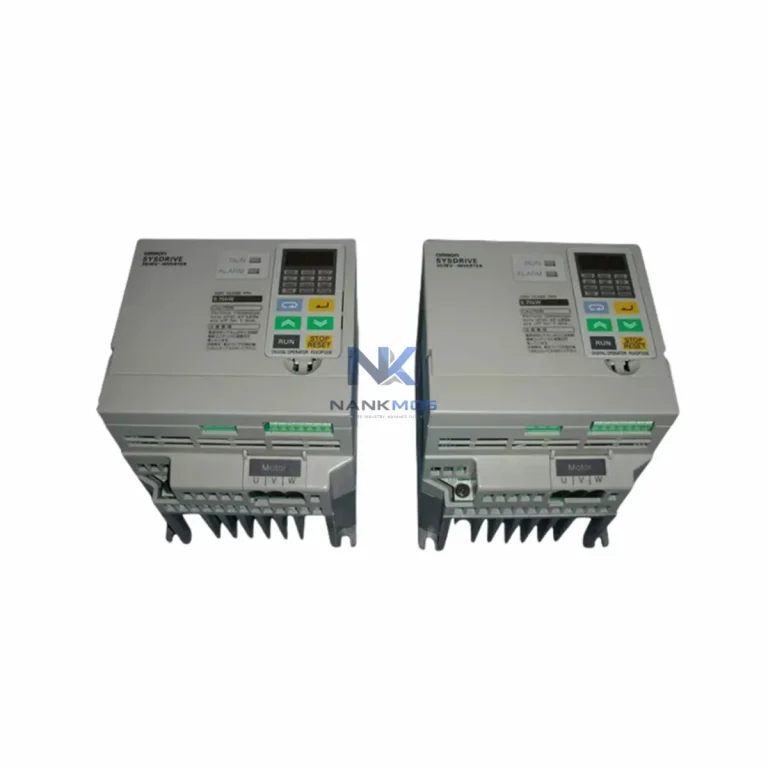
Functional Inspection
100% tested on professional platforms to ensure stable performance.
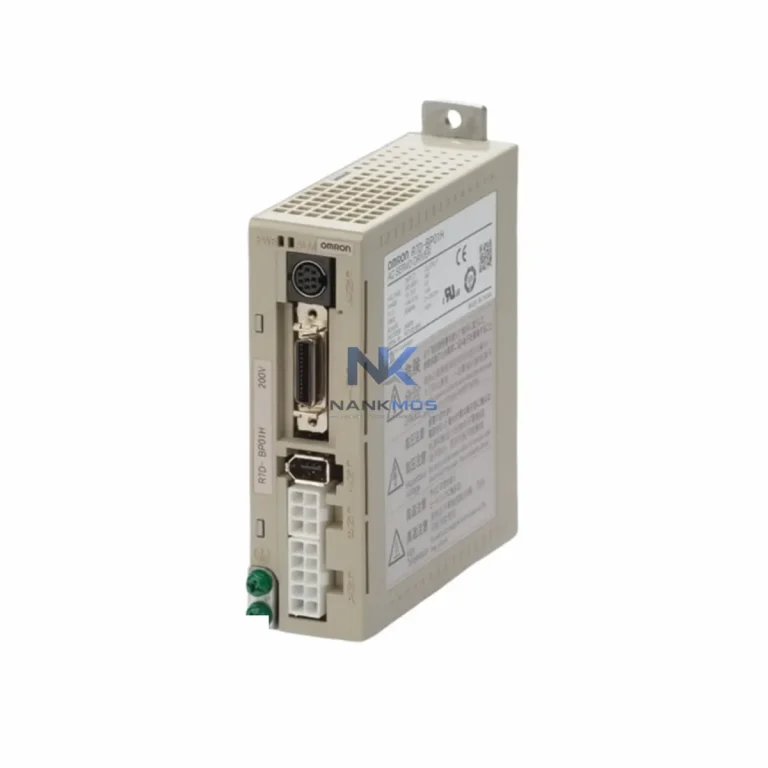
Omron R7D-BP02HH-Z is a NANKMOS industrial automation product record Listed under Other series series and Drives. Confirm condition, availability, lead time, compatibility and documentation by email inquiry.
Brand names are used for identification only.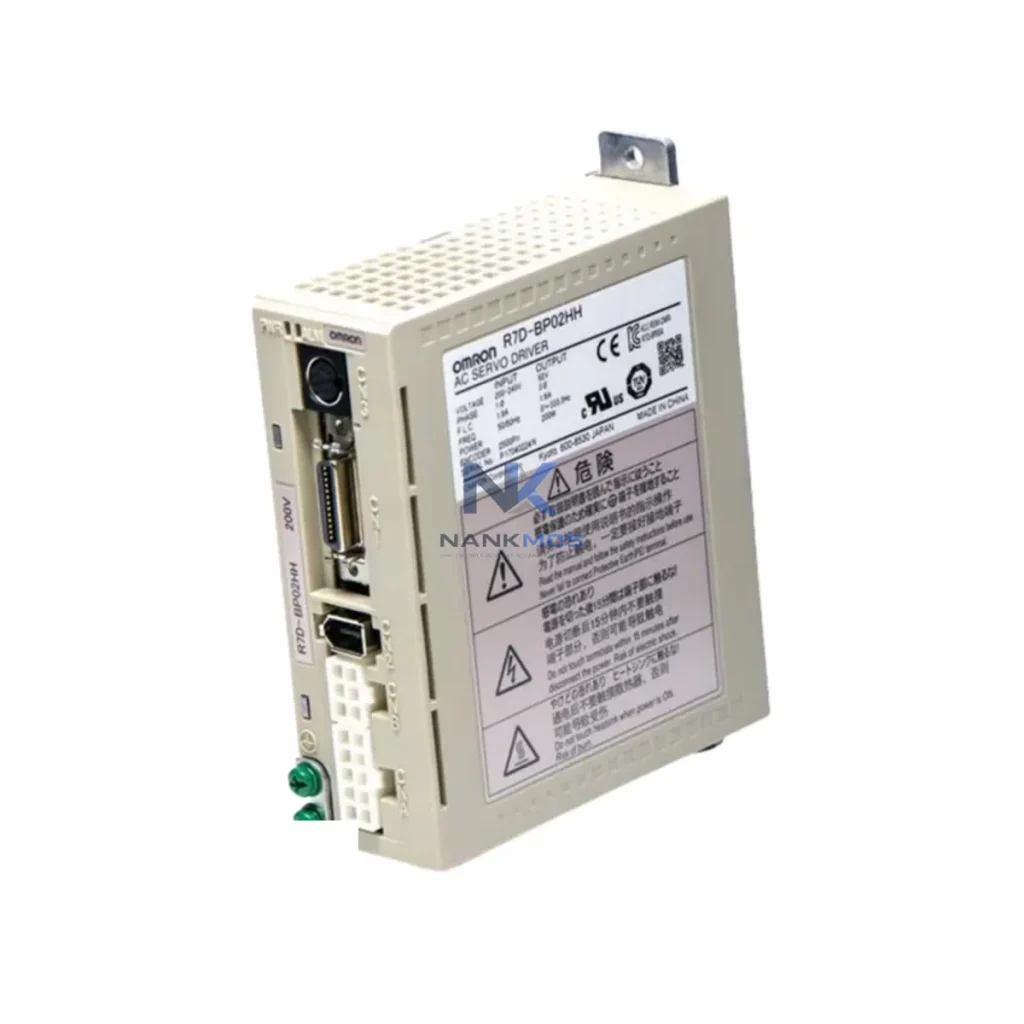
Omron R7D-BP02HH-Z is a NANKMOS industrial automation product record Listed under Other series series and Drives. Confirm condition, availability, lead time, compatibility and documentation by email inquiry.
| Manufacturer | Omron |
|---|---|
| Application | Motion Control & Drive System |
| Part Number / Model | R7D-BP02HH-Z |
| Compatible System | Confirmed by inquiry |
| Condition Options | To Confirm |
| Module Type | Servo / Drive Module |
| Warranty | 12 Months |
| Packaging | Anti-static Bag / Secure Box |
| Shipping Methods | DHL / FedEx / UPS / Air / Sea |
| Availability | To Confirm |
| Lead Time | To Confirm |
| Documentation | Part number and revision checked before quote |
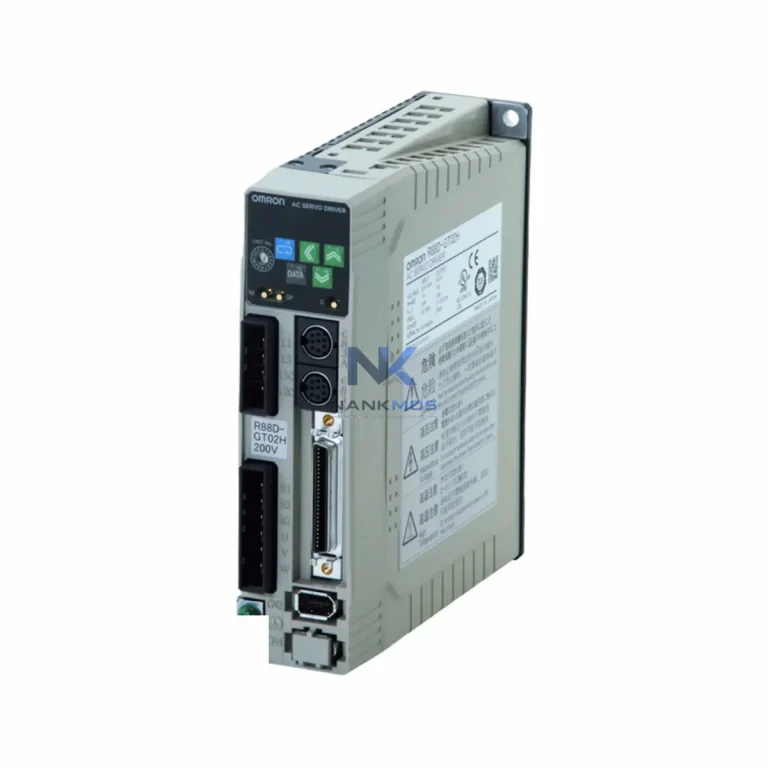
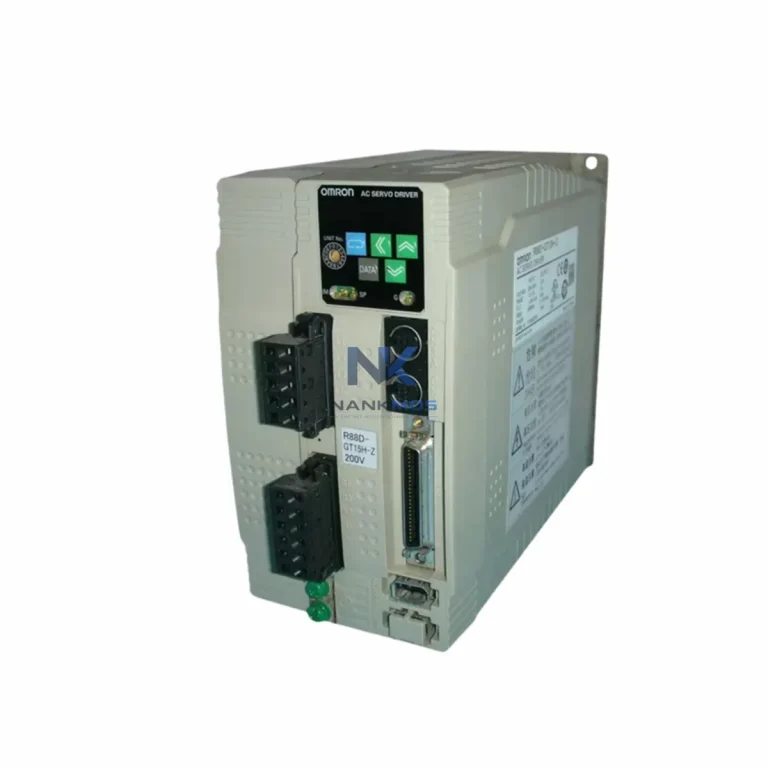
The OMRON R7D-BP02HH-Z is a high-performance AC servo drive from OMRON's R7D series, engineered to deliver precise energy control and superior drive efficiency across demanding industrial production environments. Rated for 200W output and designed for seamless integration with OMRON's R88M-series servo motors, this drive plays a central role in reducing unnecessary power consumption, minimizing thermal load, and stabilizing production line throughput. Whether deployed in packaging machinery, CNC equipment, conveyor systems, or robotic assembly cells, the R7D-BP02HH-Z delivers consistent, measurable energy savings while maintaining the motion accuracy required for modern smart manufacturing.
In a fully integrated smart production line, the R7D-BP02HH-Z does not operate in isolation — it functions as a precision energy node within a broader automation ecosystem. When paired with an OMRON NJ501 or NX102 PLC via the SYSMAC platform, the drive receives real-time motion commands while the controller monitors cycle time, axis load, and energy consumption simultaneously. This tight integration eliminates idle-state power draw and ensures the servo axis only consumes energy proportional to actual mechanical demand.
For multi-axis applications, the R7D-BP02HH-Z works alongside OMRON 1S-series servo drives and G5-series servo drives, sharing a common control architecture that simplifies commissioning and reduces wiring overhead. In lines where variable-speed pumps or fans are also present, OMRON MX2 or RX inverters (variable frequency drives) can be coordinated through the same PLC to create a unified load management strategy — reducing peak demand charges and smoothing power draw across the production shift.
Power quality and consumption visibility are provided by integrating OMRON KM-series power monitoring modules, which track real-time kWh, power factor, and harmonic distortion at the panel level. This data feeds into the SCADA layer — typically via OMRON CX-Supervisor or a third-party SCADA platform — enabling energy dashboards, shift-based consumption reports, and threshold-based alerts. When the R7D-BP02HH-Z reports abnormal load via its alarm output, the SCADA system can trigger a maintenance workflow before a fault escalates into unplanned downtime.
On the I/O side, OMRON CJ1W or NX-series I/O modules relay digital signals from proximity sensors, encoder feedback, and limit switches to the PLC, ensuring the servo drive receives accurate position references and stops precisely at target coordinates without overshoot — a key factor in reducing mechanical wear and associated energy losses from repeated correction cycles. OMRON NS-series HMI panels provide operators with a real-time view of drive status, torque utilization, and fault history, enabling informed decisions about load balancing and preventive maintenance scheduling.
The R7D-BP02HH-Z contributes to factory energy optimization through several complementary mechanisms. Its regenerative braking capability recovers kinetic energy during deceleration phases — energy that would otherwise be dissipated as heat — and feeds it back into the DC bus. In high-cycle applications such as pick-and-place or press-feed systems, this regenerative recovery can meaningfully reduce net energy consumption per production cycle.
The drive's auto-standby function reduces excitation current to the connected R88M servo motor during idle intervals between production batches, cutting thermal load on both the motor windings and the drive's internal power stage. Lower operating temperatures translate directly into extended component lifespan, reduced cooling infrastructure requirements, and lower HVAC energy consumption in the control cabinet environment.
Load-adaptive output control ensures the drive modulates its output torque and current in real time based on actual mechanical resistance, rather than running at a fixed output level. This is particularly valuable in applications with variable load profiles — such as conveyor systems handling mixed product weights or assembly stations with intermittent clamping forces — where a fixed-output drive would waste energy during light-load phases.
From a production line rhythm perspective, the R7D-BP02HH-Z's high-resolution encoder feedback and fast current loop response enable tight synchronization between servo axes, reducing inter-axis wait times and improving overall equipment effectiveness (OEE). Fewer micro-stops and smoother acceleration profiles mean the line runs closer to its designed throughput without requiring additional energy input.
Each unit is functionally tested prior to shipment, verifying encoder feedback integrity, drive output linearity, and alarm response under load. This pre-shipment validation reduces the risk of installation-related failures and ensures the drive performs to specification from day one — protecting both energy efficiency targets and production schedules.
Q1: What energy savings can I expect from the R7D-BP02HH-Z compared to a standard induction motor drive?A: In typical servo applications, the R7D-BP02HH-Z's load-adaptive output and regenerative braking can reduce energy consumption by 15–30% compared to fixed-speed induction motor systems, depending on duty cycle and load variability. Actual savings depend on application profile and line configuration.
Q2: Is the R7D-BP02HH-Z compatible with my existing OMRON PLC and SCADA system?A: Yes. The R7D-BP02HH-Z is compatible with OMRON CJ, CS, NJ, and NX series PLCs via pulse train or RS-232C interfaces. It integrates with OMRON SYSMAC Studio for parameter configuration and can report status data to SCADA systems through the PLC communication layer. Confirm your PLC firmware version and I/O allocation before installation.
Q3: What is the recommended replacement or upgrade path if the R7D-BP02HH-Z reaches end of service life?A: OMRON's G5-series servo drives offer a functionally compatible upgrade path with enhanced network options including EtherCAT, providing improved synchronization performance for multi-axis smart line applications. Consult your OMRON distributor or our technical team for a migration assessment.
Q4: What does the 12-month warranty cover, and what is the testing process before shipment?A: The 12-Month Warranty covers manufacturing defects and functional failures under normal operating conditions from the date of shipment. Prior to dispatch, each R7D-BP02HH-Z undergoes a full functional test including power-on verification, encoder signal check, output linearity test, and alarm response validation. Test records are available upon request.
Functional Inspection100% tested on professional platforms to ensure stable performance.
 Anti-static Packaging
Modules are packed in anti-static bags to prevent electrostatic damage.
 Secure Export Packing
Cushion protection and strong cartons ensure safe transportation.
 Worldwide Shipping
Global logistics network supports air, sea and express delivery.
 Documentation Check
Part number, revision and compatibility verified before shipment.
 After-sales Support
Professional technical support to help resolve your issues.