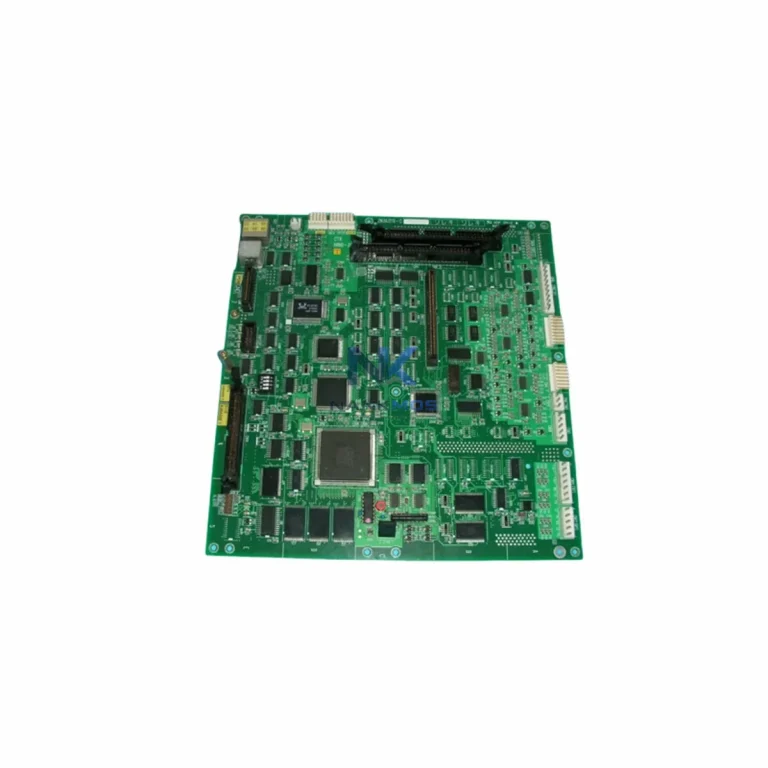
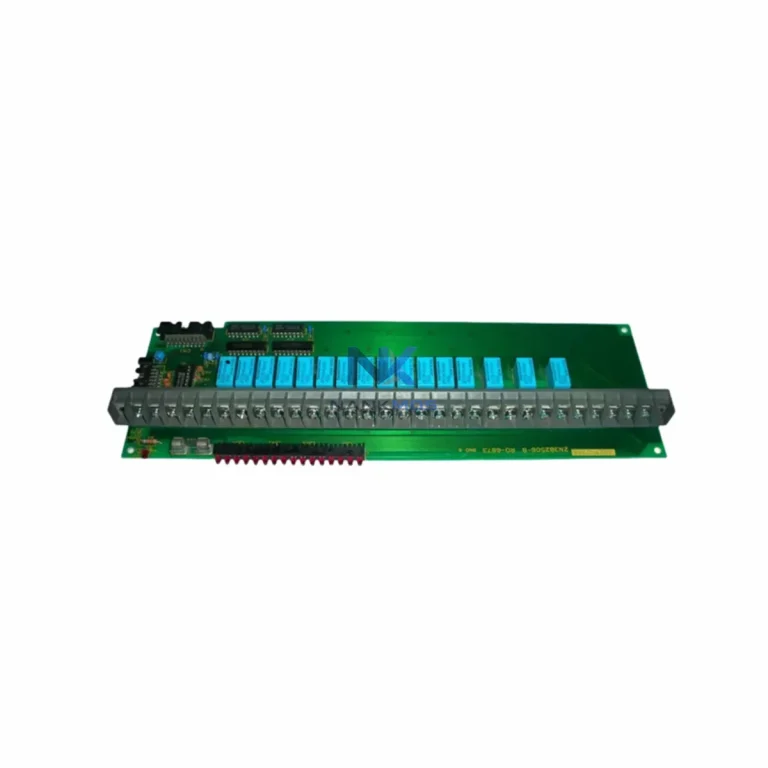
Functional Inspection
100% tested on professional platforms to ensure stable performance.
Toshiba 2N3B2502-B is a NANKMOS industrial automation product record Listed under Other series series and Business & Industrial > Automation, Control & Flow Devices > Programmable Logic Controllers. Confirm condition, availability, lead time, compatibility and documentation by email inquiry.
Brand names are used for identification only.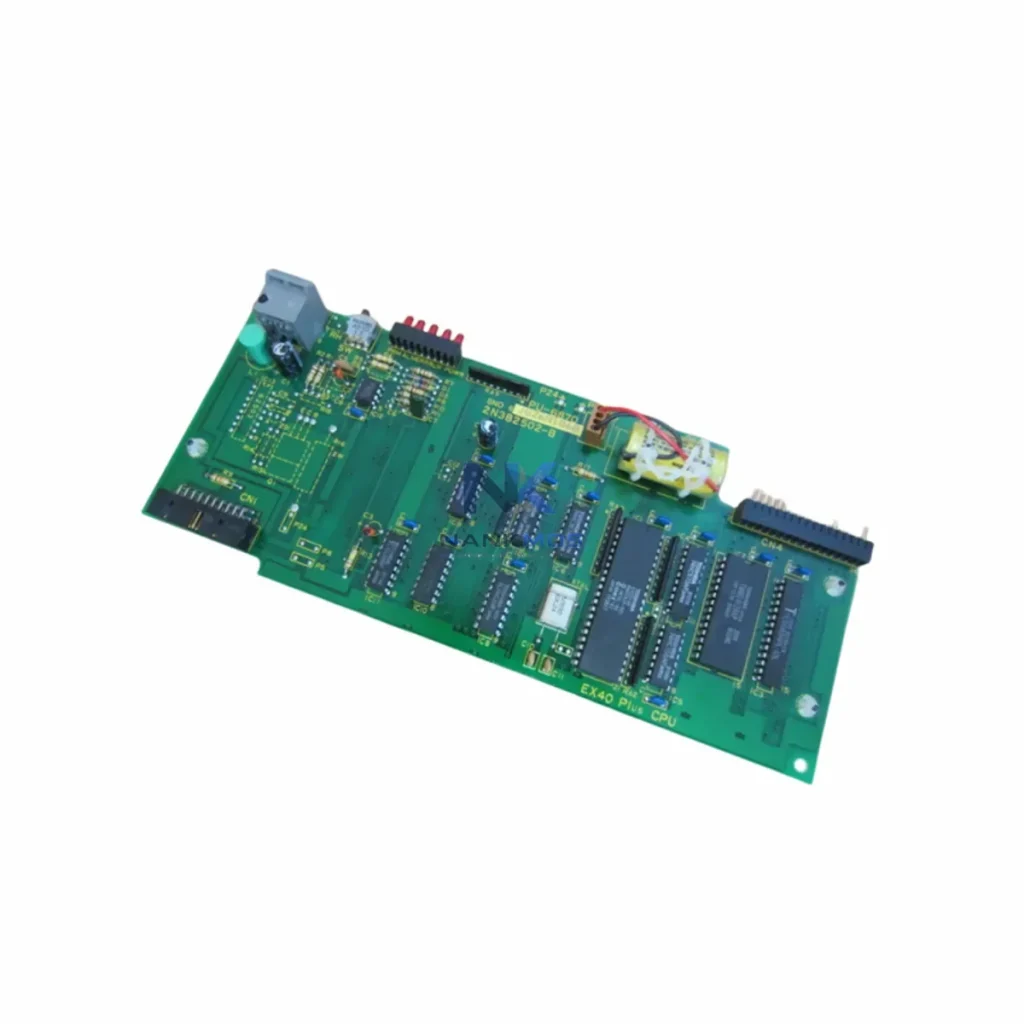
Toshiba 2N3B2502-B is a NANKMOS industrial automation product record Listed under Other series series and Business & Industrial > Automation, Control & Flow Devices > Programmable Logic Controllers. Confirm condition, availability, lead time, compatibility and documentation by email inquiry.
| Manufacturer | Toshiba |
|---|---|
| Application | Controller Processing & System Control |
| Part Number / Model | 2N3B2502-B |
| Compatible System | Confirmed by inquiry |
| Condition Options | To Confirm |
| Module Type | Controller / CPU Module |
| Warranty | 12 Months |
| Packaging | Anti-static Bag / Secure Box |
| Shipping Methods | DHL / FedEx / UPS / Air / Sea |
| Availability | To Confirm |
| Lead Time | To Confirm |
| Documentation | Part number and revision checked before quote |
The Toshiba 2N3B2502-B is a high-performance control module engineered within the PROSEC automation platform, purpose-built to deliver precise energy control across demanding industrial production environments. Designed for integration into smart factory architectures, this module enables real-time load management, motor control coordination, and drive regulation — reducing unnecessary energy consumption while maintaining consistent production throughput.
In modern manufacturing, energy waste is rarely the result of a single failure point. It accumulates through inefficient motor starts, unbalanced load distribution, poor drive synchronization, and inadequate feedback loops between field devices and control systems. The 2N3B2502-B addresses these challenges directly by providing stable, high-resolution control signals that allow connected systems to operate within their optimal efficiency bands. Whether deployed in continuous process lines, discrete assembly operations, or hybrid production environments, this module contributes measurably to reduced energy overhead and improved equipment utilization rates.
Within a PROSEC-based control architecture, the 2N3B2502-B interfaces seamlessly with Toshiba PROSEC T-series PLCs, enabling coordinated control of variable frequency drives (VFDs) such as the Toshiba VFAS3 series, which regulate motor speed and torque in response to real-time load demand. By eliminating fixed-speed motor operation during partial-load cycles, the system significantly reduces reactive power draw and thermal stress on connected equipment. This is particularly valuable in pump stations, compressor banks, and conveyor systems where load profiles fluctuate throughout the production shift.
The module's signal integrity and response latency characteristics make it well-suited for coordination with Toshiba EX series servo drives in precision motion applications. In these configurations, the 2N3B2502-B provides the control backbone that allows servo axes to execute synchronized, energy-aware motion profiles — reducing overshoot, minimizing regenerative braking losses, and maintaining cycle time consistency across multi-axis production cells.
Effective energy management in industrial automation depends on the coordinated operation of multiple system layers. The Toshiba 2N3B2502-B is designed to function as a reliable control node within this layered architecture, working in concert with a range of field devices and supervisory systems to deliver measurable efficiency gains.
At the drive level, the module coordinates with Toshiba VFAS3 variable frequency drives to implement speed-adaptive motor control strategies. Rather than running motors at fixed rated speed regardless of process demand, the VFAS3 adjusts output frequency in response to control signals from the 2N3B2502-B, reducing energy consumption during low-demand periods by up to 30–50% compared to direct-on-line motor starts. This is complemented by integration with Toshiba PROSEC T3 series I/O modules, which aggregate field-level sensor data — including current transformers, temperature sensors, and pressure transducers — and feed it back into the control loop for real-time load balancing decisions.
For power quality monitoring, the 2N3B2502-B can be paired with dedicated power monitoring modules such as those in the Toshiba PROSEC PM series, enabling the control system to track active power, reactive power, and power factor at the machine level. This data feeds directly into energy management system (EMS) dashboards and SCADA platforms, providing plant engineers with the visibility needed to identify inefficiency hotspots and schedule predictive maintenance interventions before they result in unplanned downtime.
At the human-machine interface layer, operators interact with production energy data through Toshiba V series HMI panels, which display real-time energy consumption trends, drive status, and alarm conditions. The 2N3B2502-B ensures that the control signals driving these displays are accurate and low-latency, supporting informed operator decisions that reduce manual energy waste — such as leaving drives running during scheduled breaks or failing to detect partial-load inefficiencies in multi-motor systems.
Communication between the 2N3B2502-B and higher-level systems is facilitated through Toshiba PROSEC communication modules supporting industrial Ethernet and serial protocols. These gateways enable the module to exchange data with SCADA systems, MES platforms, and cloud-based energy analytics tools, closing the loop between field-level control and enterprise-level energy reporting. In facilities running mixed-vendor environments, the module's protocol compatibility allows it to coexist with Siemens SIMATIC S7 PLCs, ABB AC500 controllers, and Omron NX/NJ series systems within the same network segment, making it a practical choice for brownfield upgrades where full platform standardization is not feasible.
The deployment of the Toshiba 2N3B2502-B within a production line delivers energy optimization benefits that extend well beyond simple motor speed control. By providing a stable, high-integrity control signal at the heart of the PROSEC automation system, this module enables a production environment where energy consumption is actively managed rather than passively accepted as a fixed operational cost.
One of the most significant contributions of the 2N3B2502-B to line-level energy efficiency is its role in reducing idle-state energy draw. In many manufacturing facilities, equipment continues to consume significant power during scheduled and unscheduled idle periods — motors remain energized, drives hold ready states, and auxiliary systems continue to run at full capacity. By integrating the 2N3B2502-B into a demand-responsive control strategy, plant engineers can implement automatic standby sequencing that powers down non-critical systems during idle windows, reducing baseline energy consumption without impacting production readiness.
Thermal load management is another area where the module delivers measurable value. High-density control panels generate substantial heat, and the energy required to cool these environments — through panel air conditioners, heat exchangers, and forced-air systems — represents a significant secondary energy cost. The 2N3B2502-B's low self-heating characteristics reduce the thermal contribution of the control module itself, while its precise drive coordination reduces the heat generated by connected motors and drives operating outside their optimal efficiency ranges. Over a full production year, these thermal savings translate into reduced cooling energy expenditure and extended component service life.
Production line throughput consistency — often referred to as line takt stability — is directly supported by the module's control precision. Inconsistent control signals lead to drive hunting, motor speed fluctuations, and mechanical stress on transmission components, all of which degrade both energy efficiency and product quality. The 2N3B2502-B delivers the signal stability required to maintain consistent takt times across multi-station production lines, reducing the energy penalty associated with acceleration and deceleration transients caused by control instability.
From a predictive maintenance perspective, the module's integration with power monitoring and I/O systems enables continuous tracking of motor current signatures, drive thermal profiles, and control response times. Deviations from established baselines can be flagged automatically, allowing maintenance teams to intervene before a developing fault causes an unplanned shutdown — which typically results in both energy waste (from emergency restarts and extended warm-up cycles) and production loss. All units are pre-shipment tested to verify functional integrity, and the 12-month warranty provides assurance of sustained performance throughout the initial deployment period.
Q1: What energy savings can I expect from deploying the Toshiba 2N3B2502-B in a VFD-controlled motor system? When the 2N3B2502-B is used to coordinate a Toshiba VFAS3 variable frequency drive in a speed-adaptive motor control configuration, energy savings of 20–50% are achievable compared to fixed-speed direct-on-line operation, depending on the load profile and duty cycle of the application. Pump, fan, and compressor applications with variable demand profiles typically yield the highest savings.
Q2: Is the 2N3B2502-B compatible with non-Toshiba control systems and communication protocols? The 2N3B2502-B is natively designed for the Toshiba PROSEC platform. However, via PROSEC communication gateway modules supporting Modbus RTU, Modbus TCP, and industrial Ethernet protocols, it can exchange data with third-party PLCs, SCADA systems, and energy management platforms. For mixed-vendor environments, we recommend confirming protocol compatibility with your system integrator prior to deployment.
Q3: What is the recommended replacement or upgrade path for aging PROSEC control modules? For facilities running earlier-generation PROSEC modules, the 2N3B2502-B represents a direct upgrade path within the PROSEC ecosystem. Its form factor and signal interface are consistent with PROSEC platform standards, minimizing re-engineering effort. Where a full platform migration is planned, our technical team can advise on transition strategies that preserve existing wiring infrastructure while introducing updated control capabilities.
Q4: What pre-shipment testing is performed, and what does the 12-month warranty cover? Every Toshiba 2N3B2502-B unit undergoes functional verification testing prior to dispatch, confirming signal output integrity, communication response, and thermal performance within specification. The 12-month warranty covers manufacturing defects and functional failures under normal operating conditions. Units are shipped from verified stock, and our team can provide documentation of test results upon request.
Functional Inspection100% tested on professional platforms to ensure stable performance.
 Anti-static Packaging
Modules are packed in anti-static bags to prevent electrostatic damage.
 Secure Export Packing
Cushion protection and strong cartons ensure safe transportation.
 Worldwide Shipping
Global logistics network supports air, sea and express delivery.
 Documentation Check
Part number, revision and compatibility verified before shipment.
 After-sales Support
Professional technical support to help resolve your issues.