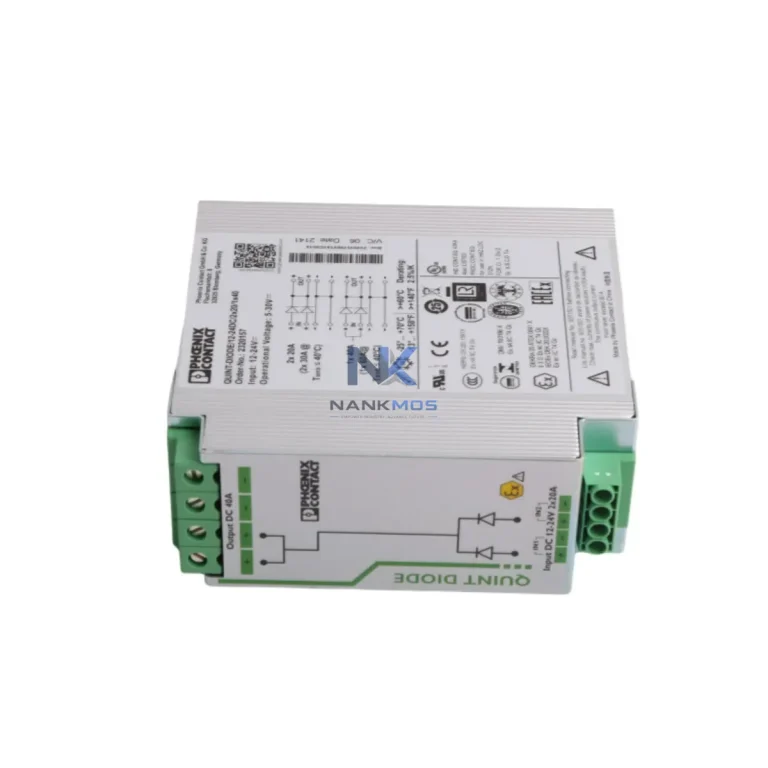
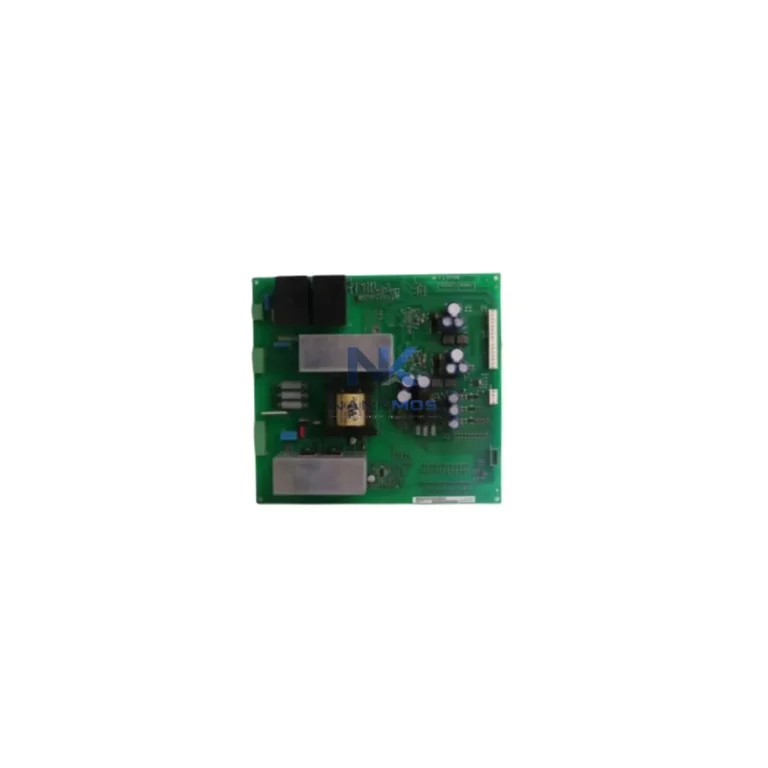
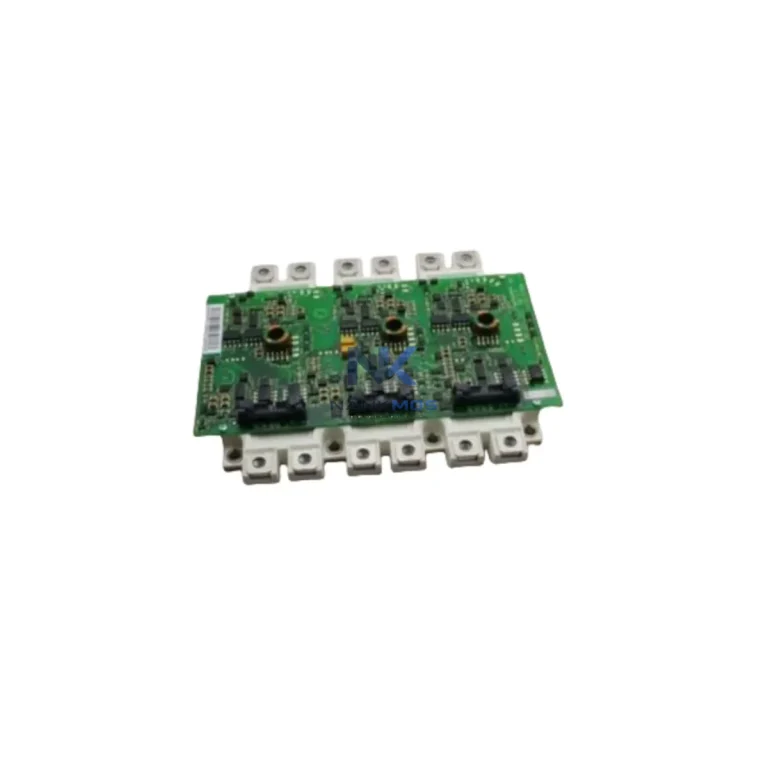
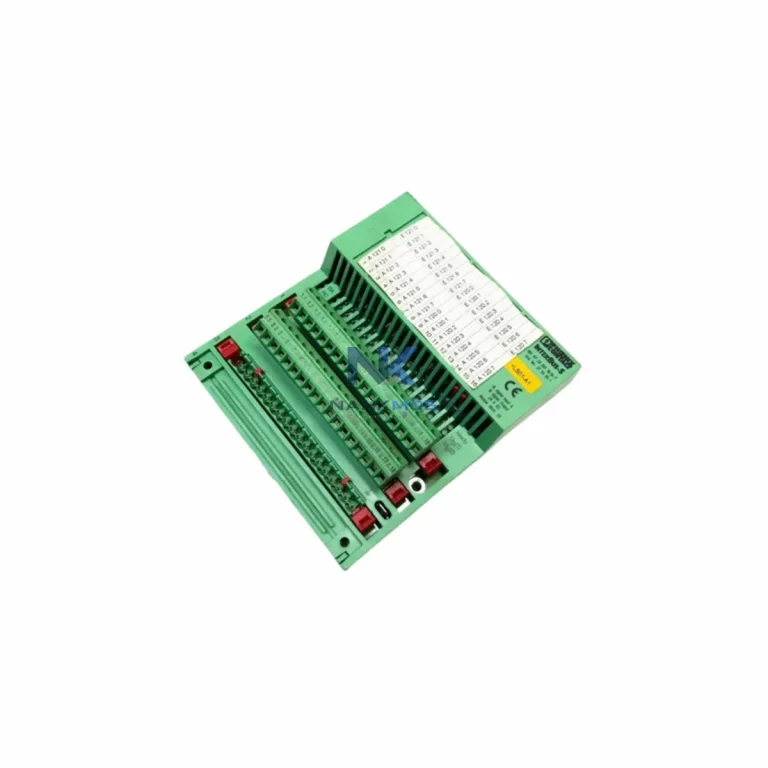
Functional Inspection
100% tested on professional platforms to ensure stable performance.
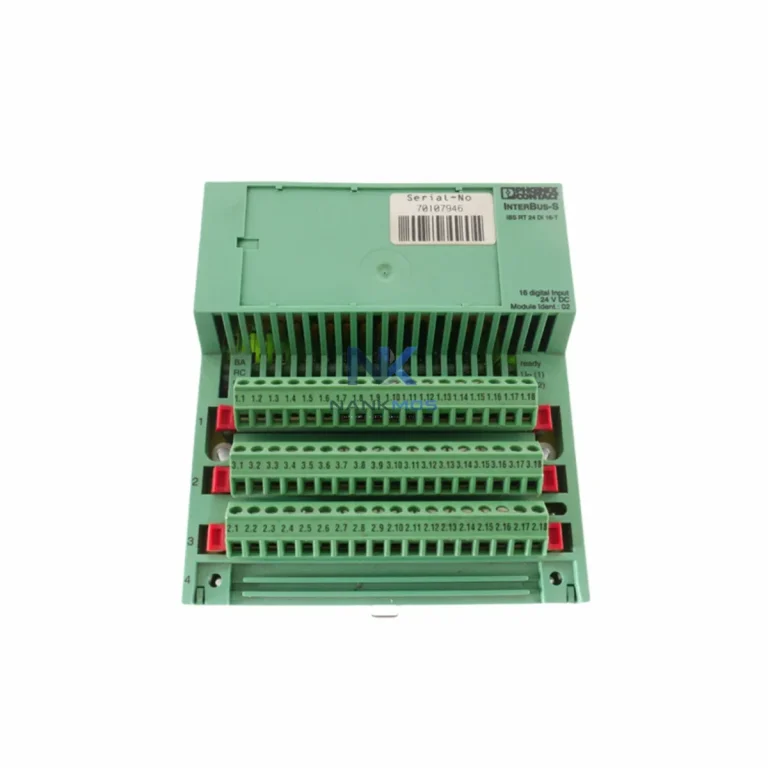
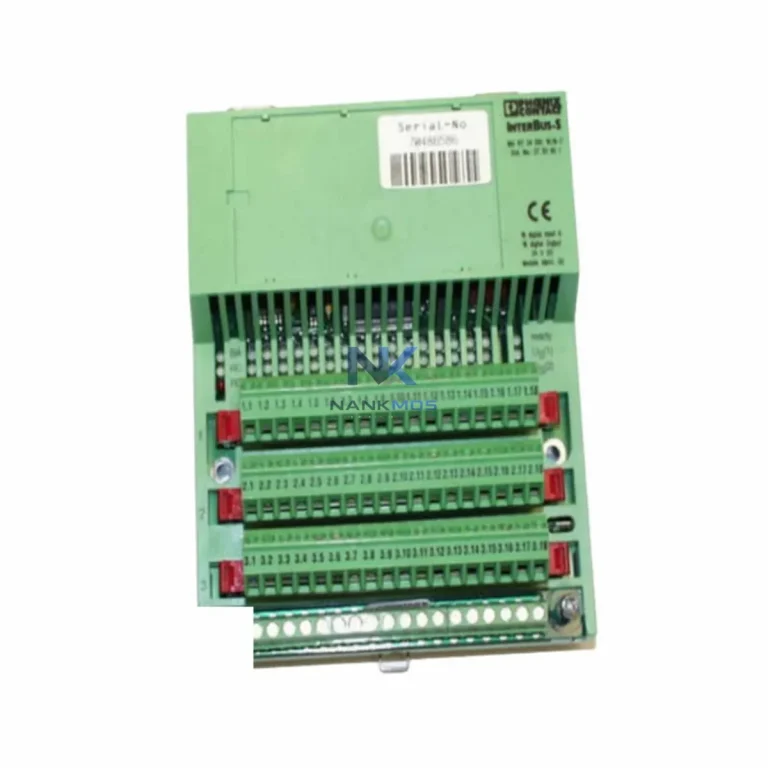
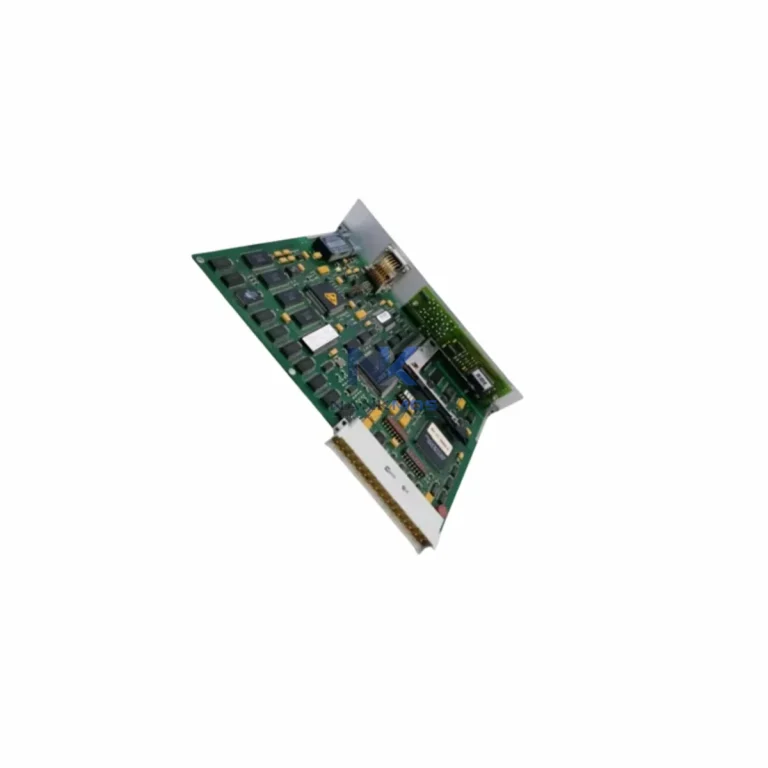
Phoenix Contact RFC 430 ETH-IB 2730190 is a NANKMOS industrial automation product record Listed under Other series series and Business & Industrial > Automation, Control & Flow Devices > Programmable Logic Controllers. Confirm condition, availability, lead time, compatibility and documentation by email inquiry.
Brand names are used for identification only.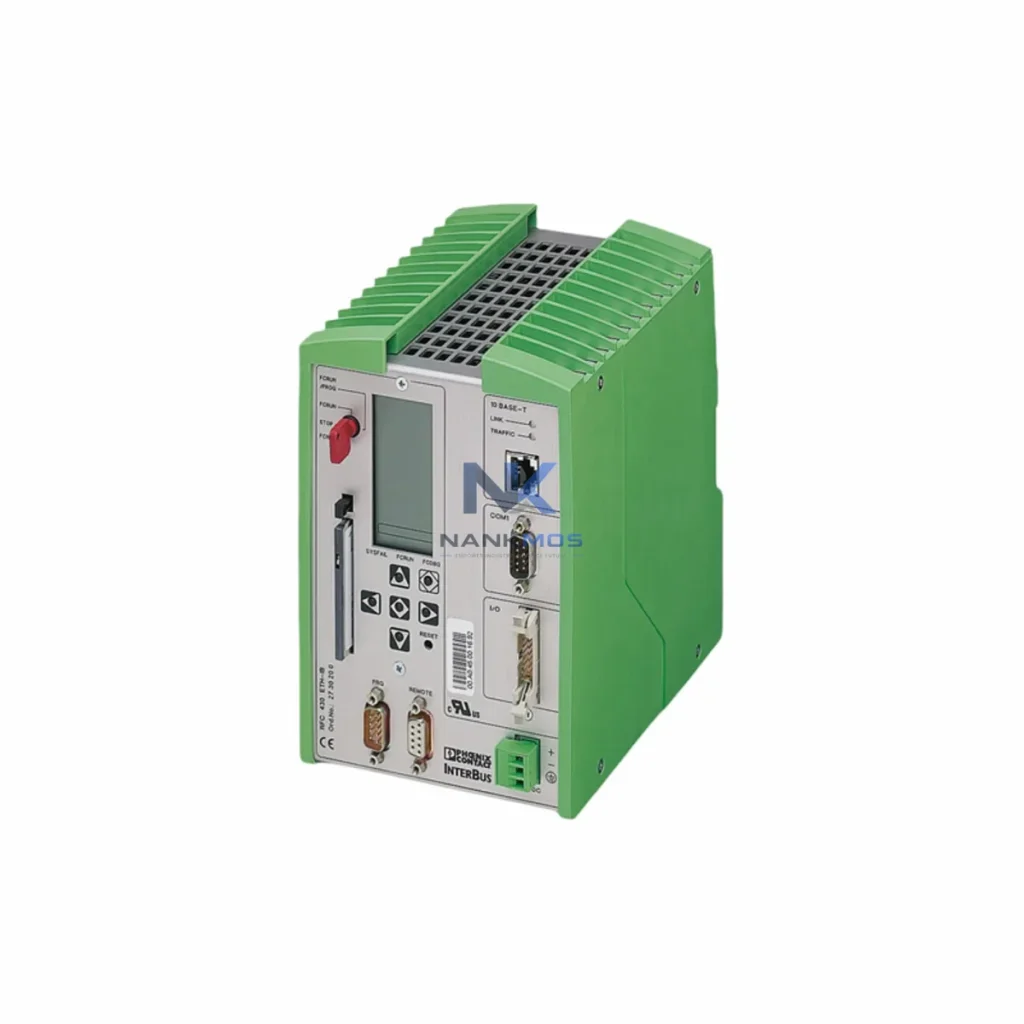
Phoenix Contact RFC 430 ETH-IB 2730190 is a NANKMOS industrial automation product record Listed under Other series series and Business & Industrial > Automation, Control & Flow Devices > Programmable Logic Controllers. Confirm condition, availability, lead time, compatibility and documentation by email inquiry.
| Manufacturer | Phoenix Contact |
|---|---|
| Application | Controller Processing & System Control |
| Part Number / Model | RFC 430 ETH-IB 2730190 |
| Compatible System | Confirmed by inquiry |
| Condition Options | To Confirm |
| Module Type | Controller / CPU Module |
| Warranty | 12 Months |
| Packaging | Anti-static Bag / Secure Box |
| Shipping Methods | DHL / FedEx / UPS / Air / Sea |
| Availability | To Confirm |
| Lead Time | To Confirm |
| Documentation | Part number and revision checked before quote |
The Phoenix Contact RFC 430 ETH-IB (SKU: 2730190) is a high-performance, energy-control PLC controller engineered for smart production lines where power efficiency, load management, and real-time process control are mission-critical. Built on Phoenix Contact's proven PLCnext Technology platform, this controller delivers deterministic automation with integrated Ethernet and INTERBUS communication capabilities, enabling seamless coordination across multi-axis drive systems, distributed I/O networks, and energy management architectures.
Designed for industrial environments demanding continuous uptime and measurable energy savings, the RFC 430 ETH-IB supports IEC 61131-3 programming standards and open-source extensions, giving automation engineers the flexibility to implement advanced load-shedding algorithms, predictive maintenance routines, and real-time energy monitoring directly within the controller logic — without reliance on external middleware.
The RFC 430 ETH-IB is purpose-built to anchor a power-aware automation architecture. In a typical smart production line, this controller acts as the central coordination node, managing energy flows across connected subsystems with precision and minimal latency.
When paired with Phoenix Contact AXL F BK ETH Axioline F bus couplers, the RFC 430 ETH-IB can aggregate distributed I/O data from dozens of field nodes — including digital input modules for motor status feedback and analog output modules for variable-speed drive setpoint commands — all within a single, low-overhead Ethernet scan cycle. This tight integration eliminates polling delays that would otherwise inflate energy consumption during high-frequency production sequences.
For motor and drive control, the RFC 430 ETH-IB interfaces directly with Phoenix Contact TRIO POWER industrial power supplies and coordinates with third-party variable frequency drives (VFDs) via INTERBUS or Ethernet fieldbus adapters. By embedding ramp-rate control and load-curve profiling logic in the PLC program, engineers can reduce inrush current events during motor start sequences — a leading cause of peak demand charges in manufacturing facilities.
The controller also integrates with Phoenix Contact EMpro power measurement modules, enabling real-time energy data acquisition at the panel level. This data feeds directly into the RFC 430 ETH-IB's task scheduler, allowing the controller to dynamically defer non-critical loads during peak tariff windows — a core function of any industrial demand-response strategy.
On the HMI and SCADA side, the RFC 430 ETH-IB communicates natively with Phoenix Contact WP 6xxx series web panels and is fully compatible with third-party SCADA platforms via OPC-UA or Modbus TCP. Operators gain live visibility into energy KPIs — kWh per production unit, motor load factor, and thermal headroom — without requiring additional gateway hardware.
For servo and motion applications, the RFC 430 ETH-IB can coordinate with Phoenix Contact RFC 470S PN or higher-tier PLCnext controllers in a distributed control topology, where the RFC 430 ETH-IB handles energy and utility I/O while the motion controller manages axis synchronization. This division of labor reduces CPU thermal load on both controllers and improves overall system MTBF.
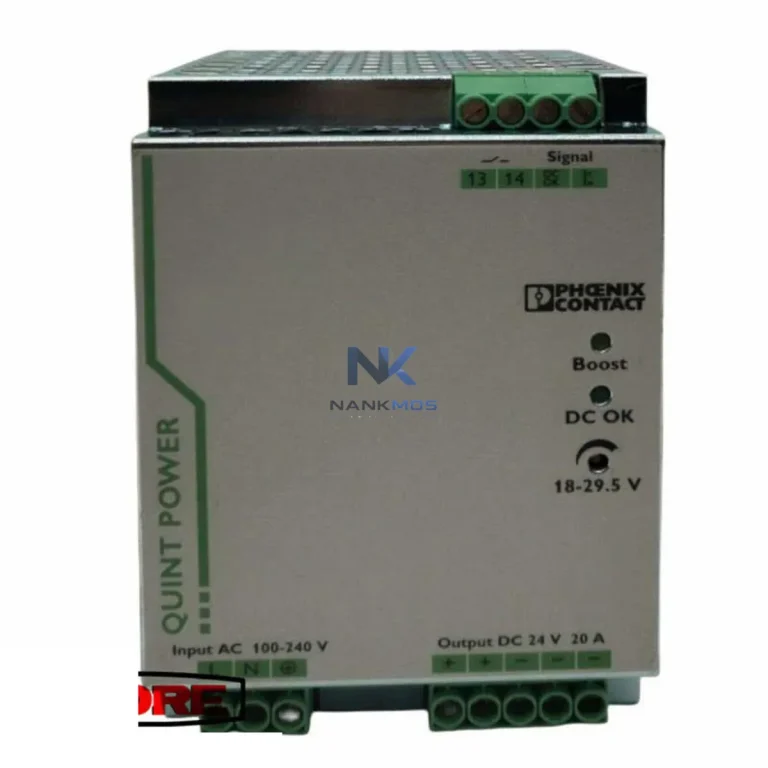
Additional integration points include Phoenix Contact QUINT POWER intelligent power supplies with diagnostic output, Phoenix Contact PSR safety relays for energy-isolated maintenance zones, and Phoenix Contact FL SWITCH managed Ethernet switches for deterministic network segmentation — all of which contribute to a cohesive, energy-optimized control architecture centered on the RFC 430 ETH-IB.
Industrial production lines face mounting pressure to reduce energy costs, meet sustainability targets, and maintain throughput — often simultaneously. The Phoenix Contact RFC 430 ETH-IB addresses all three dimensions through its combination of deterministic control, open programming environment, and multi-protocol communication.
Reducing Idle-State Energy Waste: Many production lines consume 30–50% of their peak energy during non-productive intervals — conveyor coasting, pneumatic pressure maintenance, and standby heating. The RFC 430 ETH-IB enables engineers to implement granular idle-state management routines: automatically ramping down VFD-controlled conveyors during buffer accumulation, switching off auxiliary heating circuits during scheduled breaks, and staging compressed air compressor cycles to avoid simultaneous starts. These routines are programmed directly in PLCnext Engineer using IEC 61131-3 structured text, with no additional energy management middleware required.
Thermal Load Reduction: Excessive heat generation in control panels shortens component life and increases cooling energy costs. By optimizing task cycle times and reducing unnecessary I/O polling, the RFC 430 ETH-IB minimizes its own thermal output. When combined with QUINT POWER supplies featuring active power factor correction, the overall panel heat dissipation is further reduced — extending the service life of adjacent components and reducing HVAC load in the electrical room.
Production Line Rhythm Stabilization: Inconsistent machine pacing — caused by communication jitter, uncoordinated start sequences, or reactive fault handling — leads to energy spikes and mechanical wear. The RFC 430 ETH-IB's deterministic Ethernet communication ensures that all connected nodes receive synchronized commands within defined cycle windows, eliminating the energy-wasting micro-stops and restarts that degrade OEE on high-speed lines.
Predictive Maintenance Integration: The RFC 430 ETH-IB supports condition monitoring data aggregation from vibration sensors, temperature transmitters, and current transducers connected via INTERBUS or Axioline I/O. By trending this data over time, maintenance teams can identify degrading motors, worn bearings, or clogged filters before they cause unplanned downtime — each of which represents a significant energy efficiency loss when a line restarts cold after an emergency stop.
Device Utilization Improvement: Through load profiling and historical energy data analysis — enabled by the RFC 430 ETH-IB's data logging capabilities and SCADA integration — plant engineers can identify underutilized assets, reschedule energy-intensive operations to off-peak tariff windows, and right-size motor and drive selections during future capital projects. The result is a measurable improvement in energy cost per unit produced, directly supporting factory-level sustainability KPIs.
Every RFC 430 ETH-IB unit supplied by NANKMOS undergoes a full outgoing quality test prior to shipment, verifying communication integrity, I/O response, and power supply compatibility. Stock is maintained for prompt dispatch, and all units are covered by a 12-Month Warranty from the date of delivery.
Q1: How does the RFC 430 ETH-IB contribute to measurable energy savings on a production line?The RFC 430 ETH-IB enables energy savings through programmable load management, idle-state shutdown routines, and real-time integration with power measurement modules such as the Phoenix Contact EMpro series. Engineers can implement demand-response logic directly in the PLC program, reducing peak energy consumption without impacting throughput. Typical applications include VFD ramp-rate control, compressor staging, and auxiliary circuit scheduling.
Q2: Is the RFC 430 ETH-IB compatible with existing SCADA and HMI systems?Yes. The RFC 430 ETH-IB communicates via Ethernet and INTERBUS, and supports standard industrial protocols including Modbus TCP and OPC-UA (via PLCnext runtime extensions). It is compatible with major SCADA platforms and Phoenix Contact's own WP 6xxx web panel HMIs. No proprietary gateway hardware is required for most integration scenarios.
Q3: Can the RFC 430 ETH-IB replace an existing PLCnext or RFC-series controller without full reprogramming?The RFC 430 ETH-IB is part of the Phoenix Contact RFC 400 series and shares the PLCnext Technology runtime environment. Migration from compatible RFC-series controllers typically requires hardware I/O mapping verification and communication parameter updates, but the IEC 61131-3 application code is largely portable. NANKMOS recommends a bench validation test prior to live line deployment. Contact our technical team for a compatibility assessment specific to your existing configuration.
Q4: What does the 12-Month Warranty cover, and what is the supply lead time?All RFC 430 ETH-IB units supplied by NANKMOS are covered by a 12-Month Warranty from the date of delivery, covering manufacturing defects and functional failures under normal operating conditions. Units in stock are dispatched following a full outgoing quality test, typically within 1–3 business days. For volume orders or scheduled delivery programs, contact us to confirm availability and lead time commitments.
Functional Inspection100% tested on professional platforms to ensure stable performance.
 Anti-static Packaging
Modules are packed in anti-static bags to prevent electrostatic damage.
 Secure Export Packing
Cushion protection and strong cartons ensure safe transportation.
 Worldwide Shipping
Global logistics network supports air, sea and express delivery.
 Documentation Check
Part number, revision and compatibility verified before shipment.
 After-sales Support
Professional technical support to help resolve your issues.