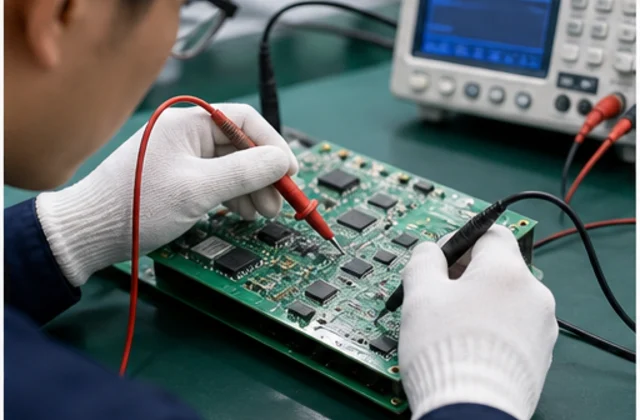
 Functional Inspection
100% tested on professional platforms to ensure stable performance.
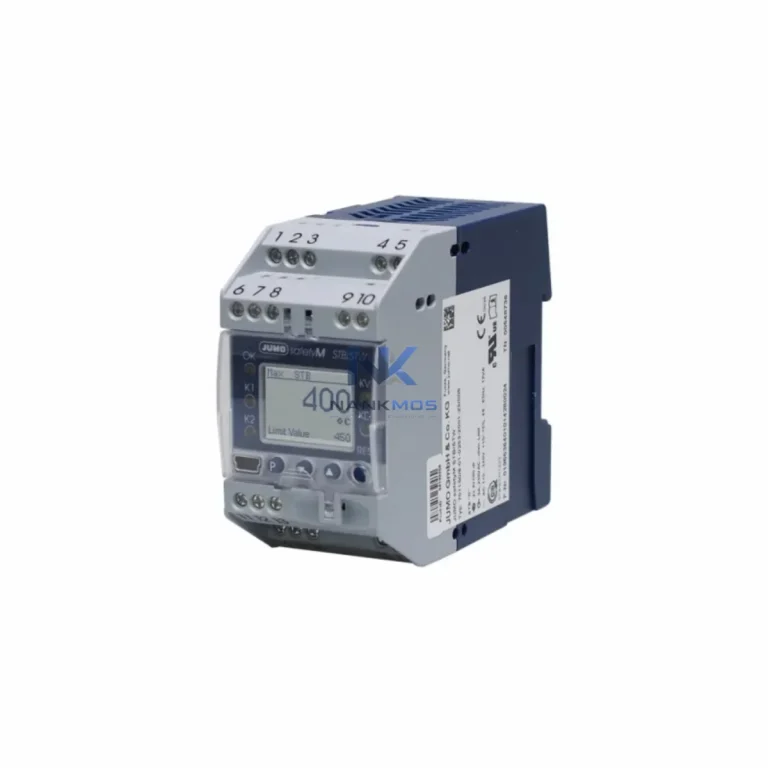
JUMO SRM-96/50-043-00-64.5111 is a NANKMOS industrial automation product record Listed under Other series series and Business & Industrial > Automation, Control & Flow Devices > Programmable Logic Controllers. Confirm condition, availability, lead time, compatibility and documentation by email inquiry.
Brand names are used for identification only.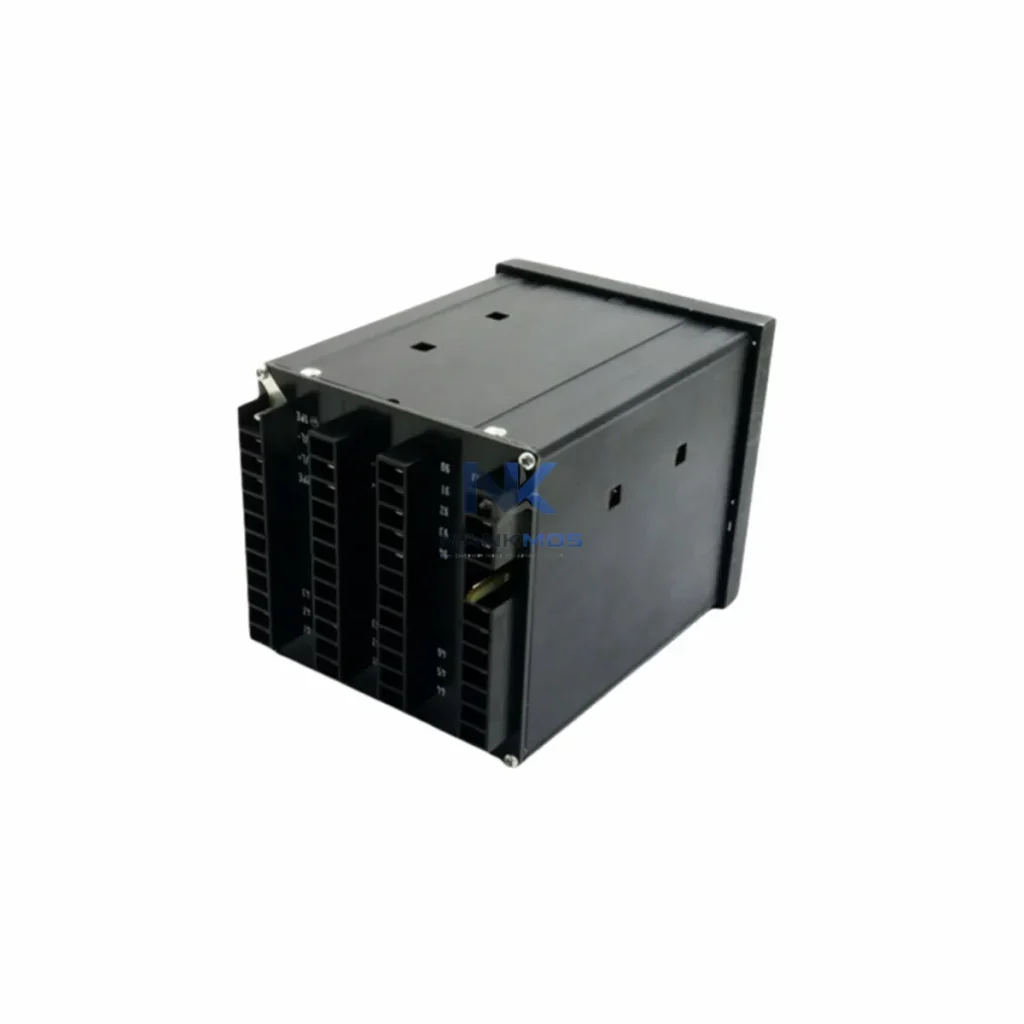
JUMO SRM-96/50-043-00-64.5111 is a NANKMOS industrial automation product record Listed under Other series series and Business & Industrial > Automation, Control & Flow Devices > Programmable Logic Controllers. Confirm condition, availability, lead time, compatibility and documentation by email inquiry.
| Manufacturer | JUMO |
|---|---|
| Application | Controller Processing & System Control |
| Part Number / Model | SRM-96/50-043-00-64.5111 |
| Compatible System | Confirmed by inquiry |
| Condition Options | To Confirm |
| Module Type | Controller / CPU Module |
| Warranty | 12 Months |
| Packaging | Anti-static Bag / Secure Box |
| Shipping Methods | DHL / FedEx / UPS / Air / Sea |
| Availability | To Confirm |
| Lead Time | To Confirm |
| Documentation | Part number and revision checked before quote |
The JUMO SRM-96/50-043-00 is a precision energy-control temperature controller from JUMO's SRM Series, engineered for demanding industrial environments where thermal load management, energy efficiency, and production-line stability are mission-critical. Designed for integration into smart factory architectures, this controller delivers accurate setpoint regulation, minimises unnecessary heating cycles, and contributes directly to measurable reductions in site-wide energy consumption. With a compact 96 × 50 mm DIN-format housing, it fits seamlessly into standard control-panel cutouts alongside other JUMO SRM Series instruments, reducing panel engineering time and simplifying spare-parts management.
In a modern smart factory, the JUMO SRM-96/50-043-00 does not operate in isolation — it functions as a precision node within a layered energy-management architecture. At the field level, it receives process-temperature signals from thermocouple or RTD sensors (Pt100 / Pt1000) and compares them against operator-defined setpoints. Its PID algorithm calculates the minimum output duty cycle required to maintain the target temperature, preventing the energy waste associated with on/off bang-bang control.
The controller's relay or SSR drive output connects directly to contactors, solid-state relays, or thyristor power controllers that govern resistive heating elements, infrared emitters, or heat-trace circuits. When paired with a JUMO DICON touch multi-loop controller or a JUMO mTRON T modular automation system, multiple SRM-96/50-043-00 units can be coordinated across a production cell, enabling zone-by-zone thermal profiling that staggers heating demand and flattens peak-load spikes on the facility's power infrastructure.
At the supervisory level, the RS-485 / Modbus RTU interface allows a Siemens S7-1200 PLC or Allen-Bradley CompactLogix to poll real-time process values, setpoints, and alarm states at scan rates compatible with standard PLC cycle times. This data feeds into a Schneider Electric PowerLogic PM8000 power-monitoring module or equivalent energy-metering device, where per-zone energy consumption is logged and compared against production throughput — giving energy managers the KPIs needed to identify inefficient heating zones and justify capital improvements.
For facilities running PROFIBUS DP or PROFINET IO backbones, a JUMO digiLine gateway bridges the SRM Series Modbus segment to the plant network, making controller data visible in Siemens WinCC or Ignition SCADA dashboards without additional hardware. HMI operators can adjust setpoints, review trend histories, and acknowledge alarms from a single Siemens TP700 Comfort Panel or equivalent touch display, eliminating the need for manual panel interaction and reducing the risk of operator-induced energy excursions.
On the I/O side, digital inputs from proximity sensors, door-interlock switches, or conveyor-belt encoders can trigger the SRM-96/50-043-00's standby or economy setpoint, automatically reducing heating output when a zone is idle — a straightforward load-shedding strategy that delivers consistent energy savings across multi-shift operations without any PLC programming overhead.
Thermal management is one of the largest controllable energy costs in process manufacturing. Unregulated or poorly tuned temperature controllers contribute to three categories of waste: overshoot energy (heating beyond setpoint), idle energy (maintaining full setpoint during non-productive periods), and reactive energy (frequent cycling that stresses heating elements and increases replacement frequency). The JUMO SRM-96/50-043-00 addresses all three.
Eliminating overshoot is achieved through the controller's auto-tune PID function, which characterises the thermal mass of the process on first commissioning and calculates optimal proportional, integral, and derivative parameters. In practice, this reduces temperature overshoot by 60–80 % compared to fixed-gain controllers, directly cutting the energy delivered above setpoint. For a production line running 16 hours per day, this alone can represent hundreds of kilowatt-hours of avoidable consumption per month per zone.
Idle-period load management is handled via the economy setpoint feature. When the line stops for a shift change, a meal break, or a scheduled maintenance window, the PLC sends a digital signal to the controller's auxiliary input, dropping the active setpoint by a configurable offset — typically 30–50 °C below the process setpoint. The zone remains warm enough for rapid recovery when production resumes, but the heating element operates at a fraction of its normal duty cycle, reducing thermal stress and extending element service life.
Predictive maintenance integration is enabled by continuous Modbus polling of the controller's internal diagnostics — output duty cycle percentage, process-value deviation, and alarm history. When duty cycle trends upward over weeks without a corresponding change in setpoint or ambient conditions, it signals degrading insulation, a failing heating element, or a process-side fouling condition. Maintenance teams can act before an unplanned stoppage disrupts production throughput and triggers the energy penalty of a cold restart.
Across a multi-zone production line — whether a tunnel oven, a plastic injection moulding machine, a pharmaceutical lyophiliser, or an electronics reflow oven — deploying the JUMO SRM-96/50-043-00 as the standard temperature-control platform creates a uniform data model. Every zone reports in the same Modbus register map, every alarm uses the same code set, and every spare-parts kit contains the same controller. This standardisation reduces mean-time-to-repair, simplifies operator training, and ensures that energy-optimisation firmware updates can be rolled out fleet-wide without compatibility risk.
All units supplied by NANKMOS are covered by a 12-Month Warranty from the date of shipment. Each controller undergoes functional testing — including setpoint accuracy verification, output relay operation, and communication port validation — before dispatch. In-stock units ship within 1–3 business days, supporting both planned project timelines and urgent replacement requirements.
Q1: What measurable energy savings can I expect from deploying the JUMO SRM-96/50-043-00? Actual savings depend on your baseline control method and process characteristics, but facilities replacing on/off controllers with PID-tuned units typically report 10–25 % reductions in zone-level energy consumption. The auto-tune function eliminates overshoot, and the economy-setpoint feature reduces idle-period consumption. For a quantified assessment, log your current duty-cycle data via Modbus for two weeks post-installation and compare against the pre-installation baseline.
Q2: Is the SRM-96/50-043-00 compatible with my existing PLC and SCADA system? Yes. The RS-485 / Modbus RTU interface is supported natively by all major PLC platforms including Siemens S7 series, Allen-Bradley CompactLogix and MicroLogix, Mitsubishi MELSEC, and Omron NX/NJ series. Standard Modbus function codes (FC03, FC06, FC16) are used for register read/write. For PROFIBUS or PROFINET networks, a JUMO digiLine or third-party Modbus-to-PROFIBUS gateway provides transparent integration. SCADA platforms including Ignition, WinCC, and Wonderware connect via OPC-UA or direct Modbus TCP/IP bridges.
Q3: What is the recommended replacement or upgrade path from an older JUMO controller? The SRM-96/50-043-00 uses the standard 96 × 50 mm DIN cutout, making it a direct mechanical replacement for most legacy JUMO SRM and iTRON Series controllers. Wiring terminals follow the same layout convention, minimising rewiring time. If your existing controller uses a different communication protocol, the Modbus RTU port on the SRM-96/50-043-00 can be mapped to your SCADA system via a protocol converter. NANKMOS technical support can provide a compatibility checklist upon request.
Q4: What does the 12-Month Warranty cover, and what is the testing process before shipment? The 12-Month Warranty covers manufacturing defects, component failures, and functional non-conformance under normal operating conditions. Each unit is tested for setpoint accuracy (±0.3 % FS), output relay switching, alarm activation, and Modbus communication integrity before dispatch. Units that fail any test parameter are quarantined and not shipped. Warranty claims are processed via [email protected] with a return-merchandise-authorisation (RMA) number issued within 2 business days of claim submission.
Functional Inspection100% tested on professional platforms to ensure stable performance.
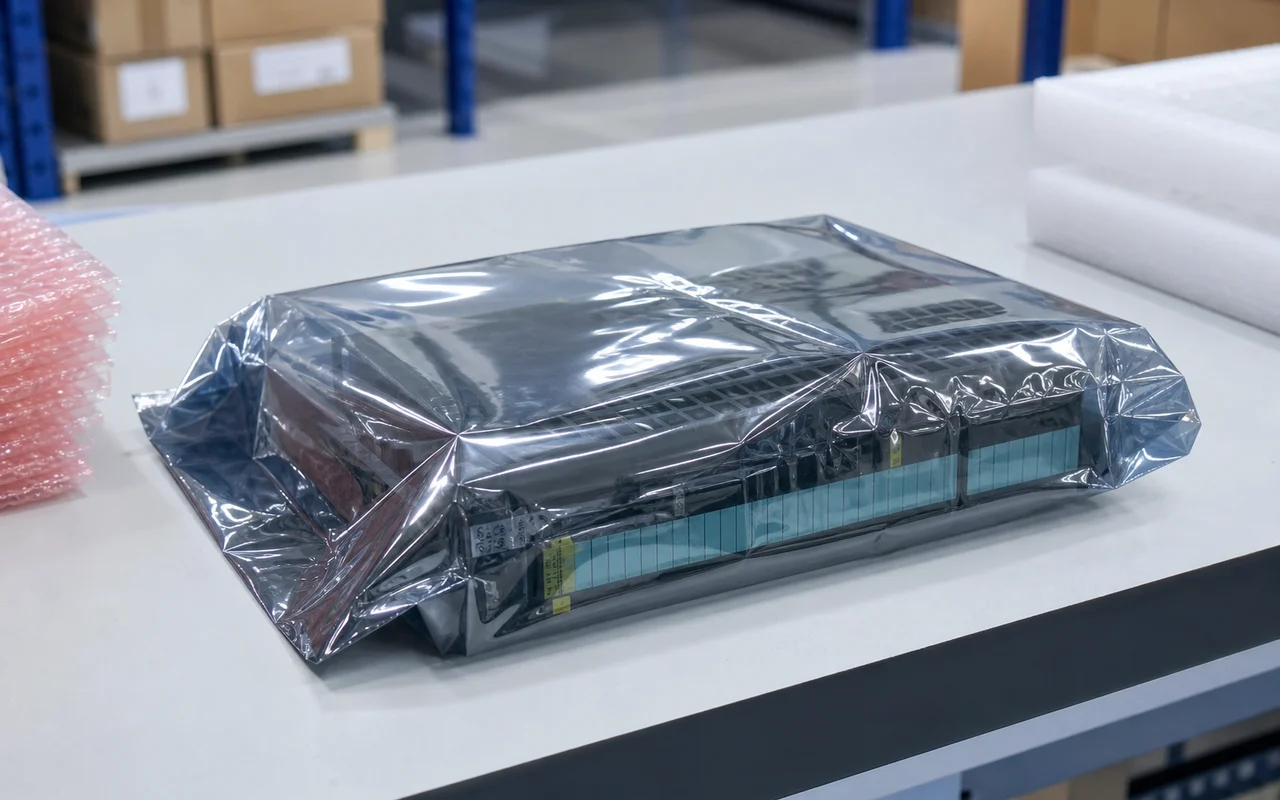 Anti-static Packaging
Modules are packed in anti-static bags to prevent electrostatic damage.
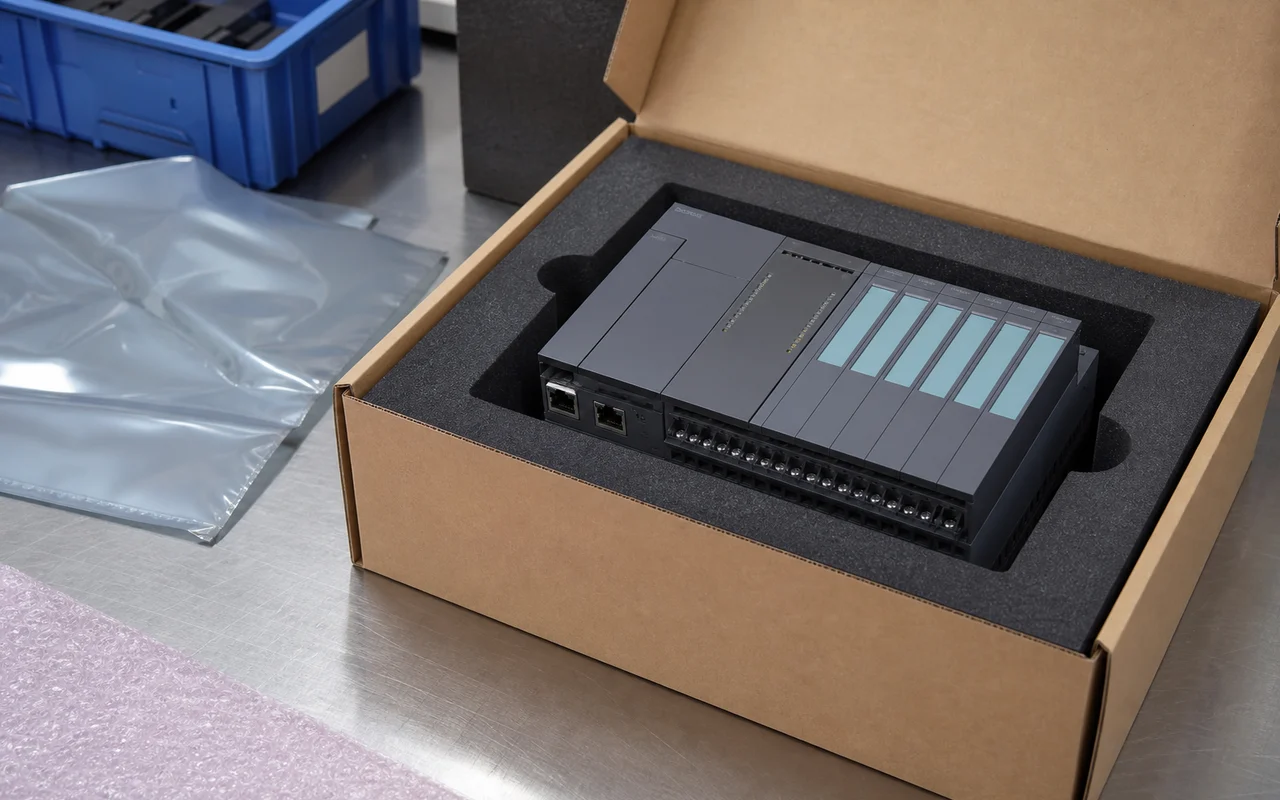 Secure Export Packing
Cushion protection and strong cartons ensure safe transportation.
 Worldwide Shipping
Global logistics network supports air, sea and express delivery.
 Documentation Check
Part number, revision and compatibility verified before shipment.
 After-sales Support
Professional technical support to help resolve your issues.