Functional Inspection
100% tested on professional platforms to ensure stable performance.
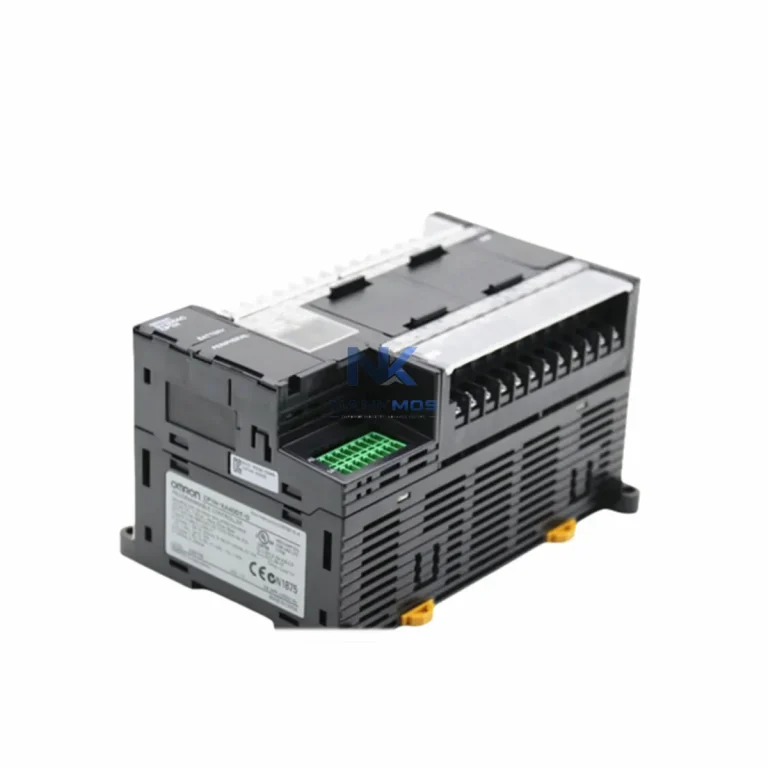
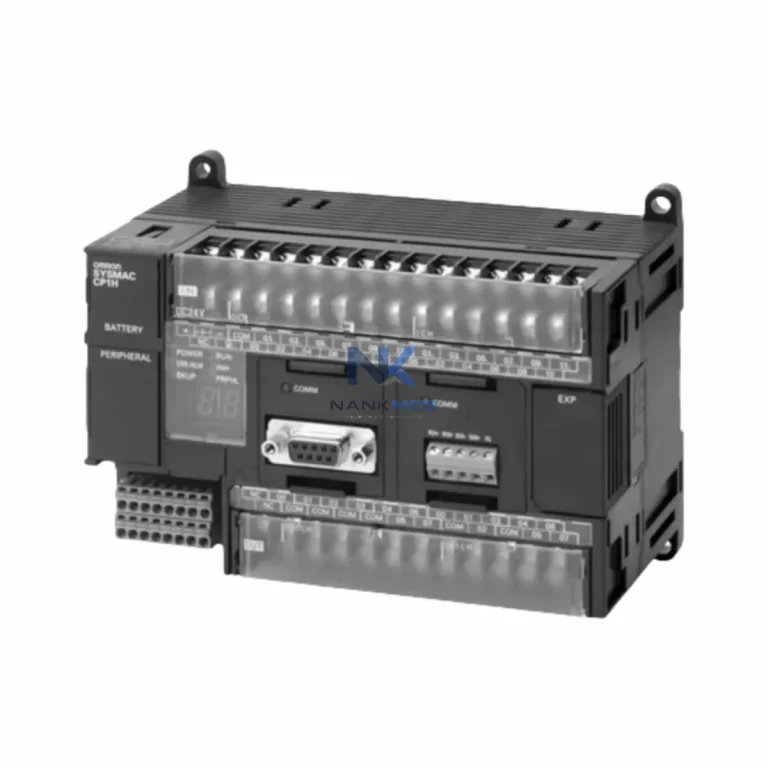
Omron TJ1-MC04 is a NANKMOS industrial automation product record Listed under Other series series and Business & Industrial > Automation, Control & Flow Devices > Programmable Logic Controllers. Confirm condition, availability, lead time, compatibility and documentation by email inquiry.
Brand names are used for identification only.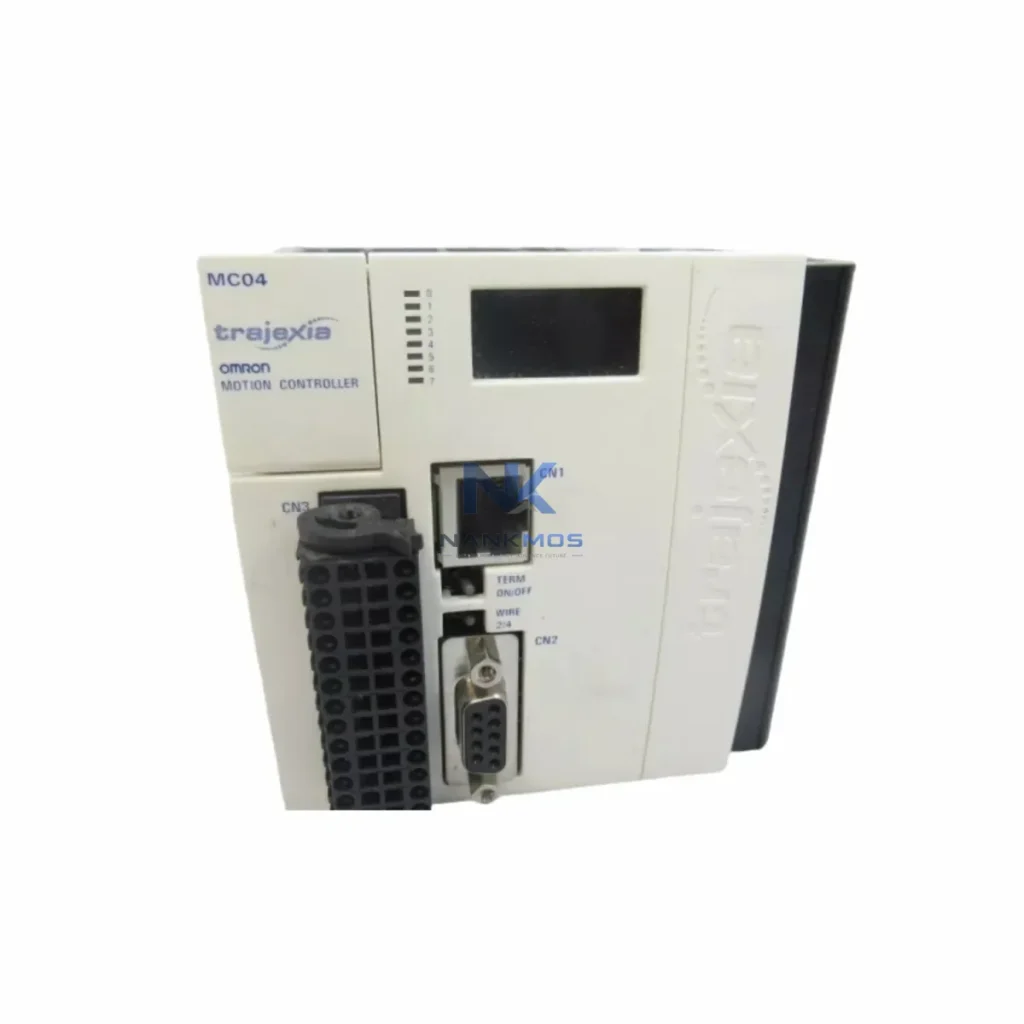
Omron TJ1-MC04 is a NANKMOS industrial automation product record Listed under Other series series and Business & Industrial > Automation, Control & Flow Devices > Programmable Logic Controllers. Confirm condition, availability, lead time, compatibility and documentation by email inquiry.
| Manufacturer | Omron |
|---|---|
| Application | Controller Processing & System Control |
| Part Number / Model | TJ1-MC04 |
| Compatible System | Confirmed by inquiry |
| Condition Options | To Confirm |
| Module Type | Controller / CPU Module |
| Warranty | 12 Months |
| Packaging | Anti-static Bag / Secure Box |
| Shipping Methods | DHL / FedEx / UPS / Air / Sea |
| Availability | To Confirm |
| Lead Time | To Confirm |
| Documentation | Part number and revision checked before quote |
The OMRON TJ1-MC04 is a high-performance 4-axis motion controller from the Trajexia series, engineered to serve as the central coordination node in modern smart factory architectures. Designed for seamless integration across EtherCAT and Mechatrolink-II networks, the TJ1-MC04 bridges the gap between field-level servo drives, PLC controllers, remote I/O modules, HMI panels, SCADA platforms, and upper-level MES systems — delivering deterministic, real-time motion data across every layer of the automation hierarchy.
In a connected factory environment, the TJ1-MC04 acts as the motion intelligence hub. Signal acquisition begins at the servo axis level, where encoder feedback and torque data are captured at sub-millisecond cycle times via the Mechatrolink-II motion bus. These signals are processed locally within the Trajexia motion engine and simultaneously forwarded upstream through EtherCAT to the plant's control backbone — enabling synchronized multi-axis interpolation, coordinated cam profiling, and electronic gearing without introducing latency into the data chain.
When deployed alongside OMRON NJ-series or NX-series machine controllers, the TJ1-MC04 participates in a unified EtherCAT segment where motion, I/O, and safety data coexist on a single deterministic network. Remote I/O nodes such as the GX-series EtherCAT slaves can be mapped into the same network topology, allowing the TJ1-MC04 to receive digital and analog field signals from sensors, proximity switches, and pressure transducers without requiring a separate fieldbus gateway. This architecture eliminates data silos between motion and process control layers — a critical requirement for Industry 4.0 transparency.
For SCADA and HMI integration, the TJ1-MC04 exposes motion state variables, axis positions, fault codes, and cycle counters through the host PLC's communication stack. OMRON NS-series HMI panels and SCADA clients running on Wonderware or Ignition can poll these values in real time via Ethernet/IP or OPC-UA adapters connected to the NJ/NX controller, providing operators with live dashboards of axis velocity, following error, and program execution status. Alarm events — including servo fault, overtravel, and communication timeout — are propagated to the SCADA alarm management layer with full timestamp and axis identification, enabling rapid remote diagnosis without dispatching field technicians.
The TJ1-MC04 also integrates naturally with OMRON's G5-series EtherCAT servo drives and R88D-KN servo amplifiers. In a typical machine cell, the TJ1-MC04 coordinates up to four servo axes simultaneously, executing linear, circular, and helical interpolation paths while maintaining position loop closure at 500 µs. Drive parameter data — including regenerative load ratio, motor temperature, and encoder battery status — is streamed back to the motion controller and made available for predictive maintenance routines running on edge computing nodes or cloud-connected gateways. This closes the remote diagnostics loop from the servo motor shaft all the way to the enterprise data layer.
For applications requiring protocol bridging between legacy Mechatrolink-II devices and modern EtherCAT infrastructure, the TJ1-MC04 serves as the native translation point within the Trajexia architecture. Older servo drives and stepping motor drivers using Mechatrolink-II remain fully operational under TJ1-MC04 command, while the EtherCAT uplink ensures that motion data reaches the plant network without protocol conversion overhead. This hybrid connectivity model protects existing capital investments while enabling phased migration toward fully EtherCAT-native machine designs.
Every OMRON TJ1-MC04 unit supplied by NANKMOS undergoes pre-shipment functional verification, including axis communication handshake testing, network enumeration checks, and motion program execution validation. Units are sourced from verified supply channels and backed by a 12-month warranty covering hardware defects and communication failures. Global inventory is maintained to support urgent project timelines across manufacturing, semiconductor, food processing, and packaging automation sectors.
A complete smart factory data chain built around the TJ1-MC04 begins at the servo axis layer. OMRON G5-series EtherCAT servo drives receive motion commands from the TJ1-MC04 via Mechatrolink-II at 500 µs cycle intervals, while encoder position and torque feedback travel back in the same cycle. The TJ1-MC04 is mounted as an EtherCAT slave within an NJ501 or NX701 machine controller segment, where it shares the deterministic EtherCAT ring with GX-ID1611 digital input modules, GX-OD1611 digital output modules, and GX-AD0471 analog input modules — consolidating motion and I/O data onto a single network backbone.
Upstream from the machine controller, an OMRON NYB Industrial Box PC running Sysmac Studio acts as the edge computing node, aggregating motion cycle data, axis fault logs, and production counters. This edge node connects to the plant Ethernet via an industrial managed switch — such as the OMRON W4S1-series or a Hirschmann MACH104 — which enforces VLAN segmentation between the motion control subnet and the plant IT network. The managed switch forwards time-stamped motion data packets to the SCADA server, where Ignition or Wonderware InTouch renders live axis position trends, alarm histories, and OEE dashboards for production supervisors.
For remote diagnostics, the NJ/NX controller's built-in EtherNet/IP port exposes TJ1-MC04 motion variables to remote clients via CIP messaging. Maintenance engineers can connect from off-site using a VPN-secured industrial router — such as the Moxa EDR-810 — to read axis following error, servo alarm codes, and program pointer positions in real time, without interrupting the running motion program. Alarm events are simultaneously pushed to the plant's alarm management system and optionally forwarded to mobile notification platforms via MQTT broker running on the edge PC.
At the sensor and transducer layer, OMRON E2E proximity sensors and ZX-series laser displacement sensors feed digital and analog signals into the GX remote I/O modules on the EtherCAT segment. These signals are available to the TJ1-MC04 motion program as synchronized inputs for position latching, registration mark detection, and flying shear synchronization — enabling high-speed web handling and label registration applications where sensor-to-axis latency must remain below 1 ms.
Many automation sites operating Mechatrolink-II servo systems face a common challenge: motion data generated at the axis level never reaches the SCADA or MES layer in a structured, queryable format. The TJ1-MC04 resolves this by acting as the protocol bridge between the Mechatrolink-II motion bus and the EtherCAT plant network, ensuring that axis position, velocity, torque, and fault data are continuously available to the host controller and, by extension, to any SCADA client connected to that controller.
Data silos between motion control and process control are eliminated when the TJ1-MC04 operates within an NJ/NX EtherCAT segment. Motion variables are mapped directly into the PLC's global variable table, making them accessible to HMI screens, SCADA tags, and MES database writers without requiring custom OPC server configuration or middleware translation layers. This unified variable namespace reduces integration engineering time and eliminates the synchronization errors that occur when motion and process data are polled from separate systems at different rates.
Remote monitoring of multi-axis machines becomes practical when TJ1-MC04 motion state is exposed through the host controller's EtherNet/IP or OPC-UA interface. Production managers can view real-time axis utilization, cycle count trends, and servo alarm frequency from any networked workstation or mobile device, enabling data-driven maintenance scheduling and reducing unplanned downtime. Alarm traceability is improved because every servo fault captured by the TJ1-MC04 is logged with axis ID, timestamp, and program line reference — providing the root cause data needed for systematic reliability improvement.
System expansion is straightforward: additional TJ1-MC04 units or TJ1-MC16 16-axis controllers can be added to the EtherCAT segment as machine capacity grows, with no changes required to the plant network infrastructure. The Trajexia architecture supports mixed-axis configurations where TJ1-MC04 and TJ1-MC16 modules coexist under a single NJ/NX host, enabling modular machine designs that scale from 4 to 64 axes without re-engineering the communication topology.
Q: What is the communication cycle time of the TJ1-MC04 on the Mechatrolink-II network?A: The TJ1-MC04 supports a minimum Mechatrolink-II cycle time of 500 µs, enabling deterministic servo command and feedback exchange at rates suitable for high-speed interpolation and registration applications. EtherCAT synchronization with the host NJ/NX controller is maintained at the same cycle boundary, ensuring zero-jitter data alignment between motion and I/O layers.
Q: Is the TJ1-MC04 compatible with non-OMRON EtherCAT masters?A: The TJ1-MC04 is designed as an EtherCAT slave conforming to the ETG.1000 standard and is primarily validated for use with OMRON NJ-series and NX-series EtherCAT masters running Sysmac Studio. Compatibility with third-party EtherCAT masters depends on ESI file support and cycle time configuration. For guaranteed interoperability, NANKMOS recommends pairing the TJ1-MC04 with OMRON NJ501 or NX701 controllers.
Q: How does NANKMOS verify TJ1-MC04 units before shipment?A: Each TJ1-MC04 undergoes pre-shipment testing that includes EtherCAT network enumeration, Mechatrolink-II axis communication handshake, motion program upload and execution validation, and hardware self-diagnostic checks. Units that pass all verification steps are sealed and shipped with a 12-month warranty covering hardware defects and communication interface failures.
Q: Can the TJ1-MC04 support remote diagnostics without interrupting production?A: Yes. When integrated with an OMRON NJ/NX host controller, TJ1-MC04 motion variables — including axis position, following error, servo alarm codes, and program execution state — are accessible via EtherNet/IP CIP messaging or OPC-UA without interrupting the running motion program. Remote maintenance clients can read diagnostic data in real time through a VPN-secured industrial router, enabling off-site fault analysis and predictive maintenance scheduling.
Functional Inspection100% tested on professional platforms to ensure stable performance.
 Anti-static Packaging
Modules are packed in anti-static bags to prevent electrostatic damage.
 Secure Export Packing
Cushion protection and strong cartons ensure safe transportation.
 Worldwide Shipping
Global logistics network supports air, sea and express delivery.
 Documentation Check
Part number, revision and compatibility verified before shipment.
 After-sales Support
Professional technical support to help resolve your issues.