
Industry Applications
Siemens Railway Signaling Modernization: Control-Cabinet RFQ Records
Use Siemens railway signaling modernization news as a prompt to improve control-cabinet records, module identification and RFQ details.
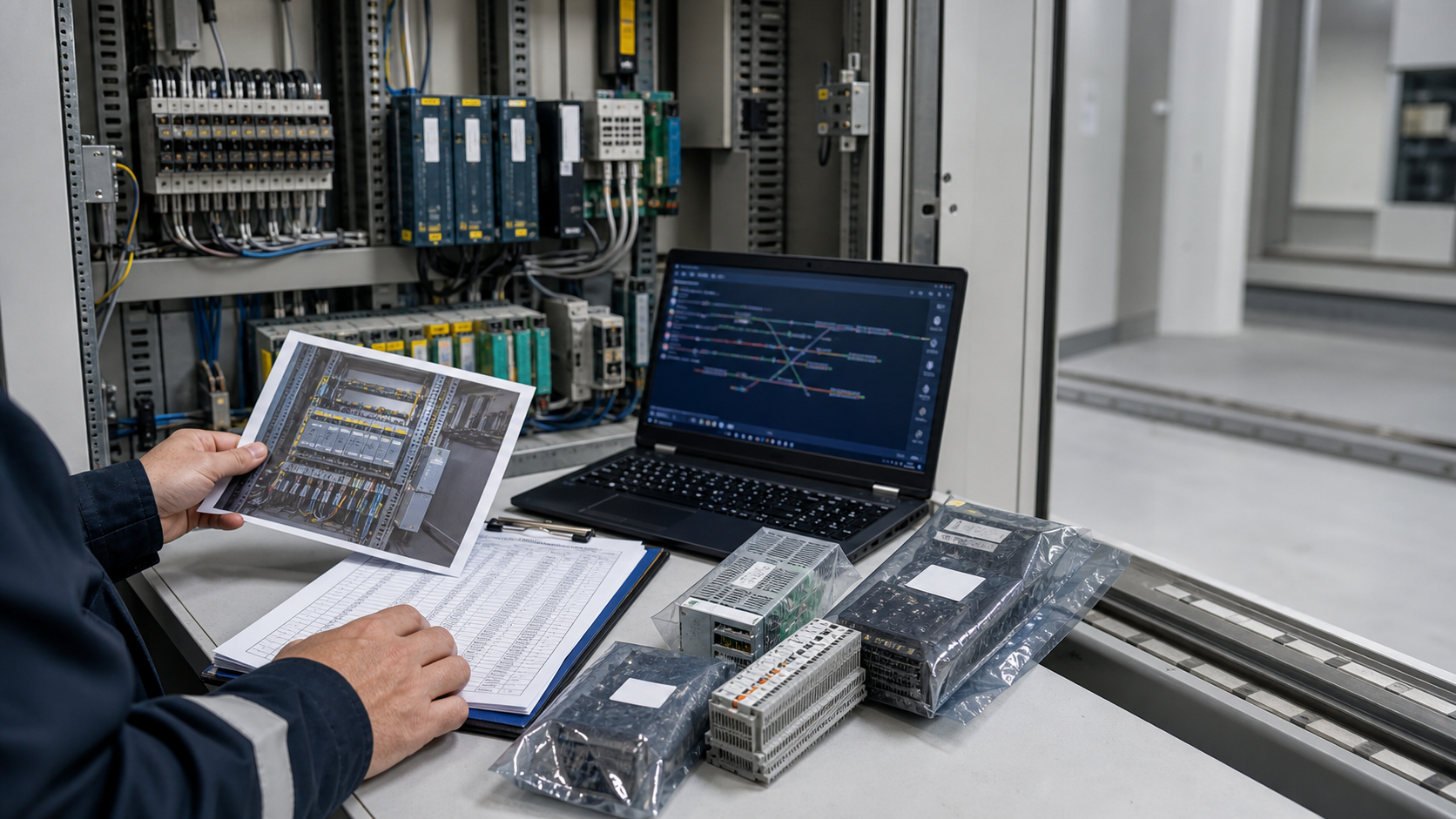
Siemens announced that a Siemens-led consortium has been awarded three railway signaling modernization contracts in Romania. The official release is about rail infrastructure, but the maintenance lesson also applies to industrial automation sites: when a control system is modernized, spare-part records should preserve exact cabinet, module, power, and communication context.
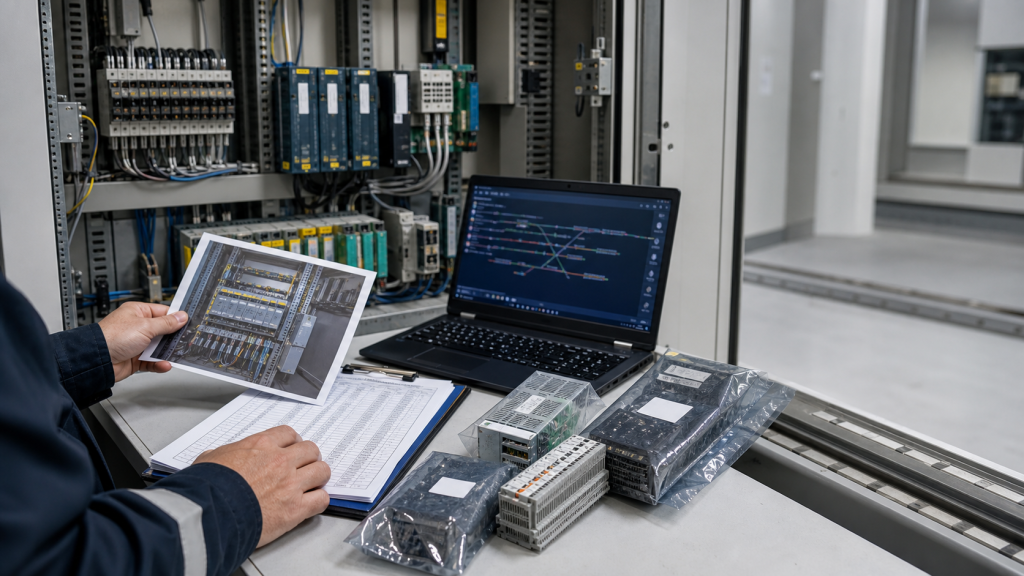
This article uses Siemens’ railway signaling update as industry context. It does not claim that any specific Siemens, SIMATIC, AS-Interface, signaling, communication, power-supply, PLC, I/O, or relay component is available, authorized, original, newly supported, or covered by a fixed warranty. Those details still need to be confirmed against the exact part number and inquiry.
What the Siemens announcement says
The official Siemens press release says Siemens Mobility, leading a consortium with ELSITEL and IMSAT, was awarded three major railway signaling modernization contracts in Romania. Siemens describes the work as signaling modernization for rail infrastructure.
Siemens Mobility also publishes broader information about rail infrastructure systems. Those pages help explain the operational context of signaling, automation, communication, and infrastructure reliability, but they do not identify the exact spare part needed inside a specific cabinet.
Why modernization changes the inquiry problem
Modernization projects often create a mixed installed base. Older cabinets may remain in service while new signaling, communication, power, monitoring, or automation equipment is introduced. Drawings can include old names, new names, subcontractor references, panel numbers, and maintenance labels that are not always consistent.
For a sourcing inquiry, that mixed context matters. A part number on a module label may be accurate, while the cabinet drawing may use an older system name. A maintenance database may describe a power supply or communication unit by function rather than catalog number. If the RFQ drops those details, the reviewer loses the evidence needed to check the right item.
Records to capture before sending a signaling or cabinet RFQ
Before requesting a replacement or spare, separate the exact item from the system context. The exact item is the label: part number, suffix, revision, and visible manufacturer reference. The system context is where and how the item is used: cabinet, rail section, power arrangement, communication link, adjacent modules, and application role.
A useful RFQ package should include:
- Front-label photo with the full part number visible.
- Side-label or rear-label photo if present.
- Cabinet photo showing neighboring relays, terminals, power supplies, and communication modules.
- Function description, such as signaling control, power supply, network interface, I/O, relay logic, or cabinet communication.
- Quantity required, condition preference, destination country, and urgency.
- Any drawing reference, panel number, rack position, or maintenance record that helps identify the installation.
Do not treat a system name as a replacement specification
A system or project name can help orient the inquiry, but it should not be treated as a full replacement specification. In rail, power, marine, chemical, and manufacturing sites, a broad system name can cover many hardware families and revisions. It may include power supplies, terminals, safety relays, communication cards, signal modules, controllers, and support hardware.
The safest approach is to keep the system name as context and preserve the module evidence separately. If the installed label conflicts with an old drawing, do not silently correct one to match the other. Send both references and ask for identification review.
How this applies to Siemens-related automation parts
NANKMOS product records include Siemens-related power and control items, including AS-Interface power supplies and control-architecture components. For those items, the strongest inquiry is still exact-model driven. A request for “Siemens railway cabinet part” is too broad; a request with the complete model, cabinet photo, function, quantity, condition preference, and destination is much more useful.
Readers can browse NANKMOS Siemens product records, filter published Siemens parts, review industry application notes, or send a cabinet or signaling-related RFQ. Availability, condition, compatibility, documentation, and delivery options should be confirmed for the exact item rather than assumed from the system name.
Compatibility boundaries to state clearly
Compatibility should be stated as a question, not assumed as a conclusion. If a maintenance team believes a newer item may replace an older unit, the RFQ should say what evidence supports that idea and what still needs confirmation. Useful evidence includes the original model, proposed model, cabinet context, function, voltage or interface context from documentation, and photos of both units if available.
This avoids turning a sourcing request into a guess. It also helps the supplier explain whether the inquiry is about the same model, a possible equivalent, a supersession question, or a wider engineering review.
Final takeaway
Siemens’ rail signaling modernization announcement is a reminder that infrastructure control systems depend on clear documentation. Modernization does not remove the need for exact labels; it increases it.
For industrial automation and infrastructure maintenance teams, a good RFQ starts with evidence: full part number, revision, cabinet photo, system context, quantity, condition preference, and destination. That gives the review a concrete basis for checking identity, availability, compatibility context, documentation, and delivery options.
Related guides
View all guides
Electrified Process Heating: Where Power Control Meets the Process Loop
A practical way to distinguish process measurement, control logic and electrical power boundaries when an industrial process heater shows a temperature deviation.
Read guide
DeltaV IQ Controller: How Server-Based Control Changes Spare Planning
Emerson’s DeltaV IQ announcement highlights server-based control. Here is how maintenance teams can distinguish host, software, redundancy and physical-controller support boundaries.
Read guide
Siemens and P&G Expand AI Inspection: What Keeps the Line Running
Siemens’ recent AI inspection announcement highlights an interconnected camera, edge-computing and PLC workflow. Here is how maintenance teams can trace faults before replacing hardware.
Read guide
Emerson’s Planned Qatar Service Center: What Flow-Instrument RFQs Still Need
Emerson has announced a planned Qatar automation service center. Here is what buyers should document in flow-instrument RFQs while its capabilities remain future plans.
Read guideSend your part number, photos or nameplate.
Our team will verify, check availability, and reply with options within 24 hours.
[email protected]+86 18359268345WhatsApp