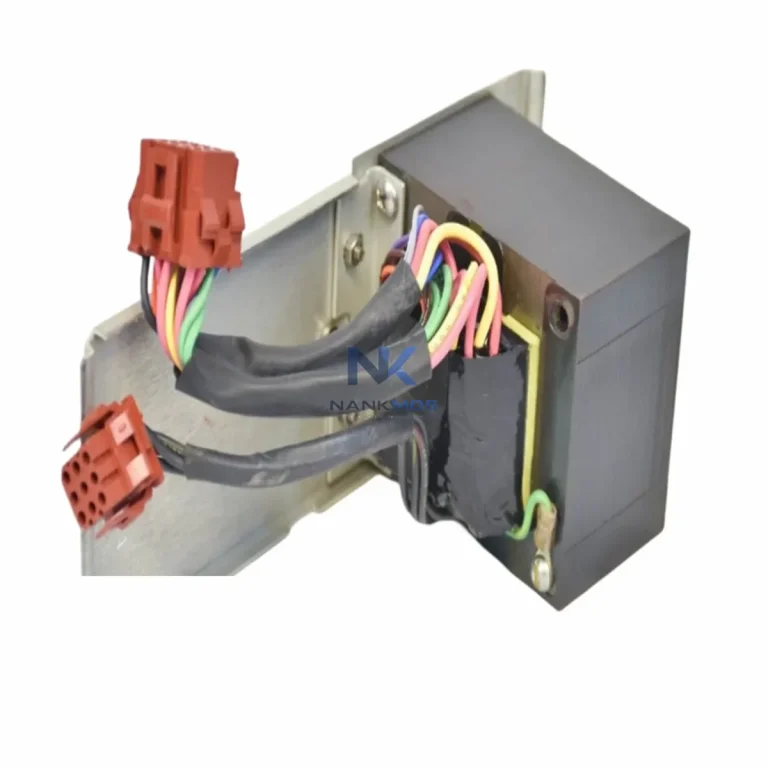
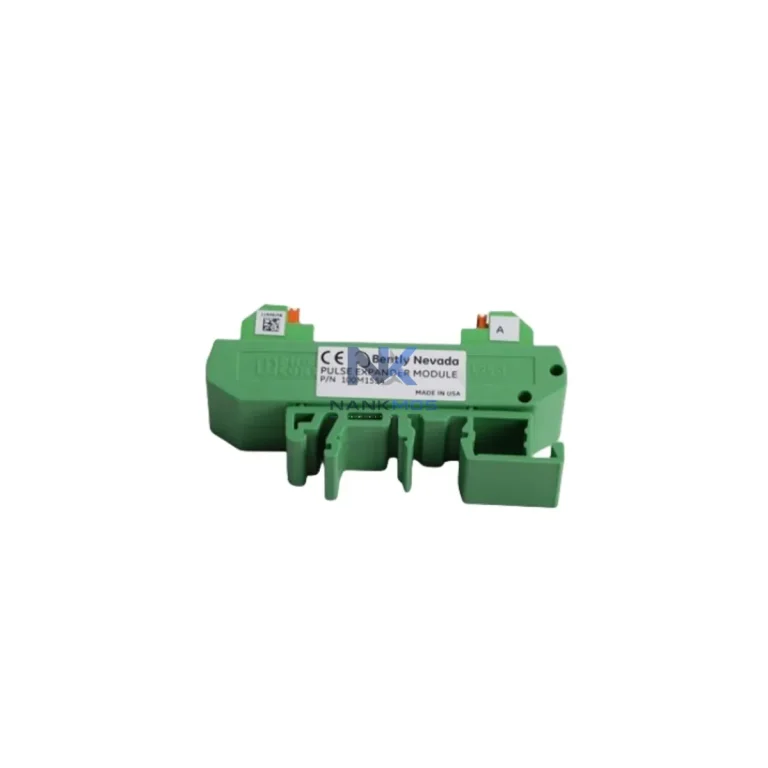
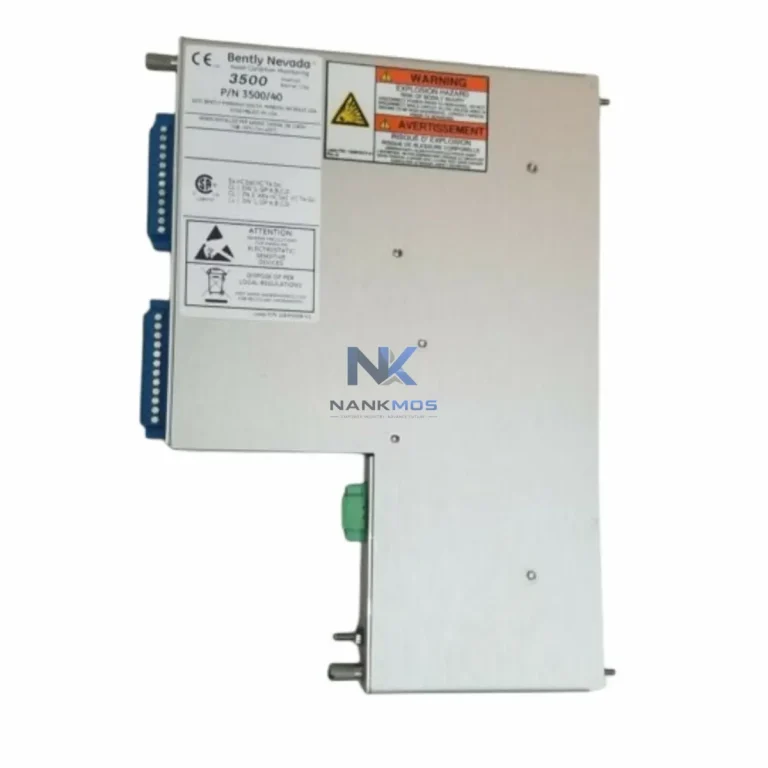
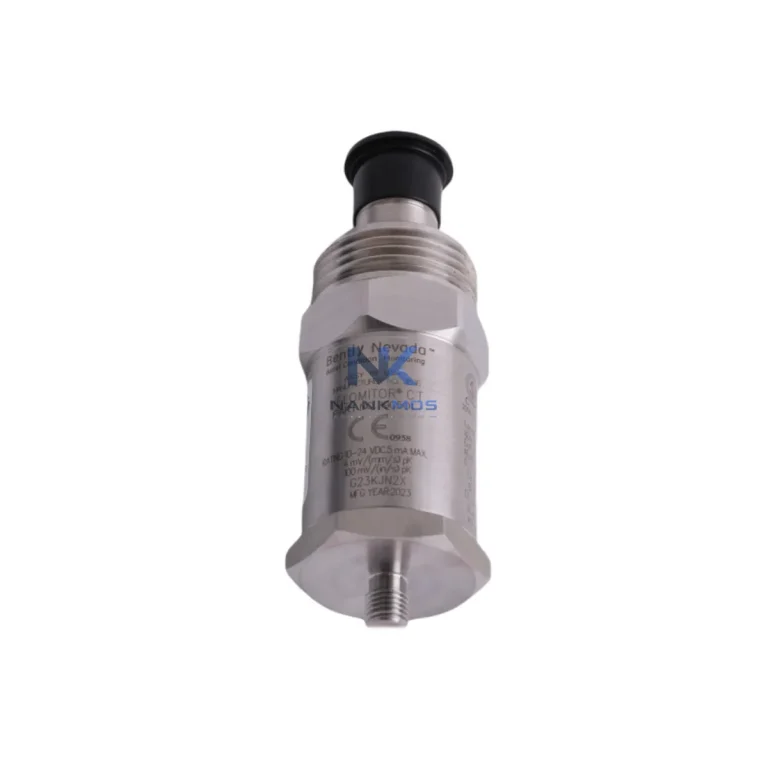
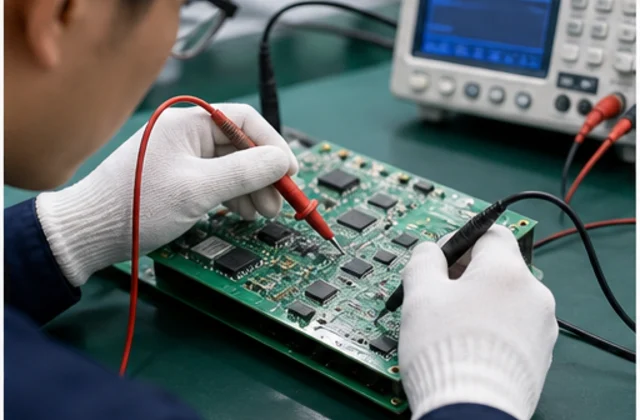
 Functional Inspection
100% tested on professional platforms to ensure stable performance.
Bently Nevada 3500/33M is a NANKMOS industrial automation product record Listed under 3500 series and Business & Industrial > Automation, Control & Flow Devices > Programmable Logic Controllers. Confirm condition, availability, lead time, compatibility and documentation by email inquiry.
Brand names are used for identification only.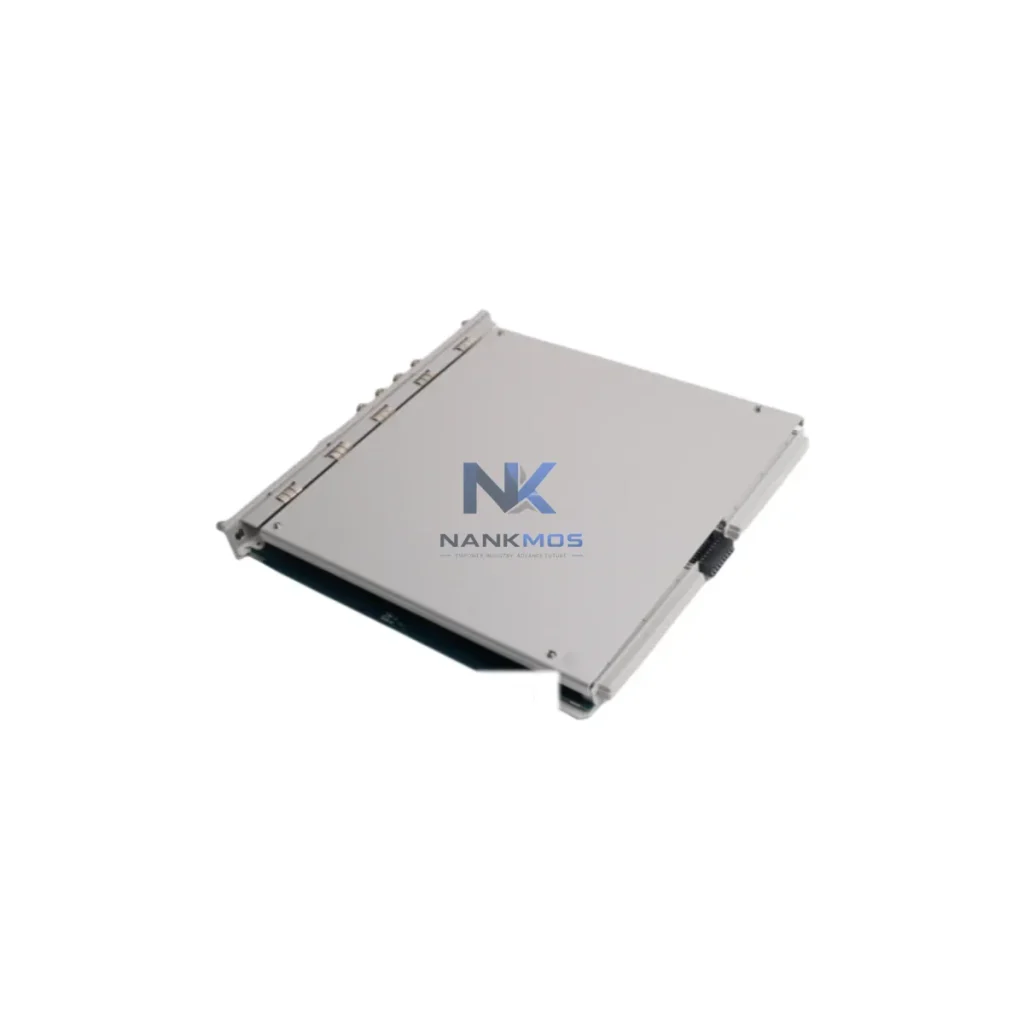
Bently Nevada 3500/33M is a NANKMOS industrial automation product record Listed under 3500 series and Business & Industrial > Automation, Control & Flow Devices > Programmable Logic Controllers. Confirm condition, availability, lead time, compatibility and documentation by email inquiry.
| Manufacturer | Bently Nevada |
|---|---|
| Application | Turbine & Condition Monitoring |
| Part Number / Model | 3500/33M |
| Compatible System | 3500 |
| Series | 3500 |
| Condition Options | To Confirm |
| Module Type | Monitoring Module |
| Warranty | 12 Months |
| Packaging | Anti-static Bag / Secure Box |
| Shipping Methods | DHL / FedEx / UPS / Air / Sea |
| Availability | To Confirm |
| Lead Time | To Confirm |
| Documentation | Part number and revision checked before quote |
The Bently Nevada 3500/33M is a high-performance network interface and relay output module engineered for the Bently Nevada 3500 Series machinery protection rack. Designed to bridge the gap between field-level vibration and process monitoring equipment and plant-wide digital control networks, the 3500/33M delivers 16 configurable relay channels with full Modbus RTU and Modbus TCP/IP protocol support. In modern smart factory environments — where real-time data visibility, remote diagnostics, and seamless SCADA integration are non-negotiable — the 3500/33M serves as a critical data link between rotating machinery health signals and the broader industrial automation ecosystem.
At its core, the 3500/33M translates analog and digital alarm states from the 3500 rack into structured network messages that upstream systems can consume directly. Whether the plant runs a Siemens S7-300 PLC, a Rockwell Automation ControlLogix controller, or a distributed control system (DCS) from Honeywell or ABB, the 3500/33M's Modbus gateway capability ensures that vibration alarm data, relay trip states, and machinery health indicators are continuously available across the control network without manual intervention or proprietary middleware.
In a typical smart factory data flow, the 3500/33M sits at the intersection of the field device layer and the supervisory layer. Proximity transducers and velocity sensors mounted on turbines, compressors, pumps, and motors feed raw vibration signals into the 3500 rack's input modules — such as the 3500/40M proximitor/seismic monitor or the 3500/42M proximitor monitor. These modules condition and process the signals, and the 3500/33M then maps the resulting alarm and relay states onto the Modbus register map, making them instantly readable by any Modbus-compatible master device on the network.
From the PLC or DCS, data flows upward to HMI panels and SCADA platforms such as Bently Nevada System 1 software, GE iFIX, or Wonderware InTouch, where operators can visualize machinery health trends, acknowledge alarms, and initiate remote diagnostic workflows. The 3500/33M's relay outputs can simultaneously drive local annunciators, safety interlock systems, or emergency shutdown (ESD) logic — ensuring that both local and remote response paths remain active and independent. This dual-path architecture is essential in power generation, petrochemical, and oil and gas facilities where a single point of failure in the alarm chain is unacceptable.
For facilities integrating edge computing into their automation architecture, the 3500/33M pairs naturally with industrial edge gateways that aggregate Modbus data from multiple 3500 racks and forward it to cloud-based analytics platforms or on-premise historians. Combined with an industrial managed Ethernet switch — such as those from Moxa or Hirschmann — the 3500/33M's TCP/IP interface can be segmented into a dedicated machinery protection VLAN, isolating critical monitoring traffic from general plant network load and reducing latency to sub-millisecond levels for alarm propagation.
Remote I/O expansion is another key use case. In large rotating equipment trains — such as a gas turbine driving a centrifugal compressor with an associated lube oil system — multiple 3500 racks may be distributed across the machinery train. The 3500/33M enables each rack to report its relay states independently over the plant Modbus network, allowing a single SCADA node to consolidate alarm data from all racks without requiring dedicated hardwired connections between each rack and the control room. This dramatically reduces cabling costs and simplifies system expansion when new machinery is added to the train.
The 3500/33M also supports integration with variable frequency drives (VFDs) and soft starters that monitor motor current and speed. When a VFD detects an overcurrent or overspeed condition, it can signal the 3500 rack via a hardwired input; the 3500/33M then propagates this alarm state over Modbus to the DCS, which can trigger an automated load-shedding sequence or alert the operator via the HMI. This closed-loop integration between the machinery protection system and the process control system is a hallmark of Industry 4.0 automation design.
Pre-shipment testing is performed on every 3500/33M unit before dispatch. Each module undergoes functional relay verification, Modbus communication validation, and rack compatibility testing against the 3500 Series backplane. Units are supplied with a 12-month warranty covering manufacturing defects and communication interface performance. In-stock availability ensures short lead times for both single-unit replacement orders and bulk procurement for new plant installations.
A complete smart factory data chain built around the 3500/33M begins at the sensor layer. Bently Nevada 3300 XL 8mm proximity transducers and 330180 velocity transducers capture shaft displacement, vibration amplitude, and phase data from rotating equipment. These signals are conditioned by 3500/40M and 3500/42M monitor modules within the 3500 rack, which apply alarm setpoints and generate relay trip commands. The 3500/33M receives these relay states and simultaneously drives local hardwired outputs — to sirens, indicator lights, or ESD panels — while encoding the same alarm data into Modbus registers for network transmission.
On the network layer, an industrial managed Ethernet switch connects the 3500/33M's TCP/IP port to the plant automation network. A Modbus TCP-to-RTU gateway may bridge legacy serial devices — such as older 3300 Series monitors or third-party vibration transmitters — into the same Modbus network segment. A Rockwell ControlLogix L7x PLC or Siemens S7-1500 PLC acts as the Modbus master, polling the 3500/33M's register map at configurable scan rates and forwarding alarm states to the DCS or safety instrumented system (SIS).
At the supervisory layer, Bently Nevada System 1 Evolution software aggregates machinery health data from multiple 3500 racks across the plant, providing trend analysis, alarm history, and predictive maintenance dashboards. An industrial edge gateway — running OPC-UA or MQTT — can forward selected data points to a cloud historian or enterprise asset management (EAM) platform, enabling remote diagnostics by off-site engineering teams without requiring VPN access to the plant control network.
Variable frequency drives controlling induced draft fans or boiler feed pumps report speed and current data to the DCS via PROFIBUS DP or EtherNet/IP; the DCS correlates this data with the vibration alarm states from the 3500/33M to detect resonance conditions or bearing wear patterns that only become visible when drive speed and vibration amplitude are analyzed together. This cross-system data correlation is the foundation of condition-based maintenance in a connected factory.
Many industrial sites operate with fragmented monitoring architectures — legacy vibration monitors that output only hardwired relay contacts, SCADA systems that cannot poll proprietary machinery protection protocols, and maintenance teams that rely on manual rounds rather than real-time data. The 3500/33M directly addresses these gaps by providing a standards-based Modbus interface that any modern PLC, DCS, or SCADA platform can consume without custom drivers or protocol converters.
Protocol fragmentation is resolved by the 3500/33M's dual Modbus RTU and TCP/IP support, which allows it to serve both legacy serial Modbus masters and modern Ethernet-based control systems simultaneously. Data silos are eliminated because the 3500/33M exposes all 16 relay states as discrete Modbus coils and input registers, making machinery alarm data available to any authorized network node — from the control room DCS to a mobile HMI tablet on the plant floor.
Remote monitoring challenges are addressed through the TCP/IP interface, which allows SCADA systems to poll the 3500/33M from a remote operations center without requiring a dedicated serial communication link to each rack. Alarm tracking is improved because every relay state change is timestamped and logged by the SCADA historian, providing a complete audit trail for post-incident analysis and regulatory compliance reporting. System expansion is straightforward: additional 3500 racks with 3500/33M modules can be added to the Modbus network segment without modifying the existing PLC or SCADA configuration — only the Modbus register map needs to be extended.
Q1: What is the typical Modbus polling latency for the 3500/33M in a TCP/IP network? Under normal plant network conditions with a dedicated machinery protection VLAN, Modbus TCP polling latency for the 3500/33M is typically under 10 milliseconds per register read cycle. For time-critical alarm applications, it is recommended to configure the Modbus master with a polling interval of 100–500 ms and to use hardwired relay outputs for primary ESD functions, with Modbus serving as the secondary supervisory data path.
Q2: Is the 3500/33M compatible with both Modbus RTU and Modbus TCP/IP simultaneously? Yes. The 3500/33M supports both Modbus RTU (via RS-485) and Modbus TCP/IP (via RJ-45 Ethernet) interfaces. Both interfaces share the same register map, allowing a serial Modbus master and an Ethernet-based SCADA system to poll the module concurrently without configuration conflicts. This dual-protocol capability simplifies integration in hybrid automation environments where legacy serial devices coexist with modern Ethernet infrastructure.
Q3: How does the 3500/33M maintain network stability in high-vibration or electrically noisy industrial environments? The 3500/33M is designed to operate within the Bently Nevada 3500 rack, which provides electrical isolation between the backplane power supply and the communication interfaces. The RS-485 Modbus RTU interface includes built-in surge protection and common-mode noise rejection, making it suitable for installation in switchgear rooms and motor control centers where electrical noise levels are high. For Ethernet connections, shielded Cat6 cabling and industrial-grade managed switches with port-level storm control are recommended to maintain network stability.
Q4: What does the 12-month warranty cover, and is pre-shipment testing included? Every 3500/33M unit supplied by NANKMOS is covered by a 12-month warranty against manufacturing defects, relay contact failures, and communication interface malfunctions. Prior to shipment, each unit undergoes functional relay verification across all 16 channels, Modbus RTU and TCP/IP communication validation, and 3500 Series backplane compatibility testing. A test report is available upon request. In-stock units are available for immediate dispatch to minimize plant downtime during replacement or new installation projects.
Functional Inspection100% tested on professional platforms to ensure stable performance.
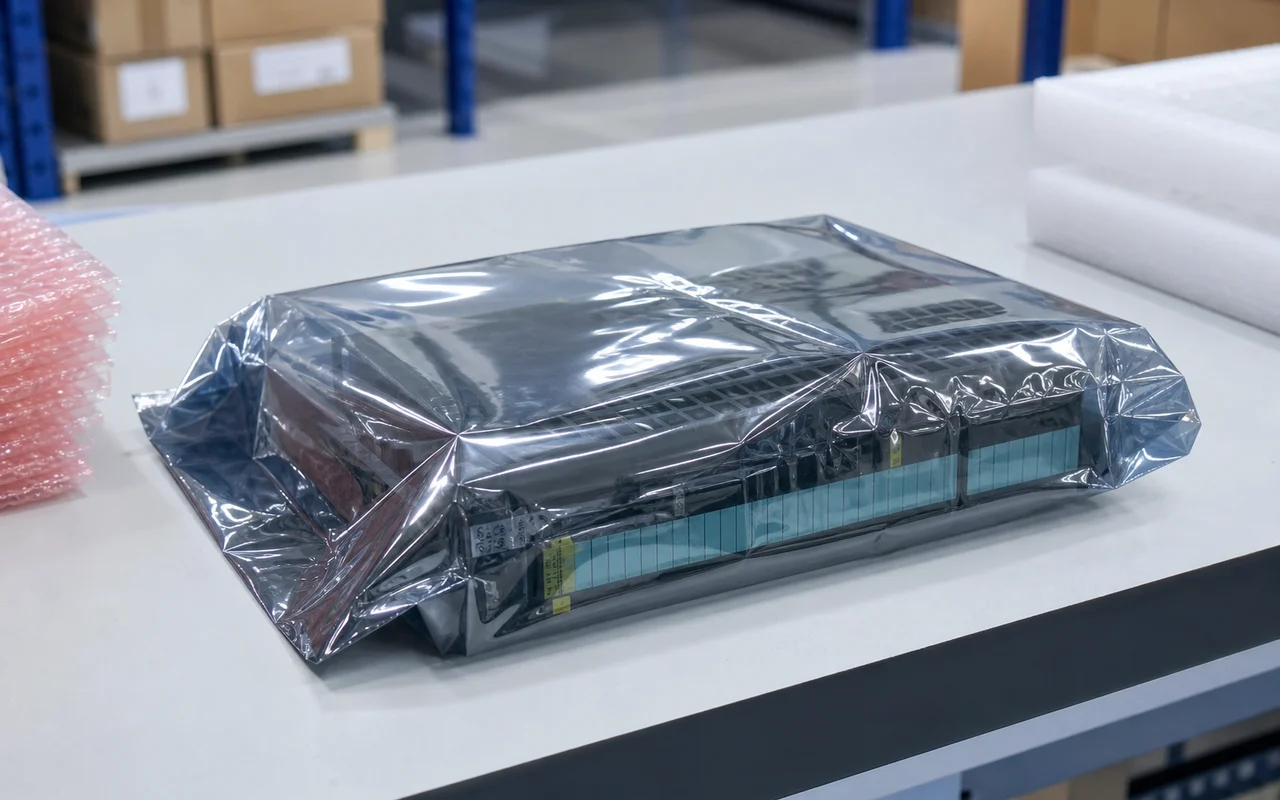 Anti-static Packaging
Modules are packed in anti-static bags to prevent electrostatic damage.
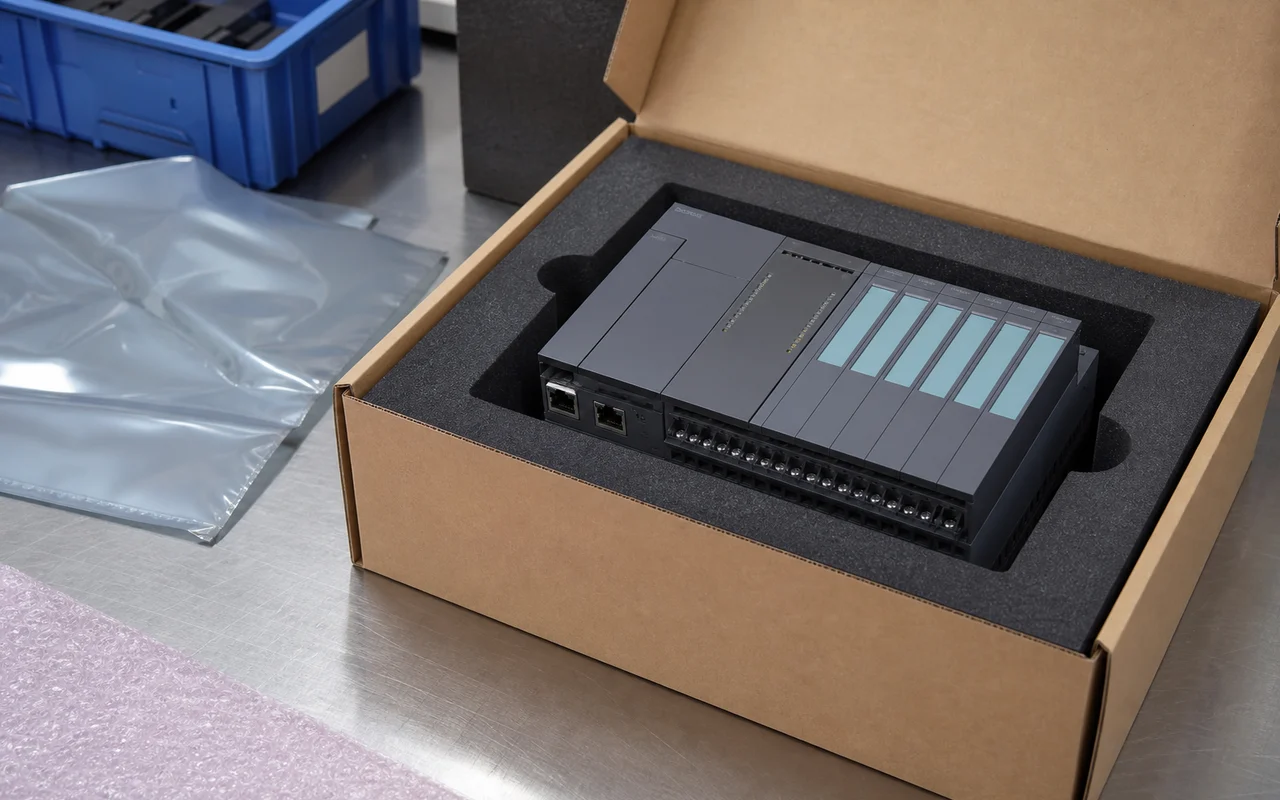 Secure Export Packing
Cushion protection and strong cartons ensure safe transportation.
 Worldwide Shipping
Global logistics network supports air, sea and express delivery.
 Documentation Check
Part number, revision and compatibility verified before shipment.
 After-sales Support
Professional technical support to help resolve your issues.