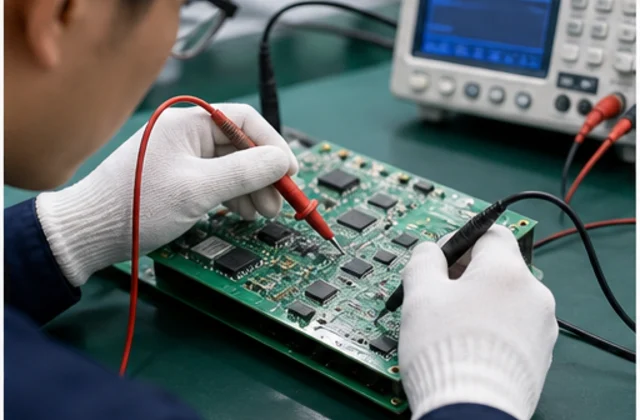
 Functional Inspection
100% tested on professional platforms to ensure stable performance.
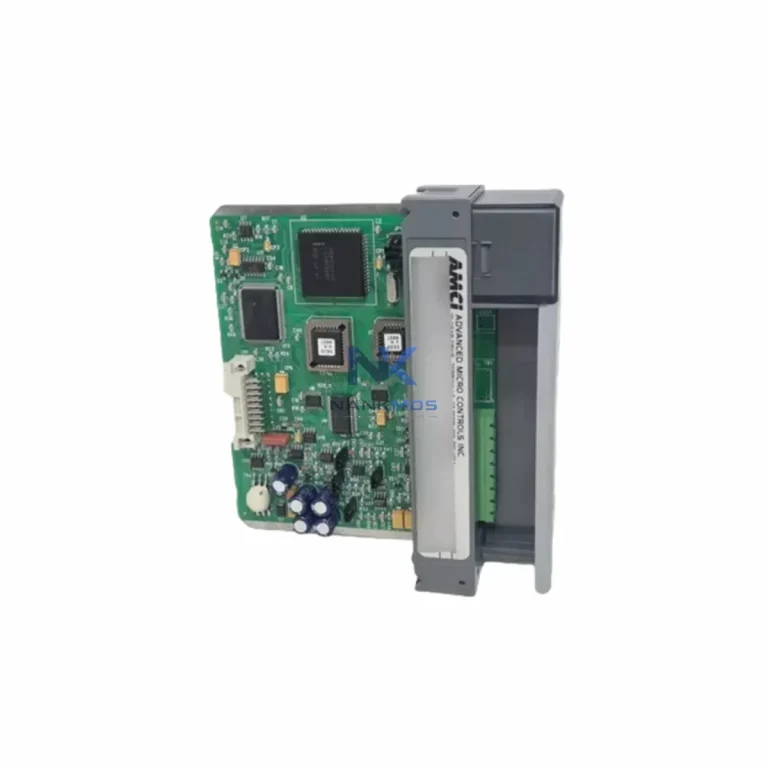
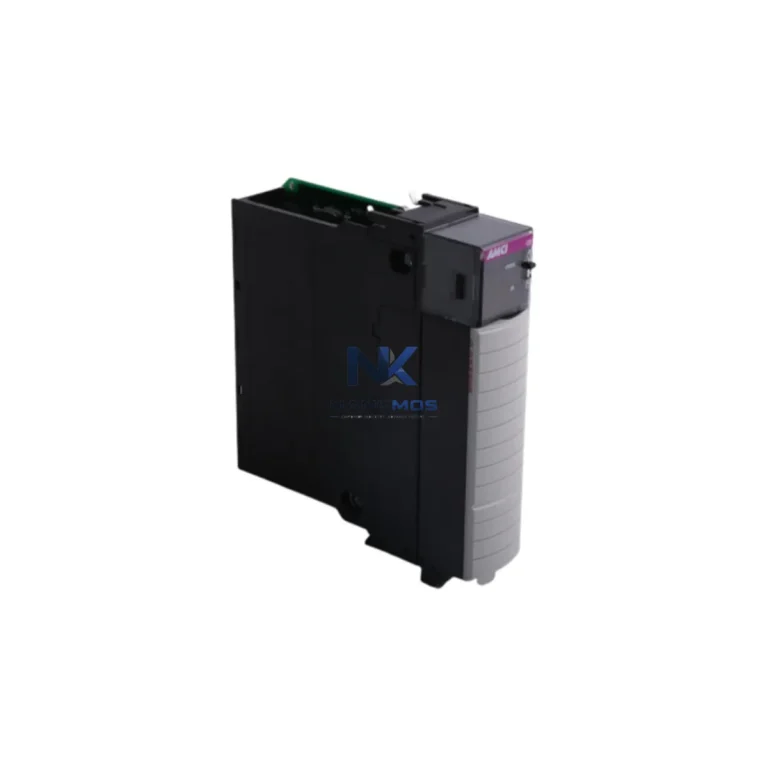
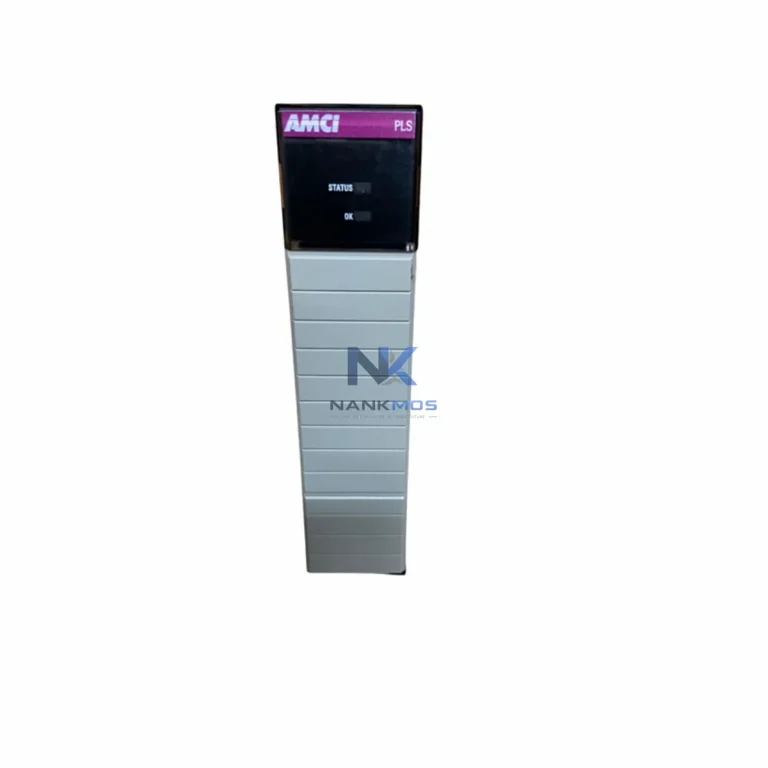
AMCI 7662 is a NANKMOS industrial automation product record Listed under Other series series and Business & Industrial > Automation, Control & Flow Devices > Programmable Logic Controllers. Confirm condition, availability, lead time, compatibility and documentation by email inquiry.
Brand names are used for identification only.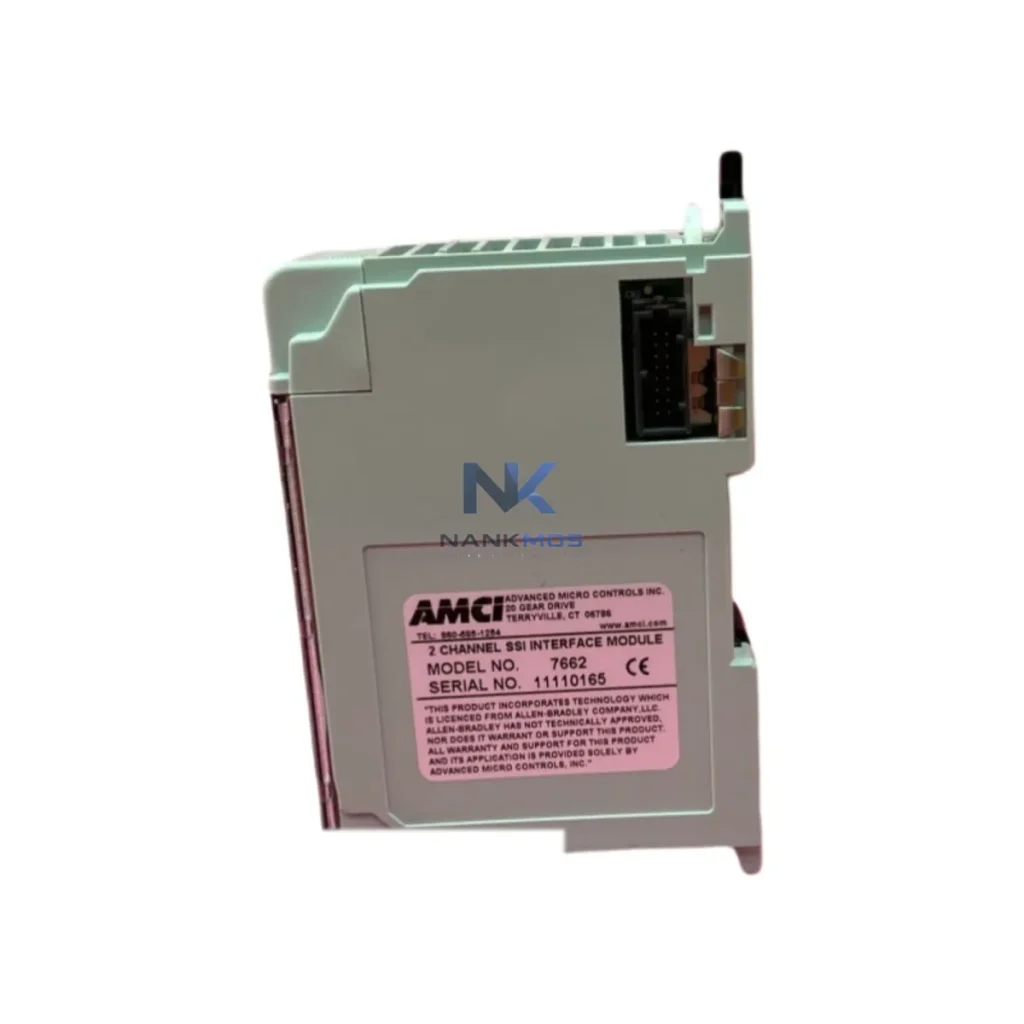
AMCI 7662 is a NANKMOS industrial automation product record Listed under Other series series and Business & Industrial > Automation, Control & Flow Devices > Programmable Logic Controllers. Confirm condition, availability, lead time, compatibility and documentation by email inquiry.
| Manufacturer | AMCI |
|---|---|
| Application | Controller Processing & System Control |
| Part Number / Model | 7662 |
| Compatible System | Confirmed by inquiry |
| Condition Options | To Confirm |
| Module Type | Controller / CPU Module |
| Warranty | 12 Months |
| Packaging | Anti-static Bag / Secure Box |
| Shipping Methods | DHL / FedEx / UPS / Air / Sea |
| Availability | To Confirm |
| Lead Time | To Confirm |
| Documentation | Part number and revision checked before quote |
The AMCI 7662 is a dual-axis stepper motor network interface module engineered for the SMD Series platform, delivering seamless Modbus TCP and Modbus RTU protocol support across modern industrial automation architectures. Designed for smart factory environments where motion control data must flow reliably from field devices to supervisory systems, the 7662 bridges the gap between standalone stepper drives and plant-wide data networks — enabling real-time position feedback, velocity monitoring, fault diagnostics, and remote command execution without dedicated motion controllers or proprietary fieldbus hardware.
In a connected factory, the AMCI 7662 functions as the critical communication node between SMD Series stepper drives and the broader automation ecosystem. Signal acquisition begins at the drive level, where encoder feedback, step pulse counts, and fault status registers are captured locally by the 7662 module. These values are then formatted into standard Modbus register maps and transmitted over Ethernet TCP/IP or RS-485 serial links to upstream controllers — including Allen-Bradley CompactLogix PLCs, Siemens S7-1200 series controllers, and Schneider Electric Modicon M340 systems — without requiring custom protocol adapters or middleware layers.
The 7662's dual-axis architecture allows a single network node to manage two independent stepper axes simultaneously, reducing panel space, wiring complexity, and network node count in multi-axis gantry systems, conveyor indexers, and rotary positioning tables. Each axis maintains its own register block within the Modbus address map, allowing PLC ladder logic or structured text programs to poll position, velocity, and status data at scan-cycle rates compatible with most mid-range PLCs and distributed I/O systems.
The AMCI 7662 sits at the intersection of motion hardware and plant data infrastructure. In a typical smart factory deployment, the data flow originates at the SMD23E2 or SMD34E2 integrated stepper motor drives — compact, encoder-equipped units that report real-time axis position and fault conditions to the 7662 network interface. The 7662 aggregates this data and exposes it as Modbus TCP registers accessible to any Ethernet-connected controller or monitoring system on the plant network.
At the controller layer, Allen-Bradley CompactLogix or MicroLogix PLCs read axis position and command new target positions via standard Modbus function codes (FC03 read, FC16 write), eliminating the need for proprietary motion network cards. For facilities running Siemens TIA Portal environments, the S7-1200 CPU with a CM 1241 RS-485 communication module can interface directly to the 7662 over Modbus RTU, maintaining deterministic scan-cycle communication even in electrically noisy environments.
Remote I/O panels equipped with Wago 750-series or Phoenix Contact Axioline modules can extend digital I/O signals — limit switches, home sensors, and e-stop inputs — into the same Modbus network segment, allowing the 7662 to coordinate motion commands with safety interlocks sourced from distributed field devices. This architecture eliminates point-to-point wiring runs between the motion axis and the main control panel, reducing installation time and improving fault isolation.
At the SCADA and HMI layer, platforms such as Inductive Automation Ignition or Rockwell FactoryTalk View SE connect to the 7662 via Modbus TCP drivers, displaying live axis position trends, velocity profiles, and fault history on operator dashboards. Alarm management modules within these SCADA platforms can trigger email or SMS notifications when the 7662 reports a stall fault, over-temperature condition, or communication timeout — enabling remote diagnostics without dispatching field technicians.
For edge computing deployments, an industrial edge gateway such as the Moxa UC-8112 or Advantech WISE-5000 series can poll the 7662's Modbus registers at configurable intervals, buffer the data locally, and forward it to cloud analytics platforms or MES systems via MQTT or OPC-UA. This edge-to-cloud pipeline supports predictive maintenance models that analyze stepper axis velocity drift and position error trends over time, flagging potential mechanical wear before it causes unplanned downtime.
Many automation sites operate with stepper motion systems that are mechanically reliable but informationally isolated — drives that run positioning cycles without reporting status to the plant network, creating data blind spots that complicate troubleshooting, OEE tracking, and remote monitoring. The AMCI 7662 directly addresses these gaps by converting SMD Series drive data into standard Modbus registers that any modern PLC, HMI, or SCADA system can consume without custom software development.
Protocol Fragmentation: Sites running mixed Modbus RTU and Modbus TCP segments can use the 7662's dual-interface capability to bridge serial and Ethernet network zones, allowing legacy RS-485 devices and modern Ethernet controllers to share motion data within the same register map. This eliminates the need for standalone protocol converters and reduces network topology complexity.
Data Silos in Multi-Axis Systems: In indexing conveyors or pick-and-place systems with four or more stepper axes, deploying multiple 7662 modules — each managing two axes — creates a scalable, node-based network architecture where each module's Modbus address range is independently configurable. PLC programs can poll all axes sequentially or in parallel, building a complete motion state picture without custom fieldbus infrastructure.
Remote Monitoring and Alarm Traceability: The 7662's fault status registers expose drive-level error codes — stall detection, encoder mismatch, over-current — that SCADA alarm historians can timestamp and archive. This creates an auditable fault log that maintenance teams can review to identify recurring failure patterns, correlate with production batch records, and prioritize preventive maintenance schedules.
Production Line Transparency: By integrating 7662 position data with MES cycle time records, plant engineers can calculate actual vs. target positioning times per production cycle, identify axes operating outside tolerance, and trigger automatic speed adjustments via PLC setpoint writes — closing the loop between motion performance data and production quality metrics.
Q1: What is the typical Modbus TCP polling latency for the AMCI 7662 in a PLC-controlled system? The AMCI 7662 responds to Modbus TCP requests within standard Ethernet latency bounds — typically under 5ms on a managed industrial switch network. For most PLC scan cycles (10–50ms), this response time is well within tolerance for real-time position monitoring and command execution. For latency-sensitive applications, use a dedicated VLAN or managed switch with QoS prioritization to isolate motion network traffic.
Q2: Is the AMCI 7662 compatible with SCADA platforms that use Modbus TCP drivers? Yes. The 7662 exposes a standard Modbus TCP server interface on port 502, compatible with any SCADA or HMI platform that supports Modbus TCP client drivers — including Ignition, FactoryTalk, WinCC, Wonderware, and Citect. No custom driver development is required; standard Modbus register mapping is sufficient for full integration.
Q3: Can the AMCI 7662 operate on both Modbus RTU and Modbus TCP simultaneously? The 7662 supports both Modbus RTU (RS-485) and Modbus TCP (Ethernet) interfaces, but simultaneous dual-protocol operation depends on the specific firmware version and network configuration. Consult the AMCI 7662 user manual for register map details and multi-master configuration guidelines. NANKMOS supplies the 7662 with pre-shipment communication testing to verify protocol operation before dispatch.
Q4: What warranty and supply assurance does NANKMOS provide for the AMCI 7662? All AMCI 7662 units supplied by NANKMOS carry a 12-month warranty covering manufacturing defects and communication interface failures. Units are pre-shipment tested for Modbus TCP/RTU connectivity and dual-axis command response before dispatch. In-stock inventory is maintained to support urgent project timelines. Contact [email protected] or +86 18359268345 for availability and lead time confirmation.
Functional Inspection100% tested on professional platforms to ensure stable performance.
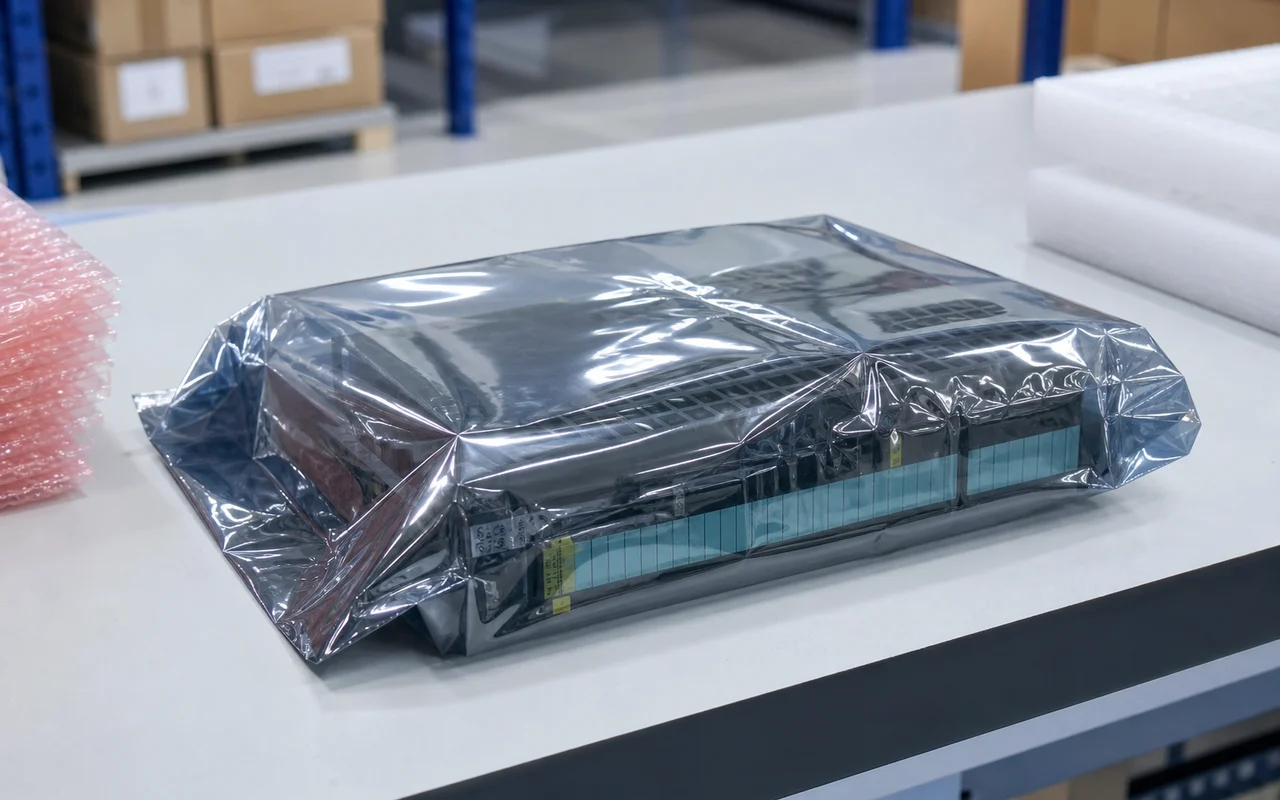 Anti-static Packaging
Modules are packed in anti-static bags to prevent electrostatic damage.
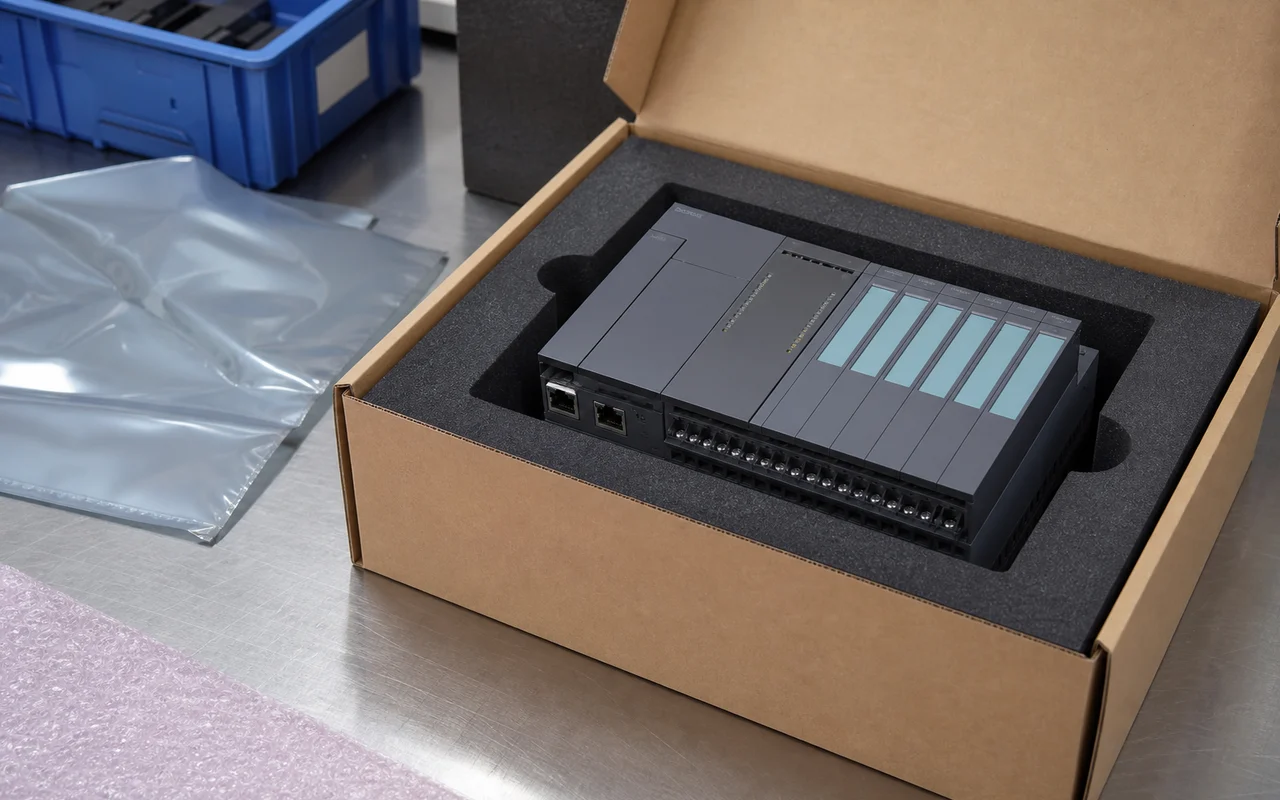 Secure Export Packing
Cushion protection and strong cartons ensure safe transportation.
 Worldwide Shipping
Global logistics network supports air, sea and express delivery.
 Documentation Check
Part number, revision and compatibility verified before shipment.
 After-sales Support
Professional technical support to help resolve your issues.