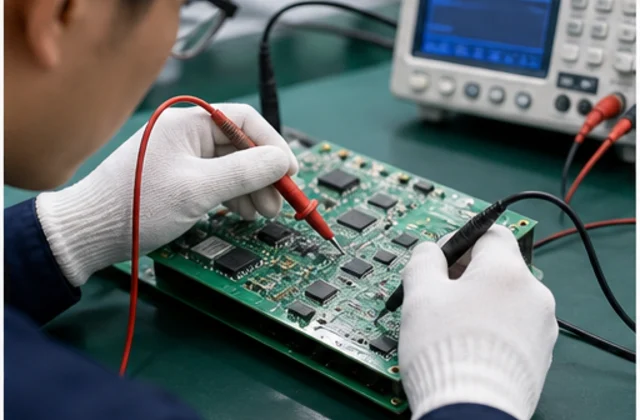
 Functional Inspection
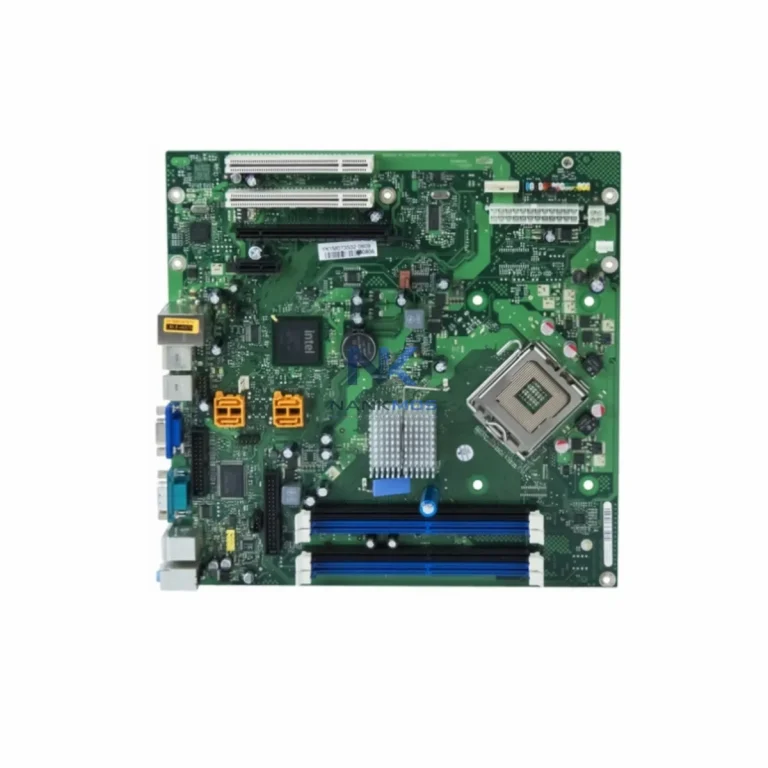
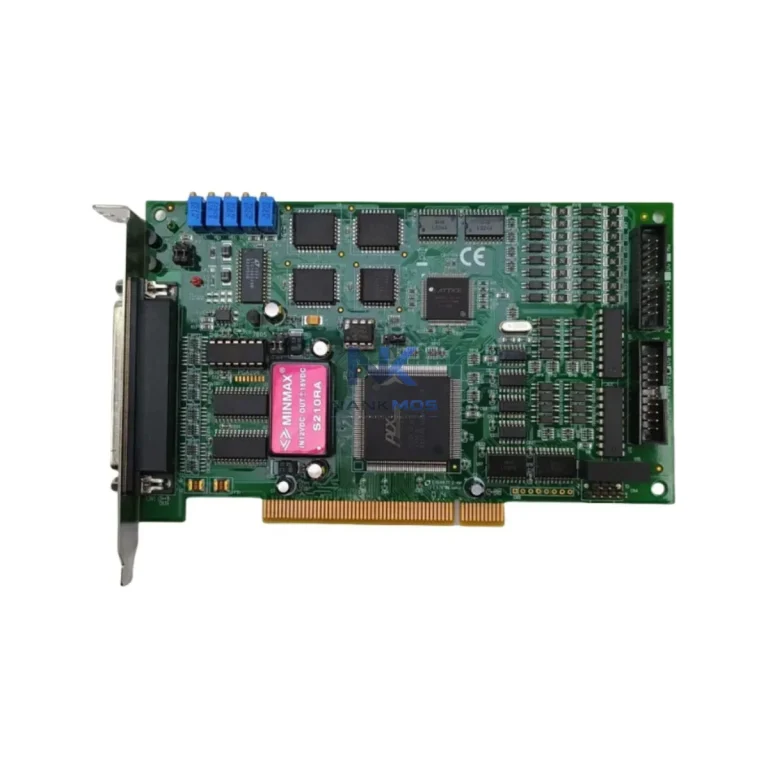
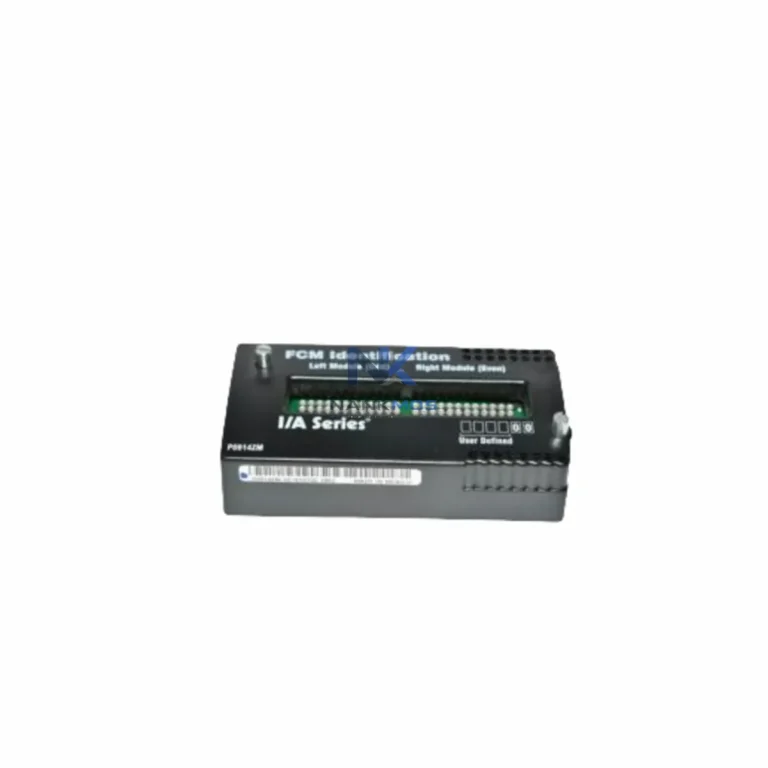
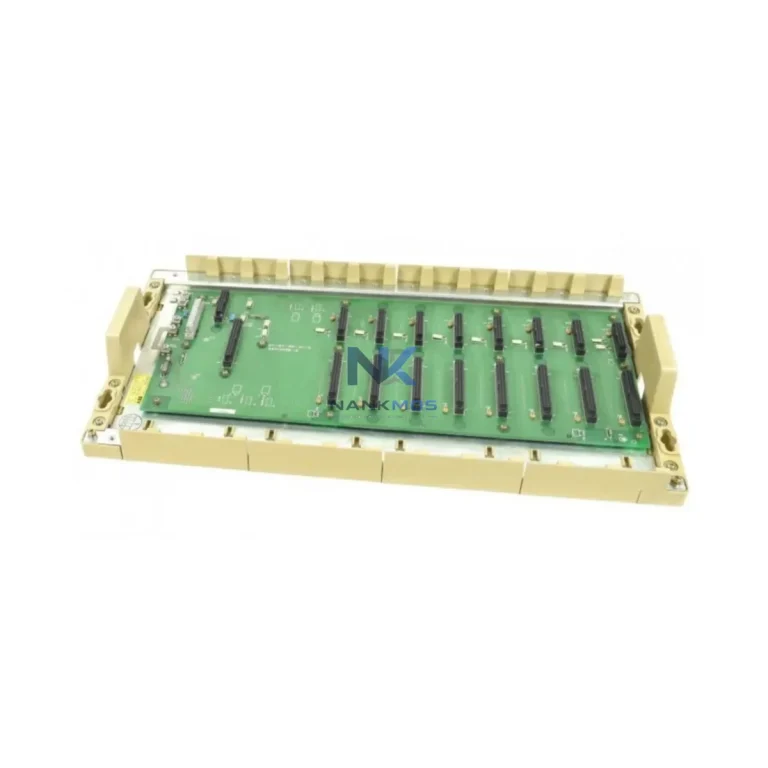
100% tested on professional platforms to ensure stable performance.
ADLINK CPCI-6920/S408/M4G(G)-1270 is a NANKMOS industrial automation product record Listed under Other series series and Business & Industrial > Automation, Control & Flow Devices > Programmable Logic Controllers. Confirm condition, availability, lead time, compatibility and documentation by email inquiry.
Brand names are used for identification only.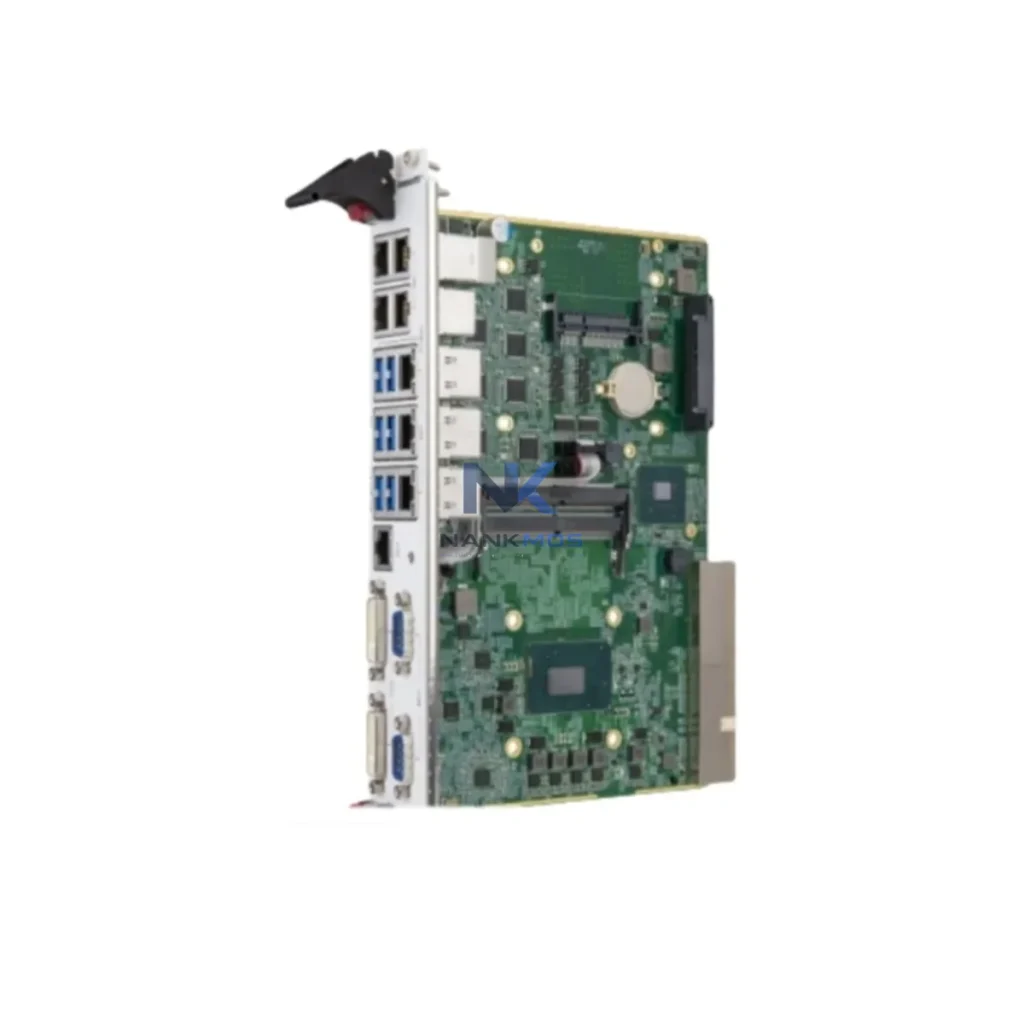
ADLINK CPCI-6920/S408/M4G(G)-1270 is a NANKMOS industrial automation product record Listed under Other series series and Business & Industrial > Automation, Control & Flow Devices > Programmable Logic Controllers. Confirm condition, availability, lead time, compatibility and documentation by email inquiry.
| Manufacturer | ADLINK |
|---|---|
| Application | Controller Processing & System Control |
| Part Number / Model | CPCI-6920/S408/M4G(G)-1270 |
| Compatible System | Confirmed by inquiry |
| Condition Options | To Confirm |
| Module Type | Controller / CPU Module |
| Warranty | 12 Months |
| Packaging | Anti-static Bag / Secure Box |
| Shipping Methods | DHL / FedEx / UPS / Air / Sea |
| Availability | To Confirm |
| Lead Time | To Confirm |
| Documentation | Part number and revision checked before quote |
The ADLINK CPCI-6920/S408/M4G(G)-1270 is a high-performance CompactPCI CPU board engineered for energy-conscious industrial automation environments. Built on the Intel Core i7-1270 processor architecture and designed to the PICMG 2.0 CompactPCI standard, this board delivers the processing density and thermal efficiency required by modern smart production lines — from automotive assembly and semiconductor fabrication to power generation control rooms and petrochemical process management. With a 4 GB DDR4 SO-DIMM configuration and a 408-pin connector interface, the CPCI-6920/S408/M4G(G)-1270 is purpose-built to reduce idle power draw, minimize thermal load on enclosures, and sustain deterministic cycle times across multi-axis control architectures.
Every unit is pre-shipment tested under operational load conditions and backed by a 12-month warranty, ensuring supply assurance for maintenance teams managing critical rotating equipment, energy monitoring racks, and distributed control systems.
In a fully integrated smart factory architecture, the CPCI-6920/S408/M4G(G)-1270 functions as the central processing node coordinating energy data flows between field devices and supervisory systems. When paired with a Siemens SIMATIC S7-1500 PLC or Rockwell Automation ControlLogix L8x controller, the board handles real-time task scheduling that prevents simultaneous peak-load events across multiple drive axes — a key strategy for reducing demand charges on industrial power tariffs.
The board's dual GbE ports enable direct Modbus/TCP and EtherNet/IP communication with ABB ACS880 variable frequency drives and Yaskawa GA800 series inverters, allowing the CPU to issue dynamic speed-reduction commands during low-production intervals. This closed-loop interaction between the CPCI-6920 and the VFD layer is fundamental to load-shedding strategies that cut motor energy consumption by 15–30% during partial-load cycles.
For servo-driven axes, the board integrates with Mitsubishi MR-J5 series servo amplifiers via EtherCAT or MECHATROLINK-III, enabling sub-millisecond torque feedback that eliminates regenerative energy waste. Alongside a Schneider Electric PowerLogic PM8000 power monitoring module installed in the same CompactPCI chassis or adjacent DIN-rail enclosure, the CPCI-6920 can log per-axis energy consumption at 1 ms resolution — data that feeds directly into energy management dashboards and ISO 50001 compliance reports.
The RS-232/422/485 interfaces support legacy field instruments including Omron E5CC temperature controllers and Keyence IL series laser displacement sensors, while the PCIe Gen 4 expansion slot accommodates a Hilscher netX 90 communication module for simultaneous PROFIBUS DP and PROFINET IO bridging. This multi-protocol capability allows a single CPCI-6920/S408/M4G(G)-1270 to replace multiple single-protocol gateway cards, reducing both rack power consumption and heat dissipation requirements.
When deployed alongside a Beckhoff CX2040 embedded PC as a secondary HMI gateway, the CPCI-6920 offloads visualization rendering tasks, keeping its own CPU utilization focused on deterministic control loops. This task partitioning strategy is particularly effective in continuous process industries where a 1% improvement in CPU utilization translates directly into measurable reductions in cooling system energy demand.
Production line energy optimization begins with accurate, high-resolution data — and the CPCI-6920/S408/M4G(G)-1270 is designed to be the data aggregation hub that makes this possible. By consolidating I/O signals from distributed sensor networks, drive status registers, and power monitoring modules into a single processing node, the board eliminates the communication latency that causes energy management systems to react slowly to load changes.
In automotive body-in-white welding lines, the CPCI-6920 coordinates the firing sequence of resistance welding controllers to prevent simultaneous current surges that would otherwise trigger demand penalty charges. In semiconductor wafer handling systems, its Intel Speed Shift technology dynamically scales core frequency between wafer transfer cycles, reducing idle power consumption without introducing jitter into the motion control loop.
For water treatment and pumping stations, the board's Modbus/TCP stack communicates directly with submersible pump VFDs to implement time-of-use energy scheduling — running high-flow cycles during off-peak tariff windows and reducing pump speed during peak-rate periods. This single optimization, managed by the CPCI-6920's onboard scheduler, can reduce annual energy costs by 8–12% in mid-scale municipal water facilities.
Predictive maintenance integration is achieved through the board's OPC-UA server capability, which publishes real-time vibration trend data from connected proximity transducers and accelerometers to SCADA historians. Early detection of bearing wear or rotor imbalance — before it causes unplanned downtime — directly improves Overall Equipment Effectiveness (OEE) and prevents the energy spikes associated with emergency restarts of large rotating machinery.
All units ship in-stock and are pre-shipment tested under full operational load, with documentation of thermal performance and communication interface validation. The 12-month warranty covers both hardware failure and firmware compatibility issues arising from integration with supported PLC and drive platforms.
Q1: What measurable energy savings can I expect from deploying the CPCI-6920/S408/M4G(G)-1270 in a multi-axis drive system? In typical multi-axis configurations with 4–8 VFD-controlled motors, customers report 12–25% reductions in aggregate motor energy consumption within the first 90 days of deployment, primarily through improved load scheduling and elimination of simultaneous peak-current events. Actual savings depend on baseline utilization rates and tariff structure.
Q2: Is the CPCI-6920/S408/M4G(G)-1270 compatible with existing CompactPCI chassis from other vendors? Yes. The board conforms to the PICMG 2.0 R3.0 CompactPCI specification and is compatible with 6U chassis from Elma Electronic, Schroff, and Pixus Technologies. Backplane power requirements are ≤ 35 W on the 5 V and 3.3 V rails, within the capacity of standard 200 W CompactPCI power supplies.
Q3: What is the recommended replacement or upgrade path from older ADLINK CompactPCI CPU boards? The CPCI-6920/S408/M4G(G)-1270 is a direct form-factor replacement for ADLINK CPCI-6910 and CPCI-6915 series boards. Driver migration from Windows Embedded Standard 7 to Windows 10 IoT Enterprise LTSC 2021 is supported via ADLINK's BSP package. No chassis or backplane modifications are required for standard 6U deployments.
Q4: What does the 12-month warranty cover, and how is pre-shipment testing documented? The 12-month warranty covers all hardware defects, including processor, memory, I/O interfaces, and onboard power regulation circuits. Each unit undergoes a 72-hour burn-in test at 55°C ambient, with a test report documenting CPU stress results, memory ECC error counts, and interface loopback validation. Test documentation is available upon request for quality audit purposes.
Functional Inspection100% tested on professional platforms to ensure stable performance.
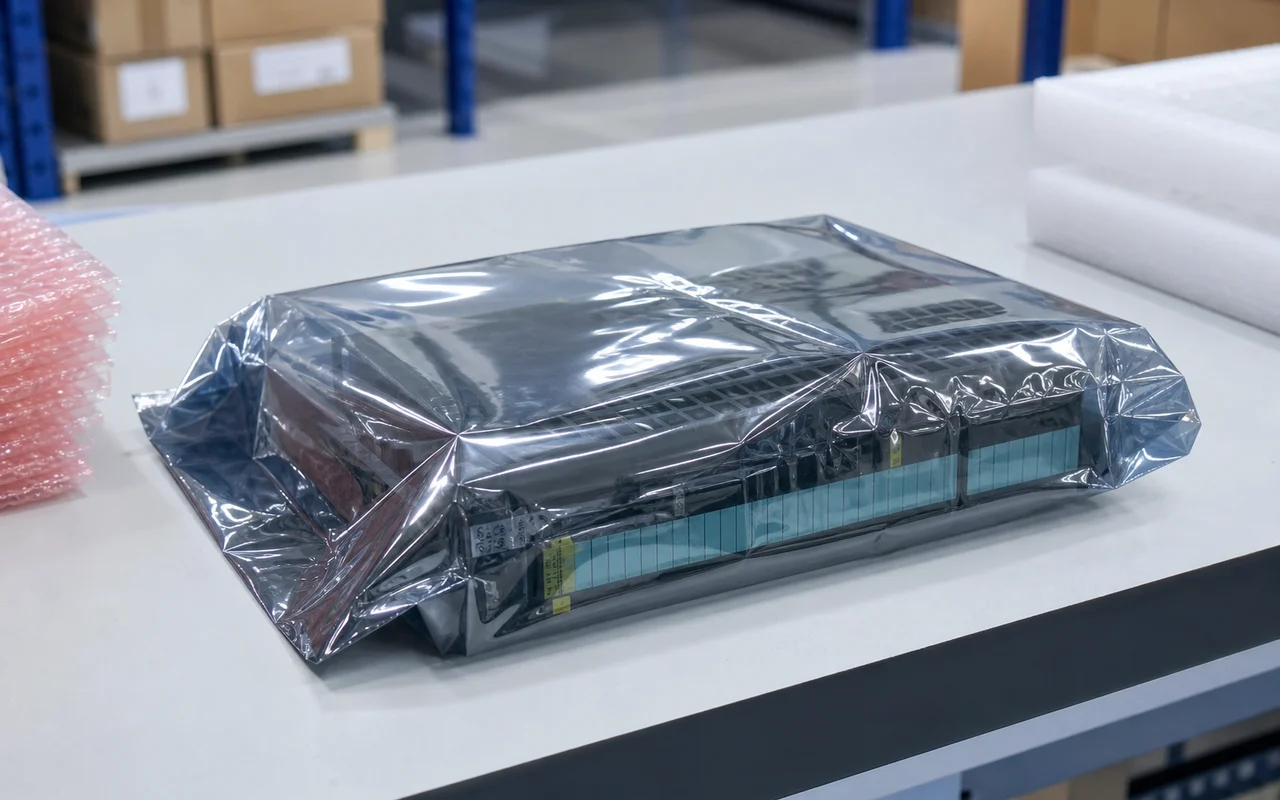 Anti-static Packaging
Modules are packed in anti-static bags to prevent electrostatic damage.
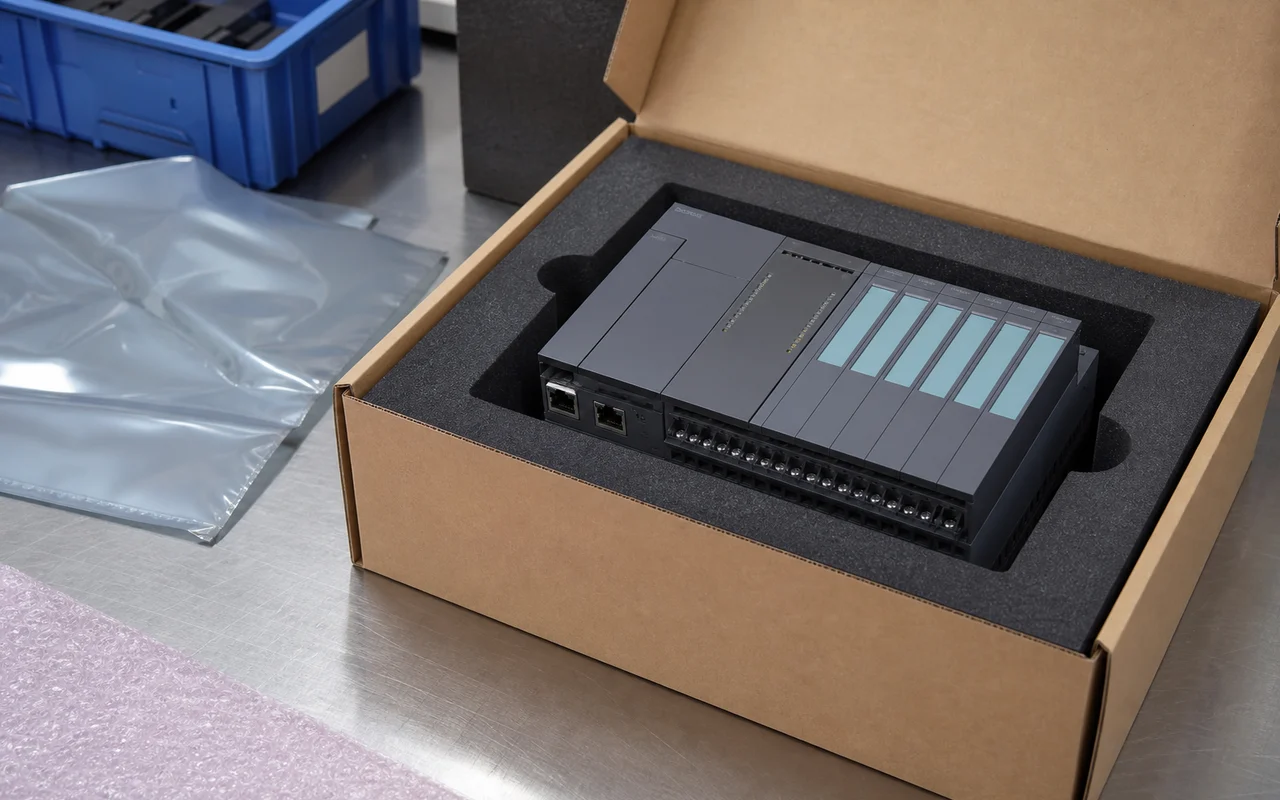 Secure Export Packing
Cushion protection and strong cartons ensure safe transportation.
 Worldwide Shipping
Global logistics network supports air, sea and express delivery.
 Documentation Check
Part number, revision and compatibility verified before shipment.
 After-sales Support
Professional technical support to help resolve your issues.