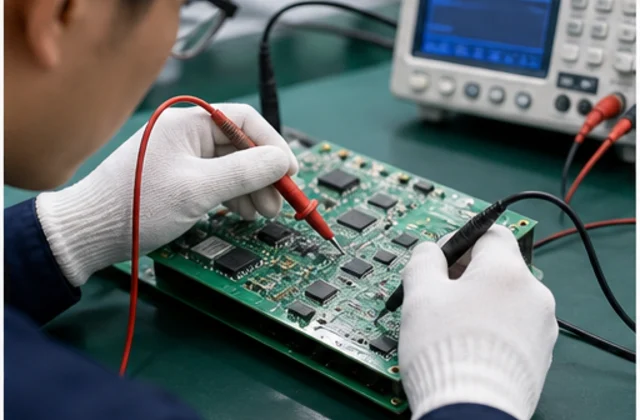
 Functional Inspection
100% tested on professional platforms to ensure stable performance.
KEBA KETOP T50 R01 VX/69908/14 is a NANKMOS industrial automation product record Listed under Other series series and HMI Panels. Confirm condition, availability, lead time, compatibility and documentation by email inquiry.
Brand names are used for identification only.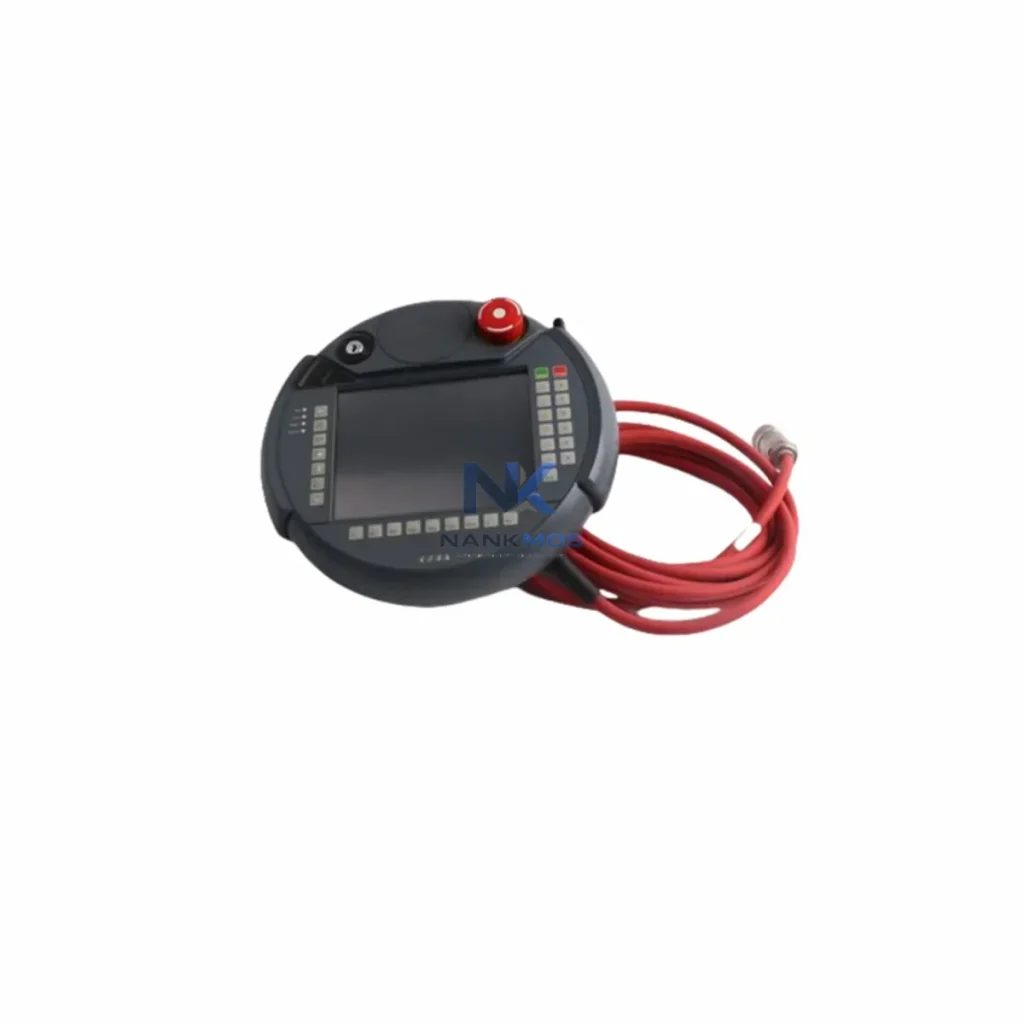
KEBA KETOP T50 R01 VX/69908/14 is a NANKMOS industrial automation product record Listed under Other series series and HMI Panels. Confirm condition, availability, lead time, compatibility and documentation by email inquiry.
| Manufacturer | KEBA |
|---|---|
| Application | Industrial Automation Maintenance |
| Part Number / Model | KETOP T50 R01 VX/69908/14 |
| Compatible System | Confirmed by inquiry |
| Condition Options | To Confirm |
| Module Type | HMI Panels |
| Warranty | 12 Months |
| Packaging | Anti-static Bag / Secure Box |
| Shipping Methods | DHL / FedEx / UPS / Air / Sea |
| Availability | To Confirm |
| Lead Time | To Confirm |
| Documentation | Part number and revision checked before quote |
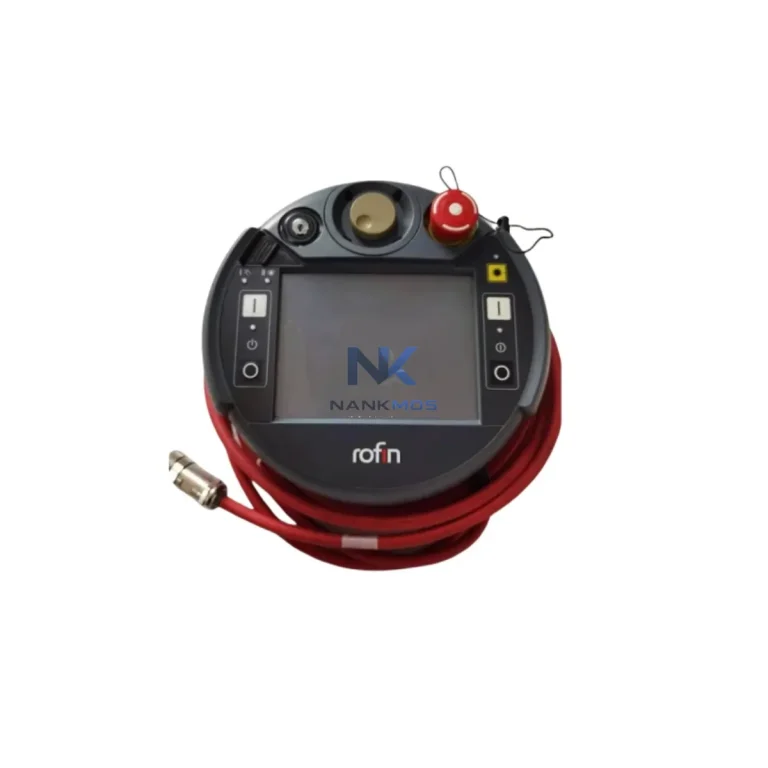
The KEBA KETOP T50 R01 VX/69908/14 is a professional-grade handheld operator terminal engineered for seamless integration within KEBA's KeTop control architecture and broader industrial automation platforms. Designed to serve as the primary human-machine interface at the operator layer, this terminal delivers robust, real-time interaction between field personnel and the underlying control system — spanning PLC logic execution, servo drive supervision, safety circuit monitoring, and multi-axis motion coordination. Its rugged construction, ergonomic form factor, and comprehensive communication capability make it a cornerstone component in demanding control environments including robotics cells, CNC machining centres, automated assembly lines, and process control installations.
Within a layered industrial control architecture, the KETOP T50 R01 VX/69908/14 occupies the HMI layer, bridging the gap between the operator and the control layer below. It communicates directly with KEBA's CP series controller platforms — such as the KEBA CP 265/x and CP 266/x — via high-speed USB or Ethernet interfaces, enabling low-latency command transmission and real-time status feedback. This tight coupling between the HMI terminal and the CPU module ensures that operator inputs are processed within deterministic cycle times, a critical requirement in motion-sensitive and safety-rated applications.
At the I/O layer, the KETOP T50 integrates with KEBA's distributed I/O modules and safety I/O subsystems, allowing operators to monitor discrete signal states, analogue process values, and safety relay outputs directly from the handheld terminal. When paired with KEBA KeContact safety modules or third-party safety PLCs, the terminal supports enable switch and emergency stop signal routing, ensuring that operator-initiated safety commands are propagated through the correct safety-rated channels without bypassing the system's protective logic.
From a communication layer perspective, the KETOP T50 R01 VX/69908/14 supports standard industrial protocols including EtherCAT and CANopen, enabling it to participate in real-time fieldbus topologies alongside servo drives, I/O couplers, and communication gateways. In installations where PROFINET or EtherNet/IP backbone networks are deployed, the terminal connects through the CP controller's network interface, maintaining a clean separation between the operator network and the machine control network — a best practice in modern industrial cybersecurity architecture.
The power layer compatibility of the KETOP T50 is equally important for system designers. The terminal operates within standard 24 VDC supply ranges, consistent with KEBA's panel-mount power supply modules and third-party DIN-rail PSUs from manufacturers such as Phoenix Contact or WAGO. This voltage compatibility simplifies cabinet design and eliminates the need for dedicated HMI power circuits, reducing both BOM complexity and potential points of failure in the power distribution architecture.
In multi-axis motion control architectures, the KETOP T50 R01 VX/69908/14 serves as the primary jog and teach pendant for coordinating axis movements during commissioning, maintenance, and production changeover. When integrated with KEBA KeMotion servo drive systems — including the KeDrive D3 series — the terminal provides axis-by-axis jog control, position readback, and fault acknowledgement functions. This capability is essential in robotic welding, palletising, and pick-and-place applications where precise manual positioning is required before automated cycle execution.
The KETOP T50's display and input architecture supports customisable operator screens, alarm management interfaces, and diagnostic dashboards. System integrators can configure the terminal's display pages using KEBA's engineering software environment, aligning the HMI presentation layer with the specific process requirements of each installation. This configurability extends to multi-language support, enabling deployment across international manufacturing sites without hardware changes — a significant advantage for global OEMs managing standardised machine platforms across multiple regions.
For maintenance and diagnostic efficiency, the KETOP T50 R01 VX/69908/14 provides direct access to controller diagnostic registers, drive fault logs, and I/O status maps. Maintenance engineers can interrogate system health, acknowledge faults, and initiate controlled restarts without requiring a separate laptop or engineering workstation. This on-terminal diagnostic capability reduces mean time to repair (MTTR) and supports lean maintenance workflows in high-availability production environments.
Modular deployment is a key design principle of the KETOP T50 architecture. The terminal connects to the control cabinet via a standardised cable assembly, supporting both fixed-mount and portable configurations. In installations requiring multiple operator stations — such as large robotic cells or transfer line systems — multiple KETOP T50 units can be deployed on a single controller platform, with access control logic managing which terminal has active command authority at any given time. This architecture supports safe multi-operator workflows without compromising system integrity.
Long-term supply continuity is assured through NANKMOS's dedicated industrial component inventory programme. The KEBA KETOP T50 R01 VX/69908/14 is maintained in stock and subject to pre-shipment functional verification, including power-on testing, display integrity checks, enable switch validation, and communication interface confirmation. All units are dispatched with a 12-Month Warranty covering manufacturing defects and functional failures under normal operating conditions, providing procurement teams and system integrators with the confidence required for long-term project planning and after-sales support commitments.
The KEBA KETOP T50 R01 VX/69908/14 is designed to operate as an integral node within a complete KEBA automation platform rather than as a standalone peripheral. In a typical KeMotion-based robotic cell, the terminal interfaces with the KEBA CP 265/x or CP 266/x controller module, which serves as the central processing unit managing motion trajectories, PLC logic, and safety supervision. The CP controller communicates downstream with KEBA KeDrive D3 servo drives over EtherCAT, coordinating multi-axis motion with microsecond-level synchronisation.
At the I/O layer, KEBA KeContact safety I/O modules handle safety-rated discrete signals — including the KETOP T50's own enable switch and emergency stop outputs — ensuring that operator commands are processed through IEC 62061 / ISO 13849-compliant safety channels. Standard process I/O is managed through distributed I/O couplers compatible with the EtherCAT fieldbus, allowing the system to scale from compact single-cabinet installations to large multi-station transfer lines without architectural changes.
For installations requiring network connectivity beyond the machine boundary, PROFINET or EtherNet/IP communication gateways bridge the machine-level EtherCAT network to the plant-level Ethernet backbone, enabling SCADA integration, MES data exchange, and remote diagnostic access. Panel-mount industrial Ethernet switches — such as those from Hirschmann or Phoenix Contact — provide the managed switching infrastructure required to maintain network determinism and support VLAN segmentation between operator, control, and enterprise network zones.
Power distribution within the control cabinet is typically managed by DIN-rail mounted 24 VDC power supply units from Phoenix Contact QUINT or WAGO series, providing regulated, monitored power to the KETOP T50, CP controller, I/O modules, and communication hardware. Redundant power supply configurations — using load-sharing or diode-ORing modules — are recommended for high-availability applications where unplanned downtime carries significant production cost.
Terminal block assemblies from Phoenix Contact or Weidmüller provide the wiring interface between the KETOP T50 cable assembly, the safety relay outputs, and the cabinet's internal signal distribution. Proper terminal block selection — including fused terminal blocks for circuit protection and marker systems for maintenance traceability — is an important detail in professional cabinet engineering that directly affects long-term maintenance efficiency and audit compliance.
Robotics & Automated Assembly: In robotic welding, palletising, and assembly cell applications, the KETOP T50 R01 VX/69908/14 functions as the primary teach pendant and operator interface. Operators use the terminal to jog robot axes, set reference positions, acknowledge faults, and initiate production cycles. The enable switch and emergency stop ensure that manual operation remains within the safety architecture's defined risk reduction measures, compliant with ISO 10218-1 robot safety standards.
CNC Machining & Motion Control: In CNC and multi-axis motion control installations, the KETOP T50 provides axis jog, spindle override, and feed rate adjustment functions at the machine level. Integration with the KEBA KeMotion platform allows the terminal to display real-time axis positions, following errors, and drive status — enabling rapid fault diagnosis and controlled axis recovery without requiring engineering workstation access.
Automotive Manufacturing Lines: On automotive body-in-white and powertrain assembly lines, the KETOP T50 supports operator-guided positioning tasks, fixture clamping confirmation, and quality gate interactions. Its rugged IP65-rated enclosure withstands the coolant mist, metal swarf, and vibration environments typical of automotive production, while its ergonomic design reduces operator fatigue during extended shift operations.
Process Control & Utilities: In process industries including water treatment, chemical processing, and energy management, the KETOP T50 serves as a portable operator interface for field-level process interaction — valve positioning confirmation, pump start/stop commands, and local PID setpoint adjustment — complementing fixed SCADA and DCS operator stations with mobile, point-of-work access.
Packaging & Material Handling: On packaging lines and automated conveyor systems, the KETOP T50 enables format changeover, speed adjustment, and fault recovery operations at the machine level, reducing the need for centralised HMI access and supporting decentralised operator workflows that improve overall line efficiency.
Q1: Is the KEBA KETOP T50 R01 VX/69908/14 compatible with third-party PLC controllers, or is it restricted to KEBA CP platforms? The KETOP T50 is natively designed for integration with KEBA's CP controller series and KeMotion platform, where it communicates via USB or Ethernet using KEBA's proprietary terminal protocol. Direct integration with third-party PLC platforms (e.g., Siemens S7, Rockwell ControlLogix) is not supported without a KEBA CP controller acting as the intermediary. For mixed-platform architectures, the recommended approach is to retain the KEBA CP controller as the motion and HMI management layer while connecting to the third-party PLC via standard fieldbus protocols such as PROFINET or EtherNet/IP.
Q2: What are the cable length and installation constraints for deploying the KETOP T50 in large robotic cells or transfer line systems? The KETOP T50 connects to the control cabinet via a standardised spiral cable assembly, with maximum cable lengths defined by KEBA's installation guidelines (typically up to 10 metres for standard configurations). For larger installations requiring extended reach or multi-station deployment, KEBA offers cable extension options and multi-terminal access control configurations. It is recommended to consult KEBA's system documentation and, where necessary, engage KEBA's application engineering team to validate cable routing, connector specifications, and access control logic before finalising the installation design.
Q3: What warranty and supply continuity terms apply to the KETOP T50 R01 VX/69908/14 sourced through NANKMOS? All KEBA KETOP T50 R01 VX/69908/14 units supplied by NANKMOS are covered by a 12-Month Warranty against manufacturing defects and functional failures under normal operating conditions. Prior to dispatch, each unit undergoes pre-shipment functional verification including power-on testing, display integrity confirmation, enable switch validation, and communication interface checks. NANKMOS maintains dedicated inventory of this model to support both project procurement and emergency replacement requirements, with global shipping capability and responsive technical support. For volume orders, lead time and pricing enquiries, contact [email protected] or call +86 18359268345.
Functional Inspection100% tested on professional platforms to ensure stable performance.
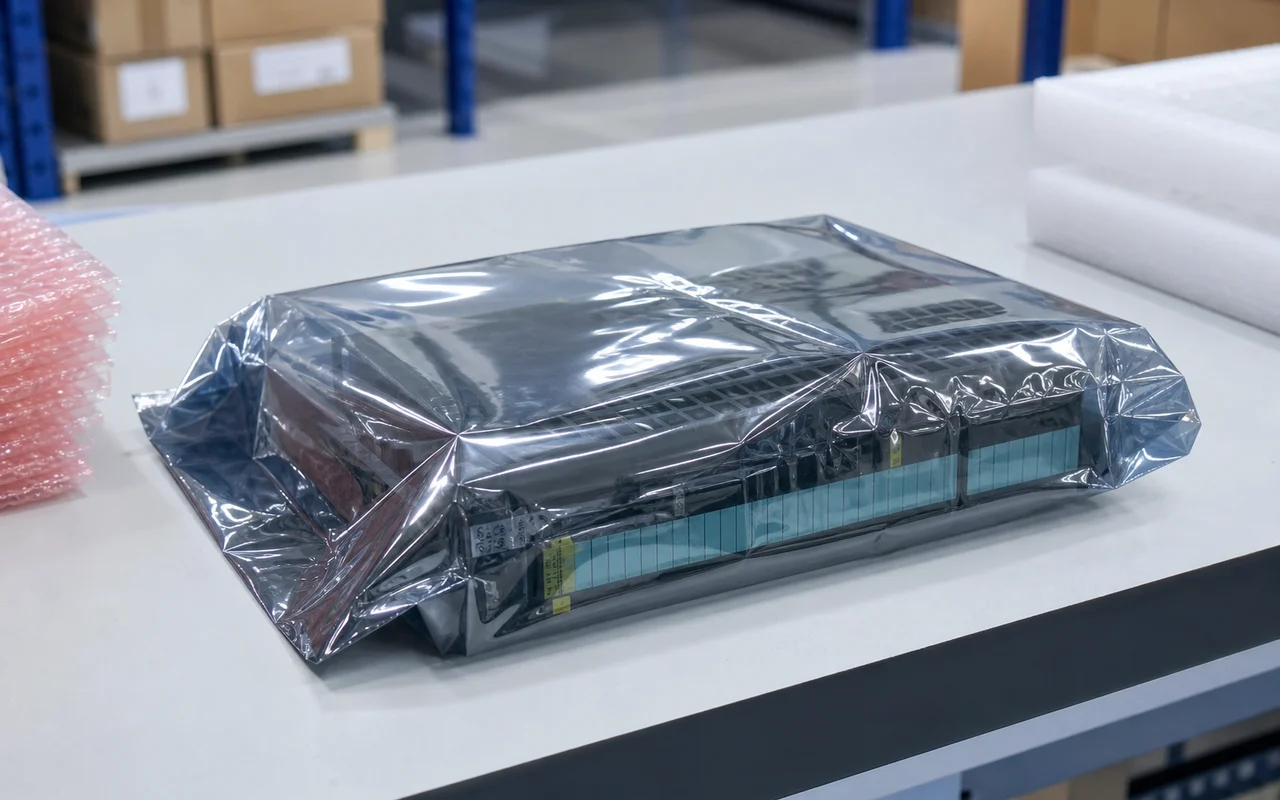 Anti-static Packaging
Modules are packed in anti-static bags to prevent electrostatic damage.
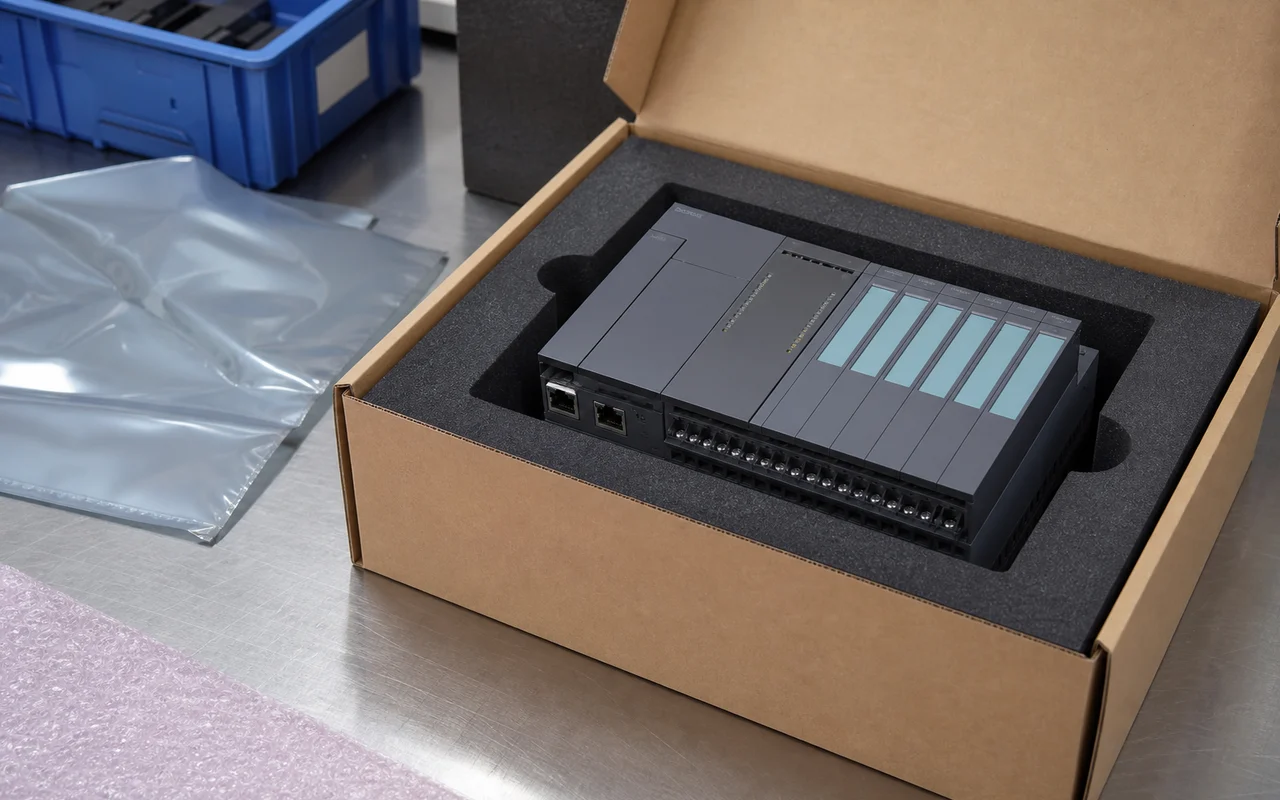 Secure Export Packing
Cushion protection and strong cartons ensure safe transportation.
 Worldwide Shipping
Global logistics network supports air, sea and express delivery.
 Documentation Check
Part number, revision and compatibility verified before shipment.
 After-sales Support
Professional technical support to help resolve your issues.