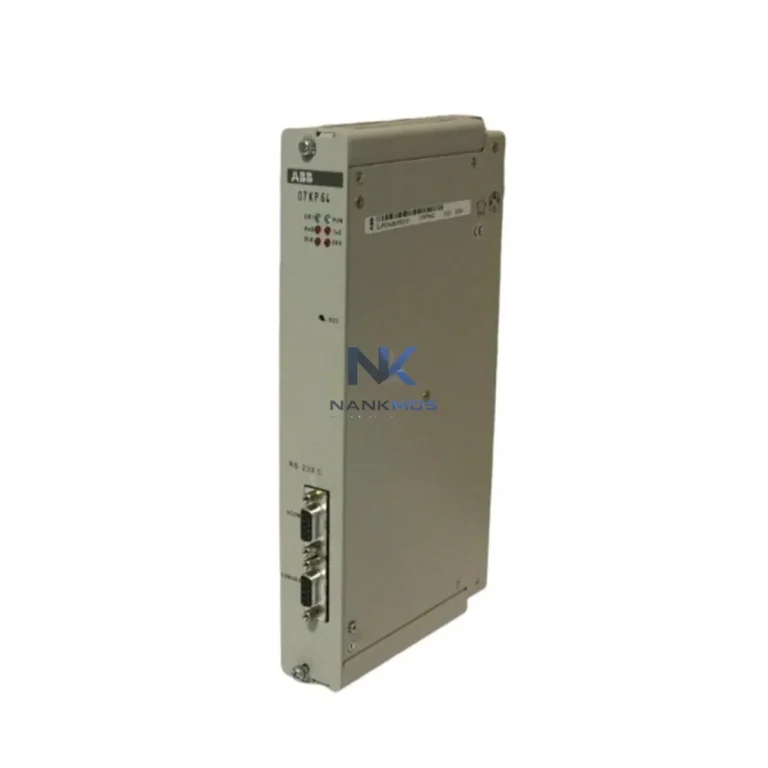
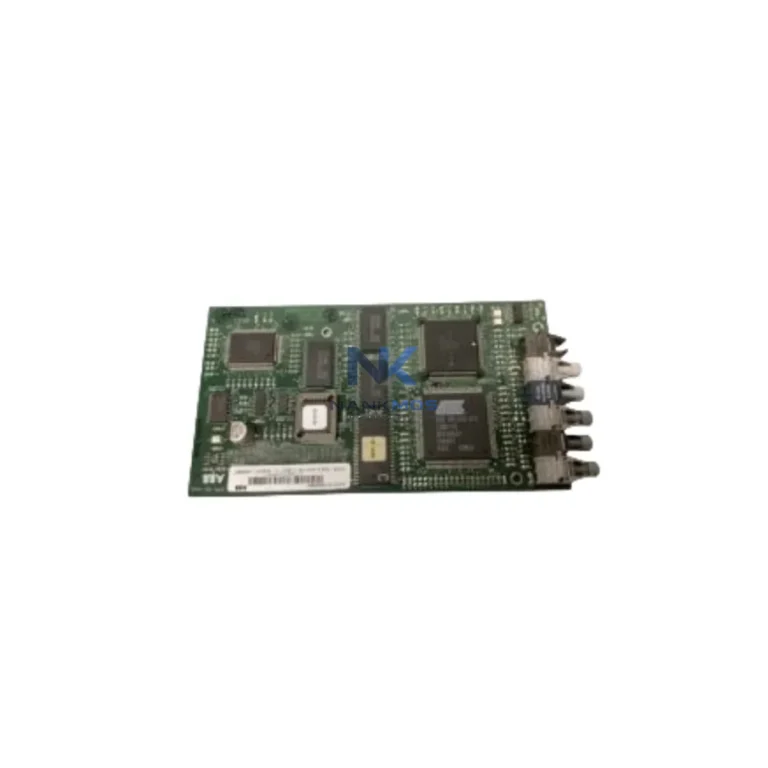
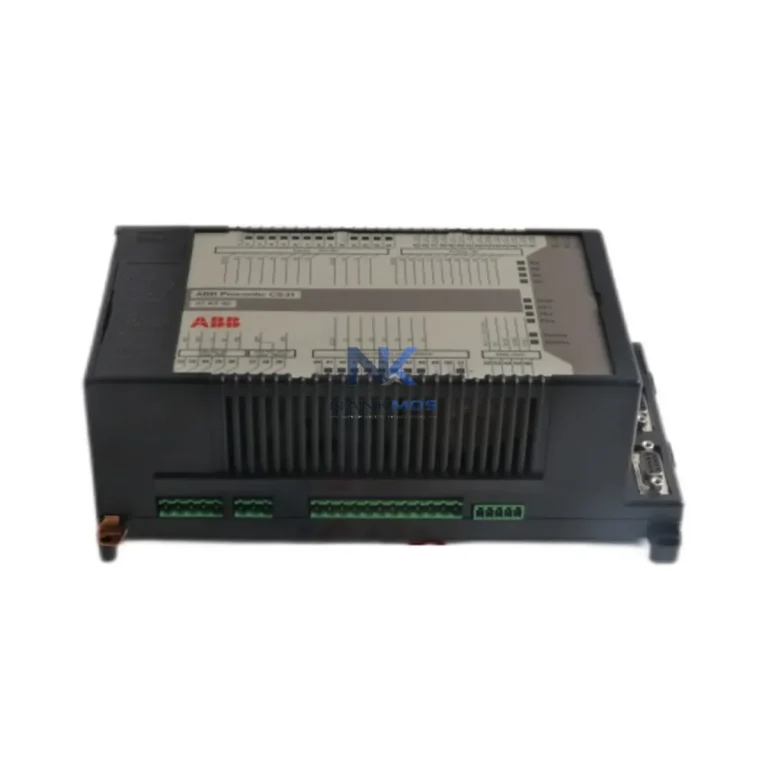
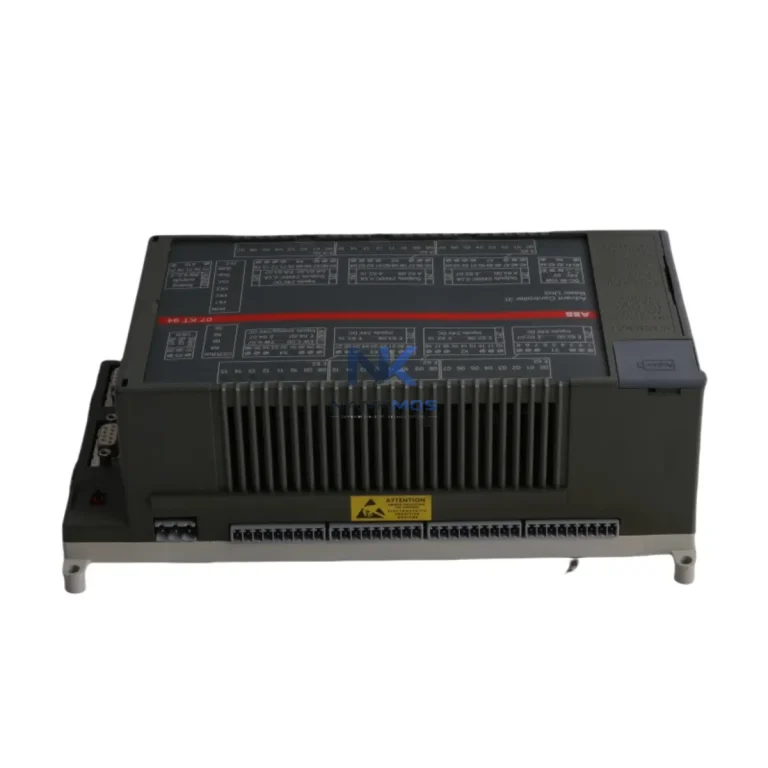
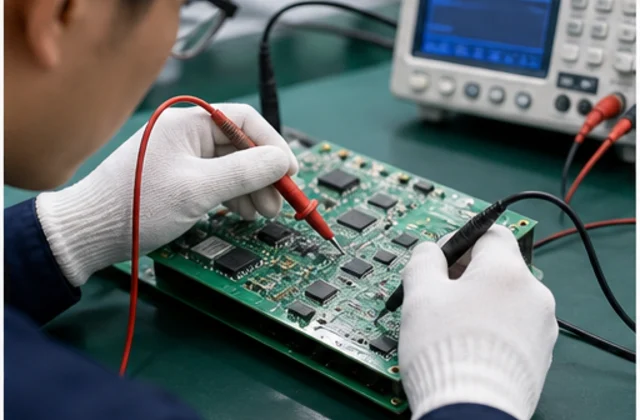
 Functional Inspection
100% tested on professional platforms to ensure stable performance.
Alcatel-Lucent Enterprise OS9600/OS9700-CMM is a NANKMOS industrial automation product record Listed under Other series series and Business & Industrial > Automation, Control & Flow Devices > Programmable Logic Controllers. Confirm condition, availability, lead time, compatibility and documentation by email inquiry.
Brand names are used for identification only.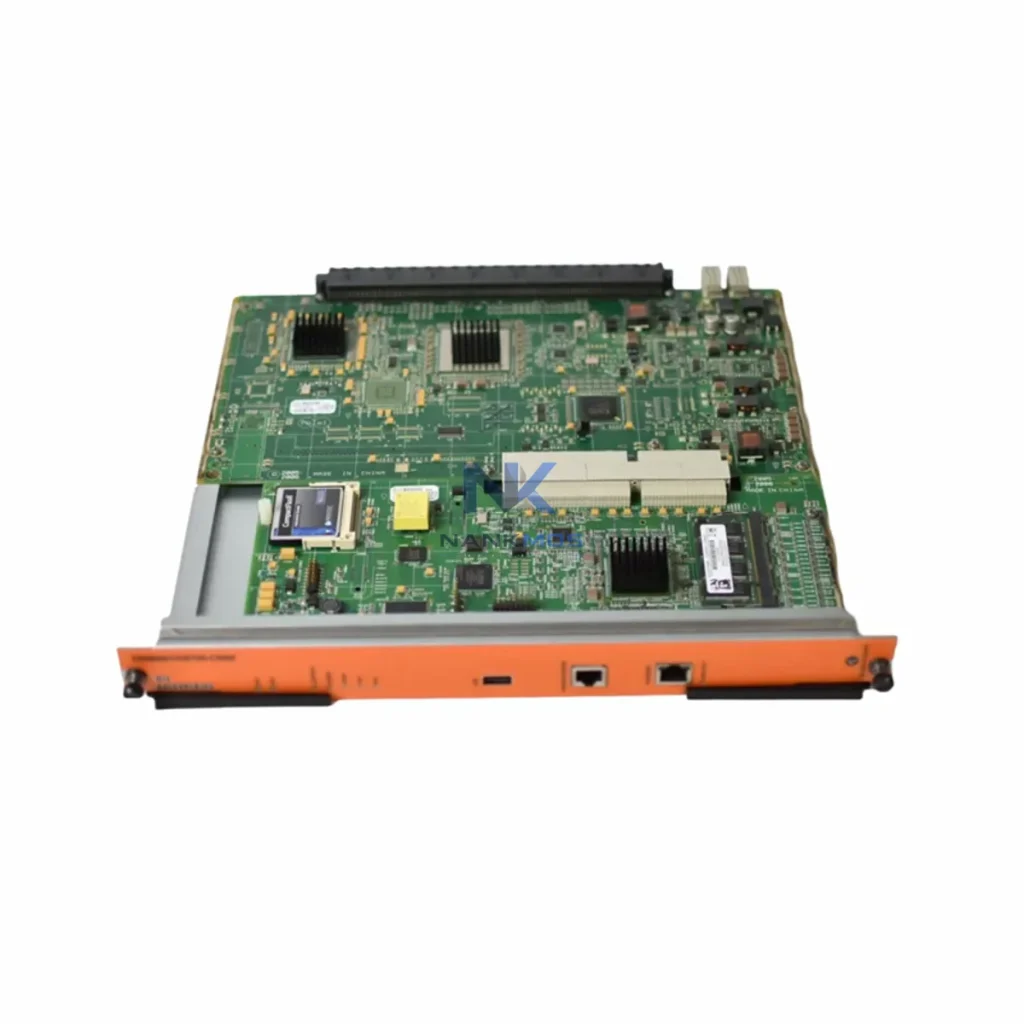
Alcatel-Lucent Enterprise OS9600/OS9700-CMM is a NANKMOS industrial automation product record Listed under Other series series and Business & Industrial > Automation, Control & Flow Devices > Programmable Logic Controllers. Confirm condition, availability, lead time, compatibility and documentation by email inquiry.
| Manufacturer | Alcatel-Lucent Enterprise |
|---|---|
| Application | Controller Processing & System Control |
| Part Number / Model | OS9600/OS9700-CMM |
| Compatible System | Confirmed by inquiry |
| Condition Options | To Confirm |
| Module Type | Controller / CPU Module |
| Warranty | 12 Months |
| Packaging | Anti-static Bag / Secure Box |
| Shipping Methods | DHL / FedEx / UPS / Air / Sea |
| Availability | To Confirm |
| Lead Time | To Confirm |
| Documentation | Part number and revision checked before quote |
The Alcatel OS9600/OS9700-CMM is the central Chassis Management Module engineered for the OmniSwitch 9600 and OmniSwitch 9700 modular chassis platforms. As the supervisory intelligence of the chassis, the CMM governs system initialization, slot arbitration, fabric coordination, redundancy switchover, and real-time diagnostics across every installed line card and fabric module. In a layered industrial control architecture — spanning the control layer, I/O layer, communication layer, power layer, HMI layer, execution layer, protection layer, and maintenance layer — the OS9600/OS9700-CMM functions as the architectural anchor that ensures system-wide coherence, deterministic forwarding, and long-term operational stability.
Deployed in enterprise data centres, industrial automation backbones, smart manufacturing networks, and mission-critical process control environments, the CMM provides the supervisory framework that transforms individual line cards into a unified, policy-driven switching fabric. Its role is not merely administrative: the CMM actively participates in spanning tree convergence, VLAN policy enforcement, QoS arbitration, and chassis-level fault isolation — capabilities that are indispensable in architectures where network downtime translates directly to production loss or safety risk.
The OS9600/OS9700-CMM does not operate in isolation. Its value is fully realised when deployed as part of a coherent, multi-layer automation and network architecture. In a typical OmniSwitch 9700 chassis deployment, the CMM works in concert with the OS9700-XNI-U12E 10GbE uplink modules to provide high-bandwidth northbound connectivity to the data centre core, while OS9700-GNI-C48 Gigabit line cards serve the access and distribution tiers. The CMM's fabric arbitration engine coordinates traffic across all installed modules, ensuring that QoS policies defined at the control layer are enforced consistently at every port.
For power integrity, the CMM interfaces directly with the OS9700-PS-900 and OS9700-PS-900-D redundant power supply modules. The chassis power layer is designed for N+1 redundancy, and the CMM monitors PSU health in real time, triggering alerts via SNMP traps or syslog to upstream SCADA or NMS platforms before a power fault can cascade into a system outage. This integration between the power layer and the supervisory control layer is a defining characteristic of the OmniSwitch 9000 architecture.
In environments requiring dual-CMM redundancy, a secondary OS9600/OS9700-CMM operates in standby mode with full configuration synchronisation. Upon primary CMM failure, the standby module assumes control within seconds using Non-Stop Forwarding (NSF), preserving all active forwarding tables and preventing traffic interruption. This 1+1 redundancy model is essential in process control networks, power distribution automation, and manufacturing execution system (MES) backbones where even brief network interruptions carry significant operational cost.
The CMM also coordinates with OS9700-SFM Switch Fabric Modules to manage internal switching capacity. As line card density increases — for example, when adding OS9700-GNI-P48 PoE line cards to support IP cameras, industrial wireless access points, or field HMI terminals — the CMM dynamically reallocates fabric bandwidth and updates forwarding tables without requiring a chassis restart. This hot-insertion capability, governed by the CMM's slot management firmware, is critical for modular expansion in live production environments.
At the communication layer, the CMM serves as the chassis-level SNMP agent, aggregating health data from all installed modules and presenting a unified management view to upstream systems such as OmniVista 2500 NMS or third-party SCADA platforms. Integration with OmniVista enables topology discovery, policy distribution, and firmware lifecycle management across multi-chassis OmniSwitch deployments — a capability that significantly reduces the engineering overhead of managing large-scale industrial networks.
For HMI and operator interface connectivity, the CMM's out-of-band management port provides a dedicated, isolated management path that remains operational even during in-band network disruptions. This ensures that operators can access chassis diagnostics, execute configuration changes, and review event logs from industrial HMI terminals or engineering workstations without relying on the production data path — a design principle aligned with IEC 62443 network segmentation recommendations for industrial control systems.
Smart Manufacturing and Discrete Automation: In automotive assembly, electronics manufacturing, and precision machining environments, the OS9600/OS9700-CMM anchors the plant network backbone. The chassis platform aggregates connectivity from PLC clusters, robot controllers, vision systems, and barcode scanners, while the CMM enforces VLAN segmentation between production cells, quality control stations, and ERP integration gateways. The CMM's real-time diagnostics enable maintenance teams to identify and isolate faulty line cards without halting the production line, supporting lean manufacturing objectives and minimising unplanned downtime.
Electric Power and Substation Automation: In transmission and distribution substations, the OmniSwitch 9700 chassis — managed by the OS9600/OS9700-CMM — provides the communication backbone for IEC 61850 GOOSE messaging between protection relays, bay controllers, and substation automation systems. The CMM's redundancy architecture ensures that protection signalling remains uninterrupted during planned maintenance or unexpected module failures, a requirement mandated by grid reliability standards. Integration with SCADA systems via SNMP and syslog provides real-time visibility into chassis health, supporting predictive maintenance programmes.
Oil, Gas, and Petrochemical Process Control: In upstream and downstream process facilities, the CMM-managed OmniSwitch chassis serves as the network convergence point for distributed control system (DCS) nodes, safety instrumented system (SIS) gateways, and historian servers. The chassis platform's modular design allows engineers to add specialised line cards — such as fibre-optic modules for long-distance field device connectivity — without disrupting active process control communications. The CMM's non-stop forwarding capability is particularly valued in continuous process environments where network reconfiguration must occur without process interruption.
Water Treatment and Utilities: Municipal water treatment and wastewater management facilities deploy the OmniSwitch 9700 chassis to interconnect SCADA RTUs, flow controllers, pump station PLCs, and operator workstations across geographically distributed sites. The CMM provides centralised chassis management, enabling remote diagnostics and firmware updates via the out-of-band management interface — reducing the need for on-site engineering visits and supporting cost-effective network operations in resource-constrained utility environments.
Mining and Metallurgy: In underground mining and surface processing operations, the OmniSwitch 9000 chassis — supervised by the OS9600/OS9700-CMM — provides ruggedised network infrastructure for conveyor control systems, ventilation automation, and safety monitoring networks. The CMM's environmental monitoring capabilities, combined with the chassis platform's wide operating temperature range, make it suitable for deployment in harsh industrial environments where standard enterprise networking equipment would be unreliable.
Q1: Can the OS9600/OS9700-CMM support dual-CMM redundancy, and what is the failover behaviour? Yes. The OmniSwitch 9600 and 9700 chassis support 1+1 CMM redundancy. When two CMM modules are installed, one operates as the primary controller and the second operates in synchronised standby mode. In the event of a primary CMM failure — whether due to hardware fault, software exception, or planned removal — the standby CMM assumes full supervisory control using Non-Stop Forwarding (NSF). NSF preserves all active Layer 2 and Layer 3 forwarding tables during the switchover, ensuring that production traffic continues without interruption. Failover typically completes within seconds, and the event is logged and reported via SNMP trap to upstream NMS or SCADA platforms. This redundancy model is recommended for all mission-critical deployments.
Q2: What AOS software versions are compatible with the OS9600/OS9700-CMM, and how is firmware managed? The OS9600/OS9700-CMM is compatible with Alcatel-Lucent Enterprise AOS Release 6.x, 7.x, and 8.x software streams, subject to chassis hardware revision compatibility. Firmware management is performed via the CMM's management interface using the AOS CLI, SFTP-based image transfer, or OmniVista 2500 NMS for centralised multi-chassis firmware lifecycle management. Before deploying a firmware update in a production environment, it is recommended to validate the target AOS release against the chassis hardware revision and installed line card inventory using the ALE compatibility matrix. All units supplied by NANKMOS are pre-tested against the firmware version specified at the time of order, and the 12-Month Warranty covers hardware defects identified during normal operation under the specified firmware environment.
Q3: What does the 12-Month Warranty cover, and what is the supply and lead time commitment? The 12-Month Warranty covers hardware defects in materials and workmanship from the date of shipment. Each OS9600/OS9700-CMM unit undergoes pre-shipment functional testing — including power-on self-test (POST), management interface verification, and fabric communication validation — before dispatch. In the event of a confirmed hardware defect within the warranty period, NANKMOS provides replacement or repair support. Units are held in stock and are available for immediate dispatch upon order confirmation, with standard lead times of 3–7 business days for international shipments. For urgent project requirements or bulk procurement, please contact [email protected] or call +86 18359268345 to discuss priority fulfilment arrangements.
Functional Inspection100% tested on professional platforms to ensure stable performance.
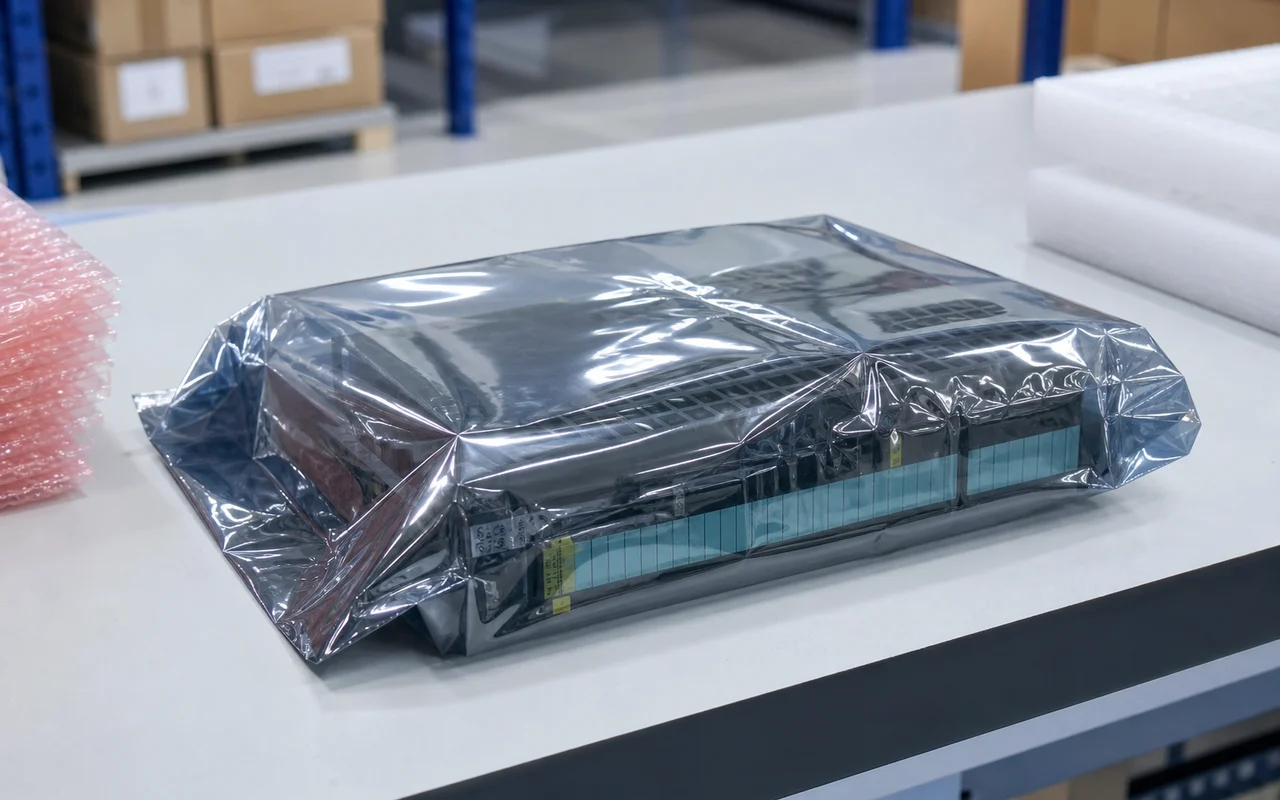 Anti-static Packaging
Modules are packed in anti-static bags to prevent electrostatic damage.
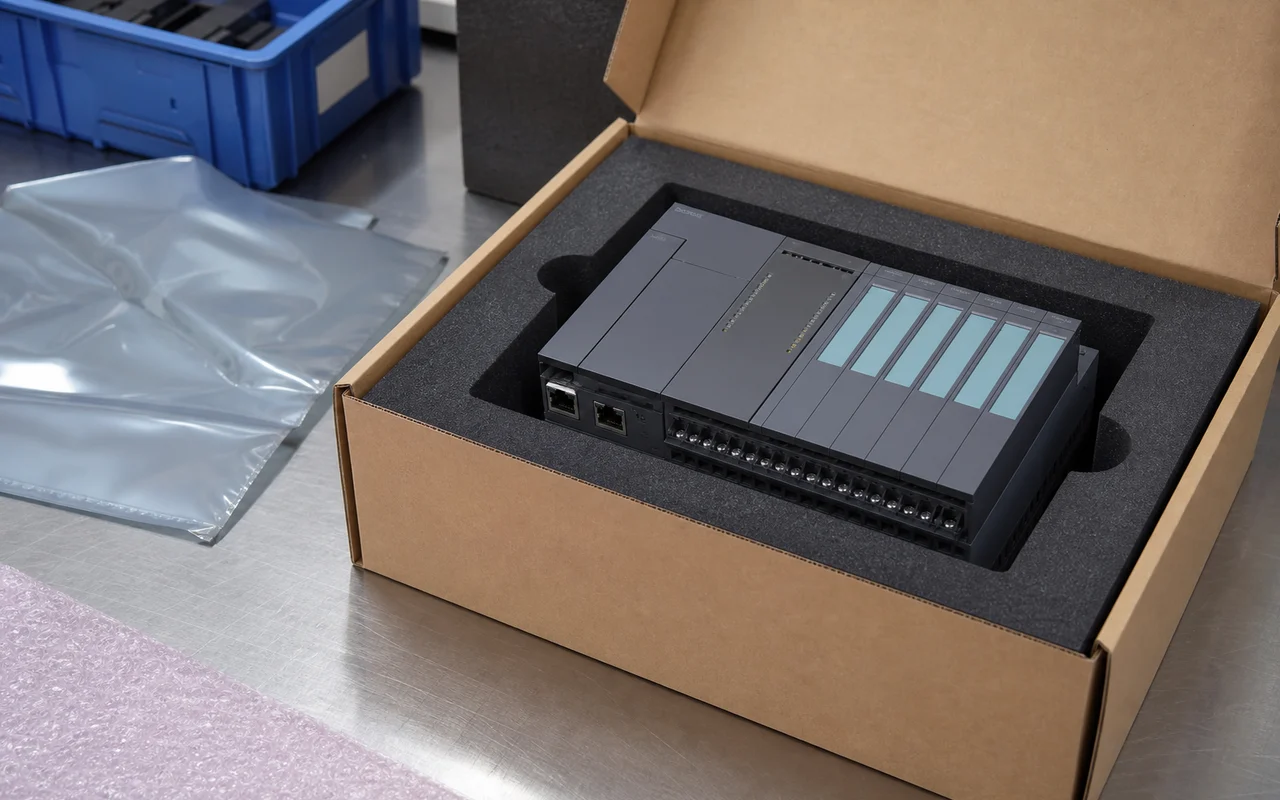 Secure Export Packing
Cushion protection and strong cartons ensure safe transportation.
 Worldwide Shipping
Global logistics network supports air, sea and express delivery.
 Documentation Check
Part number, revision and compatibility verified before shipment.
 After-sales Support
Professional technical support to help resolve your issues.