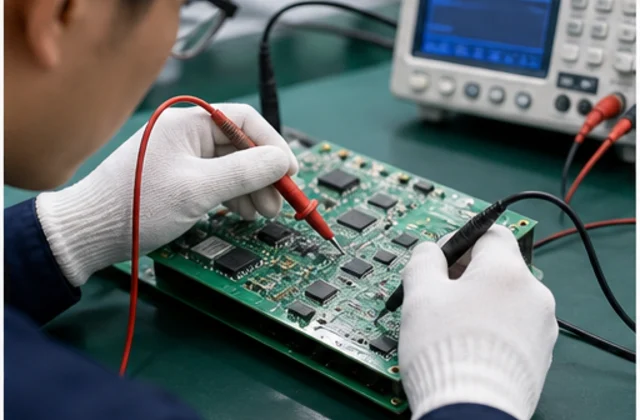
 Functional Inspection
100% tested on professional platforms to ensure stable performance.
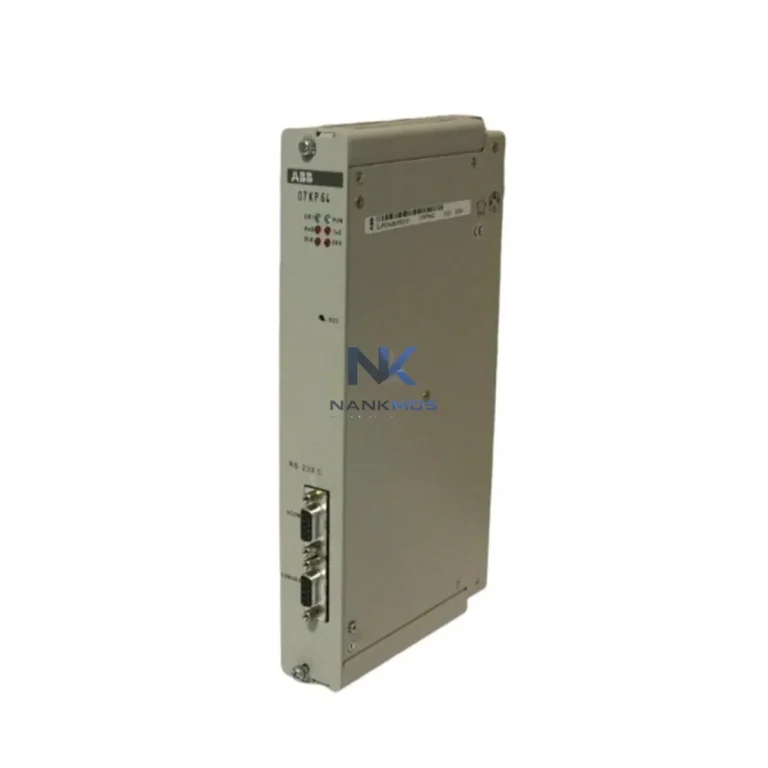
DIAVAC LIMITED PT-1DA is a NANKMOS industrial automation product record Listed under Other series series and Business & Industrial > Automation, Control & Flow Devices > Programmable Logic Controllers. Confirm condition, availability, lead time, compatibility and documentation by email inquiry.
Brand names are used for identification only.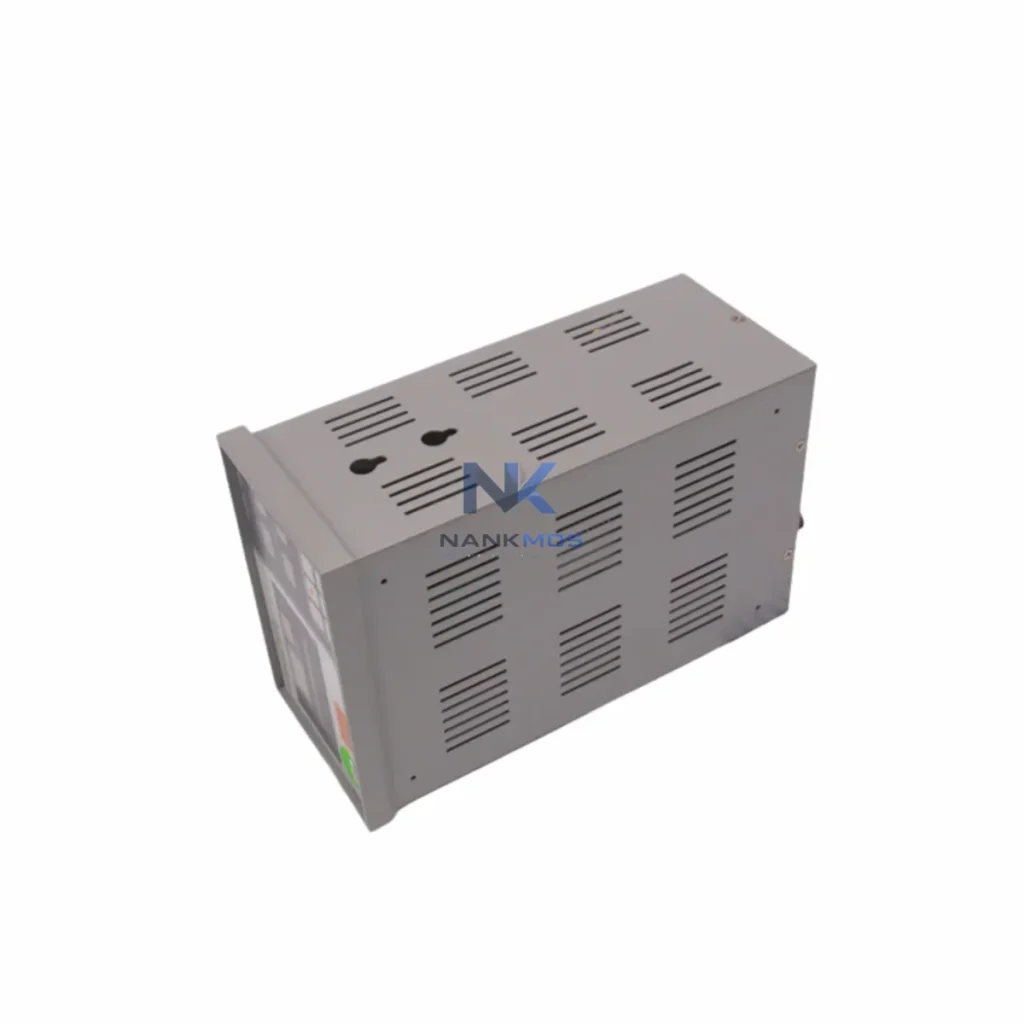
DIAVAC LIMITED PT-1DA is a NANKMOS industrial automation product record Listed under Other series series and Business & Industrial > Automation, Control & Flow Devices > Programmable Logic Controllers. Confirm condition, availability, lead time, compatibility and documentation by email inquiry.
| Manufacturer | DIAVAC LIMITED |
|---|---|
| Application | Controller Processing & System Control |
| Part Number / Model | PT-1DA |
| Compatible System | Confirmed by inquiry |
| Condition Options | To Confirm |
| Module Type | Controller / CPU Module |
| Warranty | 12 Months |
| Packaging | Anti-static Bag / Secure Box |
| Shipping Methods | DHL / FedEx / UPS / Air / Sea |
| Availability | To Confirm |
| Lead Time | To Confirm |
| Documentation | Part number and revision checked before quote |
The DIAVAC PT-1DA is a precision vacuum gauge controller engineered for seamless integration into modern industrial automation networks. Designed to bridge the gap between vacuum measurement instrumentation and digital factory infrastructure, the PT-1DA delivers real-time process data across RS-232 and RS-485 serial communication protocols — enabling direct connectivity to PLCs, SCADA platforms, HMI terminals, and edge computing gateways. In semiconductor fabrication, chemical processing, pharmaceutical manufacturing, and advanced materials production, vacuum integrity is a critical process variable. The PT-1DA transforms analogue vacuum readings into structured digital data streams that flow continuously through the plant's automation backbone.
At the heart of the PT-1DA's value proposition is its role as a network node within the smart factory data chain. Rather than operating as a standalone instrument, it functions as an active data source — feeding vacuum pressure values into the broader SCADA/HMI ecosystem where operators can monitor, trend, and act on process deviations in real time. When integrated alongside a Siemens S7-1200 or S7-1500 PLC via RS-485 Modbus RTU, the PT-1DA enables closed-loop vacuum control logic directly within the PLC programme, eliminating manual gauge reading and reducing human error in critical process steps.
In a fully connected smart factory vacuum system, the PT-1DA occupies a pivotal position in the data flow architecture. Vacuum sensors — such as Pirani gauges, capacitance manometers, or cold cathode ionisation gauges — feed analogue signals into the PT-1DA controller. The PT-1DA conditions, digitises, and transmits these readings via RS-485 Modbus RTU to the plant's PLC network. A Mitsubishi MELSEC iQ-R series PLC or an Omron NX/NJ series controller can poll the PT-1DA at configurable intervals, incorporating vacuum data into process interlocks, recipe management, and alarm logic.
For facilities running distributed control architectures, the PT-1DA's RS-485 multi-drop capability allows multiple controllers to share a single communication bus — reducing wiring complexity and simplifying network topology. An industrial RS-485 to Ethernet gateway (such as a Moxa NPort or equivalent serial device server) can bridge the PT-1DA's serial output onto a TCP/IP Ethernet backbone, making vacuum data accessible to plant-wide SCADA systems such as Wonderware InTouch, Ignition by Inductive Automation, or Siemens WinCC. This serial-to-Ethernet conversion is a common integration pattern in brownfield automation upgrades where legacy serial instruments must be brought into modern Ethernet-based SCADA environments without hardware replacement.
At the HMI layer, operators interact with PT-1DA data through touchscreen panels — for example, a Weintek cMT series HMI or a Proface GP4000 series terminal — where vacuum trends, setpoint comparisons, and alarm histories are visualised in real time. The HMI communicates with the PLC over Ethernet/IP or PROFINET, while the PLC maintains the RS-485 link to the PT-1DA, creating a clean three-tier data hierarchy: field instrument → controller → operator interface.
For edge computing and IIoT applications, the PT-1DA's serial data can be ingested by an edge gateway running lightweight MQTT or OPC-UA broker software. This enables vacuum data to be published to cloud-based MES or ERP platforms, supporting predictive maintenance analytics, process optimisation algorithms, and remote engineering access. When combined with a remote I/O module — such as a Wago 750 series or Phoenix Contact Axioline F module — additional field signals (temperature, flow, pressure) can be aggregated alongside vacuum data, providing a comprehensive process dataset for SCADA dashboards and data historians.
In vacuum furnace and thin-film deposition applications, the PT-1DA works in concert with mass flow controllers (MFCs), process gas analysers, and variable frequency drives (VFDs) controlling roughing and turbomolecular pump motors. The VFD speed reference and the PT-1DA vacuum reading are both fed into the PLC, which executes pump-down sequencing logic — ramping pump speed as vacuum improves, and triggering interlocks if vacuum degrades beyond setpoint. This closed-loop integration is fundamental to repeatable, high-yield vacuum process control.
Protocol Fragmentation: Many vacuum instruments output only analogue 4–20 mA signals, creating a data gap between the field device and the digital automation network. The PT-1DA resolves this by providing native RS-232/RS-485 digital communication, eliminating the need for separate analogue input modules and the associated signal conditioning hardware. This reduces BOM cost and simplifies cabinet wiring.
Data Silos in Vacuum Systems: Without digital connectivity, vacuum data remains isolated at the gauge controller — invisible to SCADA historians, MES systems, and engineering analytics tools. The PT-1DA breaks down these silos by making vacuum measurements a first-class data point in the plant network, available for trending, alarming, and reporting alongside all other process variables.
Remote Monitoring and Diagnostics: In facilities with geographically distributed vacuum systems — cleanrooms, R&D laboratories, multi-chamber process tools — engineers cannot physically inspect every gauge controller during a process upset. The PT-1DA's serial communication capability, when routed through an Ethernet gateway or SCADA system, enables remote vacuum monitoring and fault diagnosis from a central control room or even from off-site via secure VPN access. Alarm events, pressure deviations, and controller status can be logged and forwarded to maintenance teams via SCADA notification systems.
Production Line Transparency: Vacuum process data from the PT-1DA can be integrated into OEE (Overall Equipment Effectiveness) dashboards, giving production managers visibility into vacuum system uptime, pump-down cycle times, and process yield correlations. This transparency supports continuous improvement initiatives and helps identify recurring vacuum-related yield losses before they escalate into costly production stoppages.
Alarm Tracking and System Expansion: The PT-1DA supports configurable alarm setpoints that can be mapped to PLC digital outputs, triggering audible alarms, warning lights, or automated process holds. As production capacity grows, additional PT-1DA units can be added to the RS-485 bus (up to 32 nodes in a standard Modbus RTU network), providing a scalable vacuum monitoring architecture that grows with the facility without requiring network redesign.
Q1: What communication protocols does the DIAVAC PT-1DA support, and is it compatible with standard PLC serial ports? The PT-1DA supports RS-232 and RS-485 serial communication, with Modbus RTU compatibility making it directly addressable by the vast majority of industrial PLCs — including Siemens S7, Mitsubishi MELSEC, Omron NX/NJ, and Allen-Bradley Micro800 series — via their onboard serial COM ports or serial communication modules. Baud rate and communication parameters are configurable to match the host system's requirements.
Q2: How does the PT-1DA perform in terms of communication latency and network stability on an RS-485 multi-drop bus? RS-485 Modbus RTU communication on a properly terminated and shielded bus delivers deterministic response times typically in the range of 5–50 ms per poll cycle, depending on baud rate and network load. The PT-1DA is designed for industrial environments with appropriate EMI shielding and surge protection on its communication interfaces, ensuring stable data transmission even in electrically noisy factory environments near VFDs, servo drives, and high-current switching equipment.
Q3: Can the PT-1DA be integrated into an existing SCADA or HMI system without replacing the current network infrastructure? Yes. The PT-1DA's RS-485 output can be connected to any SCADA system with a serial COM port or via a serial-to-Ethernet gateway device. Most modern SCADA platforms — including Ignition, WinCC, and iFIX — include native Modbus RTU drivers that can communicate directly with the PT-1DA. For Ethernet-only SCADA architectures, a serial device server (e.g., Moxa NPort 5100 series) provides transparent serial-to-TCP/IP bridging with no changes required to the SCADA software configuration.
Q4: What does the 12-month warranty cover, and is pre-shipment testing performed on each unit? Every DIAVAC PT-1DA unit undergoes functional testing prior to shipment, verifying communication interface operation, measurement accuracy, and alarm output functionality. The 12-month warranty covers manufacturing defects in materials and workmanship from the date of delivery. Units are shipped with appropriate protective packaging to prevent transit damage. For warranty claims or technical support, contact NANKMOS at [email protected] or +86 18359268345.
Functional Inspection100% tested on professional platforms to ensure stable performance.
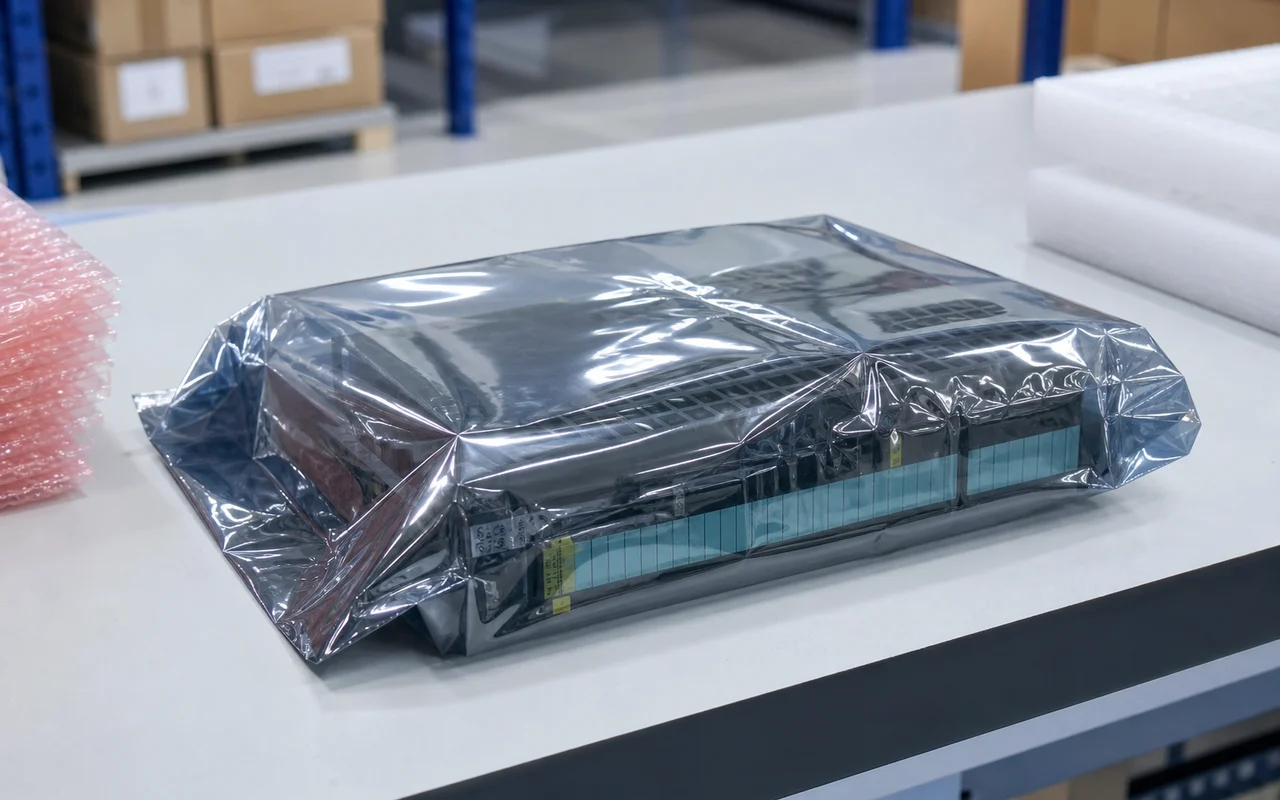 Anti-static Packaging
Modules are packed in anti-static bags to prevent electrostatic damage.
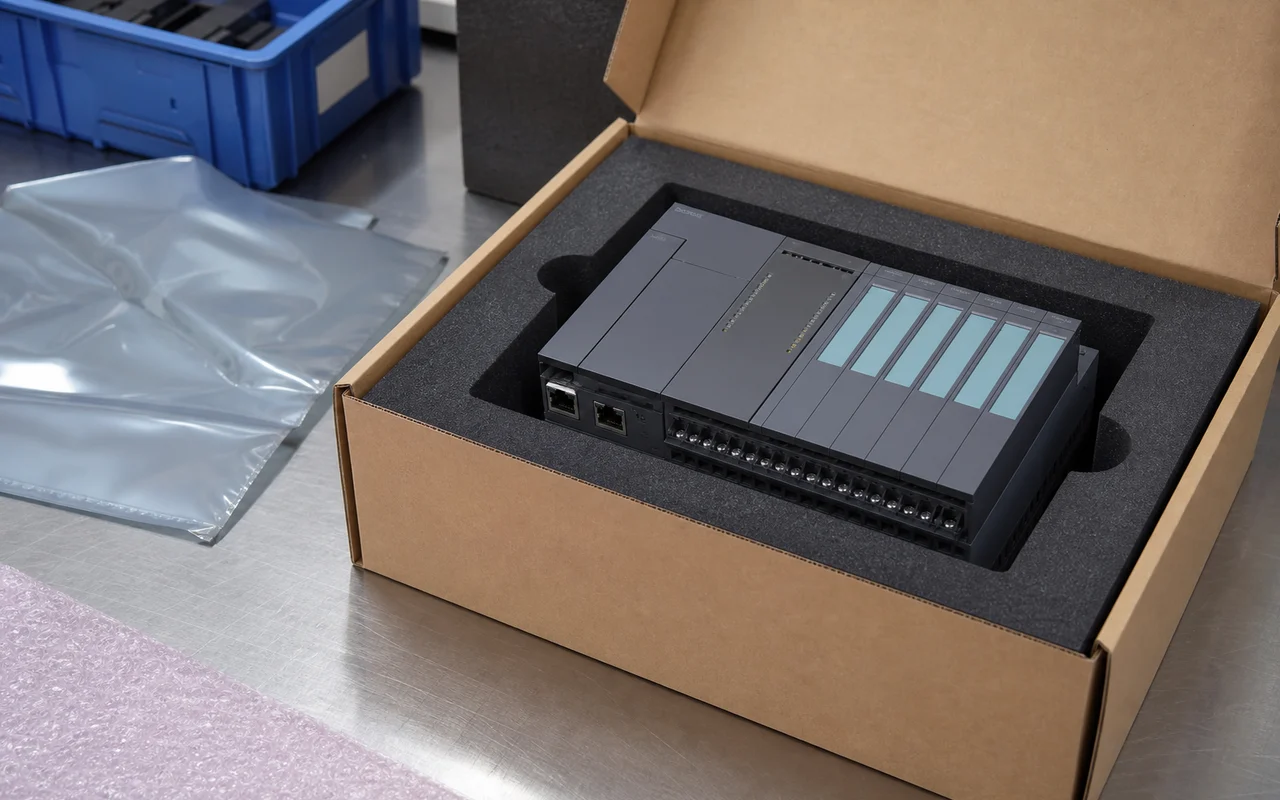 Secure Export Packing
Cushion protection and strong cartons ensure safe transportation.
 Worldwide Shipping
Global logistics network supports air, sea and express delivery.
 Documentation Check
Part number, revision and compatibility verified before shipment.
 After-sales Support
Professional technical support to help resolve your issues.