Functional Inspection
100% tested on professional platforms to ensure stable performance.
YAMAHA RCX222 is a NANKMOS industrial automation product record Listed under Other series series and Business & Industrial > Automation, Control & Flow Devices > Programmable Logic Controllers. Confirm condition, availability, lead time, compatibility and documentation by email inquiry.
Brand names are used for identification only.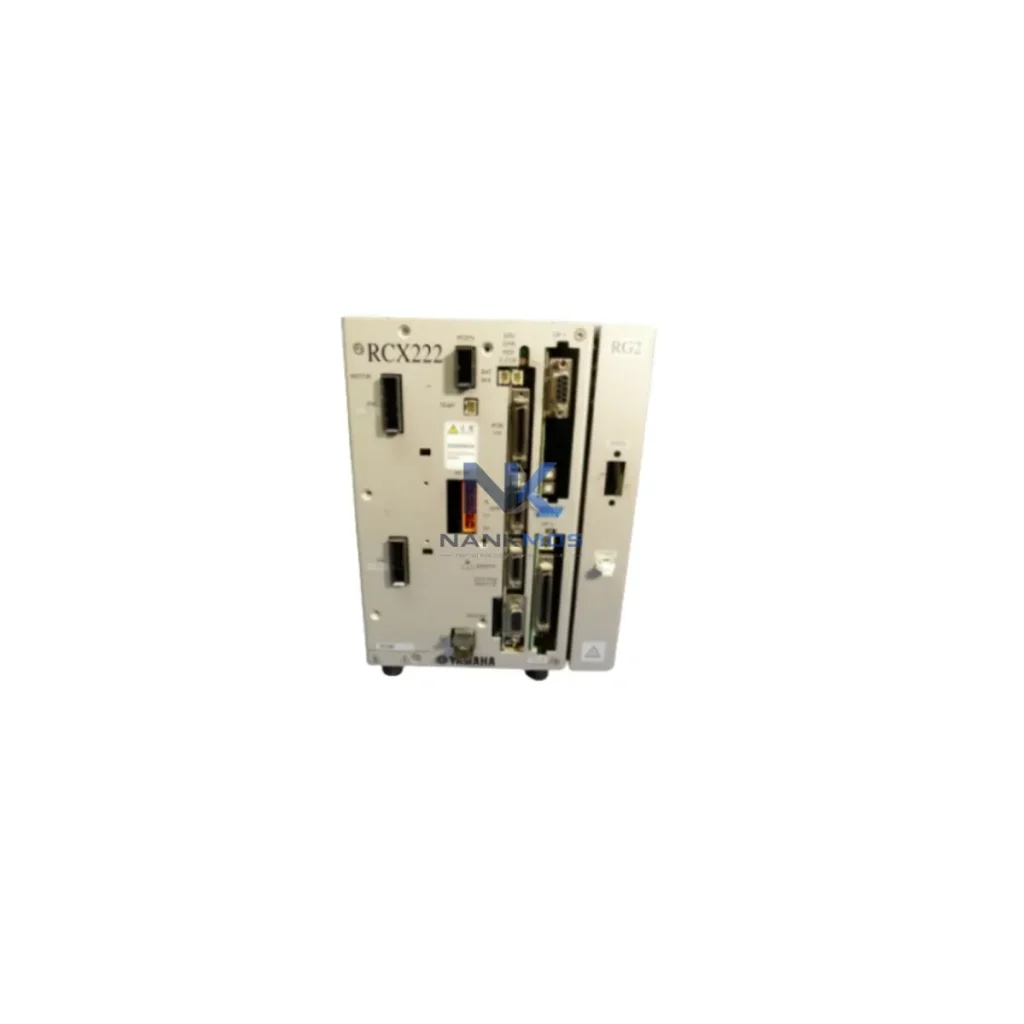
YAMAHA RCX222 is a NANKMOS industrial automation product record Listed under Other series series and Business & Industrial > Automation, Control & Flow Devices > Programmable Logic Controllers. Confirm condition, availability, lead time, compatibility and documentation by email inquiry.
| Manufacturer | YAMAHA |
|---|---|
| Application | Controller Processing & System Control |
| Part Number / Model | RCX222 |
| Compatible System | Confirmed by inquiry |
| Condition Options | To Confirm |
| Module Type | Controller / CPU Module |
| Warranty | 12 Months |
| Packaging | Anti-static Bag / Secure Box |
| Shipping Methods | DHL / FedEx / UPS / Air / Sea |
| Availability | To Confirm |
| Lead Time | To Confirm |
| Documentation | Part number and revision checked before quote |
The Yamaha RCX222 is a high-performance robot controller from the RCX Series, engineered to deliver precise, energy-efficient motion control for SCARA and multi-axis robotic systems deployed across smart manufacturing environments. Designed for demanding industrial production lines, the RCX222 integrates advanced motor control algorithms that minimize reactive power draw, reduce unnecessary actuator cycling, and optimize torque delivery — directly contributing to measurable reductions in facility energy consumption and thermal load on control panels.
In modern factories where energy cost management and carbon footprint reduction are operational priorities, the RCX222 provides a reliable, field-proven platform for coordinating robotic motion with upstream and downstream automation equipment. Its architecture supports seamless integration with programmable logic controllers, servo drive systems, and energy monitoring infrastructure, enabling plant engineers to build closed-loop production cells that respond dynamically to load conditions and production rhythm demands.
The RCX222 is purpose-built to operate as the motion intelligence hub within a broader power-aware automation architecture. In a typical smart production cell, the controller interfaces directly with Yamaha SCARA robots and coordinates motion profiles that are synchronized with the facility's energy management system. By leveraging servo standby modes and dynamic torque profiling, the RCX222 ensures that motors draw current only when mechanical work is actively required — eliminating the parasitic losses common in older fixed-speed drive configurations.
For facilities running Mitsubishi MELSEC Q-series or iQ-R PLCs, the RCX222 can be integrated via Ethernet or dedicated I/O handshaking, allowing the PLC to issue start, stop, and mode-change commands that align robotic motion with conveyor pacing and upstream sensor signals. Similarly, when paired with Omron NX/NJ series controllers or Siemens S7-1500 PLCs, the RCX222 responds to production rhythm signals that prevent unnecessary idle-run energy consumption between cycles.
In drive-intensive applications, the RCX222 works alongside Yaskawa Sigma-7 servo drives or Panasonic MINAS A6 servo amplifiers to deliver coordinated multi-axis motion with minimal overshoot and reduced regenerative heat. Power monitoring modules such as the Yokogawa WT series or Carlo Gavazzi EM series can be deployed in the same panel to log real-time energy consumption per production cycle, giving process engineers the data needed to benchmark efficiency improvements after RCX222 deployment.
HMI integration is equally straightforward. Proface GP4000 series or Weintek cMT HMI panels can display live robot status, cycle counts, and energy consumption metrics sourced from the RCX222's I/O and communication ports. This visibility supports operator-level energy awareness and enables shift-based reporting without additional SCADA middleware. For facilities that do run a full SCADA layer — such as Wonderware InTouch or Ignition by Inductive Automation — the RCX222's Ethernet connectivity allows cycle data and fault states to be logged centrally, supporting predictive maintenance scheduling and energy trend analysis.
Sensor integration further enhances the energy profile of RCX222-based cells. Keyence IV3 vision sensors or SICK distance sensors mounted at pick points can signal the RCX222 to initiate motion only when a workpiece is confirmed present, eliminating false-start cycles that waste servo energy and accelerate mechanical wear. Combined with Phoenix Contact or Wago I/O terminal blocks for signal conditioning, the RCX222 becomes the central node of a fully instrumented, energy-conscious robotic workcell.
Deploying the Yamaha RCX222 in a production line context delivers energy optimization benefits that extend well beyond the robot controller itself. By precisely managing acceleration and deceleration ramps across all controlled axes, the RCX222 reduces peak current demand — a critical factor in facilities where demand charges represent a significant portion of the electricity bill. Smoother motion profiles also reduce mechanical stress on end-of-arm tooling, grippers, and conveyor interfaces, lowering maintenance frequency and unplanned downtime.
In high-throughput packaging and assembly environments, the RCX222's ability to synchronize robotic motion with line speed signals from upstream conveyors means that robots operate at the minimum speed necessary to meet production targets — rather than running at maximum speed and waiting. This cycle-matched operation reduces average power draw per unit produced and extends the service life of servo motors and mechanical components.
Thermal load management is another measurable benefit. Because the RCX222 uses efficient PWM drive switching and supports regenerative energy recovery during deceleration phases, the heat generated within the control panel is substantially lower than with legacy relay-based or older transistor-drive controllers. This reduces the duty cycle of panel cooling fans and air conditioning units, contributing additional indirect energy savings at the facility level.
From a predictive maintenance perspective, the RCX222 logs fault histories, servo load ratios, and cycle counts that maintenance teams can use to schedule interventions before failures occur. Avoiding unplanned stops not only protects production throughput but also eliminates the energy waste associated with emergency restarts, re-homing sequences, and quality rejects caused by mid-cycle interruptions.
NANKMOS maintains in-stock inventory of the Yamaha RCX222 to support rapid replacement scenarios — critical for production environments where controller failure cannot wait for extended lead times. Every unit shipped undergoes pre-shipment functional testing to verify communication interfaces, I/O response, and drive output integrity before dispatch. A 12-month warranty is included with every RCX222 order, covering manufacturing defects and providing customers with confidence in the reliability of their automation investment.
Q1: How does the Yamaha RCX222 contribute to energy savings on a production line?The RCX222 reduces energy consumption through servo standby modes, dynamic torque limiting, and cycle-synchronized motion profiles that prevent unnecessary motor activation. When integrated with power monitoring modules and a PLC-managed production schedule, the controller ensures robots draw current only during productive motion phases, reducing average energy consumption per unit produced.
Q2: Is the RCX222 compatible with third-party PLCs and SCADA systems?Yes. The RCX222 supports RS-232C and Ethernet communication, enabling integration with Mitsubishi, Omron, and Siemens PLCs via I/O handshaking or network commands. It can also supply status and cycle data to SCADA platforms such as Ignition or Wonderware through standard Ethernet connectivity, supporting centralized energy and production monitoring.
Q3: What is the recommended replacement or upgrade path for older Yamaha robot controllers?The RCX222 is a direct upgrade candidate for facilities running earlier RCX-series controllers. It retains compatibility with Yamaha SCARA robot mechanical units while offering improved drive efficiency and communication options. NANKMOS can advise on compatibility with specific robot models based on your existing installation details — contact [email protected] for a replacement assessment.
Q4: What testing and warranty coverage is provided with the RCX222?Every Yamaha RCX222 supplied by NANKMOS undergoes pre-shipment functional testing covering power-on verification, I/O channel checks, communication port validation, and drive output confirmation. A 12-month warranty is included, covering manufacturing defects under normal operating conditions. In-stock availability ensures rapid dispatch to minimize production downtime in replacement scenarios.
Functional Inspection100% tested on professional platforms to ensure stable performance.
 Anti-static Packaging
Modules are packed in anti-static bags to prevent electrostatic damage.
 Secure Export Packing
Cushion protection and strong cartons ensure safe transportation.
 Worldwide Shipping
Global logistics network supports air, sea and express delivery.
 Documentation Check
Part number, revision and compatibility verified before shipment.
 After-sales Support
Professional technical support to help resolve your issues.