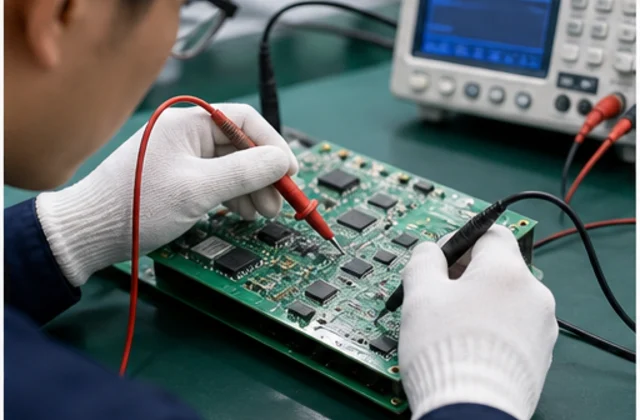
 Functional Inspection
100% tested on professional platforms to ensure stable performance.
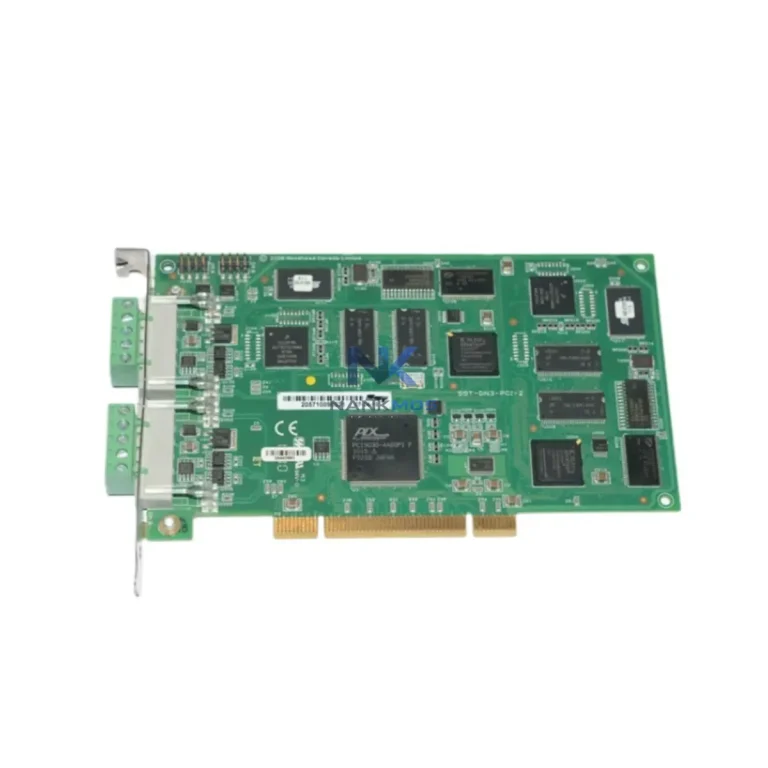
Woodward SST SST-DN3-PCU-2-E SST-DN3-PCI-2 is a NANKMOS industrial automation product record Listed under Other series series and Business & Industrial > Automation, Control & Flow Devices > Programmable Logic Controllers. Confirm condition, availability, lead time, compatibility and documentation by email inquiry.
Brand names are used for identification only.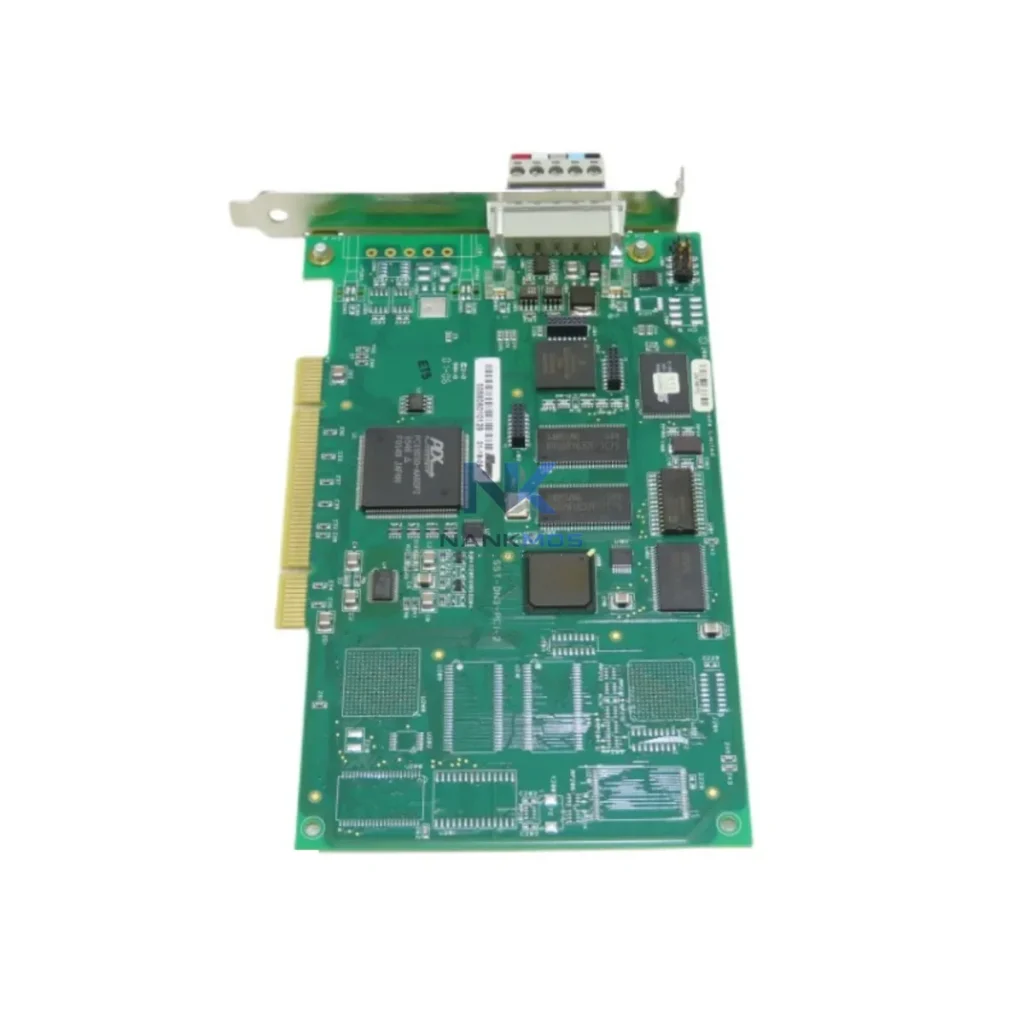
Woodward SST SST-DN3-PCU-2-E SST-DN3-PCI-2 is a NANKMOS industrial automation product record Listed under Other series series and Business & Industrial > Automation, Control & Flow Devices > Programmable Logic Controllers. Confirm condition, availability, lead time, compatibility and documentation by email inquiry.
| Manufacturer | Woodward SST |
|---|---|
| Application | Controller Processing & System Control |
| Part Number / Model | SST-DN3-PCU-2-E SST-DN3-PCI-2 |
| Compatible System | Confirmed by inquiry |
| Condition Options | To Confirm |
| Module Type | Controller / CPU Module |
| Warranty | 12 Months |
| Packaging | Anti-static Bag / Secure Box |
| Shipping Methods | DHL / FedEx / UPS / Air / Sea |
| Availability | To Confirm |
| Lead Time | To Confirm |
| Documentation | Part number and revision checked before quote |
The Woodward SST-DN3-PCU-2-E (also catalogued as SST-DN3-PCI-2) is a high-performance DeviceNet PCI interface module engineered for industrial environments where energy efficiency, real-time load visibility, and deterministic fieldbus communication are non-negotiable. Designed to integrate seamlessly into smart production architectures, this module enables plant engineers and automation specialists to reduce unnecessary energy consumption, stabilize production line throughput, and extend the operational lifespan of connected drive and control assets.
Sourced directly and shipped from verified inventory, every SST-DN3-PCU-2-E unit undergoes outgoing functional testing prior to dispatch and is backed by a 12-month warranty, ensuring deployment confidence for both greenfield installations and legacy system upgrades.
In modern industrial energy management, the communication backbone is as critical as the drive or sensor it connects. The SST-DN3-PCU-2-E serves as the DeviceNet master interface between a host PC or embedded controller and the field device layer — a role that directly influences how efficiently energy-consuming assets are commanded, monitored, and throttled.
When paired with a Rockwell Automation Allen-Bradley 1756-L71 ControlLogix PLC or similar PC-based control platform, the SST-DN3-PCU-2-E provides the deterministic scan cycle needed to issue precise speed references to PowerFlex 40 or PowerFlex 70 variable frequency drives (VFDs) on the DeviceNet segment. Rather than running motors at fixed speed regardless of load demand, the PLC-VFD loop — mediated by this interface card — enables dynamic speed adjustment that directly reduces kWh consumption during partial-load production windows.
For servo-driven axes, the module coordinates command traffic between the host controller and Kinetix 300 or Kinetix 5500 servo drives, ensuring that torque and velocity profiles are delivered with minimal latency. Reduced command jitter translates to fewer overcurrent events, lower regenerative braking losses, and a measurable reduction in thermal load across the servo cabinet.
Power quality visibility is enhanced when the SST-DN3-PCU-2-E is deployed alongside Schneider Electric PowerLogic PM5000 series power monitoring modules or equivalent DeviceNet-compatible energy meters. Real-time kW, kVAR, and power factor data from these meters flow through the DeviceNet segment to the SCADA host, enabling operators to identify high-consumption nodes and schedule load-shedding routines without manual intervention.
On the I/O layer, the module communicates with Allen-Bradley 1734 POINT I/O or 1769 CompactLogix I/O adapters over DeviceNet, collecting discrete and analog signals from motor starters, contactors, and thermal sensors. This closed-loop feedback allows the control system to detect abnormal current draw or temperature rise early — triggering protective actions before a fault escalates into unplanned downtime.
HMI integration is achieved through the SCADA host running Wonderware InTouch or FactoryTalk View SE, which reads DeviceNet node status via the SST-DN3-PCU-2-E driver stack. Operators gain a unified energy dashboard displaying drive states, motor run-hours, and cumulative energy consumption — data that feeds directly into predictive maintenance scheduling and OEE reporting.
For facilities running Omron CJ2M or CJ1M PLCs with DeviceNet master units, the SST-DN3-PCU-2-E can serve as a secondary PC-side scanner for data logging and historian integration, complementing the PLC's native scan without disrupting the primary control loop. This dual-access architecture is particularly valuable in energy audit scenarios where independent metering data must be captured alongside production records.
Communication reliability is further reinforced when the module operates within a network that includes Moxa NPort 5000 series serial-to-Ethernet gateways or HMS Anybus communicators, bridging legacy DeviceNet segments into modern Ethernet/IP or PROFINET backbones. This protocol translation layer ensures that energy data collected at the DeviceNet field level reaches the enterprise MES or ERP system without data loss or latency spikes.
Factory energy waste rarely originates from a single source. More often, it accumulates across dozens of small inefficiencies: motors running at full speed during idle periods, drives receiving delayed or imprecise commands, and control systems lacking the real-time visibility to act on consumption anomalies. The SST-DN3-PCU-2-E addresses this systemic challenge at the communication layer — the point where control intent is translated into field-level action.
By providing a stable, high-throughput DeviceNet master interface with selectable baud rates up to 500 kbps, the module ensures that speed references, torque limits, and enable/disable commands reach VFDs and servo drives within the deterministic scan window. This precision eliminates the command lag that causes drives to overshoot target speeds, draw excess current, and generate unnecessary heat — all of which inflate energy bills and accelerate component wear.
Production line throughput stability — often called takt time consistency — depends on synchronized command delivery across all motion and process nodes. When one DeviceNet node experiences communication latency, downstream stations compensate by buffering or idling, creating energy-wasteful wait states. The SST-DN3-PCU-2-E's robust CAN-layer implementation minimizes bus error rates, keeping all nodes synchronized and reducing the frequency of recovery cycles that consume additional energy without producing output.
Thermal load management is a direct beneficiary of efficient fieldbus communication. Drives and motors that receive accurate, timely commands operate closer to their efficiency curves, generating less waste heat. Reduced thermal output lowers the duty cycle of cooling systems — fans, heat exchangers, and air conditioning units — which are themselves significant energy consumers in enclosed control panels and motor control centers.
Predictive maintenance workflows are enabled by the continuous node health data that flows through the SST-DN3-PCU-2-E to the SCADA historian. Trending communication error counts, node response times, and I/O status changes allows maintenance teams to identify degrading sensors, loose DeviceNet connectors, or failing drive output stages before they cause unplanned stops. Each avoided emergency shutdown represents not only saved repair costs but also the energy and material waste associated with restarting a cold production line.
Inventory availability is maintained to support rapid deployment: the SST-DN3-PCU-2-E is held in verified stock, tested before shipment, and dispatched with full 12-month warranty coverage. For facilities operating on tight maintenance windows, this supply reliability eliminates the extended downtime that occurs when a critical interface card must be sourced from a slow supply chain.
Q1: How does the SST-DN3-PCU-2-E contribute to measurable energy savings on a production line? The module enables deterministic, low-latency command delivery to DeviceNet-connected VFDs and servo drives. By eliminating command lag and bus contention, drives operate closer to their optimal efficiency curves — reducing overcurrent events, minimizing regenerative losses, and lowering the thermal output that drives auxiliary cooling loads. When integrated with power monitoring modules on the same DeviceNet segment, the host SCADA system gains real-time consumption data to implement demand-response and load-shedding strategies.
Q2: Which PLC platforms and SCADA systems are compatible with the SST-DN3-PCU-2-E? The SST-DN3-PCU-2-E is compatible with any PC-based control or SCADA host equipped with a standard PCI slot, including systems running Rockwell FactoryTalk, Wonderware InTouch, Siemens WinCC, and custom OPC-DA/UA server configurations. It supports DeviceNet master and slave operation, making it suitable for integration with Allen-Bradley ControlLogix, CompactLogix, Omron CJ-series, and other DeviceNet-capable PLC ecosystems. Driver support is available for Windows-based industrial PC platforms.
Q3: Can this module replace an existing SST-DN3-PCI-2 without hardware or software reconfiguration? Yes. The SST-DN3-PCU-2-E is the direct functional equivalent of the SST-DN3-PCI-2, sharing the same PCI form factor, DeviceNet protocol stack, and driver interface. In most installations, the replacement is drop-in: remove the existing card, seat the SST-DN3-PCU-2-E in the same PCI slot, and reinstall the SST driver package. No DeviceNet network reconfiguration or node address changes are required. Verify driver version compatibility with your host OS before installation.
Q4: What testing and warranty coverage is provided with each unit? Every SST-DN3-PCU-2-E unit shipped from NANKMOS inventory undergoes functional outgoing inspection to verify PCI bus recognition, DeviceNet transceiver integrity, and communication layer operation. Each unit is covered by a 12-month warranty from the date of shipment. Units are held in climate-controlled storage and dispatched promptly upon order confirmation, supporting fast replacement cycles for facilities that cannot tolerate extended communication downtime.
Functional Inspection100% tested on professional platforms to ensure stable performance.
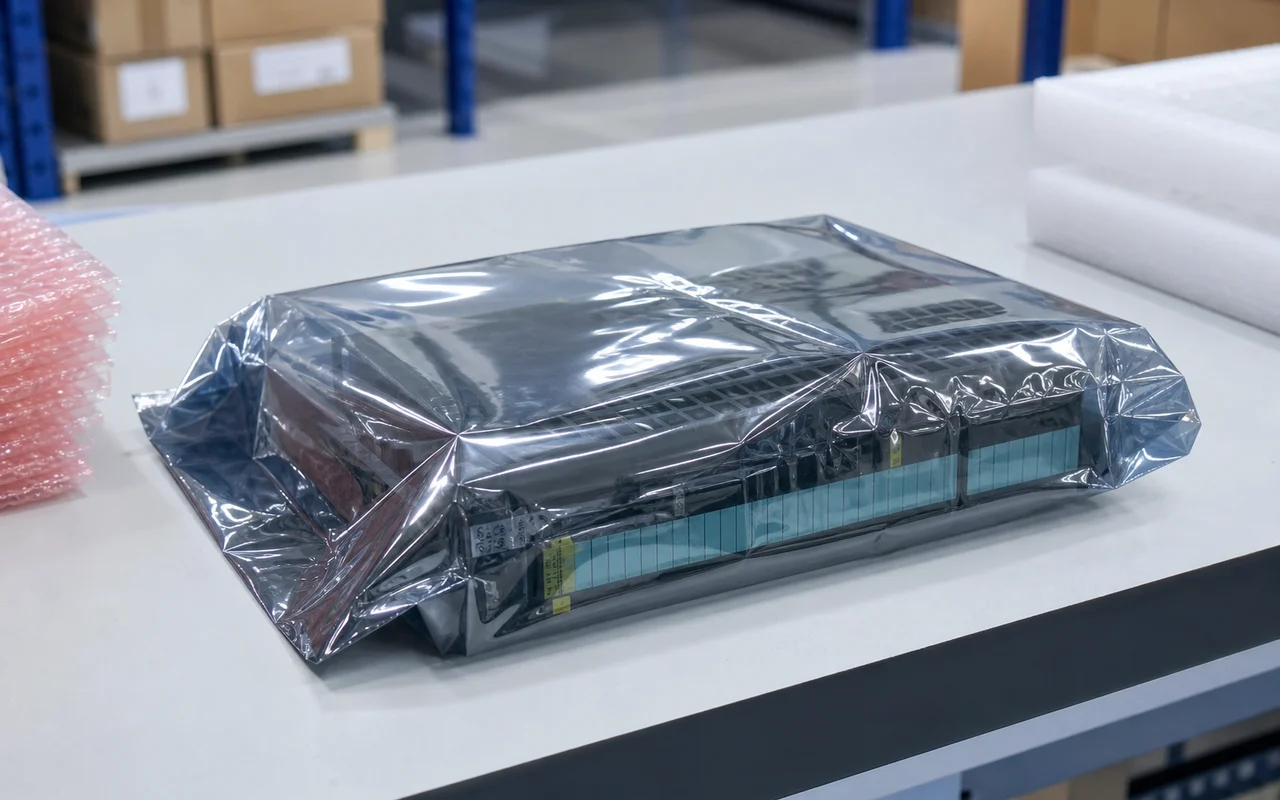 Anti-static Packaging
Modules are packed in anti-static bags to prevent electrostatic damage.
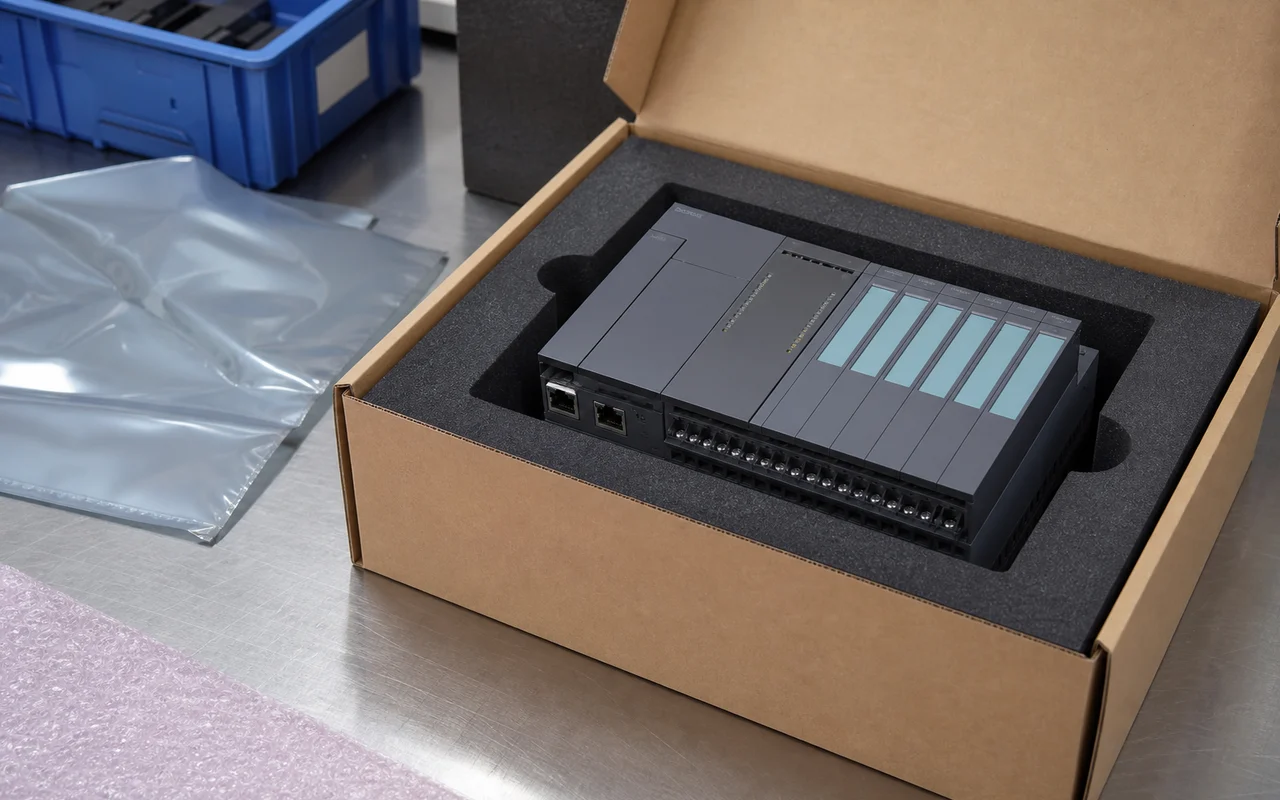 Secure Export Packing
Cushion protection and strong cartons ensure safe transportation.
 Worldwide Shipping
Global logistics network supports air, sea and express delivery.
 Documentation Check
Part number, revision and compatibility verified before shipment.
 After-sales Support
Professional technical support to help resolve your issues.