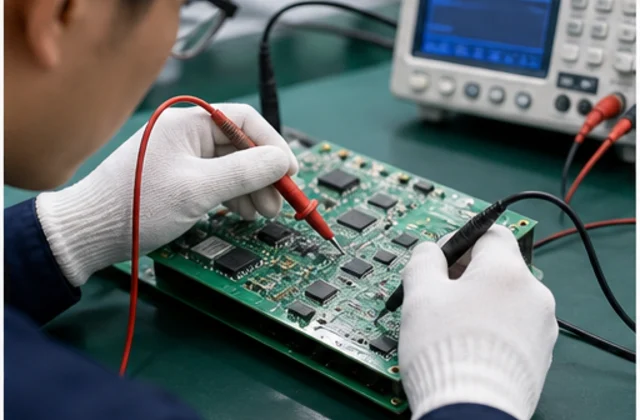
 Functional Inspection
100% tested on professional platforms to ensure stable performance.
DAIHEN UM356B PART NO L21700M(L21700M03) PCB-I-E-1171 is a NANKMOS industrial automation product record Listed under Other series series and Business & Industrial > Automation, Control & Flow Devices > Programmable Logic Controllers. Confirm condition, availability, lead time, compatibility and documentation by email inquiry.
Brand names are used for identification only.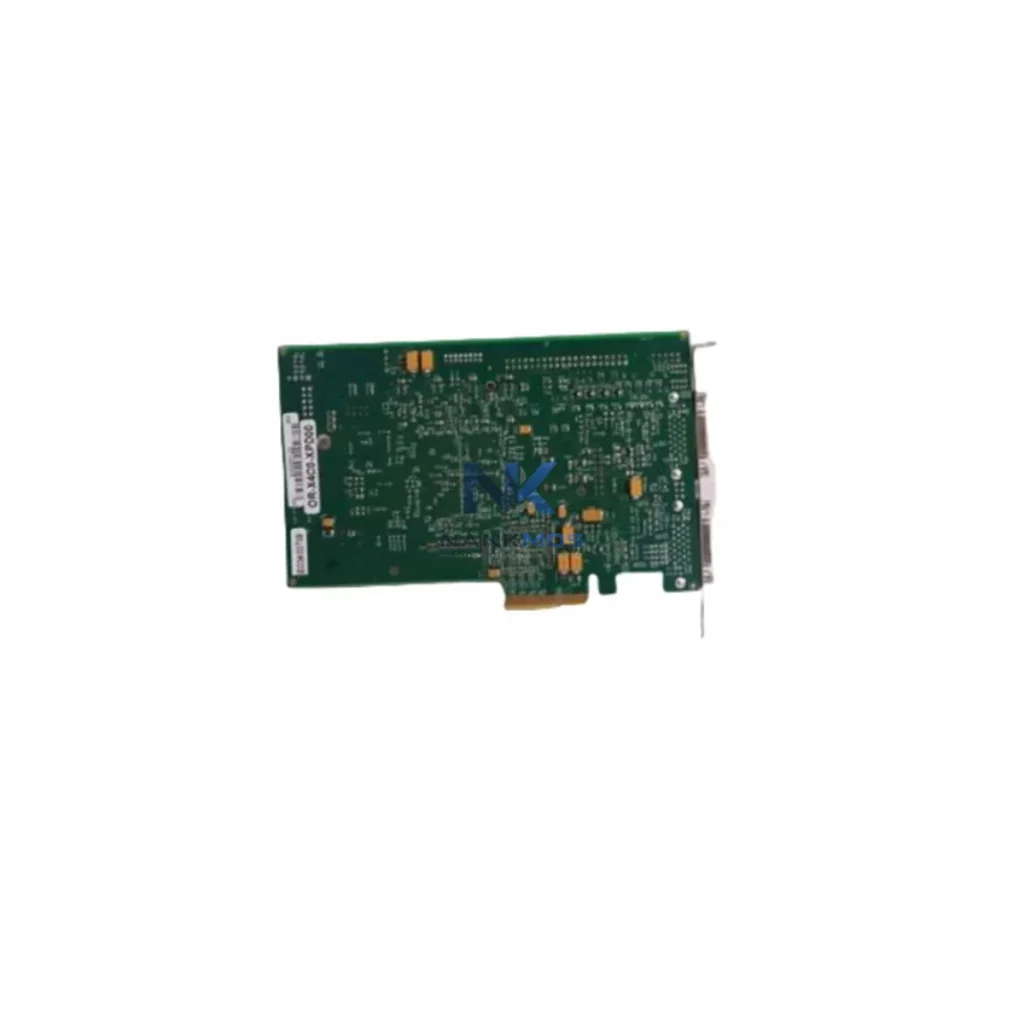
DAIHEN UM356B PART NO L21700M(L21700M03) PCB-I-E-1171 is a NANKMOS industrial automation product record Listed under Other series series and Business & Industrial > Automation, Control & Flow Devices > Programmable Logic Controllers. Confirm condition, availability, lead time, compatibility and documentation by email inquiry.
| Manufacturer | DAIHEN |
|---|---|
| Application | Controller Processing & System Control |
| Part Number / Model | UM356B PART NO L21700M(L21700M03) PCB-I-E-1171 |
| Compatible System | Confirmed by inquiry |
| Condition Options | To Confirm |
| Module Type | Controller / CPU Module |
| Warranty | 12 Months |
| Packaging | Anti-static Bag / Secure Box |
| Shipping Methods | DHL / FedEx / UPS / Air / Sea |
| Availability | To Confirm |
| Lead Time | To Confirm |
| Documentation | Part number and revision checked before quote |
The DAIHEN UM356B (Part No. L21700M / L21700M03, PCB-I-E-1171) is a precision-engineered PCB control module purpose-built for OTC welding robot systems and industrial arc welding architectures. Designed to operate within DAIHEN's integrated welding control platform, this module serves as a critical signal processing and coordination node between the robot controller, welding power source, servo drive system, and peripheral I/O layers. Its role extends beyond simple circuit-board functionality — it is a system-coherence component that ensures stable command execution, reliable feedback loops, and deterministic signal routing across the full welding cell architecture.
In modern automated welding environments, control architecture integrity is paramount. The UM356B is engineered to maintain signal fidelity across multi-axis servo coordination, torch positioning feedback, arc ignition sequencing, and weld parameter monitoring. Whether deployed in a standalone OTC welding robot cell or integrated into a larger multi-robot production line, this module provides the electrical and logical backbone that keeps the welding process synchronized with upstream PLC commands and downstream actuator responses.
From a system architecture perspective, the UM356B interfaces directly with DAIHEN's OTC robot controller platform — including controller families such as the FD11 and Almega series — coordinating with servo amplifier boards, power supply modules, and communication interface cards to deliver a unified, low-latency control loop. Its PCB design adheres to industrial-grade EMC standards, ensuring immunity to the high-frequency electrical noise inherent in arc welding environments. This makes it suitable for deployment in close proximity to welding power sources, wire feeders, and high-current bus systems without signal degradation.
The module's integration with DAIHEN's welding architecture also supports teach pendant communication, enabling real-time parameter adjustment, weld schedule selection, and diagnostic feedback without interrupting production cycles. When paired with DAIHEN's I/O expansion boards and fieldbus communication cards — supporting protocols such as DeviceNet and CC-Link — the UM356B becomes part of a fully networked welding cell capable of reporting weld quality data, fault codes, and cycle statistics to supervisory SCADA or MES systems.
For facilities operating mixed welding fleets or integrating OTC robots into broader factory automation frameworks, the UM356B's compatibility with standard industrial backplane architectures and its adherence to DAIHEN's modular replacement philosophy simplifies spare parts management and reduces mean time to repair (MTTR). Maintenance engineers can swap the module without full controller reconfiguration, provided the replacement unit matches the L21700M03 revision specification.
Supply chain reliability is a core consideration for any critical welding production asset. NANKMOS maintains verified inventory of the DAIHEN UM356B, with each unit subject to pre-shipment functional testing and visual inspection. All units are shipped with full 12-Month Warranty coverage, ensuring that procurement teams and maintenance planners can source this component with confidence in both product authenticity and post-sale support continuity.
The DAIHEN UM356B does not operate in isolation. Its value is fully realized when understood within the context of DAIHEN's complete OTC welding automation platform. In a typical welding robot cell, the UM356B works in concert with the following system components and module types:
The DAIHEN FD11 Robot Controller serves as the central processing unit of the welding cell, issuing motion commands and weld schedule parameters that the UM356B helps translate into coordinated servo and I/O actions. Alongside it, DAIHEN servo amplifier boards — such as those found in the Almega AX-V6 and AX-V4 series — receive position and torque commands routed through the control PCB layer, ensuring precise torch path execution across all six axes.
The DAIHEN welding power source (e.g., Welbee series inverter power supplies) communicates weld condition feedback — arc voltage, current waveform, and wire feed rate — back through the control architecture, with the UM356B playing a role in signal conditioning and timing synchronization. Wire feeder control boards and torch interface modules connect to this signal chain, ensuring that arc ignition, wire advancement, and shielding gas control are all temporally aligned with robot motion.
On the I/O layer, DAIHEN I/O expansion boards and digital input/output interface cards extend the controller's reach to external safety interlocks, fixture clamps, positioner drives, and conveyor synchronization signals. These are coordinated through the same backplane architecture that houses the UM356B, making module-level signal integrity critical to overall cell reliability.
For networked production environments, CC-Link or DeviceNet communication interface cards installed in the OTC controller cabinet allow the welding cell to exchange real-time data with upstream PLCs — such as Mitsubishi MELSEC Q-series or iQ-R series controllers — and with factory-level SCADA systems. The UM356B's stable operation within this communication chain ensures that weld data logging, fault reporting, and remote parameter updates function without latency or data corruption.
Teach pendant interface boards and operator panel PCBs round out the human-machine interaction layer, allowing welding engineers to modify programs, review diagnostic logs, and adjust weld schedules directly at the cell level. The reliability of these interactions depends on the integrity of the underlying control PCB infrastructure — of which the UM356B is a key element.
Automotive Body Welding Lines: In high-throughput automotive manufacturing, OTC welding robots equipped with UM356B control modules are deployed for body-in-white (BIW) spot and arc welding operations. The module's signal stability supports the rapid cycle times and precise torch positioning required for consistent weld quality across thousands of daily cycles.
Heavy Equipment & Structural Fabrication: For manufacturers of construction machinery, agricultural equipment, and structural steel assemblies, the UM356B supports multi-pass welding programs with complex torch trajectories. Its compatibility with positioner synchronization signals enables coordinated welding of large rotating workpieces.
Shipbuilding & Offshore Fabrication: In shipyard welding applications, where long weld seams and thick plate materials demand sustained arc stability, the UM356B's role in maintaining consistent power source feedback and servo coordination is critical to weld integrity and classification society compliance.
Pressure Vessel & Pipeline Welding: For petrochemical and energy sector applications requiring certified weld procedures, the UM356B supports the precise parameter control and data logging capabilities needed for weld procedure qualification and in-service inspection traceability.
Electronics & Precision Component Manufacturing: In lighter-duty OTC welding applications — such as precision component assembly or thin-sheet metal fabrication — the UM356B's signal processing accuracy supports the fine arc control and low-spatter welding modes available in DAIHEN's Welbee platform.
Q1: Is the DAIHEN UM356B (L21700M03) compatible with both FD11 and older OTC controller generations?The UM356B with PCB reference PCB-I-E-1171 and part revision L21700M03 is designed for use within DAIHEN's OTC controller platform. Compatibility with specific controller generations — including FD11 and earlier Almega series variants — should be verified against the controller's hardware revision and backplane slot specification. NANKMOS technical support can assist with cross-referencing your controller's BOM to confirm fitment prior to procurement.
Q2: What does the 12-Month Warranty cover, and how is it supported for international customers?All DAIHEN UM356B units supplied by NANKMOS are covered by a 12-Month Warranty from the date of shipment. This warranty covers manufacturing defects, functional failures under normal operating conditions, and PCB-level component integrity. For international customers, warranty claims are managed through NANKMOS's direct support channel ([email protected]), with replacement or repair options available depending on fault diagnosis. Pre-shipment functional testing minimizes the risk of DOA (dead-on-arrival) units reaching the customer.
Q3: How should the UM356B be handled and stored to ensure long-term reliability in a spare parts inventory?As a precision PCB module, the UM356B should be stored in anti-static packaging in a temperature-controlled environment (typically 0–40°C, <75% RH non-condensing). Avoid exposure to vibration, moisture, and direct contact with conductive surfaces. For long-term spare parts programs, NANKMOS recommends procuring a minimum of one spare unit per active welding cell to support rapid swap-out during unplanned downtime, reducing MTTR and protecting production continuity.
Functional Inspection100% tested on professional platforms to ensure stable performance.
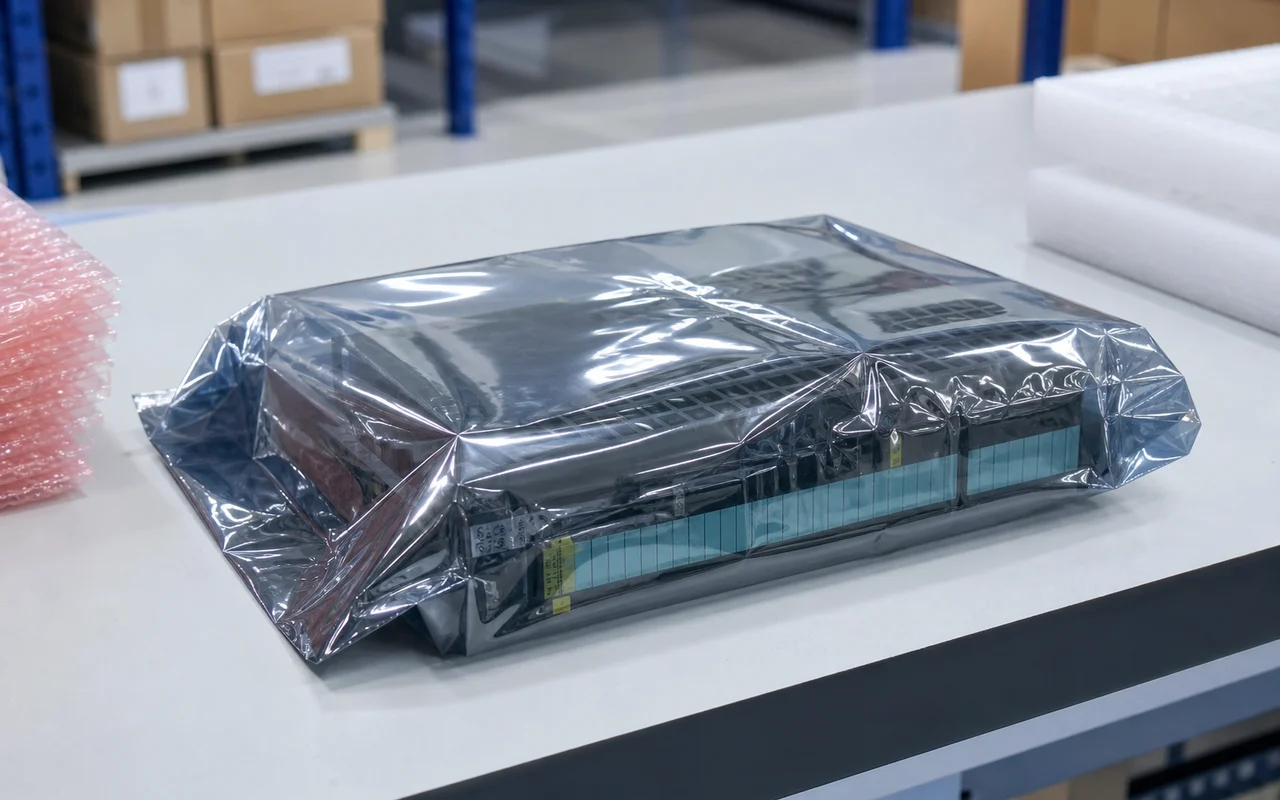 Anti-static Packaging
Modules are packed in anti-static bags to prevent electrostatic damage.
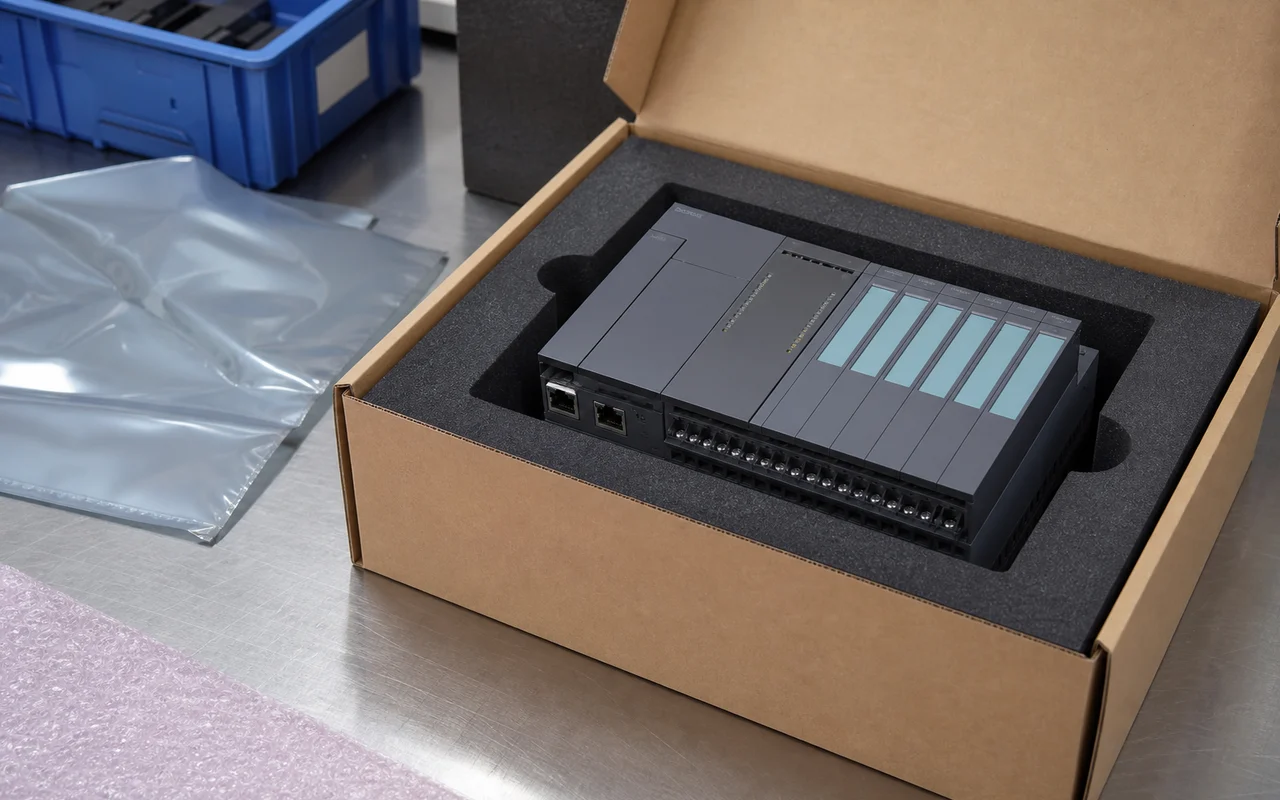 Secure Export Packing
Cushion protection and strong cartons ensure safe transportation.
 Worldwide Shipping
Global logistics network supports air, sea and express delivery.
 Documentation Check
Part number, revision and compatibility verified before shipment.
 After-sales Support
Professional technical support to help resolve your issues.