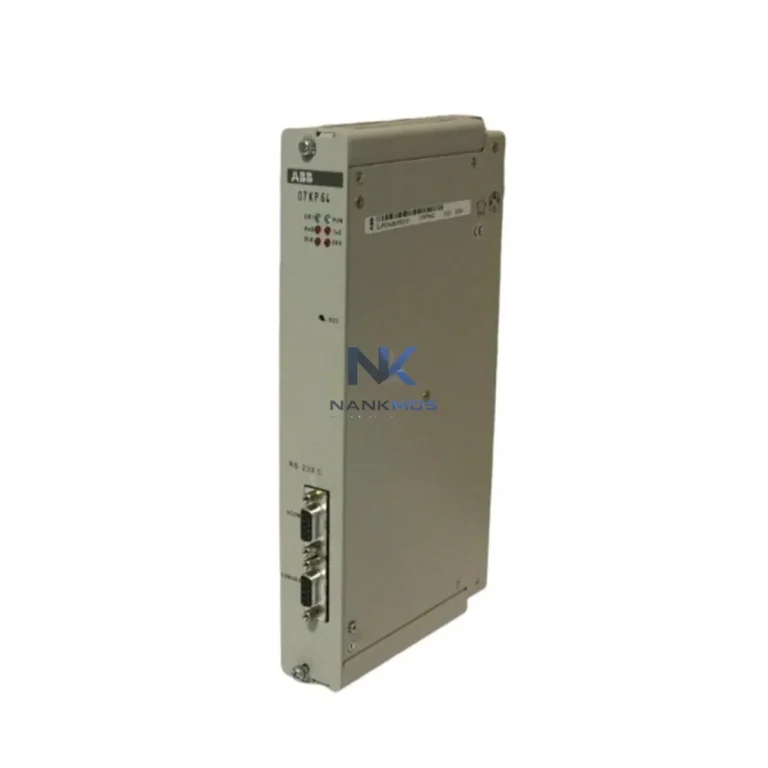
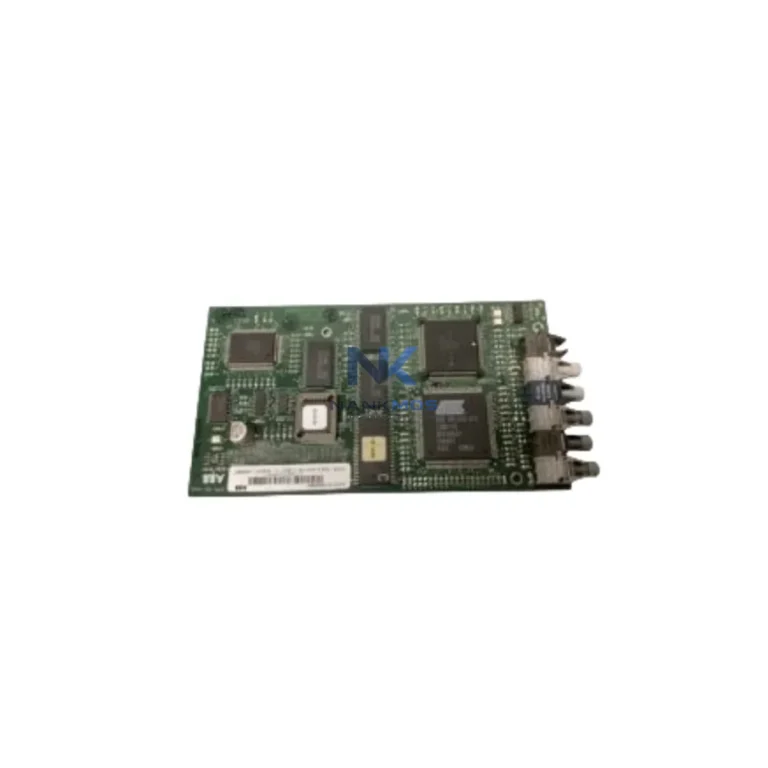
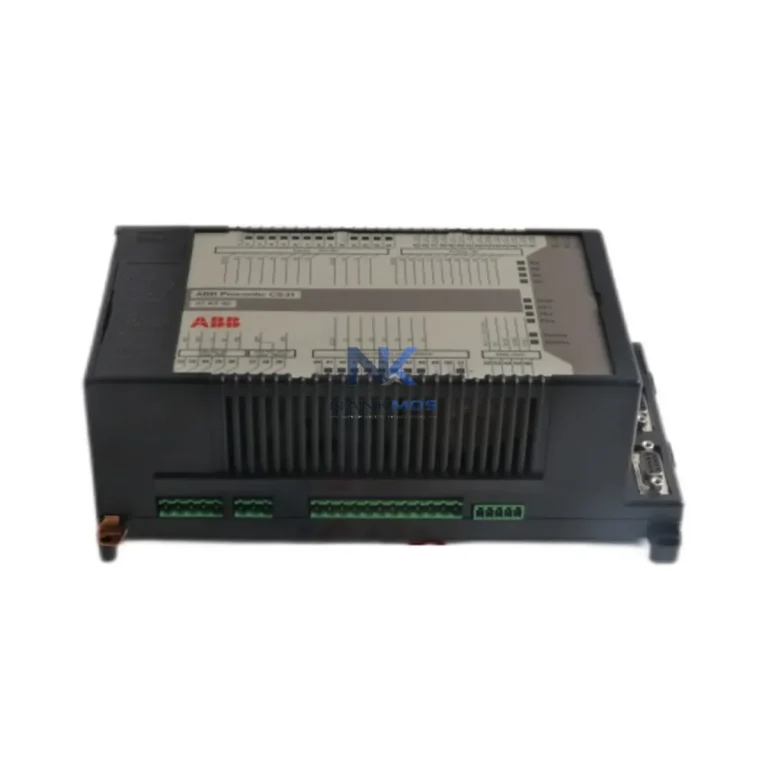
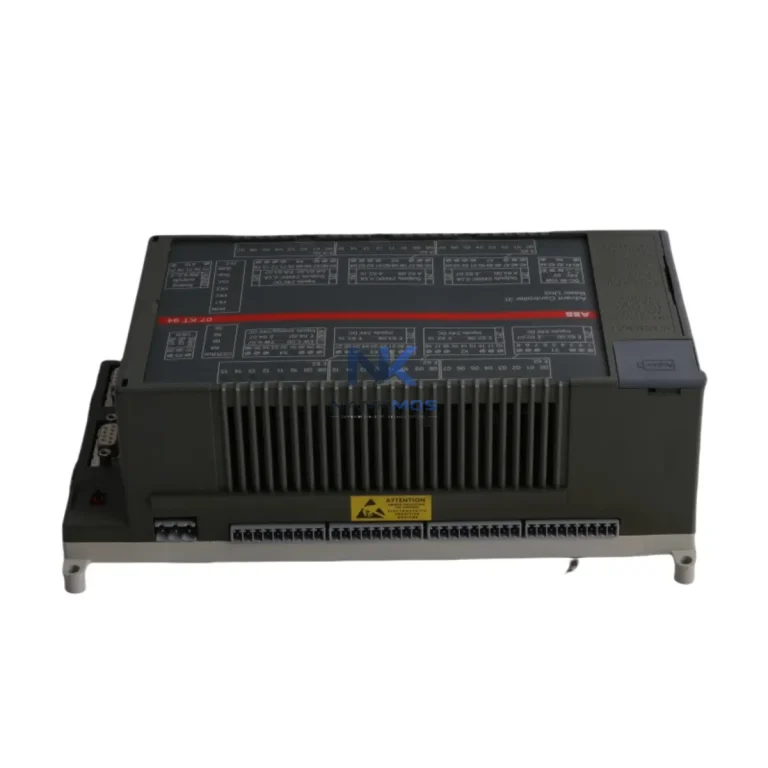
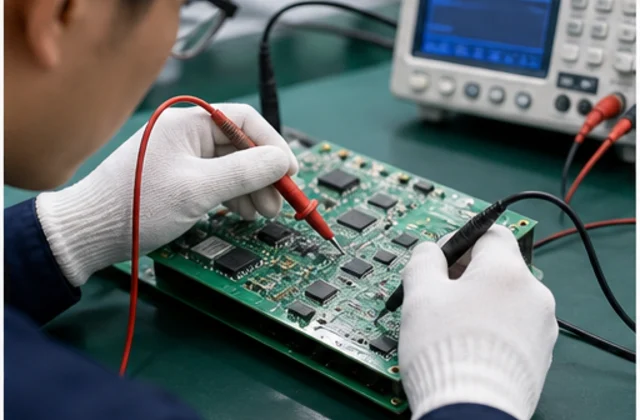
 Functional Inspection
100% tested on professional platforms to ensure stable performance.
WAVETRONICS WT307C 0010-00138 ENG1003 is a NANKMOS industrial automation product record Listed under Other series series and Business & Industrial > Automation, Control & Flow Devices > Programmable Logic Controllers. Confirm condition, availability, lead time, compatibility and documentation by email inquiry.
Brand names are used for identification only.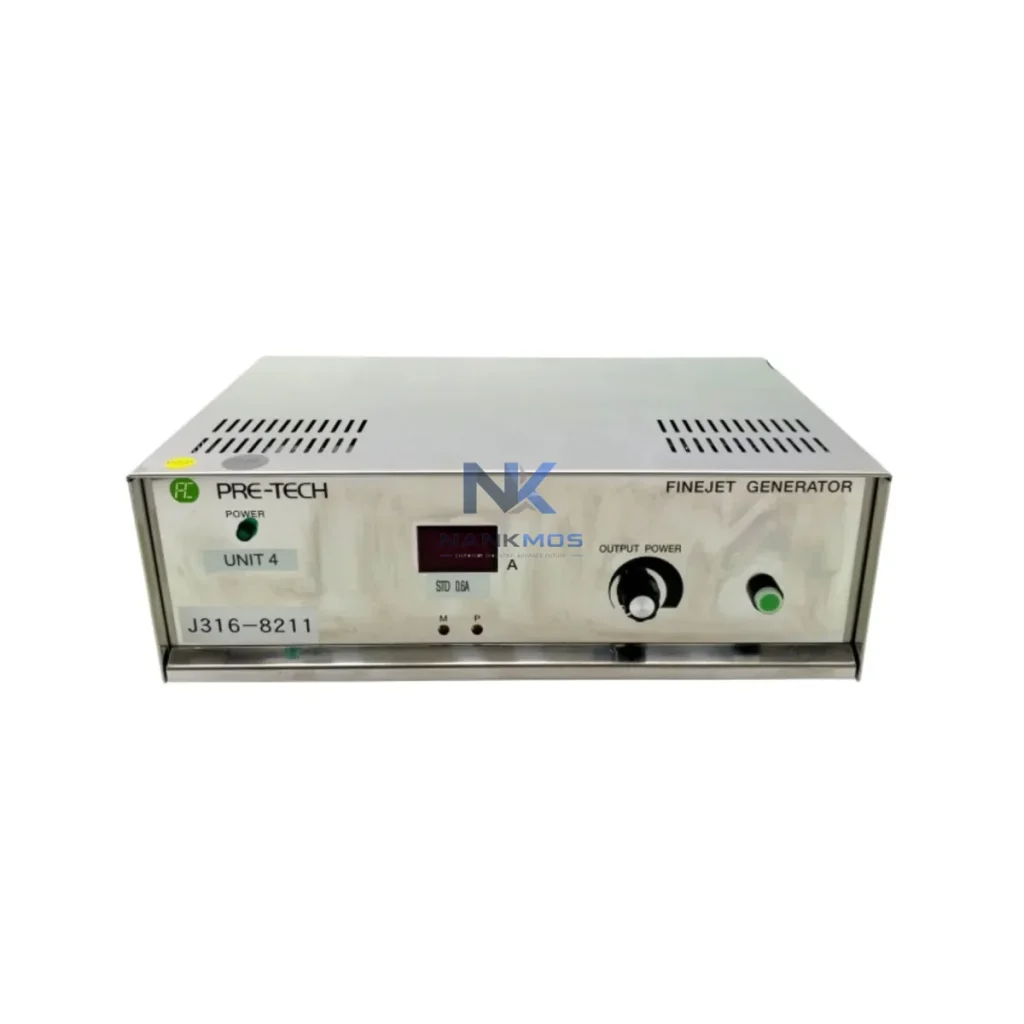
WAVETRONICS WT307C 0010-00138 ENG1003 is a NANKMOS industrial automation product record Listed under Other series series and Business & Industrial > Automation, Control & Flow Devices > Programmable Logic Controllers. Confirm condition, availability, lead time, compatibility and documentation by email inquiry.
| Manufacturer | WAVETRONICS |
|---|---|
| Application | Controller Processing & System Control |
| Part Number / Model | WT307C 0010-00138 ENG1003 |
| Compatible System | Confirmed by inquiry |
| Condition Options | To Confirm |
| Module Type | Controller / CPU Module |
| Warranty | 12 Months |
| Packaging | Anti-static Bag / Secure Box |
| Shipping Methods | DHL / FedEx / UPS / Air / Sea |
| Availability | To Confirm |
| Lead Time | To Confirm |
| Documentation | Part number and revision checked before quote |
The Wavetronics WT307C 0010-00138 ENG1003 is a frequency-stabilized Helium-Neon (He-Ne) laser module engineered for deployment within high-precision industrial control architectures. Designed to deliver exceptional wavelength stability and coherence, this module serves as a critical optical reference source across metrology, interferometry, semiconductor lithography alignment, and precision displacement measurement systems. Within a layered automation platform, the WT307C 0010-00138 ENG1003 occupies the sensing and measurement layer, providing the optical signal foundation upon which control loops, feedback systems, and process verification routines depend. Its integration into a broader control architecture — spanning PLC-based control layers, signal conditioning modules, industrial communication gateways, and HMI visualization platforms — ensures that measurement data flows with integrity from the optical source through to the supervisory control level.
Unlike general-purpose laser diodes, the WT307C 0010-00138 ENG1003 employs active frequency stabilization, locking the output wavelength to a known atomic or molecular reference. This characteristic makes it indispensable in applications where nanometer-level positional accuracy is required, such as wafer stage alignment in semiconductor fabrication, precision machine tool calibration, and optical path verification in photonic integration test benches. The module's stable output eliminates drift-induced measurement errors that would otherwise propagate through the control system, degrading closed-loop performance and increasing process variability.
From a system architecture perspective, the WT307C 0010-00138 ENG1003 interfaces with downstream signal processing hardware including photodetector arrays, lock-in amplifiers, and analog input modules connected to the I/O layer of the control platform. In Siemens SIMATIC S7-1500 or Allen-Bradley ControlLogix environments, the analog signals derived from the laser measurement chain are ingested via high-resolution analog input cards — such as the Siemens 6ES7531-7KF00-0AB0 AI module or the 1756-IF16 ControlLogix analog input module — before being processed by the CPU for real-time feedback control. The laser module's consistent output power and beam geometry reduce calibration overhead and extend the intervals between scheduled maintenance cycles.
The WT307C 0010-00138 ENG1003 achieves its full operational value when deployed as part of a coherent, multi-layer automation platform. In a typical precision manufacturing or semiconductor process control environment, the laser module anchors the measurement layer while surrounding components handle signal conditioning, control logic, communication, and operator interface functions.
At the control layer, a Siemens SIMATIC S7-1500 CPU — such as the 6ES7515-2AM02-0AB0 — or a Rockwell Automation 1756-L85E ControlLogix CPU executes the closed-loop control algorithms that consume the laser-derived measurement data. These CPUs provide the deterministic scan cycle performance necessary to respond to sub-micron positional deviations detected by the laser interferometer chain. Paired with a Siemens ET 200SP distributed I/O station or a 1734 POINT I/O system, the analog signals from photodetectors connected to the laser output are digitized and transmitted to the CPU with minimal latency.
At the signal conditioning layer, modules such as the Pepperl+Fuchs KFD2-STC4-Ex1.20020 signal isolator or equivalent DIN-rail mounted signal conditioners ensure that the low-level analog outputs from the laser measurement chain are galvanically isolated, amplified, and filtered before entering the PLC's analog input cards. This isolation is critical in environments where ground loops or electromagnetic interference could corrupt the precision measurement signal.
The communication layer relies on industrial Ethernet infrastructure — typically PROFINET or EtherNet/IP — to transmit processed measurement results from the PLC to supervisory SCADA systems or MES platforms. Industrial managed switches such as the Siemens SCALANCE X208 or Hirschmann RS20 provide the deterministic, low-latency network backbone required for real-time data exchange. In applications requiring time-sensitive networking, the SCALANCE XC208EEC with TSN support further enhances synchronization across the measurement and control layers.
At the HMI layer, operator stations running Siemens WinCC or Rockwell FactoryTalk View SE display real-time laser measurement trends, alarm states, and calibration status. Dedicated Siemens TP1200 Comfort Panel or Allen-Bradley PanelView Plus 7 terminals mounted at the machine level provide local operator access to measurement parameters and system diagnostics without requiring remote desktop access to the engineering workstation.
The power layer supplying the WT307C 0010-00138 ENG1003 and its associated signal conditioning hardware typically includes a Siemens SITOP PSU8200 or Phoenix Contact QUINT-PS regulated DC power supply, ensuring stable, low-ripple voltage that does not introduce noise into the laser's frequency stabilization circuitry. Uninterruptible power supply modules — such as the SITOP UPS1600 — protect the laser module from power transients that could disrupt the stabilization lock and require time-consuming re-acquisition procedures.
Semiconductor Fabrication: In wafer lithography and inspection systems, the WT307C 0010-00138 ENG1003 provides the optical reference for stage positioning interferometers, enabling nanometer-resolution alignment of reticles and wafers. The laser's frequency stability directly determines the accuracy of the interferometric displacement measurement, making it a foundational component in yield-critical process steps.
Precision Machine Tool Calibration: CNC machining centers and coordinate measuring machines (CMMs) use stabilized He-Ne lasers as traceable length standards for volumetric error compensation. The WT307C 0010-00138 ENG1003 integrates with laser interferometer systems — such as the Renishaw XL-80 or equivalent — to characterize linear, angular, and straightness errors across machine axes, feeding correction data into the CNC controller's compensation tables.
Optical Fiber and Photonic Component Testing: In telecommunications component manufacturing, the laser module serves as a coherent source for insertion loss, return loss, and wavelength-dependent loss measurements on passive optical components. Its single longitudinal mode output ensures that measurement results are not corrupted by mode competition or coherence collapse effects.
Petrochemical and Process Industry Metrology: Flow measurement systems based on laser Doppler velocimetry or laser transit anemometry in refinery and chemical plant environments use stabilized He-Ne sources to achieve the coherence length required for accurate velocity measurements in hostile process streams. The WT307C 0010-00138 ENG1003's robust stabilization design maintains measurement integrity even in thermally variable industrial enclosures.
Power Generation and Energy Sector: Turbine blade tip clearance measurement systems and generator rotor alignment verification tools in power plants employ stabilized laser modules as the optical reference for non-contact displacement sensors. The 12-Month Warranty and documented Contextual Integration support reduce procurement risk for maintenance engineering teams operating under strict equipment qualification requirements.
Q1: How does the WT307C 0010-00138 ENG1003 integrate with existing PLC analog input infrastructure? The laser module's measurement output — typically derived from a photodetector or interferometer controller connected to the laser — produces a standard analog voltage or current signal (e.g., 0–10 V or 4–20 mA) compatible with any industrial PLC analog input module. Signal conditioners such as the Pepperl+Fuchs KFD2 series provide galvanic isolation and signal scaling, ensuring compatibility with Siemens S7-1500 AI modules, Allen-Bradley 1756-IF16, or Mitsubishi Q64AD analog input cards without hardware modification. Contextual Integration documentation is available to support commissioning engineers during system validation.
Q2: What are the architectural compatibility requirements for deploying this laser module in a redundant control system? In redundant control architectures — such as Siemens S7-400H or Rockwell ControlLogix with redundancy — the laser measurement chain should be treated as a critical sensor input. Redundant signal paths can be implemented by connecting dual photodetectors to independent analog input channels on separate I/O racks, with the PLC's redundancy controller performing cross-comparison and fault detection. The WT307C 0010-00138 ENG1003's stable output power minimizes the risk of spurious fault declarations caused by laser intensity fluctuations, supporting high-availability system designs with minimal unplanned downtime.
Q3: What does the 12-Month Warranty cover, and how does NANKMOS support long-term inventory and maintenance requirements? The 12-Month Warranty covers manufacturing defects, premature component failure, and performance deviations from published specifications under normal operating conditions. NANKMOS maintains stock of the WT307C 0010-00138 ENG1003 to support both immediate project requirements and long-term spare parts programs for facilities operating under planned maintenance schedules. Each unit undergoes pre-shipment functional testing — including output power verification, frequency stability confirmation, and beam quality assessment — before dispatch. For facilities requiring extended support agreements or multi-unit procurement, contact NANKMOS directly to discuss inventory reservation and warranty extension options.
Functional Inspection100% tested on professional platforms to ensure stable performance.
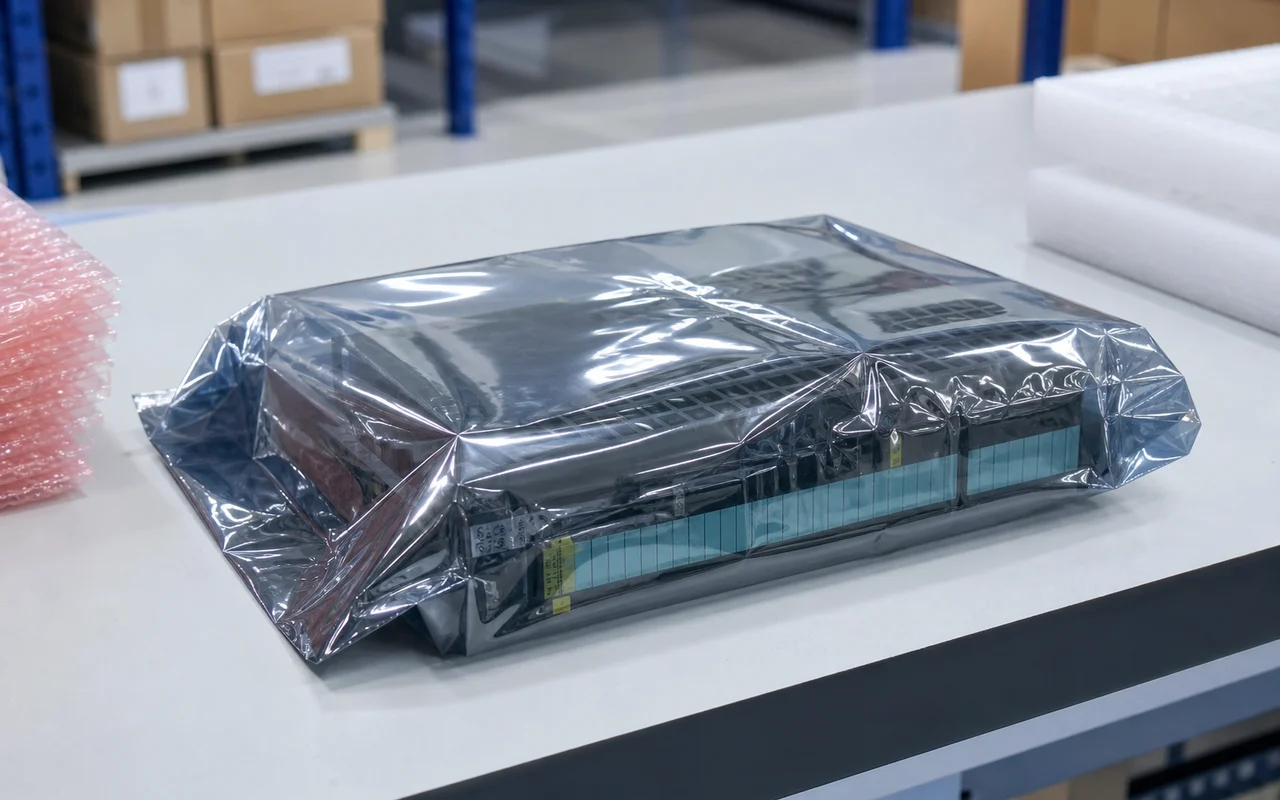 Anti-static Packaging
Modules are packed in anti-static bags to prevent electrostatic damage.
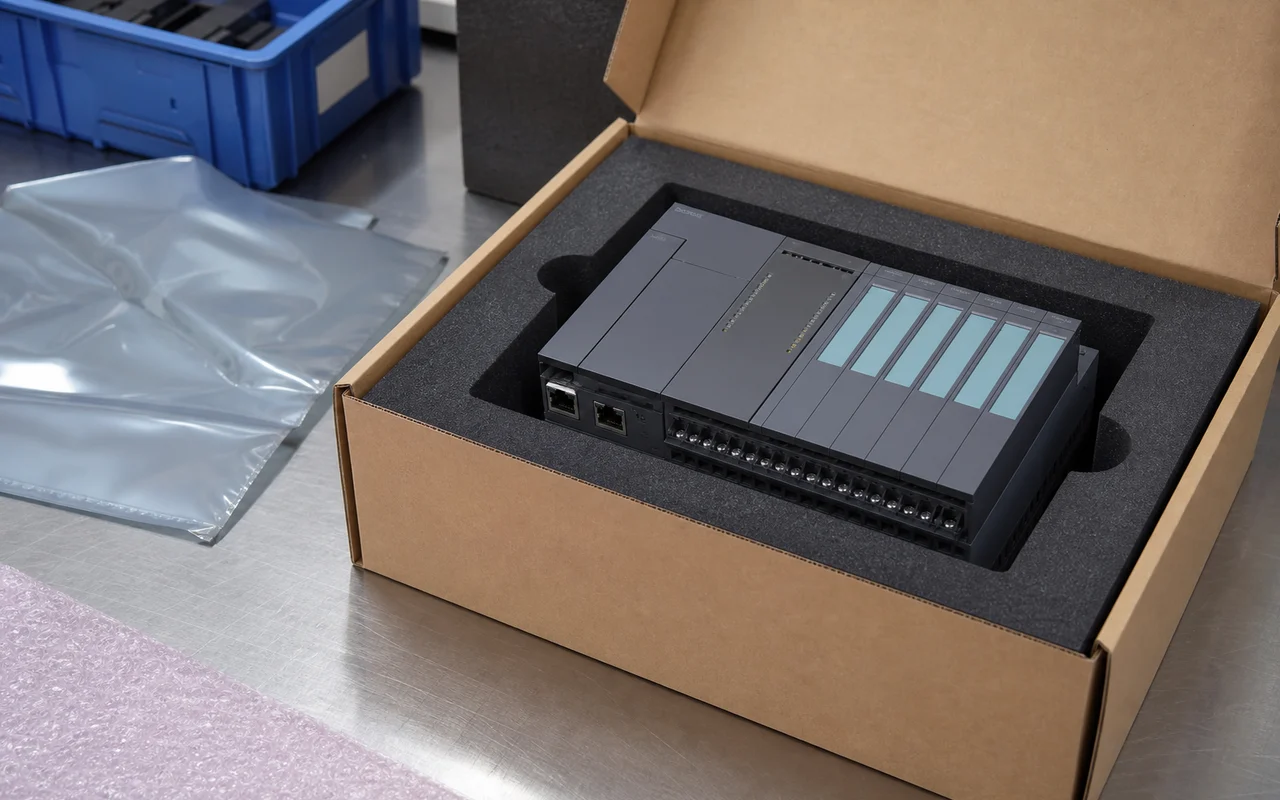 Secure Export Packing
Cushion protection and strong cartons ensure safe transportation.
 Worldwide Shipping
Global logistics network supports air, sea and express delivery.
 Documentation Check
Part number, revision and compatibility verified before shipment.
 After-sales Support
Professional technical support to help resolve your issues.