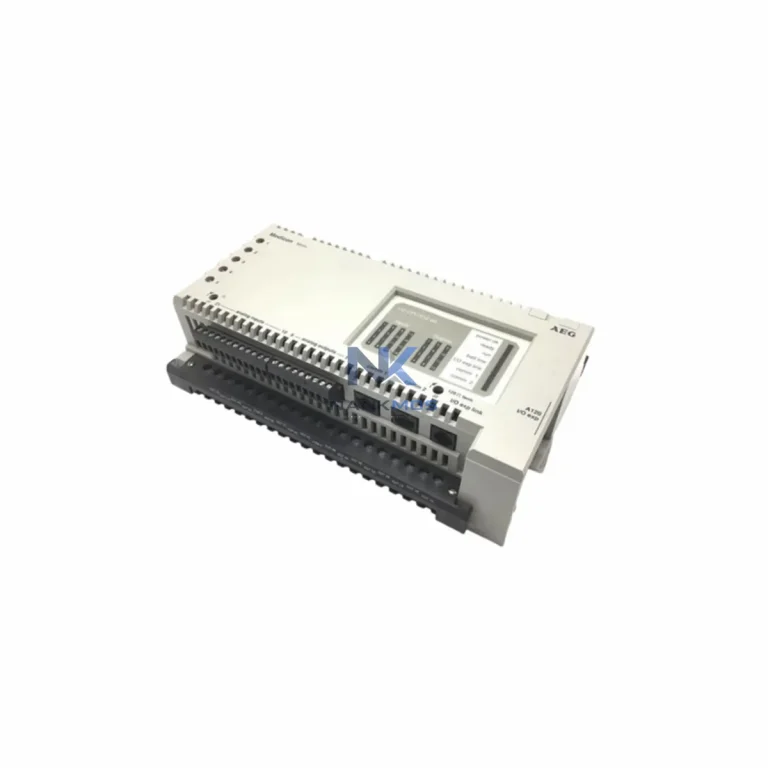
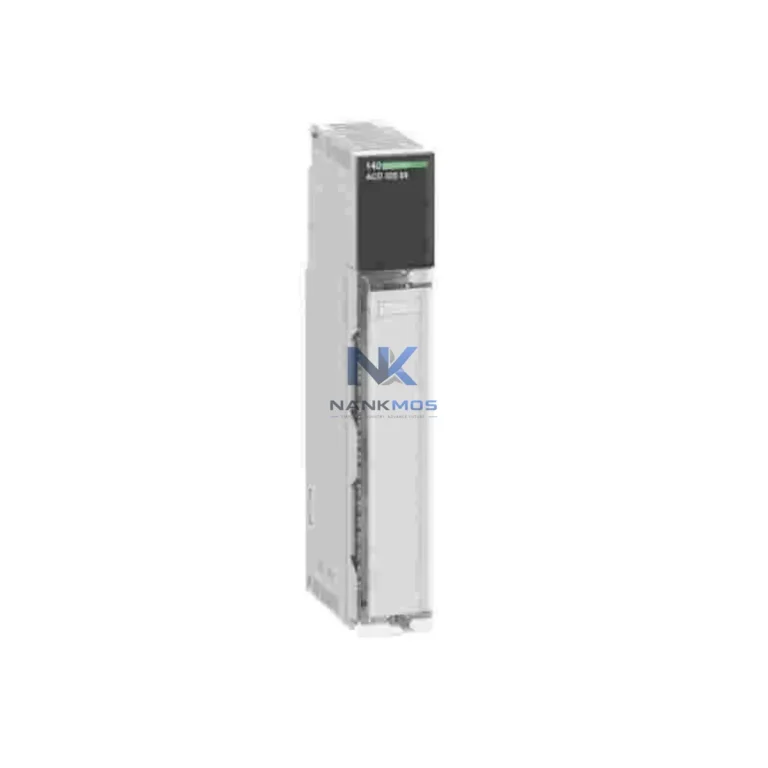
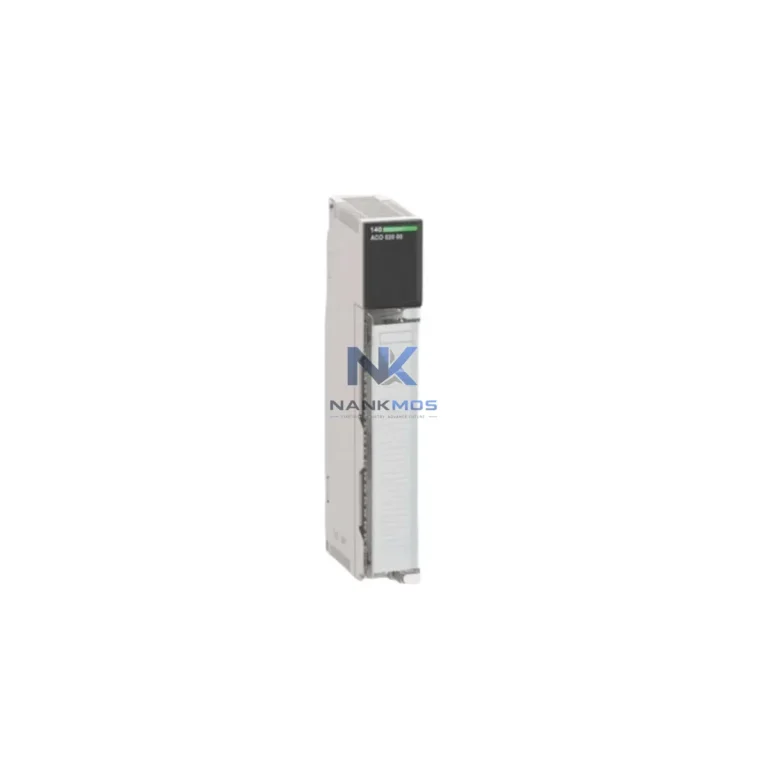
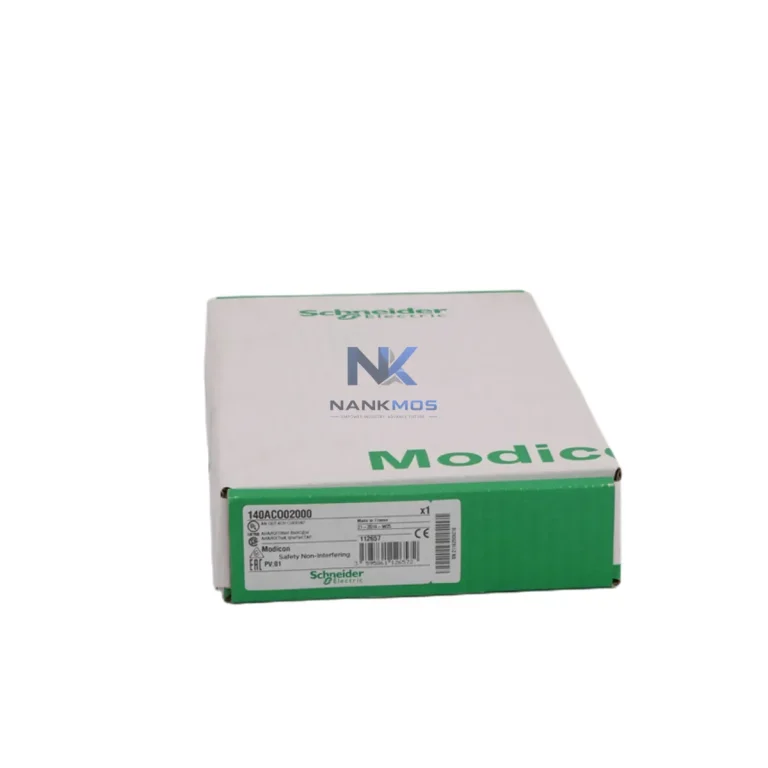
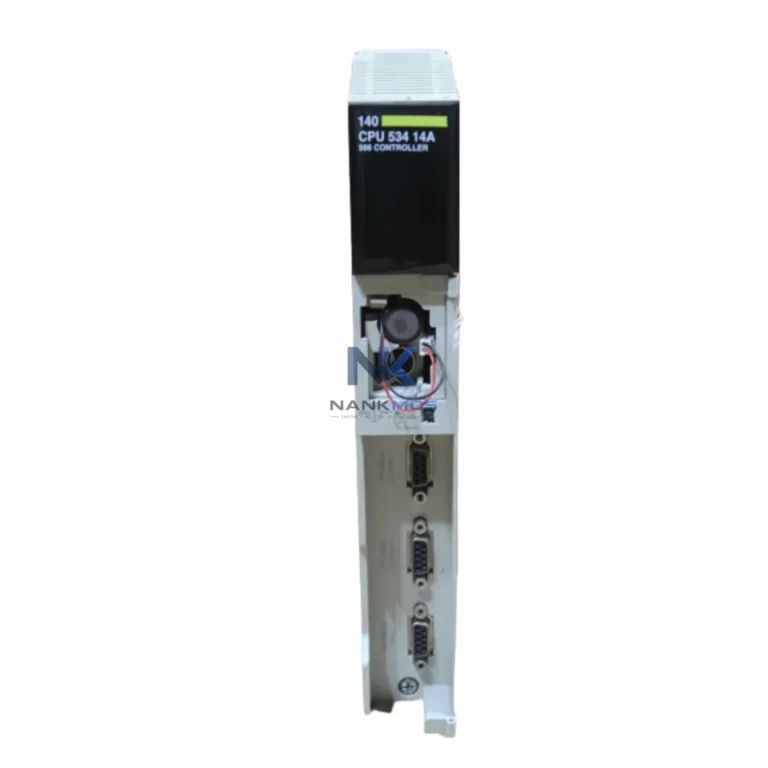
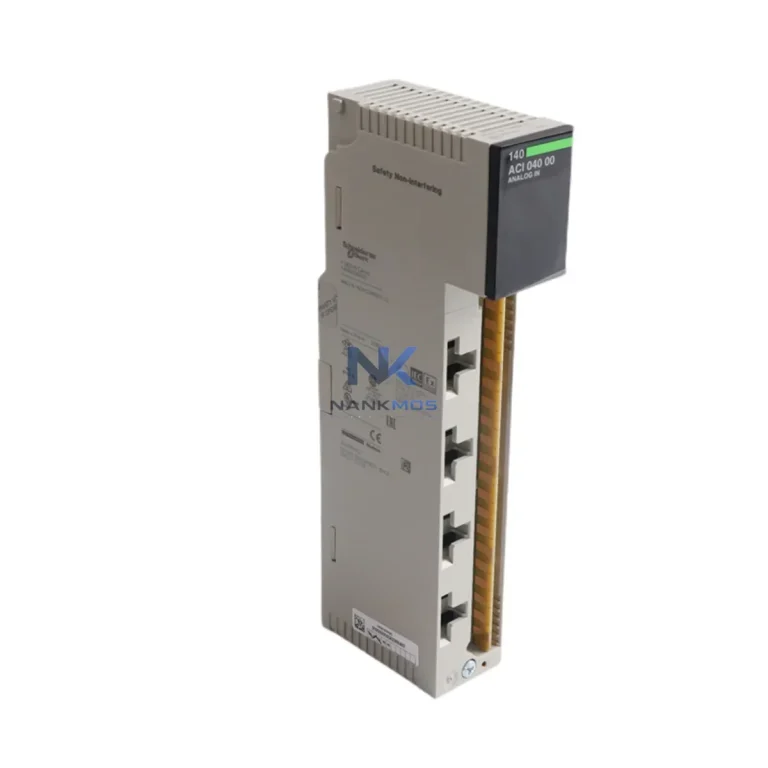
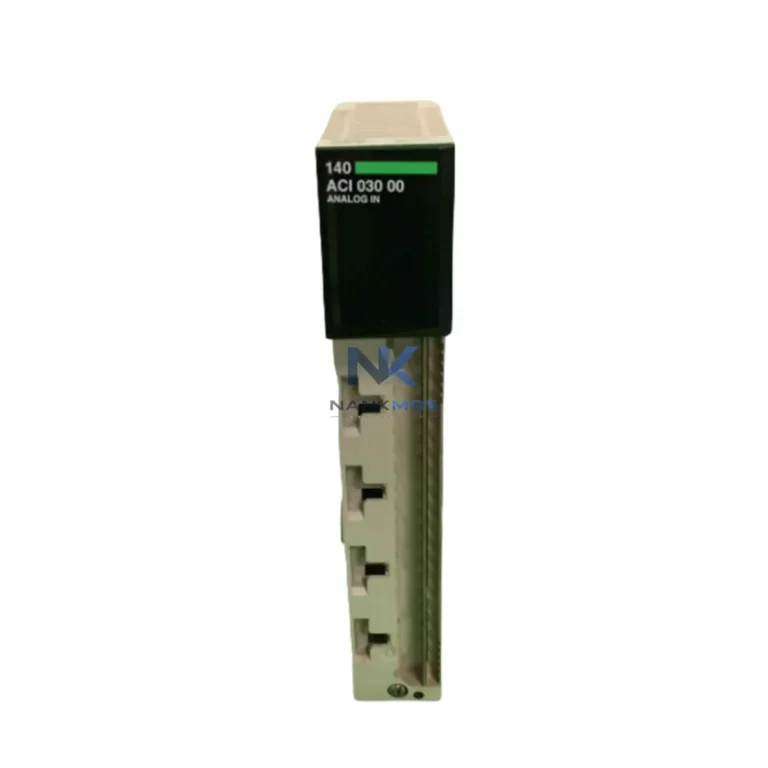
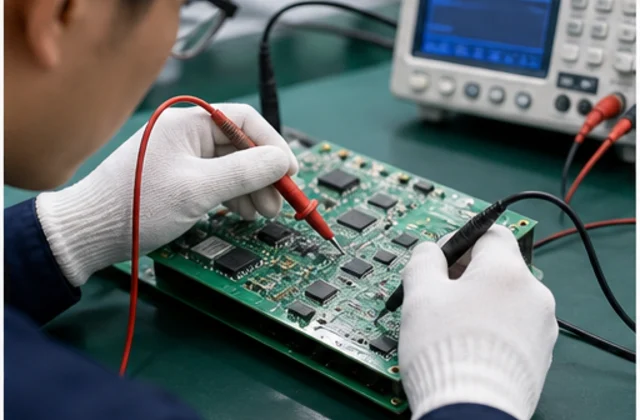
 Functional Inspection
100% tested on professional platforms to ensure stable performance.
Schneider Electric MDO32BNS is a NANKMOS industrial automation product record Listed under Modicon M340 series and Business & Industrial > Automation, Control & Flow Devices > Programmable Logic Controllers. Confirm condition, availability, lead time, compatibility and documentation by email inquiry.
Brand names are used for identification only.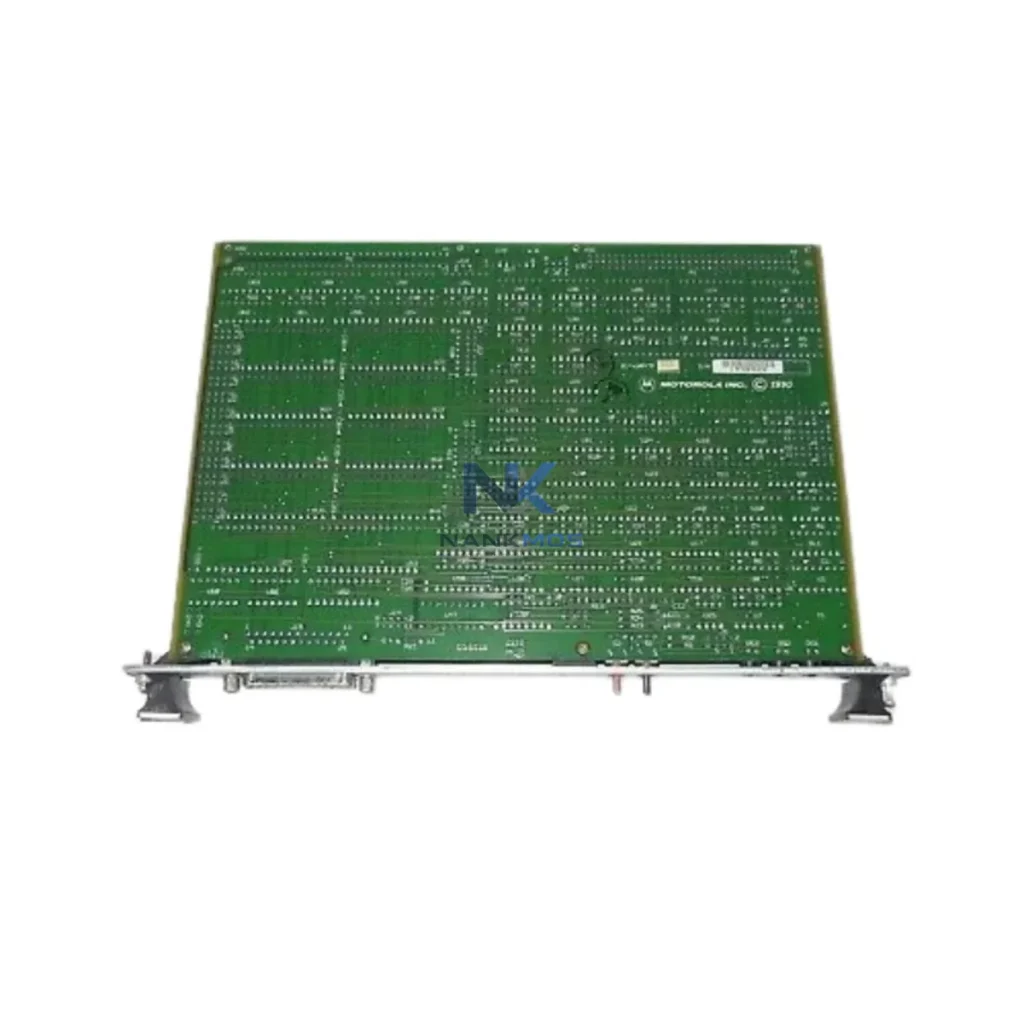
Schneider Electric MDO32BNS is a NANKMOS industrial automation product record Listed under Modicon M340 series and Business & Industrial > Automation, Control & Flow Devices > Programmable Logic Controllers. Confirm condition, availability, lead time, compatibility and documentation by email inquiry.
| Manufacturer | Schneider Electric |
|---|---|
| Application | Controller Processing & System Control |
| Part Number / Model | MDO32BNS |
| Compatible System | Modicon M340 |
| Series | Modicon M340 |
| Condition Options | To Confirm |
| Module Type | Controller / CPU Module |
| Warranty | 12 Months |
| Packaging | Anti-static Bag / Secure Box |
| Shipping Methods | DHL / FedEx / UPS / Air / Sea |
| Availability | To Confirm |
| Lead Time | To Confirm |
| Documentation | Part number and revision checked before quote |
The Schneider Electric MDO32BNS is a 32-channel transistor discrete output module engineered for the Modicon M340 programmable automation controller platform. Designed to serve as a high-density digital output interface within distributed control architectures, the MDO32BNS bridges the gap between PLC logic execution and field-level actuator response — delivering deterministic, low-latency switching across 32 independent output channels. In smart factory environments where production continuity depends on real-time command execution, this module functions as a critical node in the data chain that connects controller decisions to physical process outcomes.
Within a typical Modicon M340 rack assembly, the MDO32BNS receives output commands from the CPU module — such as the BMX P34 2020 or BMX P34 20302 processor — and translates those commands into transistor-switched signals that drive solenoid valves, motor contactors, indicator lamps, conveyor drives, and other actuator loads. The module's transistor output technology ensures fast switching response, extended service life compared to relay-based alternatives, and compatibility with 24 VDC field wiring standards common across IEC 61131-compliant automation sites.
From a data flow perspective, the MDO32BNS participates in the full automation data chain: sensor signals are acquired through companion input modules such as the BMX DDI 3202K or BMX AMI 0410 analog input module, processed by the M340 CPU executing IEC 61131-3 ladder or function block programs, and then dispatched as discrete output commands to the MDO32BNS. This closed-loop signal path — from field sensor through PLC logic to actuator output — forms the backbone of real-time process control in manufacturing, utilities, and infrastructure applications.
In a fully integrated smart factory deployment, the MDO32BNS operates as the final-mile output node in a multi-layer automation architecture. The data flow begins at the field level, where sensors — including inductive proximity switches, photoelectric sensors, and pressure transmitters — feed real-time process signals into discrete and analog input modules mounted in the same M340 rack. Modules such as the BMX DDI 3202K (32-channel discrete input) and BMX AMI 0410 (4-channel analog input) collect these signals and pass them across the X-Bus backplane to the M340 CPU for processing.
The M340 CPU — running EcoStruxure Control Expert (formerly Unity Pro) — executes the control program, evaluates process conditions, and generates output commands. These commands are dispatched across the backplane to the MDO32BNS, which switches its 32 transistor outputs to drive field actuators. In parallel, the CPU communicates upstream via its integrated Ethernet port, transmitting real-time I/O data to SCADA systems, historian servers, and MES platforms using Modbus TCP/IP or EtherNet/IP protocols.
For sites requiring extended I/O reach beyond the local rack, the M340 platform supports distributed I/O expansion via Advantys STB island modules or remote I/O drops connected over CANopen or Modbus Plus networks. In these architectures, the MDO32BNS may serve as the local high-density output module while remote drops handle geographically distributed actuator points — all managed from a single M340 CPU with unified addressing.
At the network layer, industrial Ethernet switches — such as those in the ConneXium or Hirschmann MICE series — provide the managed switching infrastructure that carries Modbus TCP/IP traffic between the M340 controller, SCADA workstations, and engineering terminals. Redundant ring topologies using RSTP or MRP protocols ensure network resilience, preventing single-point failures from disrupting production. The MDO32BNS, as a backplane-connected module, benefits from this network stability indirectly: any disruption to the CPU's Ethernet communication triggers alarm conditions visible in the SCADA system, while the module itself continues executing the last valid output state until the CPU re-establishes communication.
For remote diagnostics, the M340 platform's integrated web server and FTP data logging capabilities allow maintenance engineers to access real-time I/O status, module health data, and event logs from any networked terminal — without requiring physical access to the control panel. This remote visibility is particularly valuable in unmanned substations, water treatment facilities, and remote pump stations where on-site intervention is costly. Paired with a Vijeo Designer HMI panel or a SCADA system running on EcoStruxure Operator Terminal Expert, operators can monitor MDO32BNS output channel states, detect wiring faults, and respond to alarm conditions in real time.
In variable speed drive applications, the MDO32BNS output channels are commonly used to issue run/stop commands, direction control signals, and fault reset pulses to Altivar ATV312 or ATV630 variable frequency drives. The drive's status feedback — run confirmation, fault status, speed reached — is returned via discrete input modules in the same rack, completing the command-feedback loop within the M340 control system. This tight integration between the MDO32BNS output module, the Altivar drive, and the M340 CPU enables precise motor control with full diagnostic transparency at the SCADA level.
Many industrial sites operate with fragmented control architectures — legacy PLCs running proprietary protocols, I/O modules from multiple vendors with incompatible addressing schemes, and SCADA systems that cannot access real-time field data without manual polling. The MDO32BNS, deployed within a Modicon M340 system, addresses several of these structural data gaps.
Protocol Fragmentation: The M340 platform's multi-protocol communication capability — supporting Modbus TCP/IP, EtherNet/IP, CANopen, and serial Modbus RTU simultaneously — allows the MDO32BNS to participate in heterogeneous network environments. Output commands can originate from a Modbus TCP SCADA system, be processed by the M340 CPU, and be executed by the MDO32BNS without requiring protocol conversion gateways at the field level.
Data Silos: In sites where output module status is not reported back to the SCADA layer, maintenance teams lose visibility into actuator command states. The M340 platform's unified memory map exposes MDO32BNS output channel states as readable variables accessible via Modbus TCP or OPC-UA, enabling SCADA historians to log output command patterns, detect stuck outputs, and correlate actuator behavior with process events.
Remote Monitoring Gaps: Without remote I/O diagnostics, field technicians must physically inspect output modules to verify channel states. The M340's integrated diagnostic reporting — accessible via Control Expert or the CPU's built-in web server — provides per-channel output status, load detection (where supported), and module health indicators that can be surfaced in SCADA alarm dashboards without site visits.
Production Line Transparency: By integrating MDO32BNS output data into MES and ERP systems via OPC-UA or REST API gateways, production managers gain real-time visibility into actuator command cycles, enabling cycle time analysis, predictive maintenance scheduling, and OEE (Overall Equipment Effectiveness) calculation at the machine level.
Alarm Tracking and System Expansion: The M340 platform's modular rack architecture allows additional I/O modules — including further MDO32BNS units — to be added to the system without reprogramming the CPU communication stack. Alarm conditions detected at the output level (e.g., output overload, short circuit) are automatically surfaced in the Control Expert diagnostic buffer and forwarded to SCADA alarm management systems.
Q1: What communication protocols does the Schneider MDO32BNS support for SCADA integration? The MDO32BNS communicates with the M340 CPU via the proprietary X-Bus backplane — not directly via Ethernet. SCADA integration is achieved through the M340 CPU's communication ports, which support Modbus TCP/IP, EtherNet/IP, and OPC-UA (via gateway). Output channel states are mapped to the CPU's memory and accessible to any Modbus TCP or EtherNet/IP client, including Wonderware, Ignition, and EcoStruxure SCADA Expert platforms.
Q2: How does the MDO32BNS perform in high-cycle applications — is there a risk of output degradation over time? The MDO32BNS uses transistor output technology rather than mechanical relays, which eliminates contact wear as a failure mode. Transistor outputs are rated for millions of switching cycles, making the module well-suited for high-frequency actuator control applications such as conveyor indexing, valve cycling, and indicator lamp control. Each unit shipped by NANKMOS undergoes pre-shipment functional testing to verify output channel integrity before dispatch.
Q3: Can the MDO32BNS be used in a distributed I/O architecture, or is it limited to local rack installation? The MDO32BNS is designed for local rack installation within a Modicon M340 backplane. For distributed I/O requirements — where output points must be located remotely from the main rack — Schneider Electric's Advantys STB or TM3 remote I/O solutions are recommended. These can be integrated with the M340 CPU over CANopen or Modbus TCP networks, with the MDO32BNS handling high-density local output tasks while remote drops address geographically distributed points.
Q4: What warranty and after-sales support does NANKMOS provide for the MDO32BNS? All MDO32BNS units supplied by NANKMOS are covered by a 12-month warranty from the date of shipment. Each module is sourced from verified supply channels, undergoes pre-shipment inspection, and is shipped with full traceability documentation. Technical support for integration, configuration, and troubleshooting is available via [email protected]. Replacement or repair arrangements under warranty are handled directly by the NANKMOS technical team.
Functional Inspection100% tested on professional platforms to ensure stable performance.
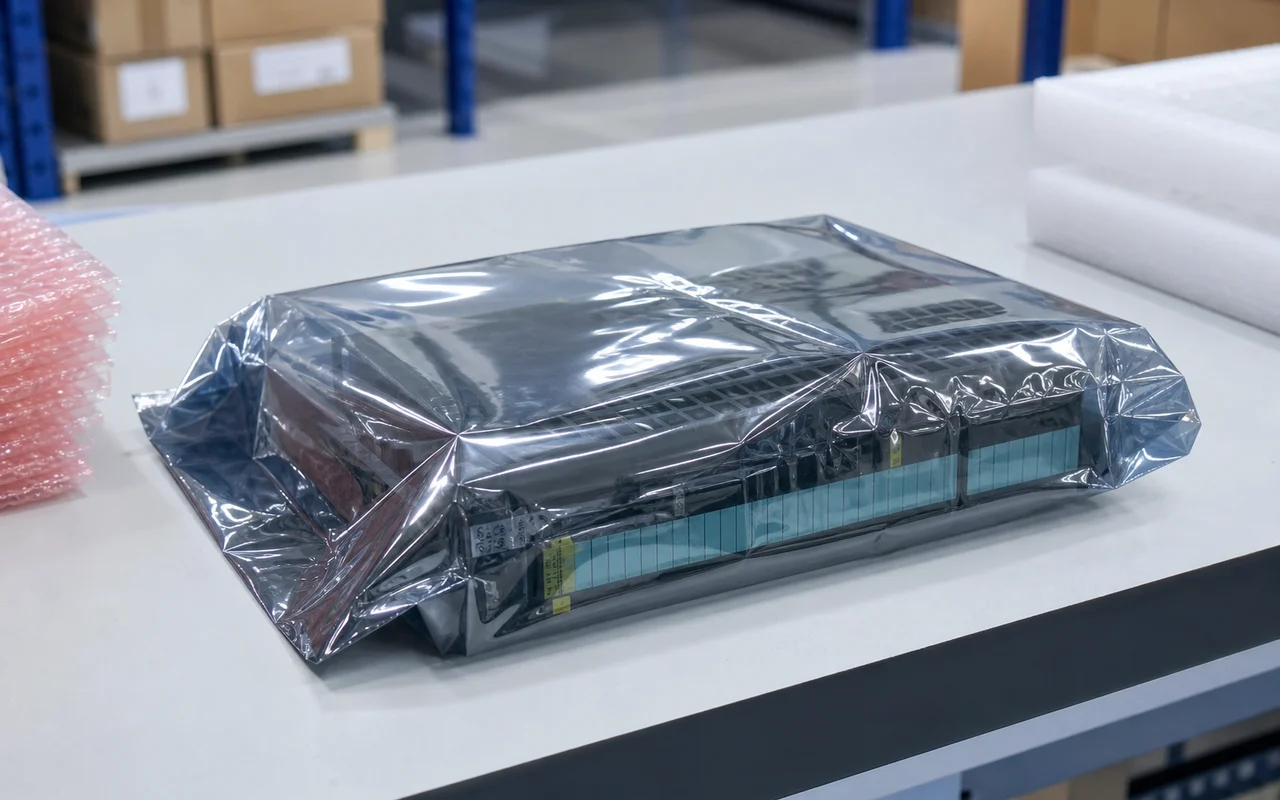 Anti-static Packaging
Modules are packed in anti-static bags to prevent electrostatic damage.
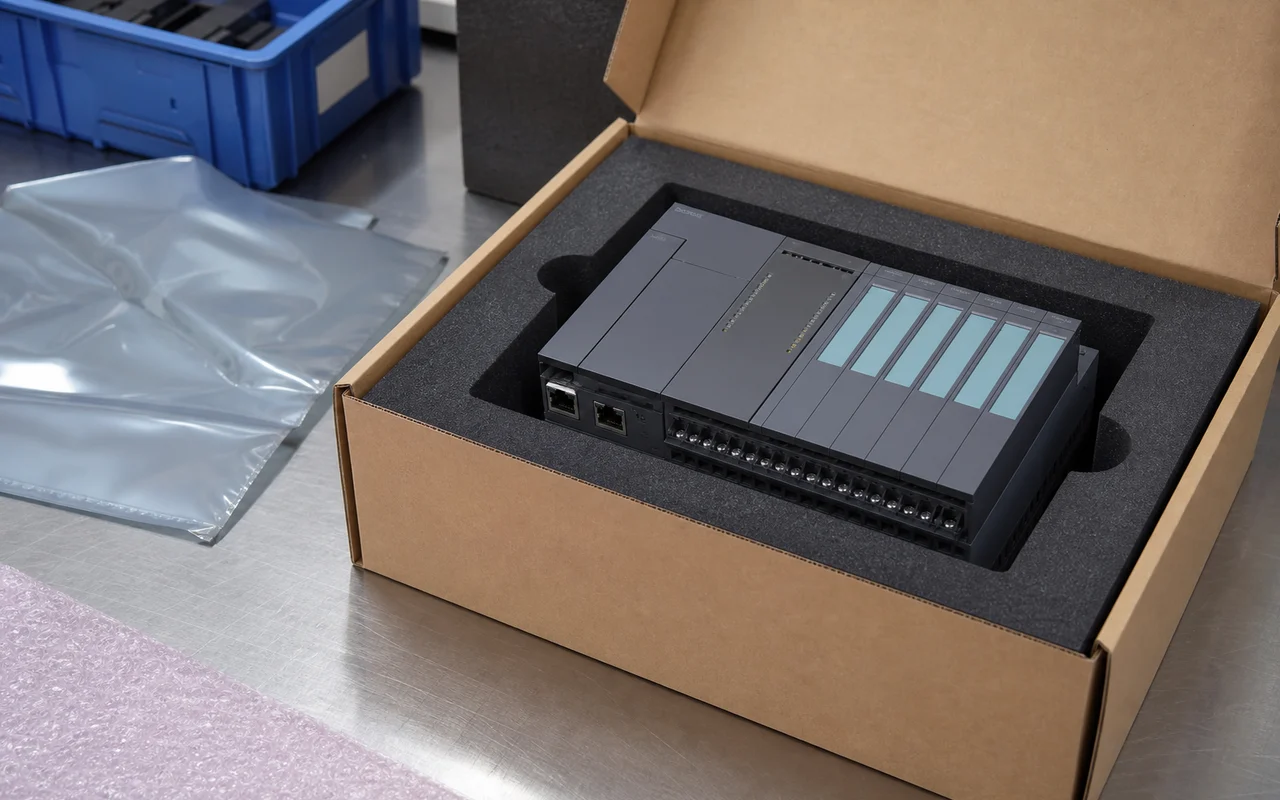 Secure Export Packing
Cushion protection and strong cartons ensure safe transportation.
 Worldwide Shipping
Global logistics network supports air, sea and express delivery.
 Documentation Check
Part number, revision and compatibility verified before shipment.
 After-sales Support
Professional technical support to help resolve your issues.