 Functional Inspection
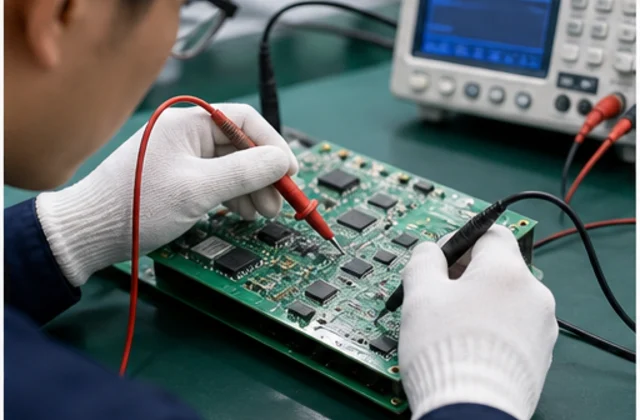
100% tested on professional platforms to ensure stable performance.
KUKA 00-106-447kr210.kr240 ZH210£¯240 is a NANKMOS industrial automation product record Listed under Other series series and Drives. Confirm condition, availability, lead time, compatibility and documentation by email inquiry.
Brand names are used for identification only.
KUKA 00-106-447kr210.kr240 ZH210£¯240 is a NANKMOS industrial automation product record Listed under Other series series and Drives. Confirm condition, availability, lead time, compatibility and documentation by email inquiry.
| Manufacturer | KUKA |
|---|---|
| Application | Motion Control & Drive System |
| Part Number / Model | 00-106-447kr210.kr240 ZH210£¯240 |
| Compatible System | Confirmed by inquiry |
| Condition Options | To Confirm |
| Module Type | Servo / Drive Module |
| Warranty | 12 Months |
| Packaging | Anti-static Bag / Secure Box |
| Shipping Methods | DHL / FedEx / UPS / Air / Sea |
| Availability | To Confirm |
| Lead Time | To Confirm |
| Documentation | Part number and revision checked before quote |
The KUKA 00-106-447 gearbox is not a standalone replacement component — it is a precision execution-layer element within a fully coordinated robotic control architecture. Understanding its role requires examining how it interacts with every layer of the automation system.
At the control layer, the KUKA KRC4 or KRC5 robot controller governs all motion trajectories, interpolation cycles, and axis coordination. The 00-106-447 gearbox receives torque commands translated from the controller's motion planner through the servo drive chain. Any deviation in gearbox backlash or transmission ratio directly affects the positional accuracy reported back to the KRC controller, making mechanical precision at this joint inseparable from software-level path performance.
The servo drive layer — typically KUKA's integrated KSD (KUKA Servo Drive) modules housed within the KRC4 cabinet — converts controller commands into precise current and voltage signals delivered to the axis motors. The 00-106-447 gearbox must be dimensionally and dynamically matched to the motor output shaft to ensure that drive torque is transmitted without resonance, backlash accumulation, or thermal stress. Mismatched gearbox specifications introduce vibration signatures that the KRC4's diagnostic system will flag as axis irregularities.
At the I/O and feedback layer, resolver or encoder signals from the motor mounted upstream of the 00-106-447 gearbox feed position data back to the KRC controller via the RDC (Resolver Digital Converter) card. Signal integrity at this layer depends on mechanical stability at the gearbox interface — any looseness or wear in the 00-106-447 transmission will introduce noise into the feedback loop, degrading closed-loop control performance across the entire KR 210 or KR 240 arm.
The communication layer in a KUKA robotic cell typically involves EtherCAT or PROFINET connectivity between the KRC4/KRC5 controller and the plant-level PLC — often a Siemens S7-1500 or Allen-Bradley ControlLogix system. The robot's motion status, fault codes, and axis health data are transmitted upstream to the SCADA or MES layer. A gearbox fault on the 00-106-447 axis will propagate as a diagnostic event through this communication chain, triggering cell-level interlocks and production line stops. Maintaining the gearbox in OEM specification is therefore a system-wide reliability concern, not merely a mechanical one.
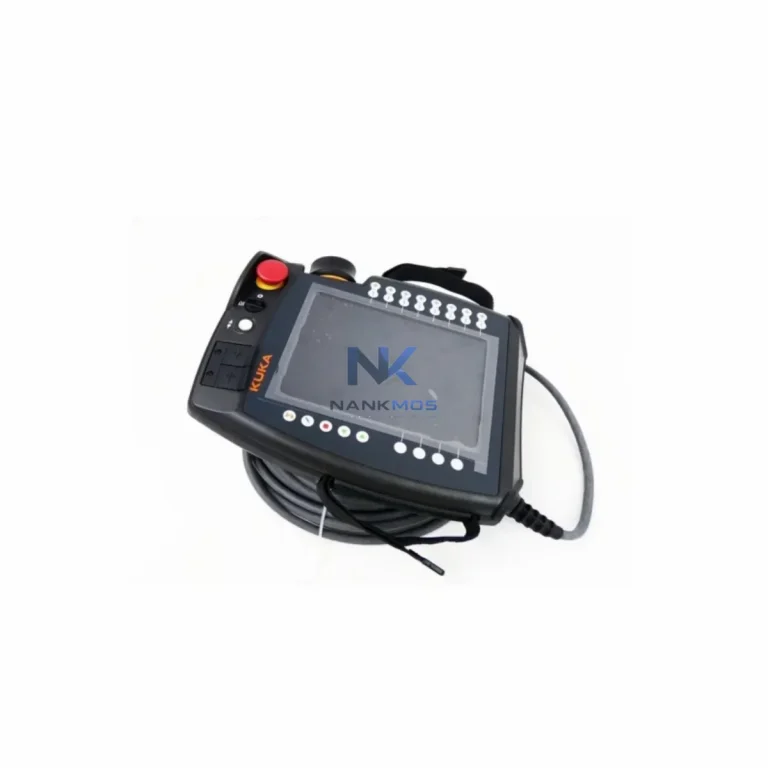
At the HMI layer, operators monitoring the robotic cell via a KUKA smartPAD or a plant-level Siemens TP1500 / TP1900 panel will observe axis load, temperature, and position deviation data that directly reflects the mechanical condition of the 00-106-447 gearbox. Predictive maintenance workflows increasingly rely on trending these HMI-visible parameters to schedule gearbox replacement before catastrophic failure occurs.
The power layer — including the KRC4's internal power supply unit (PSU), the DC link bus, and the regenerative braking circuit — must be sized for the inertia and load profile of the KR 210/KR 240 arm. A correctly specified 00-106-447 gearbox maintains the designed gear ratio and efficiency, ensuring that the power budget calculated during system commissioning remains valid throughout the robot's service life.
For redundancy and maintenance planning, facilities operating multiple KR 210 or KR 240 robots should maintain a stocked 00-106-447 gearbox alongside critical spares such as the KRC4 main computer board, KSD servo drive modules, RDC resolver cards, and axis motor assemblies. This inventory strategy minimizes mean time to repair (MTTR) and supports continuous production in high-availability environments such as automotive body-in-white lines, foundry automation, and heavy-payload palletizing systems.
The protection layer — including mechanical hard stops, software axis limits configured in the KRC4, and external safety PLCs such as the KUKA Safety Interface Board (SIB) or a Pilz PNOZ safety relay — depends on the gearbox maintaining its rated stiffness and zero-backlash performance. Gearbox wear that allows axis overshoot can compromise safety zone integrity, making timely replacement of the 00-106-447 a safety-critical maintenance action in certified robotic workcells.
Automotive Manufacturing: In automotive body-in-white and powertrain assembly lines, KUKA KR 210 and KR 240 robots perform high-payload spot welding, material handling, and press-tending operations. The 00-106-447 gearbox sustains the axis torque demands of continuous multi-shift production cycles, where gearbox reliability directly determines line OEE (Overall Equipment Effectiveness). Replacement with an OEM-matched 00-106-447 unit ensures that robot TCP (Tool Center Point) accuracy is restored to factory specification without requiring full arm recalibration.
Foundry and Heavy Industry: KR 240 robots deployed in die-casting extraction, forging handling, and sand-casting operations subject the gearbox to high thermal cycling and shock loading. The 00-106-447 gearbox's sealed lubrication system and robust housing are engineered for these environments. Facilities in metallurgy, steel processing, and aluminum smelting rely on rapid gearbox replacement to minimize furnace-side downtime.
Palletizing and Logistics: High-cycle palletizing applications in food and beverage, consumer goods, and e-commerce fulfillment centers operate KR 210 robots at sustained payload and speed profiles. Gearbox wear in these applications is predictable and schedule-driven. Stocking the 00-106-447 as a planned maintenance spare supports preventive replacement strategies aligned with OEM service intervals.
Process and Chemical Industry: In petrochemical, pharmaceutical, and water treatment facilities where robotic automation is deployed for hazardous material handling or precision dispensing, the mechanical integrity of the 00-106-447 gearbox is essential for maintaining process repeatability and regulatory compliance. System integrators in these sectors specify OEM-grade replacement components to satisfy validation and qualification requirements.
Shipbuilding and Offshore: Marine and offshore fabrication facilities using KUKA heavy-payload robots for welding and assembly in confined or corrosive environments require gearbox components that meet OEM dimensional and material standards. The 00-106-447 supports these demanding deployment scenarios with factory-verified specifications.
Q1: Is the KUKA 00-106-447 gearbox compatible with both KR 210 and KR 240 robot variants, and does it require any modification for installation? The 00-106-447 is an OEM-specified gearbox designed for direct fitment in the designated axis position of both the KR 210 and KR 240 robot families. No dimensional modification is required. Installation follows the KUKA service documentation for the relevant axis, including specified torque values for fasteners, OEM-approved lubricant top-up procedures, and post-installation mastering via the KRC4 or KRC5 controller's axis mastering routine. It is strongly recommended to perform a load test and axis accuracy verification after replacement before returning the robot to production.
Q2: How does replacing the 00-106-447 gearbox affect the broader control architecture, and what system checks are required after installation? Gearbox replacement at the execution layer requires re-mastering of the affected axis to restore the robot's coordinate reference. After mechanical installation, the KRC4/KRC5 controller must be used to perform axis mastering using the KUKA EMT (Electronic Mastering Tool) or reference notch method. Following mastering, verify axis load values, check for abnormal vibration signatures in the KRC diagnostic log, and confirm that safety zone boundaries remain valid. If the robot is integrated with an external safety PLC via the SIB or ProfiSafe interface, a functional safety test of the axis limits should be conducted before resuming automated production.
Q3: What is the warranty coverage for the 00-106-447 gearbox, and what does pre-shipment testing include? Every KUKA 00-106-447 gearbox supplied through NANKMOS is covered by a 12-Month Warranty from the date of shipment. Pre-shipment testing includes dimensional verification against OEM specifications, backlash measurement, lubrication integrity check, and visual inspection for housing and flange surface condition. Units that do not meet OEM tolerance standards are not dispatched. For facilities requiring documentation of test results for maintenance records or quality audits, inspection reports can be provided upon request. Contact [email protected] for warranty claims, technical support, or expedited stock availability inquiries.
Functional Inspection100% tested on professional platforms to ensure stable performance.
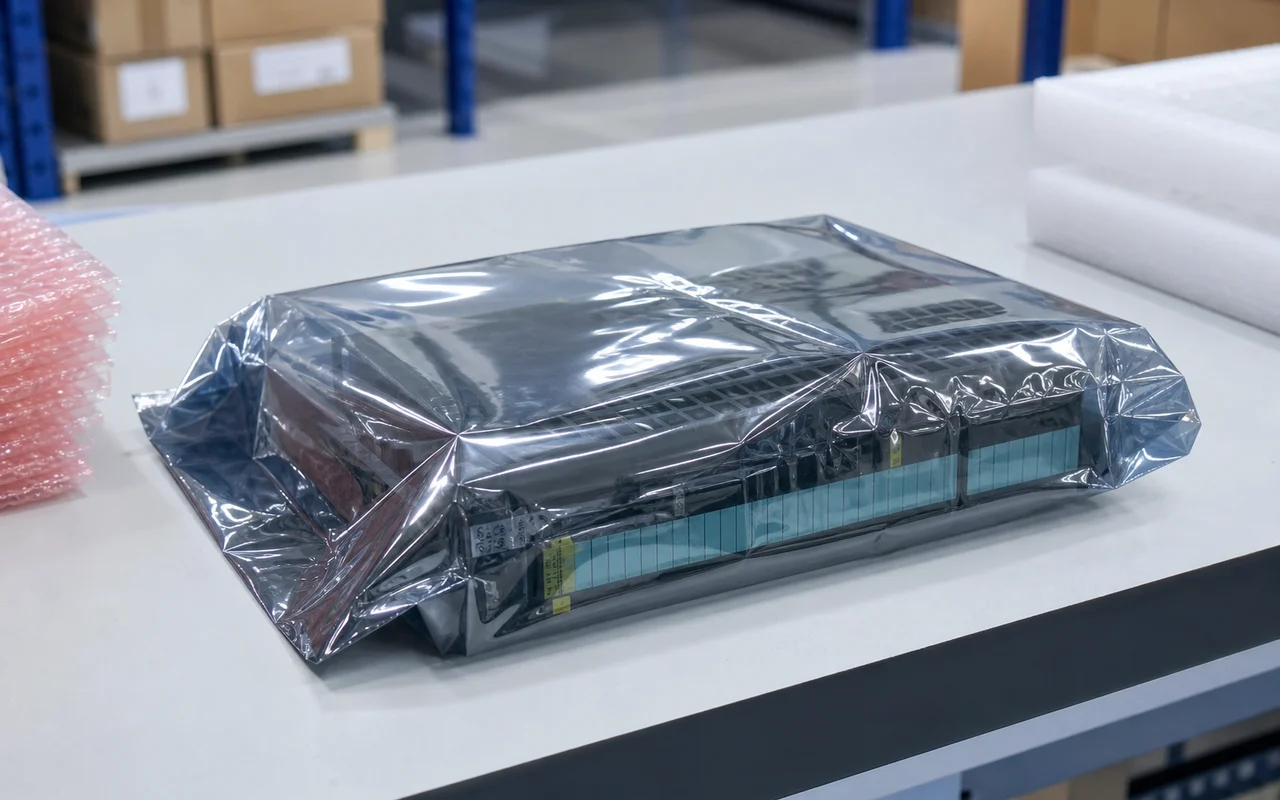 Anti-static Packaging
Modules are packed in anti-static bags to prevent electrostatic damage.
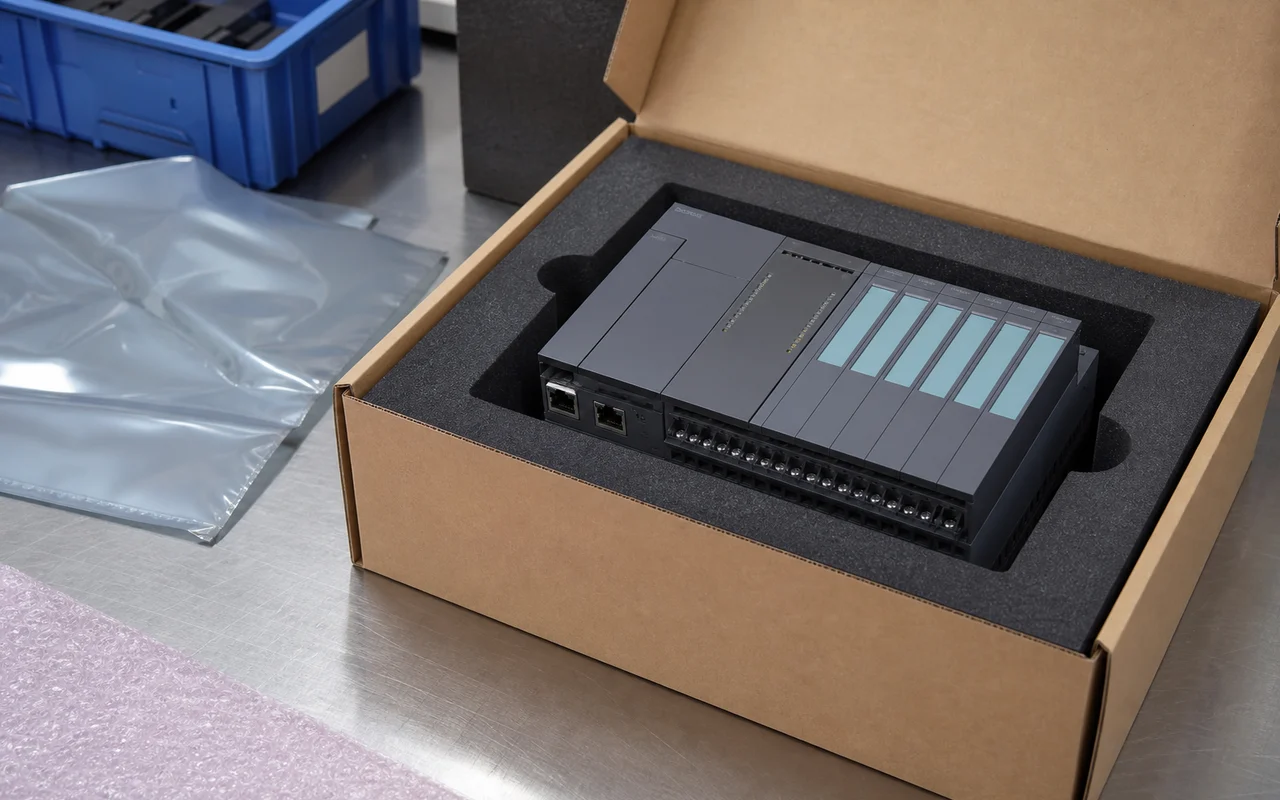 Secure Export Packing
Cushion protection and strong cartons ensure safe transportation.
 Worldwide Shipping
Global logistics network supports air, sea and express delivery.
 Documentation Check
Part number, revision and compatibility verified before shipment.
 After-sales Support
Professional technical support to help resolve your issues.