Functional Inspection
100% tested on professional platforms to ensure stable performance.
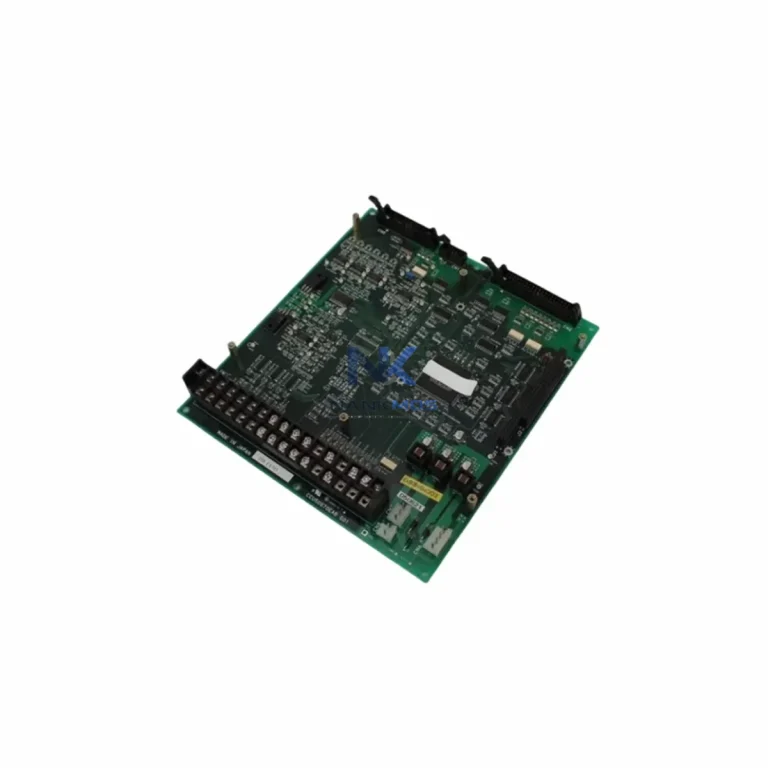
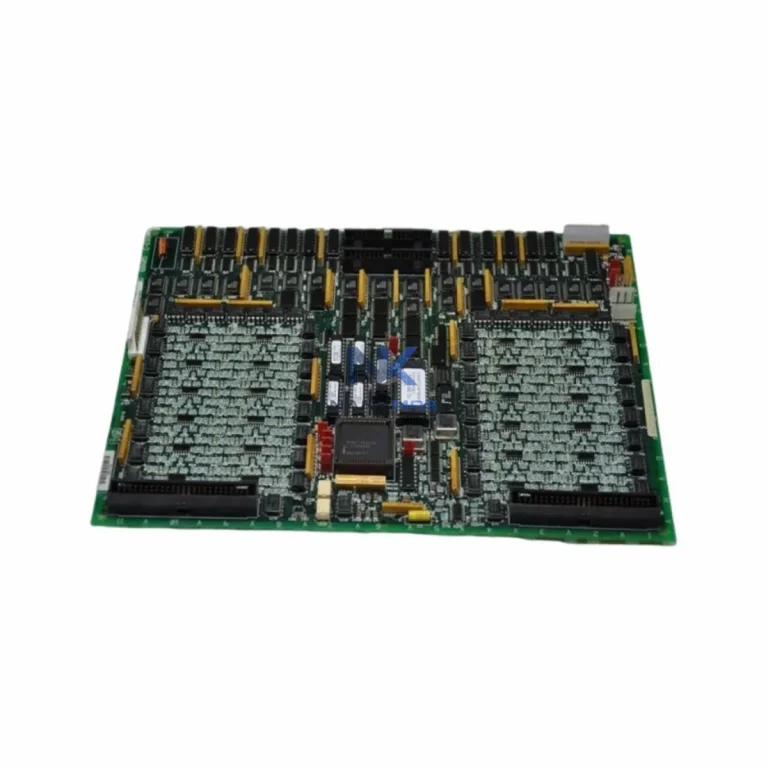
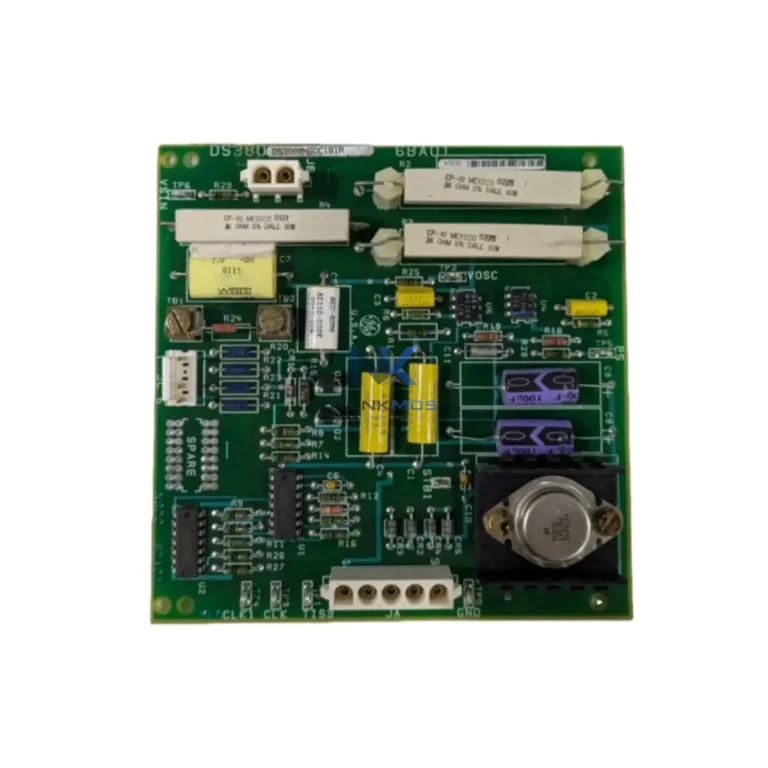
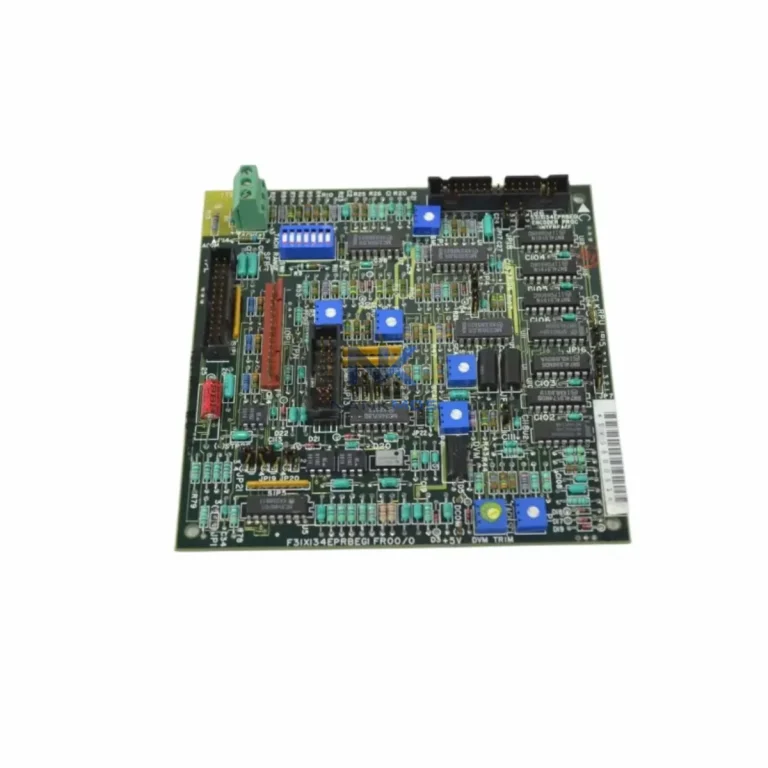
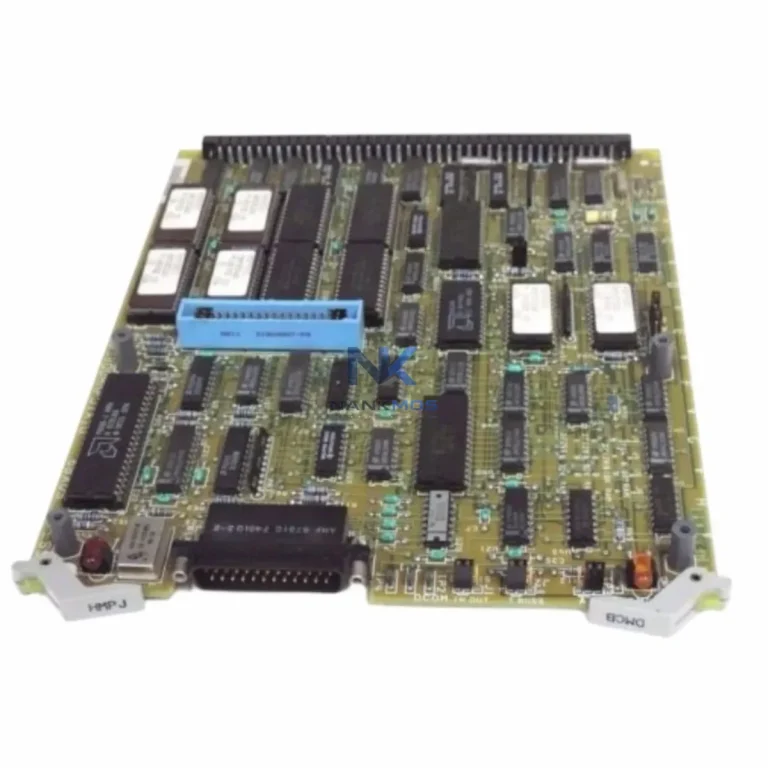
GE IS200TRLYH1BHH is a NANKMOS industrial automation product record Listed under Mark VI series and Business & Industrial > Automation, Control & Flow Devices. Confirm condition, availability, lead time, compatibility and documentation by email inquiry.
Brand names are used for identification only.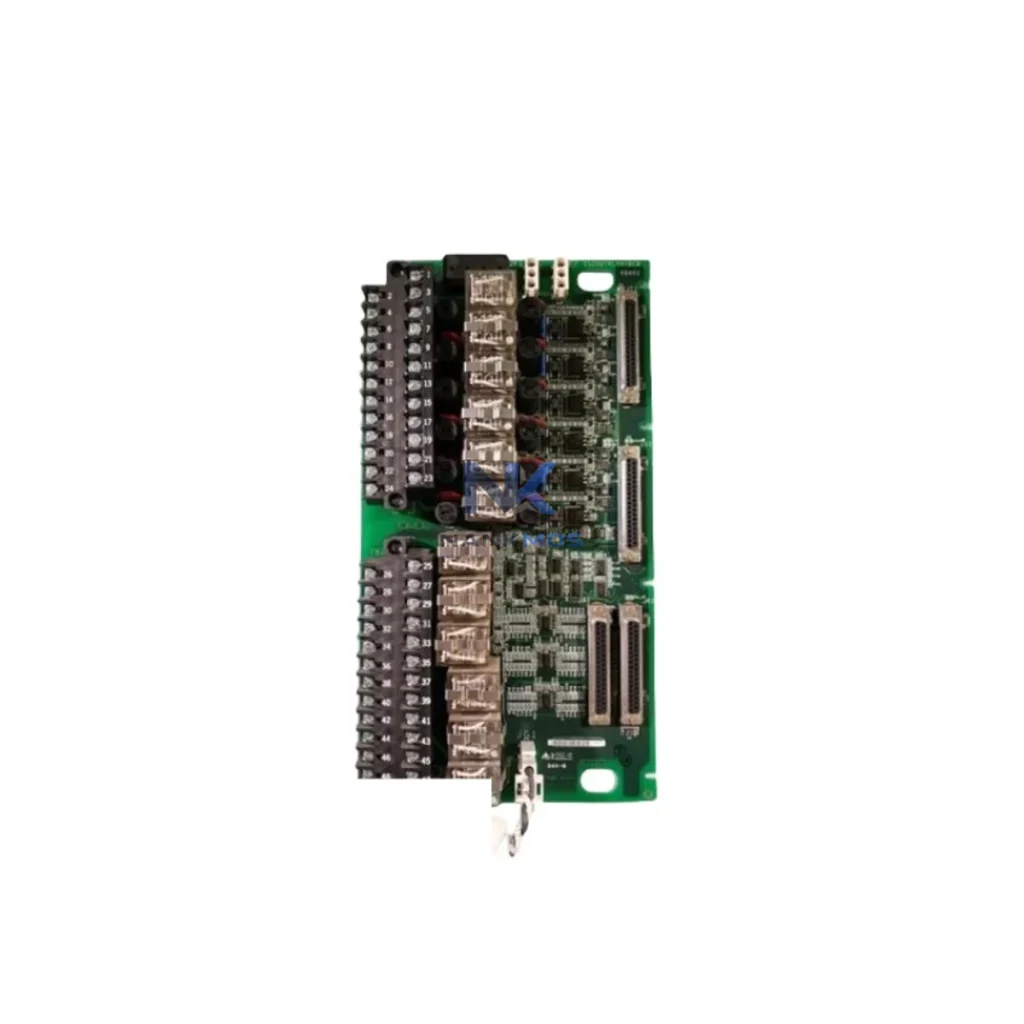
GE IS200TRLYH1BHH is a NANKMOS industrial automation product record Listed under Mark VI series and Business & Industrial > Automation, Control & Flow Devices. Confirm condition, availability, lead time, compatibility and documentation by email inquiry.
| Manufacturer | GE |
|---|---|
| Application | DCS / Control Board Replacement |
| Part Number / Model | IS200TRLYH1BHH |
| Compatible System | Mark VI |
| Series | Mark VI |
| Condition Options | To Confirm |
| Module Type | Control Board / Card |
| Warranty | 12 Months |
| Packaging | Anti-static Bag / Secure Box |
| Shipping Methods | DHL / FedEx / UPS / Air / Sea |
| Availability | To Confirm |
| Lead Time | To Confirm |
| Documentation | Part number and revision checked before quote |
The GE IS200TRLYH1BHH is a relay terminal board engineered for deployment within the GE Mark VI turbine control system architecture. Designed to interface directly with the Mark VI I/O and control modules, this board provides the critical relay output termination layer that bridges digital control commands from the controller core to field-level actuators, solenoids, and protective trip circuits. Its role within the control hierarchy is not peripheral — it is a load-bearing component of the output execution layer, ensuring that relay-driven signals are routed, isolated, and terminated with the precision demanded by gas turbine, steam turbine, and combined-cycle power generation environments.
In a fully integrated Mark VI architecture, the IS200TRLYH1BHH operates in close coordination with the VCMI communication interface module, the PPRO protection processor, the TTUR turbine terminal board, and the TREG voltage regulator terminal board. The relay outputs managed through this board are typically driven by the DOUT digital output modules seated in the Mark VI I/O rack, with signal integrity maintained across the VME-based backplane. The board's terminal layout is designed for direct field wiring, reducing intermediate junction requirements and minimizing signal path resistance — a key factor in relay response time for protective trip applications.
System architects integrating the IS200TRLYH1BHH into a redundant Mark VI configuration will find that the board supports the TMR (Triple Modular Redundancy) voting architecture native to the platform. In TMR deployments, three independent control paths — R, S, and T — each drive their own relay terminal board, with the voted output determining the final actuator state. This redundancy model ensures that no single-point failure in the relay output layer can cause an unintended trip or a failure to trip, satisfying the SIL 2 and SIL 3 functional safety requirements common in power generation and petrochemical applications.
From a signal flow perspective, the IS200TRLYH1BHH sits at the boundary between the digital control domain and the electromechanical execution domain. Control commands originating in the UCSC or UCVE controller cards are processed through the I/O pack layer, transmitted via the IONet Ethernet-based I/O network, and ultimately resolved at the relay terminal board as discrete contact closures. The board's terminal blocks accommodate both normally open and normally closed relay configurations, providing flexibility for fail-safe and fail-secure wiring strategies depending on the application's safety logic requirements.
For facilities managing long-term spare parts inventories, the IS200TRLYH1BHH represents a high-priority stocking item. Relay terminal boards in continuous-duty turbine control applications are subject to contact wear, coil fatigue, and thermal cycling degradation over extended operational periods. Maintaining a pre-tested, shelf-ready replacement unit eliminates the lead time risk associated with sourcing legacy Mark VI components during unplanned outages. Each unit supplied by NANKMOS undergoes pre-shipment functional verification to confirm relay actuation, contact continuity, and terminal integrity before dispatch.
The IS200TRLYH1BHH achieves its full operational value when considered as a component within the broader Mark VI automation platform rather than as a standalone relay board. In a typical gas turbine control cabinet, the board is installed alongside the IS200TTURH1B turbine terminal board, which handles speed, temperature, and vibration signal inputs, and the IS200TREGH1B voltage regulator terminal board, which manages generator excitation outputs. Together, these terminal boards form the complete I/O termination layer for the Mark VI rack assembly.
At the controller level, the UCSC simplex controller or UCVE TMR controller card coordinates all I/O transactions across the VME backplane. The VCMI communication interface module manages the IONet connection between the controller and remote I/O packs, ensuring that relay output commands are transmitted with deterministic latency. For applications requiring extended I/O capacity, the IS200BIOSH1A I/O terminal board and IS200AEPAH1A analog I/O pack can be integrated into the same rack architecture, expanding the system's signal handling capability without requiring additional controller hardware.
Power distribution within the Mark VI cabinet is managed through the IS200EPSMH1A power supply module, which provides regulated DC power to the controller, I/O modules, and terminal boards. In redundant power configurations, dual IS200EPSMH1A units operate in hot-standby mode, ensuring that a power supply failure does not interrupt relay output availability. The IS200TRLYH1BHH's relay coils are powered from this regulated supply, making power supply integrity a direct dependency for relay output reliability.
For HMI integration, the Mark VI system interfaces with GE's Cimplicity SCADA platform or third-party DCS systems via the VCMI's Modbus TCP or OPC DA communication ports. Relay output states managed by the IS200TRLYH1BHH are reflected in real-time on the HMI, providing operators with immediate visibility into trip circuit status, valve positions, and actuator states. This closed-loop visibility between the relay execution layer and the HMI display layer is essential for rapid fault diagnosis and post-trip analysis.
The IS200TRLYH1BHH is deployed across a wide range of heavy industrial applications where relay-driven output control is integral to process safety and operational continuity.
In power generation — gas turbine, steam turbine, and combined-cycle plants — the board manages trip relay outputs for fuel shutoff valves, inlet guide vane actuators, and generator breaker control circuits. Its TMR-compatible design ensures that protective trip functions meet the reliability requirements of IEC 61511 functional safety standards.
In petrochemical and refinery environments, the board is used in compressor control panels and process gas handling systems where relay outputs drive emergency shutdown (ESD) valves and pressure relief actuators. The board's robust terminal construction supports the vibration and thermal cycling conditions typical of compressor train installations.
In water treatment and pumping stations, the IS200TRLYH1BHH controls pump start/stop relay circuits and valve actuator outputs within Mark VI-based SCADA-integrated control systems. Its compatibility with the IONet communication architecture allows seamless integration into distributed control topologies spanning multiple pump stations.
In mining and mineral processing applications, the board supports conveyor drive control, crusher motor protection relay circuits, and ventilation fan control systems where reliable relay output execution is critical for personnel safety and production continuity.
In marine and offshore installations, the IS200TRLYH1BHH is used in turbine-driven generator sets aboard LNG carriers and offshore platforms, where the Mark VI's proven reliability in harsh environments makes it the preferred control platform for critical rotating machinery.
Q1: Is the IS200TRLYH1BHH compatible with both simplex and TMR Mark VI configurations? Yes. The IS200TRLYH1BHH is designed to operate in both simplex (single-path) and TMR (Triple Modular Redundancy) Mark VI architectures. In TMR configurations, three boards are installed — one per R/S/T control path — with the voted relay output determined by the Mark VI's 2-out-of-3 voting logic. Each board functions independently, ensuring that a single board failure does not compromise the voted output. Compatibility should be confirmed against the specific Mark VI system revision and I/O pack configuration documented in the site's control system drawing package.
Q2: What pre-shipment testing is performed on the IS200TRLYH1BHH, and what does the 12-Month Warranty cover? Each IS200TRLYH1BHH unit undergoes pre-shipment functional verification including relay actuation testing across all output channels, contact continuity measurement for both normally open and normally closed configurations, and terminal block integrity inspection. The 12-Month Warranty covers defects in materials and workmanship under normal operating conditions from the date of shipment. Units that fail to perform to specification within the warranty period are eligible for replacement or repair at no additional cost. Warranty claims are processed through NANKMOS directly — contact [email protected] for RMA procedures.
Q3: How should the IS200TRLYH1BHH be installed and commissioned within an existing Mark VI rack, and what are the key long-term maintenance considerations? Installation follows the GE Mark VI hardware installation manual procedures: the board is mounted in the designated terminal board slot within the Mark VI I/O rack, field wiring is terminated to the labeled relay output terminal blocks per the site wiring diagram, and the I/O pack connector is seated to the backplane. Commissioning requires verification of relay output states against the control logic configuration using the Mark VI Toolbox software. For long-term maintenance, relay contact resistance should be checked during scheduled outages — typically every 2 to 4 years depending on switching frequency — and the board should be replaced proactively if contact resistance exceeds the manufacturer's threshold or if relay actuation response time degrades. Maintaining a stocked spare unit minimizes unplanned downtime risk during critical maintenance windows.
Functional Inspection100% tested on professional platforms to ensure stable performance.
 Anti-static Packaging
Modules are packed in anti-static bags to prevent electrostatic damage.
 Secure Export Packing
Cushion protection and strong cartons ensure safe transportation.
 Worldwide Shipping
Global logistics network supports air, sea and express delivery.
 Documentation Check
Part number, revision and compatibility verified before shipment.
 After-sales Support
Professional technical support to help resolve your issues.