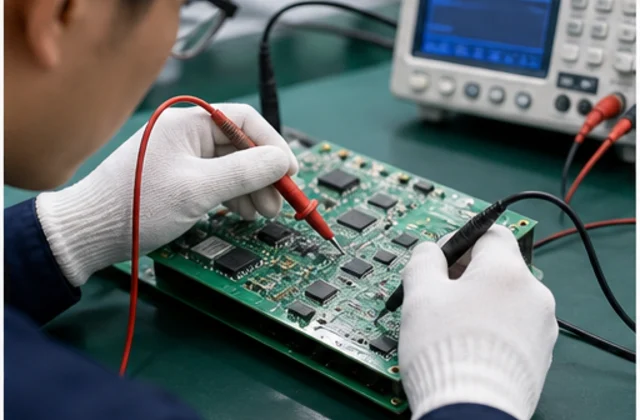
 Functional Inspection
100% tested on professional platforms to ensure stable performance.
ABB NDBU-95 is a NANKMOS industrial automation product record Listed under ACS880 series and Drives. Confirm condition, availability, lead time, compatibility and documentation by email inquiry.
Brand names are used for identification only.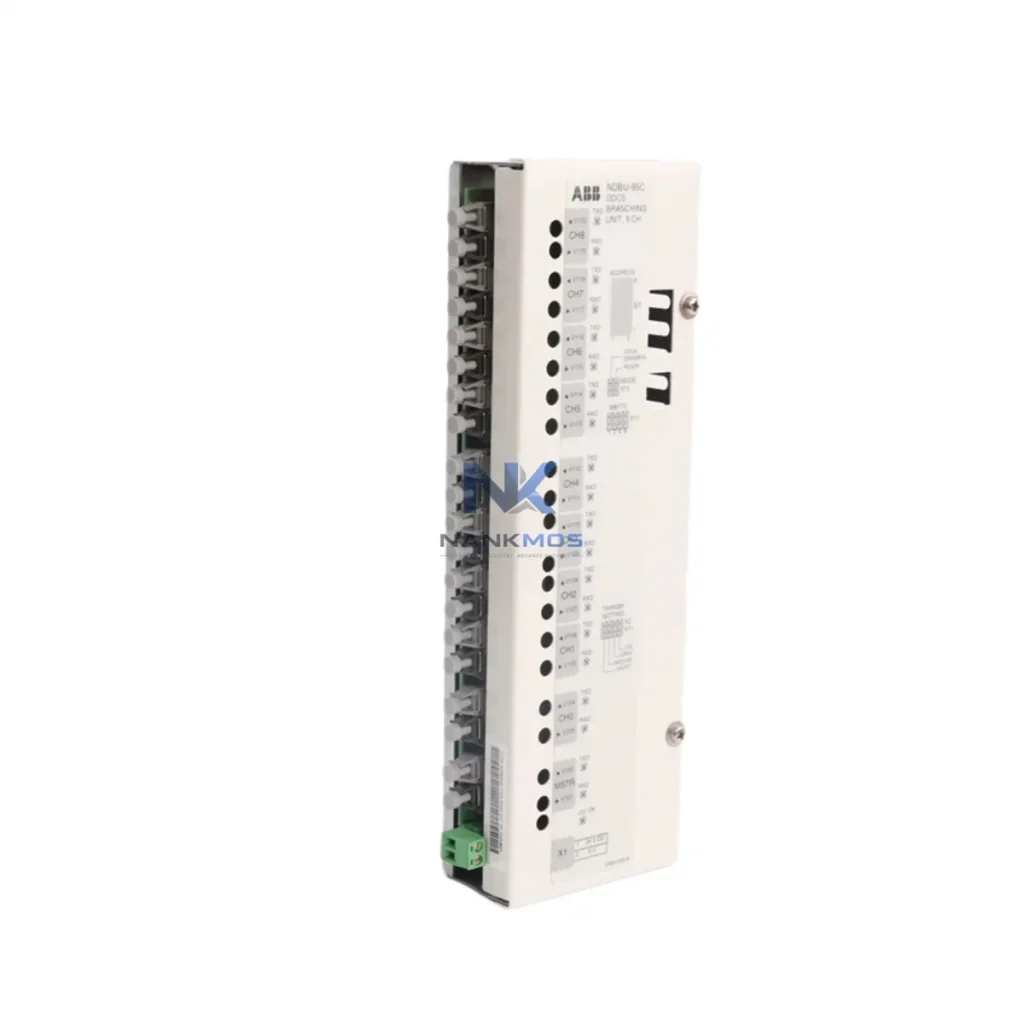
ABB NDBU-95 is a NANKMOS industrial automation product record Listed under ACS880 series and Drives. Confirm condition, availability, lead time, compatibility and documentation by email inquiry.
| Manufacturer | ABB |
|---|---|
| Application | Industrial Network Communication |
| Part Number / Model | NDBU-95 |
| Compatible System | ACS880 |
| Series | ACS880 |
| Condition Options | To Confirm |
| Module Type | Communication Module |
| Warranty | 12 Months |
| Packaging | Anti-static Bag / Secure Box |
| Shipping Methods | DHL / FedEx / UPS / Air / Sea |
| Availability | To Confirm |
| Lead Time | To Confirm |
| Documentation | Part number and revision checked before quote |
The ABB NDBU-95 is a high-performance DDCS (Distributed Drive Control System) branching unit engineered to optimize communication architecture across multi-drive installations in energy-intensive industrial environments. Designed specifically for integration with ABB ACS800 and ACS880 series variable frequency drives, the NDBU-95 enables centralized drive coordination, reduces redundant signal traffic, and supports real-time load balancing across production lines. By streamlining the fiber-optic DDCS network topology, it eliminates communication bottlenecks that contribute to inefficient energy consumption, unnecessary drive cycling, and elevated thermal loads in control cabinets.
In smart factory and process automation environments, the NDBU-95 serves as the communication backbone connecting multiple drives to a single master controller — typically an ABB AC500 PLC or an ACS880 master drive — enabling synchronized torque and speed control across motor groups. This synchronization is critical for reducing peak demand loads, smoothing energy draw curves, and preventing reactive power spikes that inflate energy costs. When paired with ABB FPBA-01 PROFIBUS adapter modules or FENA-21 Ethernet/IP communication modules, the NDBU-95 extends its coordination capability to SCADA systems and MES platforms, enabling plant-wide energy visibility and demand-side management.
The module supports up to 12 DDCS nodes per branch, making it suitable for large-scale drive arrays in applications such as conveyor systems, pump stations, compressor banks, and multi-axis material handling lines. Its fiber-optic interface eliminates electromagnetic interference from high-power switching environments, ensuring signal integrity even in electrically noisy switchgear rooms. This reliability directly reduces unplanned downtime caused by communication faults — a key driver of energy waste through emergency restarts and uncontrolled motor acceleration events.
The NDBU-95 operates at the center of a power-aware drive network. In a typical ACS880 multi-drive system, the NDBU-95 connects the master ACS880 drive to multiple follower drives via DDCS fiber links, enabling master-follower torque control that eliminates mechanical stress and reduces energy lost to load imbalance. The ABB AC500 PLC issues coordinated speed and torque references through the DDCS network, while the NDBU-95 ensures each drive receives commands with minimal latency — critical for maintaining production line rhythm and avoiding energy-wasting acceleration transients.
When integrated with ABB FPBA-01 PROFIBUS adapter modules installed on each follower drive, the system gains bidirectional status feedback — including actual current draw, motor speed, and fault codes — that feeds directly into the plant SCADA system. This data stream enables real-time energy monitoring at the drive level, allowing operators to identify underloaded motors, detect bearing wear through current signature analysis, and schedule predictive maintenance before failures cause unplanned stops. The NDBU-95 also works alongside ABB RETA-02 Ethernet adapter modules for facilities running EtherNet/IP or Modbus TCP protocols, bridging legacy DDCS drive networks into modern IIoT energy management platforms.
For power monitoring at the panel level, the NDBU-95 installation is typically complemented by ABB B23 or B24 series energy meters connected to the drive input feeders, providing kWh consumption data per drive group. Combined with ABB CP600 HMI panels displaying real-time drive status and energy KPIs, maintenance teams gain full visibility into load distribution, peak demand events, and efficiency trends across the production floor. I/O modules such as the ABB CI504 PROFIBUS coupler or CI592 PROFINET coupler extend this visibility to remote I/O racks, enabling distributed sensor data — temperature, vibration, pressure — to be correlated with drive energy consumption for comprehensive equipment health monitoring.
In high-throughput manufacturing environments, communication latency between drives and controllers is a hidden source of energy waste. When drives operate without synchronized coordination, each unit responds independently to load changes — resulting in torque conflicts, mechanical oscillation, and repeated acceleration-deceleration cycles that consume excess energy and accelerate mechanical wear. The NDBU-95 eliminates this inefficiency by providing a dedicated, low-latency DDCS communication path that keeps all drives in a group phase-aligned and load-balanced at all times.
For pump and fan applications running on ACS800 drives, the NDBU-95 enables master-follower pressure control strategies where a single PID loop governs the entire pump bank. This approach, compared to independent drive control, typically reduces total system energy consumption by 15–30% by preventing simultaneous full-speed operation of all units. In conveyor and material handling lines, synchronized speed control via DDCS ensures product spacing is maintained without stop-start cycling, reducing both energy consumption and product damage rates.
The NDBU-95 also contributes to thermal load reduction in control enclosures. By consolidating multiple point-to-point DDCS connections into a single branching topology, it reduces the number of active communication boards required per drive — lowering the total heat dissipation inside the cabinet and reducing cooling system energy demand. Over a full production shift, this thermal efficiency gain compounds into measurable reductions in HVAC energy consumption for the control room.
From a maintenance perspective, the NDBU-95 supports predictive maintenance workflows by ensuring continuous, uninterrupted data flow from all connected drives to the monitoring system. Drive fault histories, thermal models, and run-hour counters are transmitted without gaps, enabling condition-based maintenance scheduling that replaces time-based routines — reducing unnecessary part replacements and the energy cost of unplanned restarts. All units supplied by NANKMOS are tested for communication integrity and signal quality prior to shipment, and are covered by a 12-Month Warranty against manufacturing defects.
Q1: How does the NDBU-95 contribute to energy savings in a multi-drive ACS880 system? The NDBU-95 enables master-follower drive coordination via DDCS, allowing a single control reference to govern multiple drives simultaneously. This eliminates independent load hunting between drives, reduces reactive power generation, and smooths energy draw profiles — resulting in lower peak demand charges and reduced total energy consumption across the drive group.
Q2: Is the NDBU-95 compatible with both ACS800 and ACS880 series drives? Yes. The NDBU-95 is designed for ABB DDCS fiber-optic networks and is compatible with ACS800, ACS880, and selected ACS600 series drives. It can also interface with ABB AC500 PLCs and external DDCS master controllers. For specific firmware version compatibility, consult the ABB NDBU-95 hardware manual or contact NANKMOS technical support.
Q3: What is the recommended replacement or upgrade path if the NDBU-95 is discontinued or unavailable? For systems requiring DDCS branching with expanded node capacity or Ethernet integration, the ABB NDBU-95C (if available in your region) or a combination of FENA-21 Ethernet adapters with a dedicated DDCS master may serve as functional alternatives. NANKMOS maintains stock of NDBU-95 units and can advise on compatible substitutes based on your drive topology and control architecture.
Q4: What testing and quality assurance does NANKMOS perform before shipping the NDBU-95? Each NDBU-95 unit undergoes communication integrity testing, fiber-optic port verification, and power supply input checks before dispatch. Units are shipped with original packaging where available and include a 12-Month Warranty covering manufacturing defects. Lead times are typically 3–7 business days for in-stock units, with expedited shipping available on request.
Functional Inspection100% tested on professional platforms to ensure stable performance.
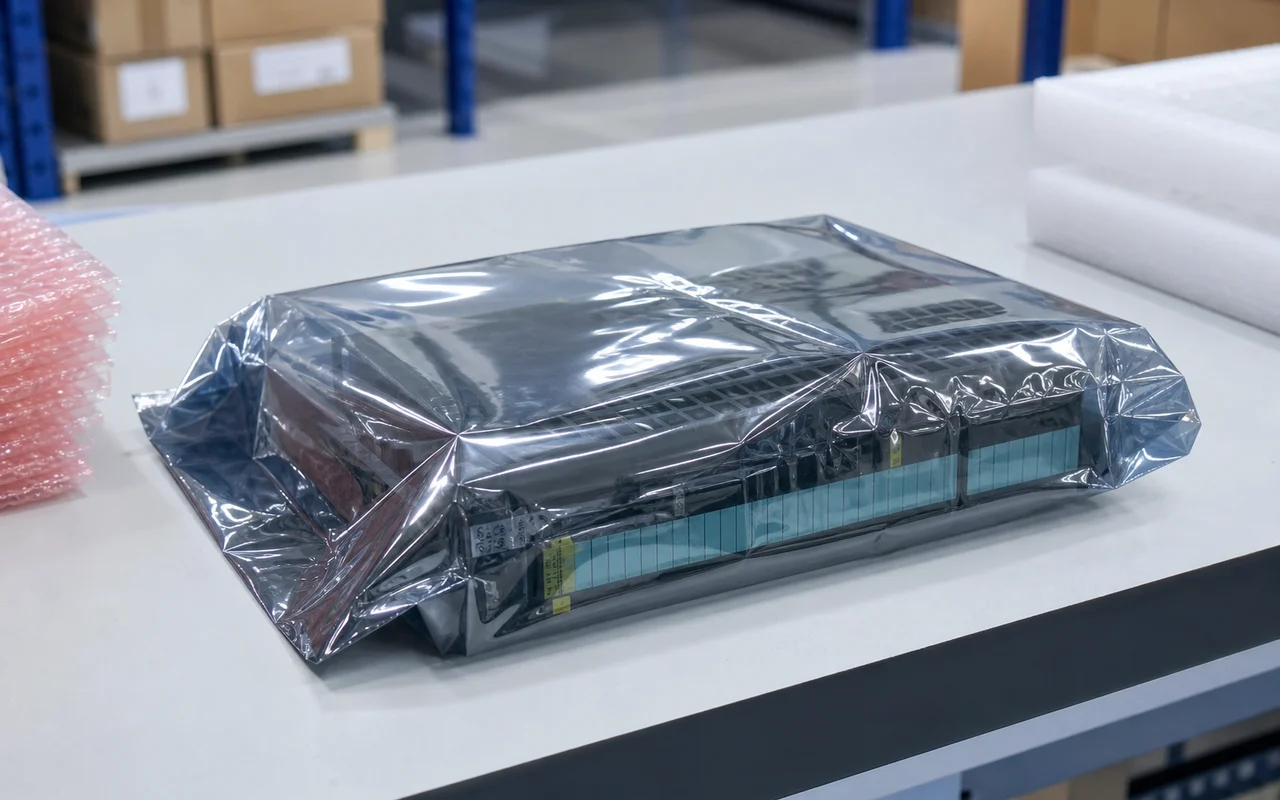 Anti-static Packaging
Modules are packed in anti-static bags to prevent electrostatic damage.
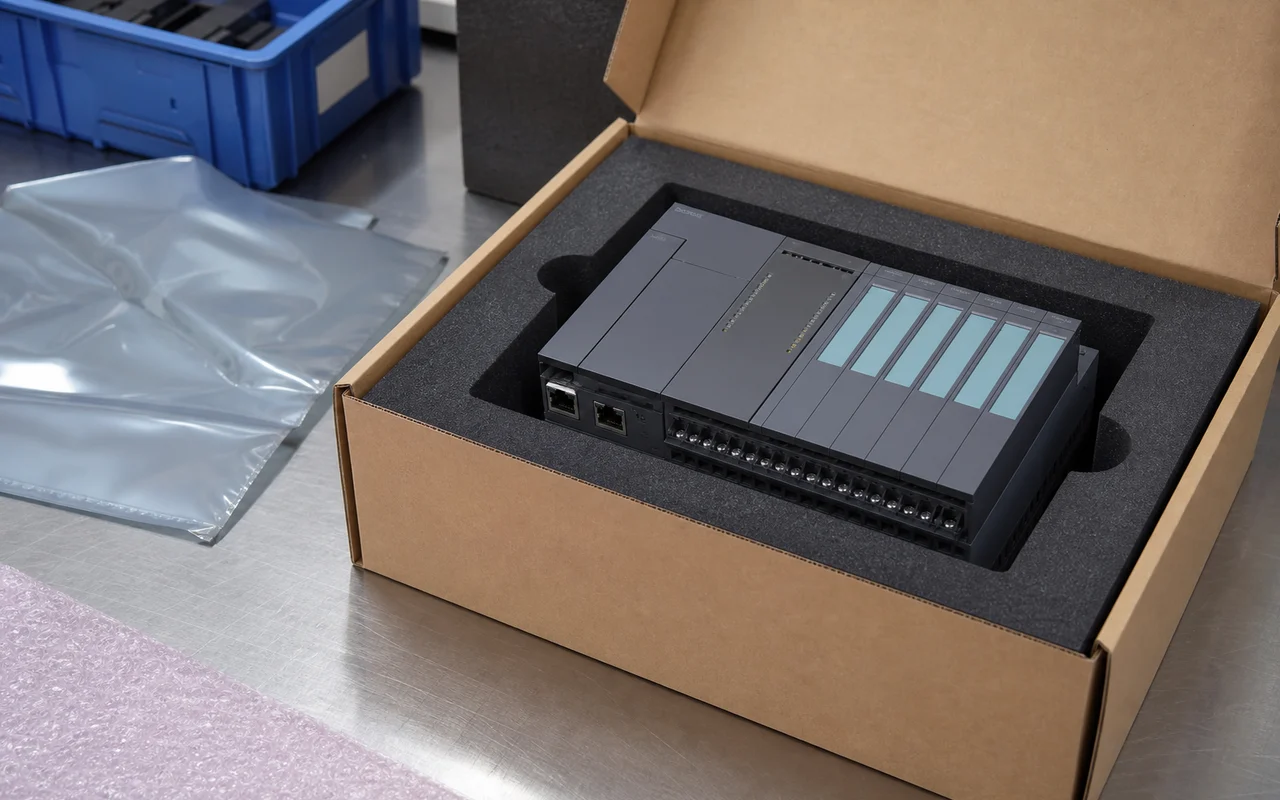 Secure Export Packing
Cushion protection and strong cartons ensure safe transportation.
 Worldwide Shipping
Global logistics network supports air, sea and express delivery.
 Documentation Check
Part number, revision and compatibility verified before shipment.
 After-sales Support
Professional technical support to help resolve your issues.