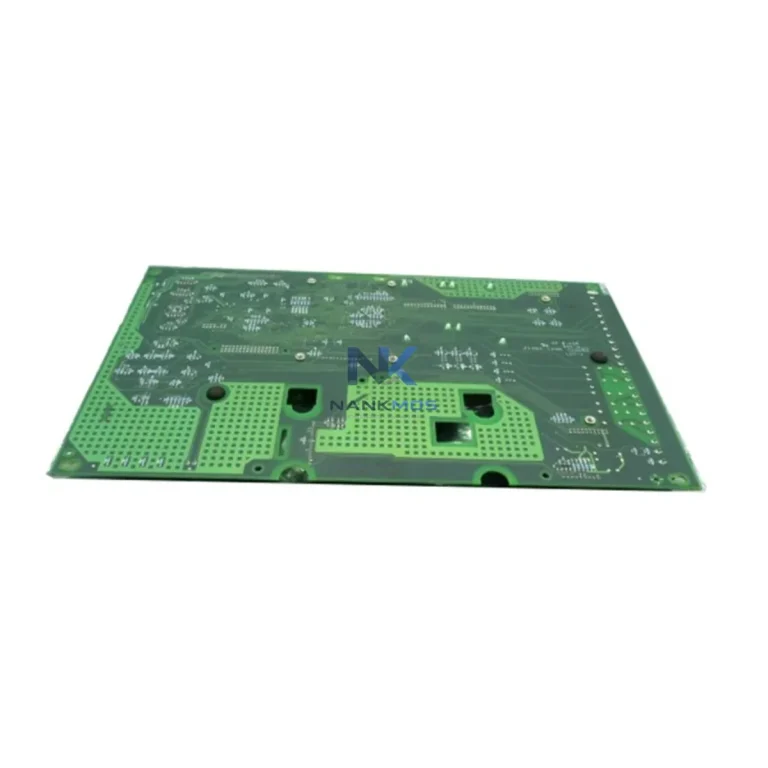
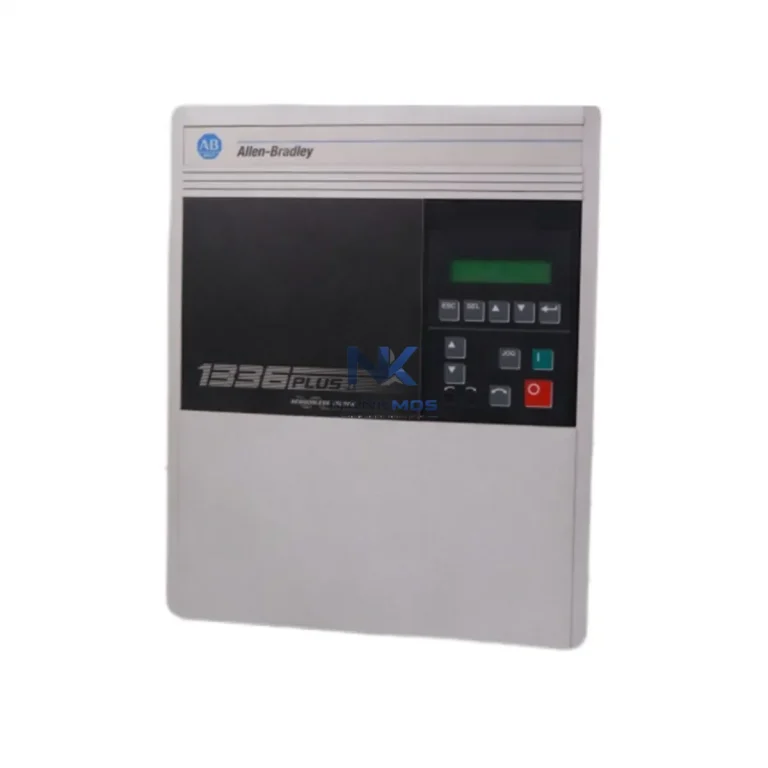
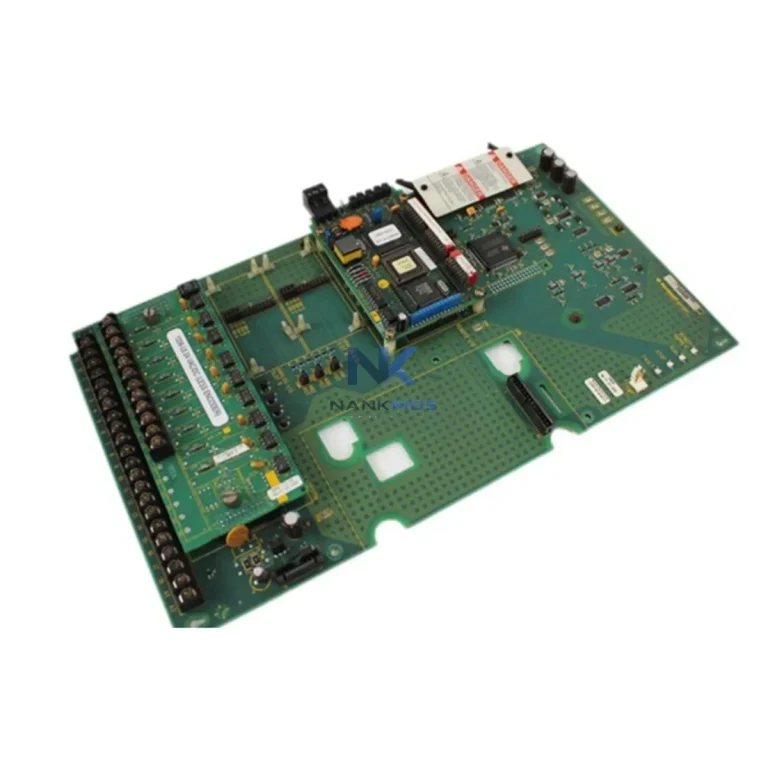
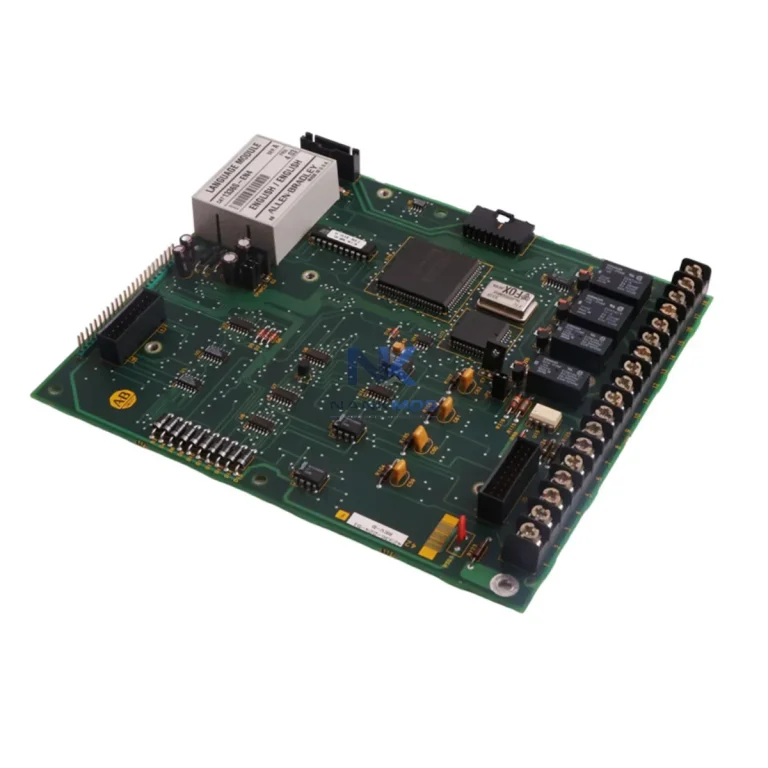
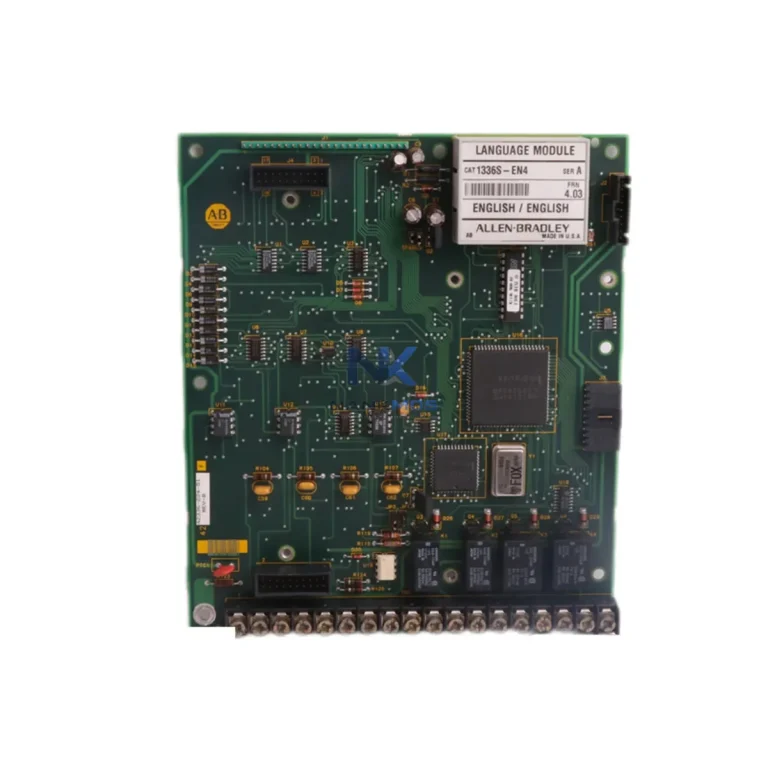
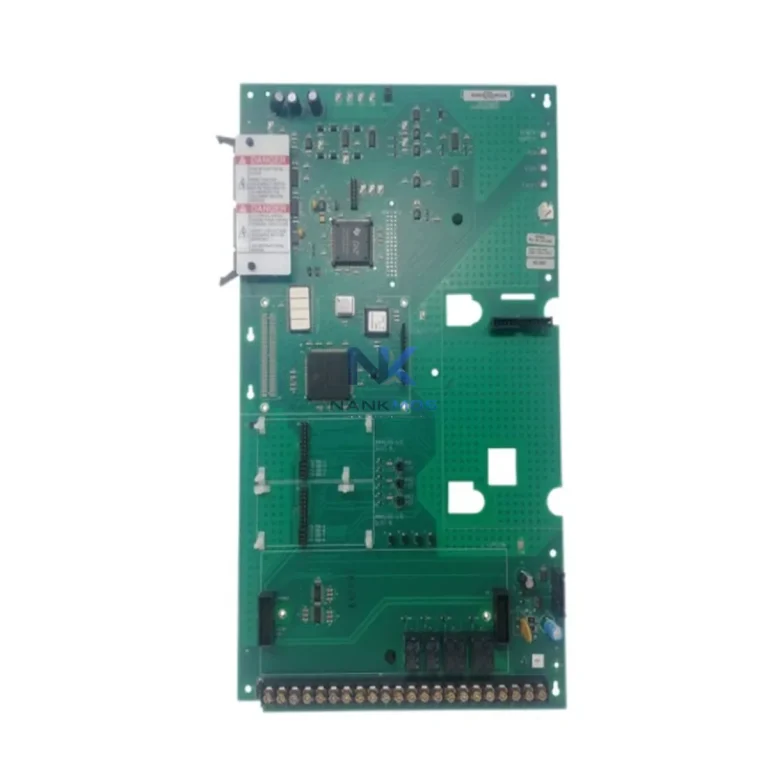
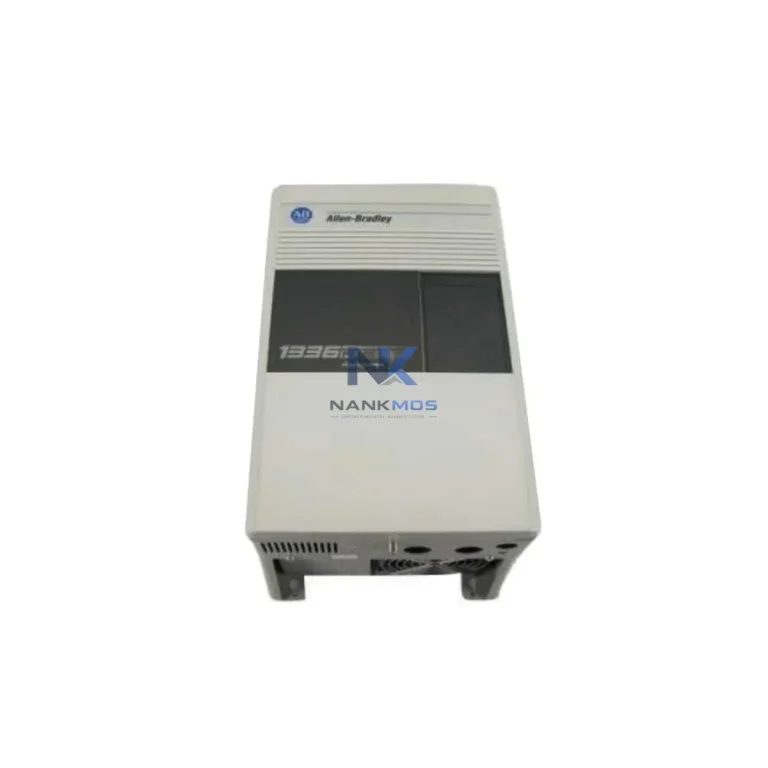
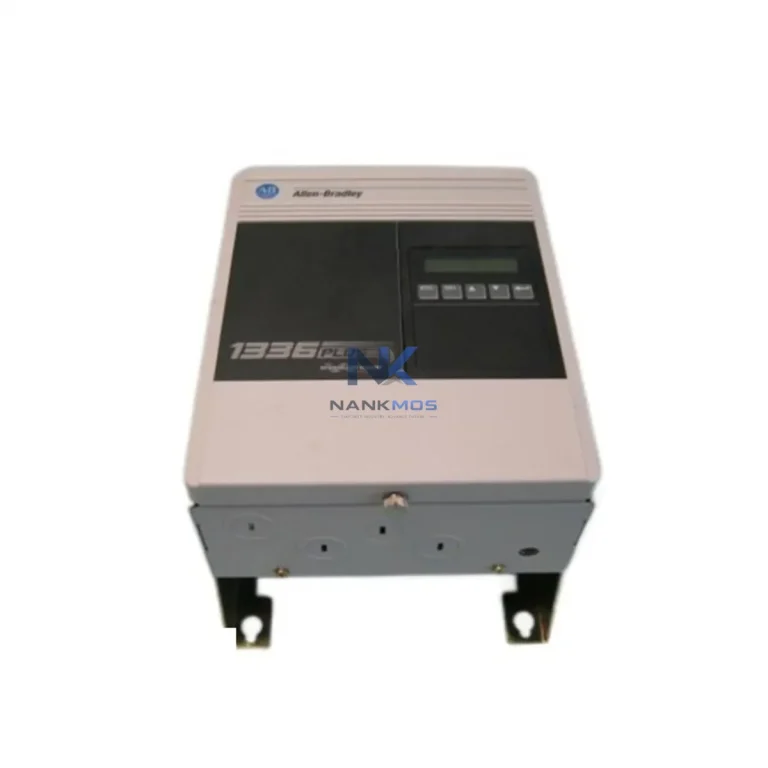
Functional Inspection
100% tested on professional platforms to ensure stable performance.
Allen-Bradley 2098-DSD-030-SE is a NANKMOS industrial automation product record Listed under Other series series and Drives. Confirm condition, availability, lead time, compatibility and documentation by email inquiry.
Brand names are used for identification only.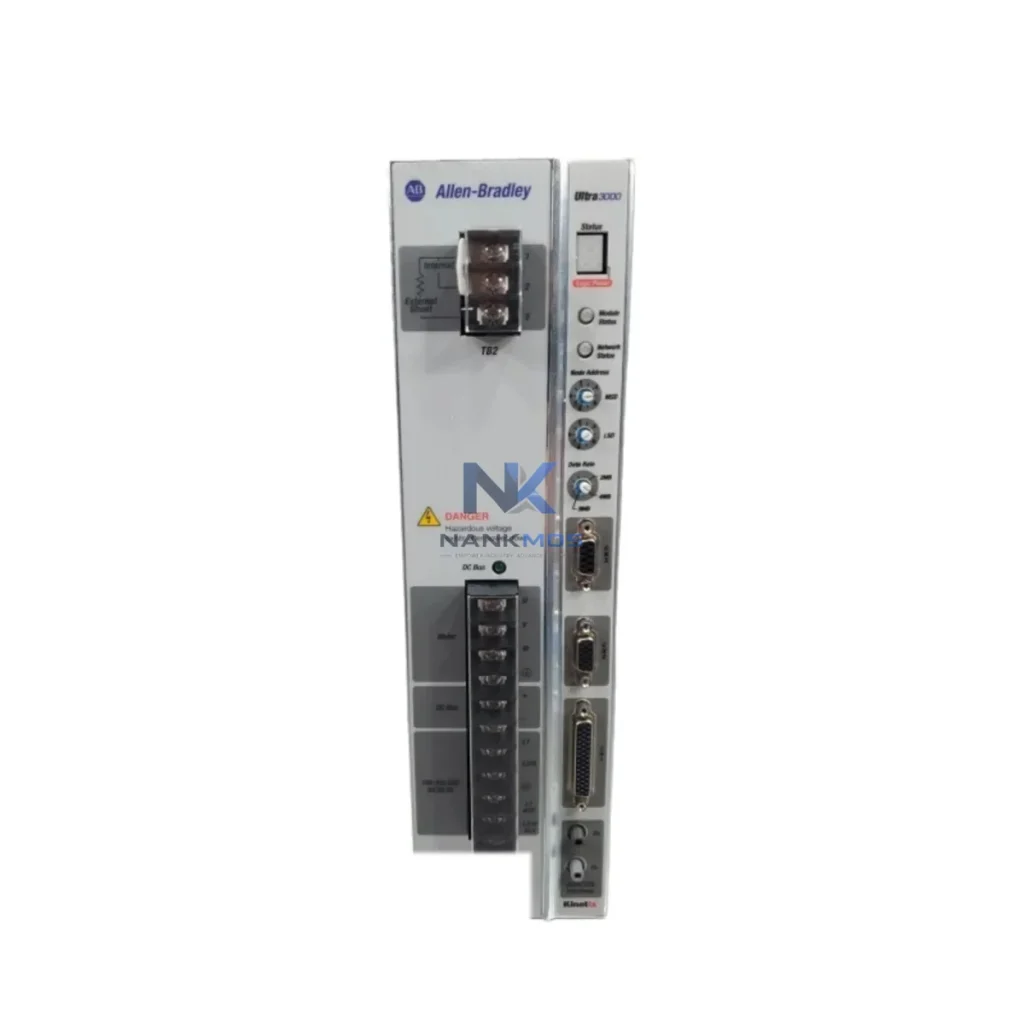
Allen-Bradley 2098-DSD-030-SE is a NANKMOS industrial automation product record Listed under Other series series and Drives. Confirm condition, availability, lead time, compatibility and documentation by email inquiry.
| Manufacturer | Allen-Bradley |
|---|---|
| Application | Motion Control & Drive System |
| Part Number / Model | 2098-DSD-030-SE |
| Compatible System | Confirmed by inquiry |
| Condition Options | To Confirm |
| Module Type | Servo / Drive Module |
| Warranty | 12 Months |
| Packaging | Anti-static Bag / Secure Box |
| Shipping Methods | DHL / FedEx / UPS / Air / Sea |
| Availability | To Confirm |
| Lead Time | To Confirm |
| Documentation | Part number and revision checked before quote |
The Allen-Bradley 2098-DSD-030-SE is a high-performance digital servo drive from Rockwell Automation's Ultra 3000 series, engineered to serve as a critical node in the industrial data chain of modern smart factories. Combining dual-protocol network capability — EtherNet/IP and SERCOS — with precision motion control, the 2098-DSD-030-SE bridges the gap between field-level servo actuation and upper-level control systems including PLCs, SCADA platforms, HMI terminals, and MES architectures. Whether deployed in high-speed packaging lines, CNC machining centers, semiconductor handling equipment, or automotive assembly cells, this drive delivers the real-time data transparency and network stability that Industry 4.0 demands.
At its core, the 2098-DSD-030-SE is not merely a motion controller — it is a data-generating endpoint in your factory's communication backbone. Every torque command, velocity feedback signal, fault event, and thermal status reading is available over the network in real time, enabling plant engineers to monitor, diagnose, and optimize servo performance without stepping onto the production floor.
In a fully integrated smart factory, the 2098-DSD-030-SE operates as a precision data node within a layered communication architecture. At the field level, servo motors — typically paired with Allen-Bradley MPL or MPM series motors — generate continuous feedback signals: encoder position, velocity, torque load, and winding temperature. The 2098-DSD-030-SE processes these signals in real time and transmits structured data packets upstream via EtherNet/IP to the plant's control layer.
At the control layer, an Allen-Bradley ControlLogix L7x or CompactLogix L3x PLC receives motion status data from the drive through the EtherNet/IP network. The PLC executes coordinated motion programs using Rockwell's Logix Designer software, issuing position and velocity commands back to the 2098-DSD-030-SE at scan rates as fast as 1 ms. This closed-loop data exchange ensures that servo positioning accuracy is maintained even under dynamic load conditions.
For multi-axis synchronization applications — such as gantry systems, flying shear lines, or electronic cam profiles — the 2098-DSD-030-SE leverages its SERCOS II fiber optic interface to participate in deterministic ring networks alongside other Ultra 3000 drives. SERCOS provides isochronous real-time communication with jitter below 1 µs, making it ideal for tight multi-axis coordination where EtherNet/IP's non-deterministic nature would be insufficient.
Moving up the data chain, a Stratix 5700 or Stratix 8000 industrial managed Ethernet switch aggregates traffic from multiple 2098-DSD-030-SE drives, remote I/O modules such as the 1734 POINT I/O or 1756 ControlLogix I/O, and HMI terminals running FactoryTalk View SE. The switch enforces VLAN segmentation and QoS policies to prioritize real-time motion data over lower-priority traffic, ensuring network stability even in high-density automation environments.
At the supervisory layer, FactoryTalk Historian or a third-party SCADA platform such as Ignition by Inductive Automation collects time-stamped drive data — including fault codes, energy consumption, and cycle counts — for trend analysis and OEE calculation. Operators at HMI stations can view live drive status, acknowledge alarms, and initiate remote parameter changes without interrupting production. For facilities with distributed architectures, an Allen-Bradley 1783-ETAP EtherNet/IP Tap or a Moxa NPort serial-to-Ethernet gateway can extend connectivity to legacy devices that lack native EtherNet/IP support, ensuring that older sensors, encoders, and variable frequency drives (VFDs) such as the PowerFlex 525 or PowerFlex 755 remain integrated into the data flow.
At the edge, an industrial edge gateway — such as a Rockwell FactoryTalk Edge Gateway or a third-party device running MQTT or OPC-UA — aggregates drive data and pushes it to cloud analytics platforms or on-premise MES systems. This enables predictive maintenance algorithms to analyze vibration signatures, thermal trends, and torque anomalies from the 2098-DSD-030-SE, flagging potential bearing wear or coupling misalignment before a failure occurs. The result is a complete, unbroken data chain from servo motor shaft to enterprise dashboard — with the 2098-DSD-030-SE as a reliable, high-bandwidth contributor at every stage.
Protocol Fragmentation: Many production sites operate a mix of legacy SERCOS I/II drives alongside newer EtherNet/IP devices. The 2098-DSD-030-SE's dual-protocol architecture eliminates the need for external protocol converters in most Ultra 3000 migration projects, reducing wiring complexity and potential points of failure. Where legacy RS-232 or DeviceNet devices remain, a 1788-EN2DN EtherNet/IP-to-DeviceNet linking device can bridge the gap without requiring a full system overhaul.
Data Silos and Production Transparency: In facilities where servo drives operate as isolated motion controllers with no network visibility, production managers lack real-time insight into machine performance. The 2098-DSD-030-SE's EtherNet/IP connectivity exposes all drive parameters — including following error, bus voltage, output frequency, and fault history — as standard CIP objects, making them immediately accessible to FactoryTalk View dashboards, SCADA trend screens, and MES reporting modules. This transforms a previously opaque motion axis into a transparent, data-rich production asset.
Remote Monitoring and Alarm Traceability: Unplanned downtime caused by servo faults is one of the most costly disruptions in discrete manufacturing. The 2098-DSD-030-SE supports explicit messaging over EtherNet/IP, allowing remote engineers to query drive fault logs, reset non-critical faults, and adjust tuning parameters from a central control room or even a remote VPN connection. Alarm events are time-stamped and logged in FactoryTalk Alarms and Events, providing a complete audit trail for root cause analysis.
System Scalability: As production capacity grows, additional 2098-DSD-030-SE drives can be added to the EtherNet/IP network without requiring changes to the existing network infrastructure, provided the Stratix switch has available ports and the ControlLogix chassis has sufficient I/O capacity. Rockwell's modular architecture ensures that scaling from a 4-axis to a 16-axis system is a configuration exercise, not a re-engineering project.
Q1: What is the communication latency of the 2098-DSD-030-SE over EtherNet/IP? The 2098-DSD-030-SE supports EtherNet/IP implicit (I/O) messaging with configurable RPI (Requested Packet Interval) values as low as 1 ms when connected to a ControlLogix or CompactLogix PLC. For SERCOS II operation, the isochronous cycle time is typically 1–4 ms with sub-microsecond jitter, making it suitable for tight multi-axis synchronization. Actual latency depends on network load, switch configuration, and PLC scan time.
Q2: Is the 2098-DSD-030-SE compatible with third-party SCADA and HMI systems? Yes. Because the drive communicates via standard EtherNet/IP (CIP protocol), it is accessible from any SCADA or HMI platform that supports EtherNet/IP or OPC-DA/UA with an appropriate server driver. Platforms such as Ignition (Inductive Automation), Wonderware System Platform, and Citect SCADA can read drive tags directly via EtherNet/IP drivers, enabling vendor-neutral data integration without proprietary middleware.
Q3: How does NANKMOS ensure the 2098-DSD-030-SE is fully functional before shipment? Every 2098-DSD-030-SE unit sourced by NANKMOS undergoes a pre-shipment functional verification process that includes power-on testing, communication interface validation (EtherNet/IP and SERCOS), parameter integrity check, and visual inspection for physical damage. Units are shipped with original or equivalent protective packaging. A 12-month warranty covers all verified units against manufacturing defects and functional failures under normal operating conditions.
Q4: Can the 2098-DSD-030-SE be integrated into an existing Ultra 3000 SERCOS ring without replacing other drives? Yes. The 2098-DSD-030-SE is fully compatible with existing Ultra 3000 SERCOS II ring topologies. It can be inserted into an existing fiber optic ring alongside other 2098-series drives — such as the 2098-DSD-010-SE, 2098-DSD-020-SE, or 2098-DSD-075-SE — without disrupting the ring's timing or requiring re-commissioning of adjacent nodes. Configuration is performed via RSLogix 5000 / Studio 5000 Logix Designer using the standard Ultra 3000 add-on profile.
Functional Inspection100% tested on professional platforms to ensure stable performance.
 Anti-static Packaging
Modules are packed in anti-static bags to prevent electrostatic damage.
 Secure Export Packing
Cushion protection and strong cartons ensure safe transportation.
 Worldwide Shipping
Global logistics network supports air, sea and express delivery.
 Documentation Check
Part number, revision and compatibility verified before shipment.
 After-sales Support
Professional technical support to help resolve your issues.