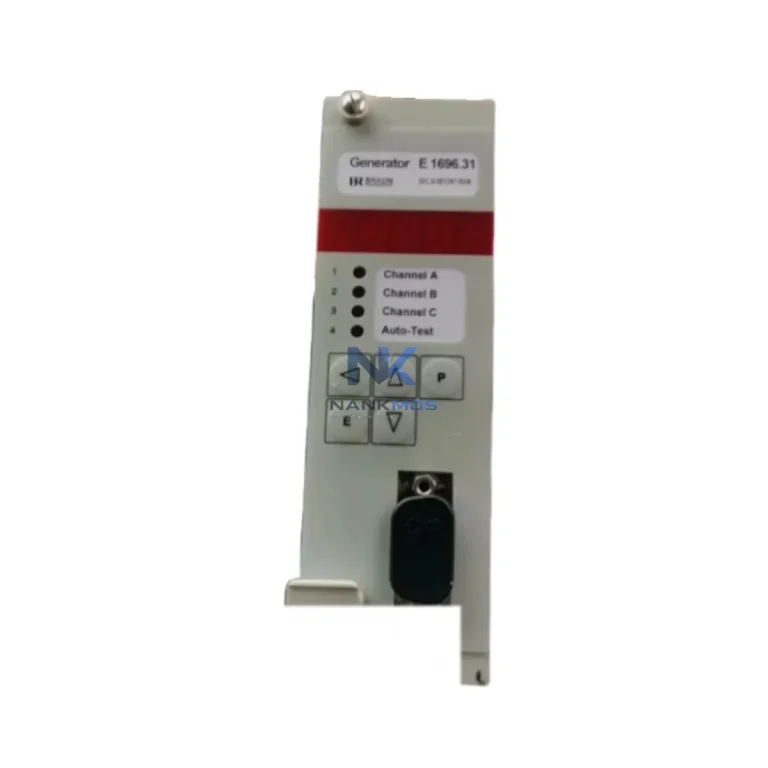
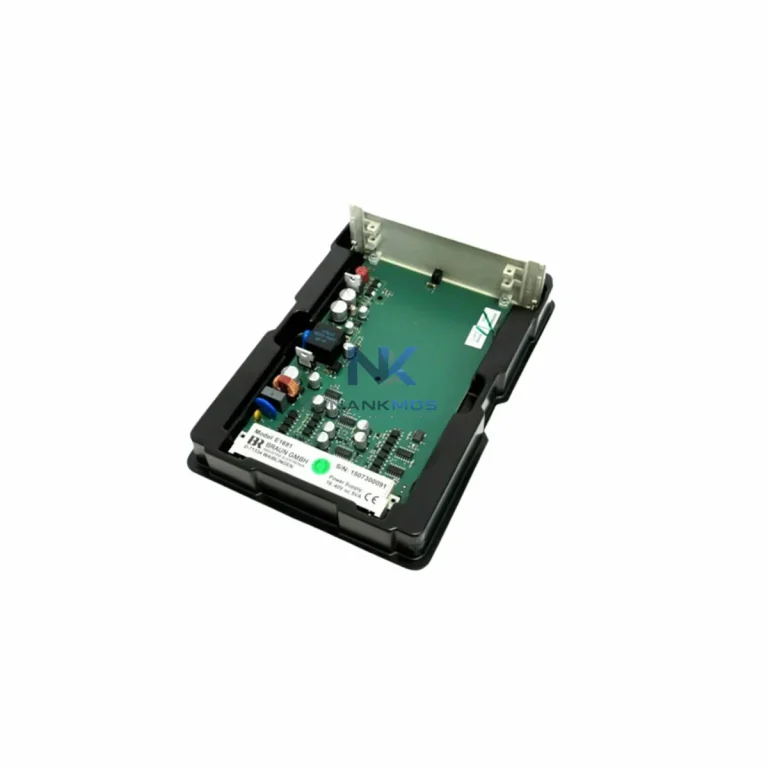
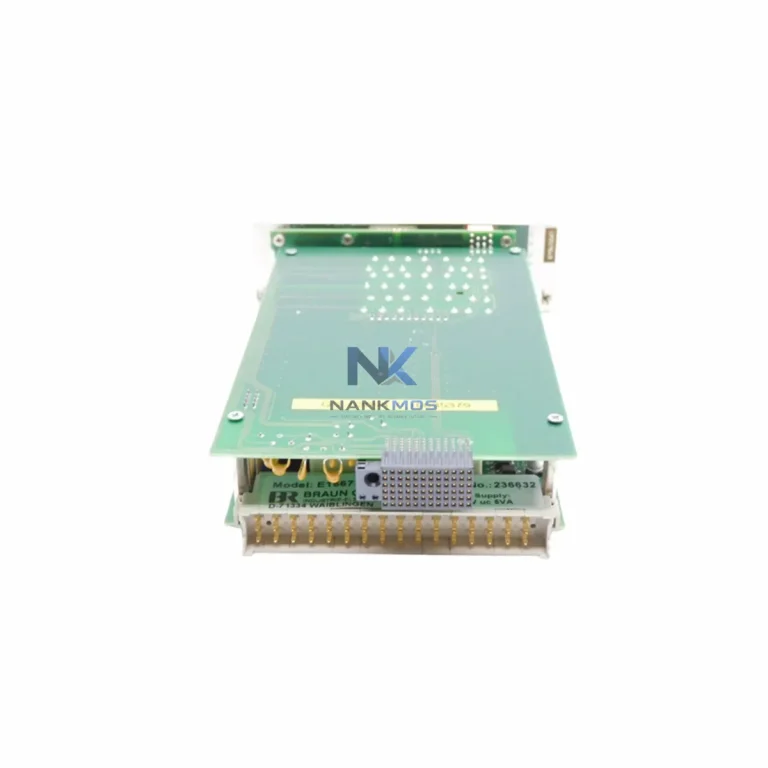
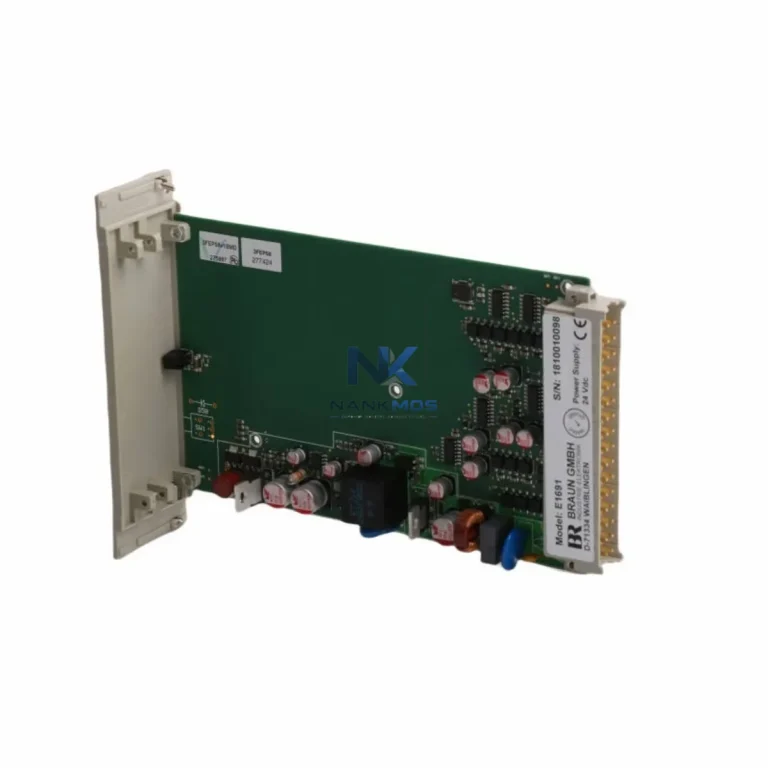
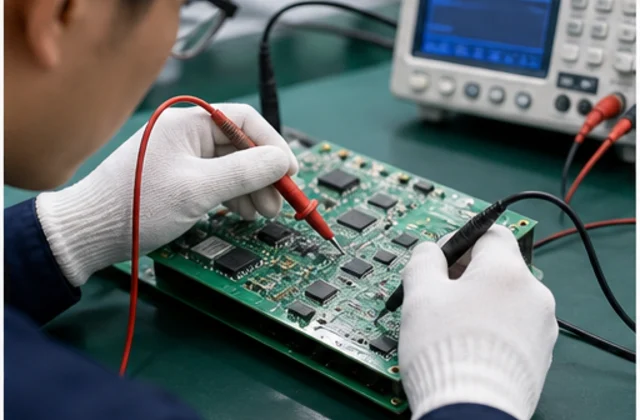
 Functional Inspection
100% tested on professional platforms to ensure stable performance.
Braun 1697.32 is a NANKMOS industrial automation product record Listed under Other series series and Sensors. Confirm condition, availability, lead time, compatibility and documentation by email inquiry.
Brand names are used for identification only.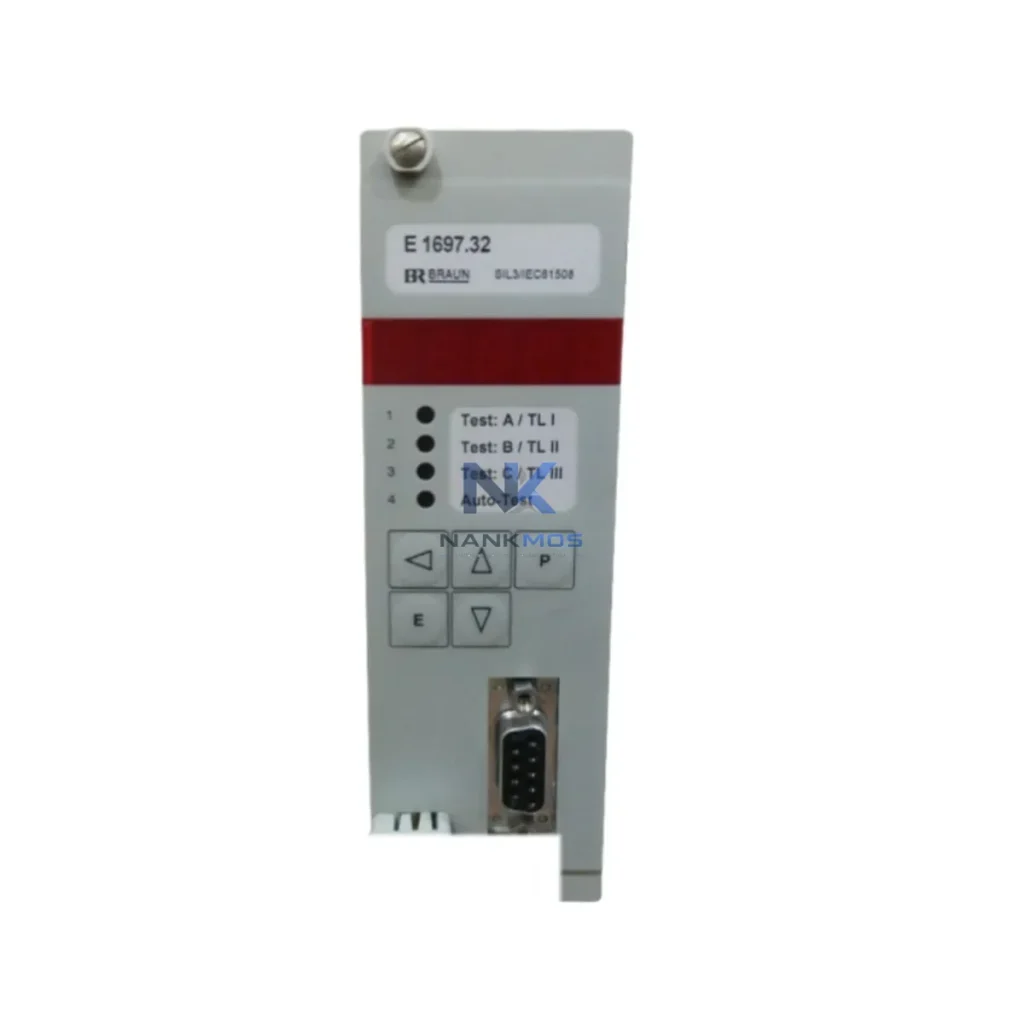
Braun 1697.32 is a NANKMOS industrial automation product record Listed under Other series series and Sensors. Confirm condition, availability, lead time, compatibility and documentation by email inquiry.
| Manufacturer | Braun |
|---|---|
| Application | Industrial Automation Maintenance |
| Part Number / Model | 1697.32 |
| Compatible System | Confirmed by inquiry |
| Condition Options | To Confirm |
| Module Type | Sensors |
| Warranty | 12 Months |
| Packaging | Anti-static Bag / Secure Box |
| Shipping Methods | DHL / FedEx / UPS / Air / Sea |
| Availability | To Confirm |
| Lead Time | To Confirm |
| Documentation | Part number and revision checked before quote |
The Braun 1697.32 is a precision resistance thermometer (RTD) engineered for seamless integration within the Braun 1697 series process measurement architecture. Designed to deliver stable, repeatable temperature signals across demanding industrial environments, the 1697.32 functions as a critical node in the thermal sensing layer of distributed control systems (DCS), programmable logic controllers (PLC), and process automation platforms. Its system-matched design ensures direct compatibility with Braun 1697 series transmitter heads, connection heads, and thermowell assemblies, enabling engineers to deploy a fully coherent measurement chain without signal conditioning compromises.
In modern industrial control architecture, temperature measurement is not an isolated function — it is a foundational input that propagates through every layer of the automation stack. The 1697.32 is built with this systemic role in mind. Its Pt100 or Pt1000 sensing element (IEC 60751 Class B or Class A tolerance) delivers a linear resistance-temperature relationship that integrates cleanly with Braun 1697.20 and 1697.21 transmitter heads, converting the RTD signal to a standardized 4–20 mA or HART output for upstream DCS or PLC consumption. This signal chain consistency reduces calibration overhead, simplifies loop commissioning, and supports long-term measurement traceability across the plant lifecycle.
At the control layer, the 4–20 mA output from the associated Braun 1697 transmitter interfaces directly with analog input modules of leading DCS platforms and PLC I/O racks. When paired with HART-capable input cards, the 1697.32 measurement chain supports secondary variable transmission, remote configuration, and predictive diagnostics — all without additional wiring infrastructure. For facilities running Modbus RTU or Modbus TCP/IP communication backbones, the signal can be routed through protocol gateways or smart marshalling panels to integrate with SCADA systems and historian platforms, enabling real-time process trending and alarm management.
The 1697.32 insertion assembly is compatible with standard Braun 1697 series connection heads (Form B and Form BB per DIN 43729), allowing field technicians to swap sensing elements without disturbing the thermowell or process connection. This modular maintainability is a key advantage in continuous-process industries where unplanned downtime carries significant operational cost. The sensor's stainless steel protection tube (standard 316L or Inconel options) withstands process temperatures up to 600 °C and pressures consistent with industrial thermowell ratings, making it suitable for steam lines, heat exchangers, reactor vessels, and distillation columns.
Within an integrated automation platform, the 1697.32 participates in a layered architecture that spans from field sensing to enterprise data. At the field level, it works alongside Braun 1697 series thermowells, connection heads, and extension necks to form a mechanically robust and process-sealed assembly. At the I/O layer, the associated transmitter's 4–20 mA signal feeds into analog input modules — such as those found in Siemens ET 200SP, Rockwell 1756-IF16, or ABB S800 I/O families — where it is digitized and passed to the controller. At the communication layer, HART or Modbus-enabled transmitters allow asset management software (such as Emerson AMS or ABB Asset Vision) to perform remote diagnostics, sensor drift detection, and calibration scheduling without physical access to the field device.
For redundancy-critical applications, the 1697.32 supports dual-element configurations (duplex RTD), where two independent sensing elements share a single protection tube. This arrangement allows one element to serve as the primary process input while the second provides a backup signal or cross-validation reference — a configuration commonly required in safety instrumented systems (SIS) and high-availability process loops. The dual-element output can feed separate input channels on a safety PLC or a voting logic module, supporting 1oo2 or 2oo3 redundancy architectures per IEC 61511 requirements.
Commissioning the 1697.32 within a new or retrofit control system follows a structured engineering workflow. After mechanical installation in the thermowell and connection of the RTD leads to the transmitter terminal block, loop calibration is performed using a precision decade resistance box or dry-block calibrator. The transmitter's HART interface allows zero and span adjustment from a handheld communicator or from the DCS engineering station, eliminating the need for local potentiometer access in hazardous areas. Loop documentation — including as-found and as-left calibration records — is generated and archived in the plant's calibration management system, supporting regulatory compliance and audit readiness.
Long-term maintenance of the 1697.32 is supported by Braun's modular insert design, which allows the sensing element to be replaced in the field without special tooling. Periodic calibration intervals — typically 12 to 24 months depending on process severity — can be managed through the plant's predictive maintenance program. HART diagnostic data, including sensor resistance at ambient conditions and transmitter self-test results, provides early warning of element degradation, connection resistance drift, or moisture ingress, allowing maintenance teams to schedule interventions before process impact occurs.
The 1697.32 is stocked and available for immediate dispatch, with each unit pre-shipment tested against Braun factory calibration standards. A 12-Month Warranty covers manufacturing defects and calibration conformance, providing procurement and engineering teams with confidence in both product quality and supply continuity. Whether deployed in a greenfield process plant, a brownfield DCS migration, or a safety system upgrade, the Braun 1697.32 delivers the measurement accuracy, system compatibility, and long-term reliability that industrial control architecture demands.
The Braun 1697.32 is designed to operate as part of a complete, multi-layer automation platform rather than as a standalone field device. In a typical process plant architecture, the 1697.32 sensing insert is housed within a Braun 1697 series thermowell and connection head assembly, with the RTD leads terminated at a Braun 1697.20 or 1697.21 HART transmitter head. The transmitter's 4–20 mA output feeds into analog input modules — such as Siemens SIMATIC ET 200SP AI modules, Rockwell Automation 1756-IF16 ControlLogix cards, or Yokogawa CENTUM VP field control station I/O — where the signal is digitized and passed to the process controller.
At the communication layer, HART pass-through capability on the DCS I/O cards allows the Braun 1697 transmitter to be accessed by asset management platforms such as Emerson AMS Device Manager or Honeywell Field Device Manager, enabling remote calibration, diagnostics, and configuration without field visits. For facilities with Modbus TCP/IP or PROFIBUS PA backbones, protocol converters and HART multiplexers bridge the 1697 measurement chain into the plant-wide communication network, feeding data to SCADA historians and OPC-UA servers.
Power supply for the 1697 transmitter loop is typically sourced from a 24 VDC field power distribution panel, often protected by Pepperl+Fuchs or MTL Instruments zener barriers or galvanic isolators in hazardous area installations. Signal isolators — such as Phoenix Contact MACX or Weidmüller ACT series — provide additional loop isolation and signal conditioning where required. At the HMI and supervisory layer, the digitized temperature values are displayed on Siemens WinCC, Wonderware InTouch, or Ignition SCADA screens, with alarm setpoints configured in the DCS controller logic. The complete signal chain — from the 1697.32 sensing element through the transmitter, I/O module, controller, and HMI — forms a coherent, traceable measurement loop that supports both operational monitoring and regulatory compliance reporting.
The Braun 1697.32 RTD sensor is deployed across a broad spectrum of process industries where accurate, reliable temperature measurement is essential to safe and efficient operation. In power generation facilities — including coal-fired, gas turbine, and combined heat and power (CHP) plants — the 1697.32 monitors steam temperatures in boiler circuits, turbine inlet and exhaust streams, and heat recovery steam generators (HRSG), providing the thermal data required for combustion optimization and turbine protection logic.
In petrochemical and refinery applications, the 1697.32 is installed in distillation column temperature profiles, reactor feed and effluent streams, heat exchanger networks, and storage tank temperature monitoring systems. Its compatibility with Braun 1697 series thermowells rated for high-pressure process connections makes it suitable for hydrocracker and reformer service where process conditions are severe. In the oil and gas sector, the sensor supports wellhead temperature monitoring, pipeline heat tracing control, and separator vessel temperature management, with duplex configurations providing the redundancy required for safety-critical loops.
Water and wastewater treatment plants use the 1697.32 in aeration basin temperature monitoring, sludge digester control, and chemical dosing system temperature compensation. Mining and mineral processing operations deploy the sensor in flotation cell temperature monitoring, leach circuit control, and dryer outlet temperature measurement. In marine propulsion and offshore platform applications, the 1697.32 monitors engine cooling water, fuel oil heating circuits, and cargo tank temperatures, with its stainless steel construction providing corrosion resistance in salt-laden environments. Packaging and food processing lines use the sensor for pasteurization temperature verification, clean-in-place (CIP) circuit monitoring, and heat sealer temperature control, where IEC 60751 Class A accuracy supports product quality and regulatory compliance.
Q1: Is the Braun 1697.32 compatible with existing 1697 series connection heads and thermowells already installed in the field? Yes. The 1697.32 sensing insert is designed to the Braun 1697 series mechanical standard, with a spring-loaded insert design that fits directly into 1697 series connection heads (Form B and Form BB per DIN 43729) and standard thermowell bore dimensions. Replacement of a worn or drifted sensing element can be performed in the field without removing the thermowell from the process connection, minimizing maintenance downtime. All replacement inserts are supplied with a factory calibration certificate traceable to national standards, and the 12-Month Warranty applies from the date of dispatch.
Q2: Can the 1697.32 be integrated into a safety instrumented system (SIS) requiring IEC 61511 compliance? The 1697.32 in duplex (dual-element) configuration supports SIS integration by providing two independent resistance outputs from a single thermowell installation. Each element can be wired to a separate input channel on a safety PLC or voting logic module, supporting 1oo2 or 2oo3 voting architectures. For SIS applications, engineers should specify Class A tolerance elements and document the sensor's failure mode and effects analysis (FMEA) data in the safety requirements specification (SRS). HART diagnostics from the associated 1697 transmitter provide additional diagnostic coverage that can contribute to the SIL verification calculation under IEC 61511-1.
Q3: What is the recommended calibration interval and long-term supply assurance for the Braun 1697.32? For standard process applications, a calibration interval of 12 to 24 months is recommended, adjusted based on process severity, temperature cycling frequency, and regulatory requirements. Each 1697.32 unit is pre-shipment tested and supplied with a factory calibration certificate. HART diagnostic data from the 1697 transmitter — including sensor resistance at ambient and transmitter self-test results — supports condition-based maintenance scheduling, potentially extending calibration intervals in stable process environments. Stock availability is maintained to support both planned maintenance cycles and emergency replacement requirements, with a 12-Month Warranty covering manufacturing defects and calibration conformance from the date of shipment.
Functional Inspection100% tested on professional platforms to ensure stable performance.
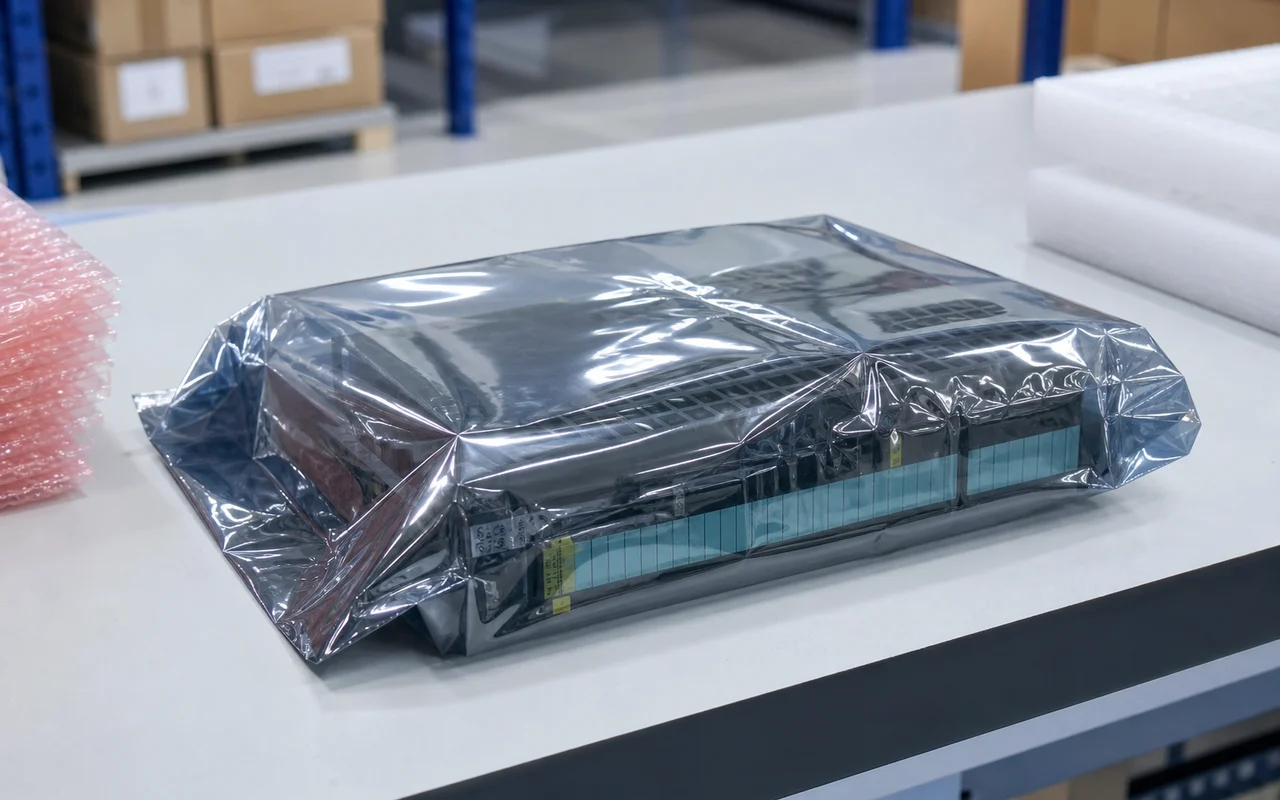 Anti-static Packaging
Modules are packed in anti-static bags to prevent electrostatic damage.
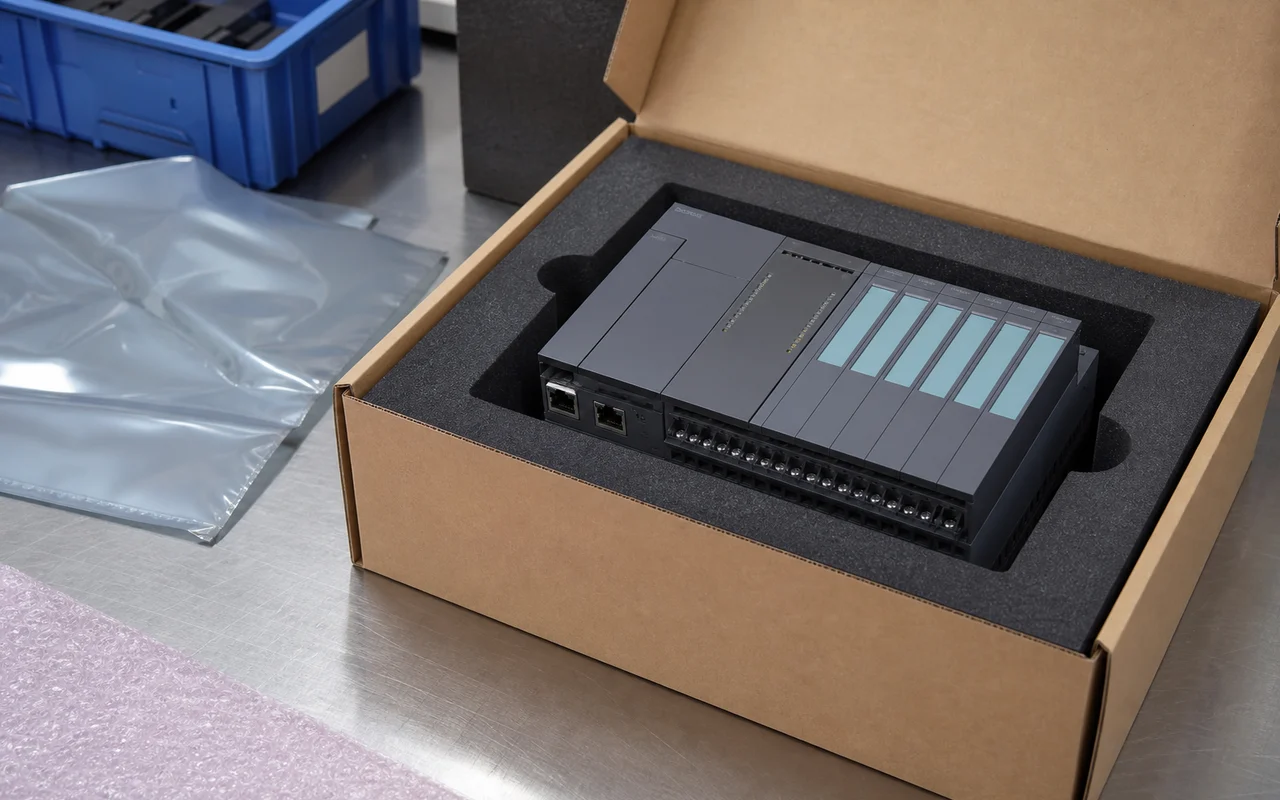 Secure Export Packing
Cushion protection and strong cartons ensure safe transportation.
 Worldwide Shipping
Global logistics network supports air, sea and express delivery.
 Documentation Check
Part number, revision and compatibility verified before shipment.
 After-sales Support
Professional technical support to help resolve your issues.