Functional Inspection
100% tested on professional platforms to ensure stable performance.
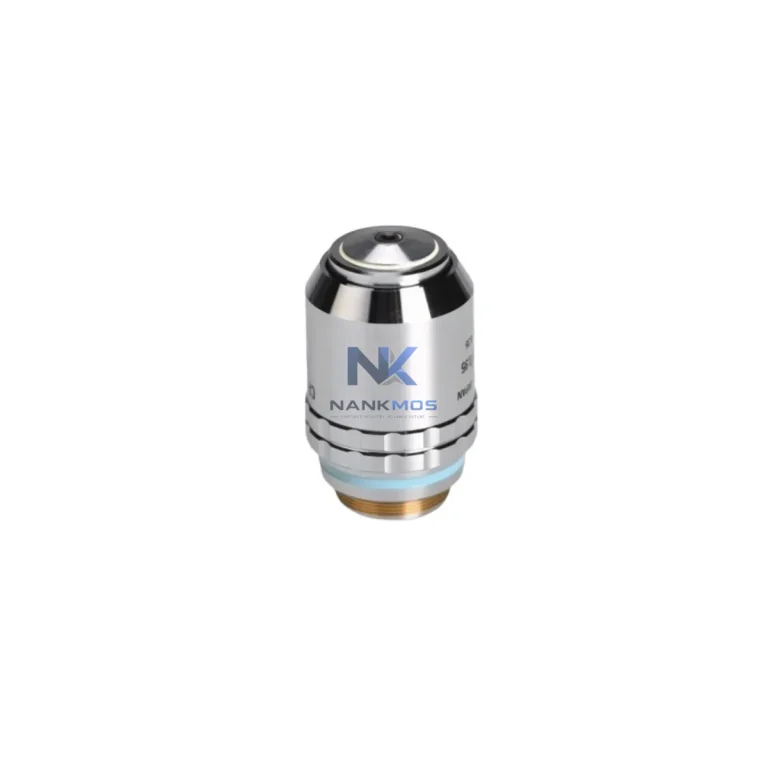
NIKON 100/0.80 ELWD 210/0 GAS HE 5964C2MAFQ5KA GAS NF3 5964C2MAGU5KA is a NANKMOS industrial automation product record Listed under Smart AOI series and Business & Industrial > Automation, Control & Flow Devices. Confirm condition, availability, lead time, compatibility and documentation by email inquiry.
Brand names are used for identification only.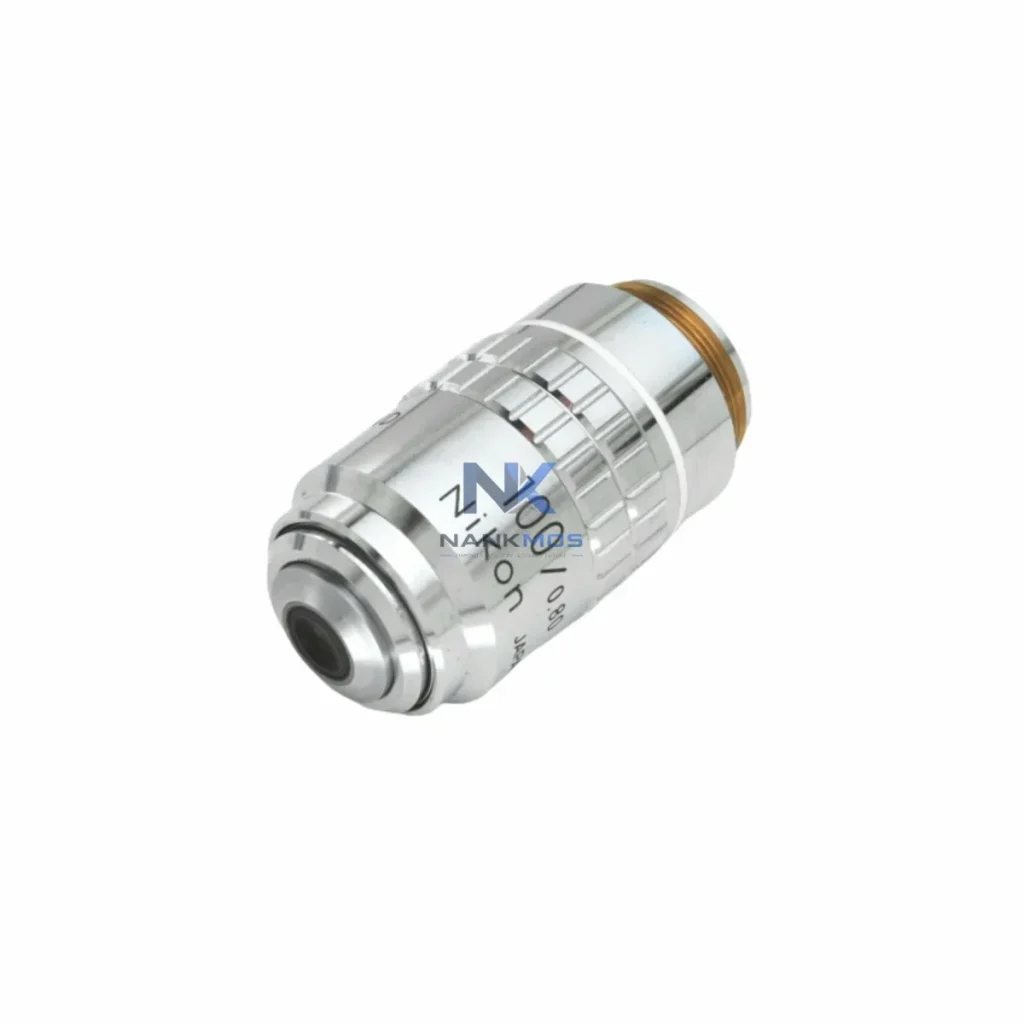
NIKON 100/0.80 ELWD 210/0 GAS HE 5964C2MAFQ5KA GAS NF3 5964C2MAGU5KA is a NANKMOS industrial automation product record Listed under Smart AOI series and Business & Industrial > Automation, Control & Flow Devices. Confirm condition, availability, lead time, compatibility and documentation by email inquiry.
| Manufacturer | NIKON |
|---|---|
| Application | Industrial Automation Maintenance |
| Part Number / Model | 100/0.80 ELWD 210/0 GAS HE 5964C2MAFQ5KA GAS NF3 5964C2MAGU5KA |
| Compatible System | Smart AOI |
| Series | Smart AOI |
| Condition Options | To Confirm |
| Module Type | Automation, Control & Flow Devices |
| Warranty | 12 Months |
| Packaging | Anti-static Bag / Secure Box |
| Shipping Methods | DHL / FedEx / UPS / Air / Sea |
| Availability | To Confirm |
| Lead Time | To Confirm |
| Documentation | Part number and revision checked before quote |
In modern smart factory environments, automated optical inspection (AOI) systems serve as the critical data acquisition layer between physical production and digital quality management platforms. The Nikon 5964C2MAFQ5KA (GAS HE) and 5964C2MAGU5KA (GAS NF3) — both designated as the 100×/0.80 ELWD M Plan Objective Lens — are engineered to deliver high-resolution, long working distance imaging at the front end of this data chain. Whether integrated into semiconductor wafer inspection lines, flat panel display (FPD) defect detection systems, or precision PCB surface analysis platforms, this objective lens functions as the optical sensor node that feeds structured visual data into upstream SCADA, MES, and AI-driven quality analytics systems.
The 100× magnification combined with a 0.80 numerical aperture and Extra Long Working Distance (ELWD) design allows inspection systems to maintain safe clearance from sensitive substrates — including GaAs, silicon wafers, and compound semiconductor materials processed under GAS HE or GAS NF3 purge environments — while capturing sub-micron surface detail. This optical performance directly determines the resolution and reliability of defect classification data passed to connected image processing controllers and vision software platforms.
The Nikon 5964C2MAFQ5KA objective lens sits at the optical front end of a multi-layer smart factory inspection architecture. In a typical semiconductor fab or advanced electronics production line, the data flow begins at the substrate surface — where this 100×/0.80 ELWD M Plan objective captures high-magnification reflected-light images of wafer dies, chip bond pads, or PCB solder joints. These images are digitized by high-speed CCD or CMOS area scan cameras — such as those from Basler, Teledyne DALSA, or Sony industrial vision series — and transmitted via GigE Vision or Camera Link interfaces to dedicated image processing controllers.
The image processing controller, often running Cognex VisionPro, Halcon, or proprietary OEM vision software, performs real-time defect classification — identifying scratches, voids, contamination, or dimensional deviations at sub-micron resolution. Classification results are then structured as event data and forwarded via OPC-UA or Ethernet/IP to the facility's SCADA layer, where platforms such as Wonderware System Platform or Ignition SCADA aggregate inspection outcomes across multiple AOI stations. Simultaneously, the MES (Manufacturing Execution System) — for example, Siemens Opcenter or Rockwell FactoryTalk — receives pass/fail signals and lot traceability data, enabling real-time yield tracking and SPC (Statistical Process Control) charting.
For multi-axis inspection stages, the objective lens is mounted on motorized nosepieces controlled by precision motion controllers — such as those from PI (Physik Instrumente) or Aerotech — which receive positioning commands from the central inspection PLC or motion coordinator. Stage position data, focus feedback from autofocus modules, and image acquisition triggers are synchronized through high-speed digital I/O modules, ensuring frame-accurate image capture aligned with substrate movement. In GAS HE or GAS NF3 purge environments, gas flow controllers and environmental sensors feed purge status data to the system controller, which gates inspection sequences to maintain optical clarity and substrate integrity.
Inspection result data — including defect maps, coordinate logs, and image thumbnails — are archived to industrial NAS or edge computing nodes, then pushed to cloud-based quality dashboards or ERP systems for cross-facility yield analysis. Remote diagnostic access to the AOI system is enabled through industrial-grade VPN gateways or secure remote I/O modules, allowing Nikon-certified engineers or process engineers to review live inspection data, adjust recipe parameters, and perform predictive maintenance checks without physical access to the cleanroom environment.
One of the most persistent challenges in semiconductor and advanced electronics inspection is the gap between raw optical data and actionable quality intelligence. When objective lenses are mismatched to the inspection task — wrong magnification, insufficient NA, or inadequate working distance — the resulting image data is degraded before it ever reaches the vision controller, creating a data quality bottleneck that no amount of downstream software compensation can fully correct.
The Nikon 5964C2MAFQ5KA addresses this at the source. Its 0.80 NA at 100× delivers the resolving power required to detect sub-micron defects on compound semiconductor surfaces, while the ELWD design eliminates the risk of lens-to-substrate contact in automated stage-scanning sequences — a common cause of unplanned downtime and substrate damage in high-throughput inspection lines. By maintaining consistent optical performance across GAS HE and GAS NF3 purge environments, it ensures that image data quality remains stable regardless of process gas selection, eliminating a common source of false-positive defect calls that inflate rework rates and distort yield statistics.
For facilities managing multiple inspection recipes across different product families, the M Plan infinity-corrected optical design ensures compatibility with standard Nikon CFI60 tube lens systems, simplifying recipe changeover and reducing the risk of optical configuration errors when switching between wafer types or inspection modes. This standardization reduces the engineering overhead of maintaining separate optical configurations for each product line and supports faster qualification of new inspection recipes — directly accelerating time-to-yield for new device introductions.
Remote monitoring integration further closes the data gap: by connecting AOI system status — including objective lens condition flags, focus drift alerts, and inspection throughput metrics — to SCADA dashboards and MES reporting layers, process engineers gain real-time visibility into inspection system health without requiring physical presence on the production floor. This supports proactive maintenance scheduling and reduces the risk of undetected optical degradation silently compromising inspection data integrity over time.
Q1: What camera interface standards are compatible with AOI systems using the Nikon 5964C2MAFQ5KA objective?A: This objective lens is compatible with any reflected-light infinity-corrected optical system using Nikon CFI60 tube lenses. Camera interfaces depend on the AOI system design — common options include GigE Vision, Camera Link, CoaXPress, and USB3 Vision. The objective itself is optically agnostic to the camera interface; compatibility is determined by the tube lens, camera adapter, and image acquisition board selected for the system.
Q2: Can this objective be used in both GAS HE and GAS NF3 purge environments, and does gas selection affect inspection data quality?A: Yes. The 5964C2MAFQ5KA is rated for GAS HE environments, while the 5964C2MAGU5KA variant is rated for GAS NF3. Both maintain equivalent optical performance within their respective gas environments. Gas selection does not degrade image resolution or contrast when the correct SKU variant is matched to the process environment — ensuring consistent inspection data quality across both configurations.
Q3: How does the ELWD design support high-throughput automated stage scanning without risk of substrate contact?A: The Extra Long Working Distance design provides a significantly greater clearance between the objective front element and the substrate surface compared to standard high-NA objectives at equivalent magnification. This clearance allows automated XY stage scanning at high speed without the risk of lens-to-substrate contact during edge-to-edge wafer traversal, reducing the probability of substrate damage events and unplanned inspection line stoppages.
Q4: What warranty and supply assurance does NANKMOS provide for this objective lens?A: NANKMOS provides a 12-month warranty on the Nikon 5964C2MAFQ5KA and 5964C2MAGU5KA objective lenses, covering optical performance and mechanical integrity under normal operating conditions. Each unit undergoes pre-shipment functional verification. Global logistics support is available for semiconductor fab and advanced electronics customers requiring expedited delivery. Contact [email protected] or +86 18359268345 for availability and lead time confirmation.
Functional Inspection100% tested on professional platforms to ensure stable performance.
 Anti-static Packaging
Modules are packed in anti-static bags to prevent electrostatic damage.
 Secure Export Packing
Cushion protection and strong cartons ensure safe transportation.
 Worldwide Shipping
Global logistics network supports air, sea and express delivery.
 Documentation Check
Part number, revision and compatibility verified before shipment.
 After-sales Support
Professional technical support to help resolve your issues.