Functional Inspection
100% tested on professional platforms to ensure stable performance.
YAMAHA LCC140-10 LCM100 is a NANKMOS industrial automation product record Listed under Other series series and Business & Industrial > Automation, Control & Flow Devices > Programmable Logic Controllers. Confirm condition, availability, lead time, compatibility and documentation by email inquiry.
Brand names are used for identification only.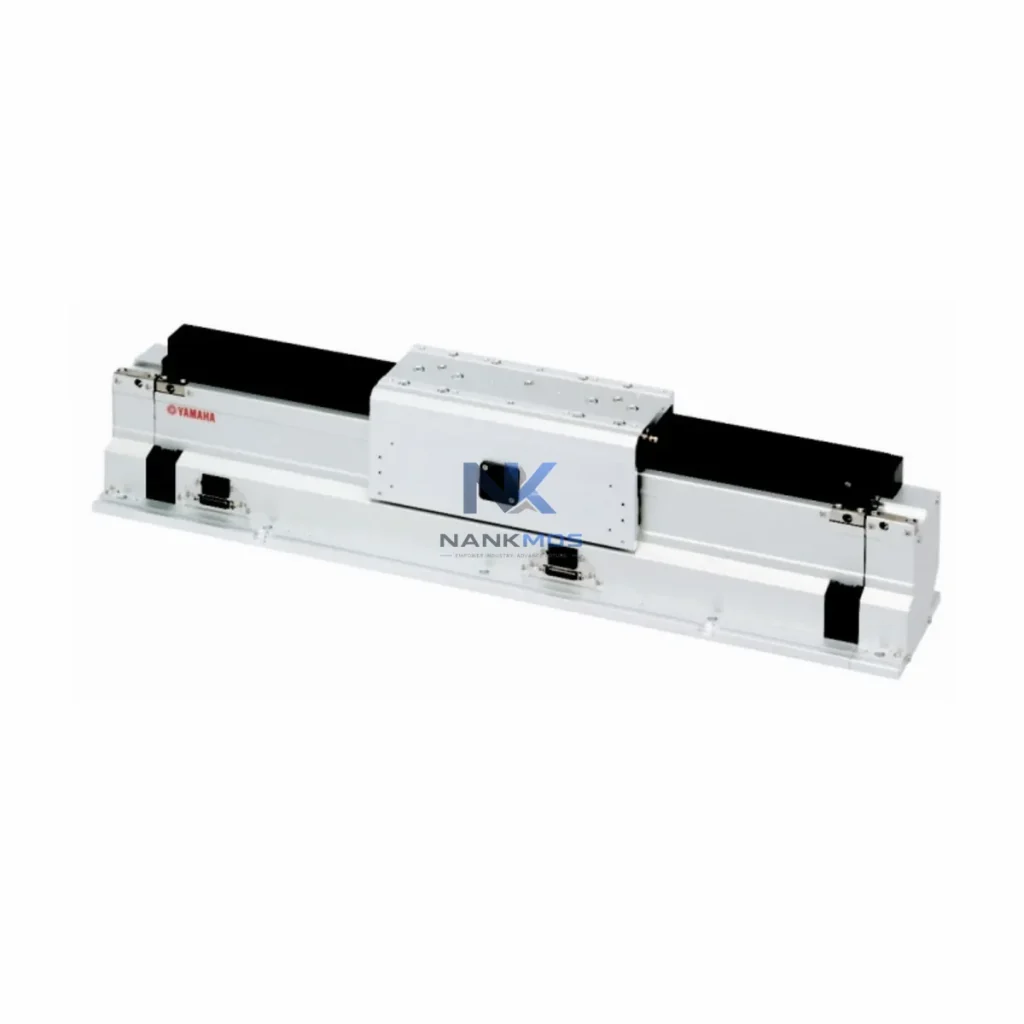
YAMAHA LCC140-10 LCM100 is a NANKMOS industrial automation product record Listed under Other series series and Business & Industrial > Automation, Control & Flow Devices > Programmable Logic Controllers. Confirm condition, availability, lead time, compatibility and documentation by email inquiry.
| Manufacturer | YAMAHA |
|---|---|
| Application | Controller Processing & System Control |
| Part Number / Model | LCC140-10 LCM100 |
| Compatible System | Confirmed by inquiry |
| Condition Options | To Confirm |
| Module Type | Controller / CPU Module |
| Warranty | 12 Months |
| Packaging | Anti-static Bag / Secure Box |
| Shipping Methods | DHL / FedEx / UPS / Air / Sea |
| Availability | To Confirm |
| Lead Time | To Confirm |
| Documentation | Part number and revision checked before quote |
The Yamaha LCC140-10 LCM100 is a precision-engineered linear conveyor module designed for seamless integration within Yamaha's LCM Series control architecture. As a core transport layer component, the LCC140-10 LCM100 delivers deterministic motion, high-throughput pallet transfer, and modular scalability across multi-axis assembly and inspection lines. Its system-ready design ensures direct compatibility with Yamaha LCM controller platforms, enabling engineers to deploy, expand, and maintain conveyor-based automation with minimal commissioning overhead and maximum long-term reliability.
Every unit supplied by NANKMOS undergoes pre-shipment functional verification and is backed by a 12-Month Warranty, ensuring operational confidence from day one of installation. Global inventory availability supports both project-phase procurement and urgent replacement scenarios across manufacturing, electronics assembly, automotive, and precision process industries.
The LCC140-10 LCM100 is not a standalone conveyor segment — it is a functional node within a fully coordinated Yamaha LCM automation platform. In a complete system architecture, the LCC140-10 LCM100 operates under the command of the Yamaha LCMX Controller or LCMC Series Controller, which manages pallet scheduling, position tracking, and inter-module handshaking across the entire conveyor loop. The controller communicates with each LCC module via the LCM proprietary EtherCAT-based network, ensuring sub-millisecond synchronization between transport segments.
Power distribution to the LCC140-10 LCM100 is handled through the Yamaha LCM Power Supply Unit (PSU), which provides regulated DC 48V to the drive rail. Stable power delivery is critical for maintaining consistent pallet velocity and positioning accuracy, particularly in high-density multi-pallet configurations where simultaneous independent motion is required.
At the I/O and sensing layer, the LCC140-10 LCM100 interfaces with Yamaha LCM Pallet Sensors and LCM Stop Units to manage pallet detection, deceleration, and precision stop positioning. These components work in concert with the conveyor module to enable accurate part presentation at assembly, inspection, or transfer stations. Integration with Yamaha YK-X Series SCARA Robots or Yamaha PHASER Linear Robots at workstations allows the LCM conveyor to serve as the transport backbone for fully automated pick-and-place or assembly cells.
For systems requiring HMI visibility, the LCC140-10 LCM100 status and pallet position data can be surfaced through Yamaha LCM Monitoring Software or integrated into plant-level SCADA via OPC-UA gateways. In multi-line or redundant architectures, LCM Curve Units and LCM Lift & Transfer Units extend the conveyor topology into loop, branch, or elevator configurations, enabling continuous flow manufacturing without manual intervention. The modular nature of the LCC140-10 LCM100 means that additional conveyor segments, stop units, or branch modules can be inserted into the line without reconfiguring the entire system — a key advantage for phased capacity expansion and long-term maintenance efficiency.
Electronics & SMT Assembly: In PCB and electronics manufacturing, the LCC140-10 LCM100 provides the precision pallet transport required between solder paste printing, pick-and-place, reflow, and AOI inspection stations. Independent pallet control eliminates inter-station waiting, maximizing throughput on high-mix, low-volume lines.
Automotive Component Assembly: For automotive sub-assembly lines — including sensor modules, ECU housings, and connector assemblies — the LCC140-10 LCM100 delivers the positional repeatability and load capacity needed to support robotic assembly and torque-controlled fastening operations. Its modular topology supports U-shaped, straight, or loop line configurations to match cell layout requirements.
Medical Device & Cleanroom Manufacturing: The LCC140-10 LCM100's low-particulate drive mechanism and compatibility with cleanroom-rated enclosures make it suitable for ISO Class 5–7 environments. Applications include catheter assembly, diagnostic cartridge production, and implantable device sub-assembly, where contamination control and traceability are mandatory.
Precision Machinery & Instrumentation: In optical, semiconductor, and precision instrument manufacturing, the LCC140-10 LCM100 supports micro-positioning pallet stops and vibration-sensitive transport, ensuring that delicate components arrive at workstations without mechanical shock or misalignment.
Consumer Electronics & Packaging Lines: High-speed packaging and final assembly lines benefit from the LCC140-10 LCM100's ability to handle multiple pallets simultaneously at different velocities, enabling asynchronous buffer management between upstream assembly and downstream packaging or labeling stations.
Q1: Is the LCC140-10 LCM100 compatible with existing Yamaha LCM Series installations using older LCMC controllers? A: Yes. The LCC140-10 LCM100 is designed for backward compatibility within the Yamaha LCM Series ecosystem. It communicates via the LCM proprietary EtherCAT-based bus, which is supported across LCMC and LCMX controller generations. For installations using legacy LCMC firmware, a firmware update may be required to enable full feature parity with newer pallet management functions. NANKMOS recommends confirming the controller firmware version prior to integration and can provide technical guidance on compatibility verification as part of the 12-Month Warranty support scope.
Q2: How many LCC140-10 LCM100 modules can be daisy-chained in a single LCM loop, and what are the architectural limits? A: The Yamaha LCM architecture supports multi-segment loop and linear topologies, with the number of connectable LCC modules determined by the controller model and network cycle time configuration. In standard LCMX configurations, systems with 20+ LCC segments are achievable while maintaining deterministic pallet scheduling. For large-scale installations, NANKMOS recommends segmenting the conveyor network into controller zones with synchronized handoff to maintain cycle time performance and simplify fault isolation during maintenance.
Q3: What does the 12-Month Warranty cover, and how does NANKMOS support long-term spare parts availability for the LCC140-10 LCM100? A: The 12-Month Warranty covers manufacturing defects, electrical failures, and mechanical faults identified under normal operating conditions. Each unit is pre-shipment tested at NANKMOS to verify drive function, communication interface integrity, and pallet transport performance before dispatch. For long-term maintenance, NANKMOS maintains global inventory of LCM Series components — including LCC modules, stop units, pallet sensors, and controller spare parts — to support both planned maintenance cycles and emergency replacement requirements. Contact [email protected] or +86 18359268345 for availability and lead time confirmation.
Functional Inspection100% tested on professional platforms to ensure stable performance.
 Anti-static Packaging
Modules are packed in anti-static bags to prevent electrostatic damage.
 Secure Export Packing
Cushion protection and strong cartons ensure safe transportation.
 Worldwide Shipping
Global logistics network supports air, sea and express delivery.
 Documentation Check
Part number, revision and compatibility verified before shipment.
 After-sales Support
Professional technical support to help resolve your issues.