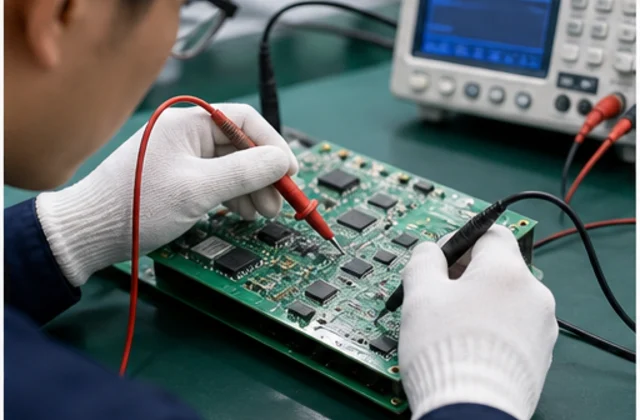
 Functional Inspection
100% tested on professional platforms to ensure stable performance.
Trio Motion Technology MC464 P860 is a NANKMOS industrial automation product record Listed under Other series series and Business & Industrial > Automation, Control & Flow Devices > Programmable Logic Controllers. Confirm condition, availability, lead time, compatibility and documentation by email inquiry.
Brand names are used for identification only.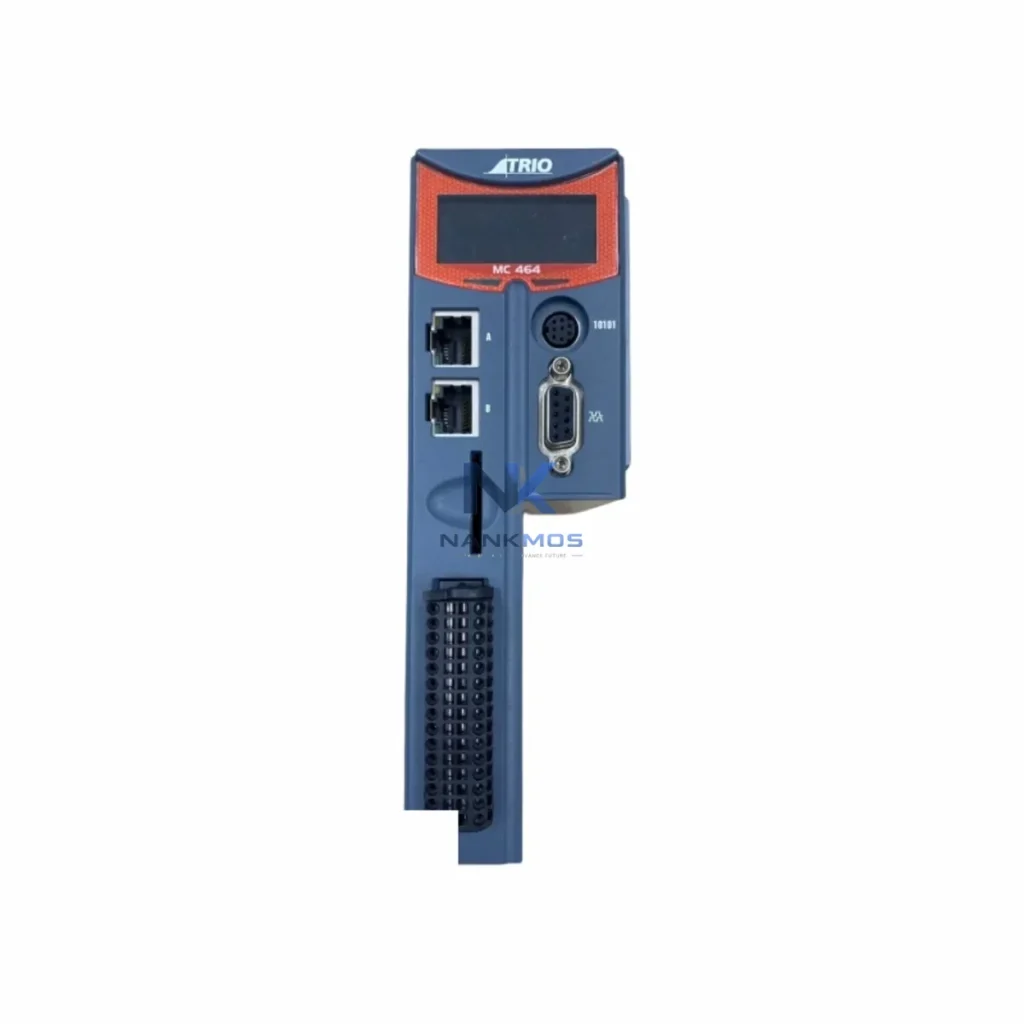
Trio Motion Technology MC464 P860 is a NANKMOS industrial automation product record Listed under Other series series and Business & Industrial > Automation, Control & Flow Devices > Programmable Logic Controllers. Confirm condition, availability, lead time, compatibility and documentation by email inquiry.
| Manufacturer | Trio Motion Technology |
|---|---|
| Application | Controller Processing & System Control |
| Part Number / Model | MC464 P860 |
| Compatible System | Confirmed by inquiry |
| Condition Options | To Confirm |
| Module Type | Controller / CPU Module |
| Warranty | 12 Months |
| Packaging | Anti-static Bag / Secure Box |
| Shipping Methods | DHL / FedEx / UPS / Air / Sea |
| Availability | To Confirm |
| Lead Time | To Confirm |
| Documentation | Part number and revision checked before quote |
The Trio Motion MC464 P860 is engineered as a central node within a layered industrial control architecture, delivering deterministic multi-axis coordination across complex machine platforms. Rather than functioning as a standalone device, the MC464 P860 is designed to operate in concert with a full suite of complementary components that together form a coherent, scalable automation system.
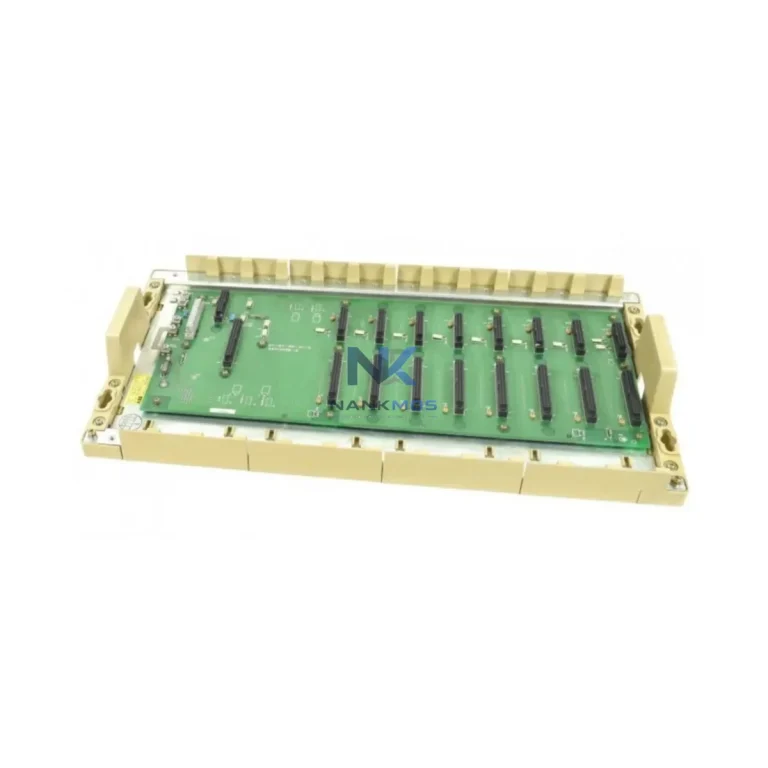
At the control layer, the MC464 P860 interfaces directly with Trio's MC464 backplane, enabling seamless integration of additional axis modules and I/O expansion cards without disrupting the base controller logic. The backplane architecture ensures that signal routing between the CPU and peripheral modules remains deterministic, reducing jitter in time-critical motion sequences. Engineers deploying multi-axis gantry systems, rotary indexers, or synchronized conveyor lines will find the MC464 P860's axis management particularly well-suited to high-throughput production environments.
At the communication layer, the MC464 P860 supports EtherCAT as its primary real-time fieldbus, enabling sub-millisecond cycle times when paired with EtherCAT-compatible servo drives such as the Trio Flex+6 or third-party drives conforming to the CoE (CANopen over EtherCAT) profile. For facilities running mixed-protocol environments, the controller's simultaneous support for PROFINET and Modbus TCP allows it to bridge legacy PLC networks with modern motion platforms — a critical capability in brownfield retrofit projects where existing Siemens S7 or Allen-Bradley ControlLogix infrastructure must coexist with new motion hardware.
At the I/O layer, the MC464 P860 coordinates with Trio's dedicated digital and analog I/O expansion modules mounted on the MC464 rack. High-speed registration inputs allow the controller to capture encoder or sensor events with microsecond-level precision, essential for flying shear, label registration, and print-and-apply applications. When combined with Trio's analog output modules, the system can simultaneously manage velocity references for hydraulic proportional valves alongside digital servo axes — a hybrid architecture common in press-brake and injection-molding machinery.
At the power layer, the MC464 P860 relies on a regulated 24 VDC rail, typically sourced from a Trio-compatible or third-party DIN-rail PSU module rated for the full rack load. Proper power sequencing — ensuring the controller initializes before axis drives are enabled — is enforced through the MC464's built-in power-good logic, reducing the risk of axis faults during startup. For redundancy-critical applications, dual-feed power architectures with automatic switchover PSUs are recommended to maintain controller uptime during mains disturbances.
At the HMI layer, the MC464 P860 communicates with operator panels via Ethernet-based protocols, supporting integration with Trio's own HMI terminals as well as third-party panels from Weintek, Siemens, or Schneider Electric running Modbus TCP or OPC-UA clients. This flexibility allows machine builders to standardize on a single motion platform while accommodating customer-specified HMI preferences without re-engineering the control architecture.
At the execution layer, the MC464 P860 drives servo amplifiers and stepper drives through its EtherCAT network, with each axis node receiving position, velocity, and torque commands within a single synchronized network cycle. The controller's built-in cam profiling and electronic gearing functions eliminate the need for external cam controllers or mechanical line shafts in packaging and printing machinery, reducing both mechanical complexity and long-term maintenance overhead.
At the protection and safety layer, the MC464 P860 supports hardware-level safe torque off (STO) signaling through its axis drive interfaces, and its watchdog outputs can be wired to safety relays or safety PLCs for SIL 2-compliant machine guarding. Integration with Pilz PNOZ or Sick Flexi Soft safety controllers is straightforward, as the MC464 P860's I/O architecture provides dedicated fast-stop inputs that halt all axes within a single controller scan cycle.
At the maintenance and diagnostics layer, the MC464 P860 provides real-time axis status, following error monitoring, and event logging accessible via Trio's Motion Perfect software environment. Engineers can perform live tuning of PID parameters, capture oscilloscope-style motion traces, and review fault histories without interrupting production — a significant advantage in 24/7 manufacturing environments where unplanned downtime carries high cost penalties. Remote diagnostics via Ethernet further reduce the need for on-site service visits, supporting lean maintenance strategies across geographically distributed machine fleets.
The MC464 P860 has been deployed across a broad spectrum of industrial sectors, each presenting unique demands on motion control architecture:
Packaging and Converting Lines: In high-speed packaging machinery — including flow wrappers, case erectors, and cartoning lines — the MC464 P860 manages synchronized multi-axis motion profiles that maintain product registration across infeed, forming, sealing, and discharge stations. Its electronic cam functionality replaces mechanical line shafts, enabling rapid format changeovers through software-defined cam tables rather than physical tooling changes.
Semiconductor and Electronics Manufacturing: Pick-and-place systems and wafer-handling robots demand sub-micron positioning repeatability and deterministic cycle times. The MC464 P860's EtherCAT backbone and high-resolution encoder feedback processing make it a suitable platform for these precision applications, where axis synchronization errors directly impact yield rates.
Power Generation and Utilities: In turbine test rigs and generator synchronization systems, the MC464 P860 provides the closed-loop speed and position control necessary to bring rotating machinery to precise setpoints before grid connection. Its robust communication stack allows integration with SCADA systems monitoring plant-wide energy flows.
Petrochemical and Process Industries: Valve actuator control, pump sequencing, and compressor management in hazardous-area installations benefit from the MC464 P860's ability to interface with intrinsically safe I/O barriers and ATEX-rated field devices through its Modbus RTU serial ports, while the main controller remains housed in a standard control room enclosure.
Metal Forming and Press Brake: Servo-hydraulic press brake systems require precise ram position control with force limiting — a capability the MC464 P860 delivers through its analog output channels driving proportional hydraulic valves, combined with digital encoder feedback from linear scales mounted on the ram.
Water and Wastewater Treatment: Pump station automation and filter backwash sequencing benefit from the MC464 P860's ability to manage both continuous process loops and discrete event-driven sequences within a single controller, reducing panel complexity and simplifying SCADA integration through its Modbus TCP interface.
Q1: Is the MC464 P860 compatible with third-party EtherCAT servo drives, and what configuration is required? The MC464 P860 supports any EtherCAT slave device conforming to the CoE (CANopen over EtherCAT) DS402 drive profile. Configuration requires importing the drive's ESI (EtherCAT Slave Information) XML file into Trio Motion Perfect, assigning the axis node address, and mapping PDO objects for position, velocity, and status words. Most major servo drive manufacturers — including Beckhoff, Omron, and Panasonic — publish compatible ESI files. For drives not natively supporting DS402, Trio's generic EtherCAT axis template provides a fallback configuration path. All axis configurations should be validated against the MC464 P860's maximum network cycle time to ensure deterministic performance across the full axis count.
Q2: How does the MC464 P860 handle system redundancy, and what architecture is recommended for high-availability applications? The MC464 P860 itself operates as a single-controller node; native hot-standby redundancy at the controller level requires an external redundancy management strategy, such as a dual-controller architecture with a supervisory PLC or safety relay managing switchover logic. For the communication network, EtherCAT's line topology can be extended with redundancy ring configurations using compatible EtherCAT switches, ensuring that a single cable fault does not interrupt the entire axis network. At the power layer, dual-feed 24 VDC supplies with diode-OR modules are recommended. For applications requiring SIL 2 availability, the MC464 P860 should be paired with a certified safety PLC handling the safety-critical stop functions, while the MC464 P860 manages the motion sequences.
Q3: What does the 12-Month Warranty cover, and how is long-term spare parts availability managed? The 12-Month Warranty covers manufacturing defects, component failures under normal operating conditions, and firmware-related malfunctions from the date of shipment. It does not cover damage resulting from incorrect installation, overvoltage events, or unauthorized modifications. For long-term spare parts availability, NANKMOS maintains buffer stock of MC464 series components — including the MC464 P860, associated backplane modules, and I/O expansion cards — to support both warranty replacements and post-warranty maintenance contracts. Customers operating large machine fleets are encouraged to discuss consignment stock arrangements to ensure rapid replacement availability without carrying full inventory on-site. Pre-shipment functional testing is performed on all units, with test records available upon request.
Functional Inspection100% tested on professional platforms to ensure stable performance.
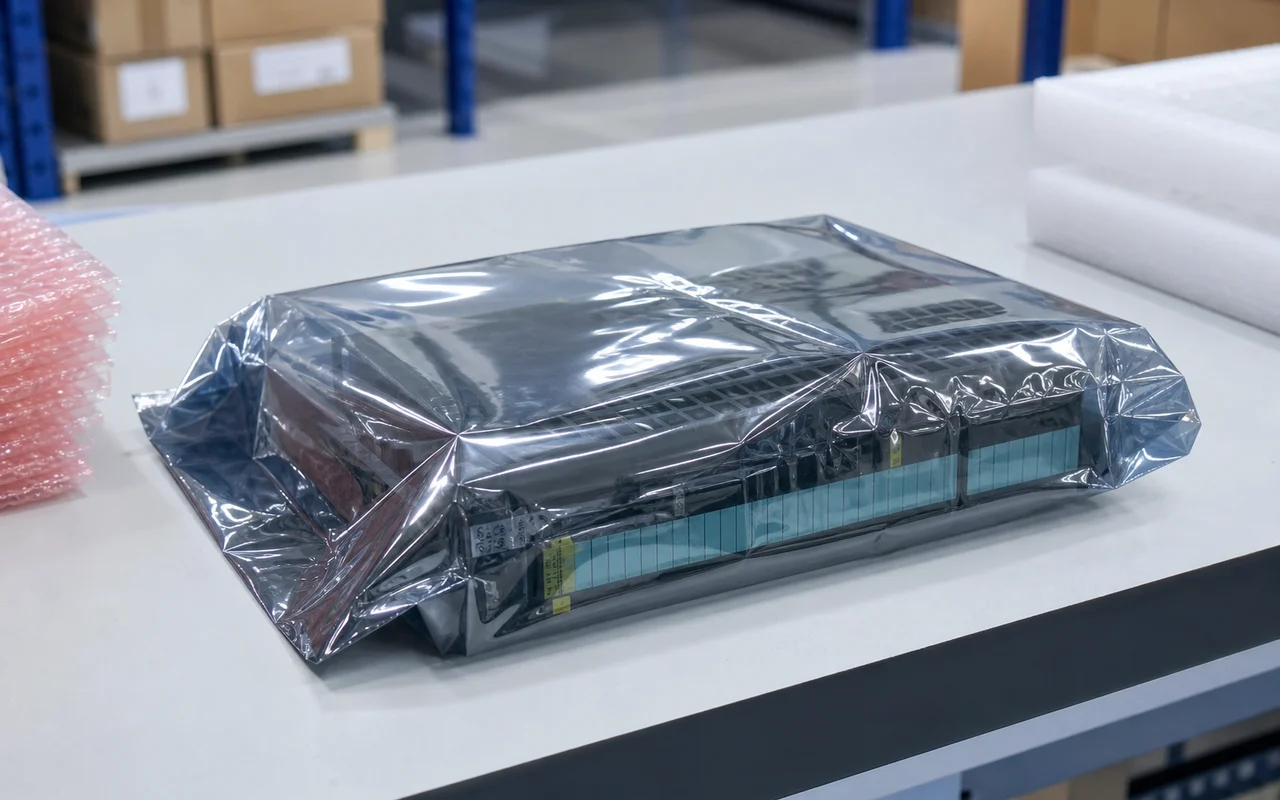 Anti-static Packaging
Modules are packed in anti-static bags to prevent electrostatic damage.
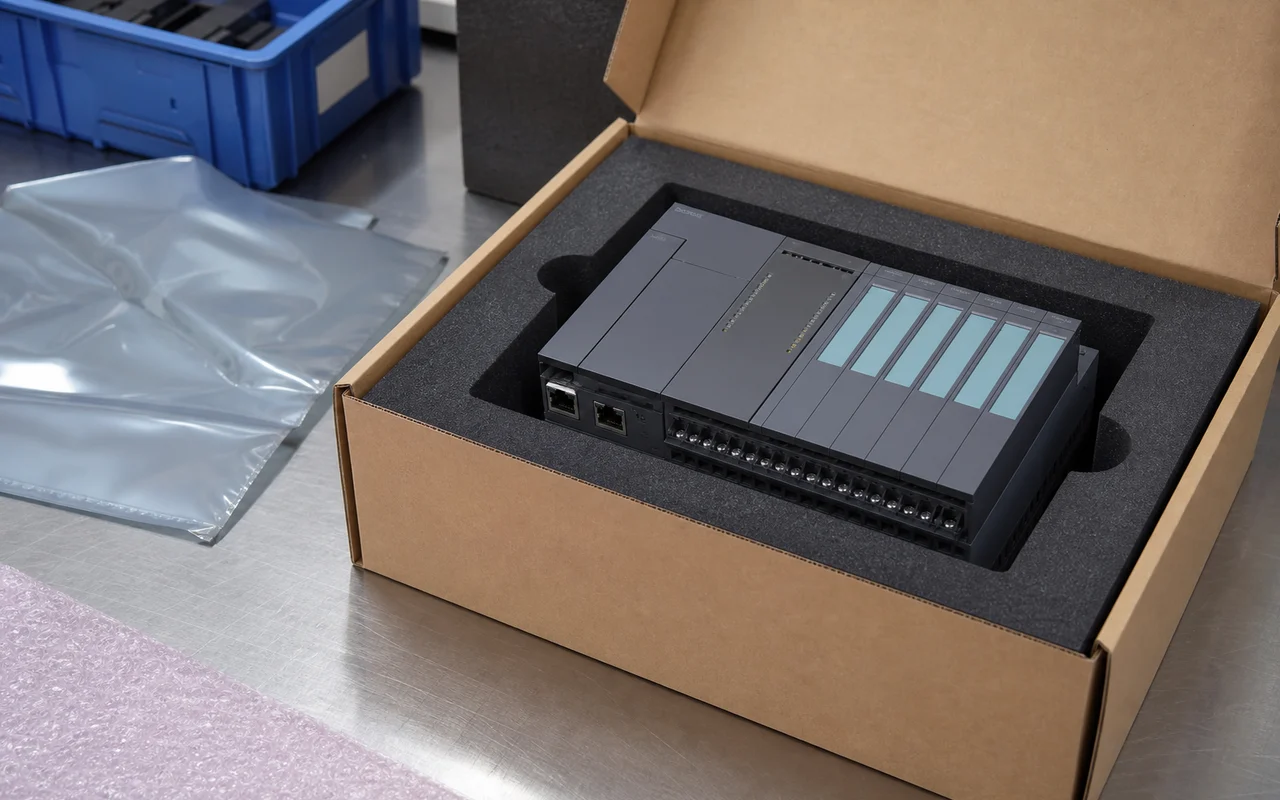 Secure Export Packing
Cushion protection and strong cartons ensure safe transportation.
 Worldwide Shipping
Global logistics network supports air, sea and express delivery.
 Documentation Check
Part number, revision and compatibility verified before shipment.
 After-sales Support
Professional technical support to help resolve your issues.