Functional Inspection
100% tested on professional platforms to ensure stable performance.
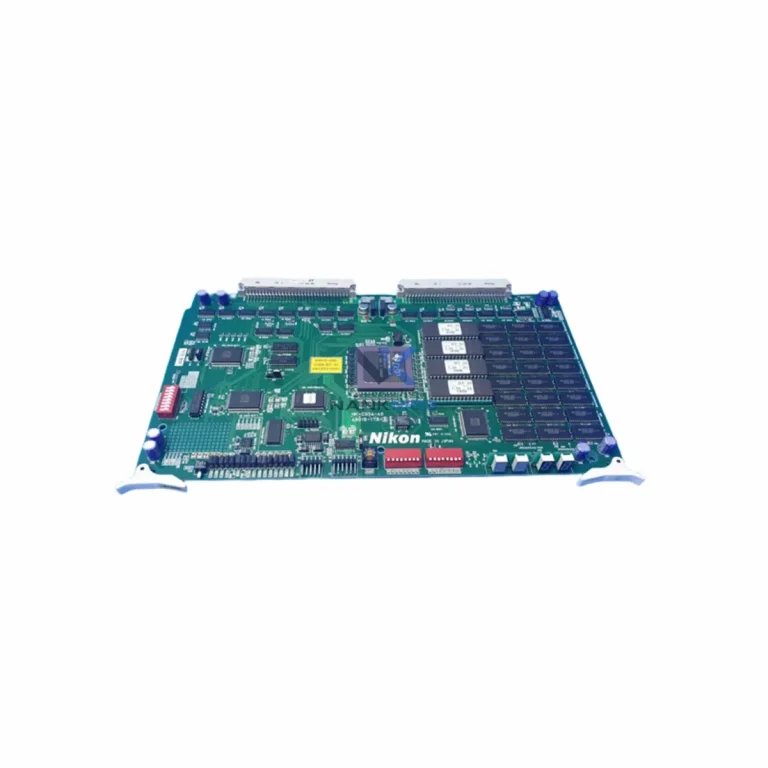
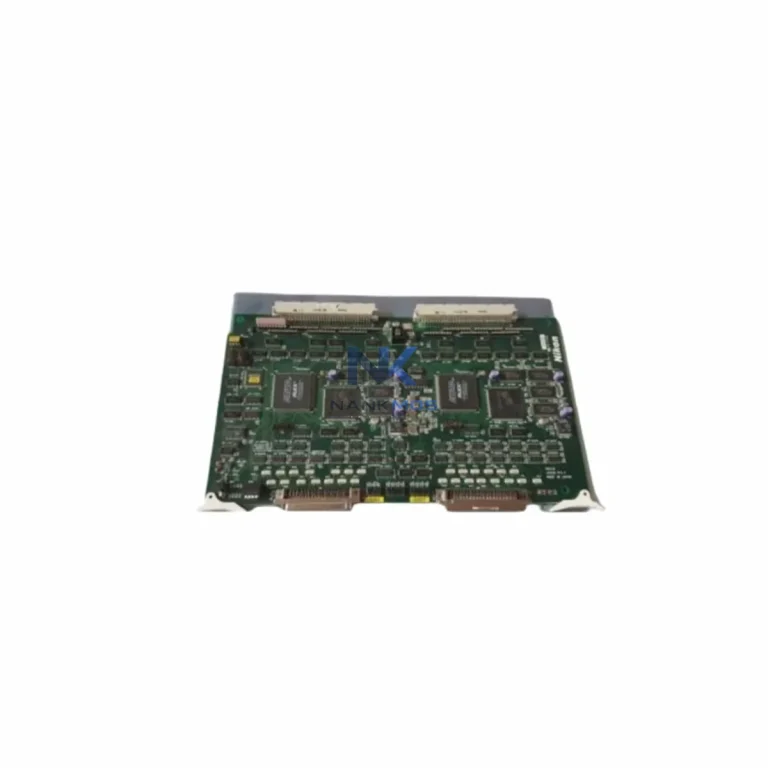
NIKON SR-EX3 4S017-489-2 0021-12555 LBC-GX 400-0332-000B is a NANKMOS industrial automation product record Listed under Other series series and Business & Industrial > Automation, Control & Flow Devices. Confirm condition, availability, lead time, compatibility and documentation by email inquiry.
Brand names are used for identification only.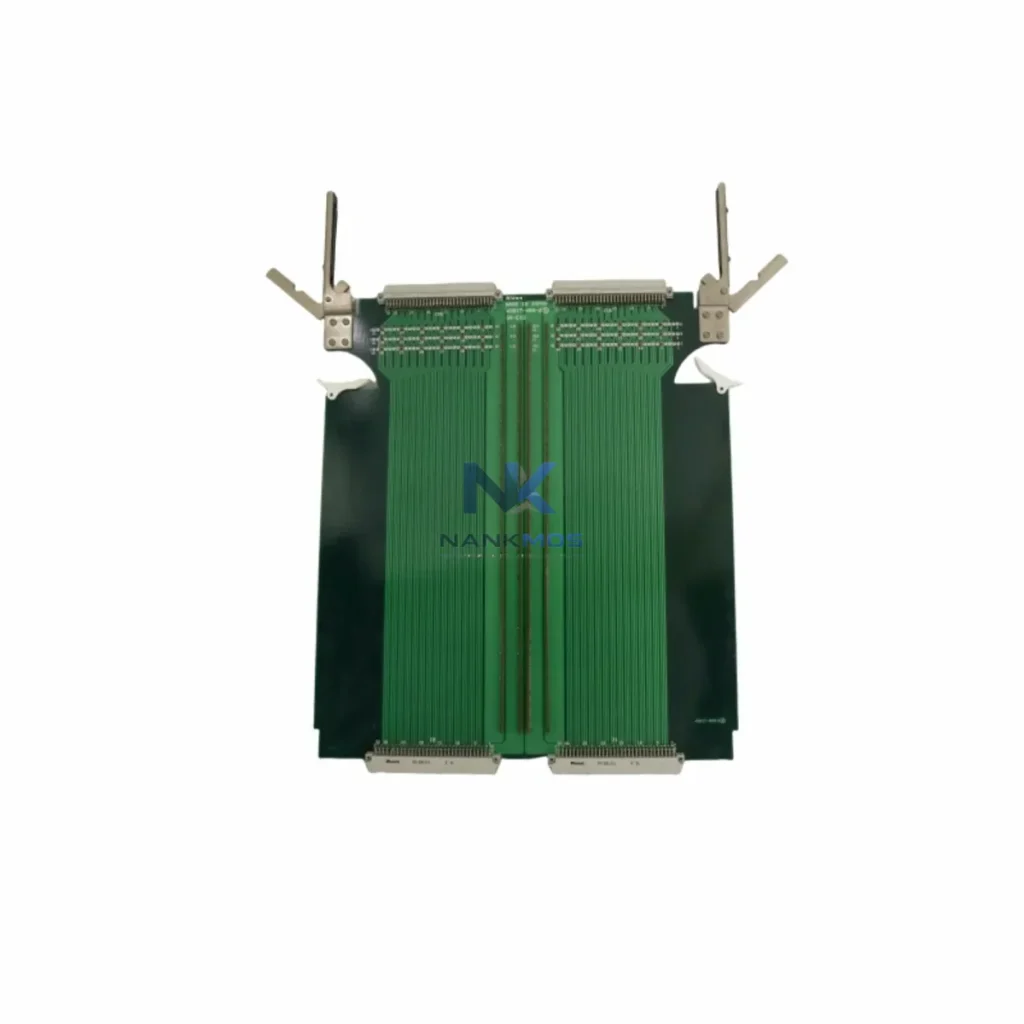
NIKON SR-EX3 4S017-489-2 0021-12555 LBC-GX 400-0332-000B is a NANKMOS industrial automation product record Listed under Other series series and Business & Industrial > Automation, Control & Flow Devices. Confirm condition, availability, lead time, compatibility and documentation by email inquiry.
| Manufacturer | NIKON |
|---|---|
| Application | Industrial Automation Maintenance |
| Part Number / Model | SR-EX3 4S017-489-2 0021-12555 LBC-GX 400-0332-000B |
| Compatible System | Confirmed by inquiry |
| Condition Options | To Confirm |
| Module Type | Automation, Control & Flow Devices |
| Warranty | 12 Months |
| Packaging | Anti-static Bag / Secure Box |
| Shipping Methods | DHL / FedEx / UPS / Air / Sea |
| Availability | To Confirm |
| Lead Time | To Confirm |
| Documentation | Part number and revision checked before quote |
The NIKON SR-EX3 4S017-489-2 0021-12555 LBC-GX 400-0332-000B is a precision-engineered industrial network interface PCB assembly designed to serve as the critical data bridge between field-level devices and upper-layer control and monitoring systems. In modern smart factory environments where real-time data integrity, protocol interoperability, and network stability are non-negotiable, this board delivers the communication backbone that keeps production lines transparent, responsive, and continuously connected.
Engineered for demanding industrial environments — including semiconductor fabrication, precision machining, energy management, and petrochemical process control — the SR-EX3 LBC-GX interface module enables seamless data exchange across heterogeneous automation architectures. Whether integrating legacy field instruments with modern SCADA platforms or extending network reach to remote I/O nodes, this PCB assembly provides the signal fidelity and protocol translation capability that industrial engineers depend on.
In a fully integrated smart factory, data must flow without interruption from the sensor layer all the way to the enterprise dashboard. The NIKON SR-EX3 LBC-GX interface board occupies a pivotal position in this chain. At the field level, sensors and encoders — including NIKON linear scales and rotary encoders — generate high-frequency positional and process signals. These signals are captured and conditioned by the SR-EX3 interface board before being passed upstream to the motion controller or PLC.
In a typical deployment, the SR-EX3 LBC-GX board interfaces directly with the NIKON SC-EX3 or compatible servo controller, enabling closed-loop feedback with sub-micron precision. The controller then communicates via industrial Ethernet — such as EtherCAT or PROFINET — to a higher-level PLC platform, where ladder logic or function block programs orchestrate multi-axis coordination. Alongside the PLC, remote I/O modules extend digital and analog signal reach to distributed actuators and valve banks across the production floor.
HMI panels — often running on Weintek, Siemens TP series, or Mitsubishi GOT platforms — pull real-time status data from the PLC via Modbus TCP or OPC-UA, giving operators live visibility into axis position, cycle time, alarm states, and throughput metrics. This data is simultaneously forwarded to a SCADA gateway, where historians log every process variable for trend analysis, SPC charting, and regulatory compliance reporting.
Edge gateways — such as those based on Advantech ADAM or Moxa MGate series — bridge the gap between legacy serial protocols and modern cloud-connected architectures. When the SR-EX3 LBC-GX board is part of a NIKON precision measurement or lithography system, the edge gateway translates proprietary machine data into MQTT or REST API streams, feeding MES and ERP platforms with real-time OEE and yield data.
Industrial managed switches — including MOXA EDS or Hirschmann SPIDER series — provide the Layer 2 network fabric that keeps all these nodes synchronized. VLAN segmentation isolates motion-critical traffic from general IT traffic, ensuring deterministic latency for time-sensitive control loops. Power for the entire network node — including the SR-EX3 interface board — is typically supplied by DIN-rail industrial power supplies such as MEAN WELL DR or SDR series, which provide stable 24 VDC with built-in surge protection.
Variable frequency drives (VFDs) connected to spindle motors or conveyor systems report speed, torque, and fault codes back through the same network fabric, enabling the SCADA system to correlate mechanical performance with process outcomes. The complete data chain — from encoder signal through the SR-EX3 LBC-GX interface, through the servo controller, PLC, HMI, SCADA, and edge gateway — forms the nervous system of a transparent, data-driven smart factory.
Many industrial facilities operate with a patchwork of equipment generations — legacy CNC machines running proprietary serial protocols alongside modern Ethernet-connected robots and cloud-linked MES platforms. The result is data silos: critical process information trapped inside individual machines, invisible to operators and unreachable by analytics systems.
The NIKON SR-EX3 4S017-489-2 LBC-GX addresses this directly. As a board-level network interface, it restores the communication pathway between NIKON precision systems and the broader plant network. When a NIKON measurement or motion system loses its interface board, the entire machine becomes a data island — position feedback stops, alarm signals go unlogged, and remote diagnostics become impossible. Replacing the SR-EX3 LBC-GX board re-establishes the data link, allowing the machine to resume its role in the connected factory architecture.
For facilities pursuing production line transparency, this means alarm events are once again captured and timestamped in the SCADA historian. Remote maintenance teams can access live diagnostic data without dispatching on-site engineers. Predictive maintenance algorithms — running on edge or cloud platforms — can resume monitoring vibration signatures, thermal trends, and cycle anomalies. System expansion becomes straightforward: additional NIKON axes or measurement heads can be added to the network without redesigning the communication architecture, because the SR-EX3 LBC-GX interface provides a standardized data handoff point.
Protocol unification is another key benefit. Rather than maintaining separate diagnostic tools for each machine generation, plant engineers can route all NIKON system data through a common gateway layer, presenting a unified data model to the SCADA and MES platforms. This reduces integration complexity, shortens commissioning time for new equipment, and lowers the long-term cost of network maintenance.
Q1: What communication protocols does the NIKON SR-EX3 LBC-GX interface board support? The SR-EX3 LBC-GX is a board-level interface designed for NIKON precision and motion systems. It supports the proprietary high-speed serial communication protocol used within NIKON SR-EX3 series controllers, and is compatible with gateway architectures that bridge to industrial Ethernet protocols including EtherCAT, PROFINET, and Modbus TCP. For specific protocol mapping requirements, consult your system integrator or contact NANKMOS for application support.
Q2: How is network stability ensured in high-vibration or electrically noisy industrial environments? The PCB assembly is manufactured to NIKON's industrial-grade specifications, with EMI shielding and signal conditioning designed for factory floor conditions. When deployed within a properly grounded control cabinet alongside industrial managed switches and DIN-rail power supplies, the SR-EX3 LBC-GX maintains stable communication even in environments with significant electrical noise from VFDs, welding equipment, or high-current motor drives.
Q3: Can this board be integrated into an existing SCADA or remote monitoring system without replacing the host controller? Yes. The SR-EX3 LBC-GX is a drop-in replacement for the original NIKON interface board. Once installed and initialized, the host controller resumes normal communication with the plant network, including SCADA data feeds, HMI status displays, and remote diagnostic access. No changes to the upper-layer software architecture are required in most standard replacement scenarios.
Q4: What does the 12-month warranty cover, and how is pre-shipment testing conducted? All NANKMOS-supplied SR-EX3 LBC-GX boards are functionally tested prior to shipment, verifying communication interface integrity, connector continuity, and board-level signal performance. The 12-month warranty covers manufacturing defects and functional failures under normal operating conditions. Boards are shipped with anti-static packaging and full traceability documentation. For RFQ, lead time, and warranty terms, contact [email protected] or call +86 18359268345.
Functional Inspection100% tested on professional platforms to ensure stable performance.
 Anti-static Packaging
Modules are packed in anti-static bags to prevent electrostatic damage.
 Secure Export Packing
Cushion protection and strong cartons ensure safe transportation.
 Worldwide Shipping
Global logistics network supports air, sea and express delivery.
 Documentation Check
Part number, revision and compatibility verified before shipment.
 After-sales Support
Professional technical support to help resolve your issues.