Functional Inspection
100% tested on professional platforms to ensure stable performance.
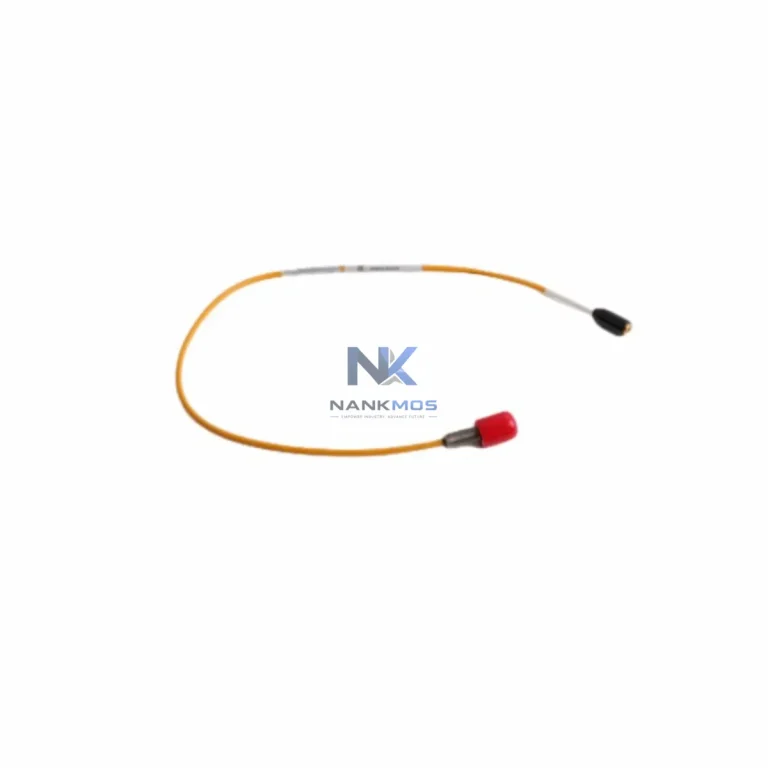
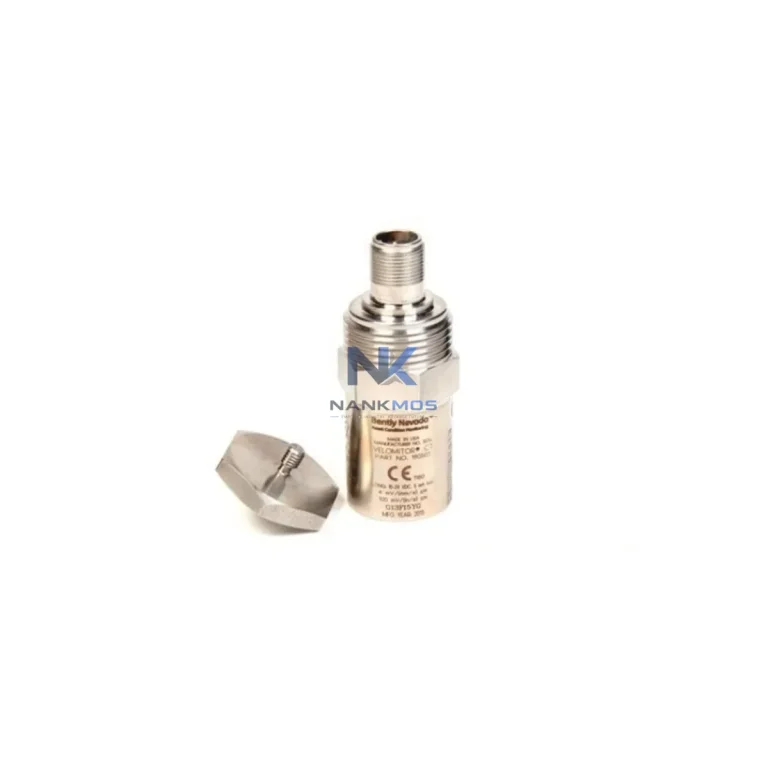
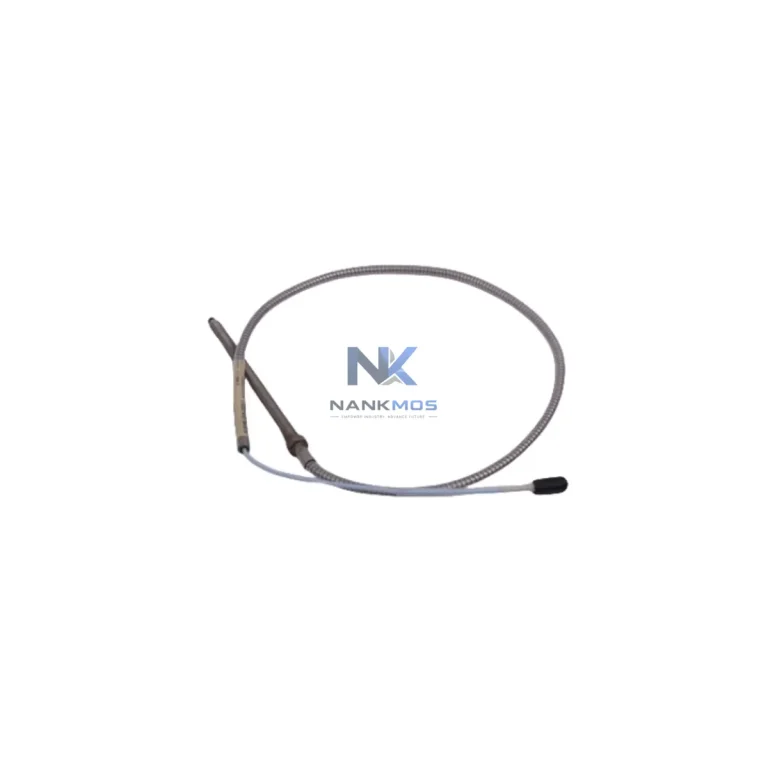
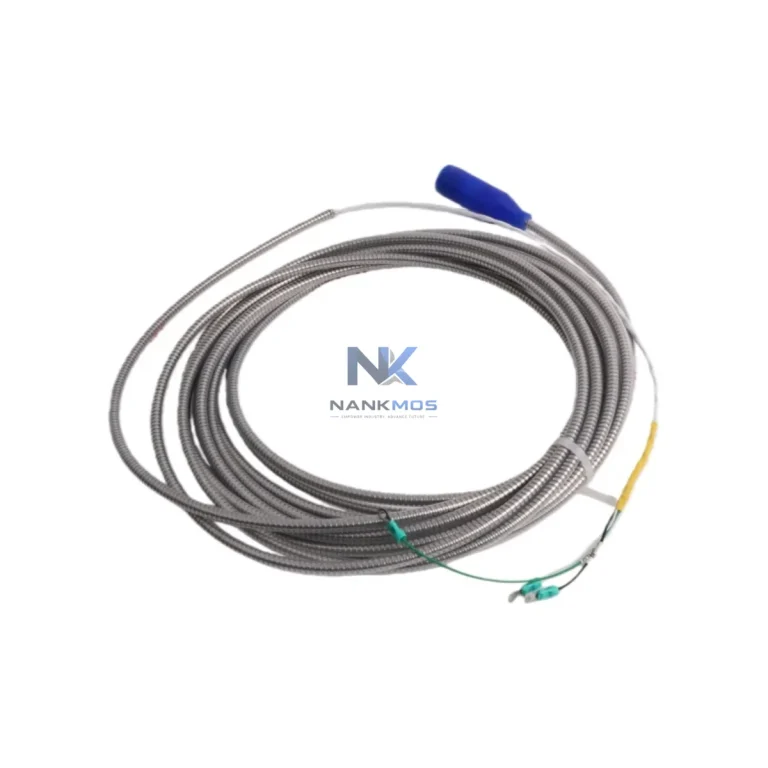
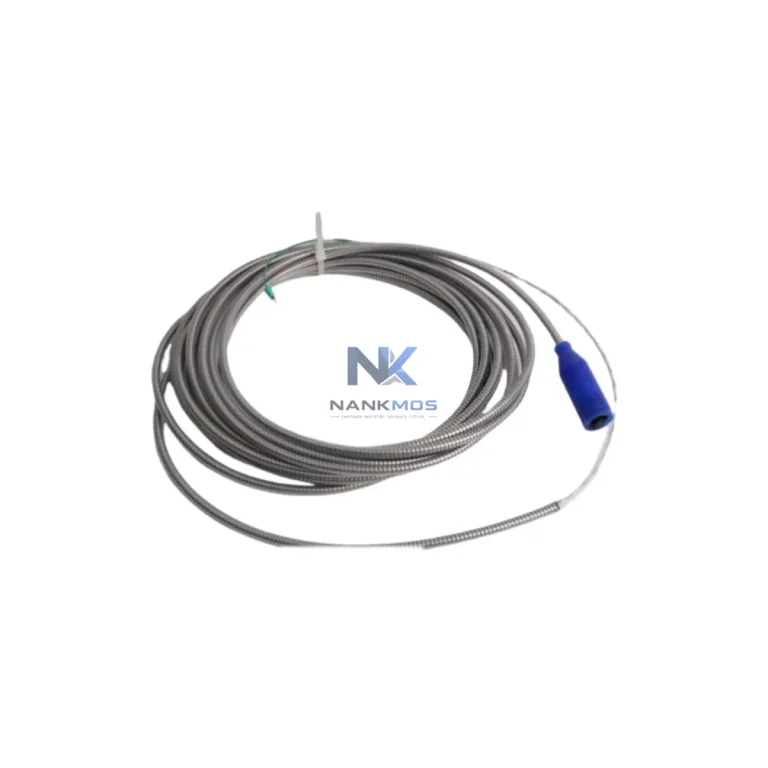
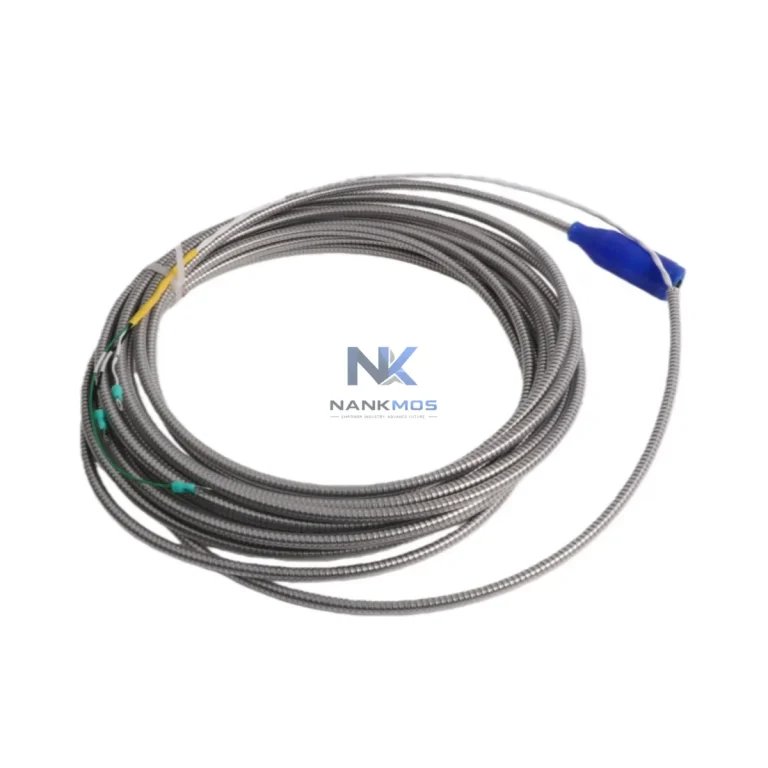
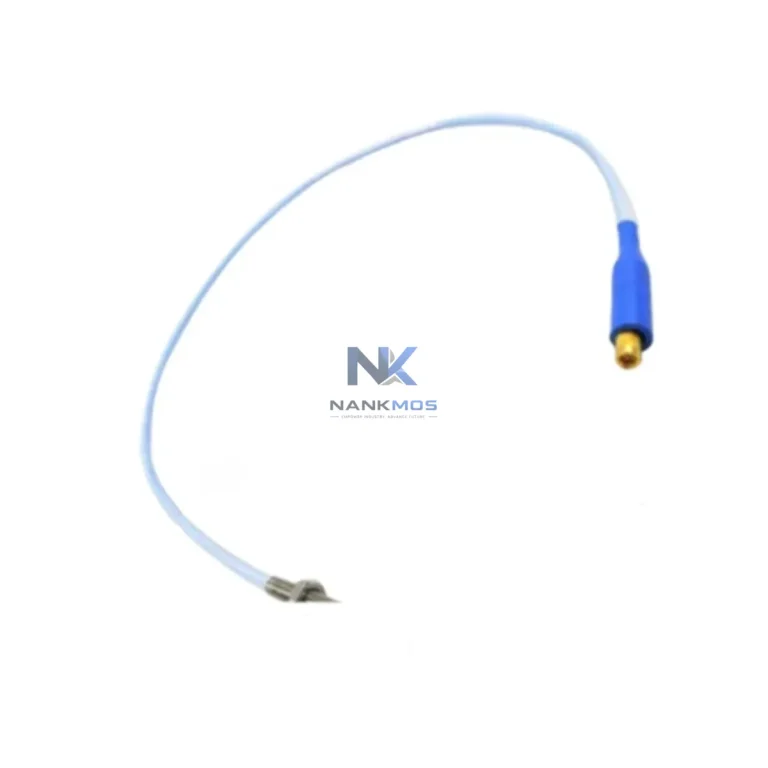
Bently Nevada 330101-00-20-20-02-CN is a NANKMOS industrial automation product record Listed under 3300 Series series and Sensors. Confirm condition, availability, lead time, compatibility and documentation by email inquiry.
Brand names are used for identification only.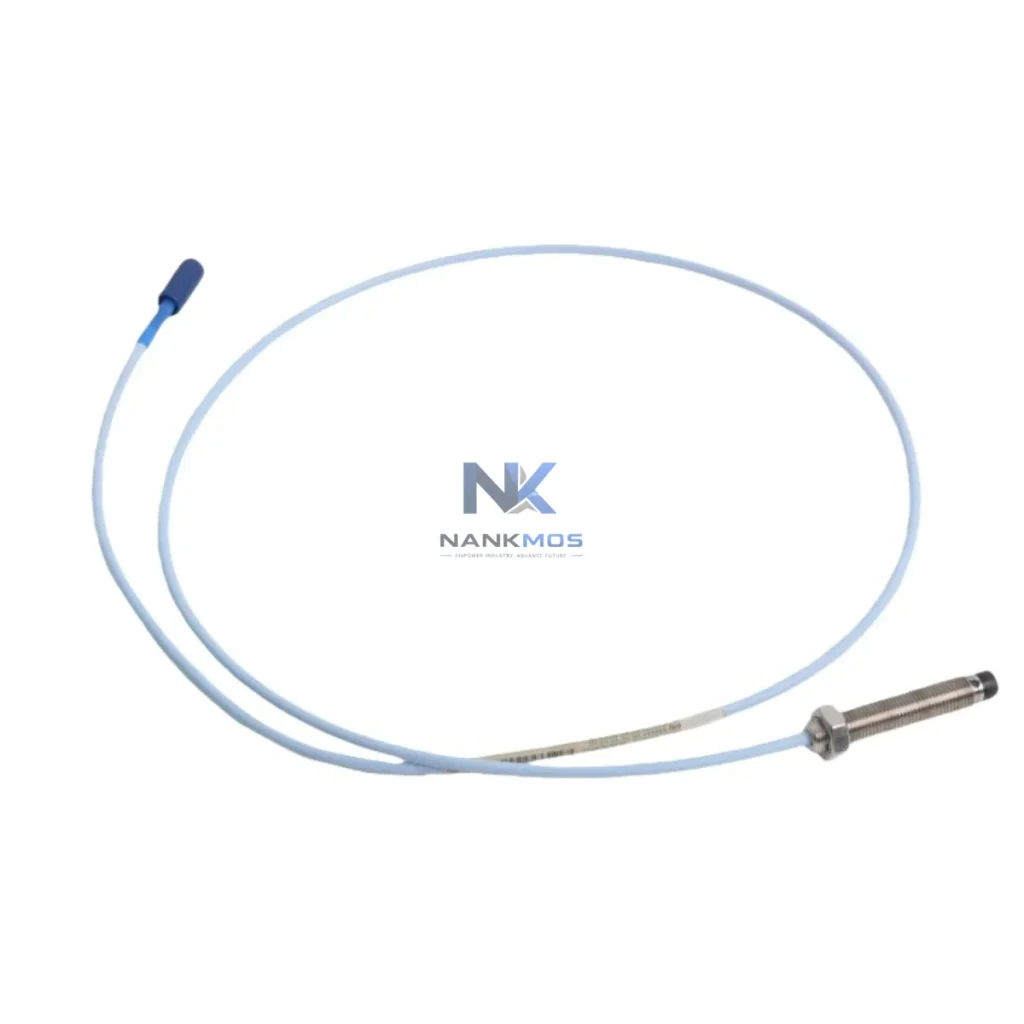
Bently Nevada 330101-00-20-20-02-CN is a NANKMOS industrial automation product record Listed under 3300 Series series and Sensors. Confirm condition, availability, lead time, compatibility and documentation by email inquiry.
| Manufacturer | Bently Nevada |
|---|---|
| Application | Turbine & Condition Monitoring |
| Part Number / Model | 330101-00-20-20-02-CN |
| Compatible System | 3300 Series |
| Series | 3300 Series |
| Condition Options | To Confirm |
| Module Type | Monitoring Module |
| Warranty | 12 Months |
| Packaging | Anti-static Bag / Secure Box |
| Shipping Methods | DHL / FedEx / UPS / Air / Sea |
| Availability | To Confirm |
| Lead Time | To Confirm |
| Documentation | Part number and revision checked before quote |
The Bently Nevada 330101-00-20-20-02-CN is a precision eddy-current proximity probe engineered as a native component within the Bently Nevada 3300 Series machinery protection and condition monitoring architecture. Designed for continuous, non-contact measurement of shaft radial vibration, axial position, and differential expansion, this probe delivers the signal fidelity and mechanical reliability demanded by rotating machinery protection systems in critical industrial environments. Its system-matched design ensures seamless integration with the 3300 XL monitor series, eliminating calibration uncertainty and reducing commissioning time across multi-channel installations.
Within a complete automation and machinery protection architecture, the 330101-00-20-20-02-CN occupies the sensing layer — the foundation upon which all higher-level diagnostics, control decisions, and safety responses depend. Signal integrity at this layer directly determines the accuracy of vibration trend analysis, alarm setpoint reliability, and the responsiveness of protective shutdown logic. By selecting a system-matched probe rather than a generic substitute, engineers preserve the calibrated transfer function between the probe, extension cable, and proximitor driver, ensuring that the entire measurement chain performs within the manufacturer's certified accuracy envelope.
The 330101-00-20-20-02-CN is not a standalone sensor — it is a precision input node within a layered machinery protection and process control architecture. Understanding its role requires examining how it interacts with adjacent system components across multiple functional layers.
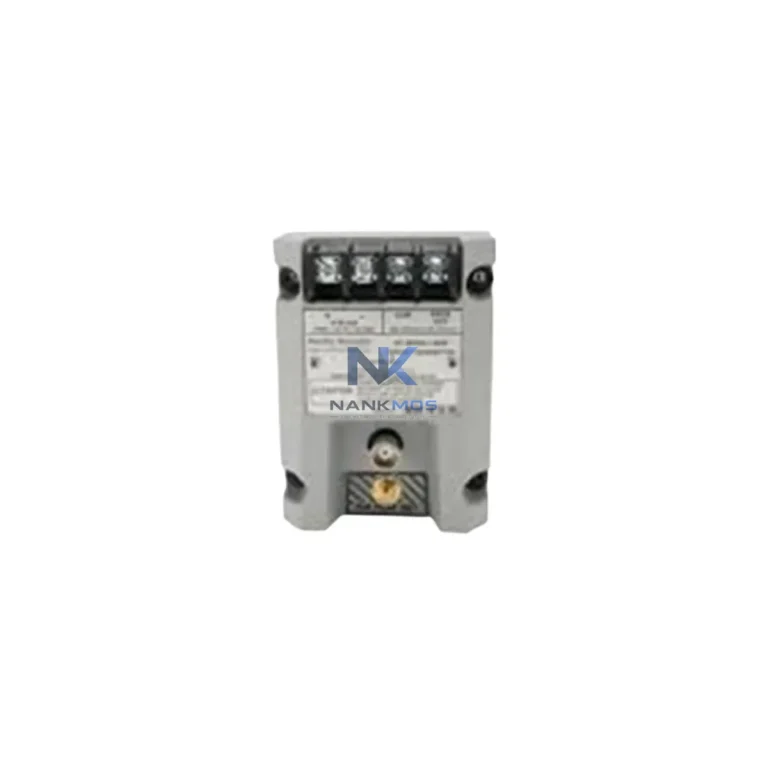
At the sensing and signal conditioning layer, the probe pairs exclusively with a compatible Bently Nevada proximitor driver such as the 3300 XL 8mm Proximitor or the 3300 XL 11mm Proximitor. The proximitor supplies the −24 VDC excitation, demodulates the eddy-current signal, and outputs a calibrated DC voltage proportional to the gap distance. This three-component measurement chain — probe, extension cable, and proximitor — must be used as a matched set to maintain the certified sensitivity of 7.87 V/mm. Substituting any element with an unmatched component invalidates the calibration and introduces systematic measurement error that cannot be corrected through software scaling alone.
At the monitor and I/O layer, the analog output from the proximitor feeds directly into a Bently Nevada 3500/42M Proximitor Monitor or a 3300 XL Dual Vibration Monitor. These monitor cards perform real-time signal processing, apply alarm and danger setpoints, and generate relay outputs for protective shutdown. In a typical turbine protection panel, four to eight proximity channels — covering X-Y radial vibration pairs at each bearing — are managed by a rack of monitor cards housed in a Bently Nevada 3500 Rack. The rack's backplane provides power distribution, inter-card communication, and a common Modbus TCP or RS-232 gateway interface to the plant DCS.
At the communication and integration layer, the 3500 rack communicates vibration data, alarm states, and diagnostic information to the plant-wide control system — typically a GE Vernova Mark VIe or a Honeywell Experion PKS DCS — via Ethernet/IP or Modbus TCP. This integration allows operators to correlate vibration trends with process variables such as bearing temperature (measured by Bently Nevada 3300 XL Temperature Monitor cards), lube oil pressure, and load conditions, enabling condition-based maintenance decisions rather than fixed-interval overhauls.
At the power layer, the 3500 rack requires a stable −24 VDC supply, typically sourced from a dedicated Bently Nevada 3500/15 Power Supply module. In critical applications, dual redundant power supplies are installed in the same rack, with automatic failover ensuring uninterrupted monitoring during a power module failure. This redundancy is essential in applications where a monitoring gap — even momentary — could result in an undetected machinery fault progressing to a catastrophic failure.
At the HMI and visualization layer, vibration data from the 3500 system is displayed on operator workstations running System 1 Evolution software, Bently Nevada's condition monitoring and diagnostics platform. System 1 provides real-time waveform display, spectrum analysis, trend plots, and automated diagnostic alerts, allowing rotating equipment engineers to identify developing faults — such as rotor imbalance, misalignment, oil whirl, or rub — weeks or months before they reach alarm thresholds.
At the protection and safety layer, the relay outputs from the monitor cards interface with the machine's emergency shutdown system (ESD). In turbine applications, a danger-level vibration signal from the 330101-00-20-20-02-CN measurement chain can trigger a turbine trip through a Bently Nevada 3500/32 Relay Module, isolating the machine before bearing damage or seal failure occurs. This protective function is the ultimate justification for maintaining a system-matched, calibrated probe chain rather than accepting field substitutions.
Power Generation — Steam and Gas Turbines: In power plant turbine trains, the 330101-00-20-20-02-CN is installed at each journal bearing location to monitor shaft radial vibration in both X and Y planes. A typical 100 MW steam turbine may require 12 to 16 proximity probe channels covering the HP, IP, and LP turbine sections plus the generator. The probes operate continuously at elevated temperatures, and their system-matched calibration ensures that vibration alarm setpoints — typically set at 75 µm peak-to-peak for warning and 125 µm for danger — remain accurate throughout the machine's operating life.
Oil and Gas — Centrifugal Compressors: Pipeline and refinery centrifugal compressors operate at high speeds with tight rotor dynamic margins. The 330101-00-20-20-02-CN provides the continuous shaft position and vibration data required to detect surge precursors, bearing wear, and rotor instability. In API 670-compliant installations, the probe is part of a certified machinery protection system that must meet specific response time, accuracy, and redundancy requirements. The 3300 XL architecture satisfies these requirements natively, reducing the engineering burden of compliance documentation.
Petrochemical — Process Compressors and Pumps: In ethylene crackers, ammonia plants, and refinery process units, rotating machinery reliability directly impacts plant throughput. The 330101-00-20-20-02-CN enables continuous condition monitoring of critical pumps and compressors, supporting a predictive maintenance strategy that reduces unplanned shutdowns. Integration with the plant DCS allows maintenance teams to schedule interventions during planned turnarounds rather than responding reactively to failures.
Water and Wastewater — Large Pump Stations: Municipal water authorities operating large vertical turbine pumps and horizontal split-case pumps increasingly deploy proximity probe systems to monitor bearing condition and detect cavitation-induced vibration. The 330101-00-20-20-02-CN's robust construction and wide operating temperature range make it suitable for the humid, chemically aggressive environments typical of pump station installations.
Mining and Minerals Processing — Mill Drives and Fans: Ball mills, SAG mills, and large induced-draft fans in mining operations are high-value assets where unplanned downtime carries significant production cost. Proximity probe monitoring of mill trunnion bearings and fan shaft vibration provides early warning of bearing deterioration, allowing maintenance to be planned without interrupting production schedules.
Q1: Can the 330101-00-20-20-02-CN be used with a non-Bently Nevada monitor or a generic eddy-current driver? A: Technically, the probe will generate a signal with any compatible eddy-current driver, but the calibrated sensitivity of 7.87 V/mm is only guaranteed when the probe is used with a matched Bently Nevada 3300 XL Proximitor. Using a third-party driver will alter the transfer function, invalidate the calibration, and introduce measurement errors that cannot be corrected through software gain adjustment. For API 670-compliant installations, the entire measurement chain — probe, extension cable, and proximitor — must be from the same certified system. NANKMOS supplies matched sets on request to ensure compliance.
Q2: What is the recommended installation and commissioning procedure for this probe in a 3300 XL architecture? A: Installation requires setting the probe gap to the midpoint of the linear range — typically 1.0 to 1.27 mm (40 to 50 mil) — verified with a calibrated gap tool and a DC voltmeter reading the proximitor output. The gap voltage should read approximately −10 to −12 VDC at the nominal gap. After mechanical installation, the channel should be verified against the monitor's calibration record, and alarm setpoints should be confirmed against the machine's vibration acceptance criteria. NANKMOS provides technical support for commissioning verification and can supply calibration documentation for the supplied probe upon request.
Q3: What does the 12-Month Warranty cover, and what is NANKMOS's supply and lead time commitment for this part? A: NANKMOS's 12-Month Warranty covers manufacturing defects and functional failures under normal operating conditions from the date of shipment. Each unit undergoes pre-shipment functional testing to verify output sensitivity, linearity, and cable integrity before dispatch. For the 330101-00-20-20-02-CN, NANKMOS maintains inventory to support urgent maintenance requirements, with standard lead times of 3 to 7 business days for in-stock units and expedited shipping available for critical plant situations. Replacement units for warranty claims are processed within 5 business days of fault confirmation. Contact [email protected] for real-time stock availability and volume pricing.
Functional Inspection100% tested on professional platforms to ensure stable performance.
 Anti-static Packaging
Modules are packed in anti-static bags to prevent electrostatic damage.
 Secure Export Packing
Cushion protection and strong cartons ensure safe transportation.
 Worldwide Shipping
Global logistics network supports air, sea and express delivery.
 Documentation Check
Part number, revision and compatibility verified before shipment.
 After-sales Support
Professional technical support to help resolve your issues.