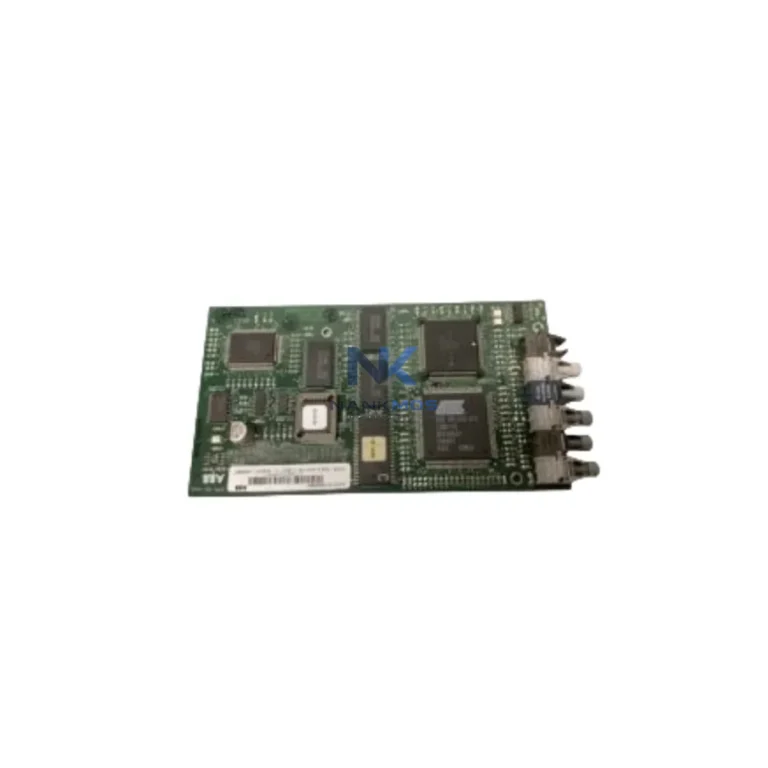
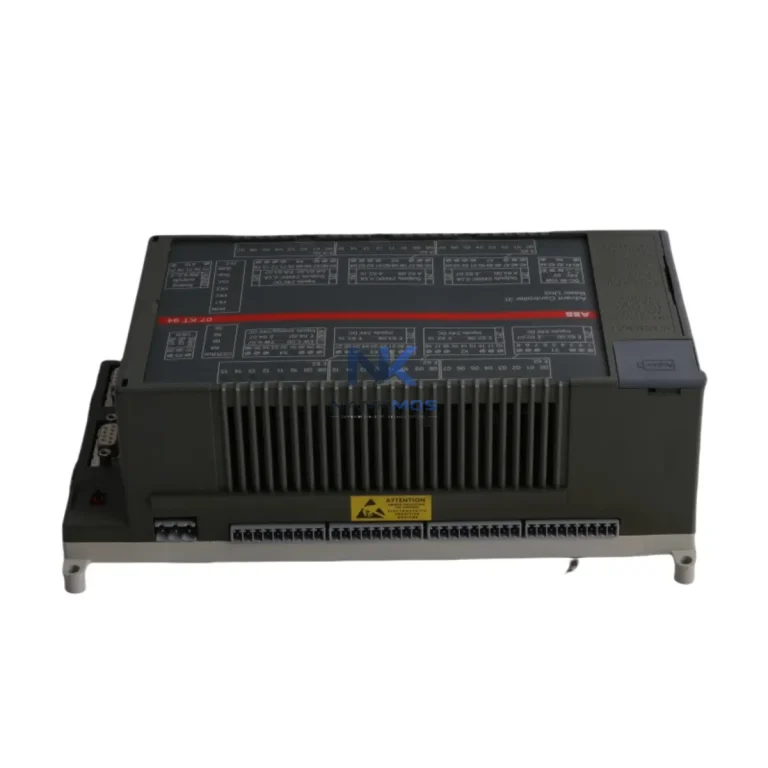
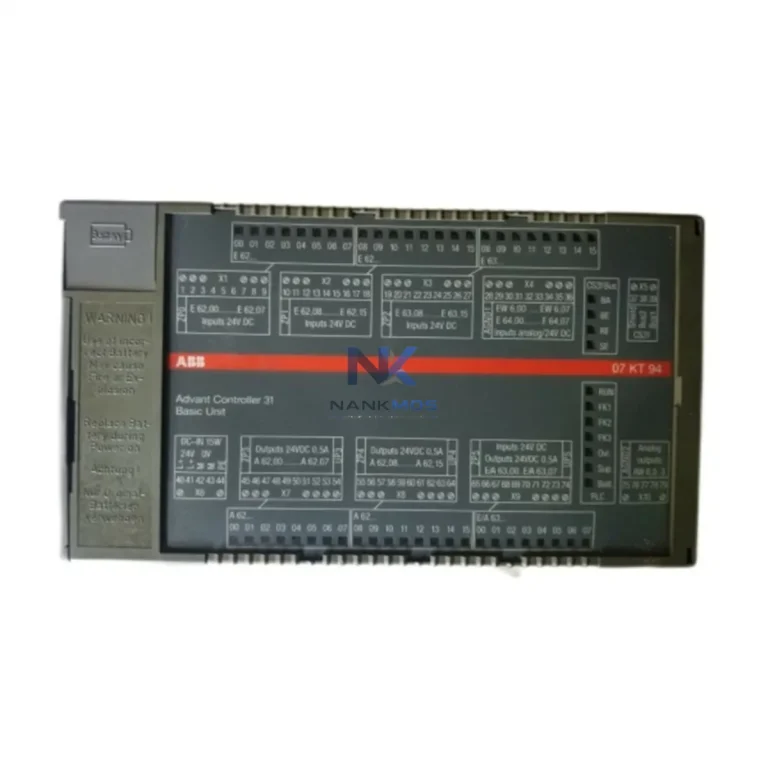
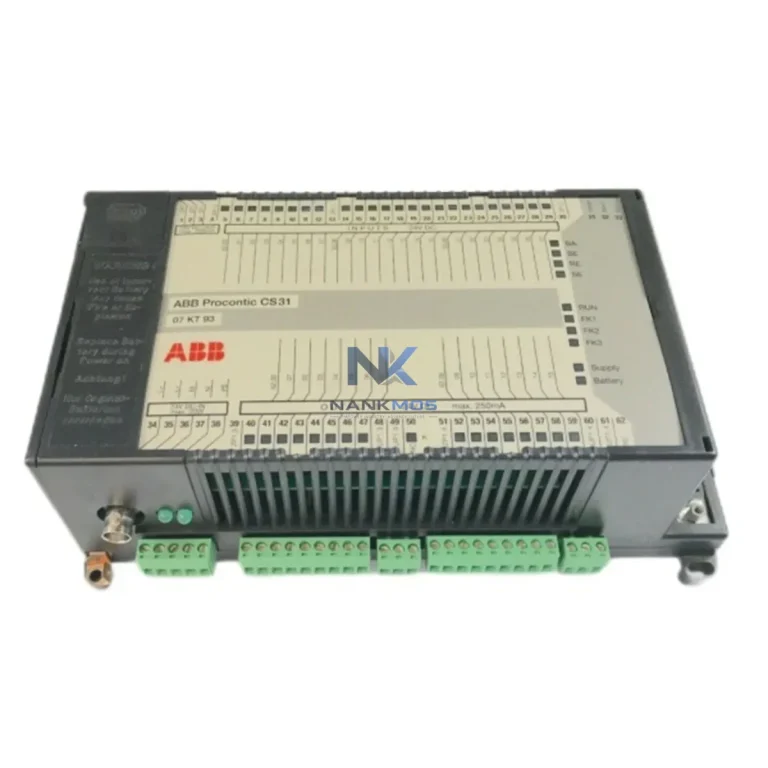
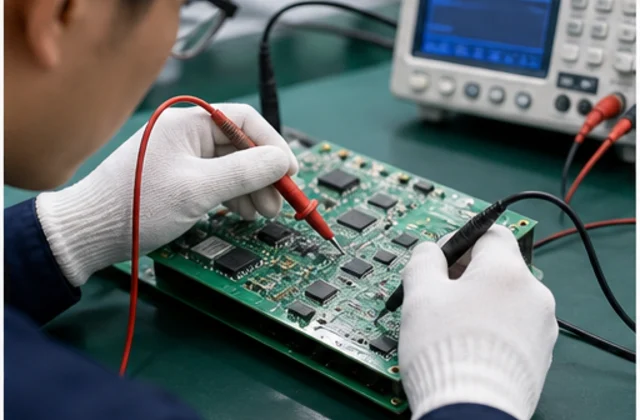
 Functional Inspection
100% tested on professional platforms to ensure stable performance.
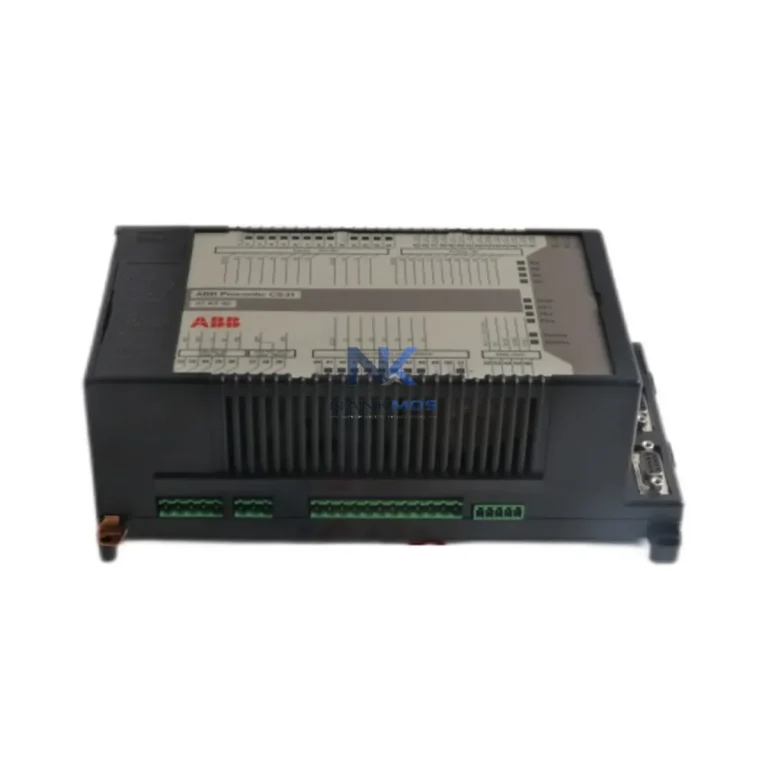
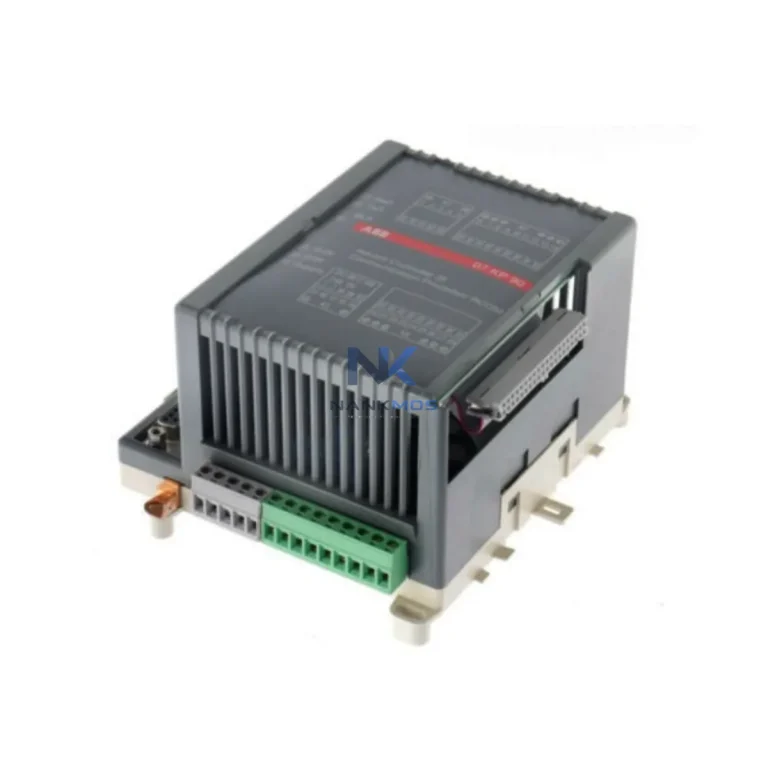
ABB RMIO-12C is a NANKMOS industrial automation product record Listed under O Module ACS Series series and Business & Industrial > Automation, Control & Flow Devices > Programmable Logic Controllers. Confirm condition, availability, lead time, compatibility and documentation by email inquiry.
Brand names are used for identification only.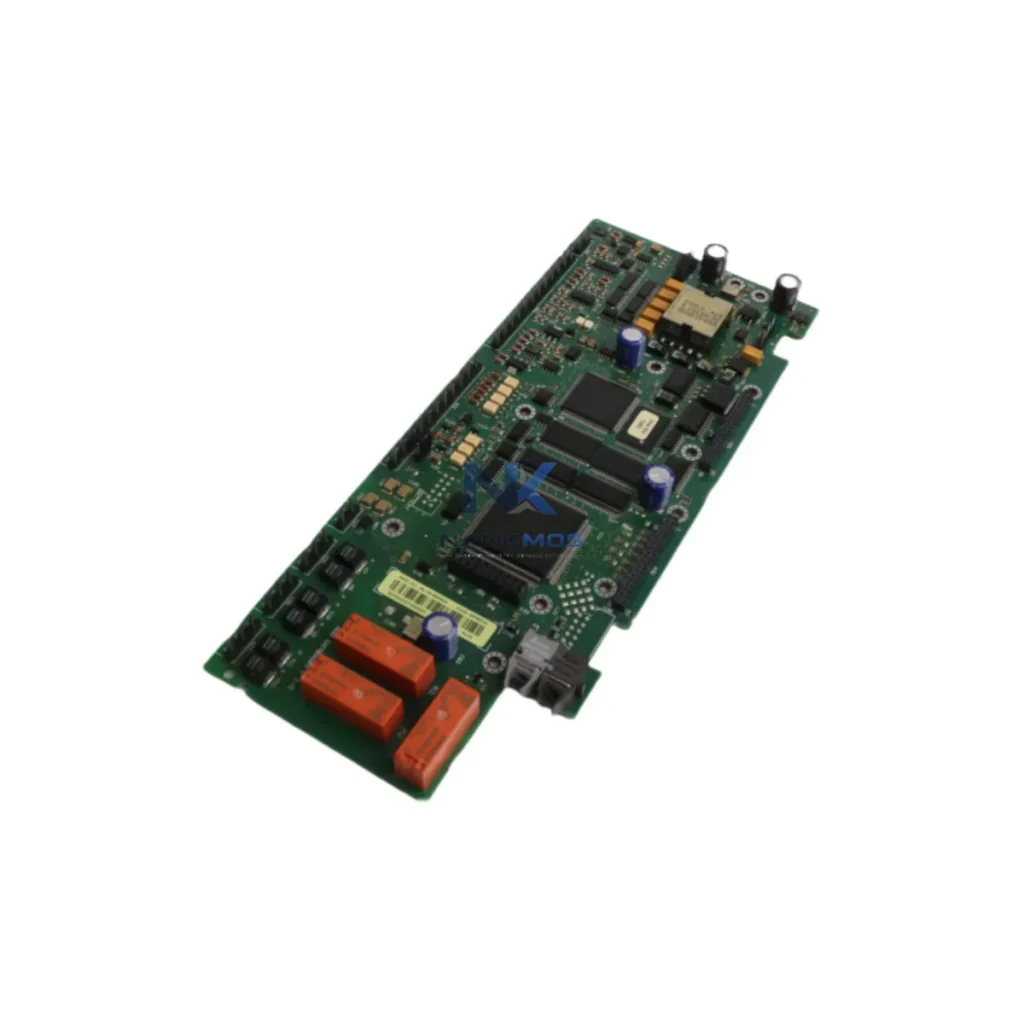
ABB RMIO-12C is a NANKMOS industrial automation product record Listed under O Module ACS Series series and Business & Industrial > Automation, Control & Flow Devices > Programmable Logic Controllers. Confirm condition, availability, lead time, compatibility and documentation by email inquiry.
| Manufacturer | ABB |
|---|---|
| Application | Controller Processing & System Control |
| Part Number / Model | RMIO-12C |
| Compatible System | O Module ACS Series |
| Series | O Module ACS Series |
| Condition Options | To Confirm |
| Module Type | Controller / CPU Module |
| Warranty | 12 Months |
| Packaging | Anti-static Bag / Secure Box |
| Shipping Methods | DHL / FedEx / UPS / Air / Sea |
| Availability | To Confirm |
| Lead Time | To Confirm |
| Documentation | Part number and revision checked before quote |
The ABB RMIO-12C is a high-performance multifunction I/O module engineered for the ACS800 and ACS880 series variable frequency drives. Designed to serve as the critical interface between field-level sensors, actuators, and the drive control core, the RMIO-12C enables real-time energy monitoring, adaptive load management, and precise motor control across demanding industrial environments. Whether deployed in power generation facilities, petrochemical plants, water treatment stations, or marine propulsion systems, this module delivers the signal integrity and processing speed required to sustain energy-efficient, high-availability production lines.
At its core, the RMIO-12C functions as the main control board of the ACS800/ACS880 drive platform, integrating analog and digital I/O channels that connect directly to field instruments including current transformers, pressure transmitters, and speed encoders. By consolidating these signal pathways, the module eliminates redundant wiring loops and reduces the parasitic energy losses associated with legacy relay-based control architectures. In smart factory deployments, this translates directly into measurable reductions in idle-state power draw and improved drive utilization rates across multi-motor production cells.
The RMIO-12C is designed to operate as a central node within a layered automation architecture. In a typical smart production line, the module interfaces directly with the ABB ACS880 drive's internal control bus, receiving setpoint commands from a Siemens S7-1500 PLC or Allen-Bradley ControlLogix controller via PROFIBUS DP or Modbus RTU. This tight integration allows the PLC to dynamically adjust motor speed references based on real-time production demand signals, eliminating the fixed-speed operation that accounts for a significant share of industrial energy waste.
On the field side, the RMIO-12C's analog input channels accept 4–20 mA signals from power monitoring modules such as the ABB M2M or equivalent DIN-rail energy meters, enabling closed-loop feedback on actual motor load. When load drops below a configurable threshold — for example, during conveyor idle periods or pump low-demand cycles — the drive responds by reducing output frequency, cutting energy consumption proportionally to the cube of speed reduction. This behavior is orchestrated through the RMIO-12C's programmable I/O logic, which can be configured via the ABB Drive Composer or DriveWindow software environment.
For distributed control architectures, the RMIO-12C supports the DDCS fiber-optic communication bus, enabling high-speed, noise-immune data exchange between the drive and master controllers in environments with heavy electromagnetic interference — common in arc furnace facilities or large motor rooms. In parallel, digital output channels drive contactor coils, brake relays, and cooling fan starters, ensuring that auxiliary energy consumers are activated only when operationally required. Integration with Schneider Electric Modicon M340 PLCs or Mitsubishi MELSEC iQ-R series controllers is also supported through standard Modbus RTU mapping, broadening the RMIO-12C's compatibility across mixed-vendor production environments.
HMI visualization of drive status and energy metrics is achieved by routing RMIO-12C output data through the drive's fieldbus adapter — such as the RPBA-01 PROFIBUS adapter or RCAN-01 CANopen module — to a Siemens TP1200 Comfort Panel or equivalent operator interface. This gives line operators real-time visibility into motor current, output frequency, and accumulated energy consumption without requiring a dedicated SCADA workstation at each drive location. For plant-wide energy management, the data stream can be aggregated into a SCADA system such as Wonderware InTouch or Ignition by Inductive Automation, where trend analysis and demand forecasting algorithms identify further optimization opportunities.
Industrial facilities operating ACS800 or ACS880 drives without a properly configured I/O module often experience energy inefficiencies that are invisible at the drive level but measurable at the utility meter. The RMIO-12C addresses this by providing the signal infrastructure needed to implement load-adaptive control strategies that respond to actual process conditions rather than fixed schedules.
In pump and fan applications — which collectively represent the largest share of industrial motor energy consumption — the RMIO-12C enables affinity-law-based speed control. By reducing pump speed from 100% to 80% of rated speed, energy consumption drops to approximately 51% of full-load draw. The RMIO-12C's analog output channels provide the 0–10 V or 4–20 mA speed reference signals that make this control strategy possible, while its digital inputs capture feedback from flow sensors and pressure switches to maintain process stability.
For conveyor and material handling lines, the module's programmable logic functions allow the drive to enter a sleep mode during product gaps or shift changeovers, eliminating the continuous low-load running that wastes energy without contributing to throughput. Wake-up triggers from proximity sensors or PLC digital outputs restart the drive within milliseconds, maintaining production rhythm without manual intervention. This capability directly reduces thermal loading on drive components, extending IGBT and capacitor service life and reducing the frequency of unplanned maintenance events.
Predictive maintenance integration is supported through the RMIO-12C's ability to log motor current signature data, which can be analyzed by condition monitoring platforms to detect bearing wear, rotor imbalance, or winding degradation before failure occurs. Early fault detection reduces emergency shutdown events, preserves production schedule integrity, and avoids the energy penalty associated with restarting cold processes. All units are pre-shipment tested under load conditions and backed by a 12-month warranty, ensuring that replacement modules arrive ready for immediate commissioning without additional calibration overhead.
Q1: How does the RMIO-12C contribute to measurable energy savings on a production line?The RMIO-12C enables load-adaptive speed control by providing the analog and digital I/O infrastructure needed to implement variable-speed operation on ACS800/ACS880 drives. By allowing the drive to match motor output to actual process demand rather than running at fixed speed, facilities typically achieve 20–50% energy reductions in pump, fan, and conveyor applications. The module's programmable sleep and wake functions further eliminate idle-state losses during production gaps.
Q2: Which PLC platforms and communication protocols are compatible with the RMIO-12C?The RMIO-12C is compatible with a broad range of PLC platforms including Siemens S7 series, Allen-Bradley ControlLogix, Mitsubishi MELSEC, and Schneider Modicon controllers via PROFIBUS DP, Modbus RTU, and DDCS fiber-optic bus. Fieldbus adapter modules such as the RPBA-01 or RCAN-01 extend connectivity to PROFINET, CANopen, and DeviceNet networks, making the RMIO-12C suitable for both legacy and modern IIoT-ready control architectures.
Q3: Can the RMIO-12C replace an existing RMIO-11C or earlier control board?The RMIO-12C is the successor to the RMIO-11C and is designed as a direct functional replacement in most ACS800 drive configurations. Before substitution, verify the drive firmware version and I/O channel mapping to ensure parameter compatibility. NANKMOS technical support can assist with cross-reference validation and commissioning guidance for replacement projects.
Q4: What does the 12-month warranty cover, and how quickly can units be shipped?All RMIO-12C units supplied by NANKMOS are pre-shipment tested under operational conditions and covered by a 12-month warranty against manufacturing defects and functional failures. Units are held in stock and available for immediate dispatch, with express shipping options to minimize production downtime. Warranty claims are processed directly through NANKMOS with replacement units prioritized for critical production applications.
Functional Inspection100% tested on professional platforms to ensure stable performance.
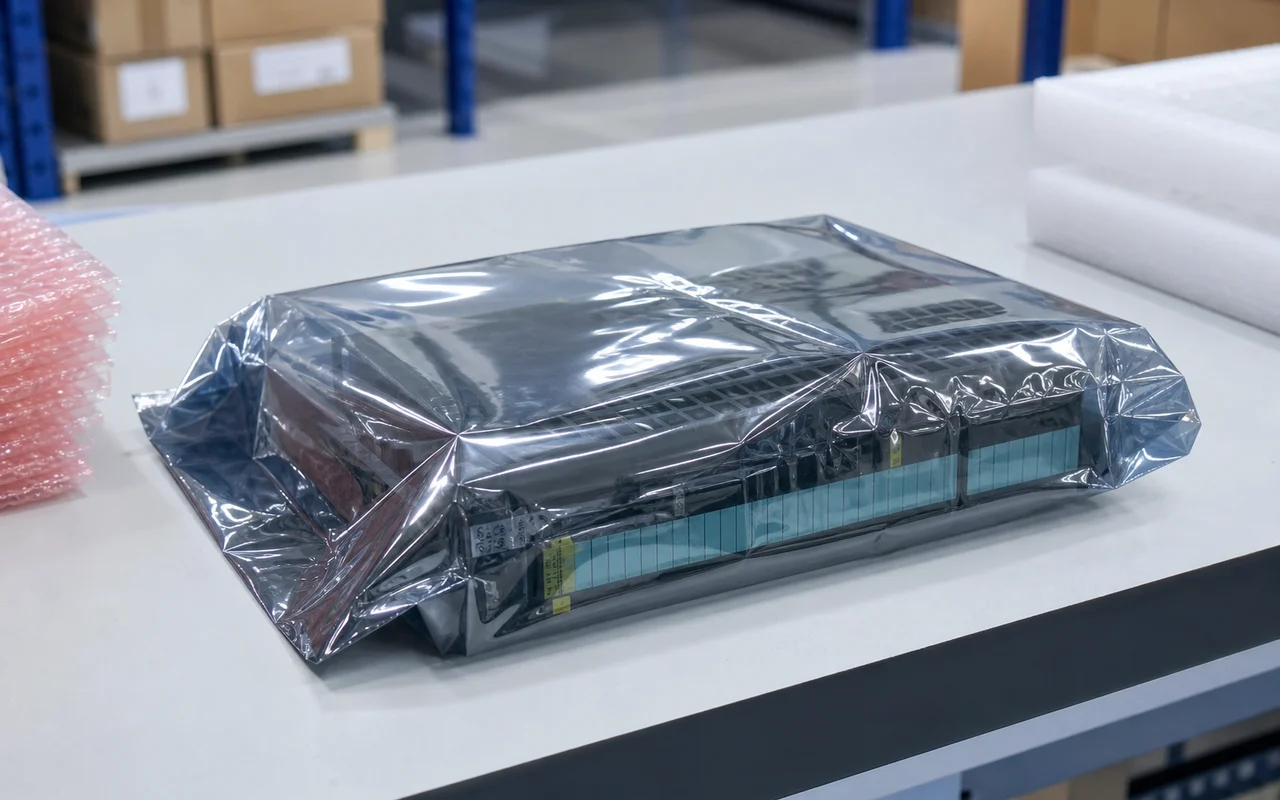 Anti-static Packaging
Modules are packed in anti-static bags to prevent electrostatic damage.
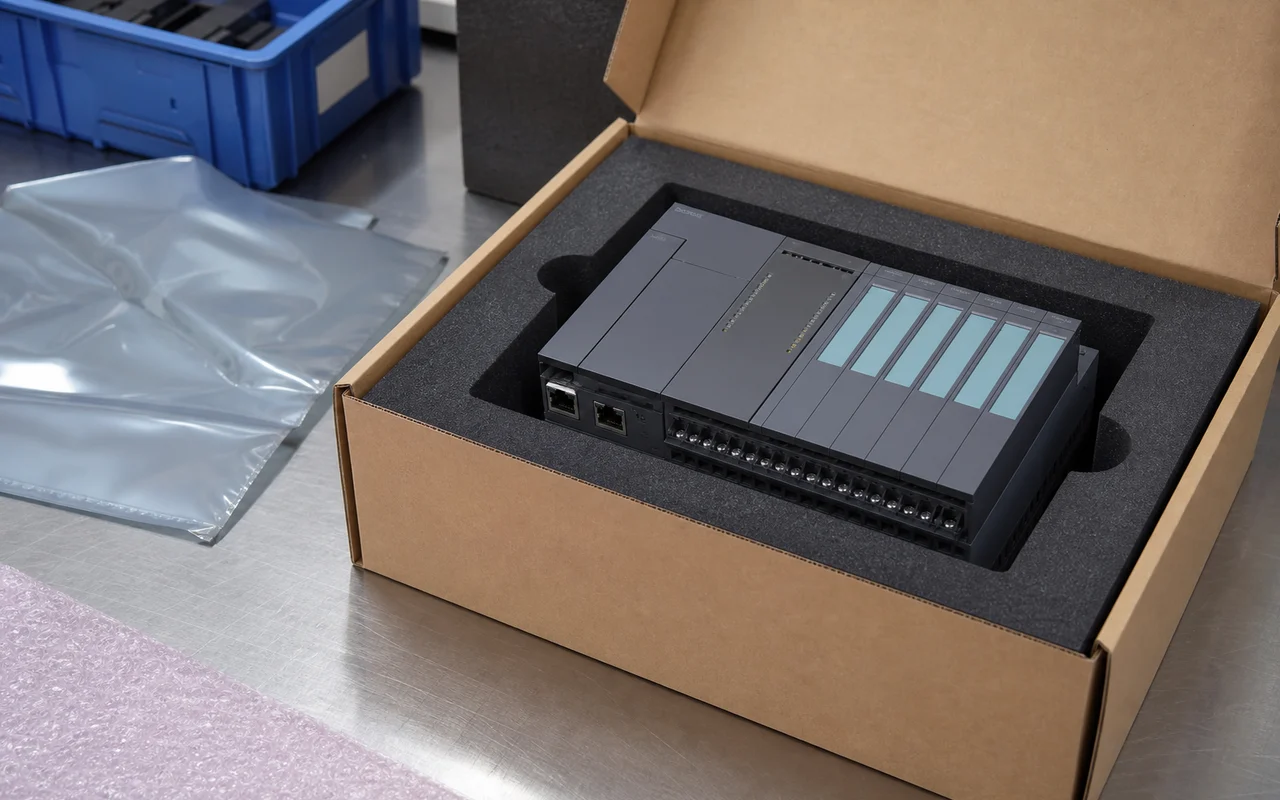 Secure Export Packing
Cushion protection and strong cartons ensure safe transportation.
 Worldwide Shipping
Global logistics network supports air, sea and express delivery.
 Documentation Check
Part number, revision and compatibility verified before shipment.
 After-sales Support
Professional technical support to help resolve your issues.