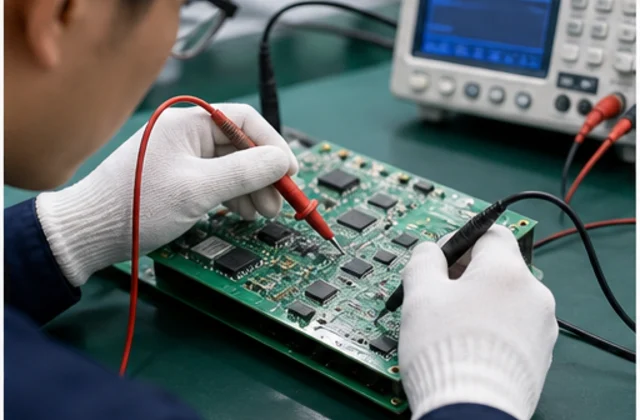
 Functional Inspection
100% tested on professional platforms to ensure stable performance.
ABB SDCS-CON-2A 3ADT309600R0002 is a NANKMOS industrial automation product record Listed under S800 series and Drives. Confirm condition, availability, lead time, compatibility and documentation by email inquiry.
Brand names are used for identification only.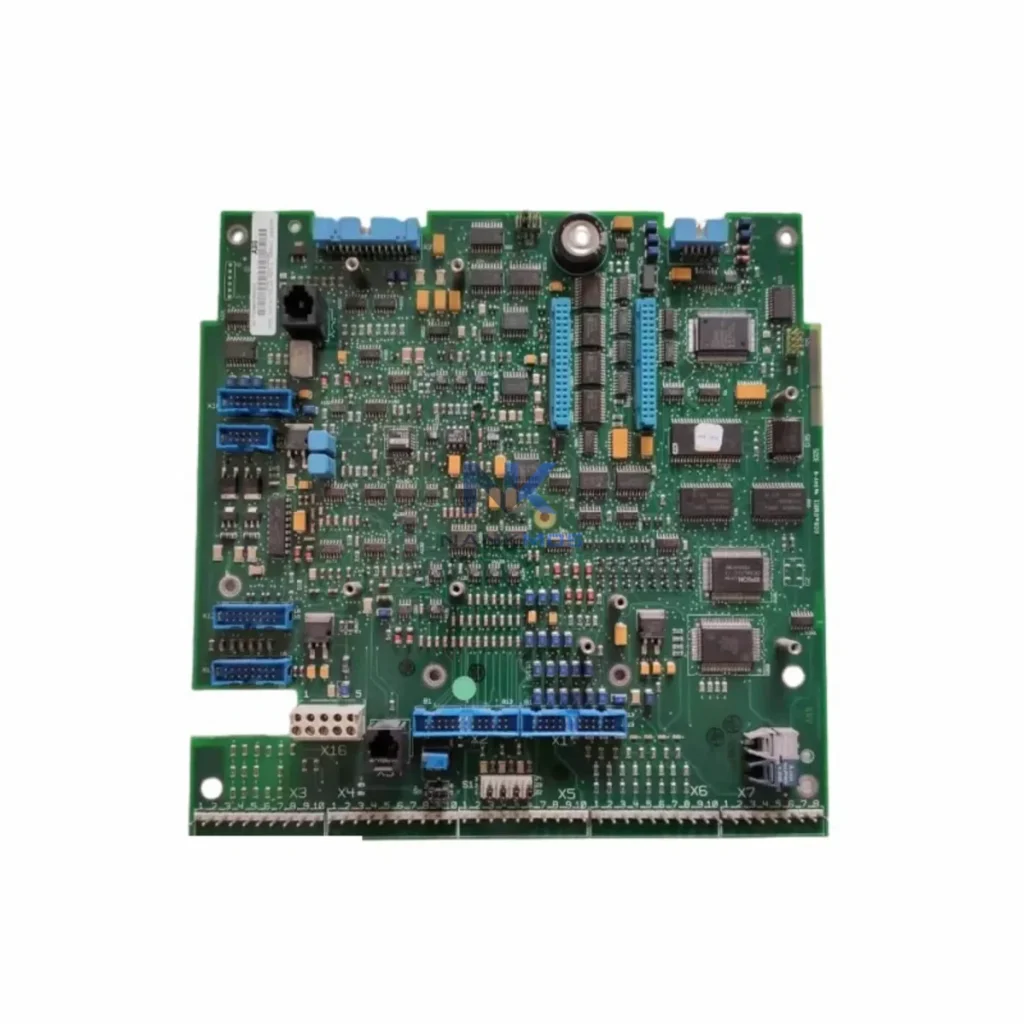
ABB SDCS-CON-2A 3ADT309600R0002 is a NANKMOS industrial automation product record Listed under S800 series and Drives. Confirm condition, availability, lead time, compatibility and documentation by email inquiry.
| Manufacturer | ABB |
|---|---|
| Application | Motion Control & Drive System |
| Part Number / Model | SDCS-CON-2A 3ADT309600R0002 |
| Compatible System | S800 |
| Series | S800 |
| Condition Options | To Confirm |
| Module Type | Servo / Drive Module |
| Warranty | 12 Months |
| Packaging | Anti-static Bag / Secure Box |
| Shipping Methods | DHL / FedEx / UPS / Air / Sea |
| Availability | To Confirm |
| Lead Time | To Confirm |
| Documentation | Part number and revision checked before quote |
The ABB SDCS-CON-2A (Part No. 3ADT309600R0002) is the core control board of the ABB DCS800 series DC drive platform, engineered to serve as the intelligent nerve center of industrial data chains in smart manufacturing environments. Designed for high-demand automation sites, this control board manages the full signal lifecycle — from field-level encoder and analog inputs through to PROFIBUS DP network communication, real-time process feedback, and upstream SCADA integration. In an era where factory transparency and remote diagnostics are no longer optional, the SDCS-CON-2A delivers the connectivity backbone that modern DC drive systems require.
At the heart of its architecture, the SDCS-CON-2A interfaces directly with the DCS800 power electronics stack, coordinating armature current regulation, field excitation control, and speed loop feedback with sub-millisecond precision. Its onboard serial communication port and optional PROFIBUS DP fieldbus adapter slot allow seamless integration into distributed control architectures where PLCs such as the ABB AC500 series or Siemens S7-300/S7-400 act as network masters. This makes the SDCS-CON-2A a natural fit for multi-drive coordination scenarios — for example, synchronizing multiple DCS800 units across a paper machine, steel rolling line, or winding/unwinding station where precise torque and speed matching is critical.
Within a connected factory data flow, the SDCS-CON-2A occupies a pivotal position between the physical drive layer and the supervisory control layer. Field sensors — including tachogenerators, encoders, and process transmitters — feed real-time signals into the board's analog and digital I/O terminals. These signals are processed locally by the board's control firmware and simultaneously transmitted upstream via PROFIBUS DP to the plant's SCADA system or DCS platform. Operators monitoring a Wonderware InTouch or ABB System 800xA HMI station receive live drive status, current load, speed reference tracking, and fault diagnostics without requiring physical access to the drive cabinet. This remote visibility is especially valuable in hazardous or hard-to-reach installation environments such as underground mining conveyors, offshore platform winches, or high-bay crane systems.
The SDCS-CON-2A also supports structured alarm and event logging, enabling maintenance teams to trace fault histories, identify recurring trip patterns, and schedule predictive maintenance interventions before unplanned downtime occurs. When paired with an ABB SDCS-IOB-3 I/O extension board or an SDCS-FEX-2A field excitation module, the system's diagnostic resolution increases further — capturing field current deviations, thermal overload trends, and armature ripple anomalies that would otherwise go undetected in a conventional relay-based control scheme.
For system integrators building multi-node automation architectures, the SDCS-CON-2A's PROFIBUS DP interface enables it to coexist on the same fieldbus segment as remote I/O stations, variable frequency drives (such as ABB ACS880 or ACS580 series AC drives), intelligent motor control centers, and edge gateway devices. This protocol-level interoperability eliminates data silos between the DC drive layer and the broader plant network, allowing production data to flow continuously from the drive's control board through the fieldbus backbone, into the plant historian, and ultimately into MES or ERP systems for production reporting and OEE analysis.
In retrofit and modernization projects, the SDCS-CON-2A is frequently specified as a direct replacement for aging DCS500 or earlier DCS400 control boards, offering a migration path that preserves existing motor and transformer assets while upgrading the control and communication layer to current industrial networking standards. Its compatibility with the DCS800 firmware ecosystem means that parameter sets, drive application programs, and fieldbus configurations can be transferred and validated rapidly, minimizing commissioning time and reducing the risk of production disruption during changeover.
Every SDCS-CON-2A unit supplied by NANKMOS undergoes pre-shipment functional verification, including power-on self-test, communication port integrity check, and I/O channel validation. Units are shipped with full ESD protective packaging and are accompanied by documentation supporting traceability. Stock is maintained to support both urgent single-unit replacement orders and larger project-quantity procurement, with lead times confirmed at the time of quotation. All units are covered by a 12-month warranty from the date of shipment, providing assurance for both end-users and system integrators managing long-term maintenance contracts.
A typical smart factory deployment of the SDCS-CON-2A begins at the field device layer, where process sensors — including speed encoders, current transducers, and temperature probes — deliver real-time signals to the board's analog and digital input terminals. The SDCS-CON-2A processes these inputs within its closed-loop control firmware and simultaneously formats the data for transmission over the PROFIBUS DP fieldbus segment. An ABB AC500 PLC acting as the PROFIBUS master polls the drive's process data objects (PDOs) at cyclic intervals, aggregating drive status, setpoint tracking, and fault codes alongside data from other field nodes — such as ABB SLIO remote I/O modules, Siemens ET 200SP distributed I/O stations, or Beckhoff EtherCAT I/O terminals connected via a protocol gateway.
From the PLC layer, data flows upward to the SCADA or DCS platform. In installations using ABB System 800xA or Wonderware AVEVA System Platform, the SDCS-CON-2A's drive parameters — including actual speed, armature current, field current, and active fault registers — appear as live process tags on operator workstations and HMI panels. Alarm thresholds configured in the drive firmware trigger event records that are time-stamped and logged in the plant historian, enabling post-event analysis and regulatory compliance reporting. For sites using edge computing architectures, an industrial edge gateway (such as an ABB Edge Connect or a Moxa UC-8100 series device) can aggregate PROFIBUS data locally and forward processed datasets to cloud-based analytics platforms via MQTT or OPC-UA, extending the data chain from the drive cabinet to enterprise-level dashboards.
In multi-drive configurations — common in steel processing lines, paper mills, and large-scale material handling systems — the SDCS-CON-2A coordinates with companion boards such as the SDCS-IOB-3 I/O extension board and the SDCS-FEX-2A field excitation controller within the same DCS800 drive unit. Across the network, these drives share speed reference and torque limit data via the PROFIBUS master, enabling synchronized multi-motor operation without dedicated hardwired interconnects. Industrial managed switches — such as those from the Hirschmann RS20 or Phoenix Contact FL SWITCH series — provide the Ethernet backbone that carries SCADA traffic, while the PROFIBUS segment handles deterministic drive control communication, keeping latency within the sub-10ms range required for closed-loop speed regulation.
Many industrial sites operating legacy DC drive systems face a common set of challenges: protocol fragmentation between older serial-based drives and modern PROFIBUS or Ethernet networks, data islands where drive-level diagnostics never reach the SCADA layer, and limited remote monitoring capability that forces maintenance teams to perform on-site inspections for routine status checks. The SDCS-CON-2A directly addresses these gaps by providing a standardized PROFIBUS DP interface that bridges the DCS800 drive into the plant's existing fieldbus infrastructure without requiring a separate protocol converter or gateway device.
For sites where protocol heterogeneity remains a challenge — for example, where older Modbus RTU devices coexist with PROFIBUS DP nodes — the SDCS-CON-2A's serial port can be configured for Modbus RTU communication, allowing the drive to participate in legacy control architectures while a parallel PROFIBUS connection serves the modern SCADA layer. This dual-protocol flexibility reduces the need for additional hardware such as standalone Modbus-to-PROFIBUS gateways, simplifying the network topology and reducing potential points of failure.
Remote diagnostics capability is further enhanced by the SDCS-CON-2A's comprehensive fault and event logging. Maintenance engineers accessing the plant SCADA from a remote workstation or mobile HMI can review drive trip histories, identify recurring overcurrent or overvoltage events, and adjust control parameters via the PROFIBUS network without dispatching a technician to the drive cabinet. This capability is particularly valuable for geographically distributed installations — such as water treatment pump stations, mining conveyor systems, or offshore platform equipment — where on-site response times are measured in hours rather than minutes. Combined with structured preventive maintenance scheduling based on drive operating hours and thermal load data, the SDCS-CON-2A enables a shift from reactive to predictive maintenance strategies, reducing unplanned downtime and extending the operational life of the DC motor and drive system.
Q1: What communication protocols does the ABB SDCS-CON-2A support, and how does this affect integration with existing plant networks? The SDCS-CON-2A supports PROFIBUS DP (V0/V1) via an optional fieldbus adapter slot and serial communication (RS-232/RS-485) via its onboard port, which can be configured for Modbus RTU. This dual-protocol capability allows the board to integrate into both modern PROFIBUS-based DCS/SCADA architectures and legacy serial control systems. For sites migrating from serial to fieldbus networks, the SDCS-CON-2A can operate in parallel on both communication layers during the transition period, minimizing disruption to ongoing production.
Q2: How does the SDCS-CON-2A ensure network stability and deterministic communication in high-demand automation environments? PROFIBUS DP operates as a deterministic fieldbus protocol with cyclic polling intervals typically configured between 1ms and 10ms, ensuring that drive status and control data are exchanged with consistent, predictable latency. The SDCS-CON-2A's firmware manages communication watchdog timers that detect network interruptions and trigger safe-state responses — such as controlled deceleration to zero speed — if the PROFIBUS master fails to respond within the configured timeout window. This behavior prevents uncontrolled drive trips that could damage connected mechanical equipment or create safety hazards.
Q3: Can the SDCS-CON-2A support system expansion, and what additional modules are compatible for extended I/O or diagnostic capability? Yes. The DCS800 platform supports modular expansion through compatible boards including the SDCS-IOB-3 I/O extension board (additional analog and digital I/O channels), the SDCS-FEX-2A field excitation controller (for separately excited DC motors), and various RPBA-series fieldbus adapter modules for PROFIBUS DP, DeviceNet, and CANopen connectivity. This modular architecture allows the control system to be scaled to match the complexity of the application without replacing the core SDCS-CON-2A control board.
Q4: What pre-shipment testing is performed, and what warranty coverage applies to the SDCS-CON-2A? Every SDCS-CON-2A unit supplied by NANKMOS undergoes pre-shipment functional verification including power-on self-test, communication port integrity check, and I/O channel validation. Units are shipped with ESD protective packaging and full traceability documentation. A 12-month warranty from the date of shipment covers manufacturing defects and functional failures under normal operating conditions. For project procurement requiring extended warranty terms or on-site commissioning support, please contact our technical sales team directly.
Functional Inspection100% tested on professional platforms to ensure stable performance.
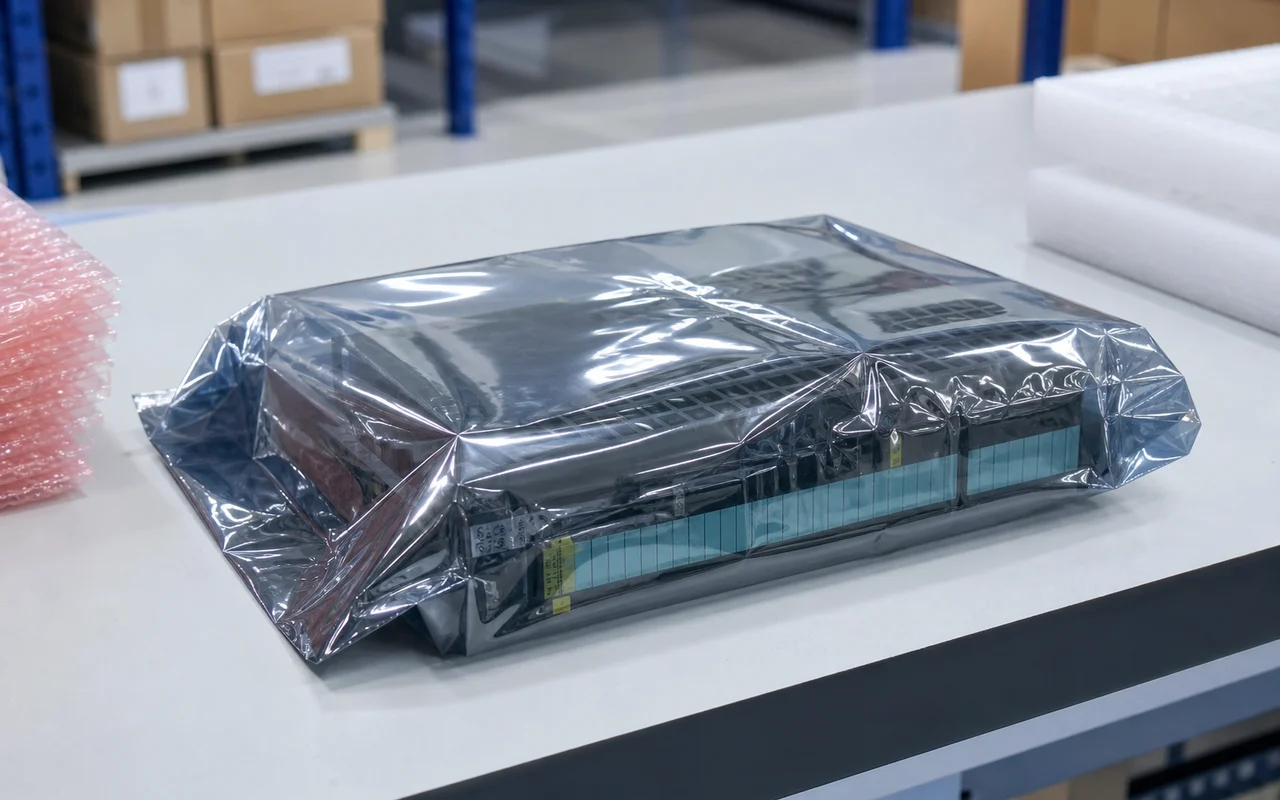 Anti-static Packaging
Modules are packed in anti-static bags to prevent electrostatic damage.
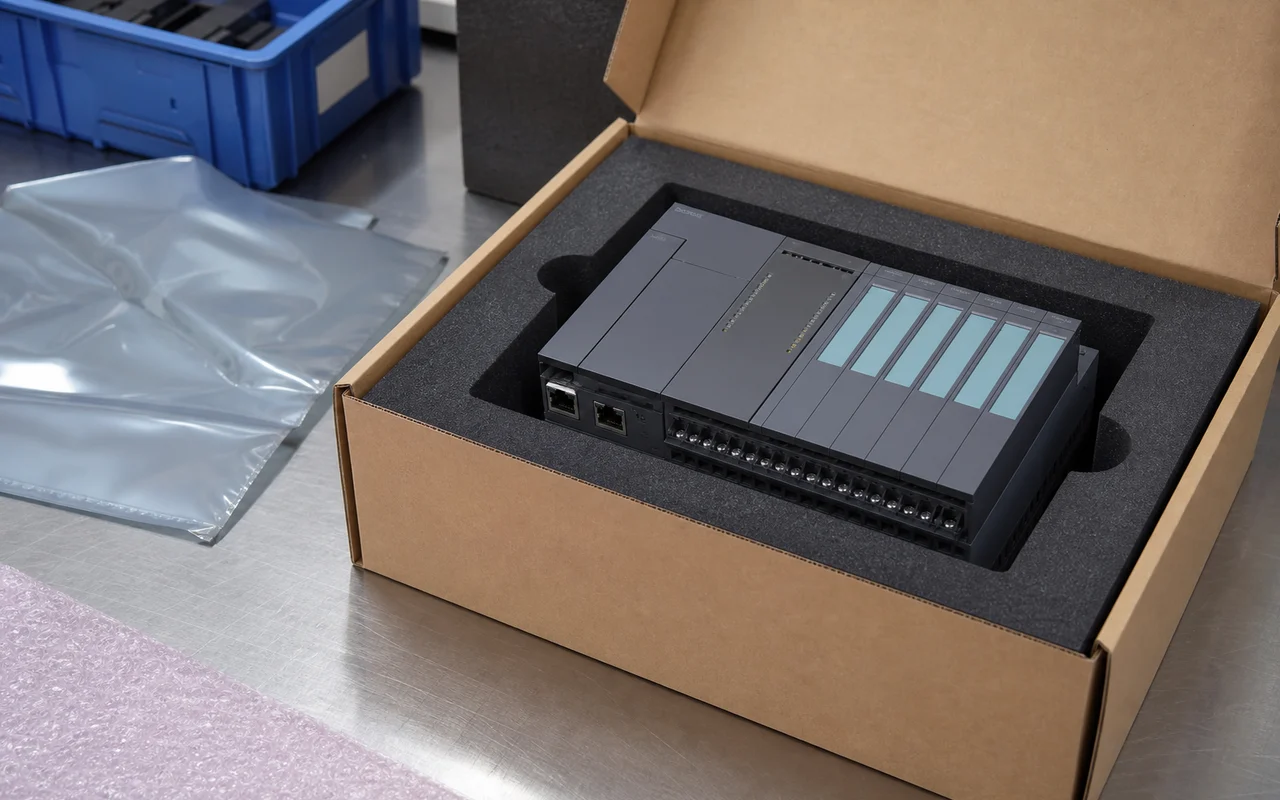 Secure Export Packing
Cushion protection and strong cartons ensure safe transportation.
 Worldwide Shipping
Global logistics network supports air, sea and express delivery.
 Documentation Check
Part number, revision and compatibility verified before shipment.
 After-sales Support
Professional technical support to help resolve your issues.