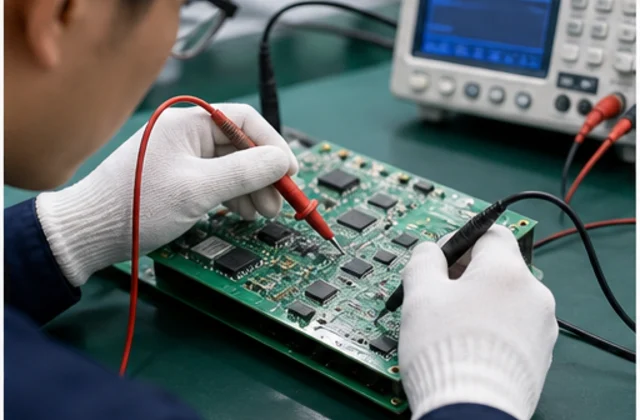
 Functional Inspection
100% tested on professional platforms to ensure stable performance.
ABB SDCS-FEP-1/3BSE006309R1 is a NANKMOS industrial automation product record Listed under S800 series and Drives. Confirm condition, availability, lead time, compatibility and documentation by email inquiry.
Brand names are used for identification only.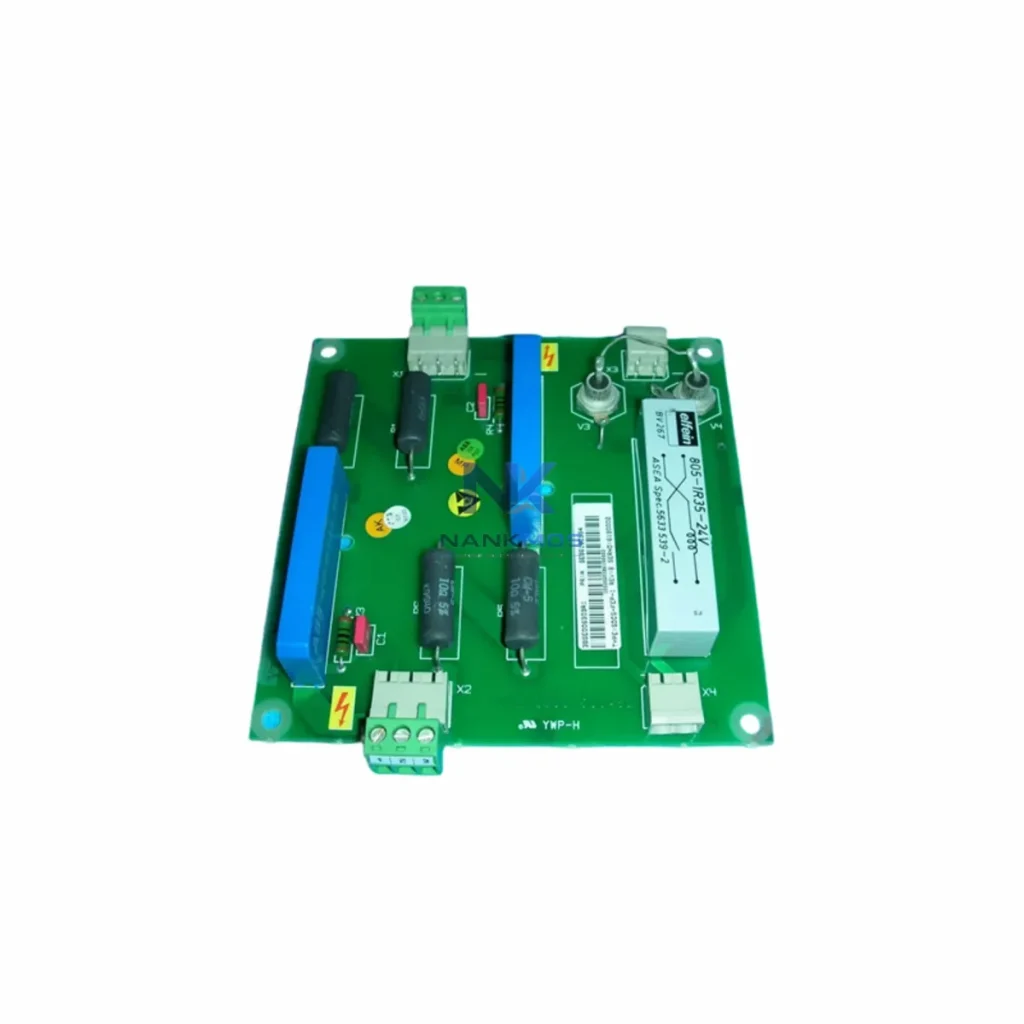
ABB SDCS-FEP-1/3BSE006309R1 is a NANKMOS industrial automation product record Listed under S800 series and Drives. Confirm condition, availability, lead time, compatibility and documentation by email inquiry.
| Manufacturer | ABB |
|---|---|
| Application | Motion Control & Drive System |
| Part Number / Model | SDCS-FEP-1/3BSE006309R1 |
| Compatible System | S800 |
| Series | S800 |
| Condition Options | To Confirm |
| Module Type | Servo / Drive Module |
| Warranty | 12 Months |
| Packaging | Anti-static Bag / Secure Box |
| Shipping Methods | DHL / FedEx / UPS / Air / Sea |
| Availability | To Confirm |
| Lead Time | To Confirm |
| Documentation | Part number and revision checked before quote |
The ABB SDCS-FEP-1 (3BSE006309R1) is a dedicated field excitation protection unit engineered for ABB's DCS800 series DC drives. Far beyond a standalone protection board, the SDCS-FEP-1 functions as a critical data node within the smart factory architecture — bridging field-side electrical signals with the digital communication backbone that connects PLCs, SCADA systems, HMIs, and remote diagnostic platforms. In modern industrial environments where data continuity and real-time visibility are non-negotiable, the SDCS-FEP-1 delivers the field protection intelligence that keeps DC drive systems operating safely, transparently, and in full communication with upper-level control layers.
Designed to integrate directly into the DCS800 drive platform, this module monitors field current regulation, detects excitation faults, and relays protection status data through ABB's internal drive communication bus. This data is then accessible via the drive's primary fieldbus interface — whether PROFIBUS-DP, Modbus RTU, DeviceNet, or CANopen — enabling seamless upstream integration with Siemens S7-series PLCs, Allen-Bradley ControlLogix controllers, or ABB AC500 automation platforms. The result is a fully connected field protection layer that feeds live fault data, current readings, and protection events directly into the plant's SCADA or DCS environment without manual intervention.
In a fully networked DC drive installation, the SDCS-FEP-1 sits at the intersection of field hardware and digital control. The data flow begins at the motor field winding, where the SDCS-FEP-1 continuously monitors field current levels and excitation status. This raw field data is processed internally and made available to the DCS800 drive's control board — typically the SDCS-CON-4 — which aggregates drive-level diagnostics and communicates upstream via an installed fieldbus adapter such as the RDCO-03 (PROFIBUS-DP) or RMBA-01 (Modbus RTU).
From the fieldbus layer, protection events and current readings are transmitted in real time to the plant PLC — for example, a Siemens S7-1500 or ABB AC500-eCo — which executes interlocking logic and forwards structured data to the SCADA platform. In Wonderware, iFIX, or WinCC-based SCADA environments, operators gain live visibility into field excitation health, enabling proactive maintenance scheduling before a fault escalates to an unplanned shutdown.
For installations requiring remote access, the SCADA data path can extend through an industrial edge gateway — such as the ABB Edge Connect or a third-party IIoT gateway running MQTT or OPC-UA — pushing field protection telemetry to cloud dashboards or MES platforms. Alongside the SDCS-FEP-1, the DCS800 system may also incorporate the SDCS-IOB-3 I/O expansion board for additional analog and digital signal acquisition, and the SDCS-PIN-51 power interface board for coordinated power supply management across the drive stack.
At the HMI layer, operators interact with field protection status through panel-mounted displays — such as ABB's CP600 HMI series — where alarm banners, trend graphs, and excitation current curves are rendered in real time. When a field overcurrent or open-circuit fault is detected by the SDCS-FEP-1, the alarm propagates within milliseconds through the drive bus to the PLC, then to the SCADA alarm manager, and simultaneously to the HMI operator screen — completing a fully traceable, time-stamped fault record that supports root cause analysis and regulatory compliance reporting.
For multi-drive installations on a shared PROFIBUS segment, the DCS800 with SDCS-FEP-1 coexists with other networked drives and remote I/O stations — such as ABB CI854A PROFIBUS communication interfaces or Phoenix Contact Axioline F remote I/O modules — all sharing the same fieldbus backbone without interference, thanks to the deterministic, token-passing architecture of PROFIBUS-DP.
Protocol Fragmentation: Many DC drive installations operate legacy equipment with proprietary communication formats. The SDCS-FEP-1, integrated within the DCS800 platform, leverages ABB's standardized fieldbus adapter architecture to bridge field-level protection data into PROFIBUS, Modbus, or CANopen — eliminating the protocol mismatch that typically creates data silos between drive systems and plant-wide SCADA or MES platforms.
Data Islands and Blind Spots: Without a connected field protection unit, excitation faults remain invisible to upper-level systems until a motor trips or production halts. The SDCS-FEP-1 closes this gap by continuously streaming field current status and protection events into the drive's communication register map, making every fault condition immediately visible to the PLC and SCADA layers — transforming reactive maintenance into predictive, data-driven intervention.
Remote Monitoring Limitations: In geographically distributed plants or unmanned substations, on-site fault inspection is costly and slow. With the SDCS-FEP-1's data integrated into the SCADA network, remote engineers can diagnose field excitation anomalies, review historical fault logs, and authorize corrective actions from a central control room or via secure remote desktop — reducing mean time to repair (MTTR) and minimizing production losses.
Production Line Transparency: Modern smart factory initiatives demand full OEE (Overall Equipment Effectiveness) visibility. By feeding field protection data into the plant historian or MES, the SDCS-FEP-1 contributes to a complete equipment health record — enabling production managers to correlate field excitation events with output quality deviations, energy consumption spikes, or unplanned downtime incidents.
System Scalability: As production capacity expands, additional DCS800 drives equipped with SDCS-FEP-1 modules can be added to the existing PROFIBUS or Modbus network without architectural redesign. Each new node inherits the same data reporting structure, ensuring consistent monitoring coverage across the expanded drive fleet.
Q1: What communication protocols does the SDCS-FEP-1 support for SCADA integration? The SDCS-FEP-1 does not connect directly to a fieldbus — it communicates via the DCS800 drive's internal SDCS backplane. The drive's fieldbus adapter (e.g., RDCO-03 for PROFIBUS-DP or RMBA-01 for Modbus RTU) then exposes all drive and field protection data to the plant network. This architecture supports PROFIBUS-DP, Modbus RTU, DeviceNet, and CANopen, making the SDCS-FEP-1 compatible with virtually all major SCADA and PLC platforms.
Q2: How does the SDCS-FEP-1 contribute to network stability in multi-drive systems? Because the SDCS-FEP-1 operates on the drive's internal bus rather than directly on the plant fieldbus, it does not add network load to the PROFIBUS or Modbus segment. Field protection data is aggregated at the drive level and transmitted as part of the drive's standard process data telegram — maintaining deterministic cycle times and network stability even in large multi-drive installations.
Q3: Can the SDCS-FEP-1 support remote diagnostics and fault logging? Yes. Fault events detected by the SDCS-FEP-1 — including field overcurrent, open-circuit excitation, and thermal protection triggers — are logged in the DCS800 drive's fault history register. These records are accessible remotely via the fieldbus interface, DriveWindow Light software, or through SCADA historian integration, enabling engineers to perform root cause analysis without physical access to the drive cabinet.
Q4: What warranty and pre-shipment testing does the SDCS-FEP-1 include? Every SDCS-FEP-1 (3BSE006309R1) supplied by NANKMOS carries a 12-Month Warranty covering manufacturing defects and functional failures under normal operating conditions. Prior to dispatch, each unit undergoes functional verification testing to confirm protection circuit integrity and communication bus compatibility. Units are in stock and available for immediate shipment, with full traceability documentation provided upon request.
Functional Inspection100% tested on professional platforms to ensure stable performance.
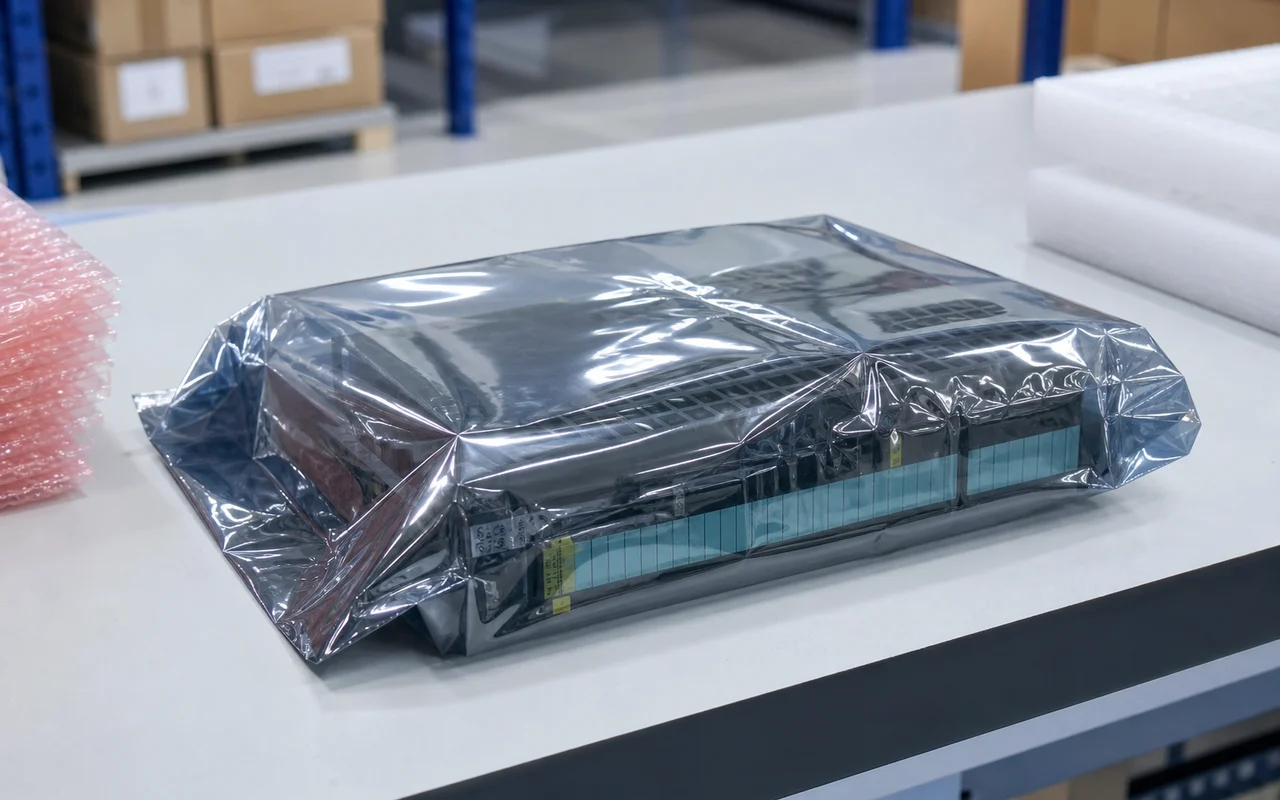 Anti-static Packaging
Modules are packed in anti-static bags to prevent electrostatic damage.
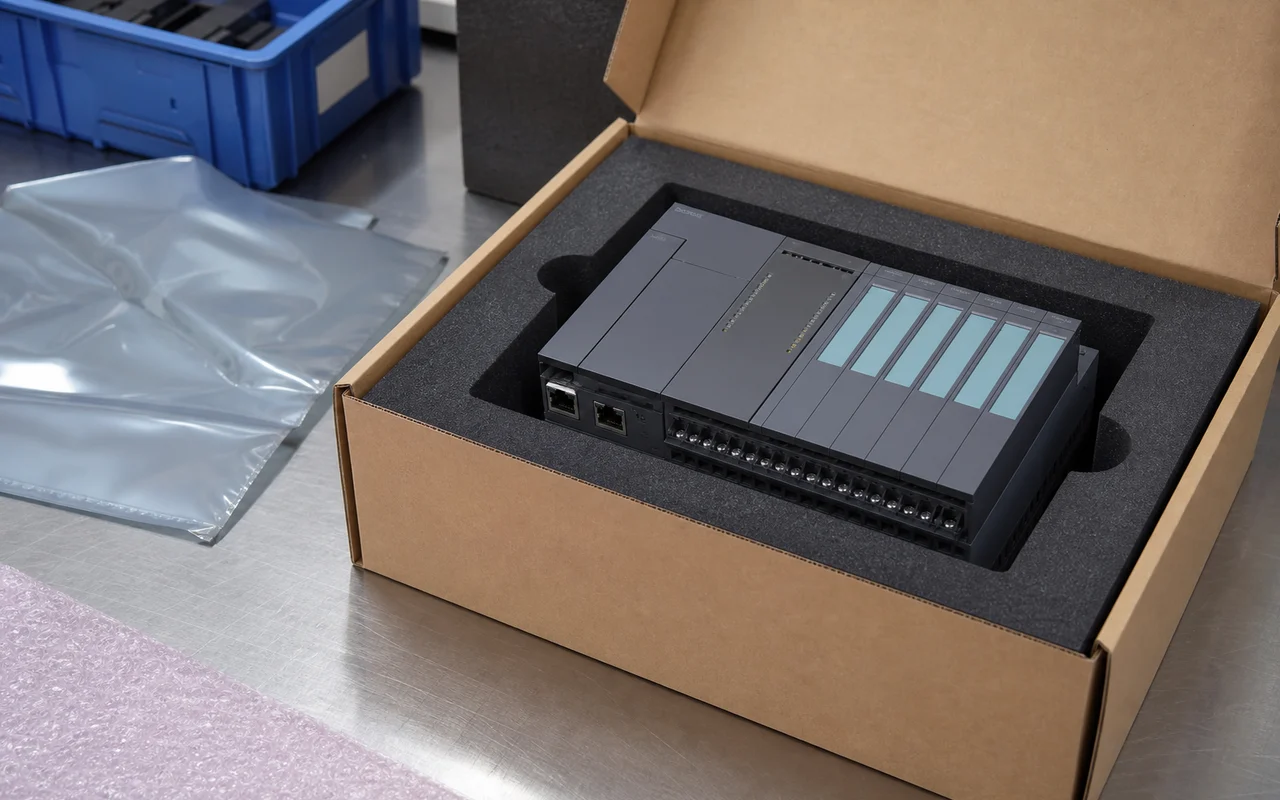 Secure Export Packing
Cushion protection and strong cartons ensure safe transportation.
 Worldwide Shipping
Global logistics network supports air, sea and express delivery.
 Documentation Check
Part number, revision and compatibility verified before shipment.
 After-sales Support
Professional technical support to help resolve your issues.