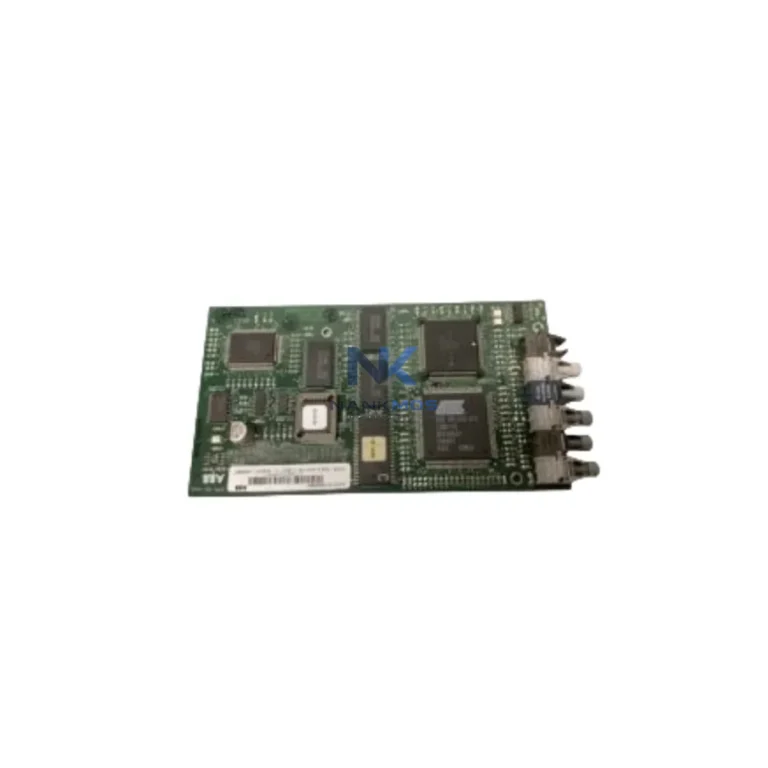
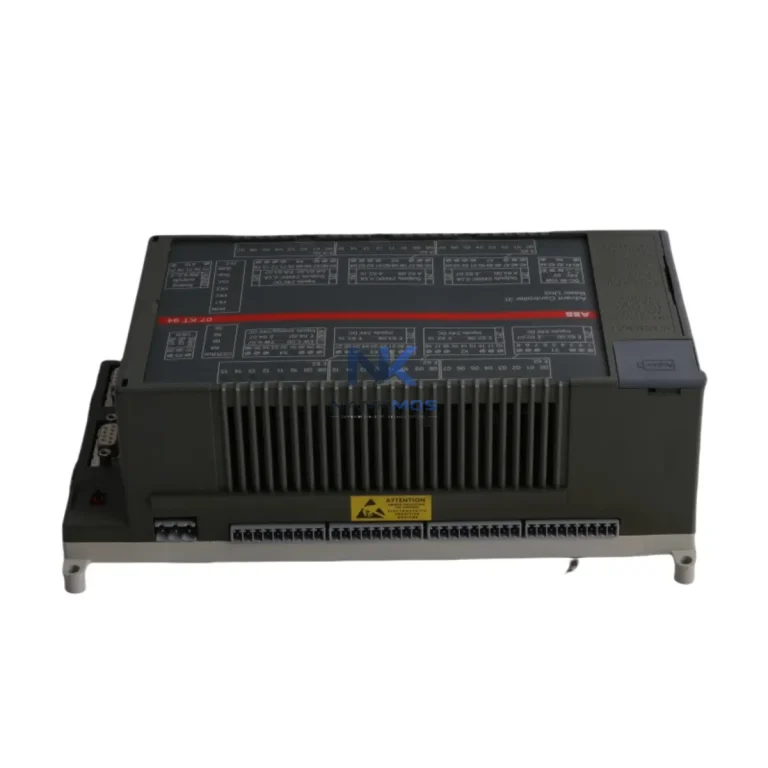
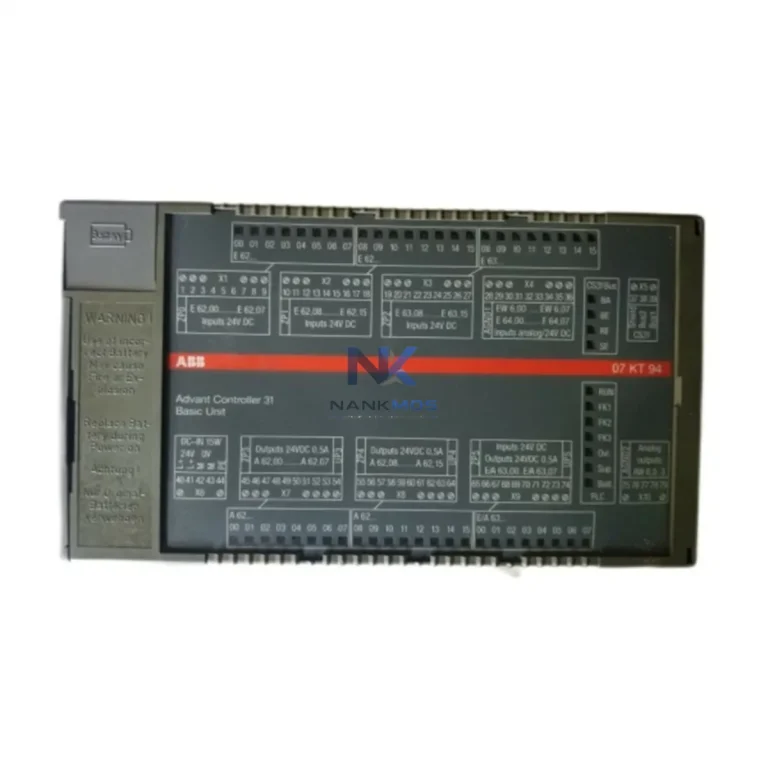
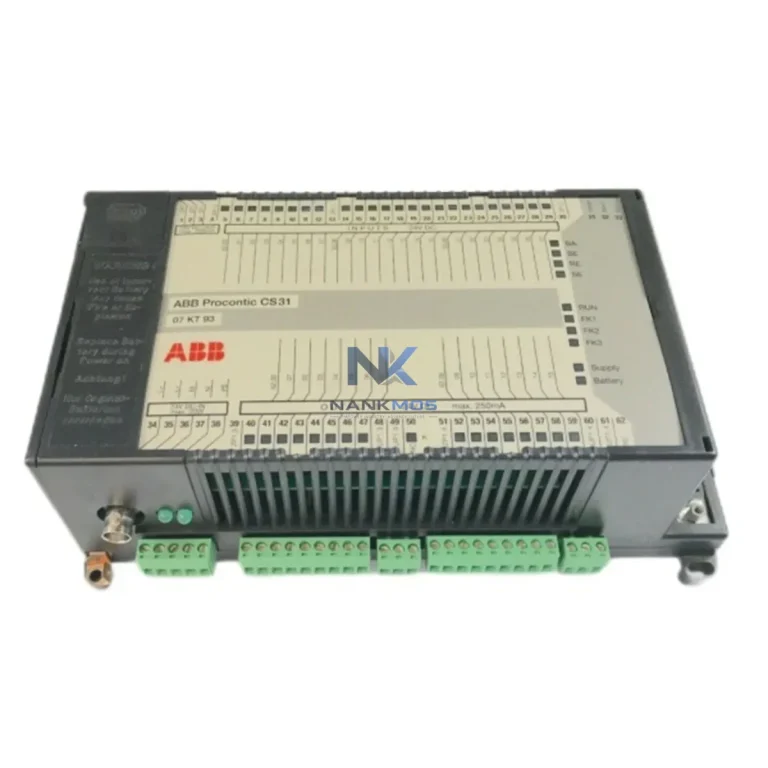
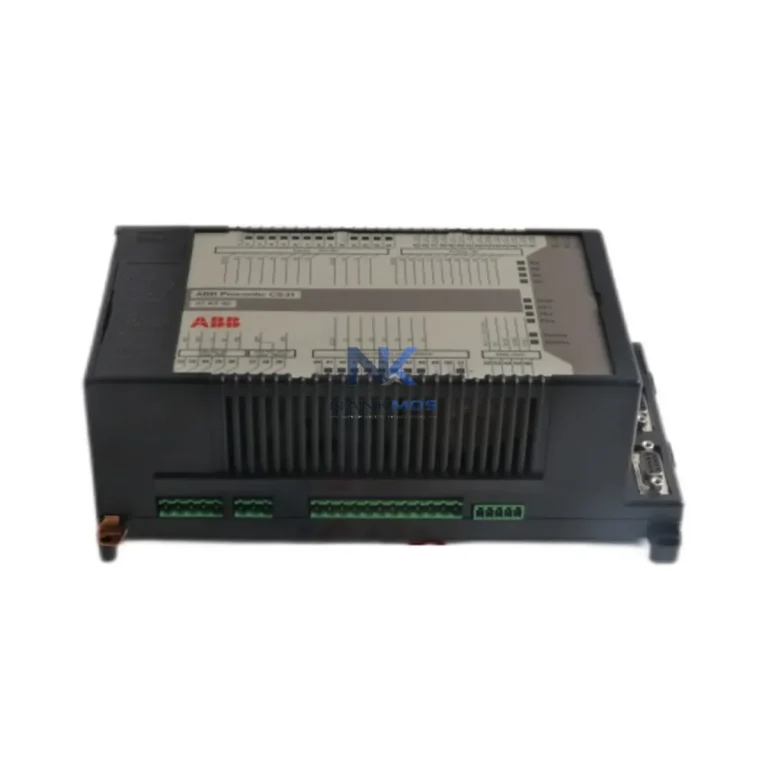
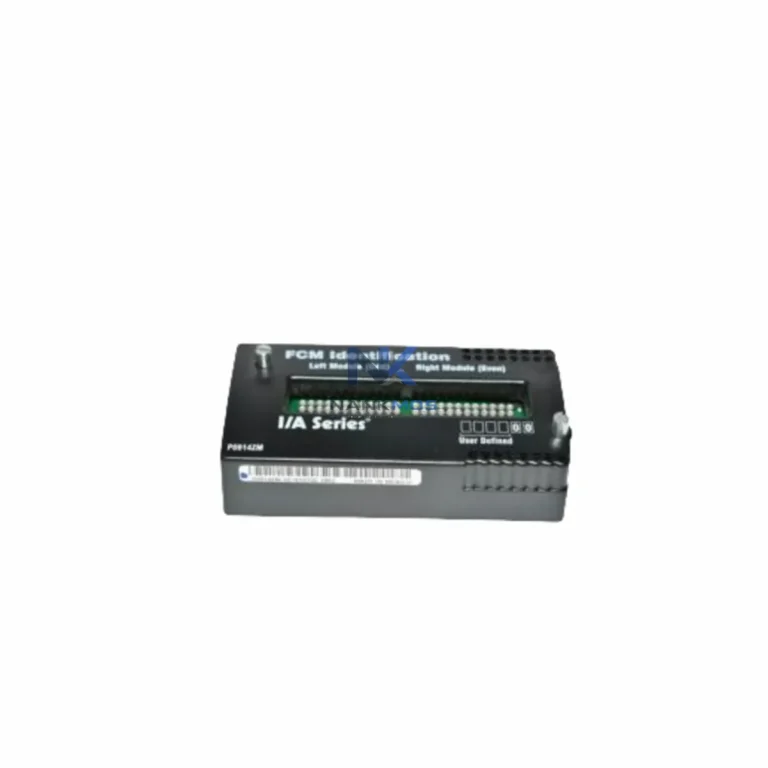
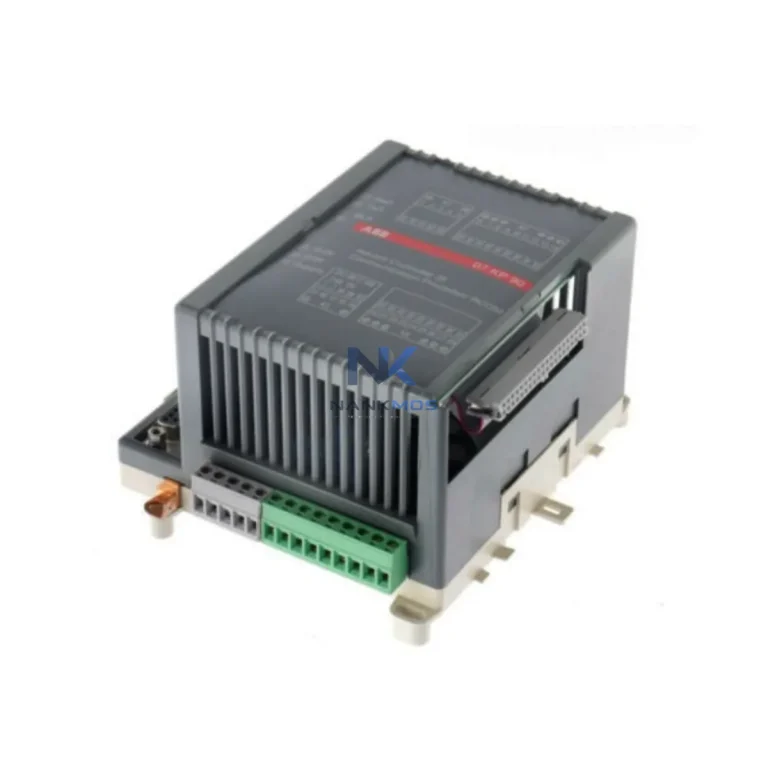
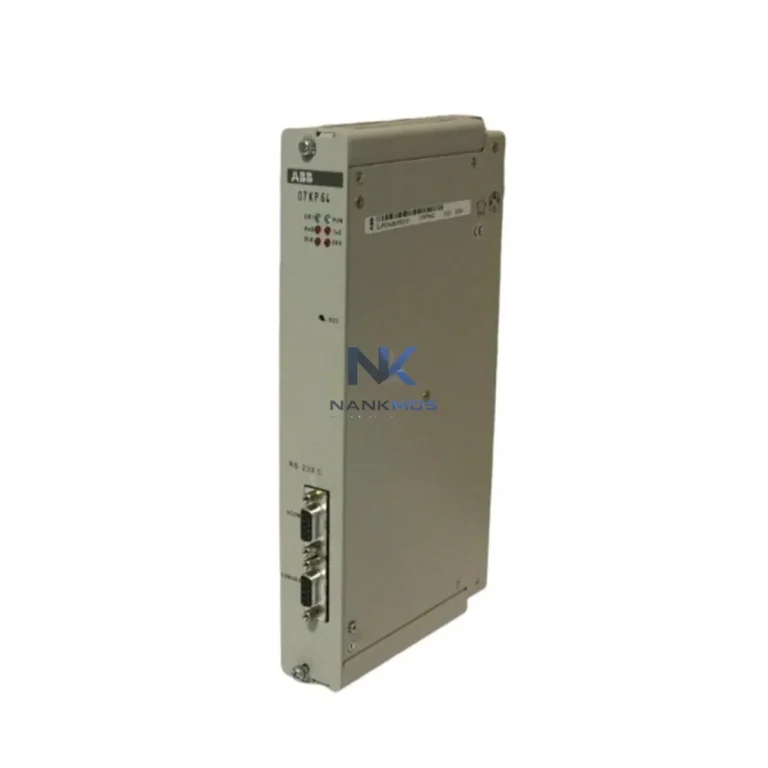
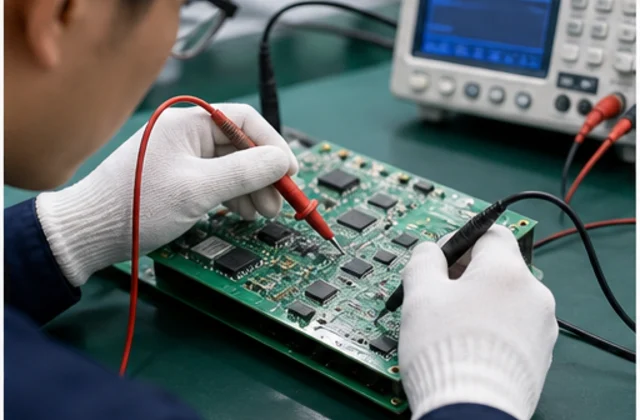
 Functional Inspection
100% tested on professional platforms to ensure stable performance.
ABB TAS01 is a NANKMOS industrial automation product record Listed under UNITROL series and Business & Industrial > Automation, Control & Flow Devices > Programmable Logic Controllers. Confirm condition, availability, lead time, compatibility and documentation by email inquiry.
Brand names are used for identification only.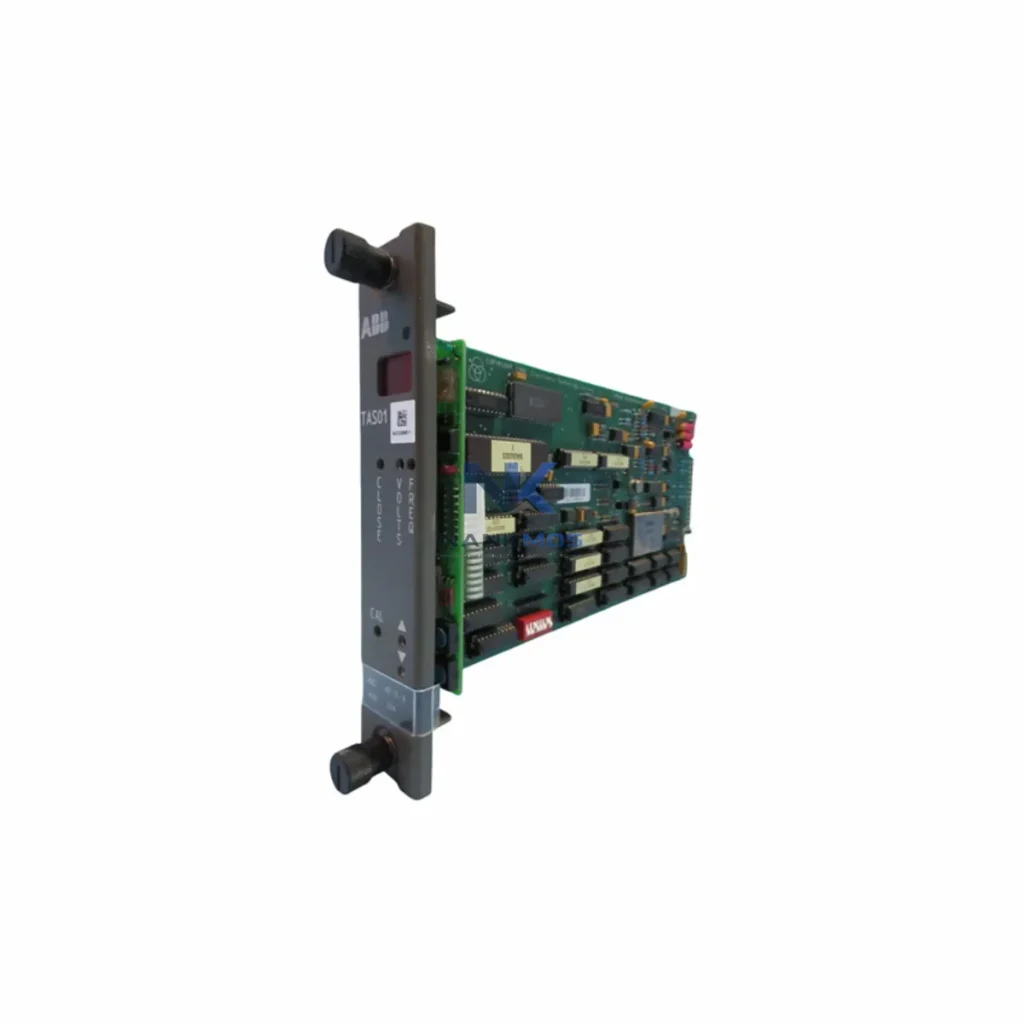
ABB TAS01 is a NANKMOS industrial automation product record Listed under UNITROL series and Business & Industrial > Automation, Control & Flow Devices > Programmable Logic Controllers. Confirm condition, availability, lead time, compatibility and documentation by email inquiry.
| Manufacturer | ABB |
|---|---|
| Application | Turbine & Condition Monitoring |
| Part Number / Model | TAS01 |
| Compatible System | UNITROL |
| Series | UNITROL |
| Condition Options | To Confirm |
| Module Type | Monitoring Module |
| Warranty | 12 Months |
| Packaging | Anti-static Bag / Secure Box |
| Shipping Methods | DHL / FedEx / UPS / Air / Sea |
| Availability | To Confirm |
| Lead Time | To Confirm |
| Documentation | Part number and revision checked before quote |
The ABB TAS01 is a precision turbine synchronization module engineered for energy-aware generator control within the ABB Unitrol excitation and voltage regulation platform. Designed for industrial power plants, co-generation facilities, and heavy-process production lines, the TAS01 delivers deterministic synchronization performance that directly reduces unnecessary energy consumption, minimises thermal loading on rotating machinery, and stabilises the power delivery cadence across the entire production floor. With verified shipment testing, in-stock availability, and a 12-Month Warranty, the TAS01 is a dependable component for facilities pursuing measurable energy efficiency gains.
Effective energy management on a modern production line is never the result of a single component acting in isolation. The ABB TAS01 operates as a critical node within a layered automation architecture. At the supervisory level, an ABB AC500 PLC coordinates the synchronization sequence, issuing enable signals to the TAS01 only when voltage magnitude, frequency, and phase angle are within the defined acceptance window. This prevents the high-current inrush events that spike energy demand and accelerate insulation degradation in generator stator windings.
On the drive side, ABB ACS880 variable-speed drives managing auxiliary loads — cooling fans, feedwater pumps, compressors — are regulated in parallel with the synchronization cycle. When the TAS01 confirms a clean grid connection, the ACS880 units ramp auxiliary loads progressively rather than simultaneously, flattening the demand curve and reducing peak kW draw. The ABB ACS580 drives handling lower-power conveyor and positioning axes follow the same load-sequencing logic, coordinated through the AC500 PLC's task scheduler.
Power quality monitoring is handled upstream by ABB M2M power measurement modules integrated into the MCC (Motor Control Centre). These modules feed real-time kW, kVAR, and power factor data to the SCADA layer — typically an ABB System 800xA or a third-party SCADA platform via OPC-UA — allowing operators to correlate synchronization events with energy consumption trends. The TAS01's deterministic switching behaviour produces a clean, auditable event log that simplifies energy audits and ISO 50001 compliance reporting.
At the field level, ABB I/O modules within the Unitrol excitation cabinet relay generator terminal voltage and current feedback to the TAS01's internal comparator circuits. Proximity sensors and speed encoders on the turbine shaft provide rotational data that the module uses to calculate slip frequency in real time. This closed-loop feedback eliminates the manual estimation errors that historically caused premature breaker closure — a common source of reactive power spikes and unnecessary heat generation in the excitation transformer.
HMI visibility is provided through an ABB CP600 operator panel or equivalent touch panel connected to the AC500 PLC. Operators can monitor synchronization readiness, view historical sync event logs, and configure acceptance tolerances without interrupting the live generation process. This transparency supports predictive maintenance workflows: when sync attempt counts per hour begin to rise, it is an early indicator of governor instability or AVR (Automatic Voltage Regulator) drift — both of which, if left unaddressed, increase fuel consumption and thermal wear.
The primary energy benefit of the ABB TAS01 is the elimination of asynchronous grid connection events. Each time a generator is connected to a live busbar out of phase, the resulting electromagnetic torque transient dissipates energy as heat in the stator, rotor, and excitation windings. Over a year of operation with multiple daily start-stop cycles — common in peaking plants and co-generation facilities — these transients represent a measurable fraction of total energy throughput. The TAS01 reduces this waste to near zero by enforcing a synchronization window of typically less than 0.1° phase error and less than 0.05 Hz slip frequency before issuing the breaker close command.
Beyond the synchronization event itself, the TAS01 contributes to steady-state energy efficiency by stabilising the excitation current profile during the post-synchronization load pick-up phase. Erratic excitation during this period forces the AVR to hunt, increasing reactive power circulation between the generator and the grid. The TAS01's clean handoff to the Unitrol AVR minimises this hunting behaviour, improving the generator's power factor and reducing I²R losses in the stator windings and step-up transformer.
From a production line perspective, stable power delivery translates directly into stable machine cadence. CNC machining centres, injection moulding machines, and robotic welding cells are sensitive to voltage sags and frequency deviations. A poorly synchronised generator connection can trigger drive fault trips on ACS880 or ACS580 units, halting production and requiring manual restart sequences that consume additional energy and operator time. The TAS01 eliminates this failure mode, supporting uninterrupted production throughput and maximising equipment utilisation rates.
Predictive maintenance integration is a further efficiency lever. By logging synchronization attempt data and exposing it via the AC500 PLC's Modbus or PROFIBUS interface to the plant's SCADA or energy management system, maintenance teams can track governor and AVR health trends over time. Deteriorating synchronization performance — evidenced by increasing slip frequency variance or rising sync attempt counts — can be flagged weeks before a failure event, allowing scheduled maintenance rather than emergency shutdown. This approach reduces unplanned downtime energy penalties and extends the operational life of the generator set and associated Unitrol excitation hardware.
All TAS01 units supplied by NANKMOS are sourced from verified ABB distribution channels, subjected to outgoing functional testing prior to shipment, and covered by a 12-Month Warranty. In-stock inventory ensures short lead times for both planned commissioning projects and urgent replacement requirements.
Q1: What measurable energy savings can the ABB TAS01 deliver on a co-generation line? The TAS01 eliminates asynchronous connection transients, which in facilities with 4–8 generator start cycles per day can reduce reactive energy waste and thermal losses in excitation windings by a significant margin. Exact savings depend on generator rating, daily cycle count, and baseline synchronization accuracy. Facilities migrating from manual or relay-based synchronization typically report improved power factor and reduced AVR hunting within the first month of operation.
Q2: Is the TAS01 compatible with existing ABB Unitrol 1000 and Unitrol 6000 excitation systems? Yes. The TAS01 is designed for integration within the ABB Unitrol excitation platform family. It interfaces with the Unitrol AVR via standard terminal connections and is compatible with AC500 PLC supervisory control. For installations using third-party PLCs or SCADA systems, the module's status outputs can be mapped through ABB I/O modules to PROFIBUS DP or Modbus RTU communication layers.
Q3: Can the TAS01 replace an older or third-party synchronization relay in an existing panel? In most cases, yes. The TAS01 is a direct-fit replacement for legacy synchronization relays within ABB Unitrol cabinets. For third-party panel installations, dimensional and terminal compatibility should be verified against the existing panel drawings. NANKMOS can provide datasheet documentation to support your engineering review prior to ordering.
Q4: What is the warranty coverage and what does the pre-shipment test include? Every ABB TAS01 unit supplied by NANKMOS carries a 12-Month Warranty covering manufacturing defects and functional failures under normal operating conditions. Pre-shipment testing includes power-on functional verification, synchronization logic output checks, and visual inspection for physical integrity. Units are dispatched from in-stock inventory, supporting both planned project timelines and urgent replacement needs.
Functional Inspection100% tested on professional platforms to ensure stable performance.
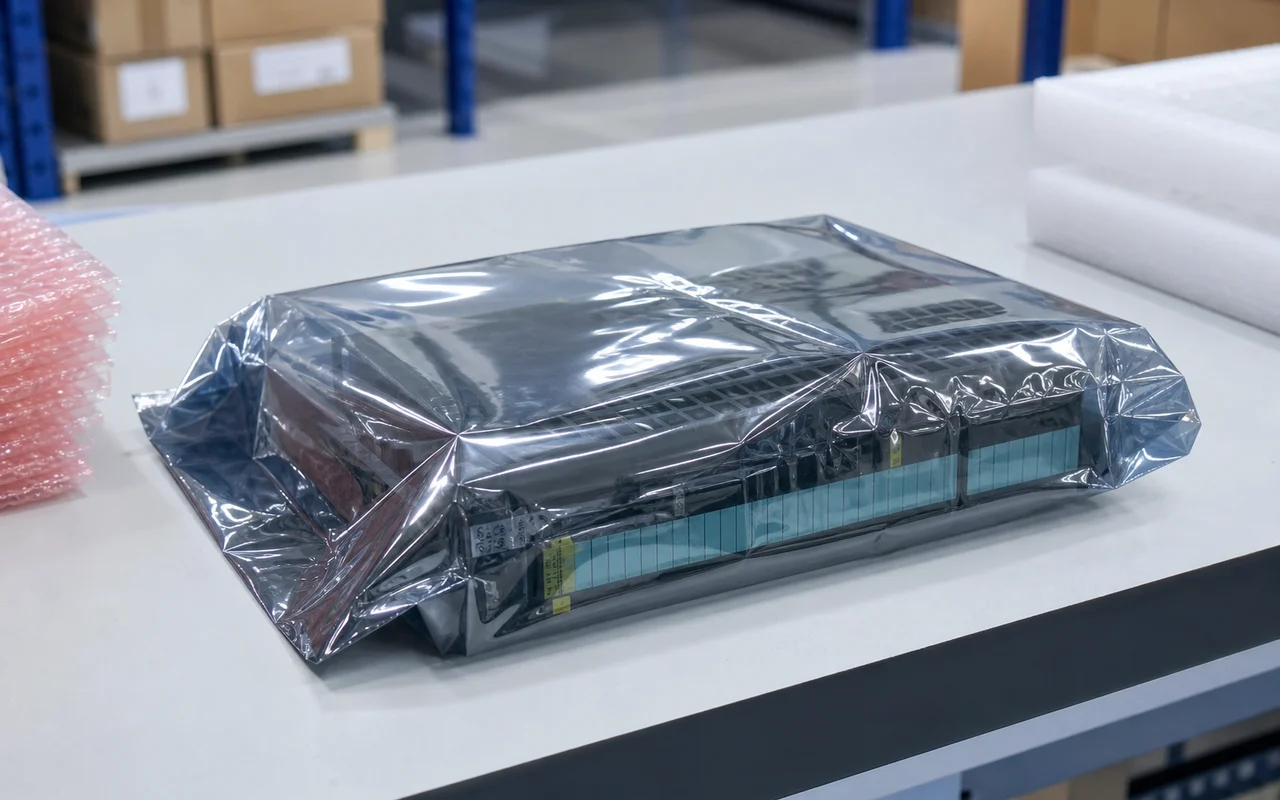 Anti-static Packaging
Modules are packed in anti-static bags to prevent electrostatic damage.
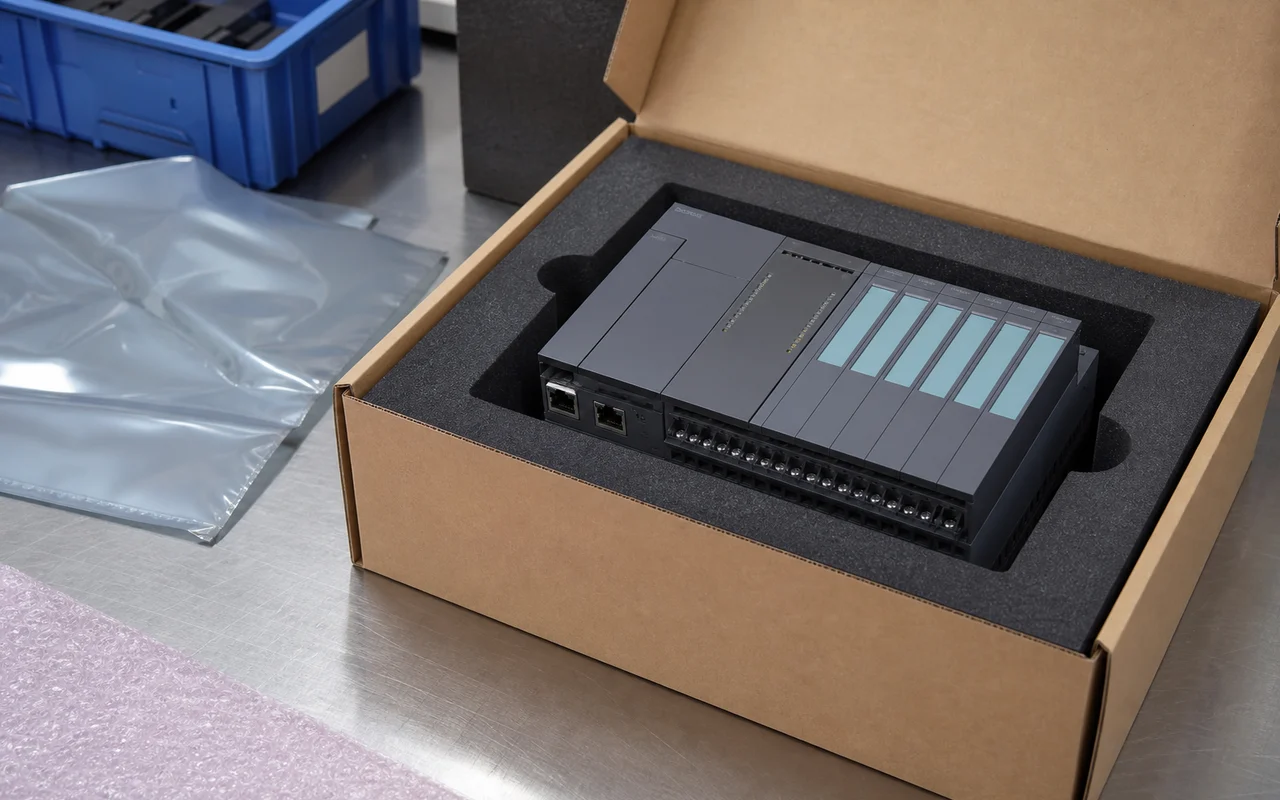 Secure Export Packing
Cushion protection and strong cartons ensure safe transportation.
 Worldwide Shipping
Global logistics network supports air, sea and express delivery.
 Documentation Check
Part number, revision and compatibility verified before shipment.
 After-sales Support
Professional technical support to help resolve your issues.