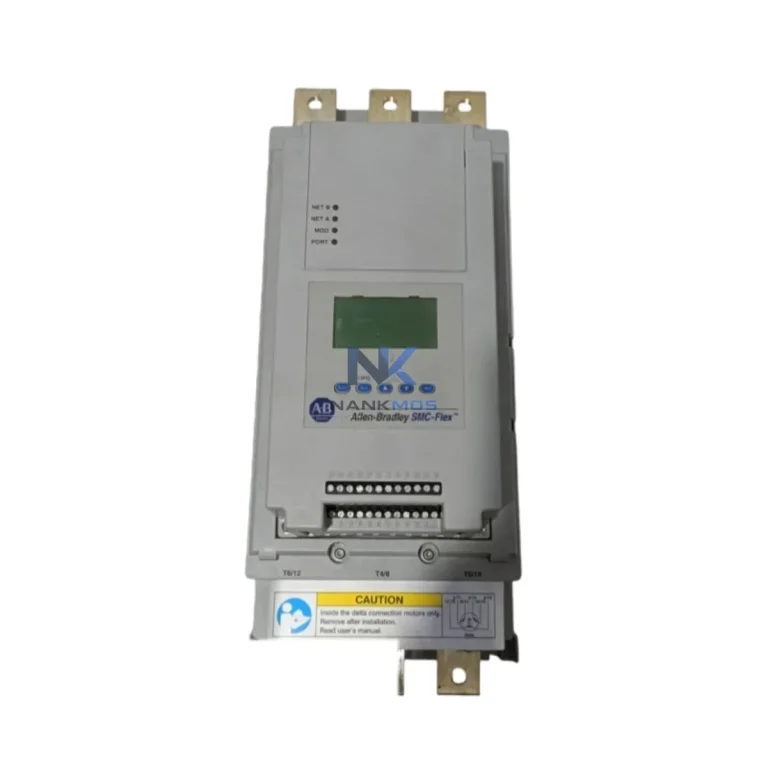
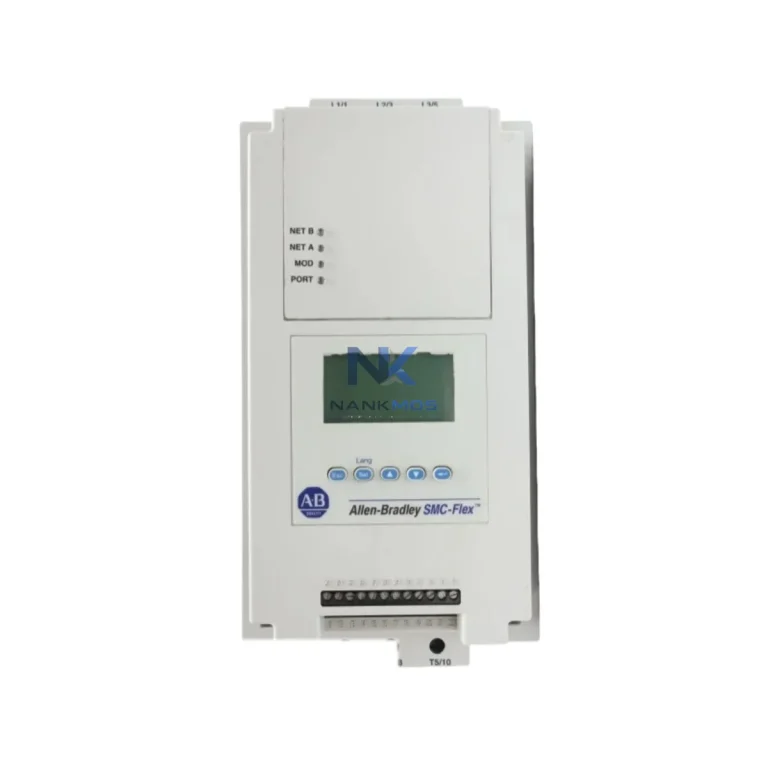
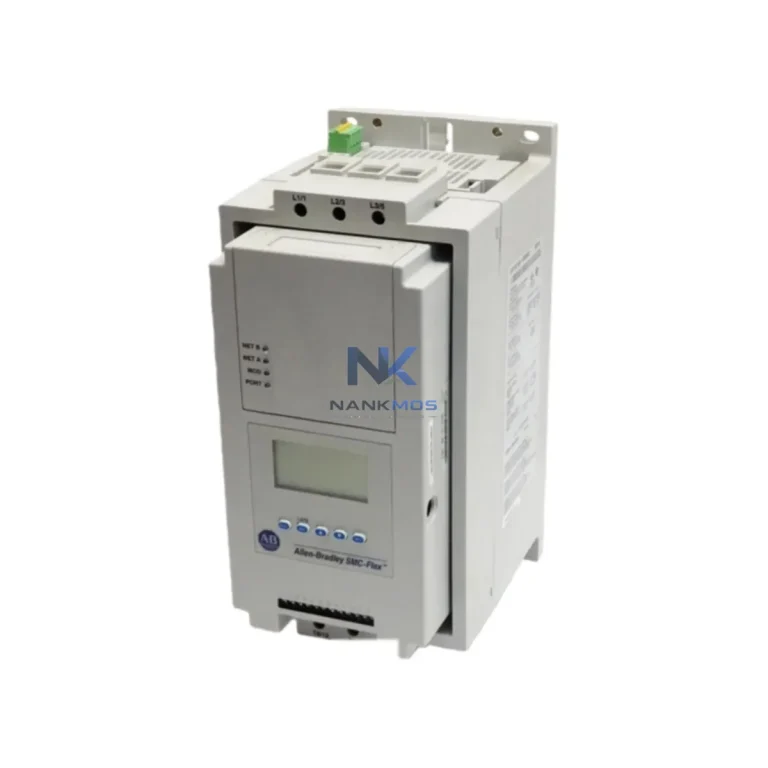
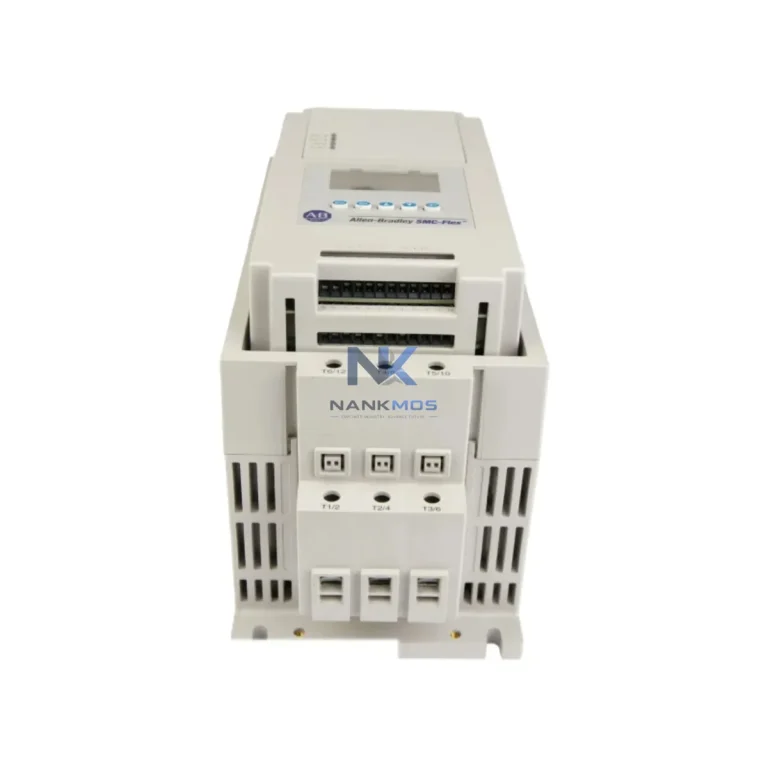
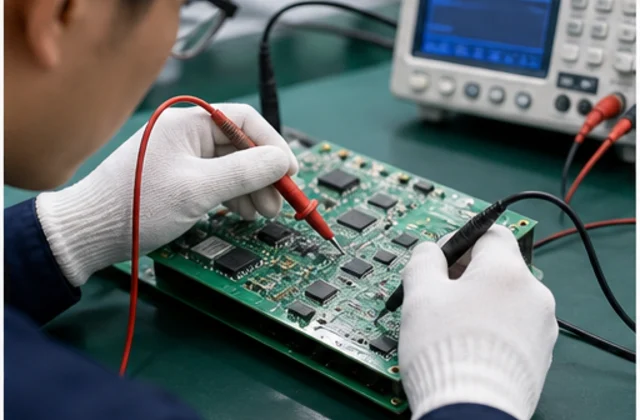
 Functional Inspection
100% tested on professional platforms to ensure stable performance.
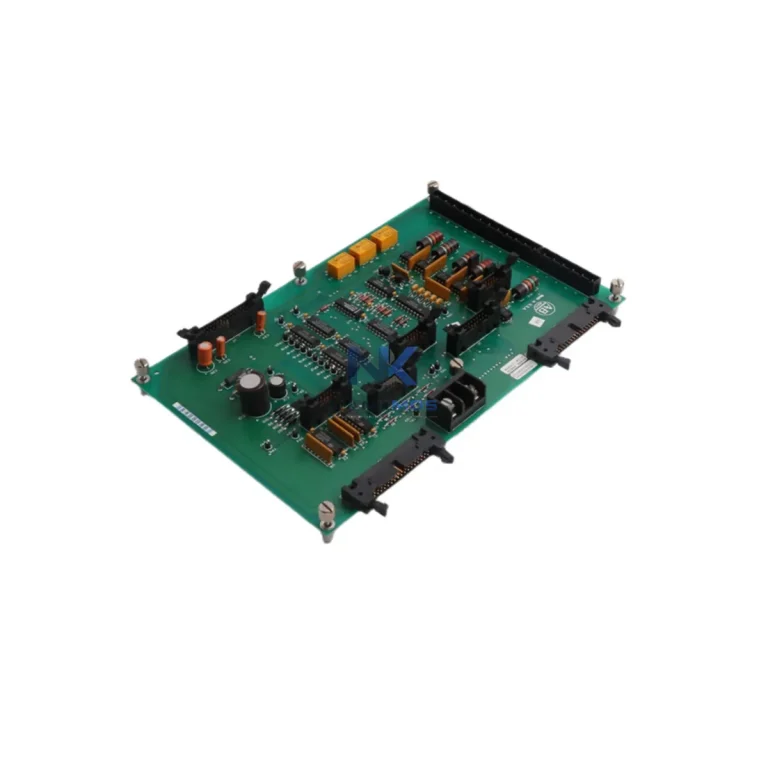
Allen-Bradley 1746-NI4 is a NANKMOS industrial automation product record Listed under SLC 500 series and Business & Industrial > Automation, Control & Flow Devices > Programmable Logic Controllers. Confirm condition, availability, lead time, compatibility and documentation by email inquiry.
Brand names are used for identification only.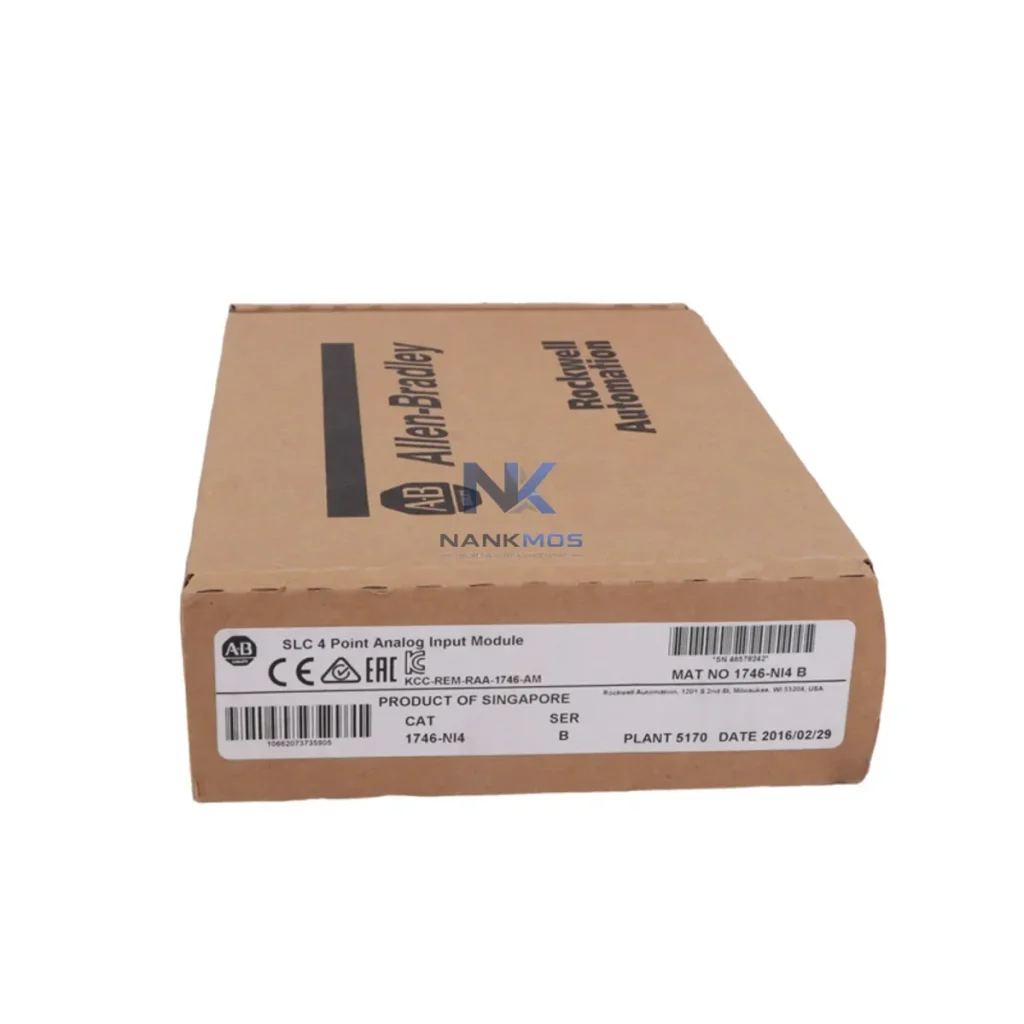
Allen-Bradley 1746-NI4 is a NANKMOS industrial automation product record Listed under SLC 500 series and Business & Industrial > Automation, Control & Flow Devices > Programmable Logic Controllers. Confirm condition, availability, lead time, compatibility and documentation by email inquiry.
| Manufacturer | Allen-Bradley |
|---|---|
| Application | Controller Processing & System Control |
| Part Number / Model | 1746-NI4 |
| Compatible System | SLC 500 |
| Series | SLC 500 |
| Condition Options | To Confirm |
| Module Type | Controller / CPU Module |
| Warranty | 12 Months |
| Packaging | Anti-static Bag / Secure Box |
| Shipping Methods | DHL / FedEx / UPS / Air / Sea |
| Availability | To Confirm |
| Lead Time | To Confirm |
| Documentation | Part number and revision checked before quote |
The Allen-Bradley 1746-NI4 is a four-channel analog input module engineered for the SLC 500 programmable controller platform, delivering precision signal acquisition that forms the backbone of energy-aware industrial automation. By converting real-world analog signals — voltage or current — into high-resolution digital values, the 1746-NI4 enables the SLC 500 CPU to make informed, real-time decisions about load management, motor control, and energy distribution across the production line. In environments where every kilowatt-hour counts, this module serves as the critical sensing layer that connects field instrumentation to the control system, reducing unnecessary energy consumption and supporting predictive maintenance strategies.
In a fully integrated SLC 500 control architecture, the 1746-NI4 analog input module works in close coordination with a range of complementary components to deliver a coherent, energy-optimized automation strategy. The module's four analog channels are typically wired to field sensors — including current transformers, pressure transducers, thermocouple transmitters, and flow meters — feeding live process data directly into the SLC 5/04 or SLC 5/05 processor via the 1746 backplane.
This real-time data stream is the foundation for variable frequency drive (VFD) control loops. When paired with a PowerFlex 40 or PowerFlex 400 drive, the SLC 500 uses analog feedback from the 1746-NI4 to dynamically adjust motor speed in response to actual load demand, eliminating the energy waste associated with fixed-speed motor operation. A pump running at 70% speed consumes roughly 34% of the energy of the same pump at full speed — a saving that compounds across multiple motor assets on the production line.
For digital I/O coordination, the 1746-NI4 operates alongside the 1746-OB16 digital output module and the 1746-IB16 digital input module, enabling hybrid control schemes where analog measurements trigger discrete switching events — such as activating a contactor or signaling an alarm relay. The 1746-OW16 relay output module can be used in parallel for higher-current switching tasks, ensuring that energy-intensive loads are only energized when process conditions justify it.
Power quality and energy metering are enhanced when the 1746-NI4 is used in conjunction with a PowerMonitor 500 or PowerMonitor 1000 energy monitoring unit. These devices provide kWh, kVAR, and power factor data that the SLC 500 can log and act upon, enabling demand-side management strategies that reduce peak energy charges. The 1747-SDN DeviceNet Scanner module extends this capability to field-level devices, allowing the SLC 500 to poll smart sensors and actuators for energy-relevant status data without additional analog wiring.
HMI visualization is typically handled by a PanelView 550 or PanelView Plus 600 terminal connected via DH-485 or Ethernet/IP, giving operators a real-time view of analog trends, energy consumption curves, and alarm states. This visibility is essential for identifying inefficient operating zones and scheduling preventive maintenance before energy waste escalates into unplanned downtime.
The 1746-NI4 plays a direct role in reducing the energy footprint of production lines by providing the analog measurement accuracy needed to implement closed-loop energy control. In motor-driven applications — conveyors, compressors, pumps, and fans — the module captures load current or process variable feedback and feeds it to the SLC 500 PID instruction. The controller then trims drive output to match actual demand, preventing the chronic over-speeding that wastes energy and accelerates mechanical wear.
Thermal load management is another key benefit. By monitoring temperature signals from RTD or thermocouple transmitters through the 1746-NI4, the SLC 500 can modulate cooling system output in proportion to actual heat generation rather than running cooling at maximum capacity continuously. This approach reduces HVAC energy consumption, extends compressor service life, and keeps the control panel environment within safe operating limits — all of which contribute to higher equipment utilization rates and lower total cost of ownership.
Production line throughput stability — often called takt time optimization — also benefits from precise analog input. When the 1746-NI4 monitors upstream process variables such as material feed rate or tank level, the SLC 500 can synchronize downstream equipment speeds to match actual production rhythm, eliminating the energy-intensive stop-start cycles that occur when equipment runs out of sync. This coordination reduces mechanical stress, lowers peak current draw, and smooths the energy demand profile of the entire line.
From a maintenance perspective, the 1746-NI4 supports predictive maintenance workflows by providing the continuous analog data streams that condition monitoring algorithms require. Trending motor current signatures, vibration transmitter outputs, or pressure differential readings over time allows maintenance teams to identify developing faults — bearing wear, pump cavitation, valve leakage — before they cause failures. Early intervention reduces emergency repair costs, avoids unplanned downtime, and keeps the production line operating at its designed energy efficiency point.
Every 1746-NI4 unit supplied by NANKMOS is drawn from verified inventory, subjected to functional testing prior to shipment, and backed by a 12-month warranty. Lead times are confirmed at the time of order, and expedited shipping options are available for urgent replacement requirements. Our technical team is available to assist with module configuration, RSLogix 500 programming support, and system integration guidance.
Q1: How does the 1746-NI4 contribute to energy savings in a motor control application?The 1746-NI4 provides the analog feedback — typically 4–20mA current signals from a current transformer or process transmitter — that the SLC 500 uses to implement closed-loop speed control on a connected VFD such as the PowerFlex 40. By continuously adjusting drive output to match actual load demand, the system avoids the energy waste of fixed-speed operation. In pump and fan applications, this can reduce motor energy consumption by 20–50% depending on the load profile.
Q2: Is the 1746-NI4 compatible with both voltage and current input signals, and can it be mixed across channels?Yes. The 1746-NI4 supports ±10V DC, 0–10V DC, 4–20mA, and 0–20mA input ranges, selectable per channel via software configuration in RSLogix 500. This flexibility allows a single module to simultaneously accept signals from different field devices — for example, a 4–20mA pressure transmitter on channel 0 and a 0–10V DC speed reference on channel 1 — without requiring additional signal conditioning hardware.
Q3: What is the recommended replacement procedure, and how do I verify the module is functioning correctly after installation?Power down the SLC 500 chassis before removing the existing module. Insert the 1746-NI4 into the same slot, restore power, and verify that RSLogix 500 recognizes the module in the I/O configuration tree. Use the Data Monitor to confirm that each channel is returning expected engineering unit values. NANKMOS ships every module fully tested; if any channel fails to respond correctly after installation, contact our support team for warranty replacement.
Q4: What is the warranty coverage, and what does NANKMOS's stock availability look like for the 1746-NI4?All 1746-NI4 modules supplied by NANKMOS carry a 12-month warranty covering manufacturing defects and functional failures under normal operating conditions. We maintain ready stock of the 1746-NI4 to support both planned procurement and urgent replacement scenarios. Each unit is tested before shipment. For volume orders or scheduled delivery programs, contact our sales team to confirm lead times and reserve allocation.
Functional Inspection100% tested on professional platforms to ensure stable performance.
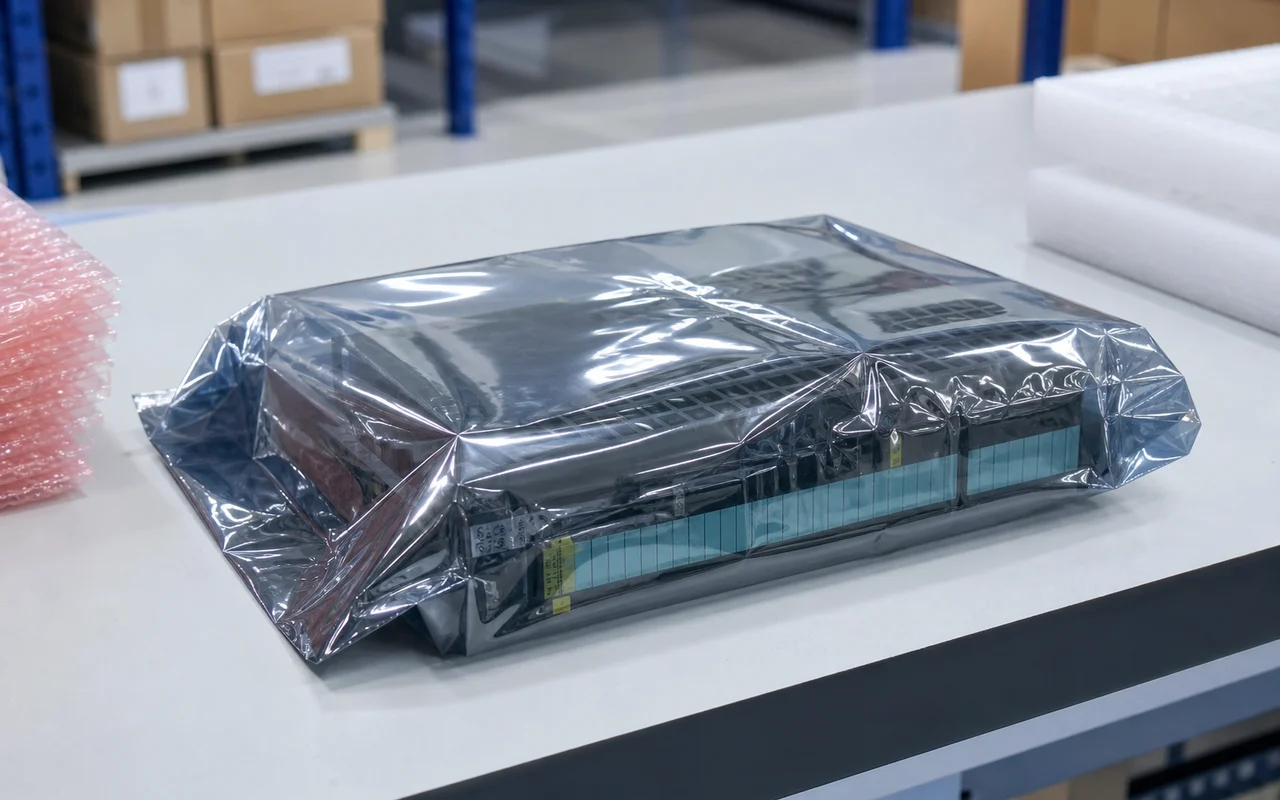 Anti-static Packaging
Modules are packed in anti-static bags to prevent electrostatic damage.
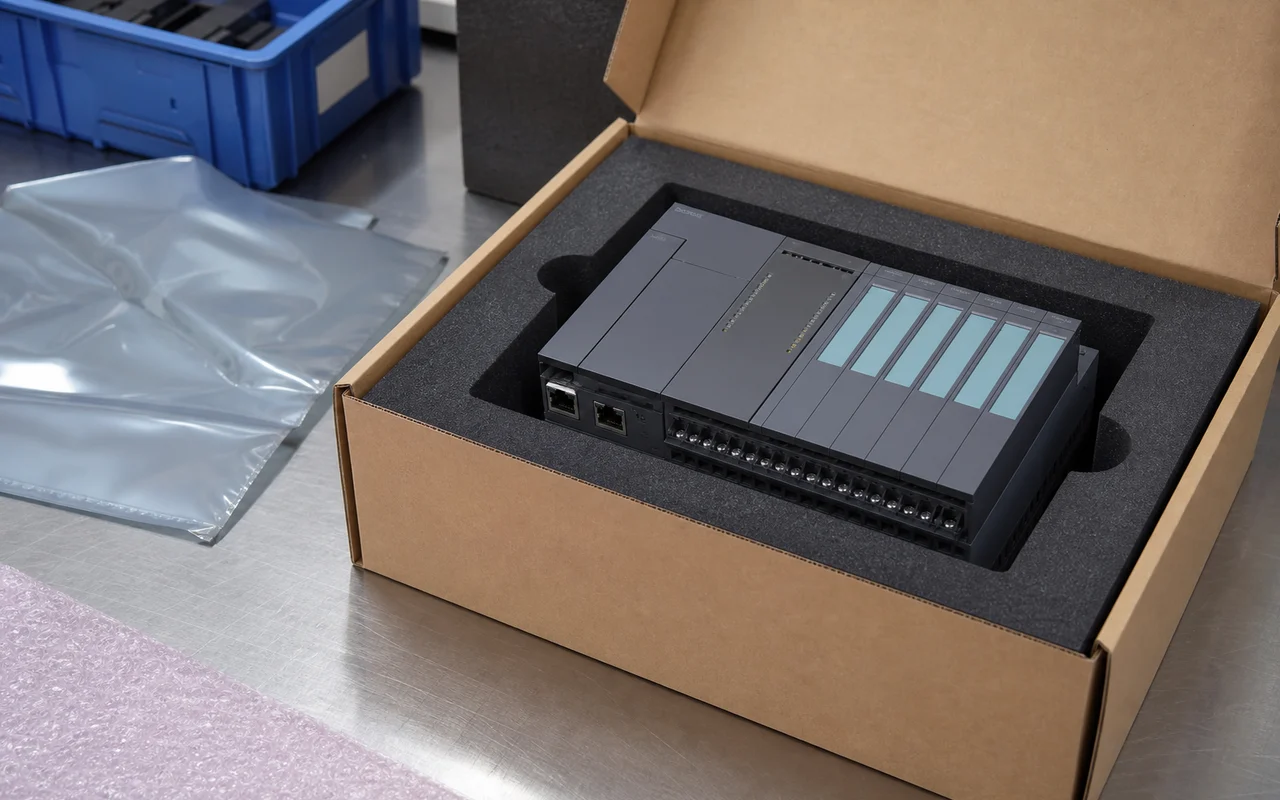 Secure Export Packing
Cushion protection and strong cartons ensure safe transportation.
 Worldwide Shipping
Global logistics network supports air, sea and express delivery.
 Documentation Check
Part number, revision and compatibility verified before shipment.
 After-sales Support
Professional technical support to help resolve your issues.