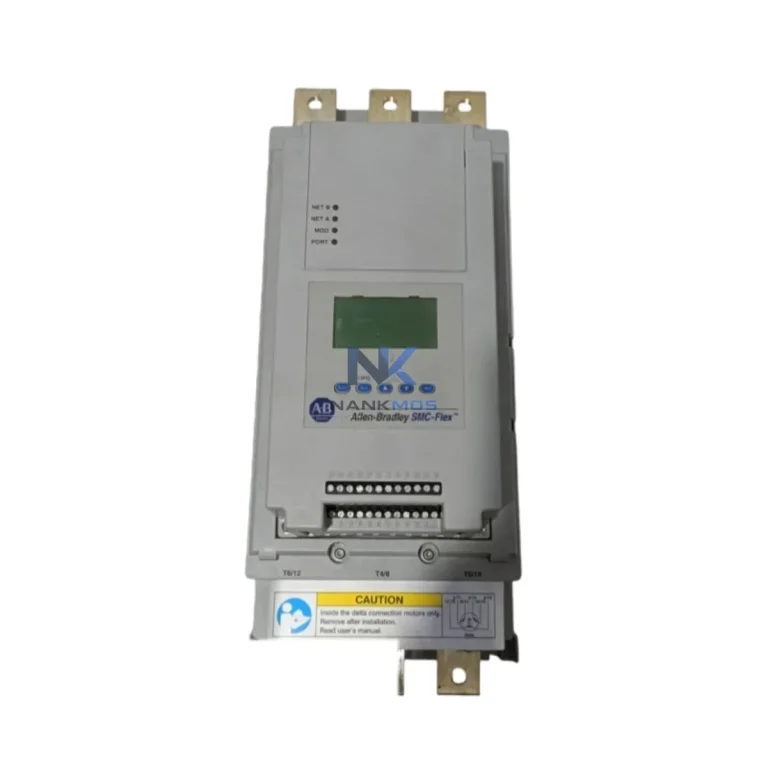
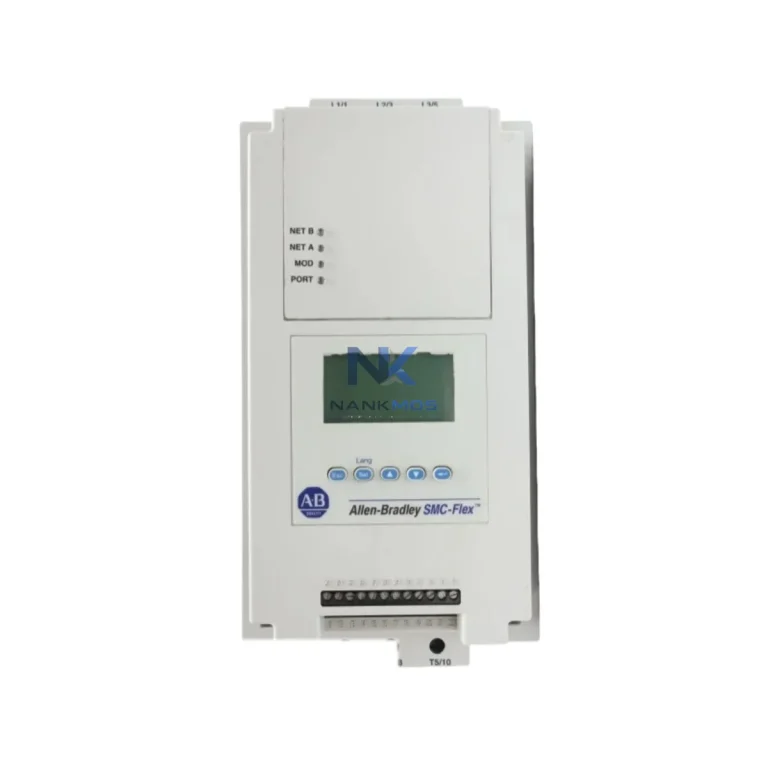
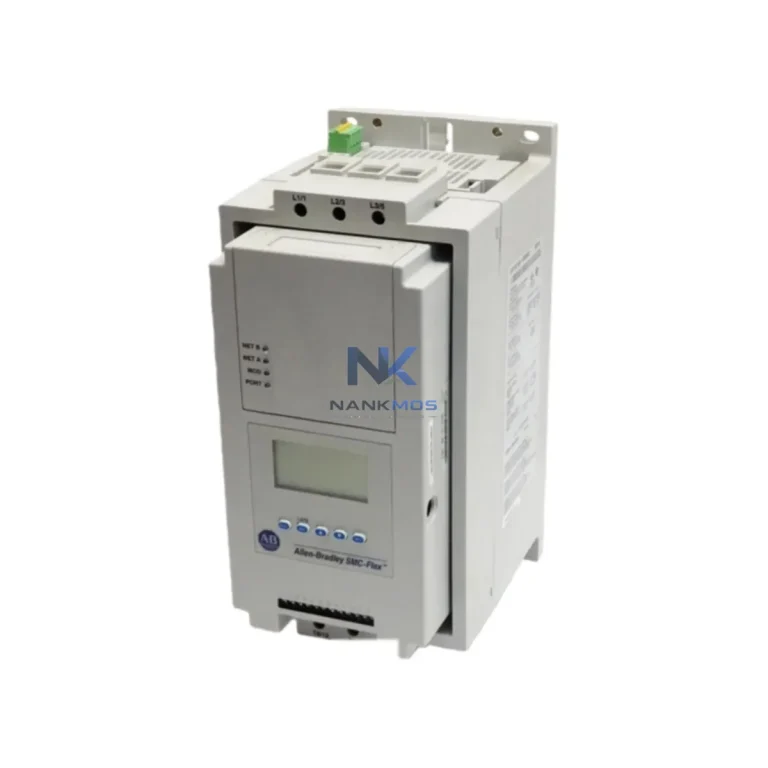
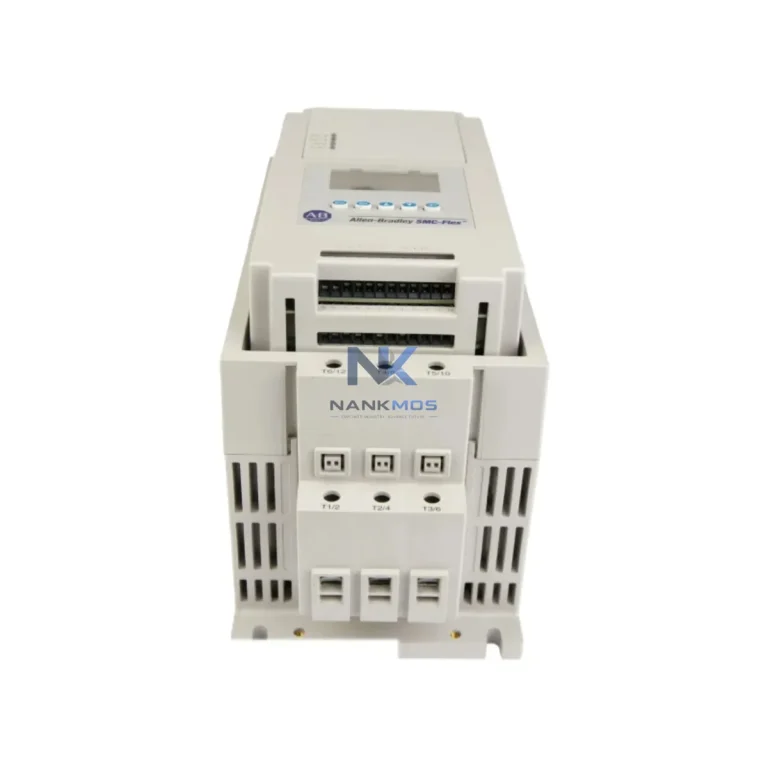
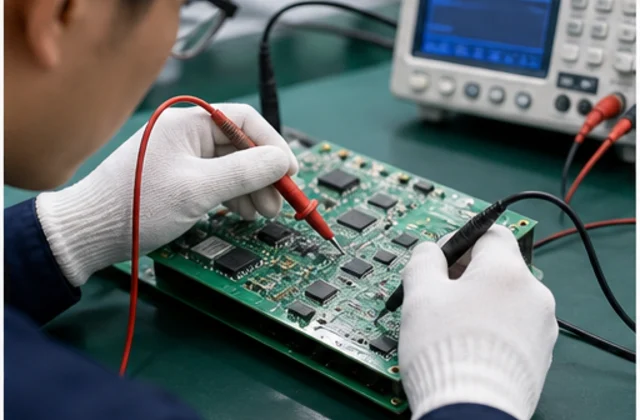
 Functional Inspection
100% tested on professional platforms to ensure stable performance.
Allen-Bradley 1769-L35CR is a NANKMOS industrial automation product record Listed under CompactLogix series and Business & Industrial > Automation, Control & Flow Devices > Programmable Logic Controllers. Confirm condition, availability, lead time, compatibility and documentation by email inquiry.
Brand names are used for identification only.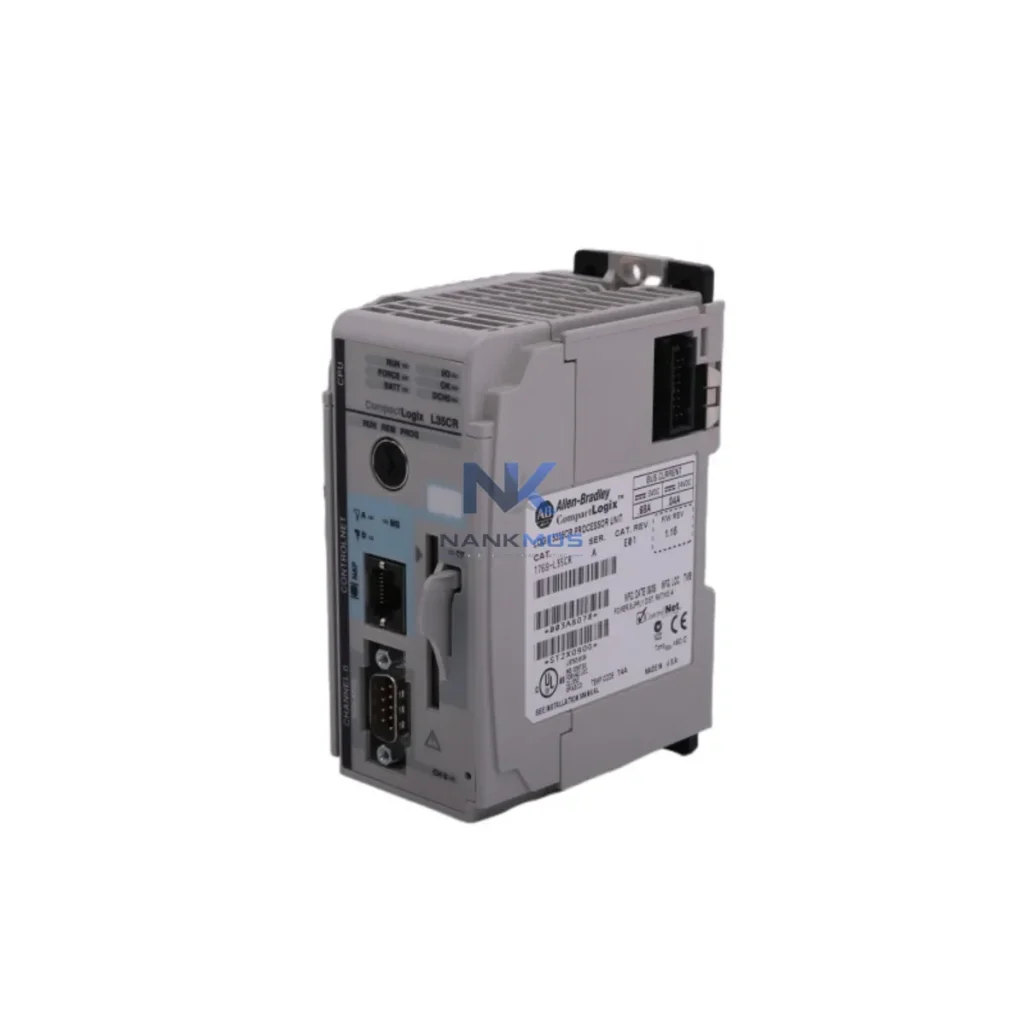
Allen-Bradley 1769-L35CR is a NANKMOS industrial automation product record Listed under CompactLogix series and Business & Industrial > Automation, Control & Flow Devices > Programmable Logic Controllers. Confirm condition, availability, lead time, compatibility and documentation by email inquiry.
| Manufacturer | Allen-Bradley |
|---|---|
| Application | Controller Processing & System Control |
| Part Number / Model | 1769-L35CR |
| Compatible System | CompactLogix |
| Series | CompactLogix |
| Condition Options | To Confirm |
| Module Type | Controller / CPU Module |
| Warranty | 12 Months |
| Packaging | Anti-static Bag / Secure Box |
| Shipping Methods | DHL / FedEx / UPS / Air / Sea |
| Availability | To Confirm |
| Lead Time | To Confirm |
| Documentation | Part number and revision checked before quote |
The Allen-Bradley 1769-L35CR CompactLogix PLC is a high-performance, energy-control programmable logic controller engineered for demanding industrial environments where production efficiency, load management, and energy accountability are mission-critical. Built on Rockwell Automation's proven CompactLogix architecture, the 1769-L35CR integrates dual ControlNet ports, 1.5 MB of user memory, and a deterministic scan cycle that enables precise coordination of motor drives, I/O subsystems, and energy monitoring modules across complex production lines. Whether deployed in discrete manufacturing, process control, or hybrid automation cells, this controller delivers the real-time responsiveness and diagnostic depth that modern smart factories require.
In a fully integrated production cell, the 1769-L35CR serves as the central decision-making node that orchestrates energy flow across every connected subsystem. Its dual ControlNet ports allow deterministic, high-speed communication with PowerFlex 755 variable frequency drives, enabling the controller to issue speed-reference commands that align motor acceleration ramps with actual load demand — eliminating unnecessary inrush current and reducing reactive power on the facility bus. When paired with the PowerFlex 523 compact drive on auxiliary conveyor axes, the 1769-L35CR can implement coordinated start-stop sequencing that prevents simultaneous motor starts, a common source of peak-demand penalties in multi-axis production lines.
On the I/O side, the controller interfaces directly with 1769-IQ16 digital input modules and 1769-OB16 digital output modules to manage contactors, solenoids, and relay-driven loads with millisecond precision. Energy metering data from a 1420 PowerMonitor unit — connected via ControlNet — feeds real-time kWh and power-factor values into the controller's data table, where custom ladder or structured-text routines can trigger load-shedding sequences or alert the SCADA layer when consumption thresholds are exceeded. This closed-loop energy feedback architecture transforms the 1769-L35CR from a simple sequencer into an active participant in the facility's energy management system.
For operator visibility, the controller integrates seamlessly with a PanelView Plus 7 HMI terminal over EtherNet/IP, surfacing real-time energy dashboards, drive status, and alarm histories without requiring a separate OPC gateway. Upstream, FactoryTalk Historian and FactoryTalk EnergyMetrix aggregate the controller's logged data into trend reports that maintenance and energy teams use for shift-level consumption analysis and demand forecasting. The 1769-L35CR's onboard ControlNet scheduler also supports time-synchronized sampling with 1756-IRT8 thermocouple input modules, enabling thermal load profiling of high-power equipment — a prerequisite for predictive maintenance programs that reduce unplanned downtime and the energy waste associated with emergency restarts.
Factory energy waste rarely originates from a single source; it accumulates across dozens of micro-inefficiencies — motors running at full speed during low-demand periods, drives without coordinated ramp profiles, and control systems that lack the granularity to distinguish productive load from parasitic consumption. The Allen-Bradley 1769-L35CR addresses these inefficiencies at the control layer, where intervention is most cost-effective.
By implementing energy-aware task scheduling within Studio 5000, engineers can assign lower-priority periodic tasks to execute during natural production pauses — conveyor indexing gaps, robotic tool-change windows, or press dwell cycles — rather than running continuous background scans that keep drives and actuators energized unnecessarily. The controller's event-task capability allows I/O transitions from proximity sensors or photoelectric sensors to trigger drive enable/disable commands in under one millisecond, ensuring that motors are powered only when mechanical demand is confirmed. Over a multi-shift operation, this level of control granularity translates directly into measurable reductions in kWh consumption and a lower thermal load on the electrical distribution system, extending the service life of switchgear, cables, and drive cooling systems.
Downtime is itself an energy inefficiency: an idle production line that remains partially energized — drives in standby, HMI backlights on, pneumatic solenoids holding position — consumes a significant fraction of its running-state power. The 1769-L35CR's structured fault-handling routines can execute a controlled energy-down sequence on fault detection, placing drives in a safe low-power state and logging the fault context for rapid diagnosis. This reduces both the energy cost of unplanned stops and the time required to return the line to full production tempo, preserving the production beat rate that throughput targets depend on. Combined with 12-month warranty coverage and pre-shipment functional testing, the 1769-L35CR represents a low-risk, high-return investment in production line energy intelligence.
Q1: How does the 1769-L35CR contribute to measurable energy savings on a production line? The controller enables energy savings through coordinated drive scheduling via ControlNet, event-driven motor enable/disable logic triggered by field sensors, and real-time power consumption feedback from connected PowerMonitor modules. Engineers can implement load-shedding routines and demand-limiting sequences directly in Studio 5000, reducing peak-demand charges and overall kWh consumption without sacrificing throughput.
Q2: Which drive and I/O systems are compatible with the 1769-L35CR? The 1769-L35CR is compatible with the full range of 1769 Compact I/O modules (digital, analog, specialty), PowerFlex 4, 40, 523, 525, 753, and 755 drives via ControlNet or EtherNet/IP adapter cards, and 1756 ControlLogix I/O over a ControlNet bridge. It also supports 1420 PowerMonitor and 1410 PowerMonitor energy meters for closed-loop power management.
Q3: Can the 1769-L35CR replace an existing CompactLogix controller without a full system redesign? In most cases, yes. The 1769-L35CR is a drop-in replacement for earlier L3x-series CompactLogix controllers sharing the same 1769 backplane and ControlNet port configuration. Program migration from RSLogix 5000 projects is straightforward, and the dual ControlNet ports maintain existing network topology. Always verify firmware compatibility and I/O module counts before replacement; our technical team can assist with pre-migration validation.
Q4: What does the 12-month warranty cover, and how is pre-shipment testing conducted? Every 1769-L35CR unit undergoes functional verification — including communication port integrity, memory read/write validation, and I/O backplane continuity checks — before dispatch. The 12-month warranty covers manufacturing defects and operational failures under normal industrial use conditions. Replacement or repair is coordinated promptly to minimize production downtime, and stock availability is maintained to support fast turnaround for critical line applications.
Functional Inspection100% tested on professional platforms to ensure stable performance.
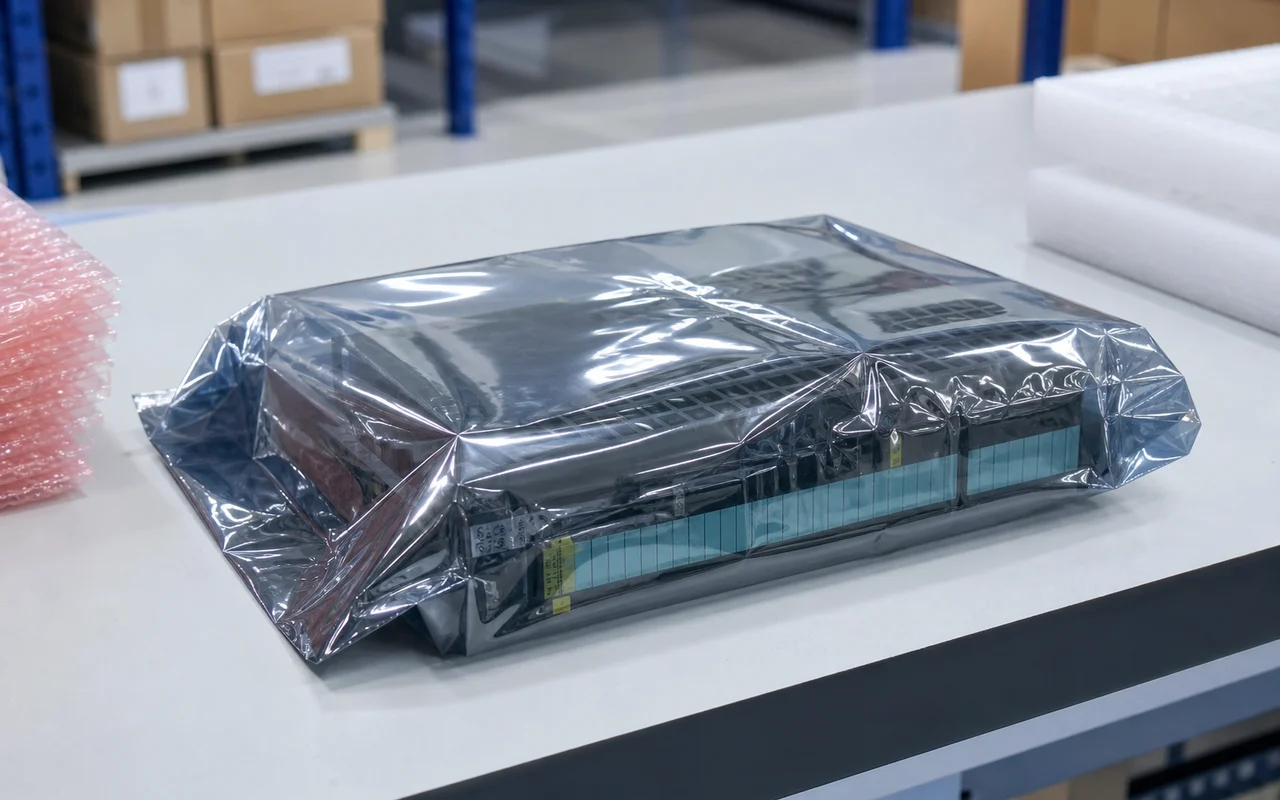 Anti-static Packaging
Modules are packed in anti-static bags to prevent electrostatic damage.
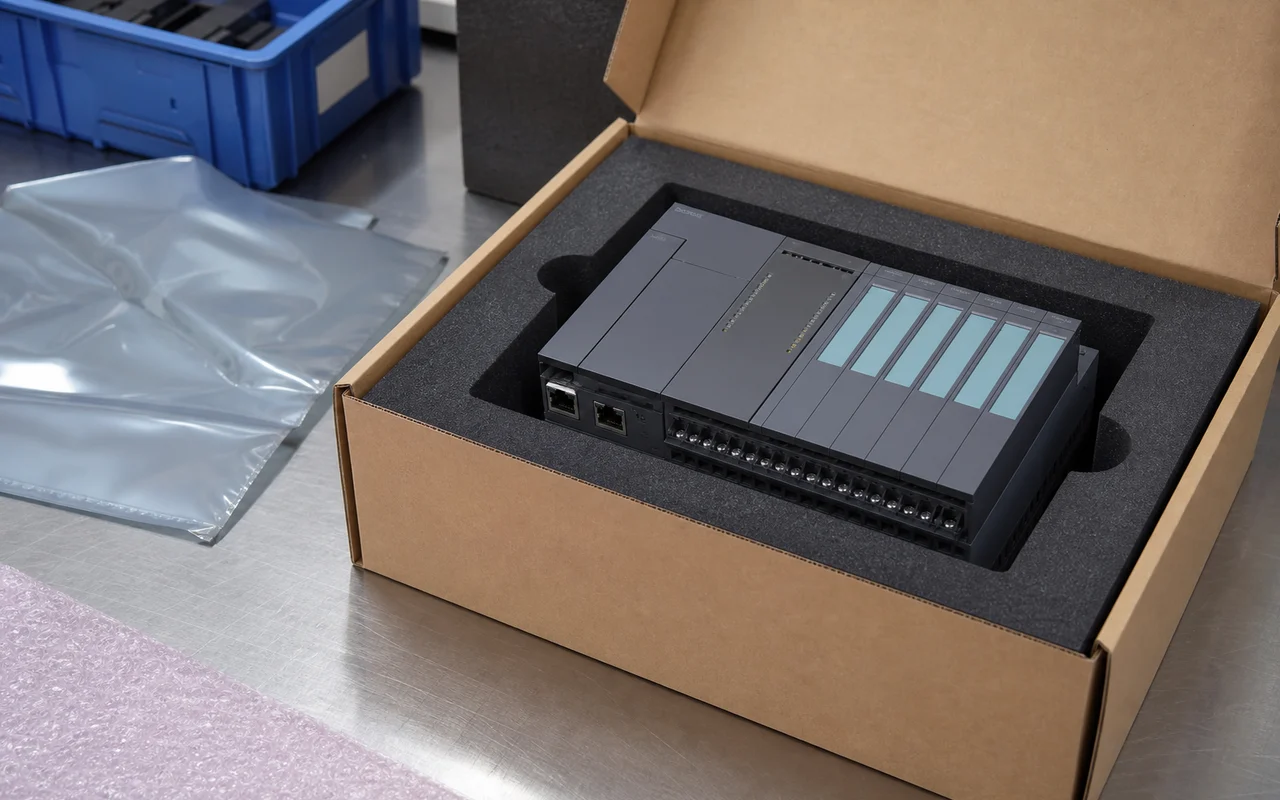 Secure Export Packing
Cushion protection and strong cartons ensure safe transportation.
 Worldwide Shipping
Global logistics network supports air, sea and express delivery.
 Documentation Check
Part number, revision and compatibility verified before shipment.
 After-sales Support
Professional technical support to help resolve your issues.