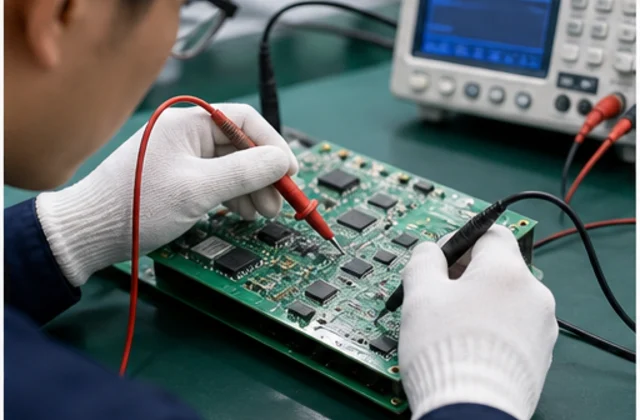
 Functional Inspection
100% tested on professional platforms to ensure stable performance.
Allen-Bradley 1771-P2 is a NANKMOS industrial automation product record Listed under PLC-5 series and Business & Industrial > Automation, Control & Flow Devices > Programmable Logic Controllers. Confirm condition, availability, lead time, compatibility and documentation by email inquiry.
Brand names are used for identification only.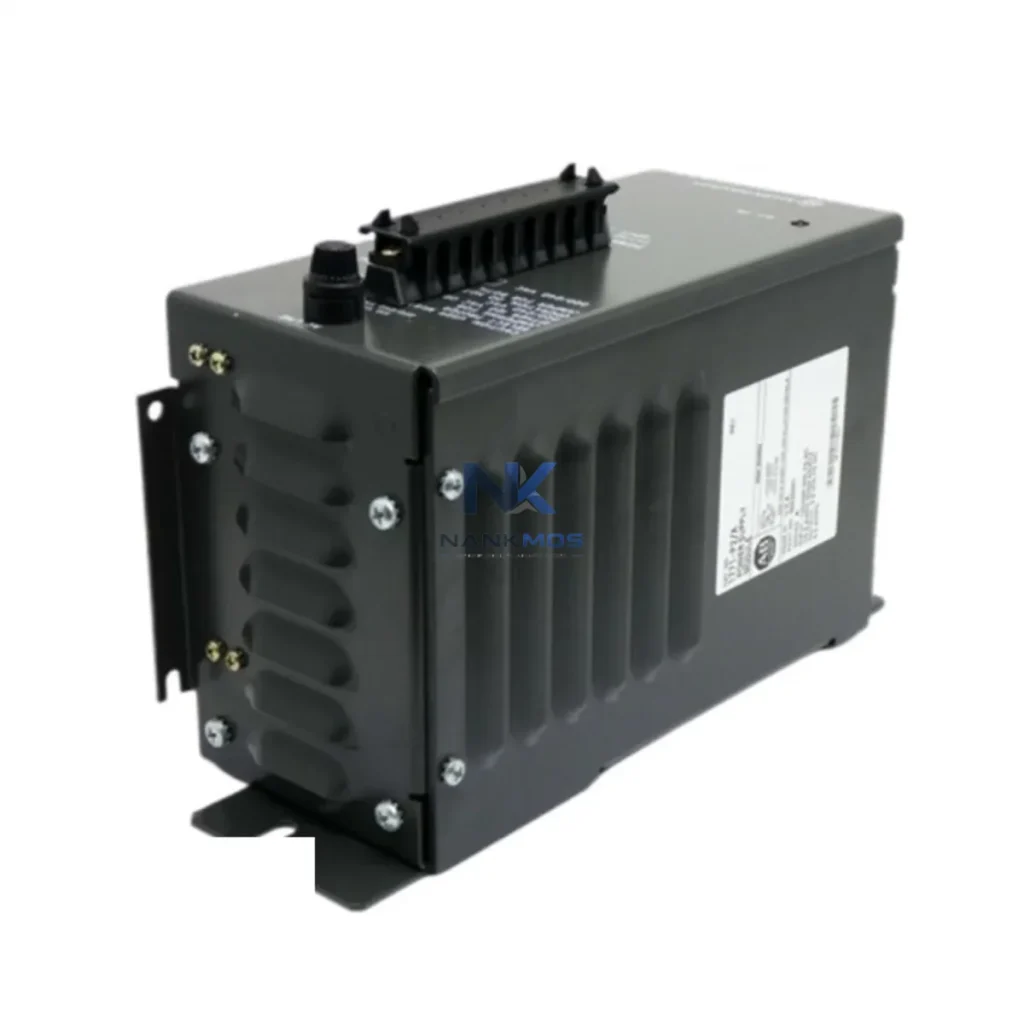
Allen-Bradley 1771-P2 is a NANKMOS industrial automation product record Listed under PLC-5 series and Business & Industrial > Automation, Control & Flow Devices > Programmable Logic Controllers. Confirm condition, availability, lead time, compatibility and documentation by email inquiry.
| Manufacturer | Allen-Bradley |
|---|---|
| Application | Control System Power Support |
| Part Number / Model | 1771-P2 |
| Compatible System | PLC-5 |
| Series | PLC-5 |
| Condition Options | To Confirm |
| Module Type | Power Supply Module |
| Warranty | 12 Months |
| Packaging | Anti-static Bag / Secure Box |
| Shipping Methods | DHL / FedEx / UPS / Air / Sea |
| Availability | To Confirm |
| Lead Time | To Confirm |
| Documentation | Part number and revision checked before quote |
The Allen-Bradley 1771-P2 is a purpose-built auxiliary power supply module designed for the PLC-5 programmable controller platform, one of Rockwell Automation's most enduring and widely deployed industrial control architectures. In modern smart factory environments, reliable and stable power delivery is not merely a hardware requirement — it is the foundation upon which every data link, protocol exchange, and real-time monitoring loop depends. The 1771-P2 ensures that the 1771 I/O chassis receives consistent, regulated power, enabling uninterrupted signal acquisition, protocol conversion, and network communication across the full automation stack.
From the moment field devices begin transmitting process data — whether from pressure transmitters, flow sensors, thermocouple inputs, or discrete limit switches — the integrity of that data chain depends on stable power at every node. The 1771-P2 supports this chain by powering the I/O backplane that hosts communication modules such as the 1771-KE RS-232 interface module and the 1771-KF2 DH+ communication adapter, both of which bridge legacy field signals into the Data Highway Plus (DH+) network. This network backbone connects PLC-5 processors to upstream SCADA systems, HMI panels, and historian servers, forming the real-time data pipeline that drives production visibility and remote diagnostics.
In distributed control architectures, the 1771-P2 is frequently deployed alongside the 1771-ASB remote I/O adapter, which extends the PLC-5's reach to remote I/O racks located across large plant floors, substations, or multi-zone process lines. Each remote rack powered by a 1771-P2 becomes a reliable data collection node, feeding analog and digital signals back to the central processor via the 1771 Remote I/O link. This architecture is common in water treatment facilities, chemical processing plants, and power generation stations where distributed sensing and centralized control must coexist without data latency or signal dropout.
The 1771-P2 sits at the heart of a layered industrial data flow architecture. At the field level, sensors and actuators — including RTDs, 4–20 mA analog transmitters, and discrete I/O devices — connect to 1771 analog and digital input modules housed in the powered I/O chassis. These modules digitize field signals and pass them to the PLC-5 processor via the backplane bus. The processor then executes ladder logic, performs PID calculations, and generates control outputs, all while maintaining real-time communication with the plant network.
The DH+ network, supported by the 1771-KF2 communication adapter, links the PLC-5 to other controllers, operator workstations running RSView32 or FactoryTalk View SE, and data historians. Simultaneously, the 1771-SDN DeviceNet Scanner module — also housed in the 1771 chassis — extends connectivity to DeviceNet-compatible field devices such as smart motor starters, variable frequency drives (VFDs), and photoelectric sensors, creating a unified device-level network that feeds real-time status data upward to the SCADA layer.
For facilities integrating legacy PLC-5 systems with modern Ethernet-based infrastructure, the 1756-ENBT ControlLogix Ethernet/IP bridge or third-party protocol gateways such as the ProSoft MVI56-DFNT module can be used to translate DH+ data into EtherNet/IP packets, enabling seamless integration with MES platforms, cloud-based analytics engines, and remote monitoring dashboards. The 1771-P2 ensures that the I/O chassis powering these communication modules remains stable under varying load conditions, preventing brownout-induced communication faults that can disrupt data continuity.
Edge computing nodes and industrial IoT gateways — such as the Moxa MGate series or Kepware KEPServerEX — can subscribe to PLC-5 data tags via OPC-DA or OPC-UA interfaces, enabling real-time data visualization on web-based SCADA dashboards and mobile HMI applications. This end-to-end data chain, from field sensor through the 1771-P2-powered I/O chassis to the cloud analytics layer, exemplifies the connected factory architecture that modern industrial operations demand.
Many industrial facilities operating legacy PLC-5 systems face a common set of challenges: protocol fragmentation, data silos between control zones, limited remote visibility, and difficulty integrating older DH+ networks with modern EtherNet/IP or PROFINET infrastructure. The 1771-P2, as the power backbone of the 1771 I/O platform, directly addresses the hardware stability layer that underpins all protocol conversion and network bridging efforts.
When power supply instability causes I/O chassis resets or communication module dropouts, the result is lost data frames, alarm flooding in SCADA systems, and gaps in production historian records. These data gaps make it impossible to perform accurate root-cause analysis, trend monitoring, or predictive maintenance. By replacing aging or undersized power supplies with the 1771-P2, maintenance engineers restore the reliable power baseline that communication modules require to maintain continuous DH+ or Remote I/O link integrity.
For sites undergoing digital transformation — migrating from paper-based maintenance logs to real-time OEE dashboards — the 1771-P2 enables the first step: ensuring that every I/O point in the legacy system is reliably powered and communicating. Once data continuity is established, protocol gateways and edge devices can begin aggregating PLC-5 tag data for KPI visualization, alarm management, and remote diagnostics without the noise introduced by intermittent power faults. This makes the 1771-P2 not just a power module, but a critical enabler of plant-wide data transparency and system scalability.
Q1: Does the 1771-P2 support communication with modern EtherNet/IP networks? The 1771-P2 is a power supply module and does not itself perform protocol conversion. However, it powers the 1771 I/O chassis that hosts communication modules such as the 1771-KF2 (DH+) and 1771-SDN (DeviceNet). Integration with EtherNet/IP networks is achieved via protocol gateway modules or ControlLogix bridge processors connected to the DH+ backbone. Network latency on DH+ links is typically under 10 ms for standard token-passing cycles, making it suitable for most SCADA polling applications.
Q2: Is the 1771-P2 compatible with ControlLogix and CompactLogix systems? The 1771-P2 is designed specifically for the 1771 PLC-5 I/O platform and is not directly compatible with ControlLogix (1756) or CompactLogix (1769) chassis. However, PLC-5 systems powered by the 1771-P2 can communicate with ControlLogix processors via DH+ bridge modules or EtherNet/IP gateways, enabling hybrid architectures during phased migration projects.
Q3: How does the 1771-P2 contribute to network stability and remote diagnostics? Stable chassis power is a prerequisite for reliable network communication. The 1771-P2 provides regulated auxiliary power that prevents voltage sag-induced communication faults on DH+ and Remote I/O links. For remote diagnostics, RSLogix 5 software can monitor PLC-5 processor status and I/O module health over DH+ or RS-232 connections, enabling engineers to diagnose faults without physical site visits.
Q4: What warranty and pre-shipment testing does the 1771-P2 include? All 1771-P2 units supplied by NANKMOS include a 12-Month Warranty covering manufacturing defects and functional failures. Each unit undergoes pre-shipment functional testing to verify output voltage regulation and load capacity before dispatch. In-stock units are available for same-week shipment, with lead times of 1–5 business days depending on destination. For volume orders or urgent requirements, contact our team for expedited fulfillment options.
Functional Inspection100% tested on professional platforms to ensure stable performance.
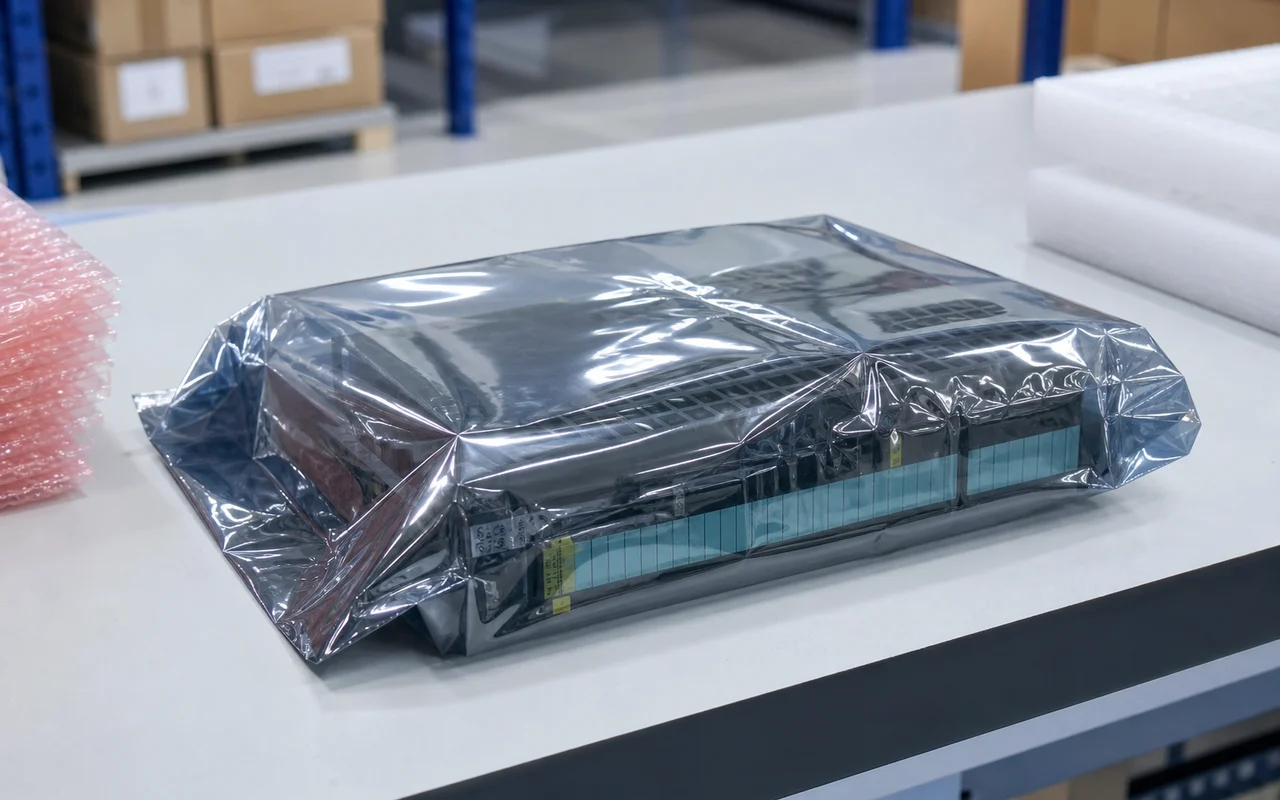 Anti-static Packaging
Modules are packed in anti-static bags to prevent electrostatic damage.
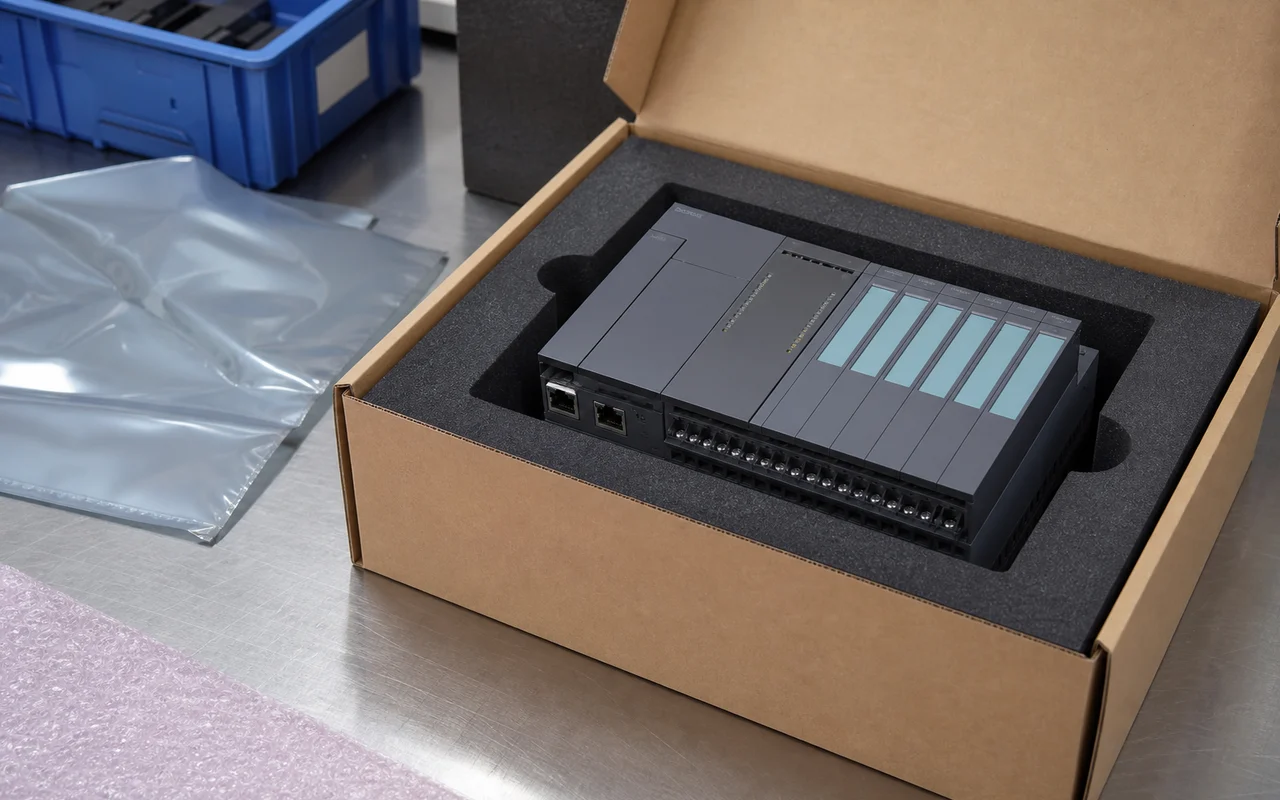 Secure Export Packing
Cushion protection and strong cartons ensure safe transportation.
 Worldwide Shipping
Global logistics network supports air, sea and express delivery.
 Documentation Check
Part number, revision and compatibility verified before shipment.
 After-sales Support
Professional technical support to help resolve your issues.