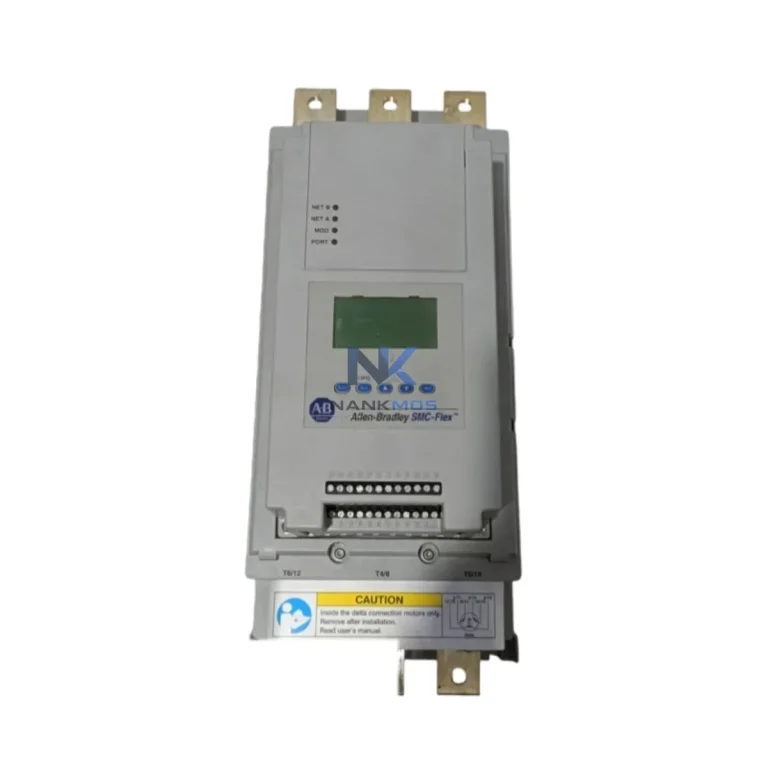
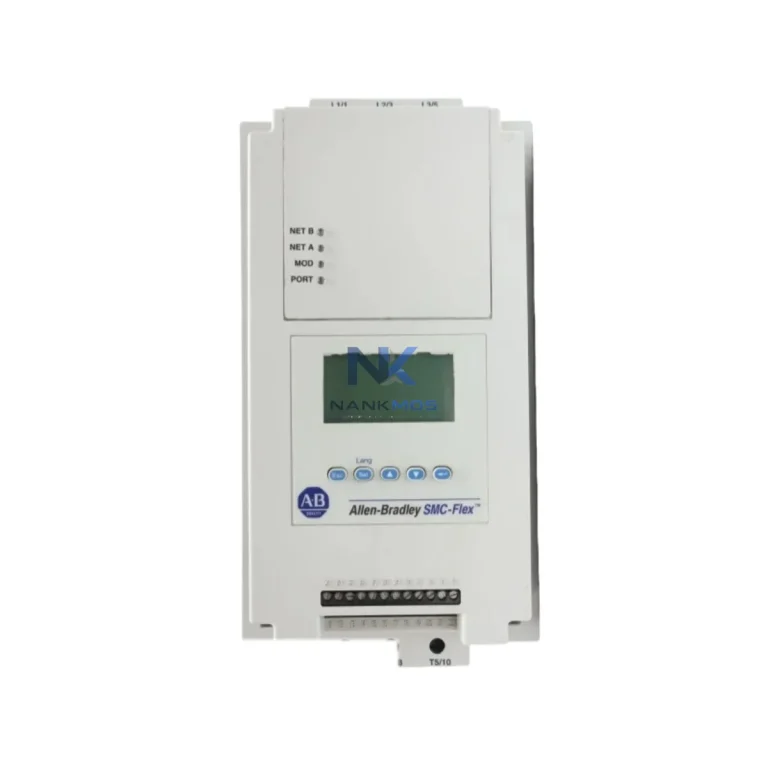
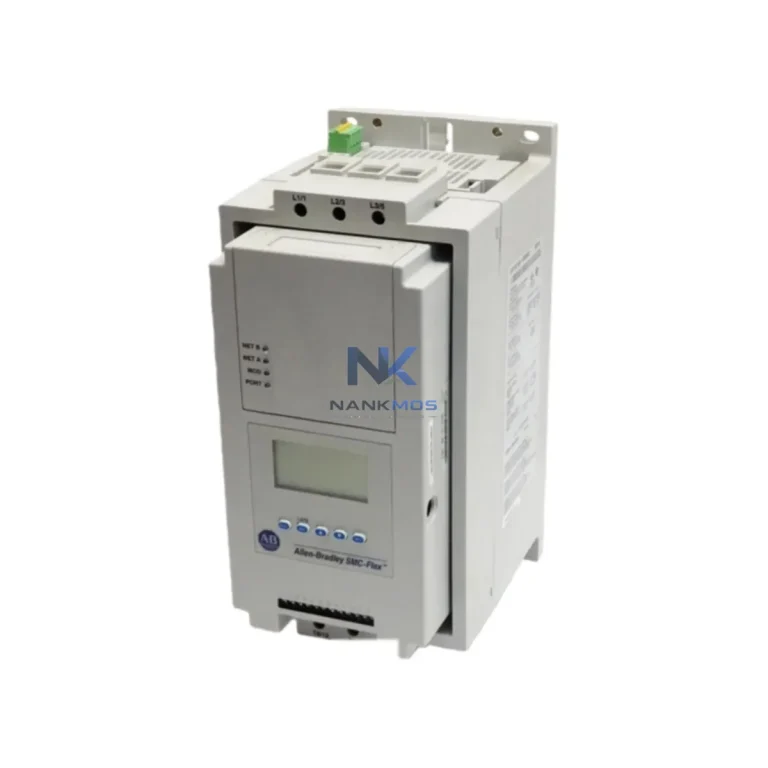
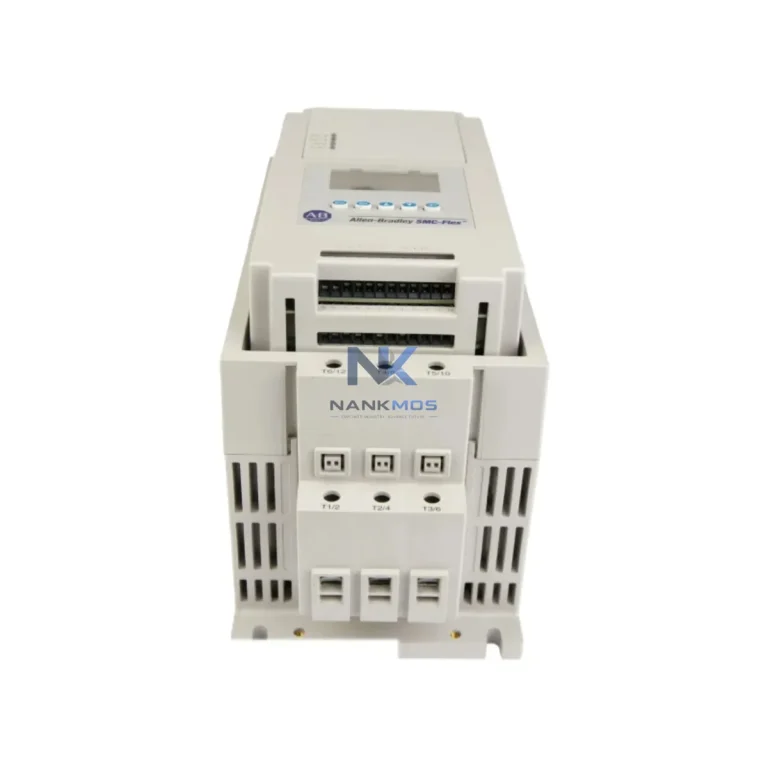
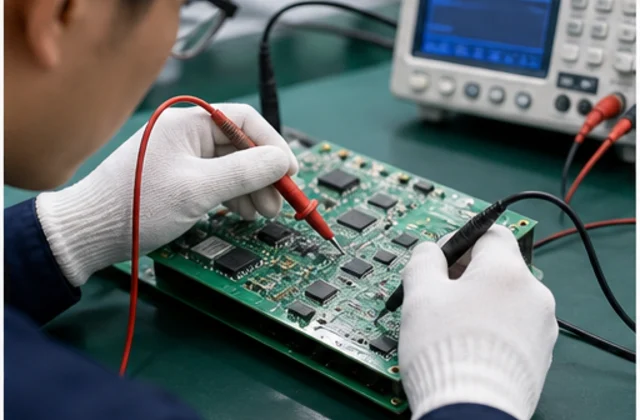
 Functional Inspection
100% tested on professional platforms to ensure stable performance.
Allen-Bradley 1771-P4R is a NANKMOS industrial automation product record Listed under PLC-5 series and Business & Industrial > Automation, Control & Flow Devices > Programmable Logic Controllers. Confirm condition, availability, lead time, compatibility and documentation by email inquiry.
Brand names are used for identification only.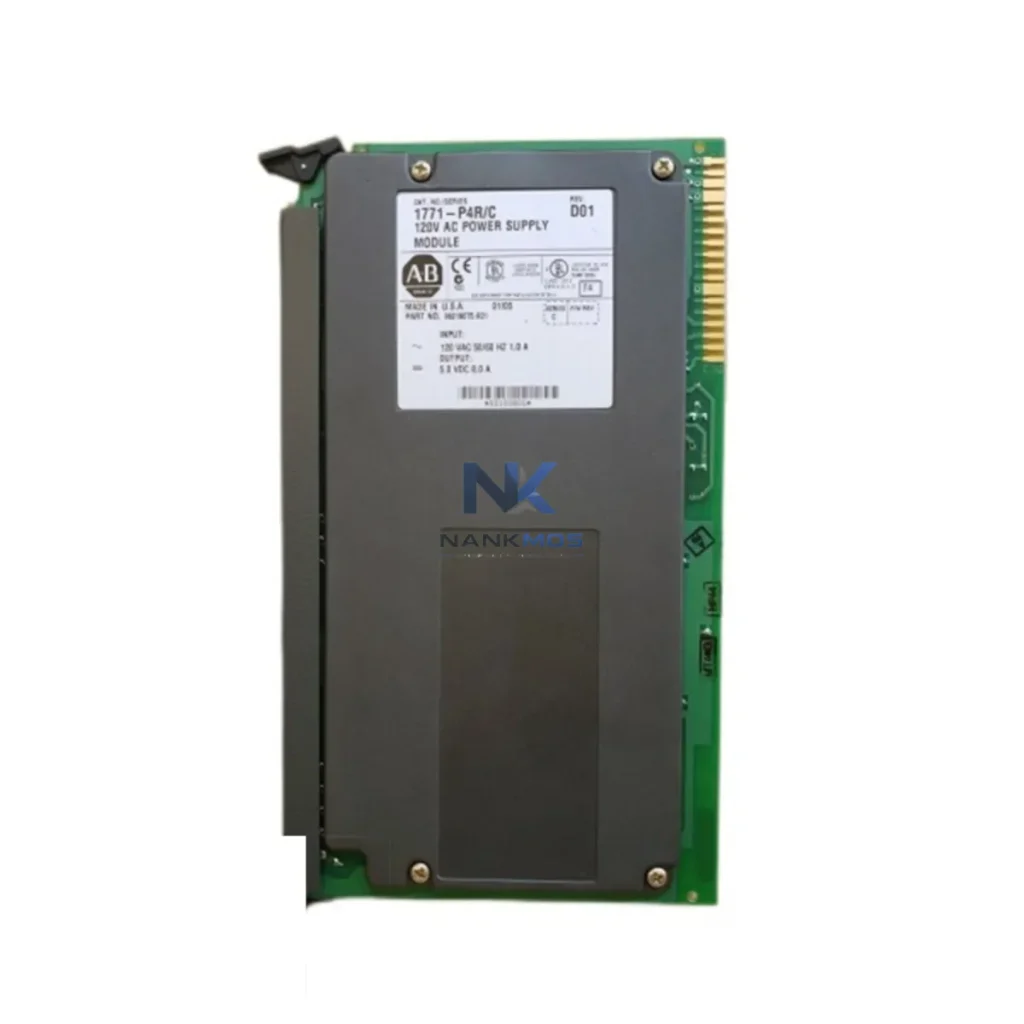
Allen-Bradley 1771-P4R is a NANKMOS industrial automation product record Listed under PLC-5 series and Business & Industrial > Automation, Control & Flow Devices > Programmable Logic Controllers. Confirm condition, availability, lead time, compatibility and documentation by email inquiry.
| Manufacturer | Allen-Bradley |
|---|---|
| Application | Control System Power Support |
| Part Number / Model | 1771-P4R |
| Compatible System | PLC-5 |
| Series | PLC-5 |
| Condition Options | To Confirm |
| Module Type | Power Supply Module |
| Warranty | 12 Months |
| Packaging | Anti-static Bag / Secure Box |
| Shipping Methods | DHL / FedEx / UPS / Air / Sea |
| Availability | To Confirm |
| Lead Time | To Confirm |
| Documentation | Part number and revision checked before quote |
The Allen-Bradley 1771-P4R is a field-proven, rack-mount power supply engineered for the PLC-5 I/O chassis platform. Designed to deliver stable, regulated DC output across demanding industrial environments, the 1771-P4R plays a central role in energy-control architectures where consistent voltage integrity directly impacts production throughput, equipment longevity, and overall energy efficiency. Whether deployed in discrete manufacturing, process control, or hybrid automation cells, this power supply provides the electrical foundation that keeps every downstream component operating within its optimal power envelope.
In modern smart production lines, unregulated or unstable power delivery is one of the most overlooked sources of energy waste. Voltage sag, inrush current spikes, and thermal overload events force control systems into protective shutdowns, increase heat dissipation across the panel, and shorten the service life of connected I/O modules and field devices. The 1771-P4R addresses these failure modes directly through its regulated output design, built-in overcurrent protection, and thermally efficient enclosure — reducing unnecessary energy draw while maintaining the signal integrity that PLC-5 processors depend on for deterministic scan-cycle execution.
The 1771-P4R does not operate in isolation — it is the power backbone for an entire rack of automation components that collectively determine how efficiently a production line consumes and manages energy. In a typical PLC-5-based control panel, the 1771-P4R supplies regulated voltage to a mix of digital and analog 1771 I/O modules, including input cards that receive signals from proximity sensors, pressure transducers, and temperature transmitters, and output cards that drive contactors, solenoid valves, and pilot lights. Every one of these field devices draws current from the chassis bus, and the stability of that bus — maintained by the 1771-P4R — directly determines whether those devices operate within their rated power windows or experience stress-induced degradation.
In energy-intensive applications, the 1771-P4R rack is often integrated with a PowerMonitor 3000 or similar Allen-Bradley power monitoring module that tracks real-time kW demand, power factor, and harmonic distortion across the production cell. When the PLC-5 processor — such as a 1785-L40B or 1785-L80B — receives feedback from the power monitor via the 1771 backplane or a Data Highway Plus (DH+) network, it can execute load-shedding logic, stagger motor start sequences, and reduce peak demand charges. The 1771-P4R's stable output ensures that this closed-loop energy management logic executes without the scan-cycle interruptions that would otherwise corrupt the control strategy.
Variable frequency drives (VFDs) such as the Allen-Bradley PowerFlex 40 or PowerFlex 700 are commonly deployed alongside PLC-5 systems to regulate motor speed on conveyors, pumps, fans, and compressors. These drives receive speed reference commands from the PLC-5 via analog output modules powered through the 1771-P4R chassis. When the power supply maintains clean, regulated voltage to the analog output card, the 4–20 mA or 0–10 V reference signal to the VFD remains accurate, enabling precise motor speed control that eliminates over-speed energy waste and reduces mechanical wear. In pump and fan applications, even a 10% reduction in motor speed through accurate VFD control can yield up to 27% energy savings — a gain that depends entirely on the signal integrity the 1771-P4R provides.
For servo-driven axes — such as those controlled by an Allen-Bradley Ultra 3000 or Kinetix 2000 servo drive — the PLC-5 issues motion commands through a 1771-QA servo interface module or a SERCOS interface card. These motion modules are housed in the same 1771 chassis and draw power from the 1771-P4R. Stable chassis power prevents position-loop errors caused by voltage-induced noise on the encoder feedback lines, reducing the frequency of fault-triggered stops that waste both energy and production time.
Communication modules such as the 1771-KGM (DH+ gateway) or a 1771-SDN DeviceNet scanner allow the PLC-5 to exchange data with HMI panels, SCADA systems, and intelligent field devices. These modules also reside in the 1771 chassis and depend on the 1771-P4R for their operating voltage. A stable power supply ensures that network communication remains uninterrupted, allowing the SCADA system to continuously log energy consumption data, equipment runtime, and alarm states — the raw inputs for predictive maintenance models that further reduce unplanned downtime and the energy spikes associated with cold-start restarts.
Factory energy optimization is not achieved through a single device — it is the cumulative result of every component in the control architecture performing within its rated parameters. The 1771-P4R contributes to this outcome in several measurable ways.
Reduced Thermal Load: An unstable or undersized power supply forces chassis components to operate outside their thermal design points, increasing heat dissipation in the control panel. Excess heat accelerates insulation degradation, increases cooling system runtime, and raises the ambient temperature for adjacent drives and power supplies. The 1771-P4R's regulated output and built-in thermal protection prevent these cascading thermal events, reducing panel cooling energy consumption and extending the service life of every module in the rack.
Stable Production Cadence: Unplanned shutdowns caused by power supply faults are among the most disruptive events in a production line. Each restart cycle consumes a disproportionate amount of energy — motors draw inrush current, heating systems ramp up from cold, and pneumatic systems repressurize. By providing reliable, fault-tolerant power delivery, the 1771-P4R minimizes the frequency of these restart events, keeping the production line in its steady-state operating mode where energy consumption per unit of output is lowest.
Improved Equipment Utilization: When I/O modules, communication cards, and processor boards receive stable power, their mean time between failures (MTBF) increases. Higher MTBF translates directly into higher overall equipment effectiveness (OEE) — the standard metric for production line efficiency. A production line running at 85% OEE versus 75% OEE produces the same output with significantly less energy per unit, because fixed overhead energy costs (lighting, HVAC, compressed air) are amortized over more productive output.
Predictive Maintenance Enablement: The 1771-P4R's consistent output voltage provides a stable reference baseline for condition monitoring systems. When power supply output remains within specification, anomalies detected by current sensors, vibration monitors, or thermal cameras on connected equipment can be attributed to mechanical wear rather than electrical noise — improving the accuracy of predictive maintenance algorithms and reducing false-positive maintenance interventions that consume technician time and spare parts inventory.
Every 1771-P4R unit shipped from NANKMOS is function-tested prior to dispatch, verified against original Allen-Bradley output specifications, and covered by a 12-month warranty. In-stock availability ensures that replacement lead times do not become a bottleneck in your maintenance planning cycle. For facilities managing aging PLC-5 infrastructure, maintaining a qualified spare of the 1771-P4R in the storeroom is a low-cost insurance policy against the high-cost consequence of an unplanned chassis power failure.
Q1: How does the 1771-P4R contribute to measurable energy savings on a production line? The 1771-P4R reduces energy waste indirectly by maintaining stable chassis voltage that enables accurate VFD speed references, prevents fault-triggered restarts, and reduces panel thermal load. When paired with a PowerMonitor module and a PLC-5 load-shedding program, the overall control system can actively manage peak demand — a direct energy cost reduction. The power supply itself is a low-draw component; its energy contribution is best measured at the system level through reduced restart frequency and improved OEE.
Q2: Is the 1771-P4R compatible with all PLC-5 chassis configurations? The 1771-P4R is designed for the Allen-Bradley 1771 I/O chassis platform used with PLC-5 processors. It is compatible with standard 1771 chassis sizes and supports the full range of 1771 I/O modules, communication adapters, and specialty cards. For specific chassis slot counts or redundant power configurations, verify the chassis model number against the 1771-P4R datasheet or contact NANKMOS technical support for a compatibility confirmation before ordering.
Q3: What is the recommended replacement process for a failed 1771-P4R in a live production environment? For a controlled replacement, schedule the swap during a planned maintenance window. Power down the affected chassis, document the existing wiring and module configuration, remove the failed unit, install the replacement 1771-P4R, and restore power. Verify output voltage at the chassis bus before re-enabling the PLC-5 processor. NANKMOS ships each unit function-tested, so bench verification prior to installation is optional but recommended for critical applications. The 12-month warranty covers any unit that fails to meet specification upon installation.
Q4: What is the warranty coverage and what does NANKMOS's stock availability mean for maintenance planning? All 1771-P4R units supplied by NANKMOS carry a 12-month warranty covering defects in materials and workmanship under normal operating conditions. In-stock availability means orders are processed and dispatched promptly, without the extended lead times associated with new-manufacture or broker-sourced components. For facilities with multiple PLC-5 racks, NANKMOS can support bulk orders and provide documentation packages to support your maintenance management system (MMS) or CMMS integration.
Functional Inspection100% tested on professional platforms to ensure stable performance.
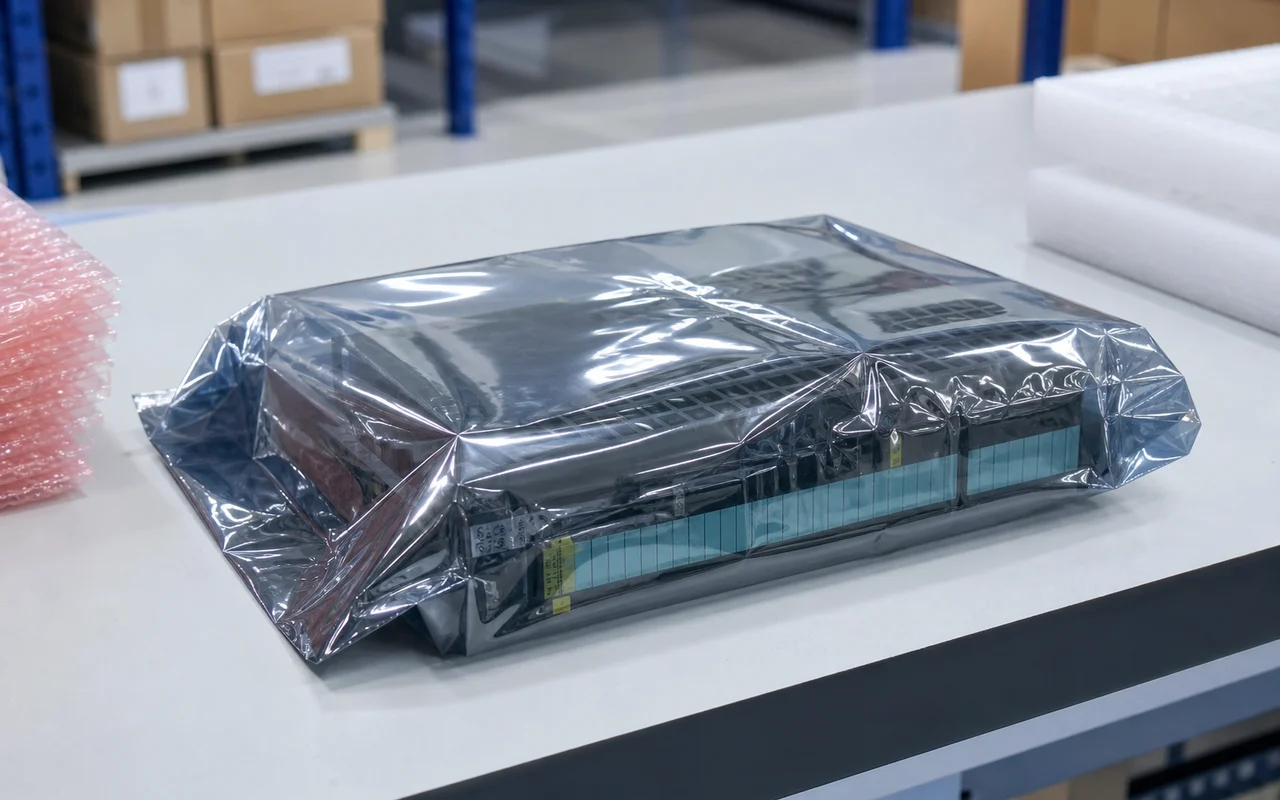 Anti-static Packaging
Modules are packed in anti-static bags to prevent electrostatic damage.
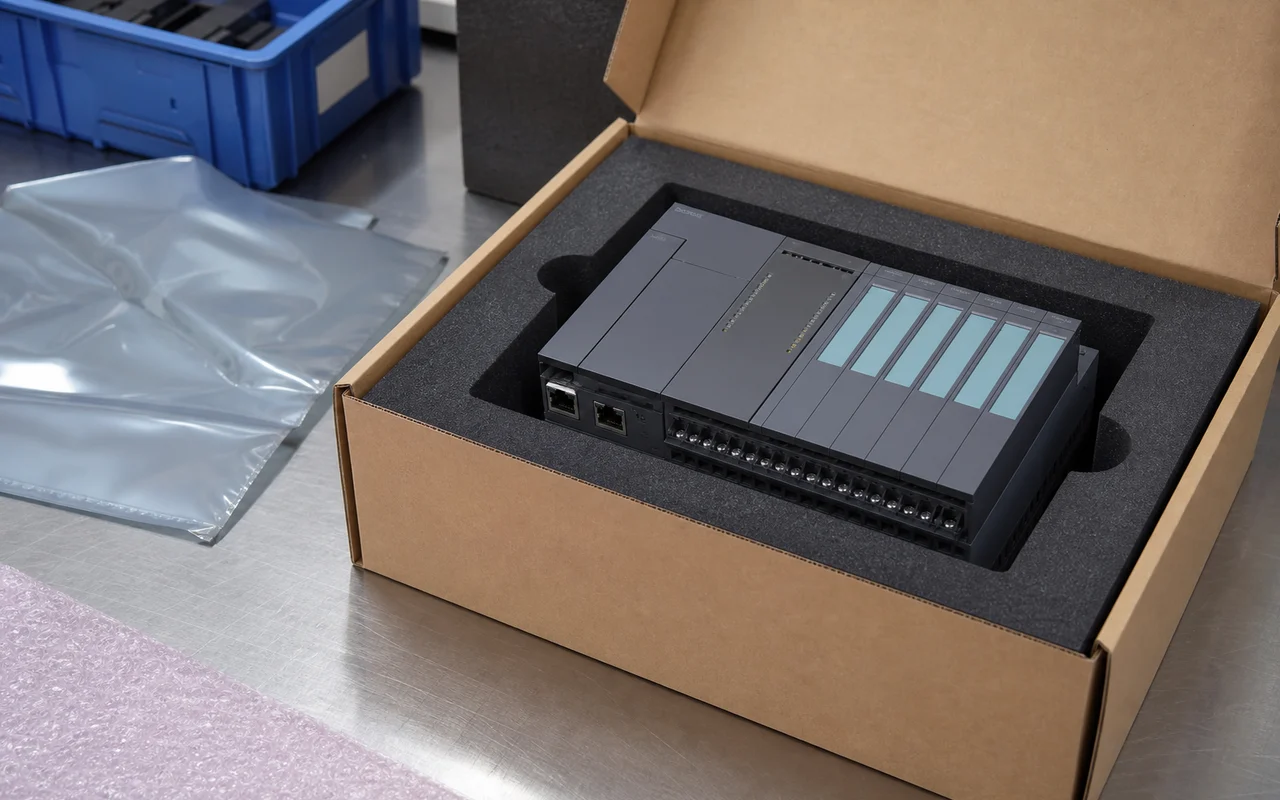 Secure Export Packing
Cushion protection and strong cartons ensure safe transportation.
 Worldwide Shipping
Global logistics network supports air, sea and express delivery.
 Documentation Check
Part number, revision and compatibility verified before shipment.
 After-sales Support
Professional technical support to help resolve your issues.