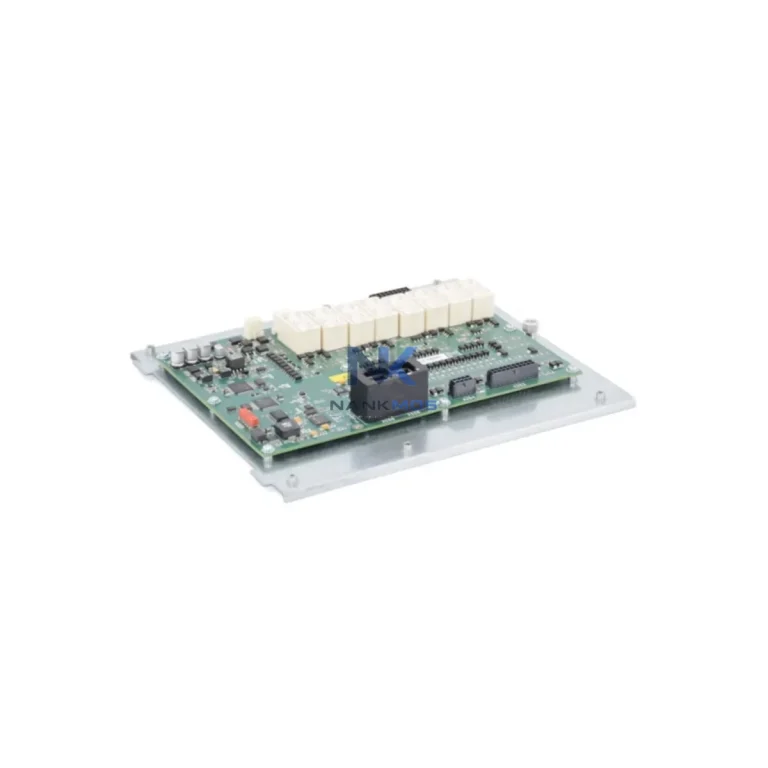
Functional Inspection
100% tested on professional platforms to ensure stable performance.
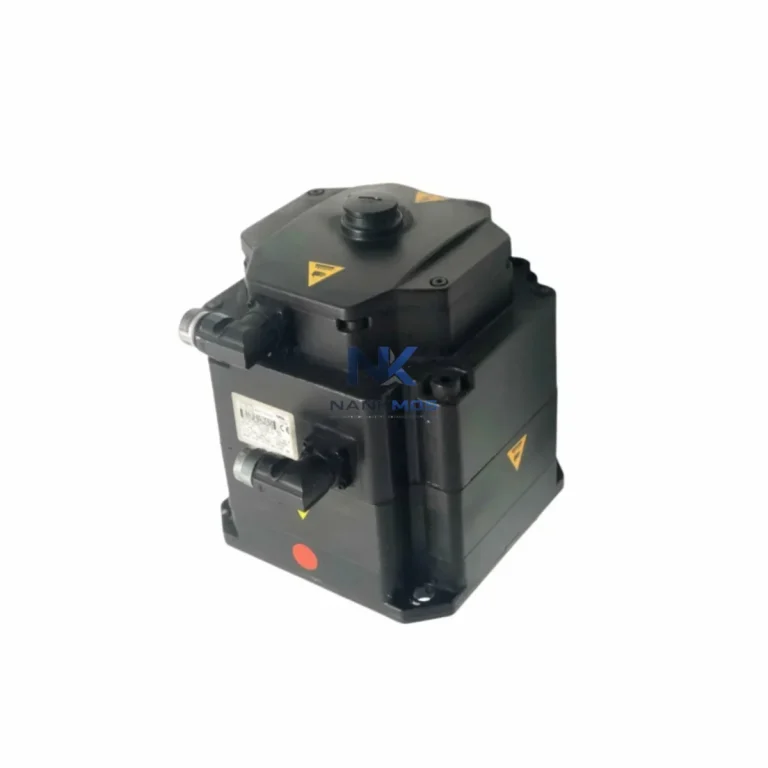
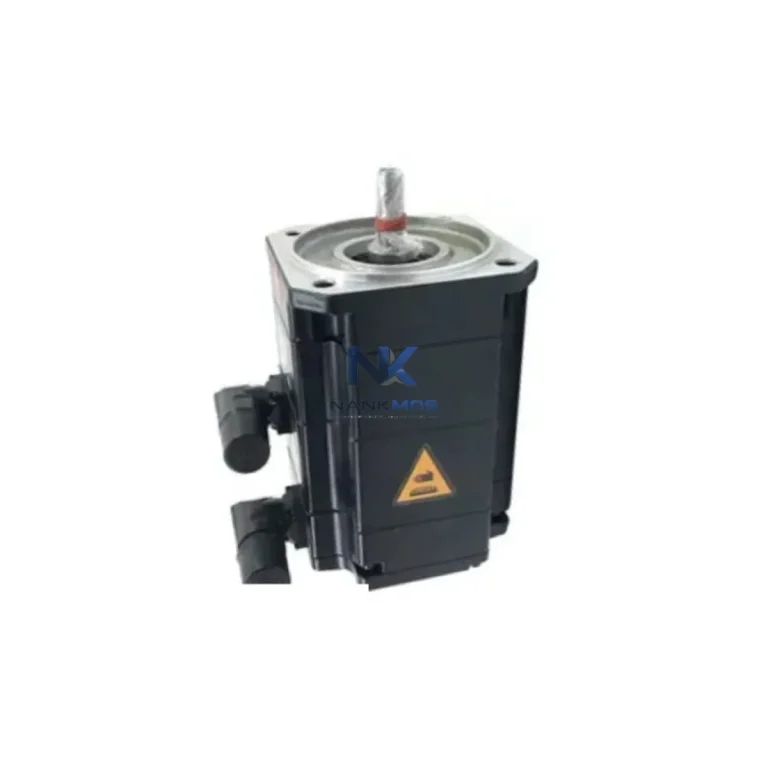
KUKA 00-136-893 1FK7103-5AF81-1SH3-Z is a NANKMOS industrial automation product record Listed under Other series series and Business & Industrial > Automation, Control & Flow Devices. Confirm condition, availability, lead time, compatibility and documentation by email inquiry.
Brand names are used for identification only.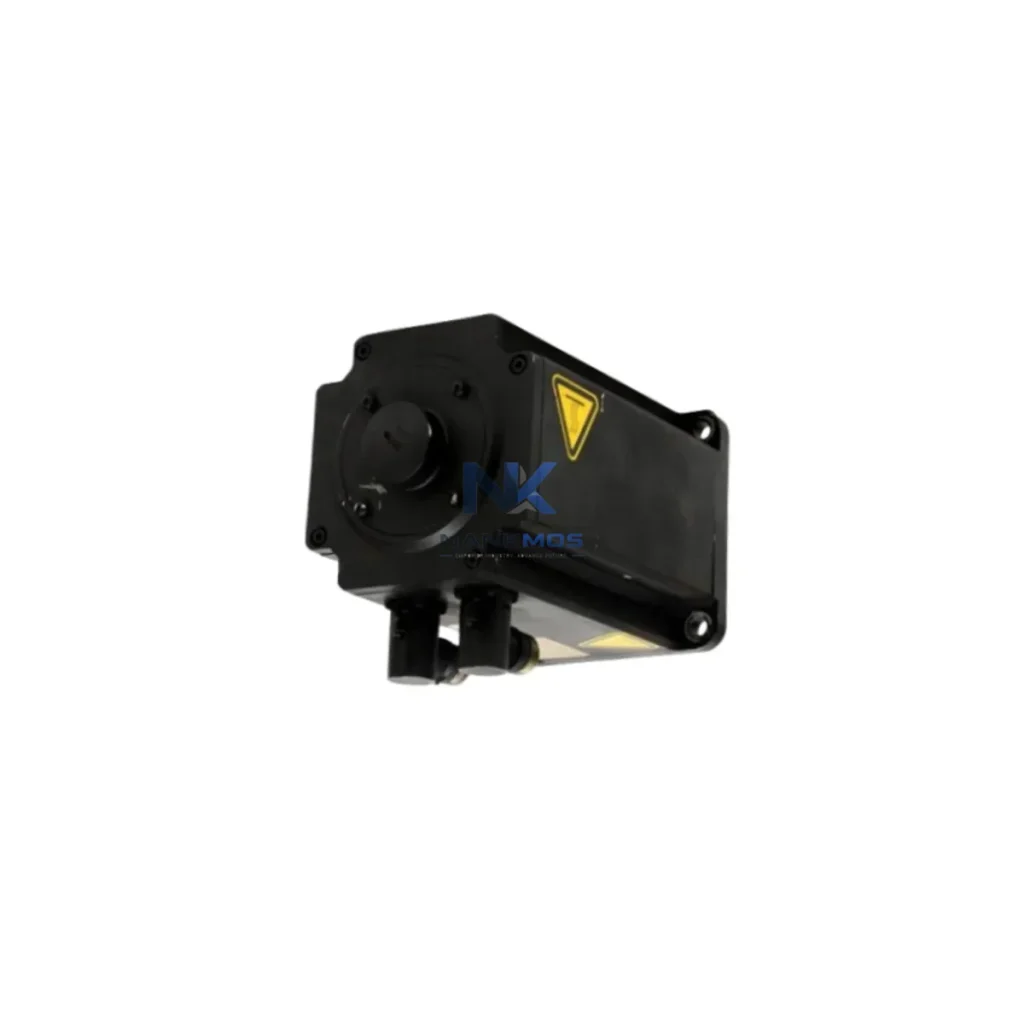
KUKA 00-136-893 1FK7103-5AF81-1SH3-Z is a NANKMOS industrial automation product record Listed under Other series series and Business & Industrial > Automation, Control & Flow Devices. Confirm condition, availability, lead time, compatibility and documentation by email inquiry.
| Manufacturer | KUKA |
|---|---|
| Application | Motion Control & Drive System |
| Part Number / Model | 00-136-893 1FK7103-5AF81-1SH3-Z |
| Compatible System | Confirmed by inquiry |
| Condition Options | To Confirm |
| Module Type | Servo / Drive Module |
| Warranty | 12 Months |
| Packaging | Anti-static Bag / Secure Box |
| Shipping Methods | DHL / FedEx / UPS / Air / Sea |
| Availability | To Confirm |
| Lead Time | To Confirm |
| Documentation | Part number and revision checked before quote |
The KUKA 00-136-893 (1FK7103-5AF81-1SH3-Z) is a high-performance, energy-control servo motor from the KUKA 1FK7 series, engineered for precision motion control and intelligent energy management in modern industrial production environments. Designed to operate within demanding automation architectures, this servo motor delivers exceptional torque density, low rotor inertia, and optimized power consumption — making it a critical component for factories pursuing measurable reductions in energy expenditure and improvements in overall equipment effectiveness (OEE).
Built to integrate seamlessly with KUKA robot controllers and third-party industrial control platforms, the 1FK7103-5AF81-1SH3-Z supports high-dynamic positioning cycles while maintaining thermal stability under continuous load. Its permanent magnet synchronous motor (PMSM) design ensures minimal iron losses and high efficiency across the full operating speed range, directly contributing to reduced heat generation and lower cooling overhead on the production floor.
In a fully integrated smart production line, the KUKA 00-136-893 servo motor does not operate in isolation — it functions as a precision energy node within a broader power-aware automation ecosystem. When paired with a SINAMICS S120 servo drive unit, the 1FK7103-5AF81-1SH3-Z benefits from closed-loop current regulation that dynamically adjusts motor excitation to match actual load demand, eliminating the energy waste associated with fixed-speed or open-loop drive configurations.
At the controller level, KUKA KR C5 robot controllers coordinate motion profiles with real-time feedback from the servo encoder, enabling the system to execute energy-optimized trajectory planning. This means acceleration and deceleration ramps are calculated to minimize peak current draw — a key factor in reducing demand charges on industrial power tariffs. Integration with PROFINET-based PLCs, such as the Siemens S7-1500 series, allows the servo axis to participate in plant-wide energy management routines, including scheduled low-power standby modes during production pauses.
Power monitoring is further enhanced when the 1FK7103-5AF81-1SH3-Z is deployed alongside SENTRON PAC power measurement devices or equivalent power monitoring modules. These instruments capture real-time kWh consumption per axis, enabling energy benchmarking at the machine level. Data from these modules feeds into SCADA systems — such as Siemens WinCC or equivalent industrial HMI platforms — where energy KPIs are visualized and trended for continuous improvement programs.
On the I/O and sensing layer, digital I/O modules from the ET 200SP or similar distributed I/O families relay motor status signals — including thermal warnings, encoder fault flags, and torque saturation alerts — back to the PLC. This real-time feedback loop allows the control system to preemptively reduce cycle speed or redistribute load across multiple servo axes before a thermal shutdown event occurs, preserving both uptime and energy efficiency. Temperature sensors mounted on the motor housing or within the drive cabinet further support predictive thermal management strategies.
Communication between the servo drive, PLC, and higher-level MES or SCADA layers is typically handled via PROFINET or EtherCAT fieldbus protocols, with optional integration through OPC UA gateways for Industry 4.0 data pipelines. This connectivity ensures that energy consumption data from the KUKA 1FK7103-5AF81-1SH3-Z axis is available for analysis alongside production throughput metrics, enabling true energy-per-part calculations that drive lean manufacturing decisions.
Factory energy optimization begins at the drive level, and the KUKA 00-136-893 servo motor is purpose-built to support this objective. Its low-inertia rotor design reduces the energy required to accelerate and decelerate the load during each production cycle, directly lowering the average power draw per part produced. In high-cycle applications — such as pick-and-place robotics, welding positioners, or precision assembly stations — this efficiency gain compounds across thousands of daily cycles into measurable reductions in electricity consumption.
Thermal load management is a critical dimension of production line energy optimization. Excessive heat generation in servo motors not only wastes energy through resistive losses but also accelerates insulation degradation and bearing wear, increasing unplanned downtime. The 1FK7103-5AF81-1SH3-Z addresses this through its high-efficiency winding design and optimized magnetic circuit, which minimizes copper and iron losses at rated operating points. When the drive system is configured with appropriate derating curves and thermal monitoring, the motor maintains stable operation across extended production shifts without requiring oversized cooling infrastructure.
Production line rhythm stability — the consistency of cycle time across all stations — is directly influenced by servo motor performance. Variations in torque delivery or positioning repeatability introduce micro-delays that accumulate into throughput losses. The KUKA 1FK7 series is engineered for high repeatability and stiff dynamic response, ensuring that each axis completes its motion profile within the programmed time window, cycle after cycle. This consistency allows production planners to tighten OEE targets and reduce buffer inventory between stations.
For maintenance teams, the predictive maintenance value of a well-monitored servo axis cannot be overstated. By tracking motor current signatures, vibration trends, and encoder health data through the connected drive and PLC infrastructure, maintenance engineers can identify developing faults — such as bearing degradation or winding insulation breakdown — weeks before they cause a production stoppage. This shift from reactive to predictive maintenance reduces both unplanned downtime and the energy waste associated with running degraded equipment at reduced efficiency.
All KUKA 00-136-893 units supplied by NANKMOS are drawn from verified inventory stock, subjected to pre-shipment functional testing under load conditions, and covered by a 12-month warranty. This ensures that replacement units arrive ready for immediate installation, minimizing the mean time to repair (MTTR) when a servo axis requires servicing on the production floor.
Q1: What energy savings can I expect when replacing an older servo motor with the KUKA 00-136-893 1FK7103-5AF81-1SH3-Z? Actual savings depend on your application duty cycle, load profile, and existing drive configuration. However, upgrading from an older, lower-efficiency servo motor to the 1FK7 series — with its PMSM design and optimized magnetic circuit — typically yields measurable reductions in motor losses, particularly at partial load operating points that dominate most production cycle profiles. When combined with a properly tuned SINAMICS S120 or equivalent servo drive, regenerative braking energy can also be recovered and fed back to the DC bus, further reducing net energy consumption.
Q2: Is the KUKA 1FK7103-5AF81-1SH3-Z compatible with non-KUKA control systems and drives? The 1FK7103-5AF81-1SH3-Z is primarily designed for use with KUKA robot controllers and SINAMICS-family servo drives that support the motor's encoder interface and power connector specifications. Integration with third-party PLC platforms — such as Siemens S7 series or Beckhoff TwinCAT systems — is achievable at the supervisory control level via PROFINET or EtherCAT. For direct drive compatibility with non-SINAMICS drives, engineering verification of the encoder protocol and power stage ratings is recommended before deployment.
Q3: What does the pre-shipment testing process cover, and how does it support my replacement workflow? Every KUKA 00-136-893 unit dispatched by NANKMOS undergoes pre-shipment functional testing that verifies encoder signal integrity, winding resistance balance, insulation resistance, and no-load run performance. This process ensures that the unit you receive is electrically and mechanically sound, reducing the risk of installation failures and the associated downtime costs. Test records are available upon request to support your incoming inspection and maintenance documentation requirements.
Q4: What does the 12-month warranty cover, and what is the stock availability for this SKU? The 12-month warranty covers manufacturing defects and functional failures under normal operating conditions from the date of shipment. It does not cover damage resulting from incorrect installation, overvoltage events, or operation outside the motor's rated parameters. NANKMOS maintains inventory stock of the KUKA 00-136-893 to support rapid replacement requirements for production-critical applications. Lead times and current stock levels can be confirmed by contacting our team directly. For urgent requirements, expedited dispatch options are available.
Functional Inspection100% tested on professional platforms to ensure stable performance.
 Anti-static Packaging
Modules are packed in anti-static bags to prevent electrostatic damage.
 Secure Export Packing
Cushion protection and strong cartons ensure safe transportation.
 Worldwide Shipping
Global logistics network supports air, sea and express delivery.
 Documentation Check
Part number, revision and compatibility verified before shipment.
 After-sales Support
Professional technical support to help resolve your issues.