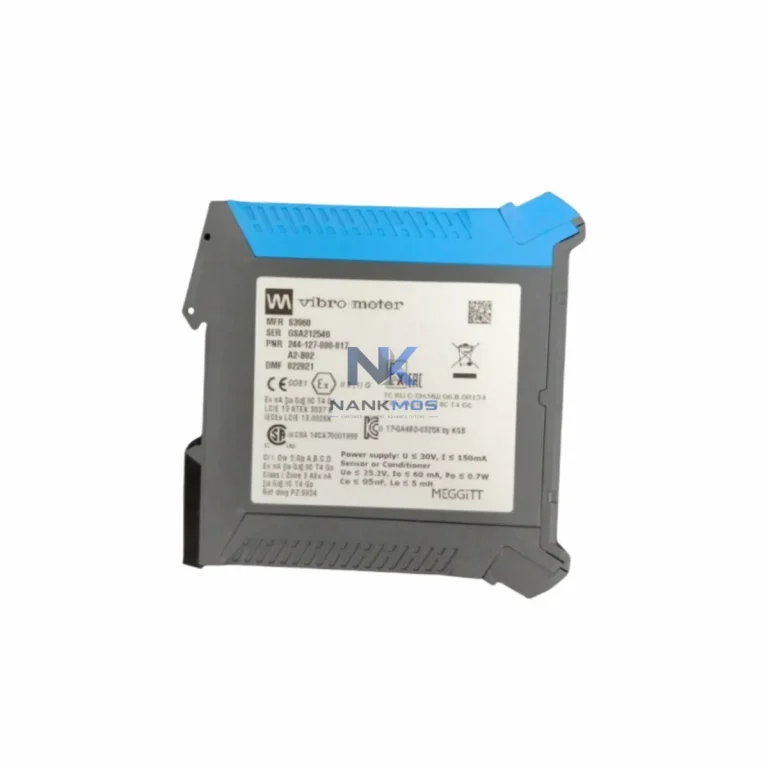
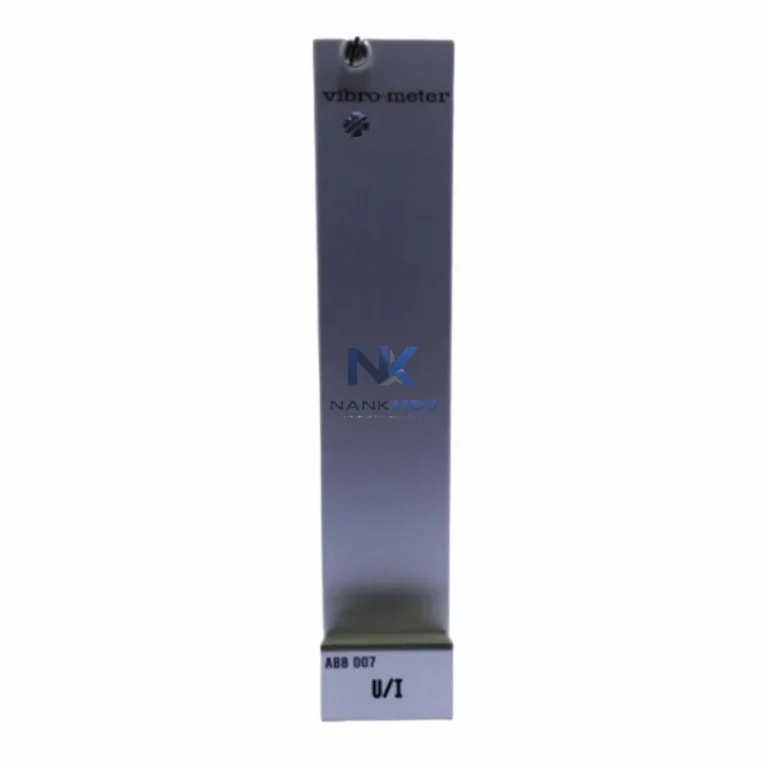
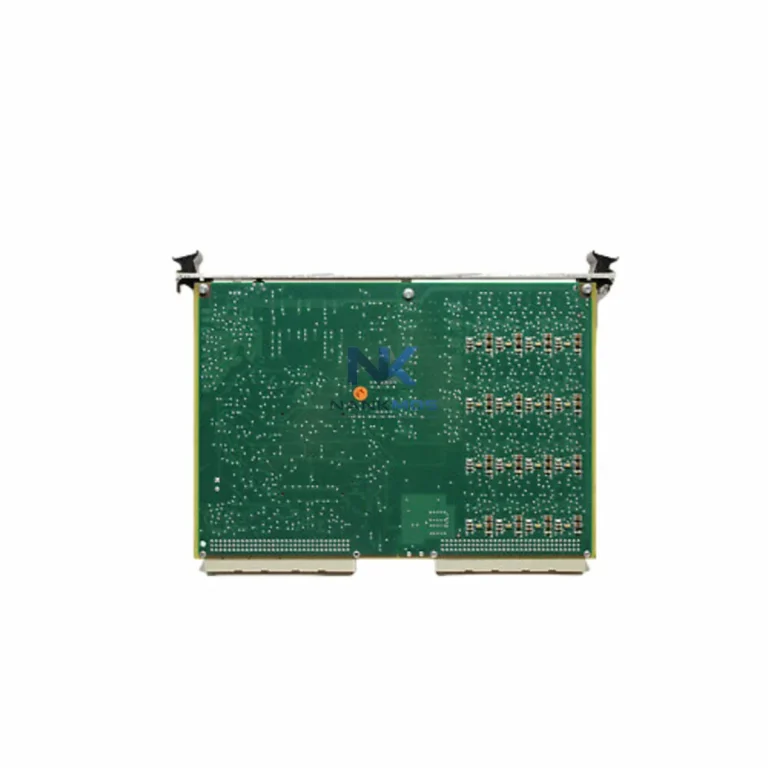
Functional Inspection
100% tested on professional platforms to ensure stable performance.
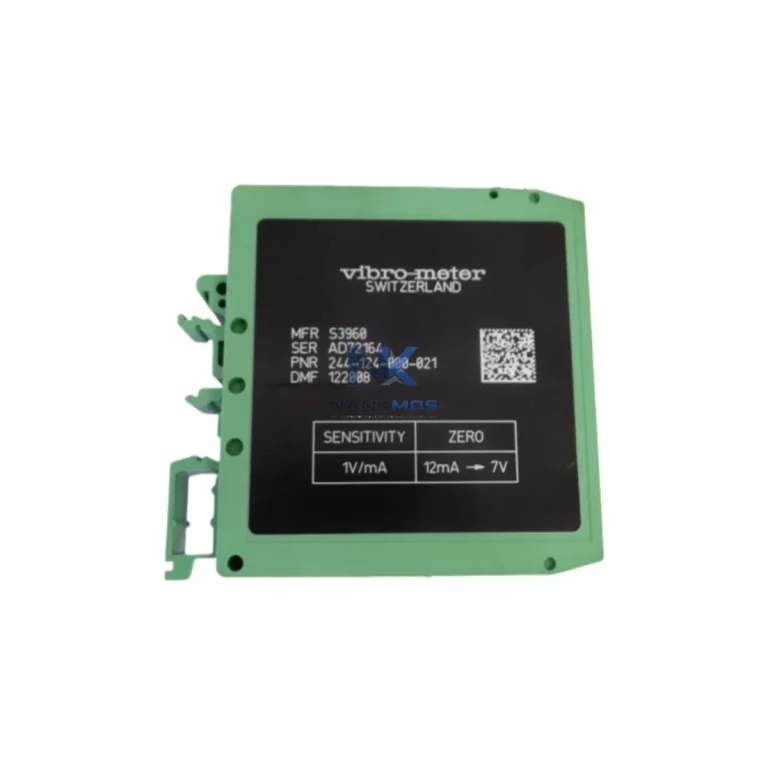
Vibro-Meter GSI124 244-124-000-021 is a NANKMOS industrial automation product record Listed under Other series series and Sensors. Confirm condition, availability, lead time, compatibility and documentation by email inquiry.
Brand names are used for identification only.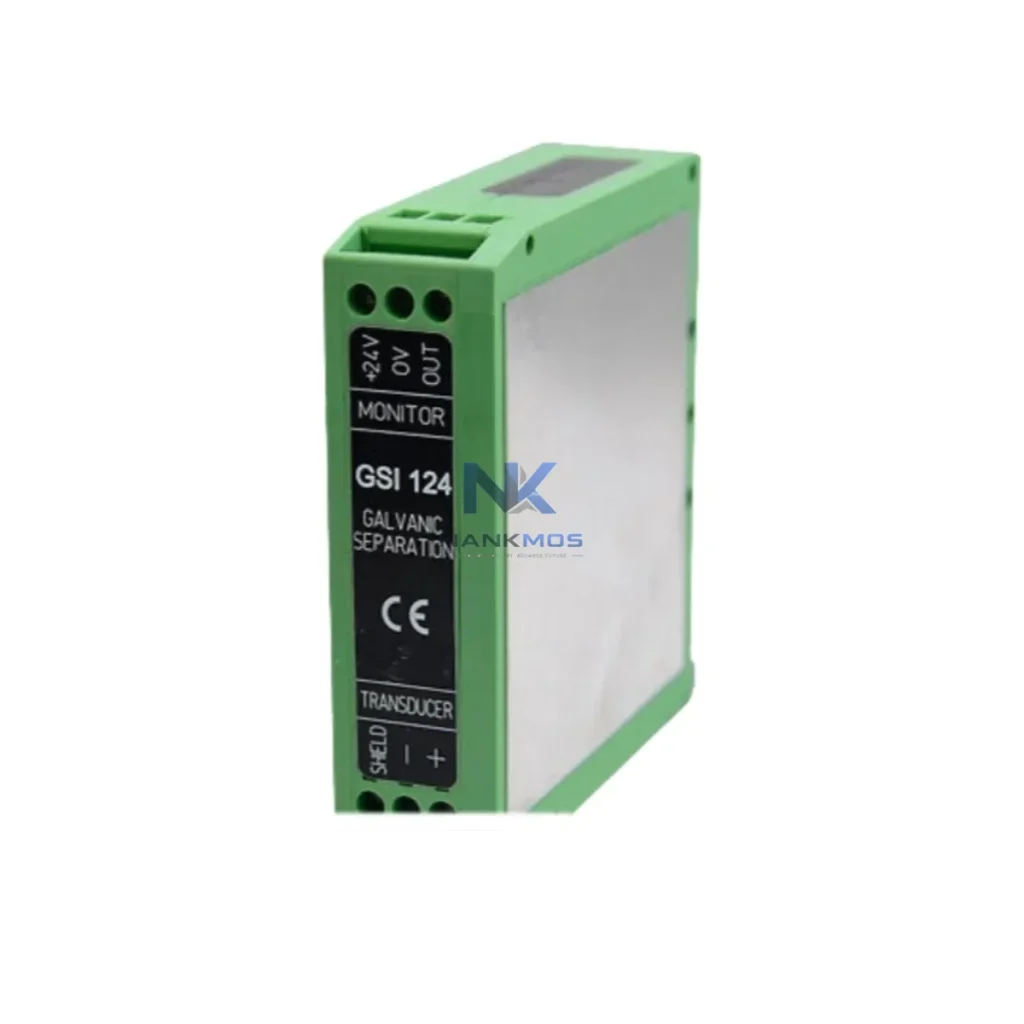
Vibro-Meter GSI124 244-124-000-021 is a NANKMOS industrial automation product record Listed under Other series series and Sensors. Confirm condition, availability, lead time, compatibility and documentation by email inquiry.
| Manufacturer | Vibro-Meter |
|---|---|
| Application | Turbine & Condition Monitoring |
| Part Number / Model | GSI124 244-124-000-021 |
| Compatible System | Confirmed by inquiry |
| Condition Options | To Confirm |
| Module Type | Monitoring Module |
| Warranty | 12 Months |
| Packaging | Anti-static Bag / Secure Box |
| Shipping Methods | DHL / FedEx / UPS / Air / Sea |
| Availability | To Confirm |
| Lead Time | To Confirm |
| Documentation | Part number and revision checked before quote |
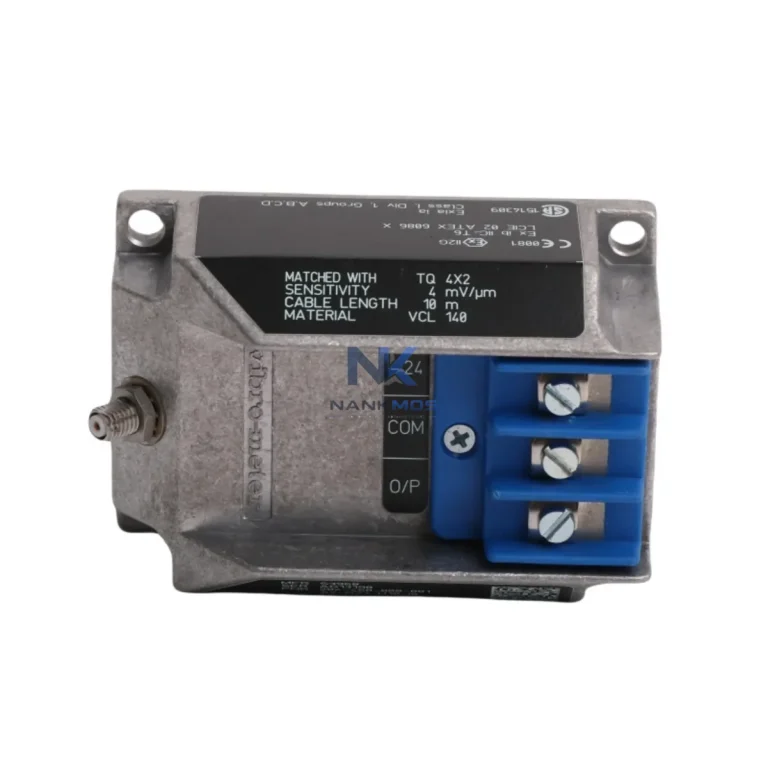
The Vibro-Meter GSI124 244-124-000-021 is a precision vibration sensor engineered for continuous energy-aware monitoring of rotating machinery in demanding industrial environments. Designed as part of the Vibro-Meter GSI Series, this sensor delivers real-time vibration data that enables production teams to optimize energy consumption, reduce thermal load, and maintain stable machine throughput across power generation, petrochemical, oil & gas, water treatment, and marine propulsion applications. With in-stock availability, pre-shipment testing, and a 12-month warranty, the GSI124 244-124-000-021 is a reliable foundation for any energy-conscious automation strategy.
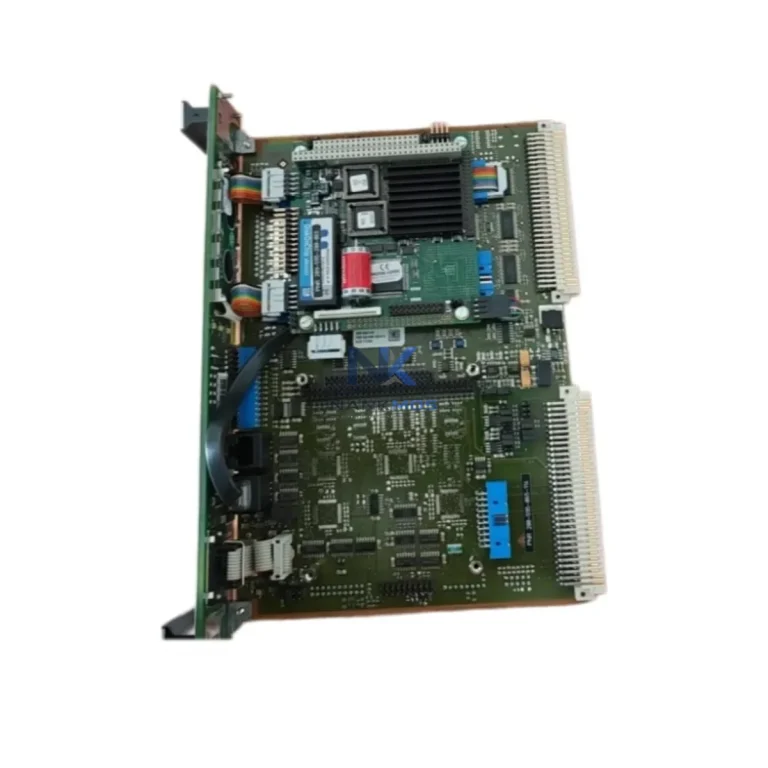
At its core, the GSI124 244-124-000-021 functions as a high-sensitivity seismic vibration transducer that converts mechanical vibration into a proportional electrical signal. This signal is fed directly into condition monitoring platforms such as the Vibro-Meter VM600 rack-based monitoring system, where it is processed alongside data from complementary channels including temperature, speed, and displacement. By continuously tracking vibration amplitude and frequency, the sensor enables early detection of imbalance, misalignment, bearing wear, and resonance — all of which are primary drivers of excess energy consumption and unplanned downtime in rotating equipment.
The GSI124 244-124-000-021 integrates seamlessly into a layered industrial automation architecture. In a typical smart production line, the sensor's analog output is wired to a Vibro-Meter VM600 MPC4 signal conditioning card, which digitizes and normalizes the vibration signal before passing it upstream to the plant's DCS or SCADA system. When paired with a Siemens S7-1500 PLC or equivalent controller, the vibration data can be used to trigger adaptive speed adjustments on a Danfoss FC302 variable frequency drive (VFD), reducing motor speed — and therefore energy draw — during low-load periods identified by stable vibration signatures.
For facilities running servo-driven axes, the GSI124 data stream can be cross-referenced with feedback from a Beckhoff AX5000 servo drive to detect mechanical resonance early and adjust motion profiles before energy waste escalates into thermal damage. On the power monitoring side, integration with a Schneider Electric PowerLogic PM8000 power meter allows engineers to correlate vibration events with real-time kWh consumption, building a precise energy baseline for each machine asset. This correlation is invaluable for ISO 50001 energy management reporting and for identifying which machines are consuming disproportionate power relative to their mechanical output.
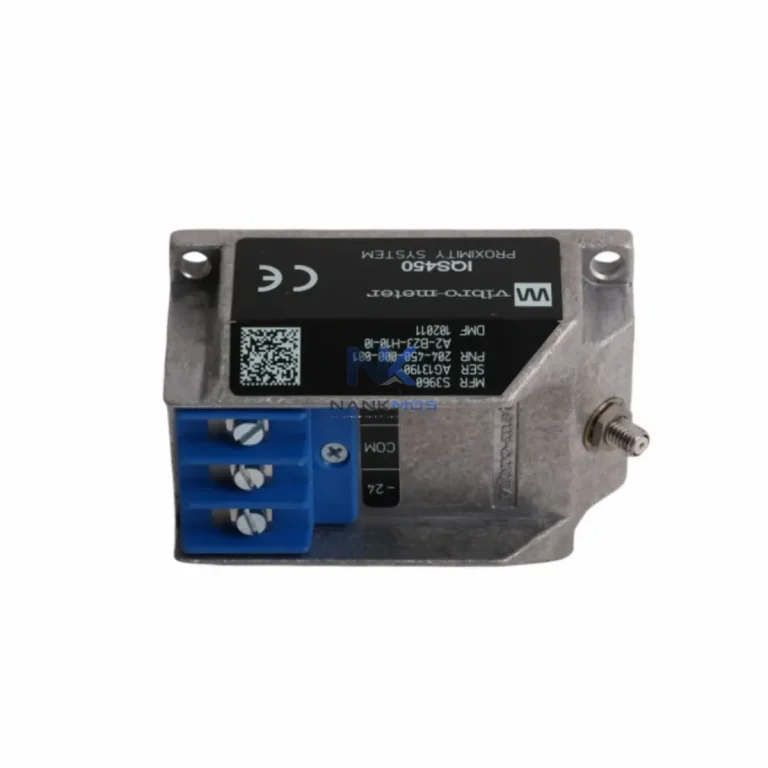
The sensor also works alongside Vibro-Meter IQS450 proximity transducer systems for shaft displacement monitoring, providing a complementary view of rotor dynamics that neither sensor alone can deliver. Combined I/O from both sensor types is aggregated in the VM600 rack and forwarded via OPC-UA or Modbus TCP to the plant historian, enabling long-term trend analysis and energy KPI dashboards on Wonderware InTouch HMI or equivalent visualization platforms. This closed-loop data flow — from physical vibration through signal conditioning, PLC logic, VFD response, and HMI visualization — forms the backbone of a power-aware automation strategy that measurably reduces idle energy consumption and extends mean time between failures (MTBF).
Undetected mechanical degradation is one of the most significant hidden costs in industrial energy budgets. A bearing running with early-stage spalling can increase motor current draw by 3–8% before any audible symptom appears. The GSI124 244-124-000-021, deployed as part of a continuous online monitoring network, catches these signatures in their infancy — allowing maintenance teams to schedule corrective action during planned downtime windows rather than reacting to catastrophic failures that halt entire production lines.
In high-throughput environments such as compressor trains, pump stations, and turbine halls, the GSI Series sensor contributes directly to production line rhythm stability. By feeding real-time vibration health data into the plant's energy management system (EMS), operators can maintain optimal drive loading across all assets simultaneously, avoiding the energy spikes that occur when multiple machines are simultaneously stressed beyond their design envelope. This load-balancing capability, enabled by accurate vibration telemetry, can reduce peak demand charges and improve overall plant power factor.
Thermal load reduction is another measurable benefit. Excessive vibration generates heat in bearings, seals, and windings — heat that must be removed by cooling systems that themselves consume energy. By keeping vibration within design limits through early intervention, the GSI124 244-124-000-021 indirectly reduces the duty cycle of cooling fans, heat exchangers, and HVAC systems serving the machine hall. Over a 12-month operating cycle, this cascading efficiency gain can represent a meaningful reduction in total facility energy expenditure.
All units are pre-shipment tested against factory calibration standards before dispatch, ensuring that the sensor arrives ready for immediate installation and commissioning. The 12-month warranty covers manufacturing defects and provides assurance of long-term measurement integrity — a critical requirement for facilities where sensor drift could lead to missed alarms and unplanned outages.
Q1: How does the GSI124 244-124-000-021 contribute to measurable energy savings? By providing continuous, high-resolution vibration data, the sensor enables predictive maintenance scheduling that eliminates energy-wasting mechanical degradation before it escalates. Facilities using online vibration monitoring typically report 5–15% reductions in maintenance-related energy losses and significant reductions in unplanned downtime costs.
Q2: Which monitoring systems and communication protocols is the GSI124 compatible with? The GSI124 244-124-000-021 is designed for use with the Vibro-Meter VM600 rack-based monitoring platform and is compatible with IQS450 signal conditioning systems. Its analog output can be interfaced to any DCS, PLC, or SCADA system supporting 4–20 mA inputs. Digital integration is achievable via Modbus RTU/TCP or OPC-UA gateways, making it suitable for both legacy and Industry 4.0 architectures.
Q3: Can the GSI124 replace other GSI Series sensors, and what is the recommended replacement process? The GSI124 244-124-000-021 is a direct replacement candidate for other GSI Series seismic sensors with equivalent output specifications. Before replacement, verify the mounting configuration, cable connector type, and sensitivity range against the existing installation. All replacement units are pre-shipment tested and include calibration documentation to simplify re-commissioning and baseline re-establishment.
Q4: What does the 12-month warranty cover, and what is the typical lead time for in-stock units? The 12-month warranty covers manufacturing defects and measurement performance deviations from published specifications. In-stock units are available for immediate dispatch following order confirmation. Pre-shipment testing is performed on every unit, and test records are available upon request to support incoming inspection and quality assurance processes.
Functional Inspection100% tested on professional platforms to ensure stable performance.
 Anti-static Packaging
Modules are packed in anti-static bags to prevent electrostatic damage.
 Secure Export Packing
Cushion protection and strong cartons ensure safe transportation.
 Worldwide Shipping
Global logistics network supports air, sea and express delivery.
 Documentation Check
Part number, revision and compatibility verified before shipment.
 After-sales Support
Professional technical support to help resolve your issues.