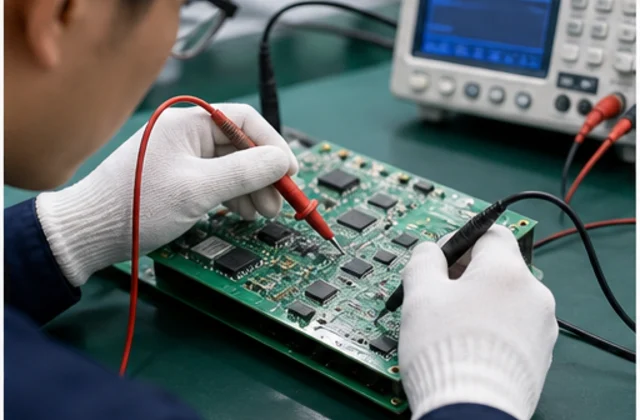
 Functional Inspection
100% tested on professional platforms to ensure stable performance.
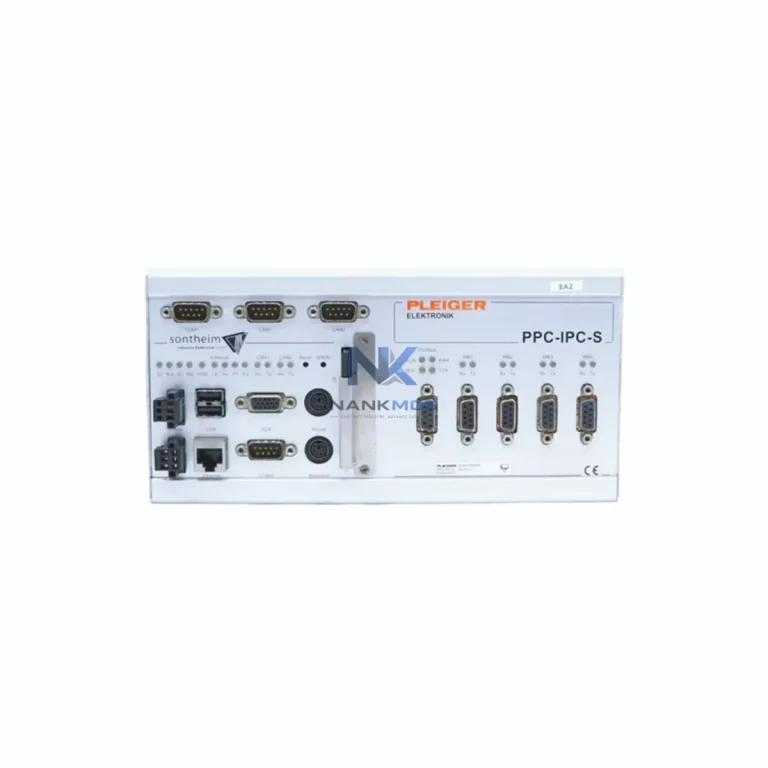
Pleiger PPC-IPC-S is a NANKMOS industrial automation product record Listed under Other series series and Business & Industrial > Automation, Control & Flow Devices > Programmable Logic Controllers. Confirm condition, availability, lead time, compatibility and documentation by email inquiry.
Brand names are used for identification only.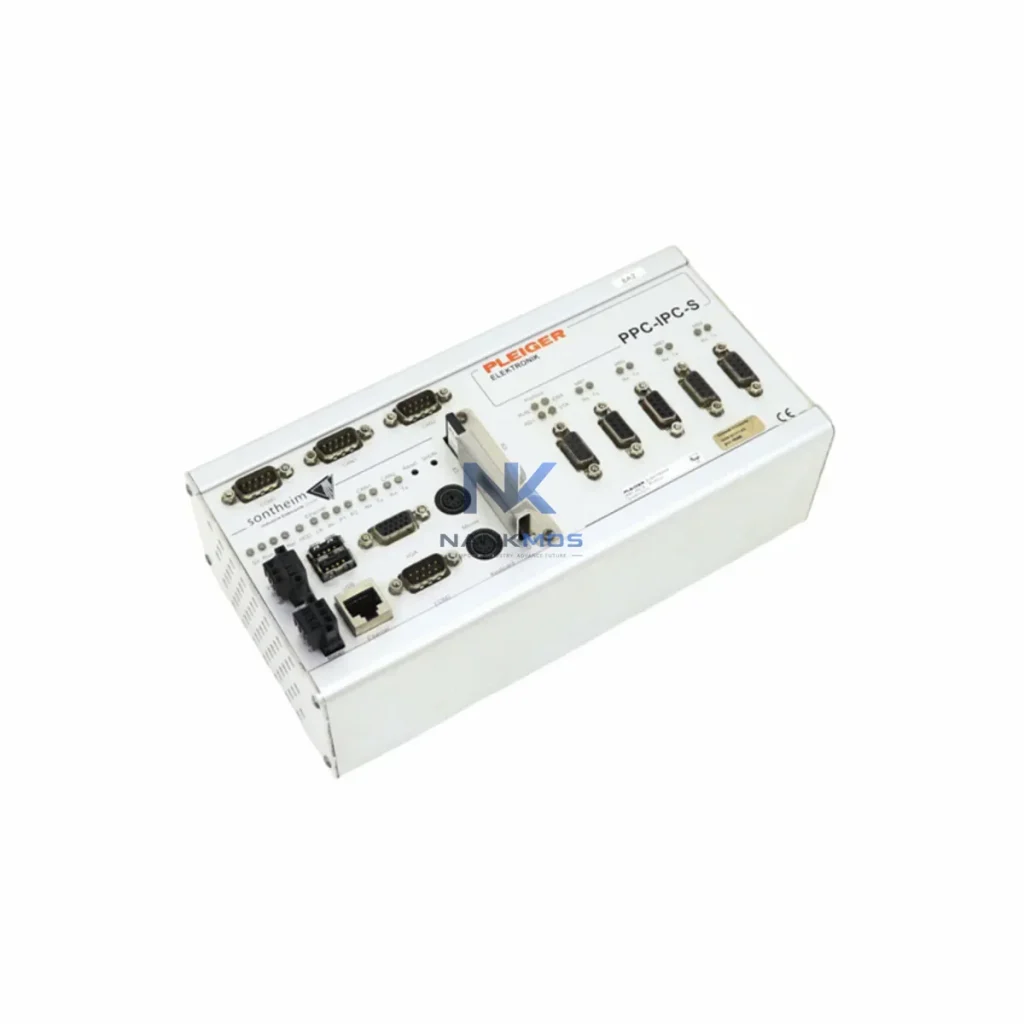
Pleiger PPC-IPC-S is a NANKMOS industrial automation product record Listed under Other series series and Business & Industrial > Automation, Control & Flow Devices > Programmable Logic Controllers. Confirm condition, availability, lead time, compatibility and documentation by email inquiry.
| Manufacturer | Pleiger |
|---|---|
| Application | Controller Processing & System Control |
| Part Number / Model | PPC-IPC-S |
| Compatible System | Confirmed by inquiry |
| Condition Options | To Confirm |
| Module Type | Controller / CPU Module |
| Warranty | 12 Months |
| Packaging | Anti-static Bag / Secure Box |
| Shipping Methods | DHL / FedEx / UPS / Air / Sea |
| Availability | To Confirm |
| Lead Time | To Confirm |
| Documentation | Part number and revision checked before quote |
The Pleiger PPC-IPC-S is a dedicated flash card module engineered for the Pleiger PPC Series Industrial PC (IPC) platform. Designed to operate within energy-conscious automation architectures, this module delivers reliable non-volatile storage for control programs, configuration data, and runtime parameters — all while minimising the power draw and thermal overhead associated with conventional rotating media. In smart factory environments where every watt counts, the PPC-IPC-S contributes directly to measurable reductions in idle-state energy consumption and supports the leaner, faster boot cycles that modern production lines demand.
As industrial facilities transition toward ISO 50001-aligned energy management frameworks, the role of IPC-resident storage modules has expanded beyond simple data retention. The PPC-IPC-S supports deterministic read/write performance that keeps the host IPC's CPU load predictable, reducing the risk of thermal throttling events that silently inflate energy consumption during peak production windows. When paired with Pleiger's PPC Series IPC mainboard and its integrated watchdog and power-management subsystems, the module enables the IPC to execute controlled shutdown and resume sequences — a critical capability for demand-response energy strategies in facilities operating under time-of-use tariff structures.
The PPC-IPC-S does not operate in isolation — its value is realised within a tightly integrated control architecture. In a typical smart production line, the Pleiger PPC Series IPC acts as the supervisory compute node, coordinating data exchange between field-level devices and higher-level management systems. The flash card module stores the IPC's operating system image, PLC runtime environment, and application-layer configuration, ensuring that the system can recover from a power interruption without manual intervention and without the energy penalty of a full cold-start sequence.
At the field level, the IPC communicates with Siemens S7-300 or S7-400 series PLCs via PROFIBUS DP or PROFINET IO, collecting real-time process data from distributed I/O modules such as the Siemens ET 200SP or ET 200M. This data stream feeds into energy monitoring logic that tracks motor load profiles, compressor duty cycles, and conveyor drive utilisation. Variable frequency drives (VFDs) — for example, units from the ABB ACS880 series or Siemens SINAMICS G120 — receive speed reference signals derived from the IPC's energy optimisation algorithms, trimming motor output to match actual process demand rather than running at fixed rated speed.
Power quality and consumption data are captured by dedicated power monitoring modules such as the Schneider Electric PowerLogic ION7650 or the Siemens SENTRON PAC3200, which feed kWh and demand figures back to the IPC over Modbus TCP or IEC 61850. The PPC-IPC-S ensures that the IPC retains all calibration offsets, communication parameters, and historian pointers for these instruments across power cycles, eliminating the re-commissioning overhead that would otherwise consume technician time and delay production resumption. HMI panels — such as the Weintek MT8000 series or Siemens SIMATIC TP700 Comfort — display live energy dashboards sourced from the IPC, giving operators immediate visibility into load trends without requiring a separate SCADA workstation query.
At the network layer, the IPC's communication stack — stored and executed from the PPC-IPC-S — supports OPC-UA server functionality, enabling seamless data publication to MES and ERP platforms. This integration allows production schedulers to align high-energy process steps with off-peak tariff windows, a strategy that can reduce energy costs by 8–15% in continuous-process environments without any change to physical equipment. Sensor data from IO-Link masters connected to the PLC's I/O backplane — including temperature, vibration, and current transducers — is aggregated by the IPC and used to build predictive maintenance models that prevent the energy spikes associated with degraded bearings, clogged filters, and misaligned couplings.
Industrial production lines lose energy in three primary ways: inefficient motor loading, unplanned downtime that forces cold restarts, and poor visibility into real-time consumption. The Pleiger PPC-IPC-S addresses all three vectors by ensuring the host IPC maintains continuous, reliable operation as the central intelligence node of the energy management architecture.
By eliminating the mechanical failure modes of hard-disk-based storage, the PPC-IPC-S reduces the probability of IPC-induced unplanned downtime — events that, in automotive or food-processing lines, can cost thousands of dollars per minute in lost throughput and wasted energy from equipment that continues to draw power while waiting for the control system to recover. The module's non-volatile flash architecture means that the IPC's last-known-good state is preserved even through abrupt power loss events, allowing the system to resume production at the correct setpoints without operator intervention.
From a thermal management perspective, flash-based storage generates significantly less heat than spinning media, reducing the IPC enclosure's internal temperature rise. In cabinet-mounted installations where the IPC shares an enclosure with PLCs, communication modules, and power supplies, lower thermal load translates directly into reduced cooling demand — whether from cabinet air conditioners or fan units — contributing to a measurable reduction in auxiliary energy consumption. Over a 12-month operating cycle, this thermal efficiency gain compounds with the drive optimisation and demand-response benefits described above to deliver a meaningful improvement in the facility's overall energy intensity metric (kWh per unit of output).
Production line takt time stability is another dimension where the PPC-IPC-S delivers value. Consistent IPC storage performance ensures that PLC scan cycles, HMI refresh rates, and SCADA polling intervals remain within their designed tolerances, preventing the micro-delays that accumulate into line imbalance and buffer overflow events. Stable takt times reduce the need for compensatory speed bursts — which are disproportionately energy-intensive — and support the lean production philosophy of producing exactly what is needed, when it is needed, at the lowest possible energy cost.
All units are function-tested before shipment, held in stock for immediate dispatch, and covered by a 12-Month Warranty from the date of shipment. NANKMOS maintains verified inventory of the PPC-IPC-S to support both planned maintenance schedules and emergency replacement requirements, minimising the risk of extended downtime due to component unavailability.
Q1: How does the PPC-IPC-S contribute to measurable energy savings on a production line? The module enables the Pleiger PPC Series IPC to execute demand-response shutdown and resume sequences, supports VFD speed optimisation algorithms, and eliminates the thermal overhead of rotating storage media. Together, these capabilities reduce both direct IPC power consumption and the auxiliary cooling load in the control cabinet, contributing to a lower facility-wide energy intensity figure.
Q2: Which control systems and communication protocols is the PPC-IPC-S compatible with? The PPC-IPC-S is designed exclusively for the Pleiger PPC Series IPC platform. The IPC itself supports PROFIBUS DP, PROFINET IO, Modbus TCP, and OPC-UA, making it compatible with a wide range of PLCs, VFDs, power monitoring modules, HMI panels, and SCADA systems from major vendors including Siemens, ABB, Schneider Electric, and Weintek.
Q3: Can the PPC-IPC-S be used as a direct replacement for a failed or end-of-life flash card in an existing PPC Series IPC installation? Yes. The PPC-IPC-S is the correct replacement module for PPC Series IPC units that use this flash card form factor. Before replacement, back up the existing IPC configuration and program files if the original module is still partially readable. After installation, restore the backup to return the IPC to its last-known-good operational state. Contact NANKMOS technical support if you require guidance on the backup and restore procedure.
Q4: What does the 12-Month Warranty cover, and how is the testing process conducted? Every PPC-IPC-S unit shipped by NANKMOS is function-tested prior to dispatch to verify read/write integrity and correct initialisation behaviour. The 12-Month Warranty covers manufacturing defects and functional failures under normal operating conditions from the date of shipment. Warranty claims are processed directly through NANKMOS; contact [email protected] with your order reference and a description of the observed fault to initiate a return or replacement.
Functional Inspection100% tested on professional platforms to ensure stable performance.
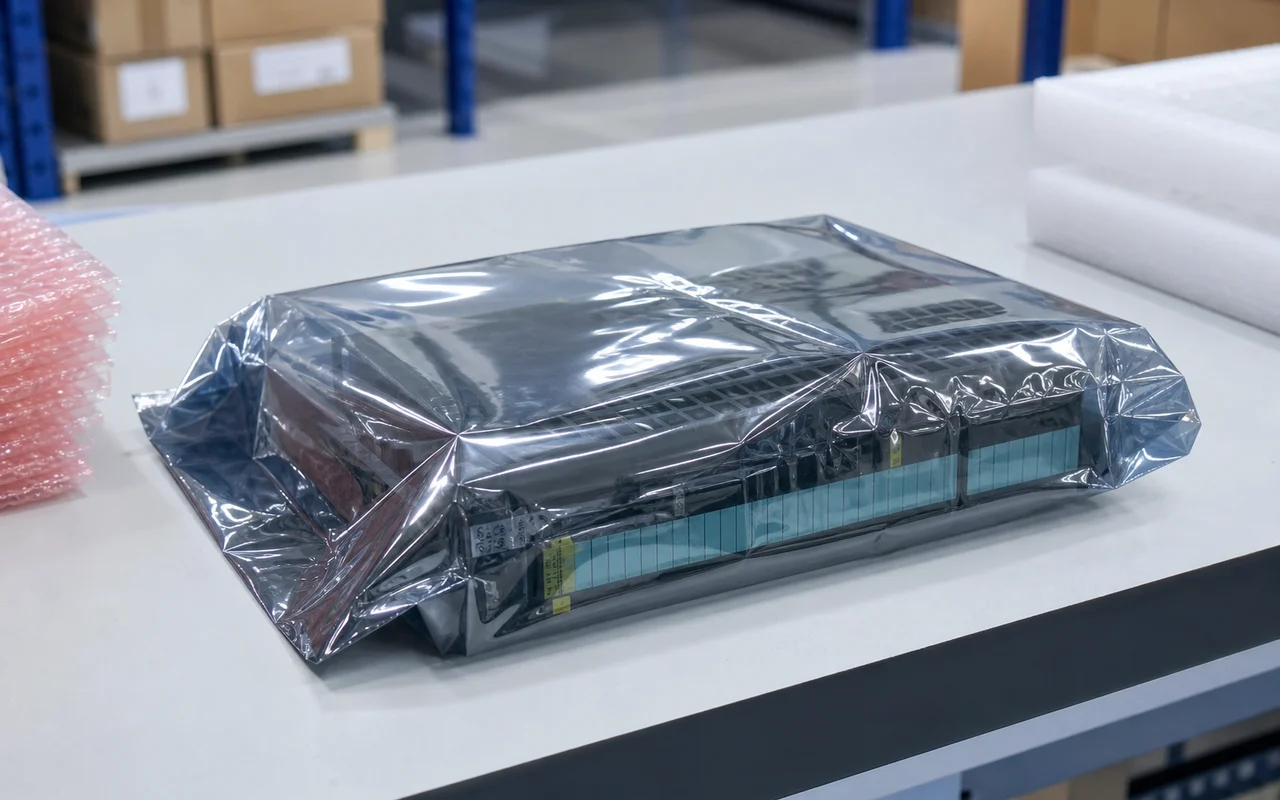 Anti-static Packaging
Modules are packed in anti-static bags to prevent electrostatic damage.
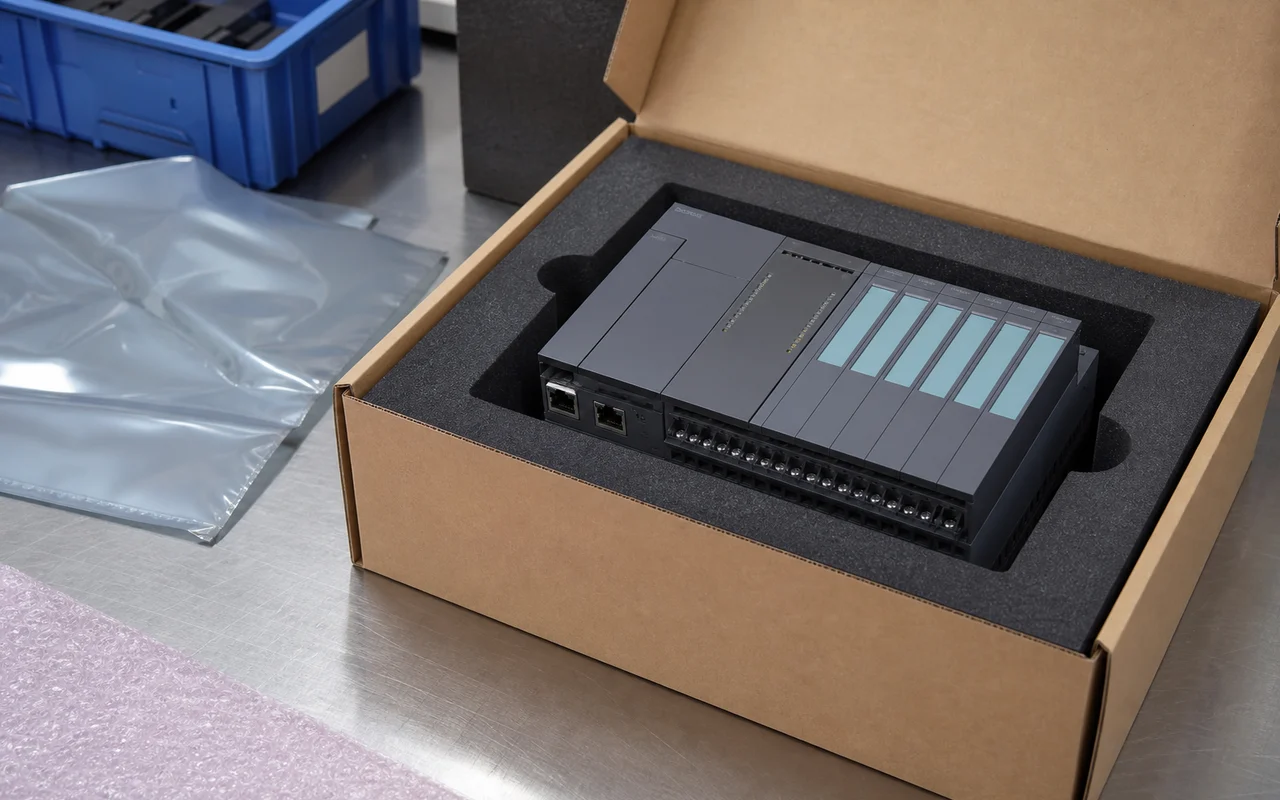 Secure Export Packing
Cushion protection and strong cartons ensure safe transportation.
 Worldwide Shipping
Global logistics network supports air, sea and express delivery.
 Documentation Check
Part number, revision and compatibility verified before shipment.
 After-sales Support
Professional technical support to help resolve your issues.