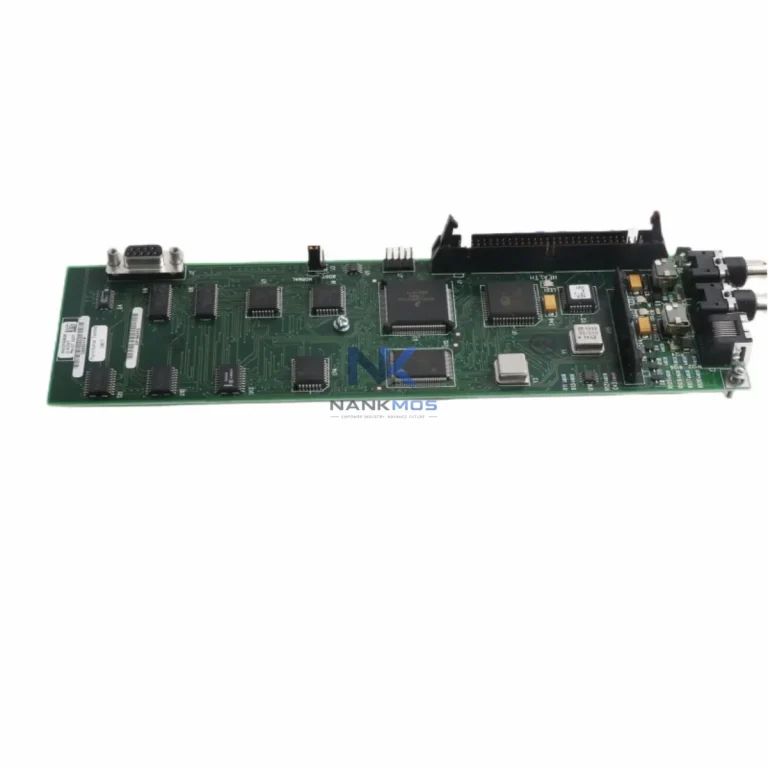
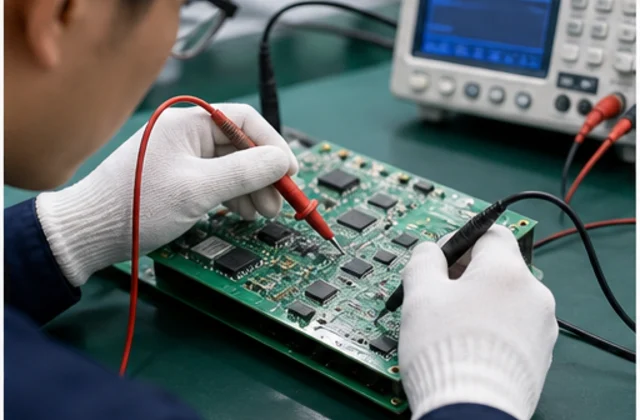
 Functional Inspection
100% tested on professional platforms to ensure stable performance.
HIWIN QSPT0400 TAB217-1/PC2-LF, 2L08-050043-11 2L81-050043-11 0021-09914 is a NANKMOS industrial automation product record Listed under Other series series and Business & Industrial > Automation, Control & Flow Devices. Confirm condition, availability, lead time, compatibility and documentation by email inquiry.
Brand names are used for identification only.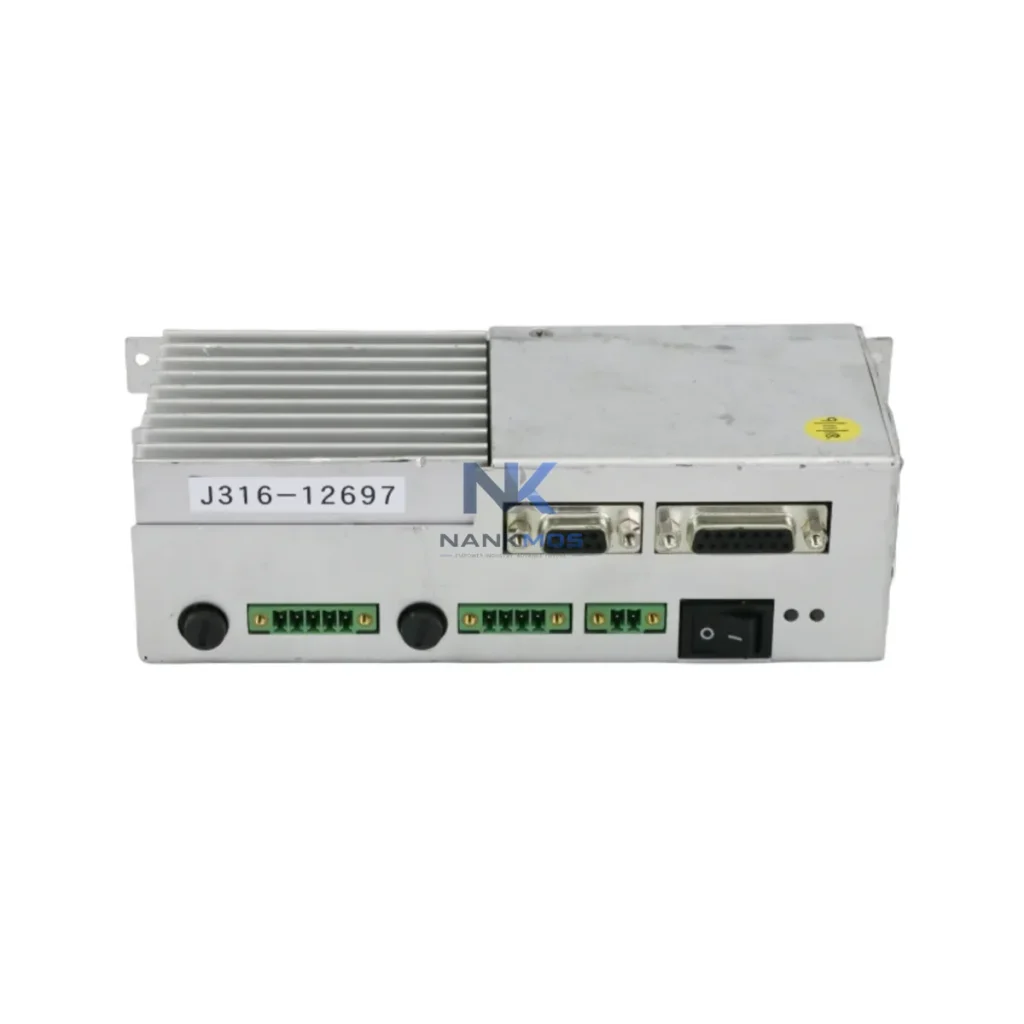
HIWIN QSPT0400 TAB217-1/PC2-LF, 2L08-050043-11 2L81-050043-11 0021-09914 is a NANKMOS industrial automation product record Listed under Other series series and Business & Industrial > Automation, Control & Flow Devices. Confirm condition, availability, lead time, compatibility and documentation by email inquiry.
| Manufacturer | HIWIN |
|---|---|
| Application | Industrial Automation Maintenance |
| Part Number / Model | QSPT0400 TAB217-1/PC2-LF, 2L08-050043-11 2L81-050043-11 0021-09914 |
| Compatible System | Confirmed by inquiry |
| Condition Options | To Confirm |
| Module Type | Automation, Control & Flow Devices |
| Warranty | 12 Months |
| Packaging | Anti-static Bag / Secure Box |
| Shipping Methods | DHL / FedEx / UPS / Air / Sea |
| Availability | To Confirm |
| Lead Time | To Confirm |
| Documentation | Part number and revision checked before quote |
The HIWIN QSPT0400 is a precision-engineered thermal control unit from HIWIN's QSPT Series, purpose-built to regulate spindle and axis temperatures in high-duty CNC machining centers, semiconductor fabrication equipment, and smart production lines. By maintaining stable thermal equilibrium across linear guideways, ball screws, and spindle bearings, the QSPT0400 directly reduces energy waste caused by thermal expansion compensation cycles, minimizes unplanned downtime, and supports continuous high-efficiency operation across multi-shift manufacturing environments.
In modern energy-aware factories, thermal drift is one of the most overlooked sources of hidden energy loss. When machine tools operate outside their thermal design window, CNC controllers must issue frequent compensation commands, servo drives work harder to maintain positional accuracy, and cooling infrastructure runs at elevated capacity. The HIWIN QSPT0400 addresses this at the source — by actively stabilizing the thermal state of the machine's most critical mechanical interfaces, it reduces the corrective workload placed on the entire drive and control chain.
The HIWIN QSPT0400 does not operate in isolation — it is most effective when integrated into a coordinated automation architecture. In a typical smart machining cell, the QSPT0400 works alongside a Mitsubishi Electric MELSEC iQ-R Series PLC that monitors machine state and triggers thermal control sequences based on spindle load feedback. The PLC communicates via CC-Link IE Field to a distributed I/O rack, where digital output modules relay enable signals to the QSPT0400's pump and fan circuits.
On the drive side, a FANUC αi Series spindle drive or Siemens SINAMICS S120 servo drive manages motor torque and speed. When the QSPT0400 maintains stable bearing temperatures, these drives operate with lower thermal derating margins, sustaining rated output without triggering protective current reduction. This directly translates to more consistent cutting performance and reduced cycle-to-cycle variation — a measurable gain in production line throughput.
Power quality at the machine level is monitored by a Schneider Electric PowerLogic PM5000 Series power meter, which captures real-time kW consumption, power factor, and harmonic distortion data. When the QSPT0400 reduces the frequency of thermal compensation pauses, the power meter records a measurable reduction in reactive power demand during those intervals. This data feeds into the plant's Ignition SCADA energy dashboard, enabling energy managers to correlate thermal stability with actual electricity cost savings.
At the operator interface level, a Weintek cMT Series HMI displays QSPT0400 operating status — coolant temperature, flow rate, and alarm states — alongside spindle load and axis position data from the CNC controller. Maintenance teams use this consolidated view to identify early signs of coolant degradation or pump wear before they escalate into unplanned stops. A Keyence FD-Q Series flow sensor installed in the coolant circuit provides real-time flow confirmation, with its output wired to a spare digital input on the I/O module for PLC-level fault detection.
For facilities running HIWIN HG Series linear guideways and HIWIN R Series ball screws on the same machine, the QSPT0400 is the natural thermal management complement — it is engineered to the same dimensional and performance standards as HIWIN's mechanical components, ensuring that the thermal control strategy aligns with the mechanical design intent of the axis system.
Thermal instability in machine tools creates a cascade of energy inefficiencies that extend well beyond the spindle itself. When bearing temperatures rise unevenly, the CNC controller compensates by issuing micro-corrections to axis positions — each correction requiring servo drive activity, encoder feedback processing, and control loop computation. Over a full production shift, these micro-corrections accumulate into measurable additional energy consumption and accelerated mechanical wear.
The HIWIN QSPT0400 interrupts this cascade at its origin. By circulating temperature-controlled coolant through the spindle housing and, where applicable, through ball screw nut cooling circuits, it holds the machine's thermal state within a narrow band regardless of ambient temperature fluctuations or varying spindle duty cycles. The result is a machine that requires fewer compensatory interventions, runs its servo drives at lower average corrective torque, and places less demand on the facility's central chiller or cooling tower infrastructure.
From a production line rhythm perspective, thermal stability means fewer mid-batch pauses for warm-up cycles or compensation re-calibration. In high-mix, low-volume environments where setup time is already a significant fraction of total cycle time, eliminating thermally-induced pauses can recover 3–8% of available spindle time per shift. In high-volume, long-run applications, the benefit manifests as tighter dimensional consistency across the batch, reducing scrap rates and the energy embedded in scrapped parts.
Predictive maintenance integration further amplifies these gains. When the QSPT0400's coolant temperature trend data is logged by the SCADA system over weeks and months, deviations from the established baseline become early indicators of pump wear, coolant contamination, or heat exchanger fouling. Addressing these issues during planned maintenance windows — rather than after a thermal fault triggers an emergency stop — preserves production schedule integrity and avoids the energy penalty of unplanned restart sequences.
All HIWIN QSPT0400 units supplied by NANKMOS are sourced from authorized HIWIN distribution channels, held in climate-controlled inventory, and subjected to functional outgoing inspection prior to shipment. Each unit is covered by a 12-month warranty against manufacturing defects under normal operating conditions, with technical support available for installation and commissioning guidance.
Q1: How does the HIWIN QSPT0400 contribute to measurable energy savings on a production line? The QSPT0400 reduces the frequency and magnitude of thermal compensation cycles issued by the CNC controller. Fewer compensation events mean lower average servo drive corrective load, reduced chiller runtime, and more consistent spindle utilization. In practice, facilities report reduced reactive power demand and improved OEE scores after integrating active spindle thermal control.
Q2: Is the QSPT0400 compatible with existing PLC and SCADA systems? Yes. The QSPT0400 provides standard digital I/O signals (run status, fault, temperature alarm) that interface directly with PLC input modules from Mitsubishi, Siemens, Omron, and other major platforms. Analog temperature output variants are available for direct integration with SCADA data acquisition systems. No proprietary communication protocol is required.
Q3: What is the recommended replacement or upgrade path from an older spindle cooling unit? For machines currently using passive air cooling or first-generation liquid cooling units, the QSPT0400 is a direct upgrade. Mounting interfaces follow HIWIN's standard spindle housing dimensions. For non-HIWIN spindles, consult the coolant port specifications and flow rate requirements. NANKMOS technical support can assist with compatibility assessment prior to order.
Q4: What does the 12-month warranty cover, and what is the supply lead time? The 12-month warranty covers manufacturing defects and component failures under normal operating conditions. It does not cover damage from improper installation, contaminated coolant, or operation outside rated parameters. NANKMOS maintains stock inventory of the QSPT0400; standard orders ship within 3–5 business days after outgoing functional test and inspection. Expedited fulfillment is available for urgent production requirements.
Functional Inspection100% tested on professional platforms to ensure stable performance.
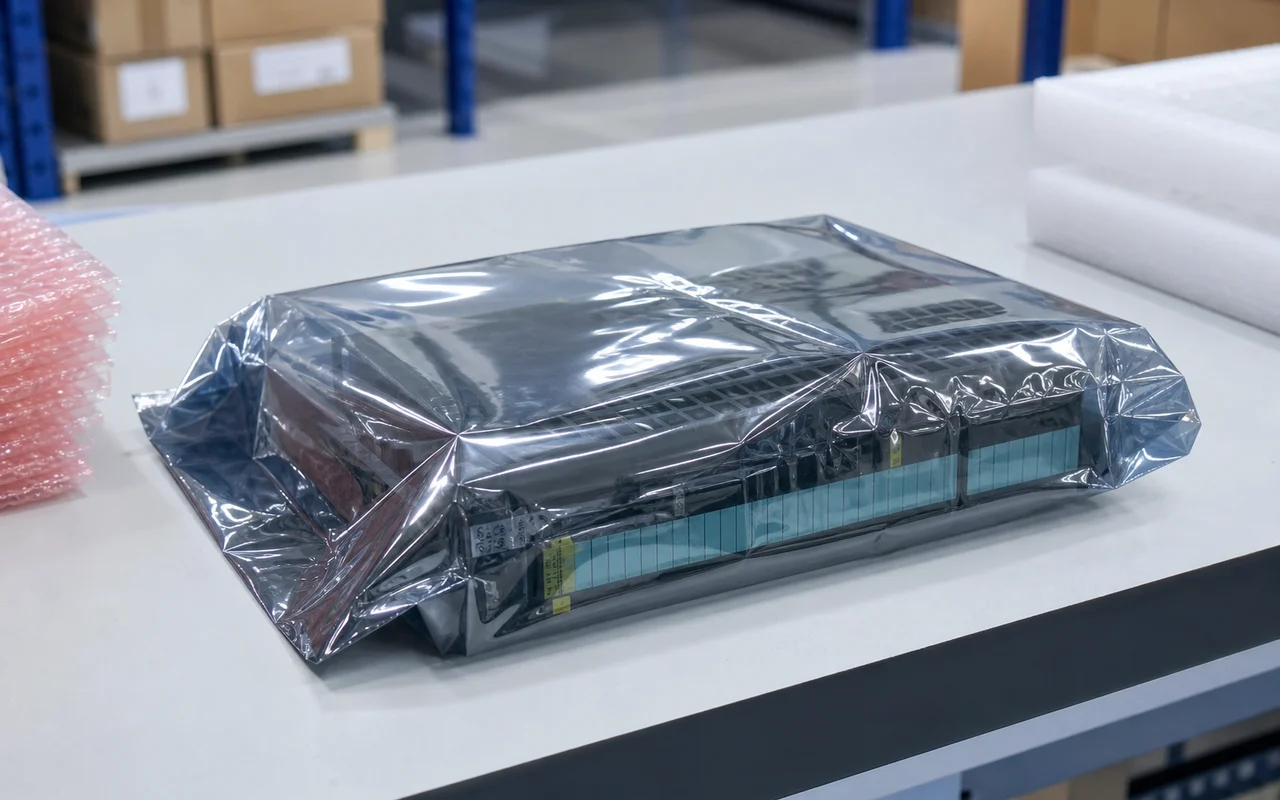 Anti-static Packaging
Modules are packed in anti-static bags to prevent electrostatic damage.
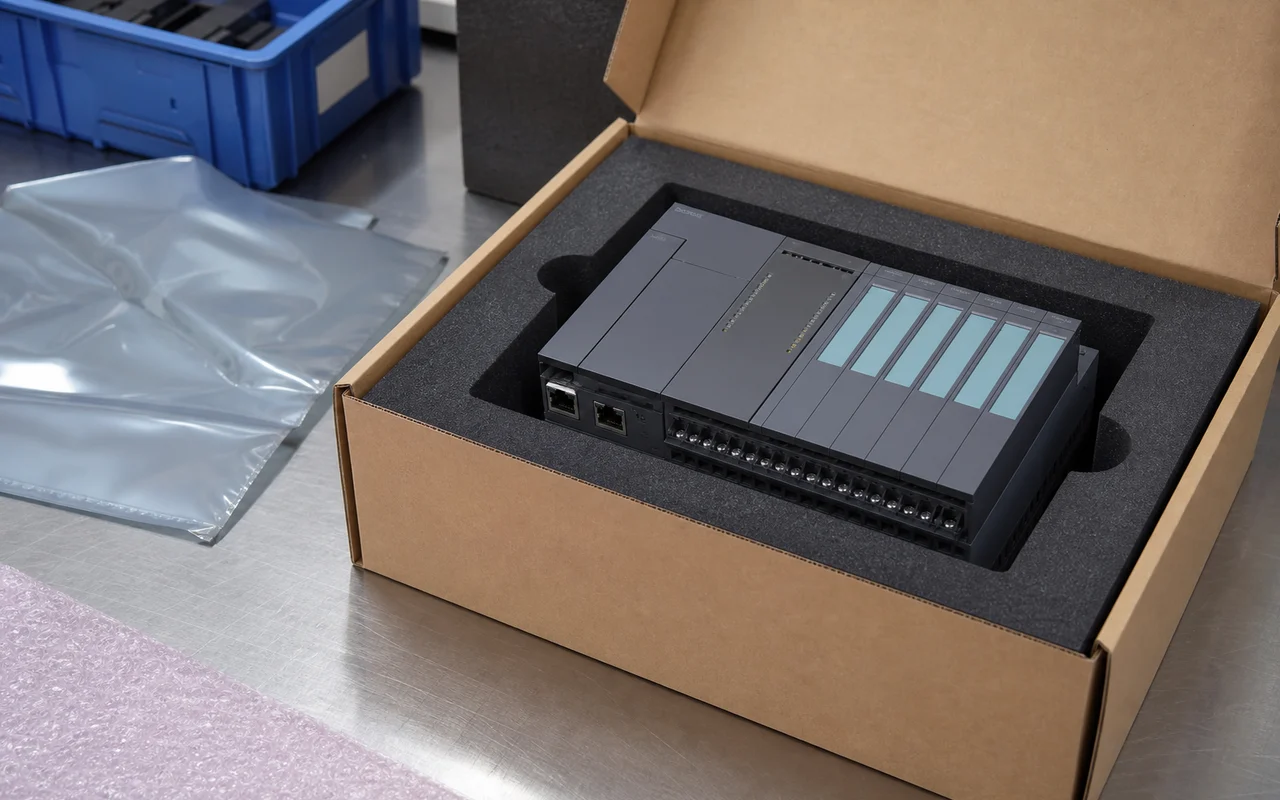 Secure Export Packing
Cushion protection and strong cartons ensure safe transportation.
 Worldwide Shipping
Global logistics network supports air, sea and express delivery.
 Documentation Check
Part number, revision and compatibility verified before shipment.
 After-sales Support
Professional technical support to help resolve your issues.