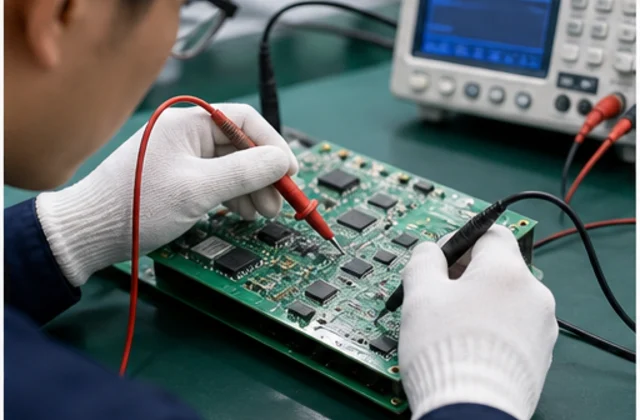
 Functional Inspection
100% tested on professional platforms to ensure stable performance.
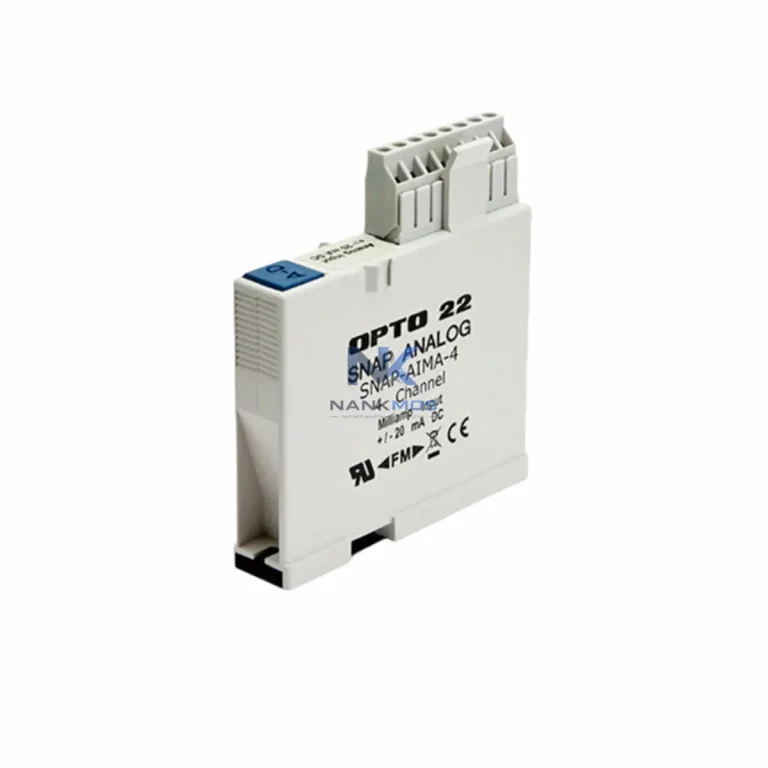
OPTO 22 SNAP-AIMA-4 is a NANKMOS industrial automation product record Listed under Other series series and Business & Industrial > Automation, Control & Flow Devices > Programmable Logic Controllers. Confirm condition, availability, lead time, compatibility and documentation by email inquiry.
Brand names are used for identification only.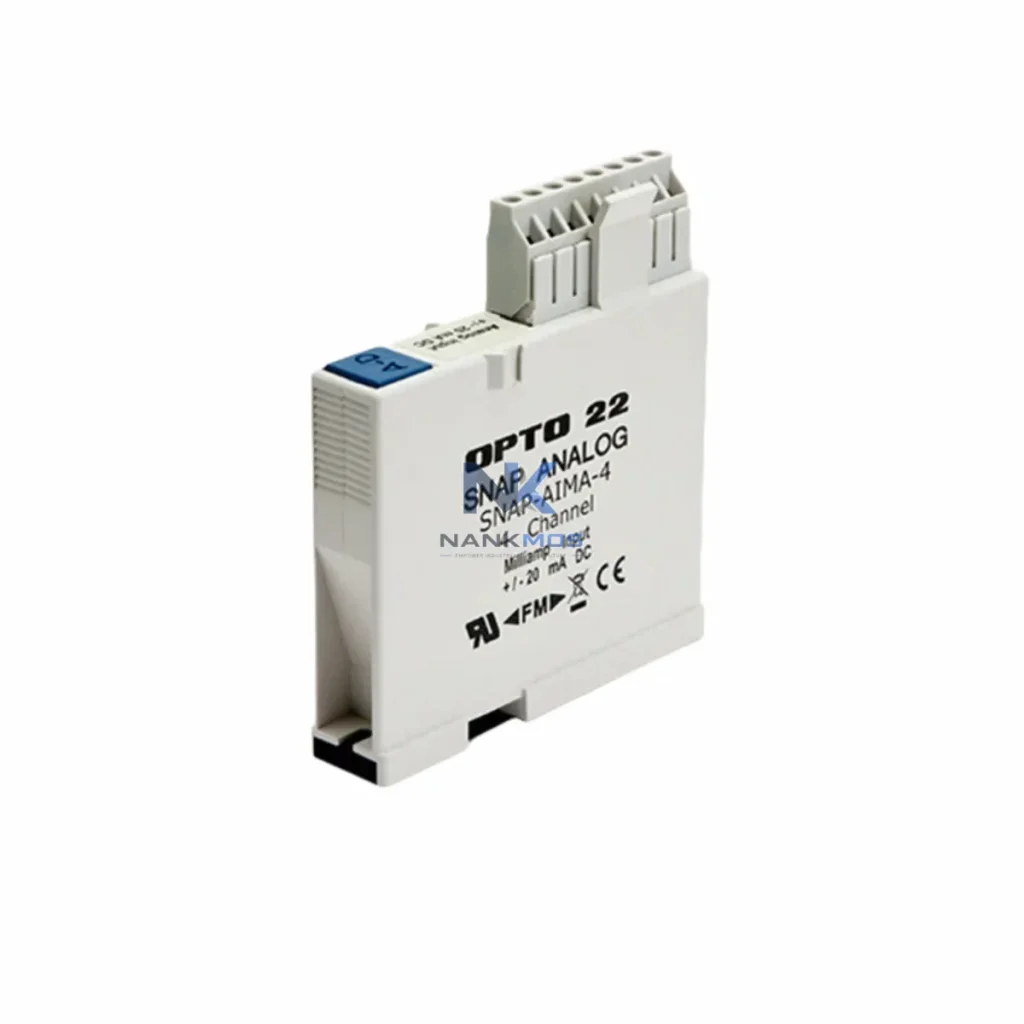
OPTO 22 SNAP-AIMA-4 is a NANKMOS industrial automation product record Listed under Other series series and Business & Industrial > Automation, Control & Flow Devices > Programmable Logic Controllers. Confirm condition, availability, lead time, compatibility and documentation by email inquiry.
| Manufacturer | OPTO 22 |
|---|---|
| Application | Controller Processing & System Control |
| Part Number / Model | SNAP-AIMA-4 |
| Compatible System | Confirmed by inquiry |
| Condition Options | To Confirm |
| Module Type | Controller / CPU Module |
| Warranty | 12 Months |
| Packaging | Anti-static Bag / Secure Box |
| Shipping Methods | DHL / FedEx / UPS / Air / Sea |
| Availability | To Confirm |
| Lead Time | To Confirm |
| Documentation | Part number and revision checked before quote |
The Opto 22 SNAP-AIMA-4 is a high-precision, 4-channel analog input module engineered for the SNAP I/O platform — a modular, rack-based remote I/O architecture designed to bridge field-level instrumentation with enterprise-grade industrial data networks. In smart factory environments where real-time signal fidelity, protocol interoperability, and uninterrupted data flow are non-negotiable, the SNAP-AIMA-4 delivers a robust, field-proven solution for connecting analog sensors, transmitters, and process instruments directly into the plant's digital data backbone.
Designed to operate within the Opto 22 SNAP PAC ecosystem, the SNAP-AIMA-4 accepts standard 4–20 mA and 0–10 V analog signals from field devices — including pressure transmitters, flow meters, temperature sensors, and level transducers — and converts them into high-resolution digital values that are immediately accessible to the SNAP PAC controller brain. From there, data is transmitted upstream via Ethernet/IP, Modbus TCP, SRTP, or OPC-UA protocols, enabling seamless integration with SCADA platforms, HMI terminals, MES systems, and cloud-based analytics engines. This complete signal-to-system data chain is what makes the SNAP-AIMA-4 a cornerstone component in any IIoT-ready automation architecture.
In a fully connected smart factory, the SNAP-AIMA-4 sits at the critical junction between physical process signals and the plant's digital intelligence layer. Consider a typical production line scenario: a series of 4–20 mA pressure transmitters and RTD temperature sensors are wired directly into the SNAP-AIMA-4 channels. The module digitises these analog readings at high resolution and passes them to the Opto 22 SNAP-PAC-R1 or SNAP-PAC-S1 controller brain mounted on the same rack. The brain, acting as the network gateway, encapsulates the process data into Ethernet/IP or Modbus TCP frames and transmits them across the plant's industrial Ethernet backbone.
At the network layer, an industrial managed Ethernet switch — such as those in the Hirschmann MICE or Cisco IE series — routes the data packets to multiple destinations simultaneously: a Wonderware InTouch or Ignition SCADA server for real-time process visualisation, a Kepware KEPServerEX OPC-UA aggregator for protocol normalisation, and an edge computing gateway running local analytics for anomaly detection. The SCADA system, in turn, feeds data to HMI panels — such as the Opto 22 groov View or third-party Weintek and Siemens TP series terminals — where operators monitor live analog trends, set alarm thresholds, and acknowledge fault conditions in real time.
Simultaneously, the same data stream is forwarded to a Modbus TCP-compatible variable frequency drive (VFD) controller, enabling closed-loop speed regulation based on live process feedback from the SNAP-AIMA-4 channels. In parallel, a remote I/O expansion rack using additional SNAP modules — such as the SNAP-AIMA-8 for 8-channel analog input or the SNAP-AOA-23 for analog output — extends the system's sensing and actuation reach without adding network complexity. All data paths converge at the SCADA historian, where time-stamped process records are stored for compliance reporting, predictive maintenance modelling, and production KPI dashboards.
For facilities requiring wireless connectivity or remote site integration, the SNAP PAC brain's OPC-UA interface connects directly to IIoT edge gateways — such as the Opto 22 groov EPIC or third-party Moxa UC series — which securely tunnel plant data to cloud platforms including AWS IoT, Microsoft Azure IoT Hub, or on-premise MES systems. This end-to-end data chain — from the SNAP-AIMA-4's analog input channels through the controller brain, across the industrial network, and into the enterprise data layer — represents the full realisation of smart factory connectivity.
Protocol Fragmentation: Many legacy automation sites operate with a mix of 4–20 mA analog loops, RS-485 Modbus RTU devices, and newer Ethernet-based controllers — creating protocol islands that prevent unified data visibility. The SNAP-AIMA-4, when paired with the SNAP PAC brain's multi-protocol support (Ethernet/IP, Modbus TCP, SRTP, OPC-UA), acts as a universal translator, consolidating analog field signals into a single, network-accessible data stream that any SCADA or MES platform can consume without custom middleware.
Data Silos and Production Blind Spots: Without proper analog input infrastructure, critical process variables — pressure, flow, temperature, level — remain invisible to the plant's digital systems. The SNAP-AIMA-4 eliminates these blind spots by providing continuous, high-resolution analog digitisation across four independent channels, ensuring that every field instrument contributes to the plant's real-time data picture. Combined with the SNAP-AIMA-8 for higher channel density or the SNAP-AITM-4 for thermocouple inputs, operators can build a comprehensive sensing layer without redesigning the network architecture.
Remote Monitoring and Alarm Management: In distributed manufacturing environments — multi-building plants, remote pump stations, or offshore installations — the inability to monitor analog process variables remotely leads to delayed fault response and unplanned downtime. The SNAP-AIMA-4's integration with the SNAP PAC brain enables remote SCADA polling via Modbus TCP or OPC-UA, allowing engineers to monitor live analog values, configure alarm limits, and receive fault notifications from any location on the network. Alarm events are logged with millisecond timestamps, enabling precise root-cause analysis and regulatory compliance reporting.
System Scalability: As production capacity grows, automation systems must scale without requiring complete redesigns. The SNAP I/O platform's modular rack architecture allows engineers to add SNAP-AIMA-4 modules, digital I/O modules, and specialty modules to existing racks incrementally, expanding the system's I/O count without disrupting live production. This scalability, combined with the platform's backward compatibility across SNAP PAC controller generations, protects the capital investment in existing infrastructure while accommodating future automation requirements.
Q1: What communication protocols does the SNAP-AIMA-4 support, and is it compatible with existing SCADA systems? The SNAP-AIMA-4 itself is a signal conditioning module; its network protocol support is determined by the SNAP PAC brain it is paired with. When used with the SNAP-PAC-R1 or SNAP-PAC-S1 brain, the system supports Ethernet/IP, Modbus TCP, SRTP, and OPC-UA — covering the vast majority of industrial SCADA, DCS, and MES platforms including Ignition, Wonderware, FactoryTalk, and Kepware. No additional protocol converters or gateways are required for standard Ethernet-based SCADA integration.
Q2: How does the SNAP-AIMA-4 ensure network stability and data integrity in high-noise industrial environments? The SNAP I/O platform is designed for industrial-grade reliability, with each module providing galvanic isolation between field wiring and the backplane bus. This isolation protects the network from ground loops, electrical transients, and EMI interference common in motor-driven environments. The SNAP PAC brain's Ethernet interface supports standard network redundancy configurations, and the module's deterministic scan cycle ensures consistent data update rates regardless of network load — critical for time-sensitive process control and alarm management applications.
Q3: Can the SNAP-AIMA-4 be integrated with remote diagnostic and predictive maintenance systems? Yes. Via the SNAP PAC brain's OPC-UA server, the SNAP-AIMA-4's channel data is accessible to any OPC-UA-compatible analytics platform, including IIoT edge gateways, cloud-based condition monitoring services, and AI-driven predictive maintenance engines. Engineers can configure the SCADA system to log analog trends, detect signal drift, and generate maintenance alerts before equipment failure occurs — reducing unplanned downtime and extending asset service life. The groov EPIC controller further extends these capabilities with built-in Node-RED flows for custom data processing and cloud connectivity.
Q4: What does the 12-Month Warranty cover, and has the unit been tested before shipment? Every SNAP-AIMA-4 unit supplied by NANKMOS is covered by a 12-Month Warranty from the date of shipment, covering manufacturing defects and functional failures under normal operating conditions. Prior to dispatch, each unit undergoes functional verification testing to confirm channel accuracy, signal range compliance, and backplane communication integrity. Units are shipped in original or equivalent protective packaging with full traceability documentation. In-stock units are available for immediate dispatch, with lead times confirmed at the time of order. For technical pre-sales support or warranty claims, contact [email protected] or +86 18359268345.
Functional Inspection100% tested on professional platforms to ensure stable performance.
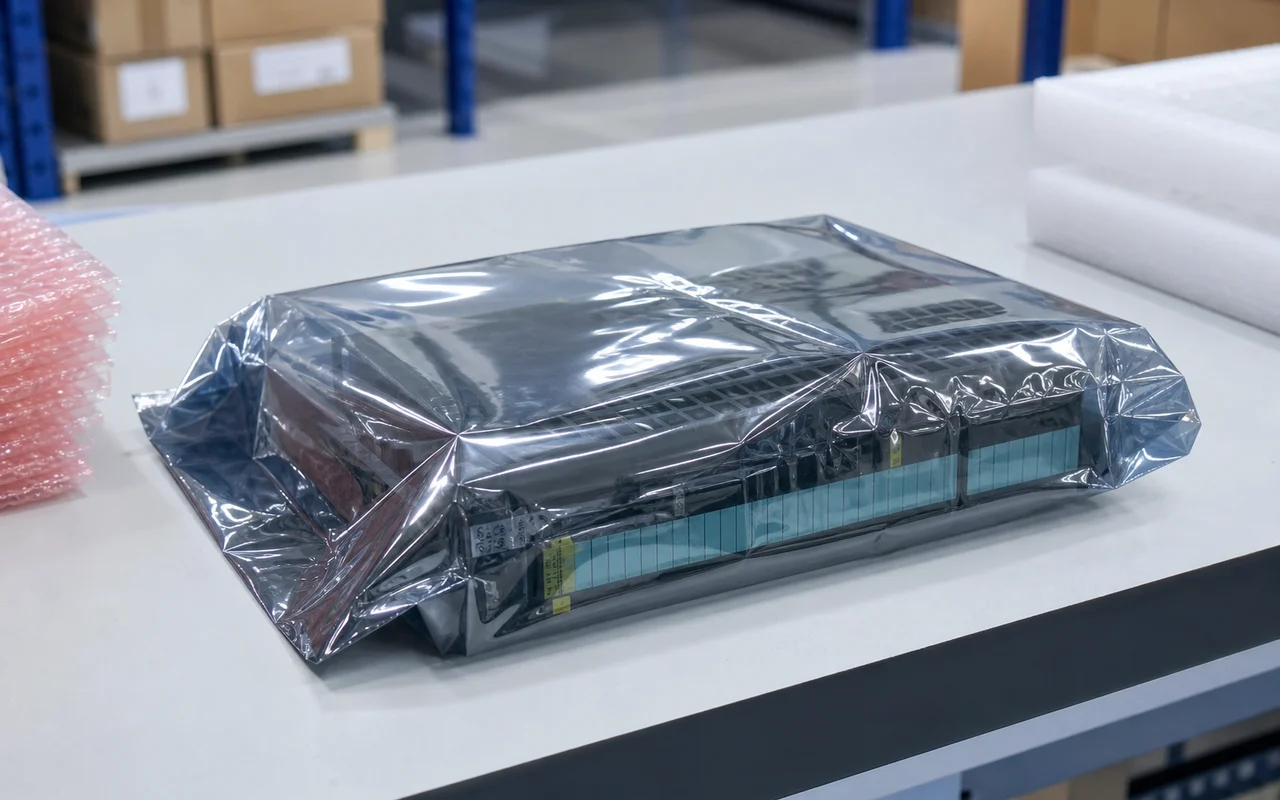 Anti-static Packaging
Modules are packed in anti-static bags to prevent electrostatic damage.
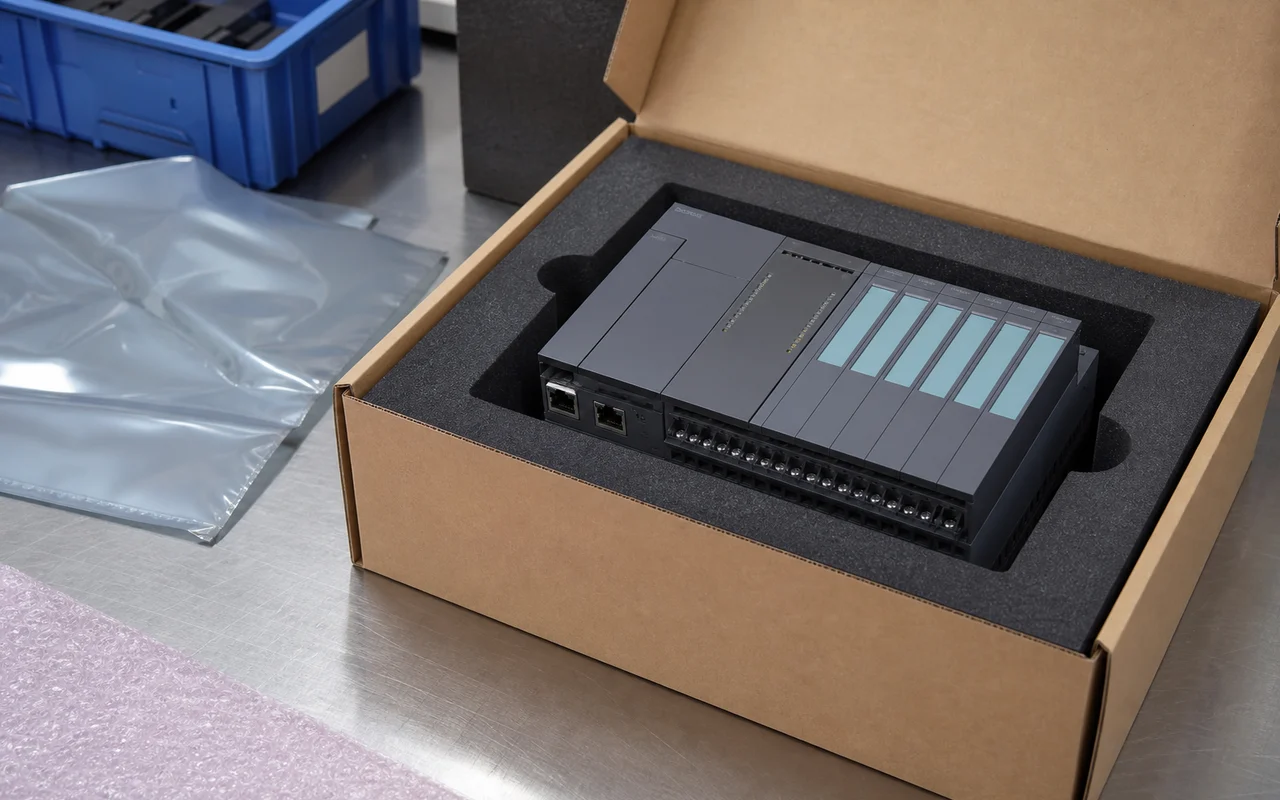 Secure Export Packing
Cushion protection and strong cartons ensure safe transportation.
 Worldwide Shipping
Global logistics network supports air, sea and express delivery.
 Documentation Check
Part number, revision and compatibility verified before shipment.
 After-sales Support
Professional technical support to help resolve your issues.