Functional Inspection
100% tested on professional platforms to ensure stable performance.
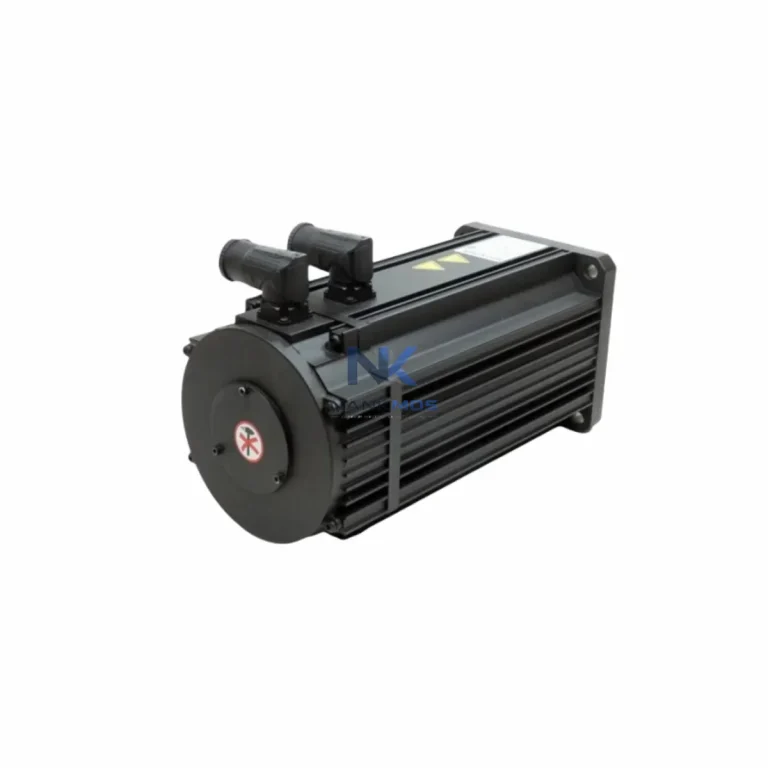
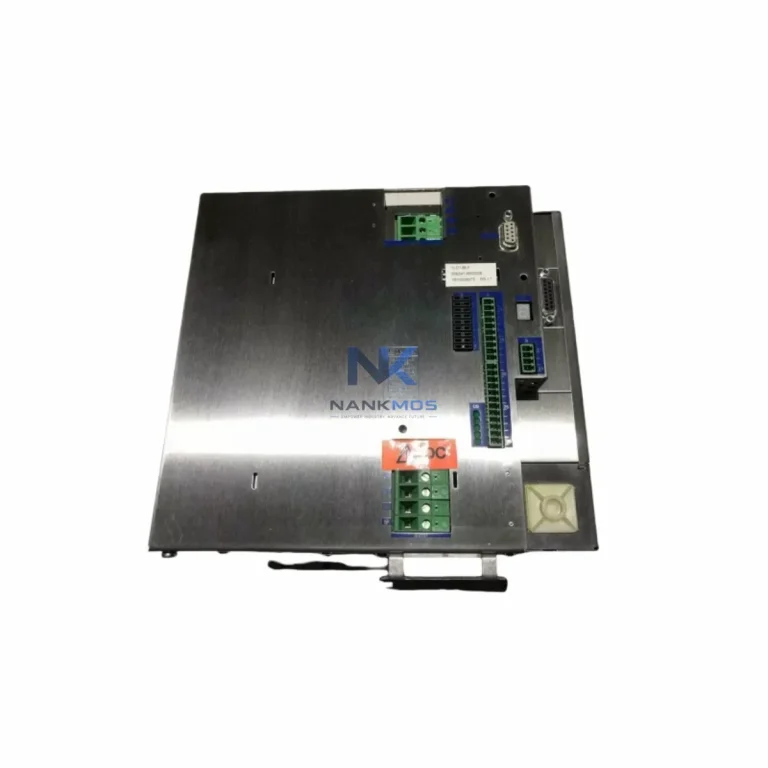
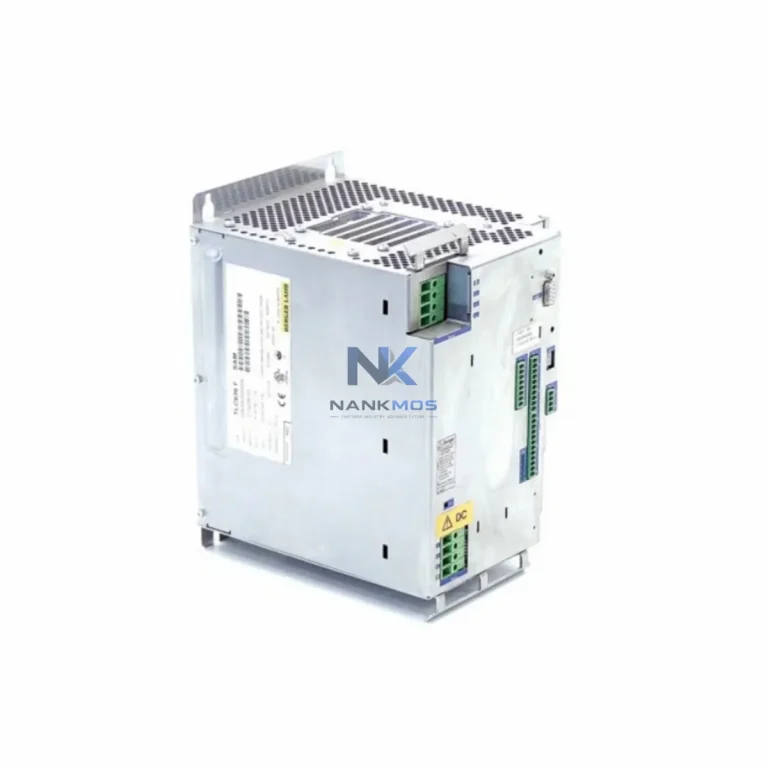
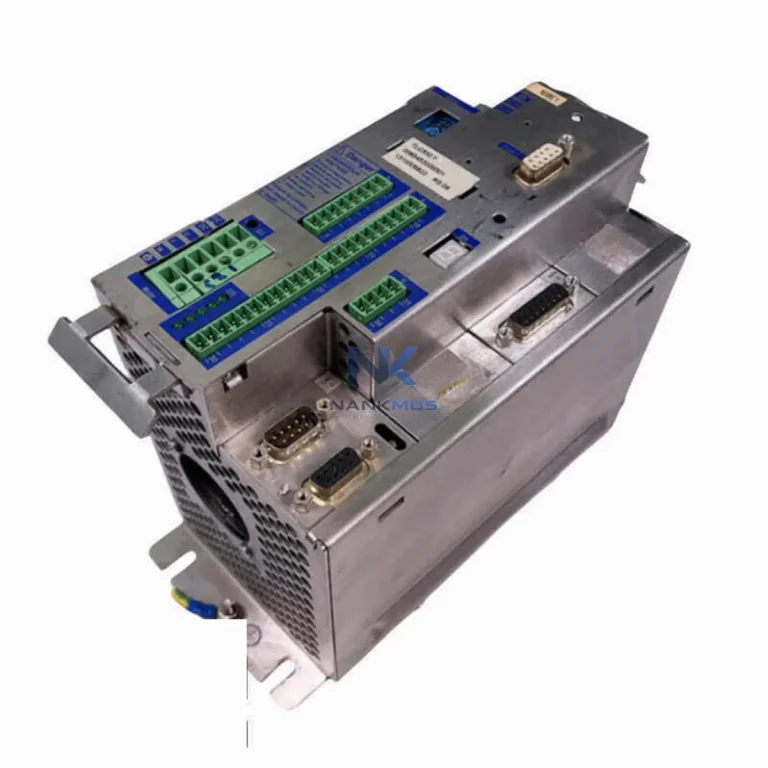
Berger Lahr VRDM368/50LNB VRD M368/50 LNB is a NANKMOS industrial automation product record Listed under Other series series and Business & Industrial > Automation, Control & Flow Devices. Confirm condition, availability, lead time, compatibility and documentation by email inquiry.
Brand names are used for identification only.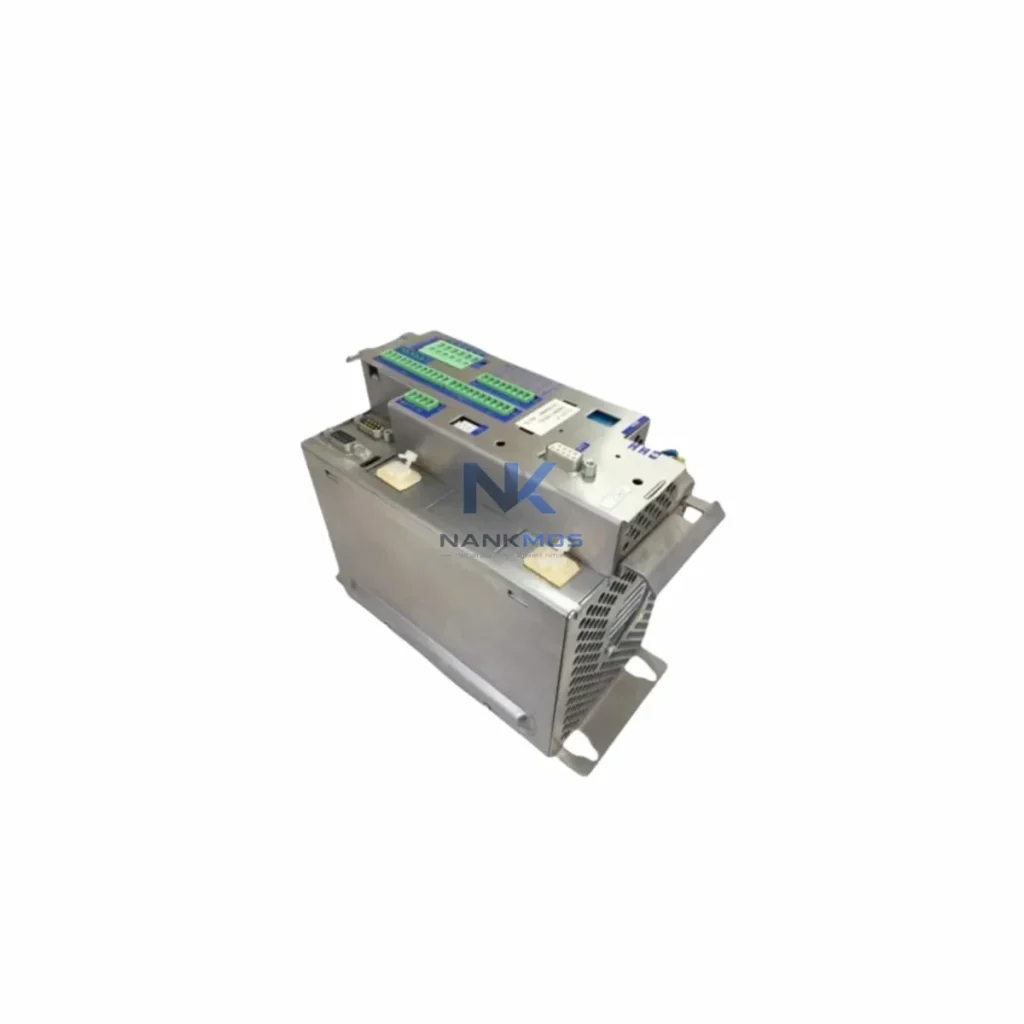
Berger Lahr VRDM368/50LNB VRD M368/50 LNB is a NANKMOS industrial automation product record Listed under Other series series and Business & Industrial > Automation, Control & Flow Devices. Confirm condition, availability, lead time, compatibility and documentation by email inquiry.
| Manufacturer | Berger Lahr |
|---|---|
| Application | Industrial Automation Maintenance |
| Part Number / Model | VRDM368/50LNB VRD M368/50 LNB |
| Compatible System | Confirmed by inquiry |
| Condition Options | To Confirm |
| Module Type | Automation, Control & Flow Devices |
| Warranty | 12 Months |
| Packaging | Anti-static Bag / Secure Box |
| Shipping Methods | DHL / FedEx / UPS / Air / Sea |
| Availability | To Confirm |
| Lead Time | To Confirm |
| Documentation | Part number and revision checked before quote |
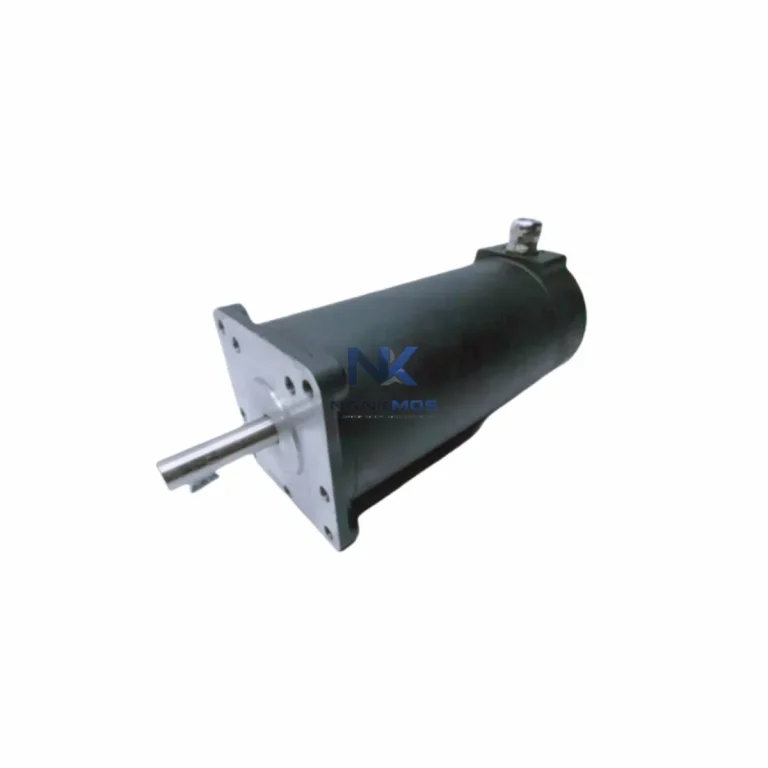
The Berger Lahr VRDM368/50LNB is a high-precision stepper motor from the renowned VRD Series, engineered for energy-conscious industrial automation environments. Designed and manufactured in Germany, this motor delivers exceptional torque consistency, low heat dissipation, and deterministic step accuracy — making it a cornerstone component in smart production lines where energy efficiency, load management, and production rhythm stability are non-negotiable operational priorities.
As industrial facilities face increasing pressure to reduce energy consumption and comply with energy management standards such as ISO 50001, the VRDM368/50LNB provides a mechanically reliable and electrically efficient motion control solution. Its optimised winding design minimises resistive losses during holding and low-speed operation, directly reducing thermal load on the drive cabinet and contributing to lower overall facility energy expenditure.
In a fully integrated smart factory architecture, the VRDM368/50LNB does not operate in isolation — it functions as a precision actuator within a layered energy and motion control ecosystem. When paired with a compatible Berger Lahr VRDM stepper drive or a WD3-007 drive module, the motor receives optimised current profiles that reduce unnecessary power draw during deceleration and dwell phases, a critical factor in high-cycle-rate production environments.
At the controller level, a Siemens S7-1500 PLC or Schneider Modicon M580 issues pulse-direction commands via dedicated motion control outputs, enabling precise positioning without the overhead of a full servo feedback loop. This architecture is particularly effective in applications where deterministic step counts replace encoder-based closed-loop control, reducing system complexity and associated power consumption from feedback electronics.
For energy monitoring, integrating a Siemens SENTRON PAC3200 power monitoring module or a Schneider PowerLogic PM5000 series meter alongside the stepper drive cabinet allows facility engineers to capture real-time current draw, power factor, and cumulative energy consumption per production cell. This data feeds directly into a SCADA system — such as Wonderware InTouch or Siemens WinCC — enabling trend analysis and energy benchmarking across multiple production lines.
On the I/O layer, a Siemens ET 200SP distributed I/O module or a Wago 750-series I/O node handles proximity sensor feedback, end-stop signals, and fault relay outputs associated with the stepper axis. These signals are processed by the PLC to implement safe torque-off sequences and energy-saving standby modes when the production line enters a scheduled idle period. Coupling this with a Pilz PNOZmulti safety controller ensures that energy-saving standby transitions comply with functional safety requirements under IEC 62061.
At the HMI layer, a Siemens SIMATIC HMI TP1200 Comfort Panel or equivalent touch panel provides operators with real-time axis status, step count verification, and energy consumption dashboards. Operators can trigger manual jog sequences, review fault histories, and initiate energy audit reports — all without interrupting the production cycle. This visibility reduces unplanned downtime and supports proactive maintenance scheduling, directly improving overall equipment effectiveness (OEE).
For communication, the stepper drive and associated I/O nodes connect to the plant network via PROFIBUS DP or PROFINET IO, depending on the generation of the control platform. In newer installations, OPC-UA gateways — such as the Softing edgeConnector Modbus or a Hilscher netTAP NT 100 — bridge legacy stepper drive data into MES and ERP layers, enabling energy consumption data to be correlated with production order records for ISO 50001 reporting.
The VRDM368/50LNB contributes to production line energy optimisation through several interconnected mechanisms. First, its hybrid stepper design maintains holding torque with minimal current draw when the axis is stationary — a significant advantage in indexing applications where the motor spends a substantial portion of each cycle in a held position. Compared to servo systems that continuously draw power to maintain encoder lock, the stepper's open-loop hold characteristic reduces baseline energy consumption per axis.
Second, the motor's thermal efficiency directly impacts the cooling load of the control cabinet. Lower winding temperatures mean reduced demands on cabinet air conditioning or heat exchanger systems, which in large facilities with dozens of stepper axes can represent a measurable reduction in auxiliary energy consumption. Facilities operating under energy management frameworks benefit from this compounding effect across the entire motor population.
Third, the deterministic nature of stepper motion — where each pulse corresponds to a fixed angular displacement — eliminates the need for continuous position correction cycles that consume additional computational and electrical resources in servo-based systems. This predictability supports tighter production rhythm control, reducing cycle time variance and the energy waste associated with acceleration/deceleration compensation in poorly tuned servo loops.
From a maintenance perspective, the VRDM368/50LNB's robust German engineering heritage means extended mean time between failures (MTBF) in standard industrial environments. Fewer unplanned stoppages translate directly into fewer emergency restart cycles — which are among the highest energy-consumption events in motor-driven systems due to inrush current spikes. Predictive maintenance strategies, supported by current monitoring data from the drive and power monitoring modules, allow maintenance teams to schedule replacements during planned downtime windows, preserving production rhythm and energy budget targets.
All units supplied are drawn from verified in-stock inventory, individually tested prior to dispatch, and covered by a 12-Month Warranty. This ensures that replacement units perform to specification from day one, avoiding the energy inefficiencies associated with running degraded or out-of-specification motors in production.
Q1: What energy savings can I expect by deploying the VRDM368/50LNB in an indexing application? In indexing applications with significant dwell time between moves, the VRDM368/50LNB's optimised holding current profile can reduce per-axis energy consumption compared to equivalent servo systems. The exact saving depends on duty cycle, load inertia, and ambient temperature, but facilities with high dwell-to-move ratios typically see the most pronounced efficiency gains. Integrating a power monitoring module on the drive supply rail provides empirical data for your energy audit.
Q2: Is the VRDM368/50LNB compatible with my existing Siemens or Schneider PLC platform? Yes. The VRDM368/50LNB accepts standard pulse-direction (PUL/DIR) or step-clock signals from any PLC motion output module, including Siemens S7-300/S7-1500 FM 357 motion modules and Schneider Modicon M340 BMX MSP 0200 stepper modules. No proprietary communication protocol is required, making integration straightforward in both new and retrofit installations.
Q3: What is the recommended replacement or upgrade path if my current stepper motor is underperforming? If your current motor exhibits excessive heat, missed steps under load, or audible resonance at mid-range speeds, the VRDM368/50LNB is a direct form-factor replacement for motors in the Berger Lahr VRD M3 frame family. Verify shaft diameter, mounting flange (NEMA/IEC), and connector pinout before installation. Our technical team can assist with cross-reference verification to ensure a drop-in fit.
Q4: What does the 12-Month Warranty cover, and how is the unit tested before shipment? Every VRDM368/50LNB unit undergoes a pre-shipment functional test covering winding resistance balance, insulation integrity, step accuracy under no-load conditions, and mechanical shaft runout. The 12-Month Warranty covers defects in materials and workmanship under normal operating conditions. Units showing thermal damage from oversized drive current settings or mechanical overload are assessed on a case-by-case basis. Contact our support team with your order reference for warranty claims.
Functional Inspection100% tested on professional platforms to ensure stable performance.
 Anti-static Packaging
Modules are packed in anti-static bags to prevent electrostatic damage.
 Secure Export Packing
Cushion protection and strong cartons ensure safe transportation.
 Worldwide Shipping
Global logistics network supports air, sea and express delivery.
 Documentation Check
Part number, revision and compatibility verified before shipment.
 After-sales Support
Professional technical support to help resolve your issues.