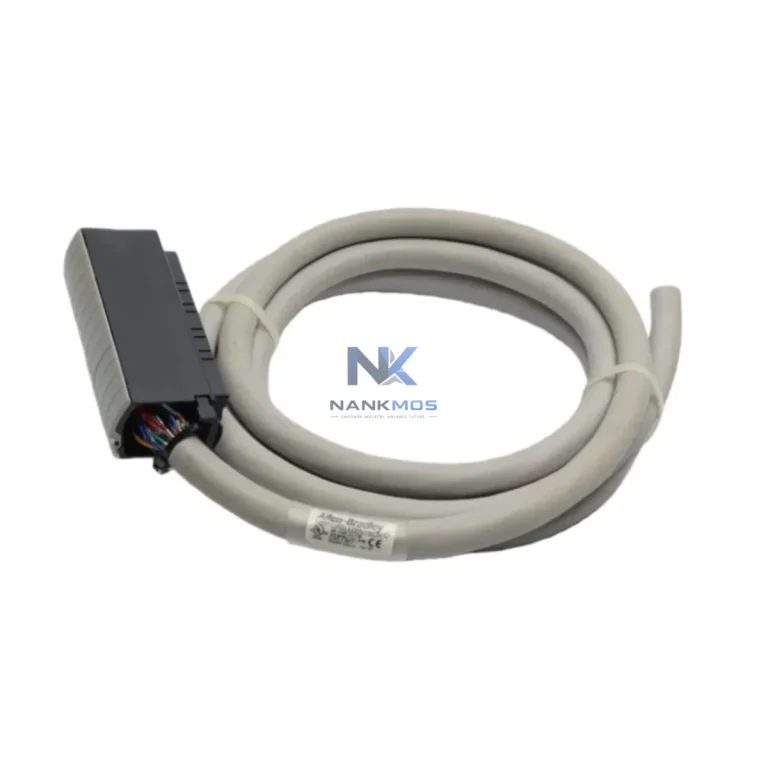
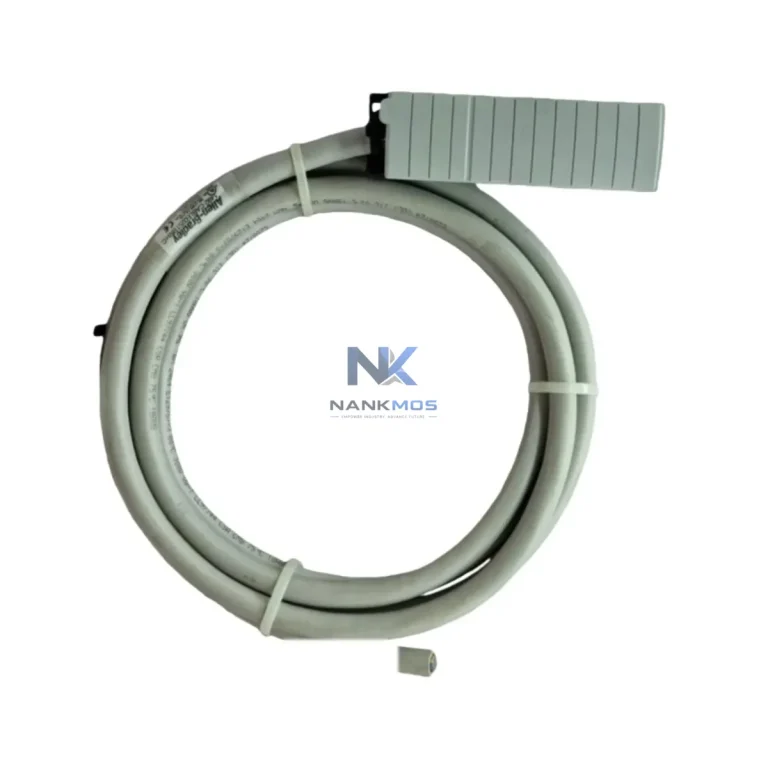
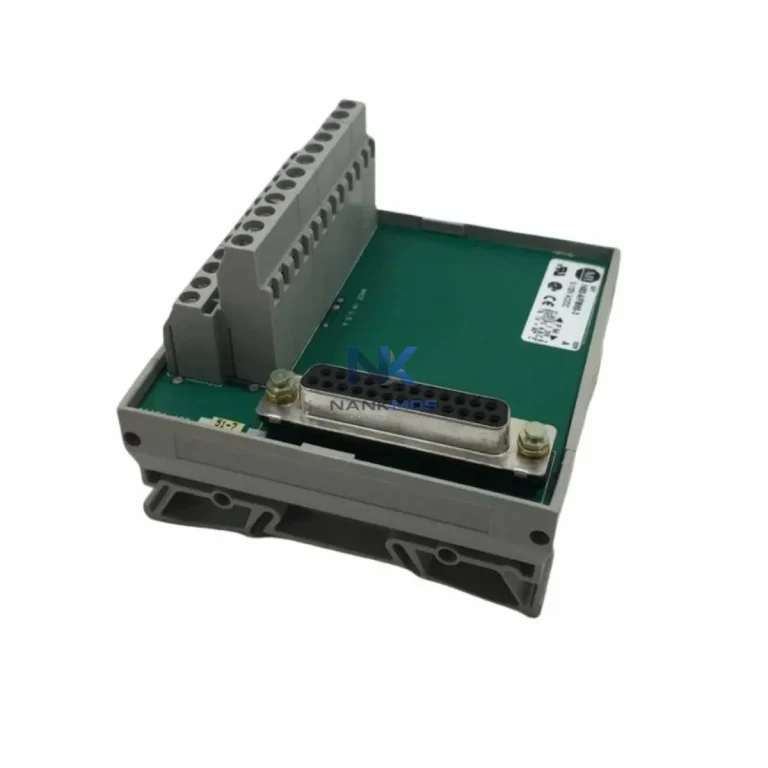
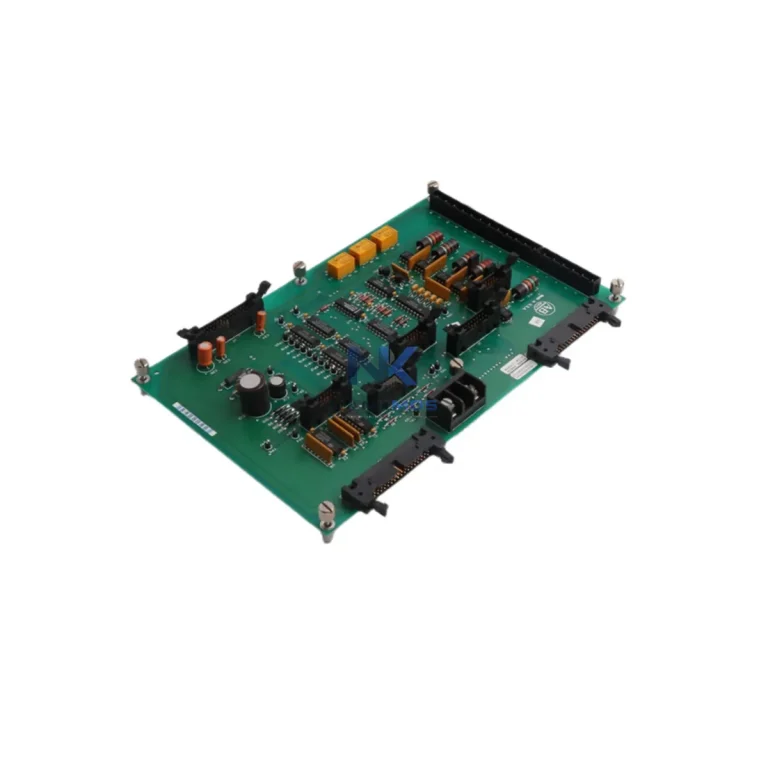
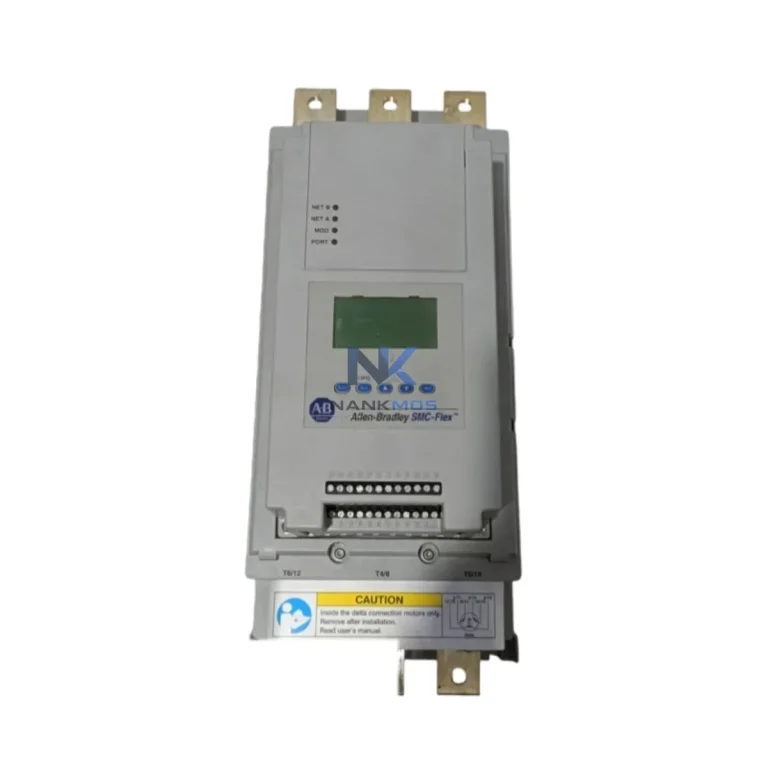
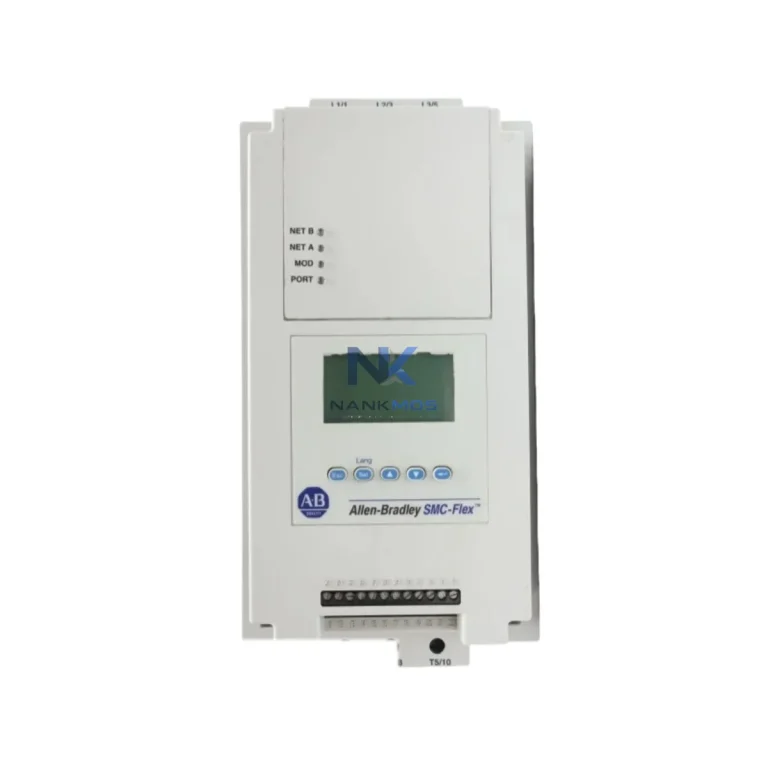
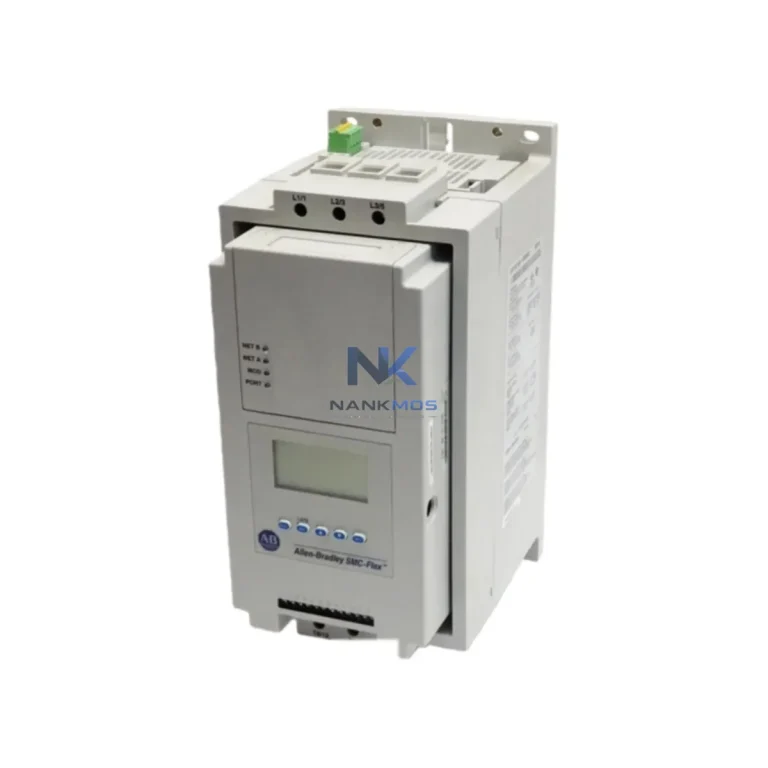
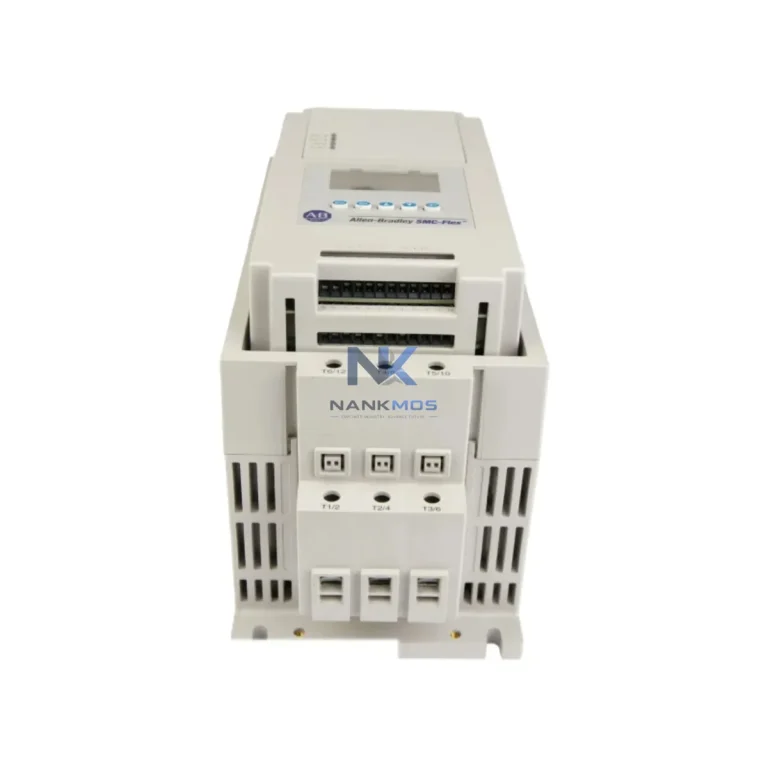
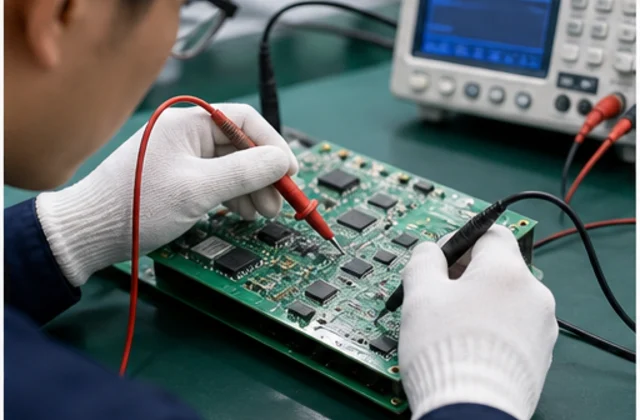
 Functional Inspection
100% tested on professional platforms to ensure stable performance.
Allen-Bradley 1794-PS3 is a NANKMOS industrial automation product record Listed under Flex I/O series and Business & Industrial > Automation, Control & Flow Devices > Programmable Logic Controllers. Confirm condition, availability, lead time, compatibility and documentation by email inquiry.
Brand names are used for identification only.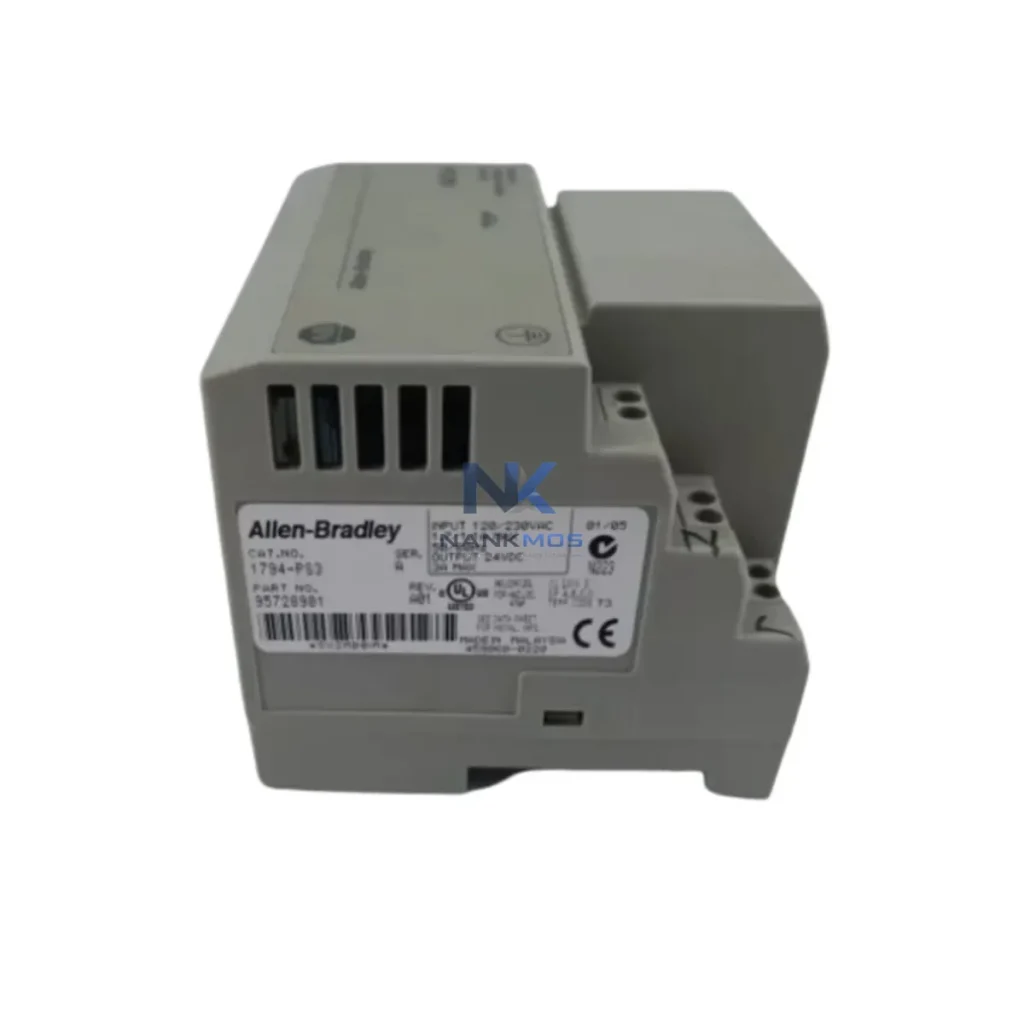
Allen-Bradley 1794-PS3 is a NANKMOS industrial automation product record Listed under Flex I/O series and Business & Industrial > Automation, Control & Flow Devices > Programmable Logic Controllers. Confirm condition, availability, lead time, compatibility and documentation by email inquiry.
| Manufacturer | Allen-Bradley |
|---|---|
| Application | Control System Power Support |
| Part Number / Model | 1794-PS3 |
| Compatible System | Flex I/O |
| Series | Flex I/O |
| Condition Options | To Confirm |
| Module Type | Power Supply Module |
| Warranty | 12 Months |
| Packaging | Anti-static Bag / Secure Box |
| Shipping Methods | DHL / FedEx / UPS / Air / Sea |
| Availability | To Confirm |
| Lead Time | To Confirm |
| Documentation | Part number and revision checked before quote |
The Allen-Bradley 1794-PS3 is a dedicated power supply module engineered for the FLEX I/O 1794 distributed I/O platform, delivering regulated 24 VDC bus power to I/O adapter assemblies and terminal base modules across multi-drop field installations. Within a layered industrial control architecture, the 1794-PS3 occupies the power layer — the foundational tier that determines the operational stability, signal integrity, and long-term reliability of every module mounted downstream. Its role is not merely to supply voltage; it actively conditions and isolates bus power, ensuring that transient loads from digital output modules, analog signal conditioners, and communication adapters do not propagate upstream into the controller backplane or degrade the diagnostic accuracy of the broader system.
Designed for seamless integration within Rockwell Automation's ControlLogix, CompactLogix, and legacy SLC 500 control platforms, the 1794-PS3 supports distributed I/O architectures where field devices are geographically separated from the main control cabinet. In these deployments, maintaining consistent power quality at the remote I/O node is critical — voltage sag or ripple at the terminal base level can introduce false transitions in digital input modules, offset drift in analog I/O channels, and communication timeouts on DeviceNet or PROFIBUS adapter modules. The 1794-PS3 addresses these risks through its regulated output design, providing a stable power foundation that supports system-wide diagnostic confidence and reduces unplanned downtime.
The 1794-PS3 achieves its full engineering value when deployed as part of a coordinated FLEX I/O node assembly. A typical distributed control node built around this power supply module integrates multiple system layers, each contributing to overall architecture performance:
Control Layer: The upstream controller — commonly a 1756-L73 ControlLogix CPU or a 1769-L33ER CompactLogix controller — manages the I/O scan cycle and executes ladder logic or function block programs that depend on accurate, low-latency field data. The 1794-PS3 ensures that power instability at the remote node does not introduce scan-cycle jitter or false fault conditions that would otherwise trigger unnecessary controller faults.
Communication Layer: The FLEX I/O adapter module — such as the 1794-AENT EtherNet/IP adapter or the 1794-ADN DeviceNet adapter — bridges the controller's network to the local I/O modules. The 1794-PS3 powers the adapter's logic circuitry and the downstream I/O module bus simultaneously, maintaining communication stability even under high-cycle digital output switching loads. For PROFIBUS-DP architectures, the 1794-APB adapter operates in the same power domain, making the 1794-PS3's regulated output essential for deterministic bus timing.
I/O Layer: Downstream of the adapter, modules such as the 1794-IB16 16-point 24 VDC digital input module, the 1794-OB16 16-point digital output module, and the 1794-IE8 8-channel analog input module draw their logic power from the 1794-PS3's regulated bus. Analog modules are particularly sensitive to power quality — even minor ripple on the 5 VDC bus can introduce offset errors in 4–20 mA or 0–10 VDC signal chains. The 1794-PS3's regulated design directly supports the measurement accuracy that process control applications demand.
Terminal Base and Wiring Layer: The 1794-TB3 terminal base and 1794-TB32 terminal base provide the mechanical and electrical interface between the 1794-PS3 and the field wiring. Proper terminal base selection — matched to the I/O module type and field wiring gauge — is a prerequisite for achieving the full current capacity of the 1794-PS3 without voltage drop at the module connector.
Power Distribution Layer: In larger distributed panels, the 1794-PS3 is typically fed from a 1606-XLP power supply or equivalent 24 VDC DIN-rail power supply, which itself is protected by a branch circuit breaker or electronic circuit protector. Coordinating the upstream power supply's output impedance with the 1794-PS3's input range ensures stable operation across the full load range of the I/O node.
HMI and Supervisory Layer: At the supervisory level, a 2711P-T10C21D8S PanelView Plus 7 HMI or a SCADA workstation running FactoryTalk View SE monitors the health of the distributed I/O node, including power supply status tags exposed through the EtherNet/IP adapter. The 1794-PS3's operational status is visible at the system level, enabling operators to detect power anomalies before they escalate to process shutdowns.
Protection and Redundancy Layer: For high-availability applications, redundant power feed designs using dual 1794-PS3 modules with diode-OR power combining circuits are employed in critical process nodes. This architecture ensures that a single power supply failure does not interrupt I/O scanning or field device control, supporting the continuous operation requirements of power generation, water treatment, and petrochemical facilities.
Manufacturing and Assembly Lines: In automotive body-in-white welding lines and discrete parts assembly systems, FLEX I/O nodes powered by the 1794-PS3 manage proximity sensor inputs, solenoid valve outputs, and servo drive enable signals at each station. The module's compact form factor and DIN-rail mounting allow high-density I/O distribution within machine-level control panels, reducing inter-cabinet wiring and improving fault isolation during maintenance.
Power Generation and Utilities: In thermal power plant auxiliary systems — including boiler feedwater control, cooling tower fan management, and turbine lube oil monitoring — the 1794-PS3 supports FLEX I/O nodes that interface with 4–20 mA transmitters and HART-enabled field instruments. The module's electrical isolation between field power and logic bus is particularly valuable in environments where ground loops and common-mode noise from large rotating machinery can corrupt analog signal chains.
Petrochemical and Refinery Process Control: Distributed control architectures in refinery units — including crude distillation, hydrotreating, and gas compression — deploy FLEX I/O nodes at field junction boxes to minimize intrinsically safe barrier wiring runs. The 1794-PS3 powers these remote nodes reliably in ambient temperatures up to 55 °C, consistent with the thermal environment of outdoor process areas in tropical and subtropical climates.
Water and Wastewater Treatment: Municipal water treatment SCADA systems use FLEX I/O distributed nodes to monitor pump motor current, valve position feedback, and flow transmitter signals across geographically dispersed pump stations. The 1794-PS3's stable bus power supports the analog input accuracy required for flow totalisation and chemical dosing control, where measurement errors directly affect regulatory compliance.
Mining and Mineral Processing: In conveyor drive control systems and crusher automation panels, the 1794-PS3 supports FLEX I/O nodes that manage belt speed references, motor protection relay status inputs, and emergency stop circuit monitoring. The module's robust operating temperature range and DIN-rail mounting make it suitable for installation in field-mounted enclosures subject to vibration and thermal cycling.
Packaging and Material Handling: High-speed packaging lines with servo-driven pick-and-place systems and vision inspection stations use FLEX I/O nodes to aggregate sensor data and distribute output commands at line speed. The 1794-PS3's ability to power up to eight I/O modules per adapter node reduces the number of power supply units required per line segment, simplifying panel design and spare parts management.
Q1: How many FLEX I/O modules can the 1794-PS3 support on a single adapter node, and what determines the limit? The 1794-PS3 provides up to 2 A of regulated 5 VDC bus power to the FLEX I/O adapter and its associated I/O modules. The practical module count per node — typically up to 8 I/O modules — is determined by the aggregate current draw of all installed modules, not a fixed slot count. Digital I/O modules with low per-channel current draw allow more modules per node, while analog modules or modules with high-density output loading may reduce the supported count. Always verify the total current budget using the FLEX I/O System User Manual (Publication 1794-UM001) before finalising node configuration. Our technical team can assist with current budget calculations for your specific module mix.
Q2: Is the 1794-PS3 compatible with both legacy SLC 500 remote I/O architectures and current EtherNet/IP-based ControlLogix systems? Yes. The 1794-PS3 is a power supply module that operates independently of the communication protocol used by the adapter module. It is compatible with all FLEX I/O adapter variants, including the 1794-ASB (Remote I/O adapter for SLC 500 and PLC-5 systems), the 1794-ADN (DeviceNet), the 1794-APB (PROFIBUS-DP), the 1794-ACN (ControlNet), and the 1794-AENT (EtherNet/IP). This protocol-agnostic design allows the 1794-PS3 to serve as a consistent power infrastructure component across system migrations and platform upgrades, protecting the capital investment in field wiring and terminal base assemblies.
Q3: What does the 12-Month Warranty cover for the 1794-PS3, and what is the typical lead time for replacement units? All 1794-PS3 units supplied by NANKMOS are covered by a 12-Month Warranty against manufacturing defects, electrical performance deviations, and premature component failure under normal operating conditions. The warranty period begins from the date of shipment. In the event of a warranty claim, NANKMOS provides a replacement unit or full refund following technical verification. For critical applications requiring immediate replacement, we maintain in-stock inventory of the 1794-PS3 to support same-day or next-business-day dispatch. Contact [email protected] or +86 18359268345 to confirm current stock availability and lead time for your project schedule.
Functional Inspection100% tested on professional platforms to ensure stable performance.
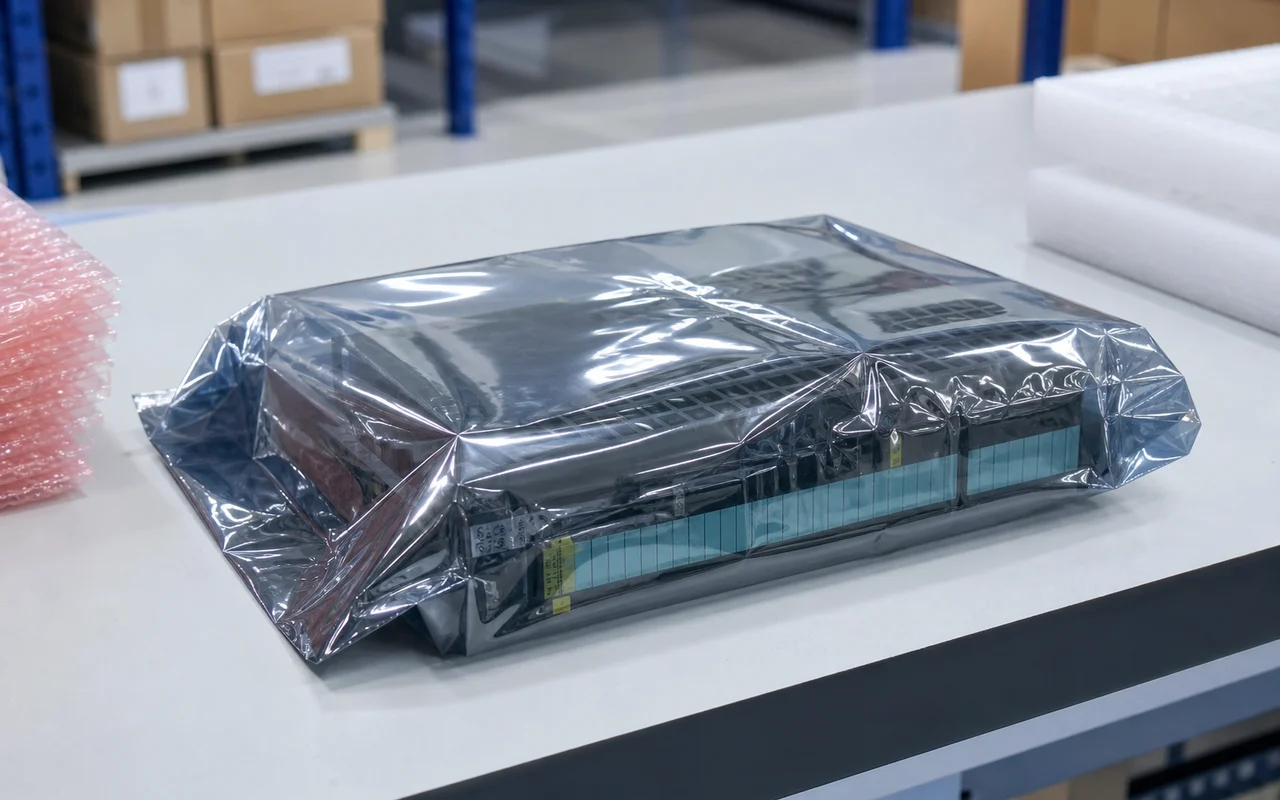 Anti-static Packaging
Modules are packed in anti-static bags to prevent electrostatic damage.
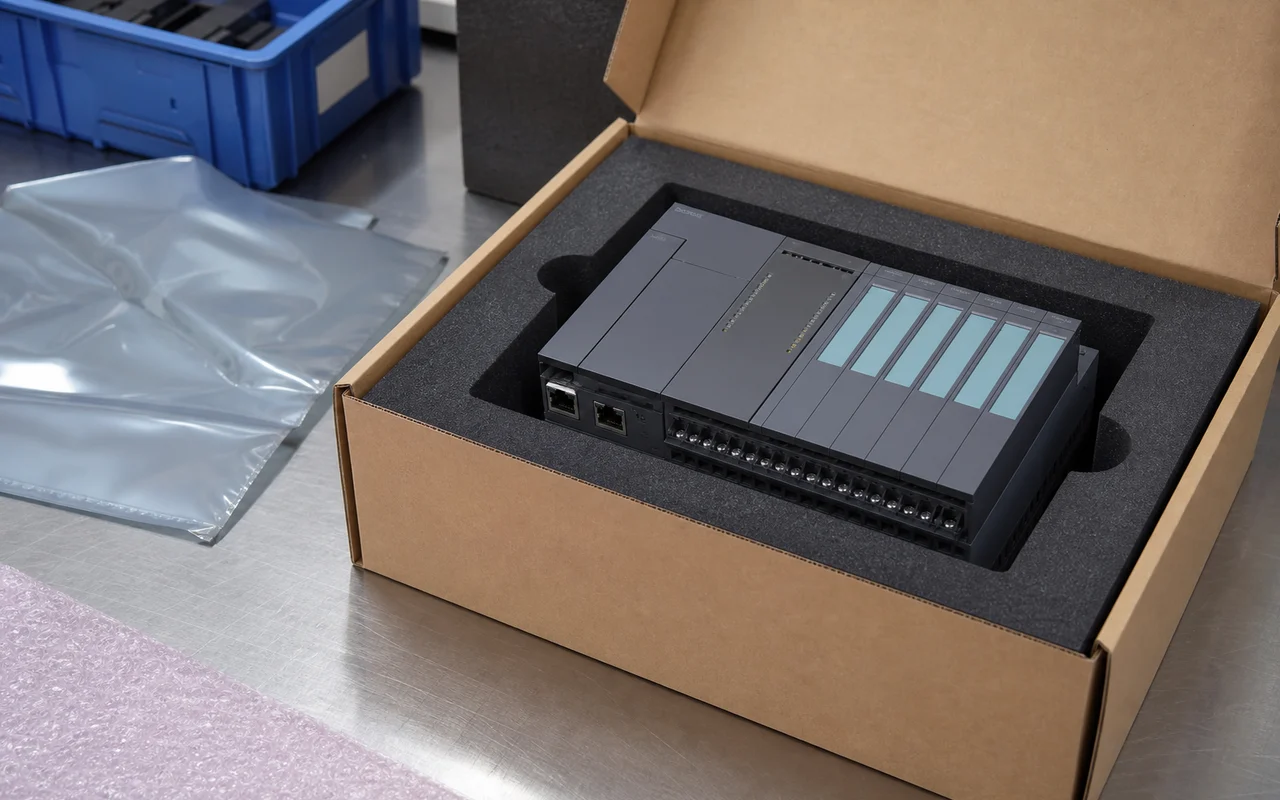 Secure Export Packing
Cushion protection and strong cartons ensure safe transportation.
 Worldwide Shipping
Global logistics network supports air, sea and express delivery.
 Documentation Check
Part number, revision and compatibility verified before shipment.
 After-sales Support
Professional technical support to help resolve your issues.