Functional Inspection
100% tested on professional platforms to ensure stable performance.
KUKA KRC4 is a NANKMOS industrial automation product record Listed under Other series series and Business & Industrial > Automation, Control & Flow Devices. Confirm condition, availability, lead time, compatibility and documentation by email inquiry.
Brand names are used for identification only.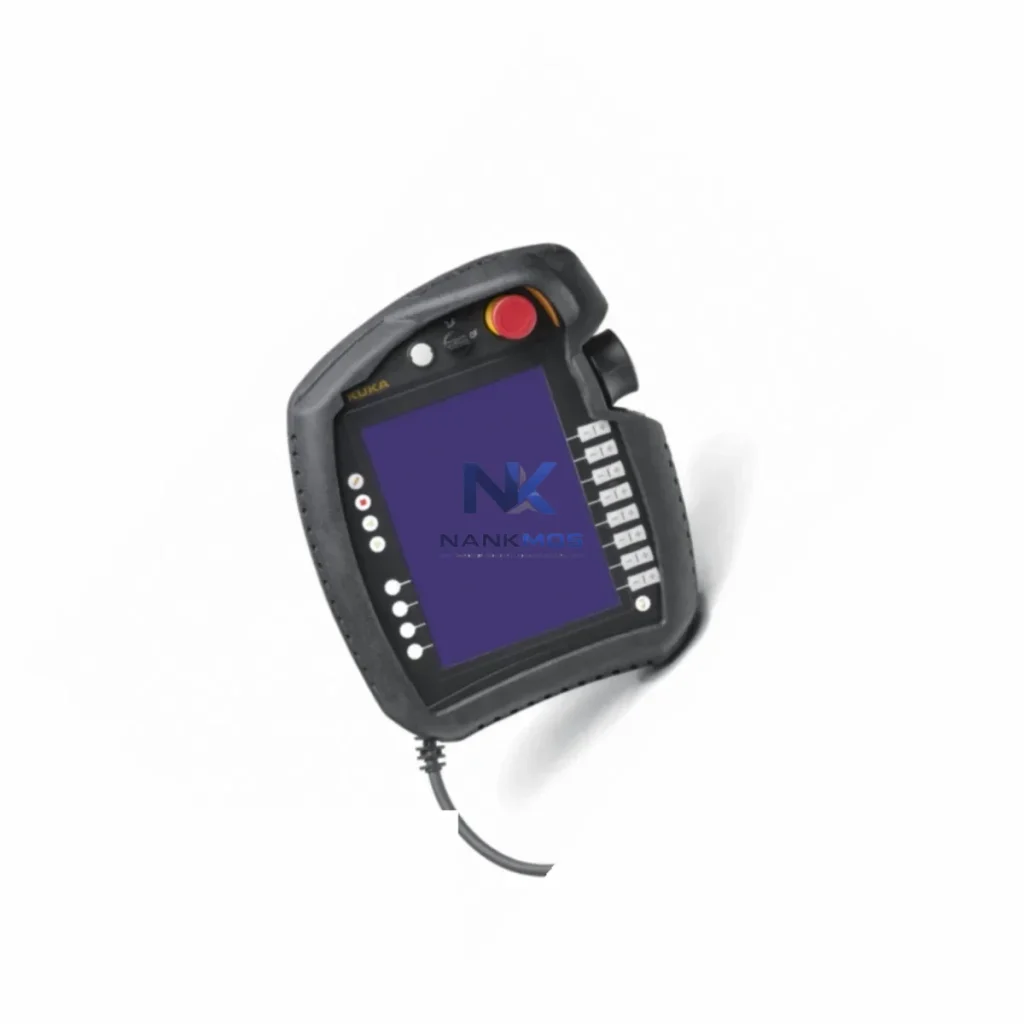
KUKA KRC4 is a NANKMOS industrial automation product record Listed under Other series series and Business & Industrial > Automation, Control & Flow Devices. Confirm condition, availability, lead time, compatibility and documentation by email inquiry.
| Manufacturer | KUKA |
|---|---|
| Application | Industrial Automation Maintenance |
| Part Number / Model | KRC4 |
| Compatible System | Confirmed by inquiry |
| Condition Options | none_detected |
| Module Type | Automation, Control & Flow Devices |
| Warranty | 12 Months |
| Packaging | Anti-static Bag / Secure Box |
| Shipping Methods | DHL / FedEx / UPS / Air / Sea |
| Availability | To Confirm |
| Lead Time | To Confirm |
| Documentation | Part number and revision checked before quote |
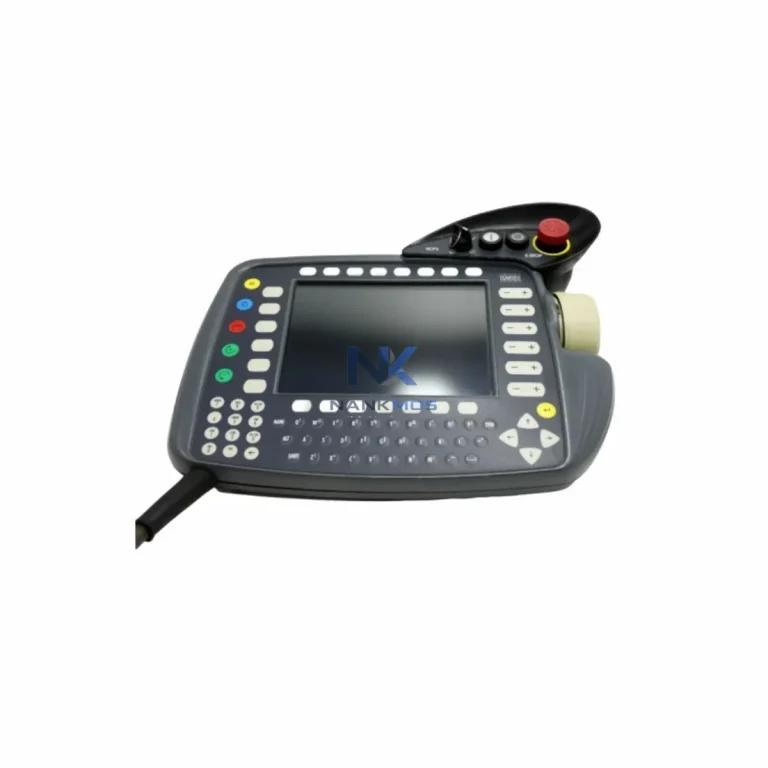
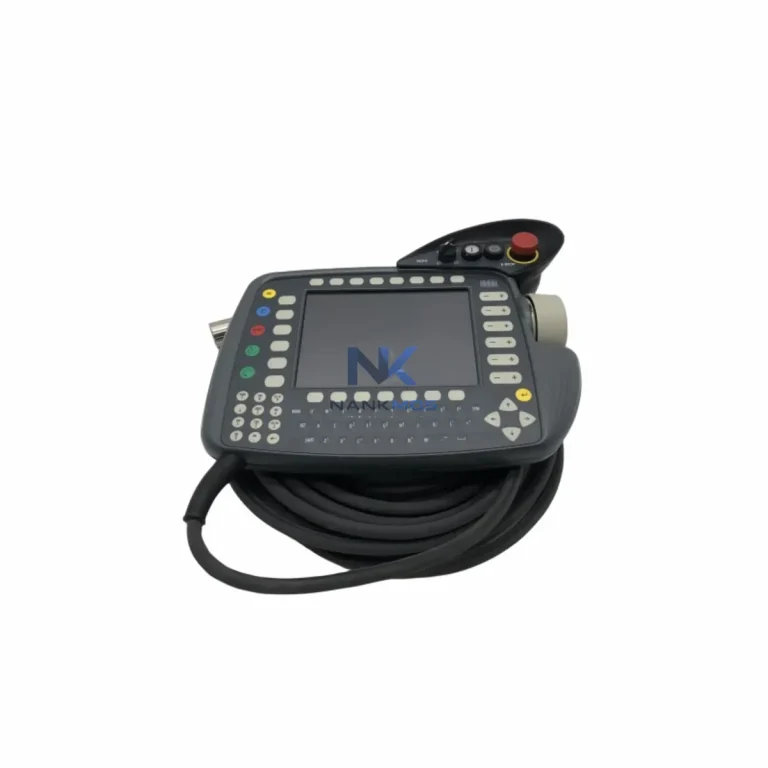
The KUKA KRC4 Teach Pendant is the primary human-machine interface for the KRC4 robot controller family, engineered to deliver precise energy-aware motion programming, real-time load monitoring, and production line synchronization across high-demand industrial environments. Designed for integration with KUKA's KRC4 controller platform, this pendant enables operators to configure energy-optimized motion profiles, manage axis load distribution, and reduce unnecessary actuator cycling — directly contributing to measurable reductions in per-cycle energy consumption and thermal stress on drive components.
In modern smart manufacturing facilities, energy efficiency is no longer a secondary concern — it is a core KPI. The KRC4 Teach Pendant supports this objective by providing granular control over robot motion parameters, including velocity scaling, acceleration ramps, and payload-adaptive path planning. These capabilities allow production engineers to fine-tune robot behavior to match actual load conditions, avoiding peak-power spikes that increase energy costs and accelerate wear on servo drive systems.
The KRC4 Teach Pendant operates as the configuration and monitoring hub for a broader energy-aware automation architecture. In a typical smart production cell, the pendant interfaces directly with the KUKA KRC4 controller, which manages coordinated motion across all robot axes via integrated KUKA KSD servo drives. By programming optimized motion trajectories through the pendant's smartPAD interface, engineers can reduce unnecessary axis travel, lower peak torque demands, and minimize reactive power draw from the facility's electrical infrastructure.
For facilities running mixed automation environments, the KRC4 Teach Pendant supports integration with Siemens S7-1500 PLCs via PROFINET, enabling synchronized production scheduling that aligns robot motion cycles with upstream and downstream equipment states. This synchronization prevents robots from running idle cycles during conveyor gaps or machine pauses — a common source of avoidable energy consumption. When paired with a Siemens SINAMICS G120 variable frequency drive controlling peripheral conveyor or pump systems, the overall production cell can be managed as a unified energy load, with the robot's cycle time adapted to match the VFD-controlled equipment's operational rhythm.
Power quality monitoring is equally important in energy-optimized facilities. Integration with Schneider Electric PowerLogic PM5000 series power monitoring modules allows facility engineers to correlate robot motion events — logged via the KRC4 controller — with real-time power consumption data. This correlation supports demand-side management strategies, helping identify which motion programs or production sequences generate the highest energy peaks. The KRC4 Teach Pendant's programmable motion profiles can then be adjusted to flatten these peaks and reduce maximum demand charges.
In welding and assembly applications, the pendant coordinates with KUKA KRC4 external axis modules to manage positioner and track motion in parallel with the robot arm, ensuring that auxiliary axes do not draw unnecessary power during robot dwell periods. For vision-guided applications, integration with Cognex In-Sight vision systems via the KRC4's digital I/O or EtherNet/IP interface allows the robot to pause or slow motion when the vision system is processing, reducing unnecessary servo holding torque and associated energy draw.
At the supervisory level, production data from the KRC4 controller — accessible and configurable via the teach pendant — can be forwarded to SCADA platforms such as Wonderware System Platform or Ignition by Inductive Automation, enabling plant-wide energy dashboards that track robot utilization rates, idle time ratios, and per-shift energy consumption. This data supports continuous improvement initiatives and provides the evidence base for energy efficiency certifications and reporting.
Unplanned downtime and inefficient motion programming are the two largest contributors to energy waste in robot-integrated production lines. The KUKA KRC4 Teach Pendant addresses both directly. Its intuitive programming environment allows engineers to create and validate energy-optimized motion programs offline, reducing the time robots spend in manual jog mode — a high-energy, low-productivity operating state. Once validated programs are deployed, the KRC4 controller executes them with consistent cycle times, eliminating the variability that causes downstream equipment to wait, idle, or compensate with additional energy expenditure.
Thermal management is a critical but often overlooked dimension of production line energy efficiency. Servo drives and motor windings that operate at elevated temperatures consume more energy, degrade faster, and require more frequent maintenance interventions. By enabling precise control over acceleration and deceleration profiles, the KRC4 Teach Pendant allows operators to reduce the thermal load on drive components, extending mean time between failures and reducing the energy overhead associated with cooling systems. Facilities with enclosed robot cells benefit particularly from this capability, as lower drive temperatures reduce the duty cycle of cell ventilation and air conditioning equipment.
Production line throughput optimization — often called takt time management — is another area where the KRC4 Teach Pendant delivers measurable value. By enabling fine-grained adjustment of robot motion speed relative to actual production demand, the pendant allows engineers to avoid the common practice of running robots at maximum speed regardless of downstream capacity. Speed-matched operation reduces energy consumption proportionally, since servo drive power draw scales with motion velocity and acceleration. Over a multi-shift production schedule, these savings compound into significant reductions in facility energy costs.
Predictive maintenance readiness is built into the KRC4 platform. The teach pendant provides access to axis load history, motor temperature trends, and drive status diagnostics — data that, when trended over time, enables maintenance teams to identify developing faults before they cause unplanned stops. Early intervention reduces the energy waste associated with emergency repairs, restart cycles, and production catch-up overtime. Combined with NANKMOS's in-stock availability and pre-shipment testing protocol, replacement KRC4 Teach Pendants can be deployed rapidly, minimizing the duration of any unplanned downtime event.
Q1: How does the KRC4 Teach Pendant contribute to measurable energy savings on the production line? The pendant enables programming of velocity-scaled and acceleration-optimized motion profiles that reduce peak power draw and eliminate unnecessary axis travel. When combined with production-synchronized scheduling via PLC integration, idle robot cycles are minimized, directly reducing per-shift energy consumption. Facilities that have implemented structured motion optimization programs report reductions in robot cell energy use of 10–25% depending on application type and baseline programming quality.
Q2: Is the KRC4 Teach Pendant compatible with third-party PLCs and SCADA systems? Yes. The KRC4 controller supports PROFINET, EtherCAT, and DeviceNet communication protocols, enabling integration with Siemens, Allen-Bradley, Mitsubishi, and other major PLC platforms. SCADA connectivity is supported via OPC-UA and standard Ethernet interfaces, allowing production and energy data from the robot controller to be aggregated into plant-wide monitoring systems.
Q3: What is the recommended replacement and testing process for a KRC4 Teach Pendant? NANKMOS supplies KRC4 Teach Pendants from verified inventory, with each unit undergoing pre-shipment functional testing to confirm communication, display, and control interface integrity. Upon receipt, the replacement pendant should be paired with the KRC4 controller using the standard KUKA pairing procedure, followed by a motion program validation cycle before returning the cell to production. NANKMOS technical support is available to assist with commissioning questions.
Q4: What warranty coverage applies to the KRC4 Teach Pendant supplied by NANKMOS? All KRC4 Teach Pendants supplied by NANKMOS are covered by a 12-month warranty from the date of shipment. This warranty covers manufacturing defects and functional failures under normal operating conditions. NANKMOS maintains stock of critical KRC4 components to support rapid warranty replacement, minimizing production downtime in the event of a covered failure.
Functional Inspection100% tested on professional platforms to ensure stable performance.
 Anti-static Packaging
Modules are packed in anti-static bags to prevent electrostatic damage.
 Secure Export Packing
Cushion protection and strong cartons ensure safe transportation.
 Worldwide Shipping
Global logistics network supports air, sea and express delivery.
 Documentation Check
Part number, revision and compatibility verified before shipment.
 After-sales Support
Professional technical support to help resolve your issues.