Functional Inspection
100% tested on professional platforms to ensure stable performance.
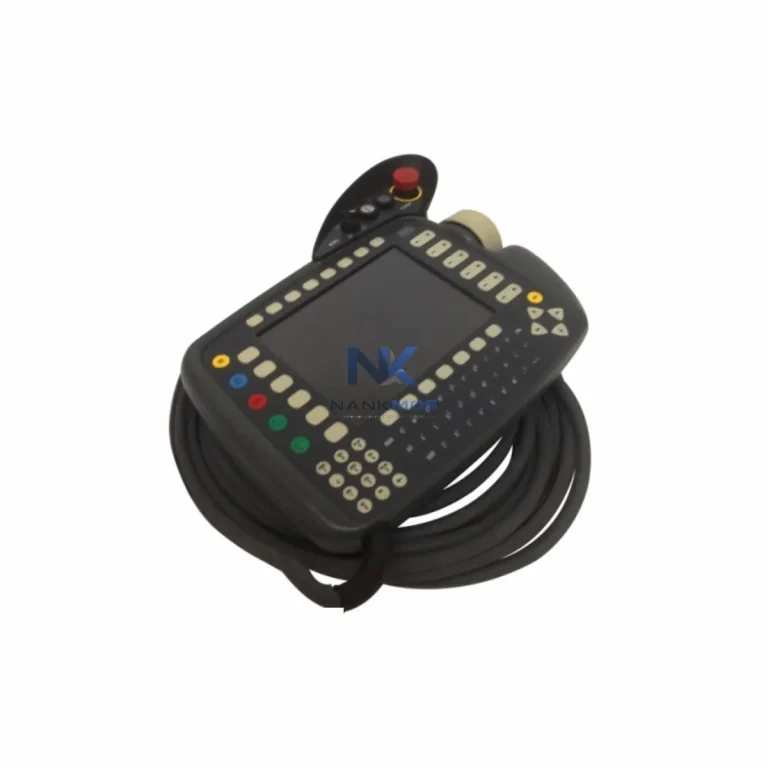
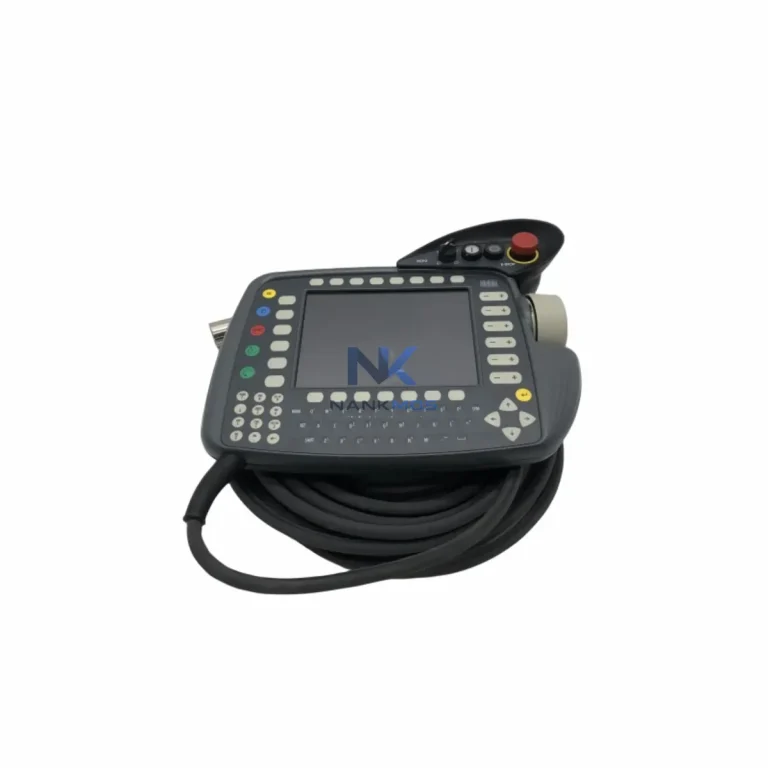
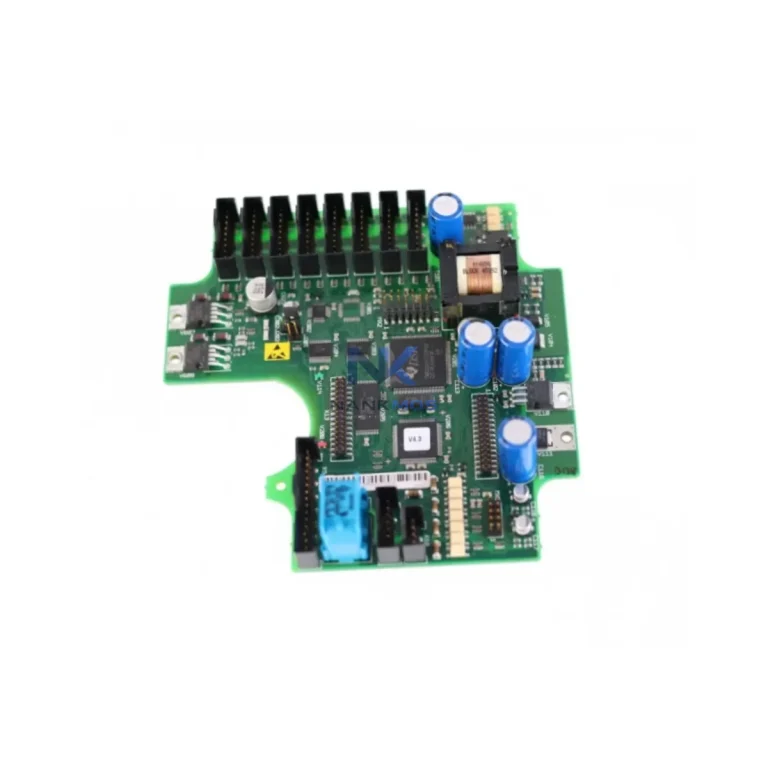
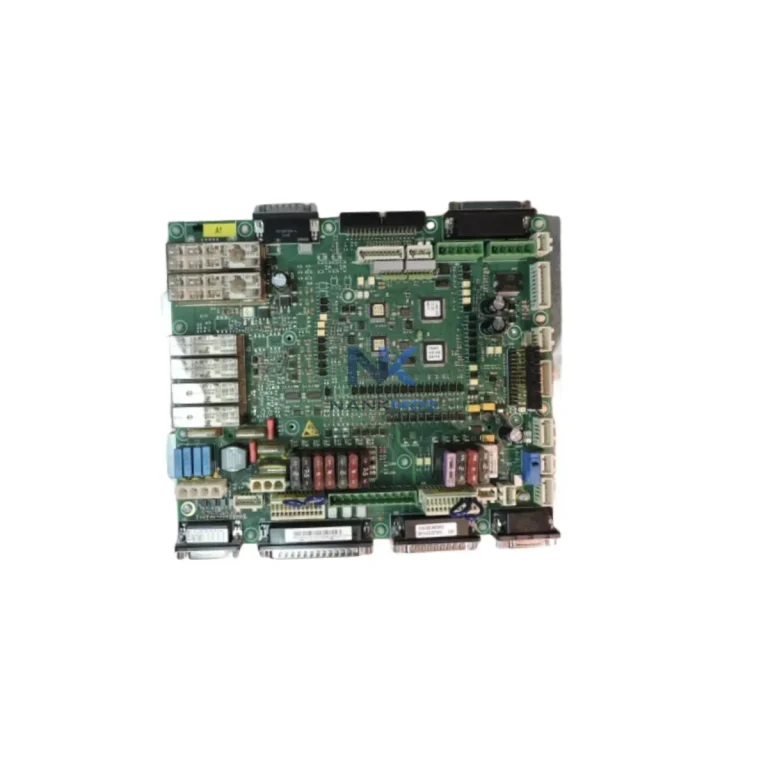
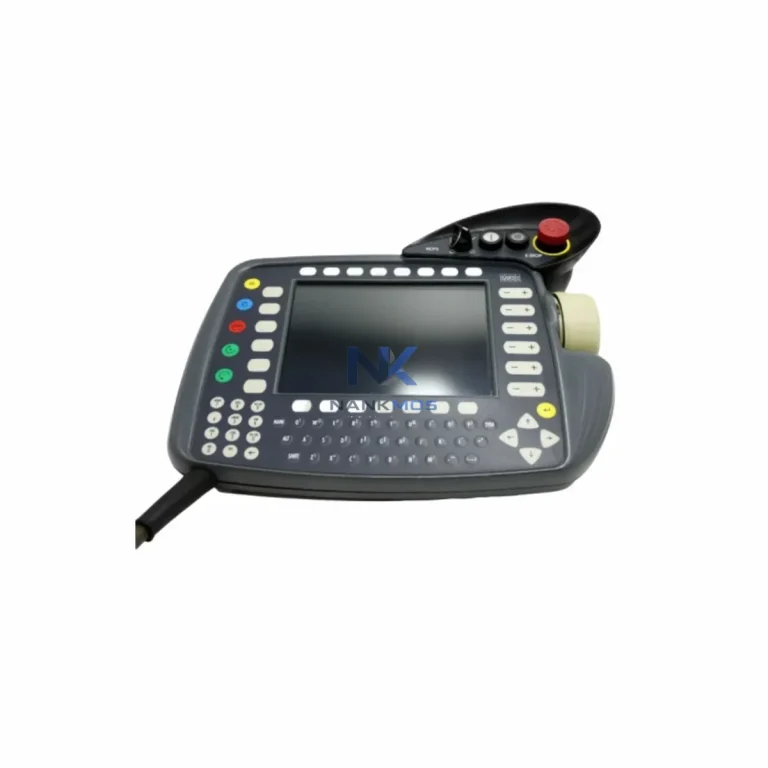
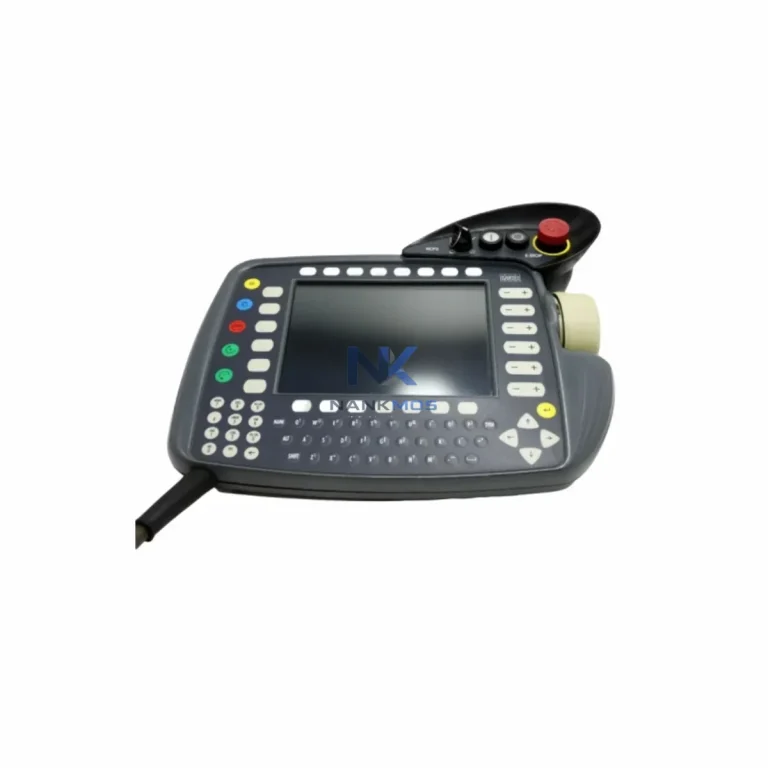
KUKA 00-138-379 is a NANKMOS industrial automation product record Listed under Other series series and Business & Industrial > Automation, Control & Flow Devices > Programmable Logic Controllers. Confirm condition, availability, lead time, compatibility and documentation by email inquiry.
Brand names are used for identification only.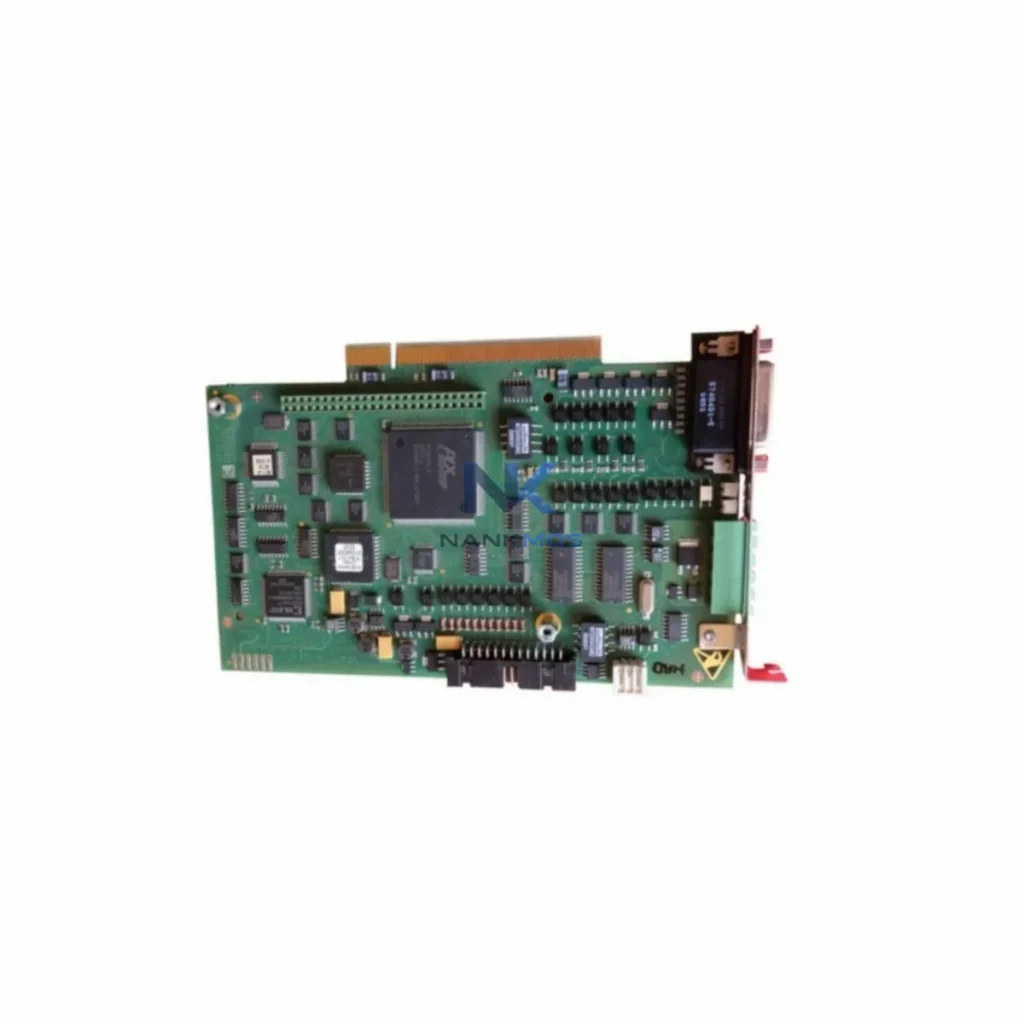
KUKA 00-138-379 is a NANKMOS industrial automation product record Listed under Other series series and Business & Industrial > Automation, Control & Flow Devices > Programmable Logic Controllers. Confirm condition, availability, lead time, compatibility and documentation by email inquiry.
| Manufacturer | KUKA |
|---|---|
| Application | Controller Processing & System Control |
| Part Number / Model | 00-138-379 |
| Compatible System | Confirmed by inquiry |
| Condition Options | To Confirm |
| Module Type | Controller / CPU Module |
| Warranty | 12 Months |
| Packaging | Anti-static Bag / Secure Box |
| Shipping Methods | DHL / FedEx / UPS / Air / Sea |
| Availability | To Confirm |
| Lead Time | To Confirm |
| Documentation | Part number and revision checked before quote |
The KUKA 00-138-379 Safety Board is a critical safety-layer component engineered for seamless integration within KUKA KRC robot controller architectures. Designed to operate as the dedicated safety monitoring and interlock module within the KRC control cabinet, this board ensures that all safety-relevant signals — including emergency stop chains, enabling device inputs, protective door interlocks, and axis-specific safe torque off (STO) commands — are processed with deterministic response times and full compliance with functional safety standards. Its role within the broader automation architecture extends far beyond a standalone safety relay: it acts as the structural backbone of the safety layer, coordinating with the CPU module, servo drives, I/O expansion racks, and fieldbus communication nodes to enforce a coherent, system-wide safety state.
The KUKA 00-138-379 Safety Board does not operate in isolation — its value is fully realized when understood within the context of the complete KRC control architecture. In a typical KRC4-based robot cell, the safety board interfaces directly with the KRC4 main computer module (e.g., KUKA PC board 00-168-334 or equivalent CPU assembly), which handles trajectory planning, motion interpolation, and real-time process coordination. The safety board receives and validates safety-relevant inputs from the teach pendant (KCP4 or smartPAD), the external emergency stop circuit, and the cell-level safety PLC — often a Siemens S7-300 or S7-1500 series controller managing the broader production line safety zone.
On the drive side, the safety board communicates STO (Safe Torque Off) and SS1 (Safe Stop 1) commands to the KRC servo inverter modules — such as the KUKA KPP 600-20 power section or KSP 600-3x10 servo pack — ensuring that axis motion is halted in a controlled, safety-rated manner without requiring a full controller power cycle. This tight coupling between the safety board, the power electronics layer, and the motion controller is what enables KUKA systems to achieve short recovery times after safety events, a critical requirement in high-throughput automotive and electronics assembly lines.
At the I/O layer, the 00-138-379 integrates with KUKA's internal I/O expansion modules and, in more complex architectures, with external Profinet or EtherCAT I/O nodes — such as Beckhoff EK1100 EtherCAT couplers or Phoenix Contact Axioline F I/O slices — that aggregate field-level safety signals from light curtains, safety mats, and two-hand control stations. The safety board's role is to consolidate these distributed safety inputs into a unified safety state that the KRC CPU can act upon deterministically.
For installations requiring functional redundancy, the 00-138-379 supports architectures where a secondary safety monitoring path — often implemented via a dedicated safety relay module such as the Pilz PNOZ X or SICK Flexi Soft safety controller — provides a cross-monitored safety channel. This dual-channel architecture is common in collaborative robot (cobot) integration scenarios and in cells where human-robot interaction zones require PLd or SIL2-rated safety performance.
At the HMI and supervision layer, the safety board's status is typically surfaced through the KUKA smartHMI interface on the KCP4 teach pendant, as well as through OPC-UA or Profinet diagnostic data accessible from SCADA systems and MES platforms. Maintenance engineers can query safety board fault codes, input channel states, and safety function activation history directly from the controller's diagnostic interface, significantly reducing mean time to repair (MTTR) during unplanned downtime events.
Automotive Body-in-White Assembly: In high-volume automotive welding and assembly lines, KUKA KRC4 robots equipped with the 00-138-379 Safety Board operate within multi-robot cells where coordinated safety zones must be managed with millisecond-level precision. The safety board ensures that zone-entry events — detected by safety laser scanners or area sensors — trigger immediate STO commands to all axes within the affected zone, while robots in adjacent zones continue production uninterrupted. This selective safety response is only possible when the safety board is correctly configured and communicating reliably with the cell-level safety PLC.
Electronics and Semiconductor Manufacturing: In cleanroom environments where KUKA robots handle wafer carriers, PCB assemblies, or precision optical components, the 00-138-379 Safety Board provides the safety interlock infrastructure that prevents robot motion during manual loading and unloading cycles. Its low-latency safety response is essential in environments where even minor uncontrolled motion could result in product damage or personnel injury.
Petrochemical and Process Industry: In hazardous area applications where KUKA robots are deployed for inspection, sampling, or valve actuation tasks, the safety board's reliable emergency stop processing ensures that the robot can be brought to a safe state rapidly in response to process alarms or gas detection events. Integration with the plant's safety instrumented system (SIS) is achieved through hardwired safety relay interfaces connected to the safety board's input channels.
Packaging and Palletizing Lines: High-speed packaging robots rely on the 00-138-379 to manage the safety interlock between the robot work envelope and the conveyor infeed/outfeed zones. The safety board's ability to process multiple simultaneous safety input channels allows a single KRC controller to manage complex multi-zone safety logic without requiring an external safety PLC for basic cell protection.
Metal Fabrication and Welding: In arc welding and laser cutting applications, the safety board coordinates with the welding power source interlock and the fume extraction system safety relay to ensure that the robot cannot initiate a weld cycle unless all auxiliary systems are confirmed ready. This system-level interlock logic, managed through the 00-138-379, reduces the risk of weld defects caused by incomplete process readiness.
Q1: Is the KUKA 00-138-379 Safety Board compatible with both KRC2 and KRC4 controller generations? The 00-138-379 is primarily associated with the KRC architecture platform. Compatibility should be verified against your specific controller serial number and software version (KUKA System Software, KSS). When ordering for a KRC2 installation, confirm the cabinet revision and existing safety board part number to ensure a direct replacement fit. Our technical team can assist with cross-referencing if you provide the controller nameplate data.
Q2: What is the recommended procedure for replacing the safety board without losing safety configuration data? Before replacing the 00-138-379, back up the complete KRC project including safety configuration parameters using WorkVisual or the applicable KUKA project management tool for your KSS version. After physical replacement, restore the project and perform a full safety acceptance test including verification of all E-stop channels, door interlock inputs, and STO function per your site's safety validation protocol. The 12-Month Warranty covers the replacement unit against manufacturing defects; functional validation after installation is the responsibility of the commissioning engineer.
Q3: How does NANKMOS ensure the quality and reliability of the KUKA 00-138-379 Safety Board prior to shipment? Every KUKA 00-138-379 Safety Board dispatched from NANKMOS undergoes pre-shipment functional testing to verify board integrity and connector condition. Units are sourced from verified supply channels and stored under controlled conditions to prevent ESD damage and environmental degradation. Each unit is covered by a 12-Month Warranty from the date of shipment, providing assurance for maintenance planners and procurement teams managing critical spare parts inventories for KUKA robot installations.
Functional Inspection100% tested on professional platforms to ensure stable performance.
 Anti-static Packaging
Modules are packed in anti-static bags to prevent electrostatic damage.
 Secure Export Packing
Cushion protection and strong cartons ensure safe transportation.
 Worldwide Shipping
Global logistics network supports air, sea and express delivery.
 Documentation Check
Part number, revision and compatibility verified before shipment.
 After-sales Support
Professional technical support to help resolve your issues.