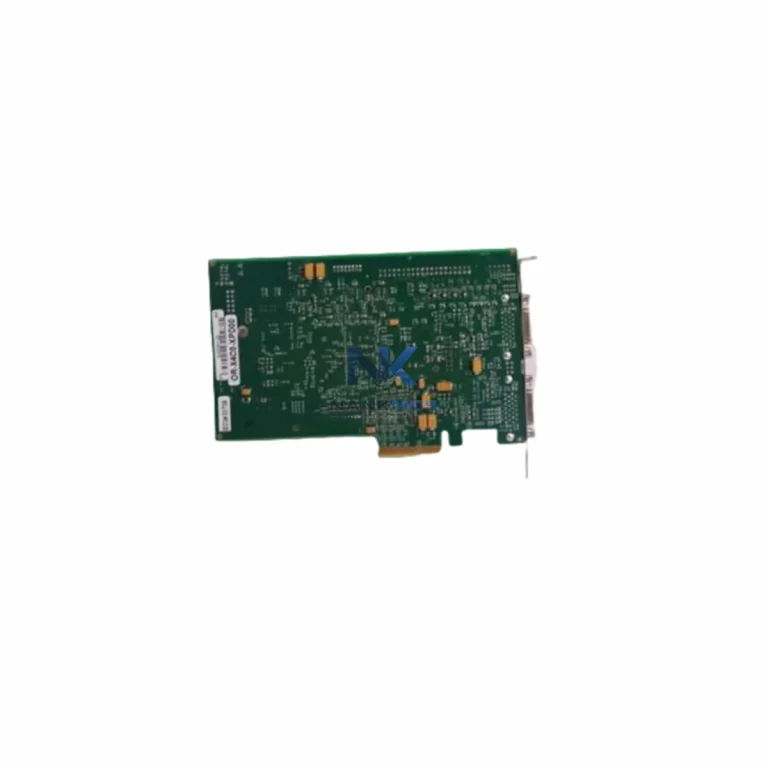
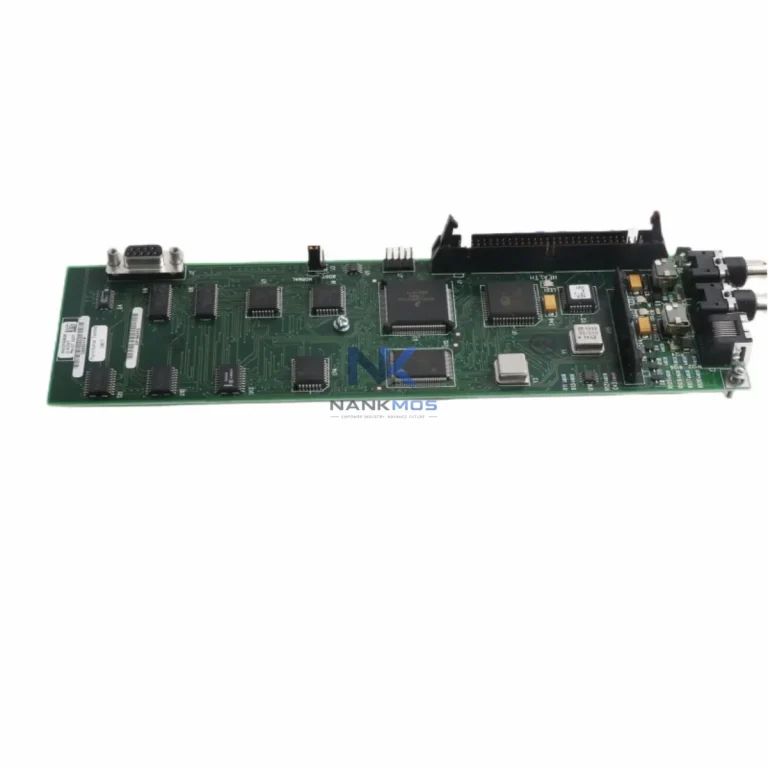
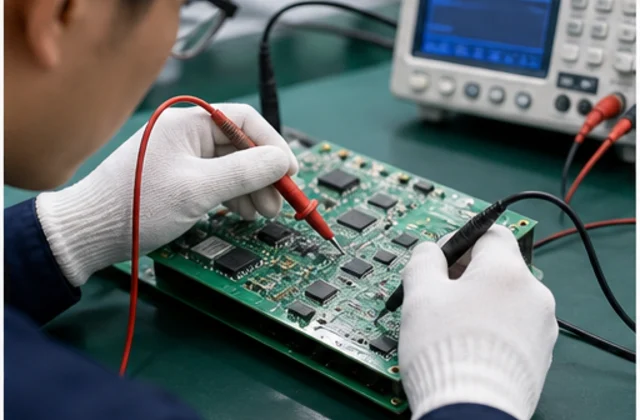
 Functional Inspection
100% tested on professional platforms to ensure stable performance.
DAIHEN FLB-60M-03 0190-19674 is a NANKMOS industrial automation product record Listed under Other series series and Business & Industrial > Automation, Control & Flow Devices. Confirm condition, availability, lead time, compatibility and documentation by email inquiry.
Brand names are used for identification only.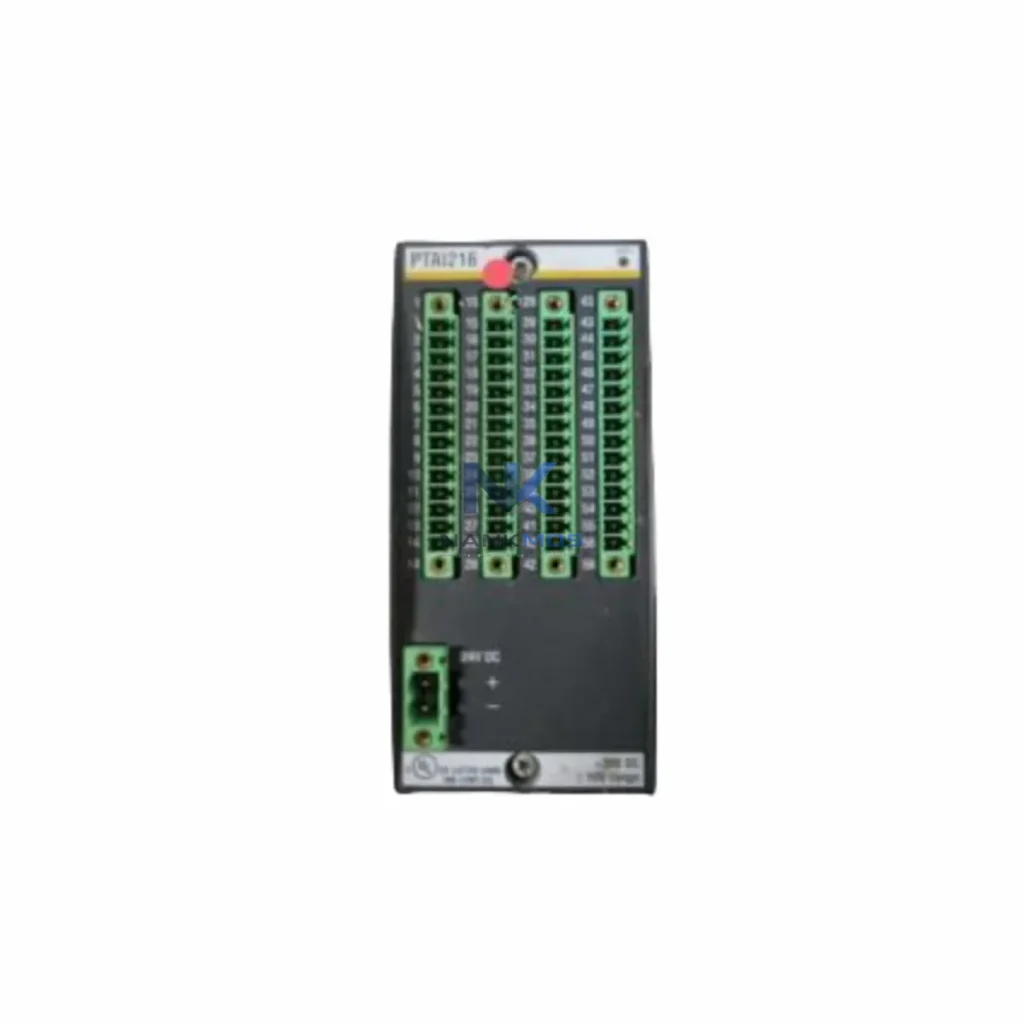
DAIHEN FLB-60M-03 0190-19674 is a NANKMOS industrial automation product record Listed under Other series series and Business & Industrial > Automation, Control & Flow Devices. Confirm condition, availability, lead time, compatibility and documentation by email inquiry.
| Manufacturer | DAIHEN |
|---|---|
| Application | DCS / Control Board Replacement |
| Part Number / Model | FLB-60M-03 0190-19674 |
| Compatible System | Confirmed by inquiry |
| Condition Options | To Confirm |
| Module Type | Control Board / Card |
| Warranty | 12 Months |
| Packaging | Anti-static Bag / Secure Box |
| Shipping Methods | DHL / FedEx / UPS / Air / Sea |
| Availability | To Confirm |
| Lead Time | To Confirm |
| Documentation | Part number and revision checked before quote |
The DAIHEN FLB-60M-03-0190 is a precision-engineered control board designed for OTC welding automation systems, delivering reliable energy-control performance across demanding smart production environments. As a core component within DAIHEN's FLB series, this board governs arc-start sequencing, weld-cycle timing, and load-state feedback — directly influencing how efficiently a welding cell consumes power and maintains production rhythm. By stabilising control signals and minimising idle-state energy draw, the FLB-60M-03-0190 contributes measurably to reduced operational energy costs and improved equipment utilisation across continuous-run production lines.
In modern smart factories, energy efficiency is not a single-device achievement — it is a system-level outcome. The FLB-60M-03-0190 is engineered to integrate seamlessly within broader automation architectures, working in coordination with upstream controllers, drive systems, and monitoring infrastructure to ensure that every joule consumed by the welding process is purposeful and accountable.
Effective energy management in a welding production line requires tight coordination between the control board and every adjacent system layer. The DAIHEN FLB-60M-03-0190 operates as the nerve centre of the OTC welding cell, but its energy-control value is fully realised only when it communicates accurately with the surrounding automation ecosystem.
At the controller level, the FLB-60M-03-0190 interfaces with PLC platforms — such as those running on PROFIBUS-DP or DeviceNet fieldbus backbones — to receive production-schedule signals and relay real-time weld-status feedback. This bidirectional data flow allows the PLC to modulate welding cell activation in alignment with line-takt requirements, preventing unnecessary power-on cycles during buffer gaps or upstream stoppages. When paired with a DAIHEN OTC DR-4000 or equivalent welding power source, the board ensures that arc-ignition energy is delivered precisely, avoiding the thermal and electrical stress associated with repeated failed arc-starts.
On the drive side, servo drive systems controlling wire-feed mechanisms and torch-positioning axes depend on stable control-board outputs to maintain consistent feed rates. Erratic control signals — often a symptom of a degraded control board — force servo drives to compensate with excess torque, increasing both motor heat and energy consumption. A correctly functioning FLB-60M-03-0190 eliminates this compensation overhead, keeping servo drive efficiency within rated parameters.
Power monitoring modules installed at the welding cell distribution panel can log the energy signature of each weld cycle. When the FLB-60M-03-0190 is operating correctly, the power profile per weld is consistent and predictable — a baseline that energy management systems and SCADA platforms can use to flag anomalies indicative of electrode wear, contact-tip degradation, or upstream supply instability. Integration with HMI panels allows operators to visualise weld-energy trends in real time, enabling proactive intervention before quality or efficiency losses occur.
I/O modules connected to the welding cell safety circuit — monitoring door interlocks, torch-collision sensors, and coolant-flow switches — feed status signals through the control board logic. The FLB-60M-03-0190 processes these inputs to gate welding power, ensuring that energy is never delivered to an unsafe or unready cell state. Communication modules bridging the welding controller to plant-level SCADA systems carry cycle-count, fault-code, and energy-consumption data upstream, supporting factory-wide energy optimisation dashboards and OEE reporting.
Welding operations are among the highest energy-intensity processes on a manufacturing floor. A single robotic welding cell operating at full duty cycle can draw several tens of kilowatts continuously, and across a multi-cell production line, cumulative energy costs are substantial. The DAIHEN FLB-60M-03-0190 addresses energy optimisation at the source — the control logic that governs when, how, and for how long welding power is applied.
By maintaining precise arc-start and arc-end sequencing, the board eliminates the energy waste associated with prolonged arc-establishment attempts or premature arc-termination followed by re-ignition. Each failed arc-start represents not only wasted electrical energy but also accelerated consumable wear and potential weld-quality defects that trigger rework — a secondary energy cost often overlooked in energy audits. A reliable FLB-60M-03-0190 reduces arc-start failure rates, directly lowering both primary energy consumption and rework-related energy overhead.
Thermal load management is a further benefit. Welding power sources generate significant heat, and their cooling systems — typically fan-cooled or water-cooled — consume additional energy proportional to thermal load. When the control board maintains stable, efficient weld cycles, the thermal output of the power source is more predictable and lower on average, reducing cooling system duty cycles and extending the service life of thermal management components.
From a production-rhythm perspective, the FLB-60M-03-0190 supports consistent takt-time adherence. Unplanned stoppages caused by control-board faults disrupt line balance, forcing upstream and downstream stations into idle states — a hidden energy cost as motors, conveyors, and auxiliary systems continue to draw power while waiting for the welding cell to recover. Maintaining a healthy, in-specification control board is therefore a line-level energy strategy, not merely a maintenance task.
Predictive maintenance programmes benefit directly from a stable control board. When the FLB-60M-03-0190 produces consistent, fault-free operation, maintenance teams can establish reliable baseline performance metrics. Deviations from these baselines — captured by connected power monitoring modules and SCADA systems — provide early warning of impending failures, allowing scheduled replacement during planned downtime rather than emergency intervention during production hours. This approach maximises equipment utilisation, minimises unplanned energy waste from emergency restarts, and supports the 12-month warranty coverage period with documented operational history.
All units are supplied from verified in-stock inventory, pre-shipment tested under load conditions to confirm functional integrity before dispatch. This ensures that replacement installations restore production efficiency immediately, without the commissioning delays associated with untested or refurbished components.
Q1: How does the FLB-60M-03-0190 contribute to measurable energy savings on a welding production line?The board governs arc-start sequencing and load-state control, eliminating energy waste from failed arc-starts, idle-state overconsumption, and erratic weld cycles. When operating correctly, it produces a consistent, predictable energy signature per weld that supports SCADA-based energy monitoring and line-level efficiency reporting.
Q2: Is the FLB-60M-03-0190 compatible with current DAIHEN OTC welding systems and third-party PLC platforms?Yes. The FLB-60M-03-0190 is designed for DAIHEN OTC series welding controllers and FLB-series power sources. It interfaces with standard PLC I/O architectures via the welding controller's fieldbus or hardwired I/O connections. Compatibility with specific PLC models or communication protocols should be confirmed against the OTC controller's integration documentation.
Q3: What is the recommended replacement and testing process for this control board?Replacement should be performed by qualified automation technicians following DAIHEN OTC service procedures. All NANKMOS-supplied units are pre-shipment tested under operational load conditions. Post-installation, a weld-cycle commissioning test is recommended to verify arc-start performance, load-state feedback accuracy, and integration with connected PLC and SCADA systems before returning the cell to full production.
Q4: What warranty and supply terms apply to this unit?The DAIHEN FLB-60M-03-0190 is supplied with a 12-Month Warranty covering manufacturing defects and functional failures under normal operating conditions. Units are dispatched from verified in-stock inventory with pre-shipment test documentation available on request. For volume orders, lead-time and supply continuity terms are available upon enquiry.
Functional Inspection100% tested on professional platforms to ensure stable performance.
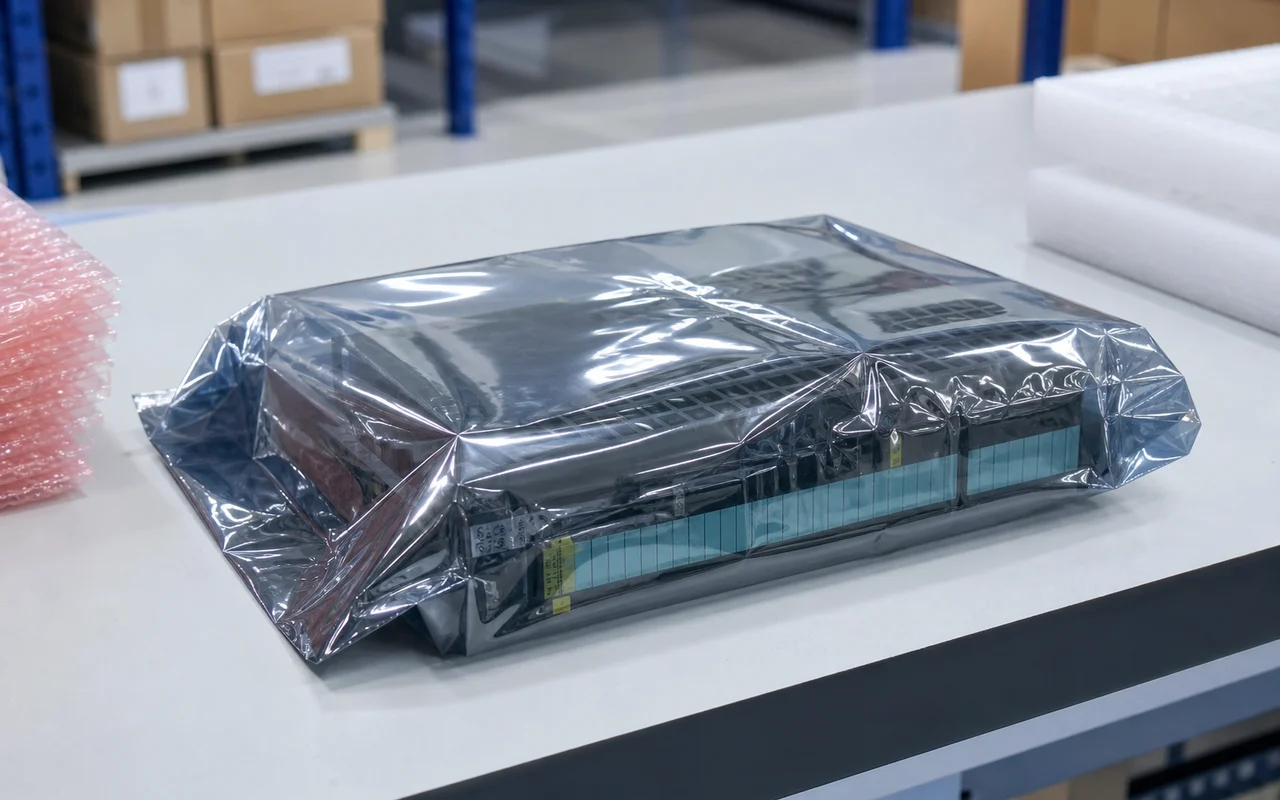 Anti-static Packaging
Modules are packed in anti-static bags to prevent electrostatic damage.
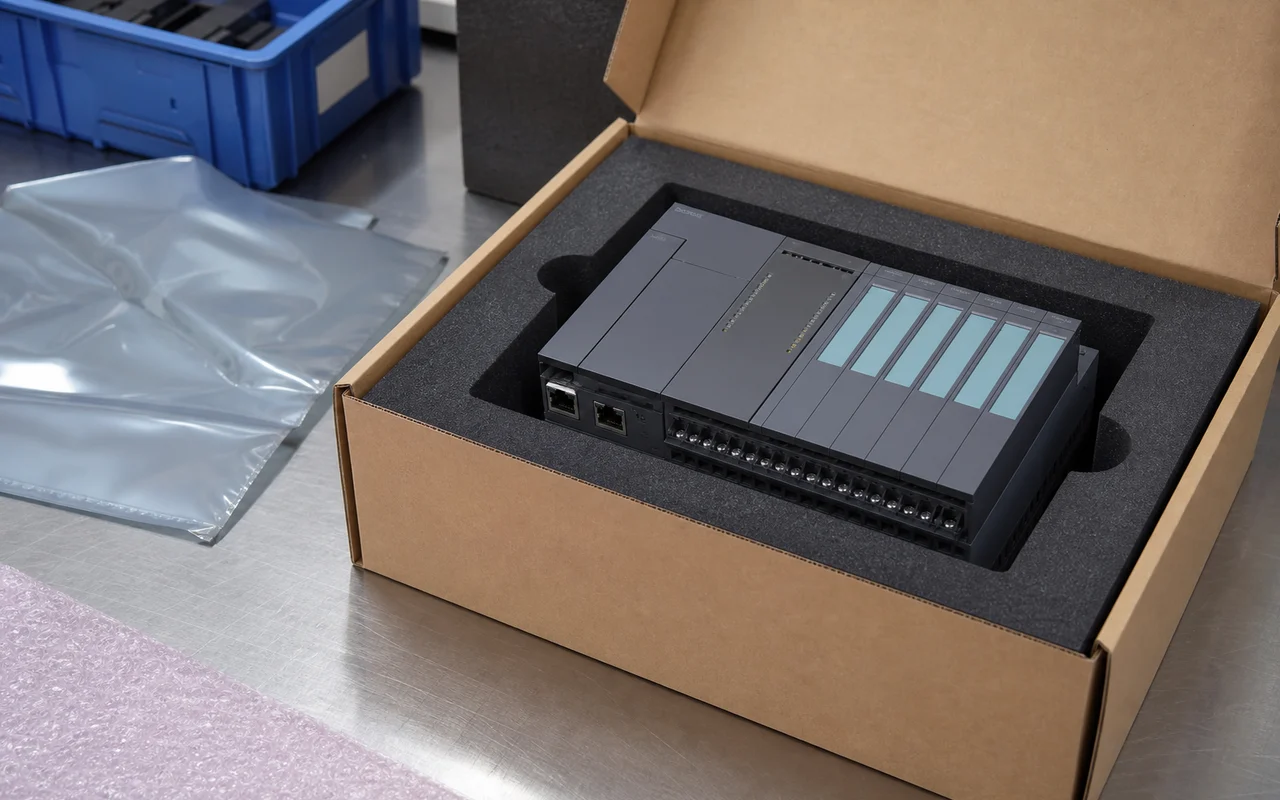 Secure Export Packing
Cushion protection and strong cartons ensure safe transportation.
 Worldwide Shipping
Global logistics network supports air, sea and express delivery.
 Documentation Check
Part number, revision and compatibility verified before shipment.
 After-sales Support
Professional technical support to help resolve your issues.