Functional Inspection
100% tested on professional platforms to ensure stable performance.
KUKA SPS-DY150H 00-105-904 is a NANKMOS industrial automation product record Listed under Other series series and Business & Industrial > Automation, Control & Flow Devices > Programmable Logic Controllers. Confirm condition, availability, lead time, compatibility and documentation by email inquiry.
Brand names are used for identification only.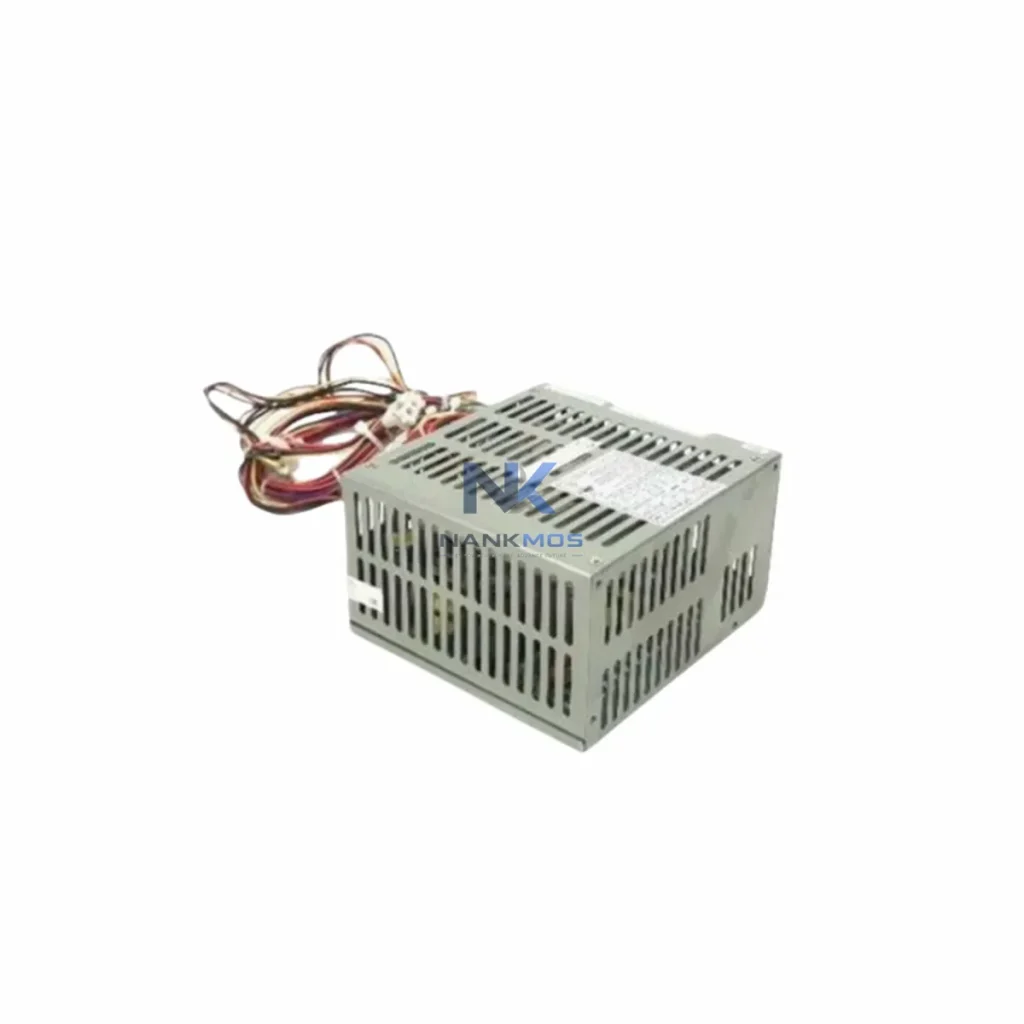
KUKA SPS-DY150H 00-105-904 is a NANKMOS industrial automation product record Listed under Other series series and Business & Industrial > Automation, Control & Flow Devices > Programmable Logic Controllers. Confirm condition, availability, lead time, compatibility and documentation by email inquiry.
| Manufacturer | KUKA |
|---|---|
| Application | Control System Power Support |
| Part Number / Model | SPS-DY150H 00-105-904 |
| Compatible System | Confirmed by inquiry |
| Condition Options | To Confirm |
| Module Type | Power Supply Module |
| Warranty | 12 Months |
| Packaging | Anti-static Bag / Secure Box |
| Shipping Methods | DHL / FedEx / UPS / Air / Sea |
| Availability | To Confirm |
| Lead Time | To Confirm |
| Documentation | Part number and revision checked before quote |
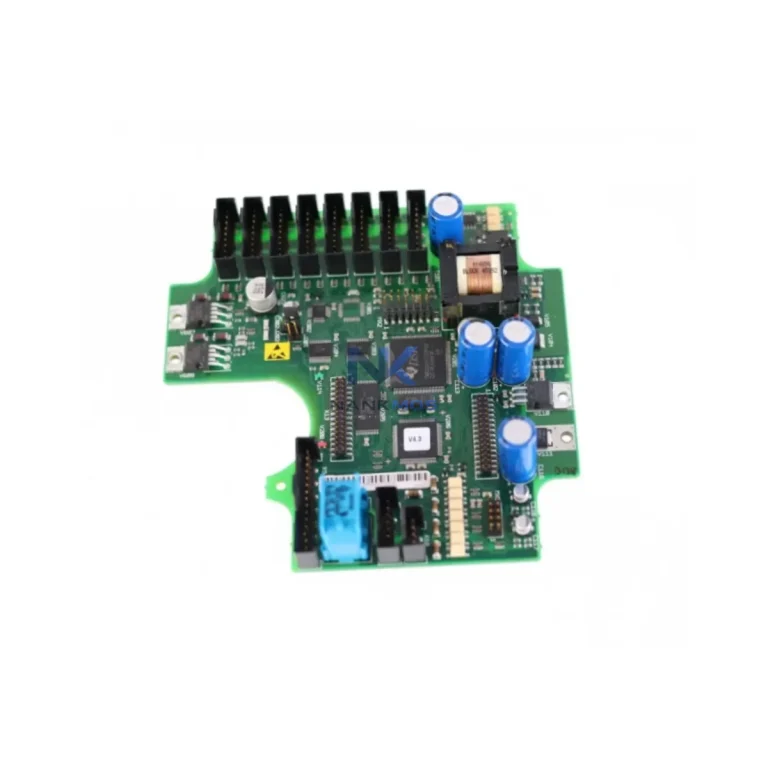
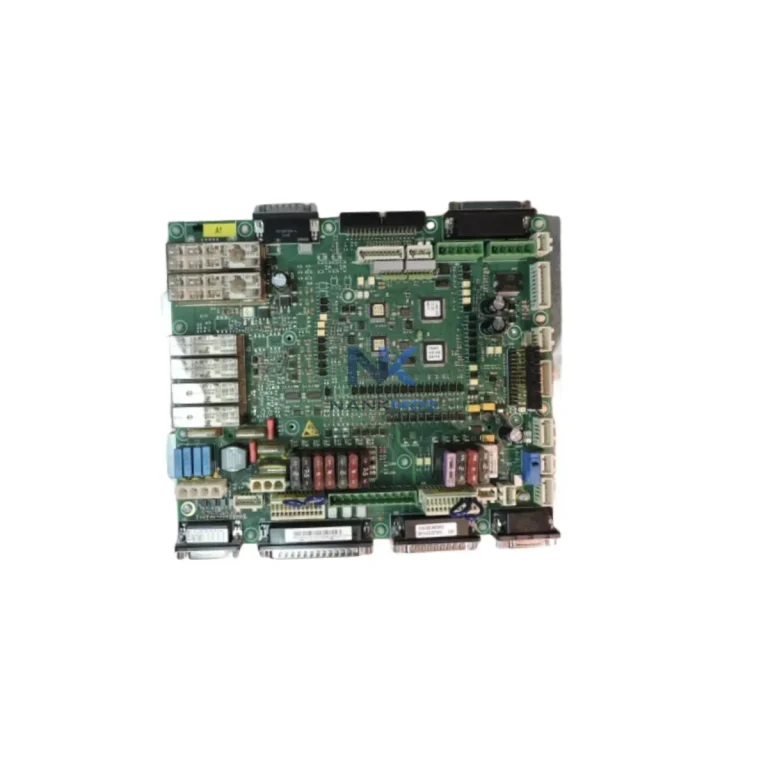
The KUKA 00-105-904 (SPS-DY150H) is a dedicated power supply module engineered for seamless integration within the KUKA KR C2 robot controller architecture. As a critical component of the control system's power layer, this module ensures stable, regulated DC voltage delivery to the controller's CPU board, I/O backplane, servo amplifier interfaces, and safety relay circuits. Its design reflects KUKA's commitment to system-level reliability — every electrical parameter is matched to the KR C2 platform's internal bus requirements, eliminating compatibility risk and reducing commissioning time on the factory floor.
In a fully deployed KR C2 control cabinet, the power supply does not operate in isolation. It forms the electrical backbone that sustains every other subsystem: from the KPS 600 servo power supply unit that drives the robot's axis amplifiers, to the DSE-IBS C33 I/O interface board that handles digital signal exchange with peripheral PLCs and safety controllers. The SPS-DY150H provides the low-voltage DC rails that keep the controller's logic circuits, fieldbus communication cards, and operator panel alive during both normal operation and controlled shutdown sequences. Without a correctly specified and tested power supply, even the most sophisticated motion planning software cannot execute reliably.
The KR C2 controller is a mature, widely deployed robot control platform found across automotive body-in-white lines, foundry automation, palletising systems, and arc welding cells. The SPS-DY150H power supply sits at the heart of this architecture, and its correct operation directly influences the performance of every connected subsystem.
At the control layer, the KR C2's main CPU board — the KRC2 VxWorks controller card — depends on the stable +5 V and +12 V rails delivered by this module to execute real-time motion interpolation and safety monitoring cycles. Any voltage ripple or dropout at this layer propagates immediately into trajectory errors or E-stop events. Alongside the CPU, the KPS 600 servo power supply handles the high-voltage DC bus for the axis drives, but it relies on the SPS-DY150H's +24 V output to energise its own control logic and contactor coils.
At the I/O and communication layer, the DSE-IBS C33 digital I/O board and optional KUKA MFC3 fieldbus communication card (supporting PROFIBUS-DP or DeviceNet) draw their logic power from the same +24 V rail. This means that a degraded power supply does not merely affect motion — it can silently corrupt fieldbus communication frames, causing intermittent faults that are extremely difficult to diagnose without oscilloscope-level analysis. Replacing the SPS-DY150H with a verified OEM unit eliminates this entire class of fault.
At the HMI and operator layer, the KUKA KCP (KUKA Control Panel) teach pendant and its associated interface electronics are powered through the controller's internal distribution. The pendant's display, keypad scanning, and emergency stop monitoring circuits all trace back to the power supply's output rails. In installations where the KUKA smartPAD or legacy KCP2 pendant is used for program editing and manual jogging, a stable power supply is a prerequisite for reliable operator interaction.
At the safety and protection layer, the KR C2 integrates a dedicated safety controller that monitors axis positions, speed limits, and workspace boundaries. The safety relay board — often the ESC (Electronic Safety Circuit) module — requires uninterrupted +24 V to maintain its monitoring loops. A power supply that drifts out of specification can cause nuisance safety trips or, more critically, fail to trigger a genuine E-stop, both of which are unacceptable in a CE-marked robot installation.
For system integrators managing mixed-brand control cabinets, the SPS-DY150H's multi-rail output also supports auxiliary 24 V loads such as Phoenix Contact QUINT-series DIN-rail power conditioners, Weidmüller terminal block signal isolators, and Siemens SITOP PSU100S buffer modules that are commonly co-located in the same panel to support peripheral I/O marshalling and fieldbus segment power. This cross-brand compatibility makes the KUKA 00-105-904 a practical choice for retrofit and upgrade projects where the robot controller shares a cabinet with third-party PLC I/O or safety relay modules.
Automotive Manufacturing: In body-in-white welding and assembly lines, KR C2 controllers are deployed in multi-robot cells coordinated by a Siemens S7-400 or S7-300 PLC via PROFIBUS-DP. The SPS-DY150H ensures that the robot's fieldbus interface card maintains continuous communication with the line PLC, preventing cell-level production stops caused by controller power instability. Replacement of this module during scheduled maintenance windows is a standard practice in automotive OEM facilities operating under ISO/TS 16949 quality frameworks.
Foundry and Heavy Industry: In high-vibration, high-temperature foundry environments — die casting, investment casting, and forging automation — the KR C2 controller is subjected to thermal cycling and airborne particulate contamination. The SPS-DY150H's forced-air cooling and robust internal construction make it suitable for these demanding conditions, provided the cabinet's air filtration is maintained. Foundry integrators typically stock one spare unit per robot cell to minimise unplanned downtime.
Palletising and Logistics: In end-of-line palletising systems, KR C2 robots operate continuously across three-shift production schedules. The power supply's 150 W output capacity provides adequate headroom for the controller's full I/O load, including gripper solenoid valves, barcode scanner interfaces, and conveyor interlock signals routed through the DSE-IBS I/O board. Logistics integrators value the module's plug-and-play replacement capability, which allows a trained technician to restore a cell to production within 30 minutes.
Arc Welding Automation: In MIG/MAG and TIG welding cells, the KR C2 controller interfaces with welding power sources via analogue and digital I/O. The SPS-DY150H's clean +24 V output is essential for maintaining the integrity of the welding process control signals, particularly the arc-on/arc-off commands and wire feed speed references that are exchanged between the robot controller and the welding inverter. Electrical noise on the power supply output can introduce weld defects that are only detected during post-weld inspection.
Q1: Is the KUKA 00-105-904 (SPS-DY150H) compatible with all KR C2 controller variants, including the KR C2 ed05 and KR C2 sr?The SPS-DY150H is the standard internal power supply for the KR C2 platform across its production variants, including the KR C2 ed05 (extended service) and KR C2 sr (shelf-ready) configurations. The module's multi-rail output and physical form factor are consistent across these variants. However, integrators should always verify the part number against the controller's internal wiring diagram (available in the KR C2 Service Manual, document number KUKA Roboter GmbH BA KR C2) before installation, as late-production KR C2 ed05 units may have been retrofitted with an alternative PSU during factory refurbishment.
Q2: What is the recommended maintenance interval for the SPS-DY150H, and how does it affect the 12-Month Warranty?KUKA recommends inspecting the internal power supply as part of the annual preventive maintenance schedule defined in the KR C2 maintenance manual. This includes checking output voltage levels under load, inspecting the cooling fan for bearing wear, and verifying connector integrity. The 12-Month Warranty provided by NANKMOS covers manufacturing defects and electrical failure under normal operating conditions. Warranty claims require the module to have been installed in a correctly configured KR C2 cabinet and operated within the specified input voltage and ambient temperature ranges. Damage caused by incorrect input voltage, cabinet overheating, or physical impact is excluded.
Q3: Can the KUKA 00-105-904 be used as a direct replacement in a KR C2 controller that has been integrated with a third-party safety PLC, such as a Pilz PNOZ or Sick Flexi Soft?Yes. The SPS-DY150H's +24 V output rail is electrically compatible with the input requirements of Pilz PNOZ X-series and Sick Flexi Soft safety relay modules, which are commonly used to extend the KR C2's native ESC safety circuit in collaborative or multi-robot installations. The power supply does not interact directly with the safety PLC's logic — it simply provides the DC supply voltage. Integrators should ensure that the total 24 V load, including the safety PLC, I/O modules, and solenoid valves, does not exceed the SPS-DY150H's rated output capacity. If the load budget is tight, a supplementary DIN-rail PSU should be added to the cabinet to offload non-critical 24 V consumers.
Functional Inspection100% tested on professional platforms to ensure stable performance.
 Anti-static Packaging
Modules are packed in anti-static bags to prevent electrostatic damage.
 Secure Export Packing
Cushion protection and strong cartons ensure safe transportation.
 Worldwide Shipping
Global logistics network supports air, sea and express delivery.
 Documentation Check
Part number, revision and compatibility verified before shipment.
 After-sales Support
Professional technical support to help resolve your issues.