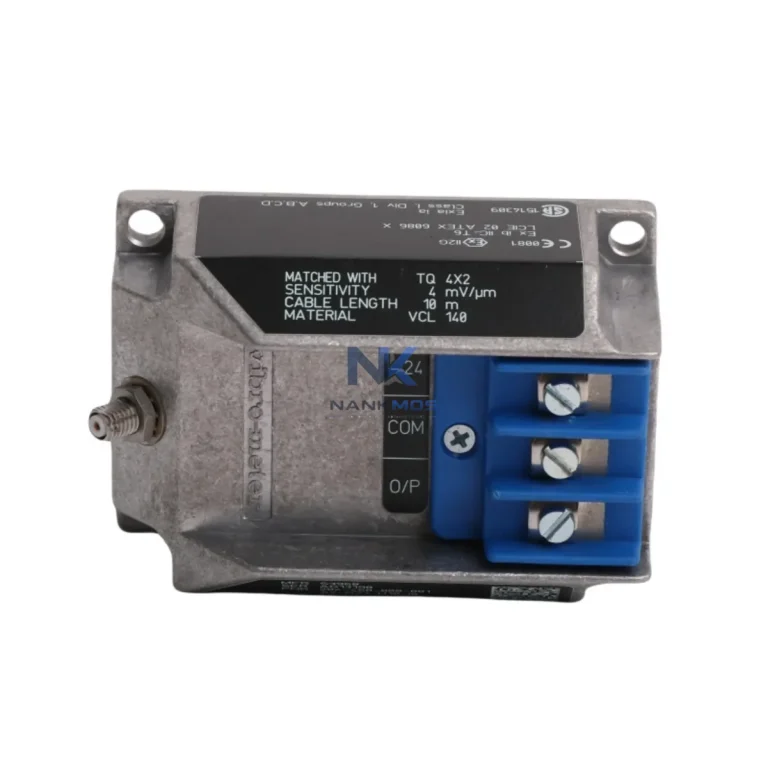
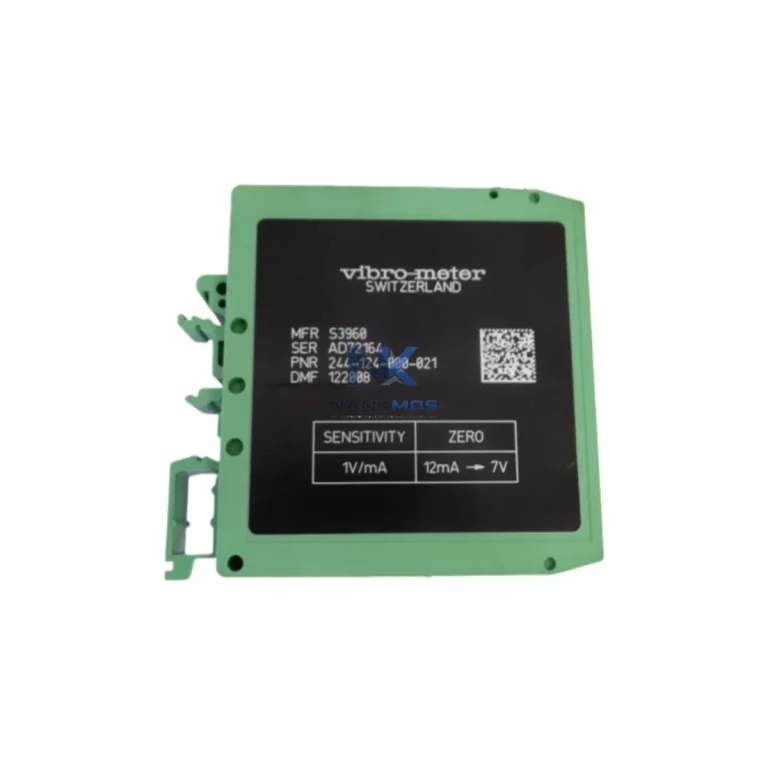
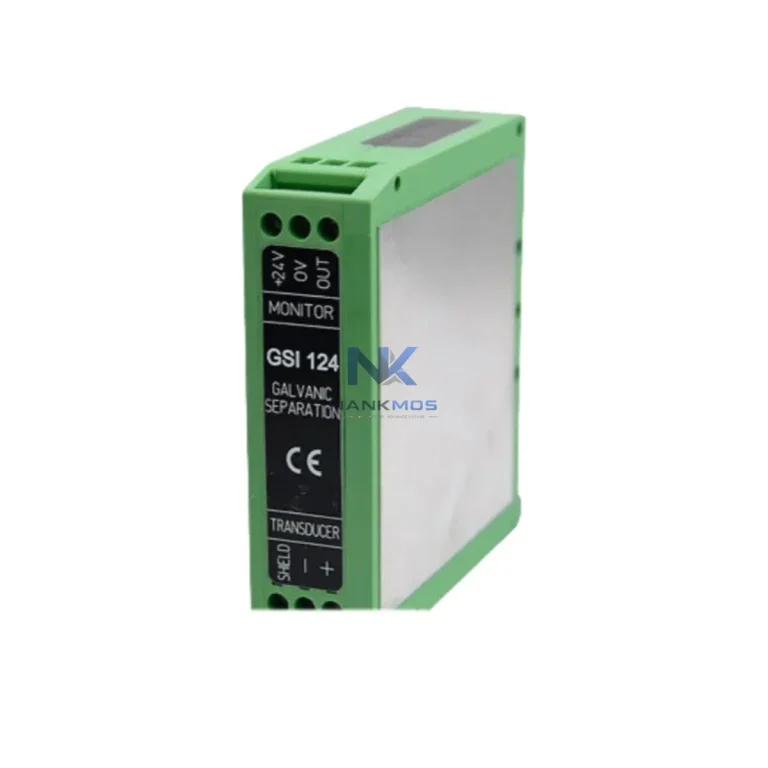
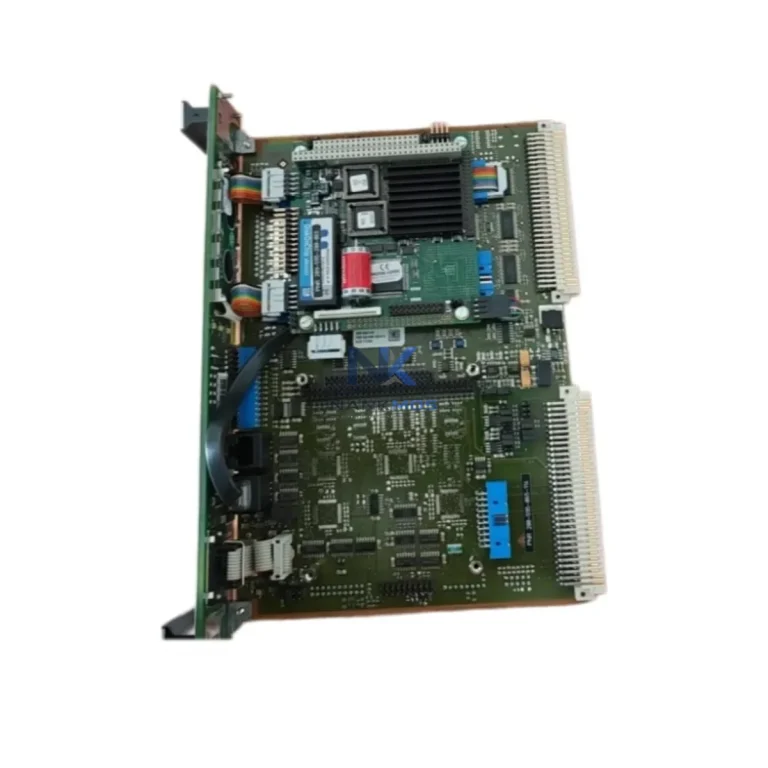
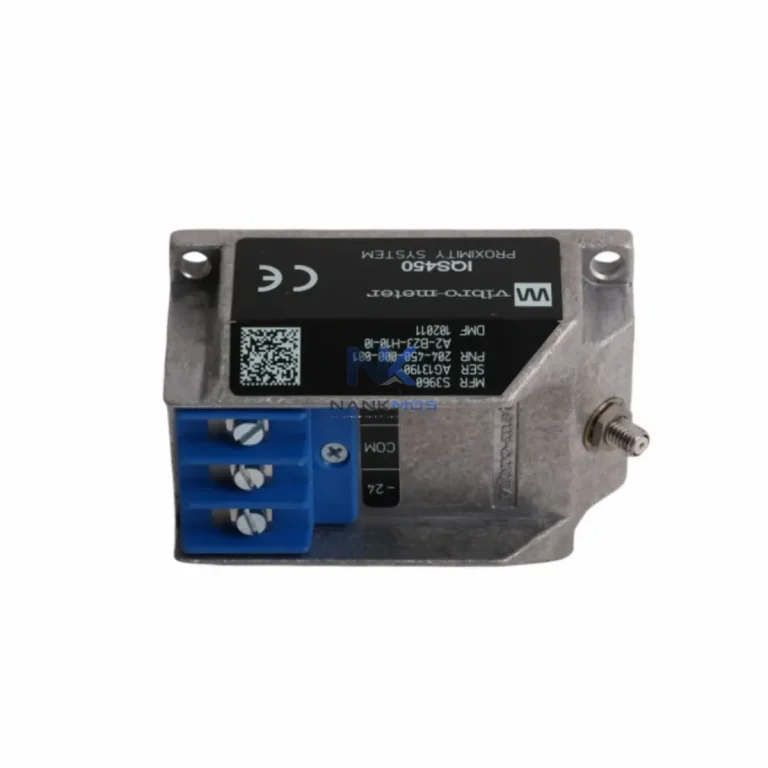
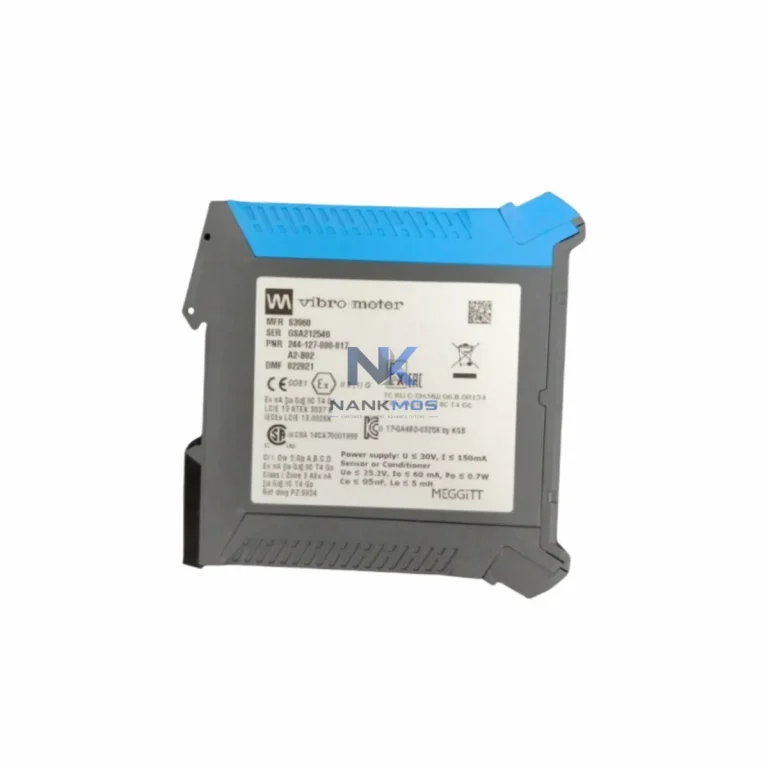
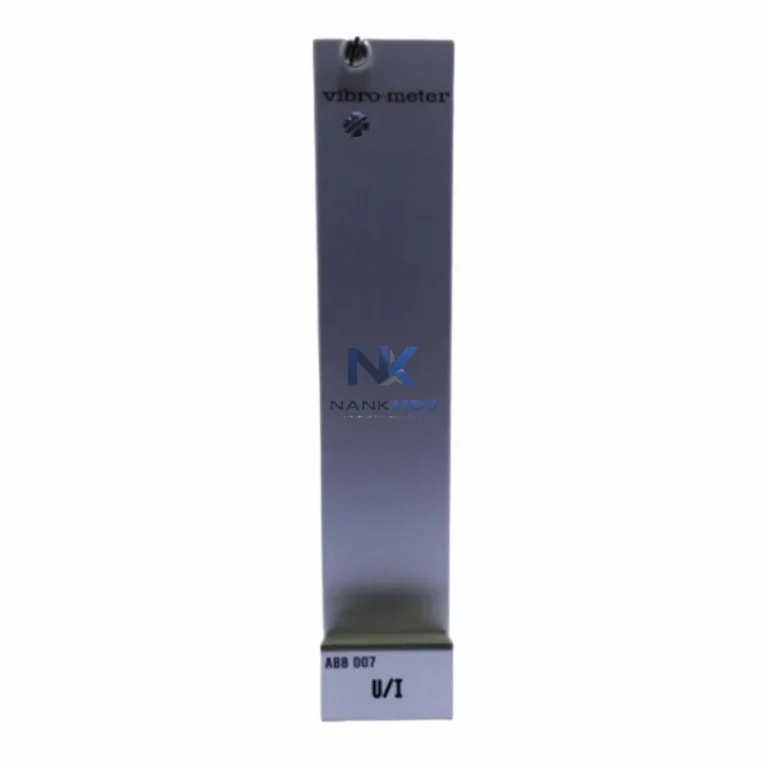
Functional Inspection
100% tested on professional platforms to ensure stable performance.
Vibro-Meter 204-040-100-011 is a NANKMOS industrial automation product record Listed under Other series series and HMI Panels. Confirm condition, availability, lead time, compatibility and documentation by email inquiry.
Brand names are used for identification only.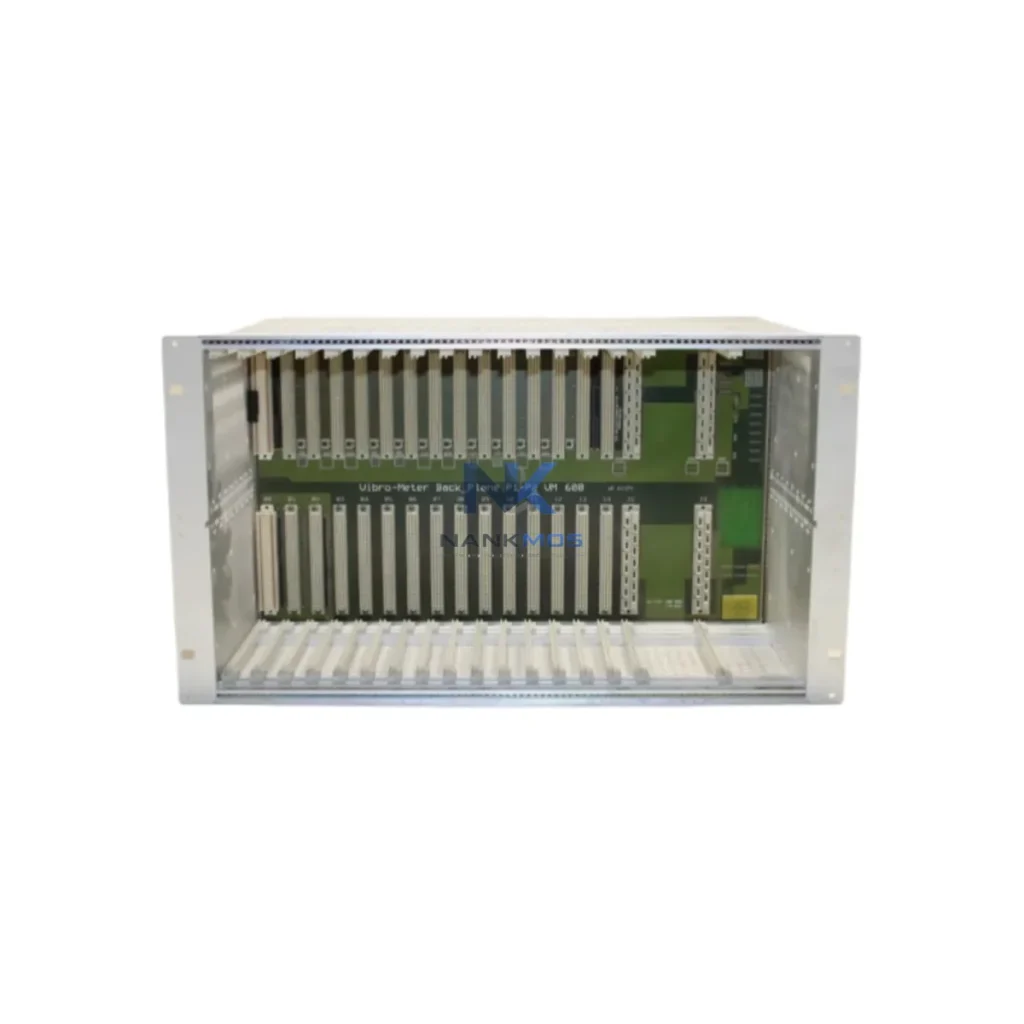
Vibro-Meter 204-040-100-011 is a NANKMOS industrial automation product record Listed under Other series series and HMI Panels. Confirm condition, availability, lead time, compatibility and documentation by email inquiry.
| Manufacturer | Vibro-Meter |
|---|---|
| Application | Turbine & Condition Monitoring |
| Part Number / Model | 204-040-100-011 |
| Compatible System | Confirmed by inquiry |
| Condition Options | To Confirm |
| Module Type | Monitoring Module |
| Warranty | 12 Months |
| Packaging | Anti-static Bag / Secure Box |
| Shipping Methods | DHL / FedEx / UPS / Air / Sea |
| Availability | To Confirm |
| Lead Time | To Confirm |
| Documentation | Part number and revision checked before quote |
The Vibro-Meter 204-040-100-011 is a precision vibration monitoring module from the VM Series, engineered for continuous machine health surveillance in demanding industrial environments. Designed to serve as a critical node in the smart factory data chain, this unit bridges field-level vibration signals with upper-layer control and analytics systems — enabling real-time condition monitoring, predictive maintenance, and seamless SCADA/HMI integration across rotating machinery, turbines, compressors, and high-value production assets.
Built to Swiss precision standards, the 204-040-100-011 delivers reliable IEPE-compatible signal conditioning and structured data output, making it a cornerstone component for facilities transitioning from reactive maintenance to data-driven, network-connected asset management. Its multi-protocol communication capability ensures compatibility with modern industrial architectures, from legacy Modbus RTU installations to OPC-UA-enabled Industry 4.0 platforms.
In a fully connected smart factory, the Vibro-Meter 204-040-100-011 operates as the signal origin point in a layered industrial data architecture. Mounted directly on rotating assets — motors, pumps, gearboxes, or turbine bearing housings — the module captures raw vibration waveforms via IEPE-compatible accelerometers and conditions the signal into structured 4–20 mA analog outputs or digital protocol frames.
These conditioned signals are transmitted upstream via RS-485 Modbus RTU to a Vibro-Meter VM600 rack-based condition monitoring system, where multi-channel signal processing, FFT spectrum analysis, and alarm threshold management are performed. The VM600 platform aggregates data from multiple 204-series modules across a production line, providing a unified machine health dashboard without requiring individual wiring runs to the control room.
For facilities running Siemens S7-300 or S7-1500 PLCs, the 204-040-100-011 integrates via PROFIBUS DP using a Vibro-Meter PROFIBUS gateway module, enabling the PLC to read vibration severity values, alarm bits, and sensor status directly into the ladder logic or function block diagram — triggering automated shutdown sequences or maintenance alerts without operator intervention.
Where Ethernet-based architectures are preferred, the module's Modbus TCP/IP output connects to an industrial managed Ethernet switch — such as a Moxa EDS or Hirschmann MICE series — forming a ring-redundant or star topology that feeds data to the plant SCADA server. SCADA platforms such as Wonderware InTouch, Ignition by Inductive Automation, or Siemens WinCC receive live vibration trend data, enabling operators to visualize bearing condition, rotor imbalance, and misalignment trends on HMI screens across the facility.
In OPC-UA-enabled Industry 4.0 deployments, the 204-040-100-011 data stream is published through an edge gateway — such as a Moxa UC-8100 or Advantech WISE-5000 series — which performs local pre-processing, anomaly detection, and secure data forwarding to cloud-based asset management platforms or MES systems. This edge layer reduces SCADA polling load and enables remote diagnostics from engineering workstations or mobile devices without direct network exposure to the field bus.
Complementary components in this data chain include Vibro-Meter CM-series signal conditioners for multi-sensor aggregation, Vibro-Meter TQ-series torque monitoring modules for drivetrain load analysis, and Vibro-Meter TA-series temperature transmitters for combined thermal-vibration correlation — all communicating over the same Modbus or PROFIBUS backbone. Remote I/O modules such as the Wago 750-series Modbus coupler or Phoenix Contact Axioline F can extend the monitoring network to distributed sensor points across large plant footprints without additional PLC hardware.
Variable frequency drives (VFDs) — including ABB ACS880 or Siemens SINAMICS G120 — connected on the same PROFIBUS or Modbus segment can cross-reference vibration alarm states from the 204-040-100-011 to automatically reduce motor speed during high-vibration events, protecting both the drive and the driven equipment. This closed-loop response between the vibration monitor and the drive controller is a hallmark of mature predictive maintenance architecture.
Many industrial facilities operate with fragmented monitoring infrastructure — vibration sensors wired to standalone meters, data recorded manually on shift logs, and no integration with the plant SCADA or ERP system. The Vibro-Meter 204-040-100-011 directly addresses these data gaps by providing a network-ready output that eliminates the need for manual data collection and enables continuous, automated condition monitoring.
Protocol fragmentation is resolved through the module's multi-protocol support. Sites running legacy Modbus RTU alongside newer PROFIBUS DP or OPC-UA infrastructure can integrate the 204-040-100-011 at any layer of the network hierarchy, using protocol converters or gateway modules where necessary — without replacing existing PLC or SCADA infrastructure.
Data silos are eliminated by routing vibration data through the same industrial Ethernet backbone used for process control signals. When vibration severity, alarm status, and trend data are visible in the same SCADA historian as temperature, pressure, and flow — maintenance engineers gain a complete picture of asset health without switching between disconnected systems.
Remote monitoring and diagnostics are enabled through the module's structured digital output. Remote engineering teams can access live vibration spectra, alarm histories, and sensor diagnostics via the SCADA or edge gateway interface — reducing the need for on-site inspection during routine checks and enabling faster fault diagnosis during unplanned downtime events.
Production line transparency is achieved by deploying multiple 204-series modules across critical assets and aggregating their data in the VM600 or SCADA historian. Trend analysis across the fleet reveals systemic issues — such as foundation resonance, belt wear patterns, or bearing fatigue progression — before they result in unplanned stoppages.
Alarm traceability is built into the module's protocol output, with timestamped alarm events transmitted to the SCADA system for logging, notification routing, and post-event analysis. Maintenance teams receive automated alerts via HMI pop-ups, email, or SMS — with full event context available for root cause investigation.
System scalability is supported by the module's standard bus interfaces. Additional 204-040-100-011 units can be added to an existing Modbus or PROFIBUS segment without reconfiguring the master PLC or SCADA server — making it straightforward to expand monitoring coverage as production capacity grows.
Q1: What communication protocols does the Vibro-Meter 204-040-100-011 support, and how does it integrate with existing PLC or SCADA systems?The 204-040-100-011 supports Modbus RTU (RS-485), Modbus TCP/IP, PROFIBUS DP, and OPC-UA, covering the most widely deployed industrial communication standards. Integration with Siemens, Allen-Bradley, Schneider, or Mitsubishi PLCs is achieved via the appropriate protocol interface — either direct PROFIBUS DP connection or Modbus master polling. SCADA platforms including Ignition, WinCC, and Wonderware support all four protocols natively, requiring only address mapping and tag configuration to bring vibration data into the historian and HMI displays.
Q2: How does the module perform in high-noise industrial environments, and what is the network transmission latency?The 204-040-100-011 is designed for industrial EMC environments, with galvanically isolated signal paths and shielded RS-485 communication supporting cable runs up to 1,200 metres at standard Modbus baud rates. Network transmission latency for Modbus RTU polling is typically under 50 ms per device at 19,200 baud — well within the response requirements for condition monitoring applications. For time-critical alarm transmission, PROFIBUS DP cyclic communication delivers sub-10 ms update cycles.
Q3: Can the 204-040-100-011 support remote diagnostics and firmware updates without on-site access?Yes. When connected via Modbus TCP/IP or OPC-UA through an edge gateway, the module's diagnostic registers — including sensor status, signal quality flags, and alarm counters — are accessible remotely from any authorised engineering workstation or mobile device. Configuration changes and threshold adjustments can be applied remotely via the VM600 system software or compatible SCADA configuration tools, eliminating the need for on-site visits during routine parameter updates.
Q4: What does the 12-month warranty cover, and is the unit tested before shipment?Every Vibro-Meter 204-040-100-011 supplied by NANKMOS is covered by a 12-month warranty against manufacturing defects and functional failures under normal operating conditions. Each unit undergoes functional verification and communication protocol testing prior to shipment, ensuring that the module arrives ready for installation and commissioning. Warranty claims are supported by NANKMOS technical staff, with replacement or repair processing initiated within 5 business days of confirmed fault diagnosis.
Functional Inspection100% tested on professional platforms to ensure stable performance.
 Anti-static Packaging
Modules are packed in anti-static bags to prevent electrostatic damage.
 Secure Export Packing
Cushion protection and strong cartons ensure safe transportation.
 Worldwide Shipping
Global logistics network supports air, sea and express delivery.
 Documentation Check
Part number, revision and compatibility verified before shipment.
 After-sales Support
Professional technical support to help resolve your issues.