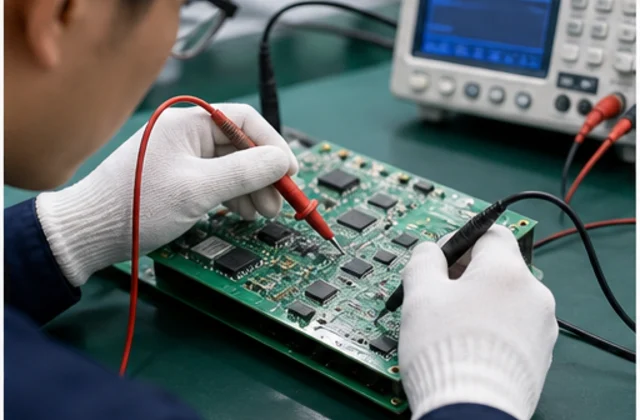
 Functional Inspection
100% tested on professional platforms to ensure stable performance.
ABB RDCO-02C is a NANKMOS industrial automation product record Listed under S800 series and Drives. Confirm condition, availability, lead time, compatibility and documentation by email inquiry.
Brand names are used for identification only.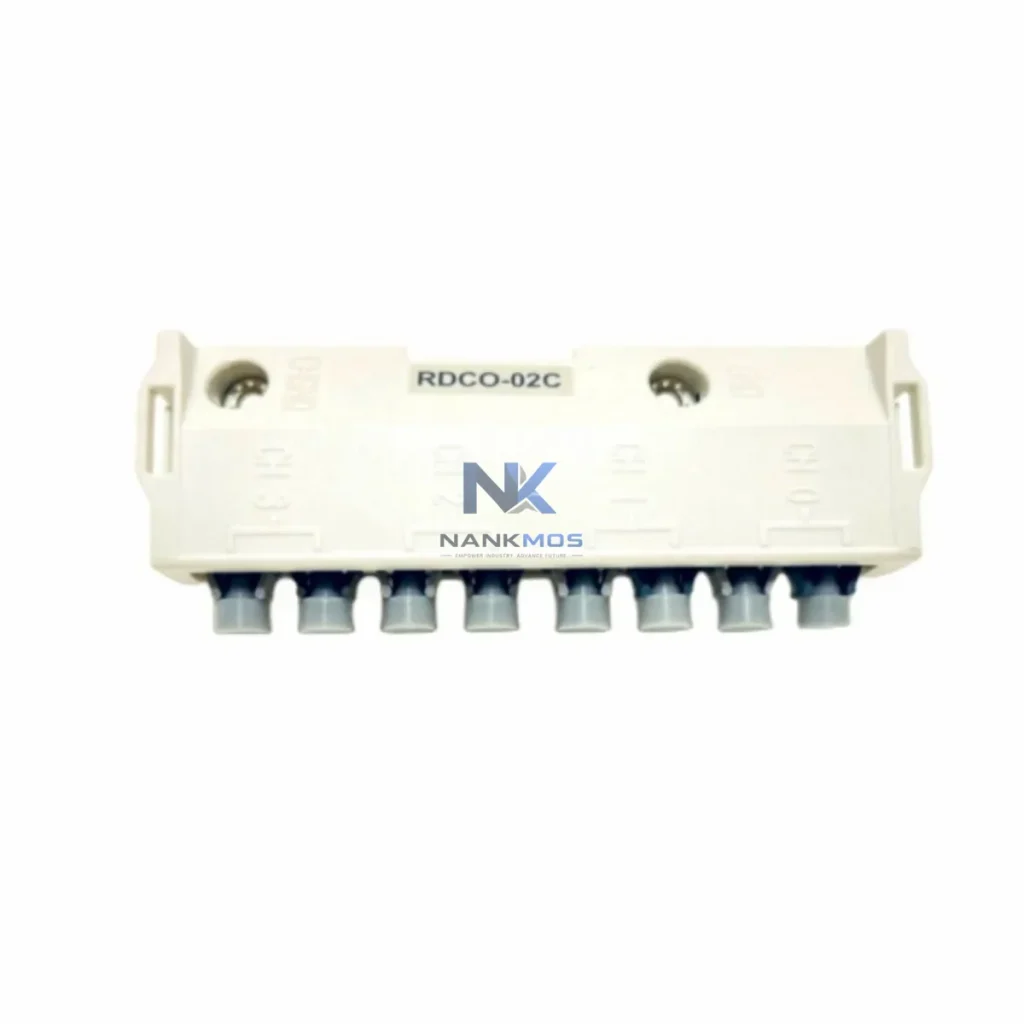
ABB RDCO-02C is a NANKMOS industrial automation product record Listed under S800 series and Drives. Confirm condition, availability, lead time, compatibility and documentation by email inquiry.
| Manufacturer | ABB |
|---|---|
| Application | Industrial Network Communication |
| Part Number / Model | RDCO-02C |
| Compatible System | S800 |
| Series | S800 |
| Condition Options | To Confirm |
| Module Type | Communication Module |
| Warranty | 12 Months |
| Packaging | Anti-static Bag / Secure Box |
| Shipping Methods | DHL / FedEx / UPS / Air / Sea |
| Availability | To Confirm |
| Lead Time | To Confirm |
| Documentation | Part number and revision checked before quote |
In modern smart factory environments, seamless data flow between field devices and supervisory systems is the backbone of operational efficiency. The ABB RDCO-02C is a DDCS (Distributed Drive Control System) fiber optic communication board engineered for ABB ACS800 and ACS600 series variable frequency drives. It serves as a critical network interface node, enabling high-speed, noise-immune optical data transmission between drive systems and upper-level control architectures including PLCs, SCADA platforms, HMI terminals, and edge computing gateways. By bridging the physical layer of drive communication with the logical layer of industrial Ethernet and fieldbus networks, the RDCO-02C eliminates data silos and delivers the real-time visibility that Industry 4.0 demands.
The RDCO-02C integrates directly into the ACS800 drive's option slot, establishing a dedicated DDCS fiber optic channel that connects the drive to ABB's DriveWindow, DriveAP, or third-party SCADA/DCS systems. Its fiber optic medium provides complete galvanic isolation, making it ideal for high-voltage environments where copper-based communication would introduce ground loops or electromagnetic interference. In facilities running multiple ACS800 drives in parallel — such as paper mills, cement plants, or large-scale HVAC systems — the RDCO-02C enables a daisy-chained or star topology ring network, allowing a single master controller to monitor and command up to 12 drives simultaneously over a single fiber loop.
The RDCO-02C sits at the intersection of drive-level signal processing and plant-wide data infrastructure. In a typical smart factory deployment, field sensors — including vibration transducers, temperature probes, and current transformers — feed analog and digital signals into the ACS800 drive's I/O terminals. The drive processes these signals for motor control logic, while the RDCO-02C simultaneously packages drive status data — output frequency, motor current, fault codes, torque references, and energy consumption metrics — into DDCS protocol frames and transmits them upstream via fiber optic cable.
At the network layer, an ABB AC800M PLC or compatible master controller receives the DDCS data stream and executes supervisory logic, issuing speed references and control commands back to the drive in real time. For facilities using distributed I/O architectures, the RDCO-02C's ring topology allows remote I/O modules such as the ABB RDIO-01 digital I/O extension board to participate in the same fiber loop, expanding the drive's I/O capacity without additional wiring runs. This is particularly valuable in large motor control centers (MCCs) where cable management is a critical constraint.
The data collected by the RDCO-02C is not limited to the drive itself. In integrated smart factory architectures, the DDCS network feeds into an ABB Industrial Edge Gateway or a third-party OPC-UA server, where drive data is normalized and published to SCADA platforms such as ABB System 800xA, Wonderware InTouch, or Ignition by Inductive Automation. HMI panels — including ABB CP600 series operator panels — display real-time drive parameters, trend graphs, and alarm states, giving operators immediate visibility into motor performance without navigating complex drive menus. For multi-drive systems, the RDCO-02C's ability to network up to 12 ACS800 units on a single fiber ring means that a single SCADA screen can present a unified view of an entire pump station, conveyor system, or compressor bank.
Energy monitoring is another key data flow enabled by the RDCO-02C. By transmitting real-time kWh consumption data from the ACS800 to an energy management system or power monitoring module such as the ABB B23 energy meter, facilities can track per-drive energy usage, identify inefficiencies, and generate compliance reports — all without additional metering hardware at the motor terminal. When paired with an ABB NETA-21 remote monitoring tool, the RDCO-02C enables cloud-connected diagnostics, allowing maintenance engineers to access drive fault logs, parameter histories, and performance trends from any location, reducing unplanned downtime and eliminating the need for on-site inspection during initial fault triage.
For applications requiring protocol bridging between DDCS and standard industrial Ethernet protocols, the RDCO-02C is commonly deployed alongside communication adapters such as the ABB RETA-02 Ethernet adapter or RPBA-01 PROFIBUS adapter, which translate DDCS drive data into PROFIBUS DP, Modbus TCP, or EtherNet/IP frames consumable by third-party PLCs and DCS controllers. This multi-protocol gateway architecture ensures that ACS800 drives can be integrated into any existing plant network without requiring drive replacement or custom software development.
Many industrial facilities operate with a fragmented communication landscape: legacy drives using proprietary protocols, newer PLCs expecting standard fieldbus or Ethernet connectivity, and SCADA systems that cannot natively interpret drive-level data. The RDCO-02C directly addresses these integration challenges by providing a standardized DDCS interface that abstracts the drive's internal communication complexity into a well-documented, high-speed optical channel.
Protocol fragmentation is resolved by positioning the RDCO-02C as the drive-side endpoint of a protocol conversion chain. Combined with an appropriate fieldbus adapter, the drive's DDCS data becomes accessible to any industrial protocol stack, eliminating the need for custom OPC drivers or middleware. Data islands — isolated drives with no network connectivity — are eliminated by the RDCO-02C's plug-in installation, which requires no drive firmware modification and is fully backward compatible with existing ACS800 and ACS600 installations.
Remote monitoring gaps are closed by the RDCO-02C's integration with ABB's NETA-21 and DriveWindow tools, which provide web-based parameter access, fault history retrieval, and real-time trend logging. For production line transparency, the RDCO-02C enables continuous streaming of drive KPIs — including load percentage, thermal status, and energy consumption — to MES and ERP systems, supporting OEE calculations and predictive maintenance scheduling. Alarm tracking is enhanced by the DDCS network's ability to propagate fault events from any networked drive to the SCADA alarm management system within milliseconds, ensuring that operators receive actionable alerts before process deviations escalate into equipment damage. System expansion is straightforward: additional ACS800 drives can be added to the DDCS ring without reconfiguring existing nodes, supporting phased capacity expansions common in growing manufacturing facilities.
Every RDCO-02C unit supplied by NANKMOS undergoes pre-shipment functional testing, verifying fiber optic link integrity, DDCS communication handshake, and parameter read/write operations. Stock is maintained for immediate dispatch, and all units are covered by a 12-month warranty against manufacturing defects.
Q1: What is the maximum communication latency on a DDCS fiber optic ring using the RDCO-02C? The DDCS protocol operates at up to 4 Mbit/s with a typical cycle time of 2–5 ms per node in a 12-drive ring configuration. This latency is well within the requirements of most drive supervisory and energy monitoring applications. For time-critical torque control loops, the ACS800's internal control cycle (250 µs) operates independently of the DDCS network, ensuring that communication delays do not affect motor control performance.
Q2: Is the RDCO-02C compatible with third-party PLCs and SCADA systems that do not support DDCS natively? Yes. The RDCO-02C provides the DDCS interface on the drive side. To connect to third-party systems, it is paired with a protocol gateway or fieldbus adapter — such as the ABB RETA-02 for Modbus TCP / EtherNet/IP or the RPBA-01 for PROFIBUS DP — which translates DDCS data into standard industrial protocols. This architecture supports integration with Siemens S7, Rockwell ControlLogix, Schneider Modicon, and any SCADA platform with OPC-DA/UA support.
Q3: How does the fiber optic medium improve network stability in high-voltage drive environments? Fiber optic cables are immune to electromagnetic interference (EMI) and radio frequency interference (RFI), which are prevalent in environments with large VFDs, transformers, and switching power supplies. Unlike copper-based fieldbus cables, fiber optic links do not require shielding, grounding, or termination resistors, and they provide complete galvanic isolation between the drive and the control network. This eliminates ground loop currents that can corrupt data on RS-485 or CAN-based networks and significantly reduces communication error rates in electrically noisy industrial environments.
Q4: What does the 12-month warranty cover, and what is the pre-shipment testing process? All RDCO-02C units supplied by NANKMOS are covered by a 12-month warranty from the date of shipment, covering defects in materials and workmanship under normal operating conditions. Prior to dispatch, each unit undergoes functional verification including fiber optic transceiver output power measurement, DDCS protocol handshake testing with an ACS800 drive, and parameter read/write cycle validation. Units that do not meet ABB's original performance specifications are quarantined and not shipped. For warranty claims, NANKMOS provides RMA support with a target replacement or repair turnaround of 5–7 business days.
Functional Inspection100% tested on professional platforms to ensure stable performance.
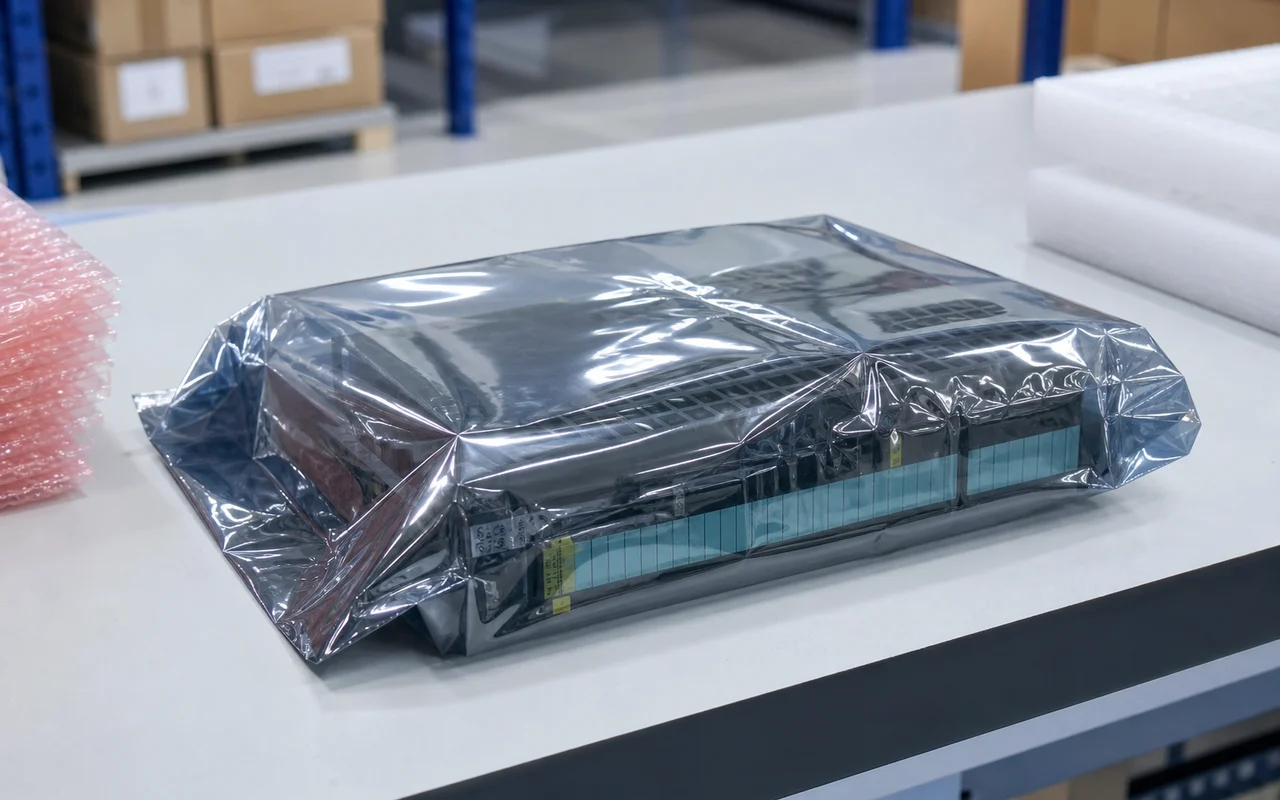 Anti-static Packaging
Modules are packed in anti-static bags to prevent electrostatic damage.
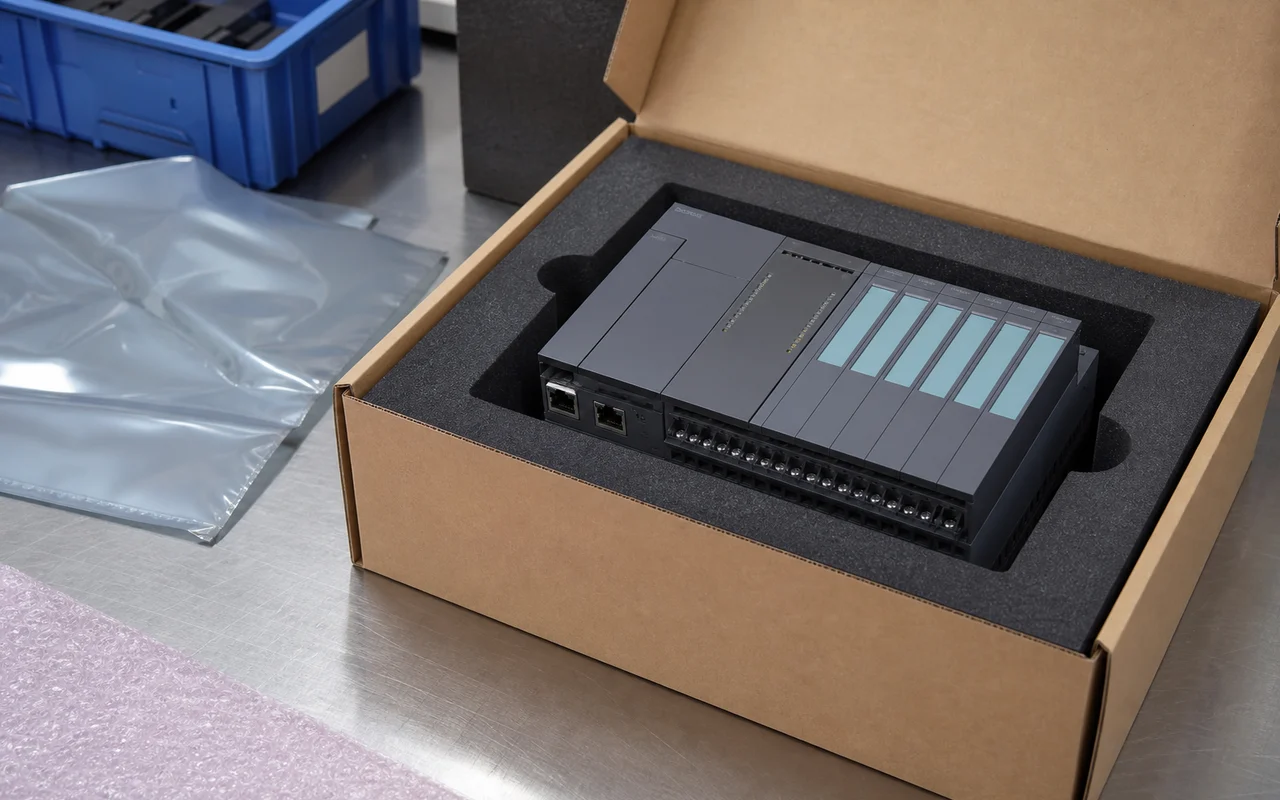 Secure Export Packing
Cushion protection and strong cartons ensure safe transportation.
 Worldwide Shipping
Global logistics network supports air, sea and express delivery.
 Documentation Check
Part number, revision and compatibility verified before shipment.
 After-sales Support
Professional technical support to help resolve your issues.