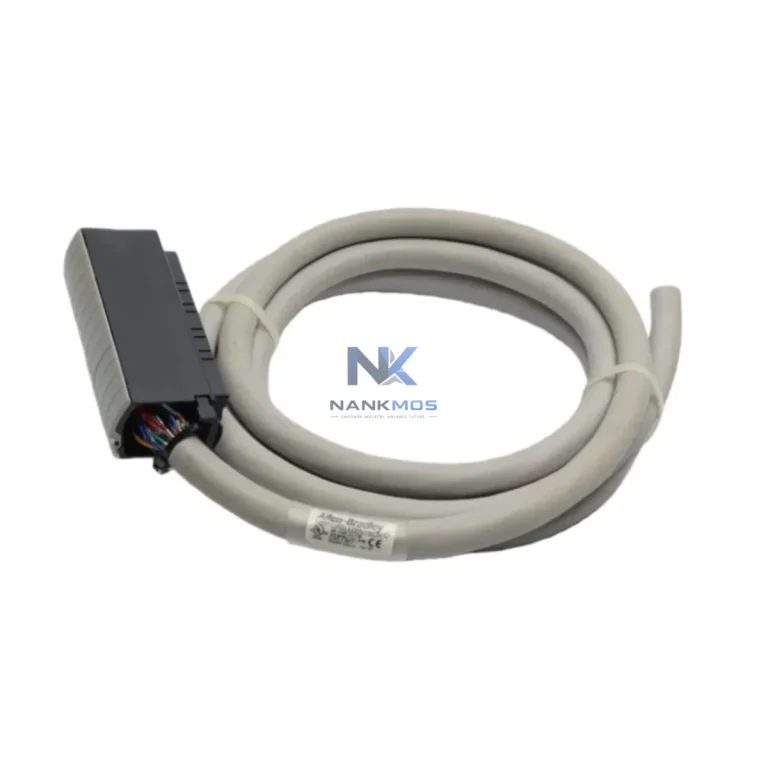
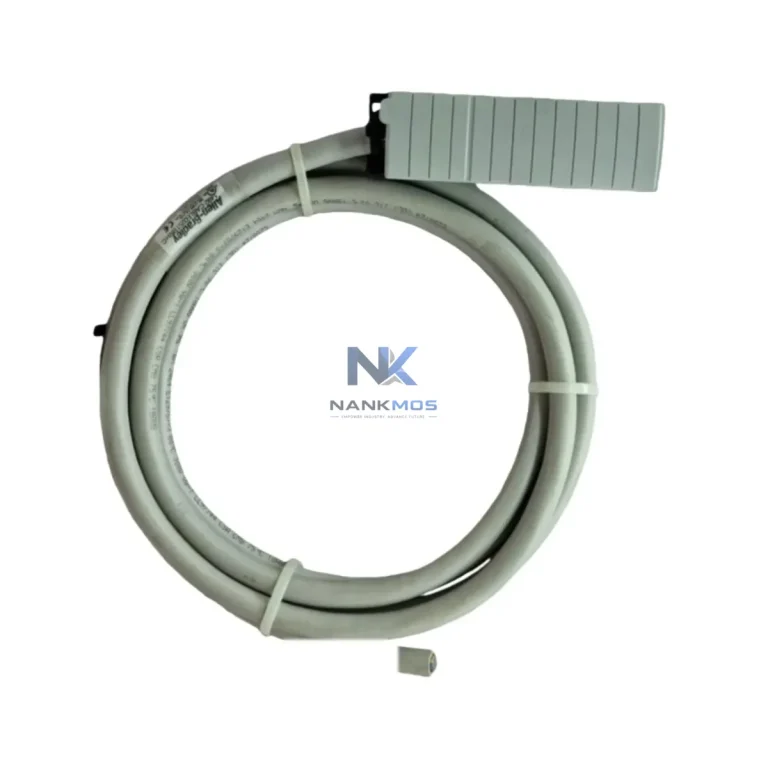
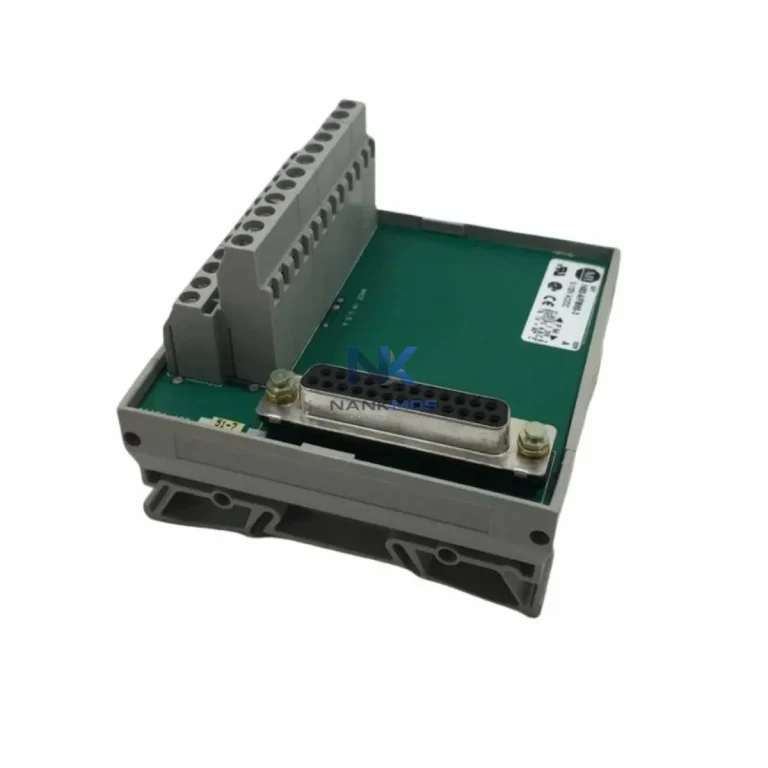
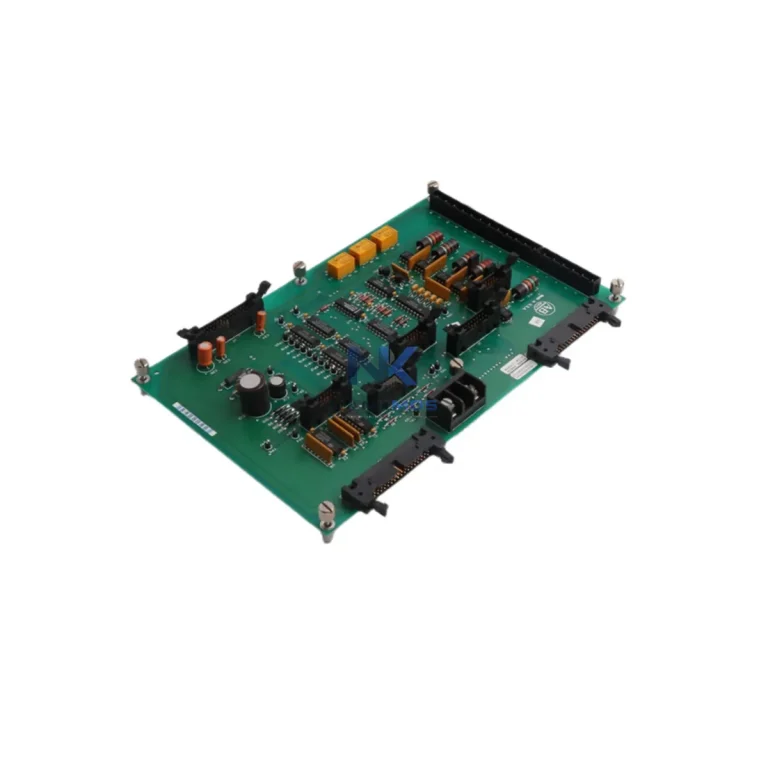
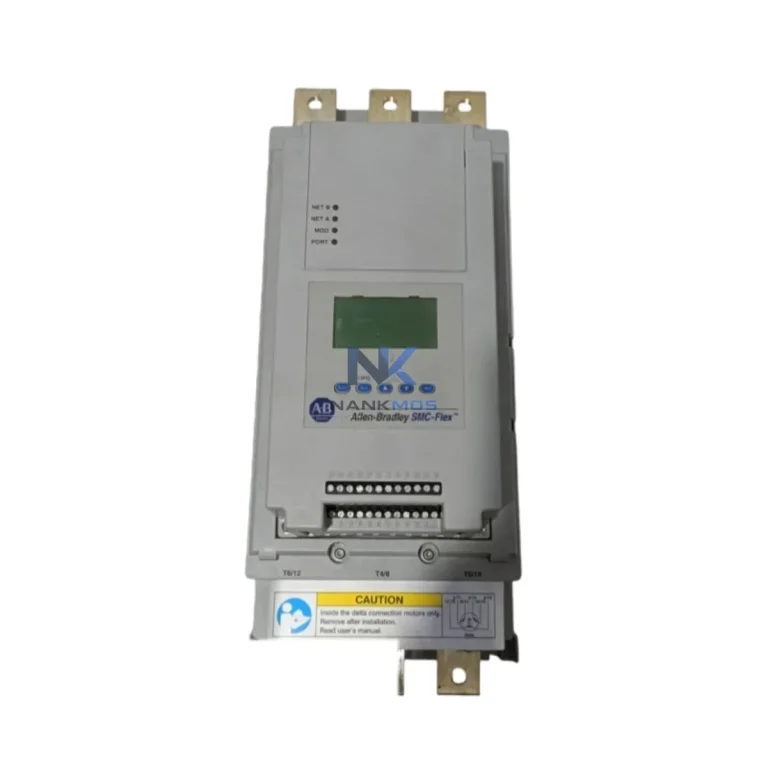
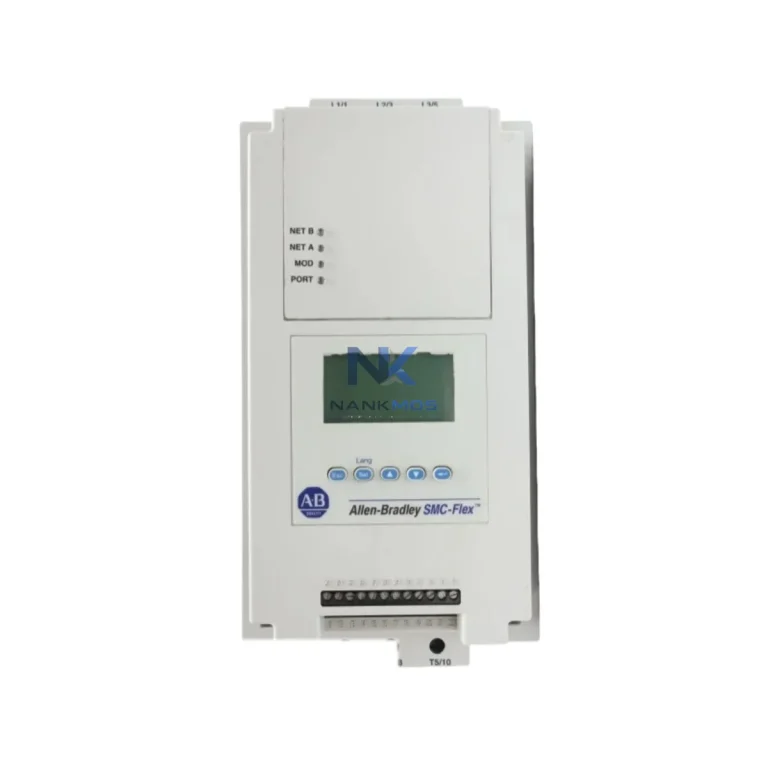
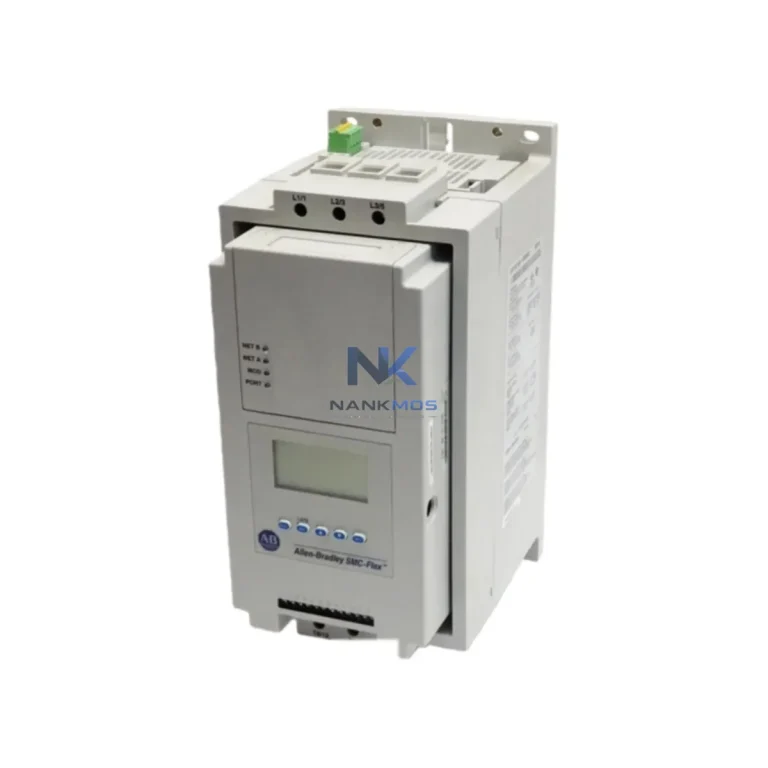
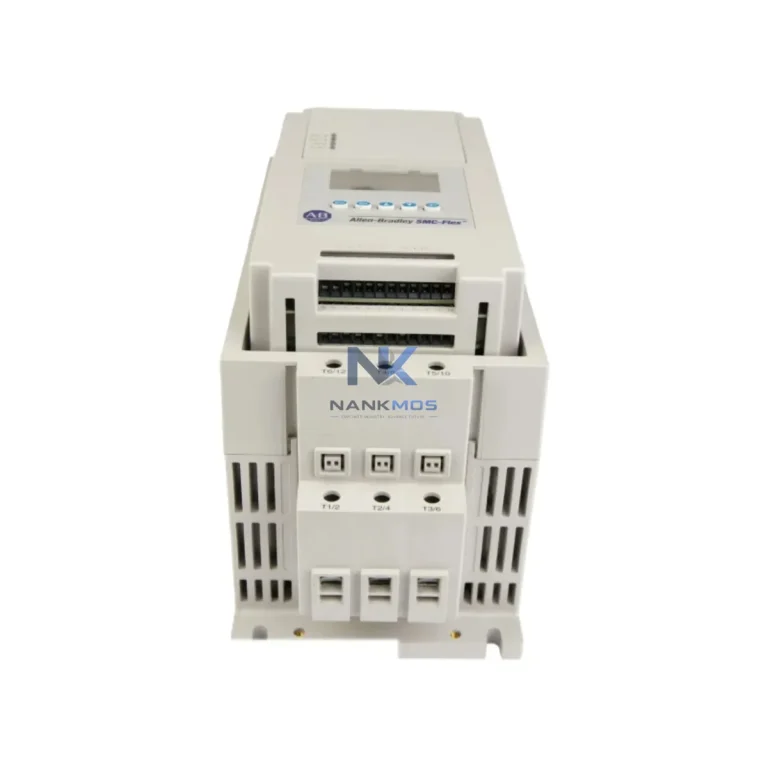
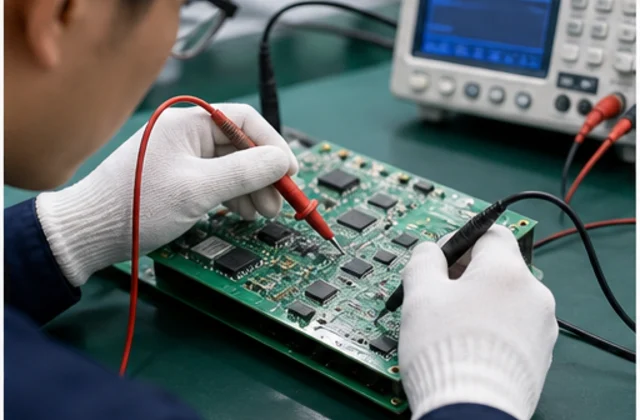
 Functional Inspection
100% tested on professional platforms to ensure stable performance.
Allen-Bradley 1771-ASB/E is a NANKMOS industrial automation product record Listed under PLC-5 series and Business & Industrial > Automation, Control & Flow Devices > Programmable Logic Controllers. Confirm condition, availability, lead time, compatibility and documentation by email inquiry.
Brand names are used for identification only.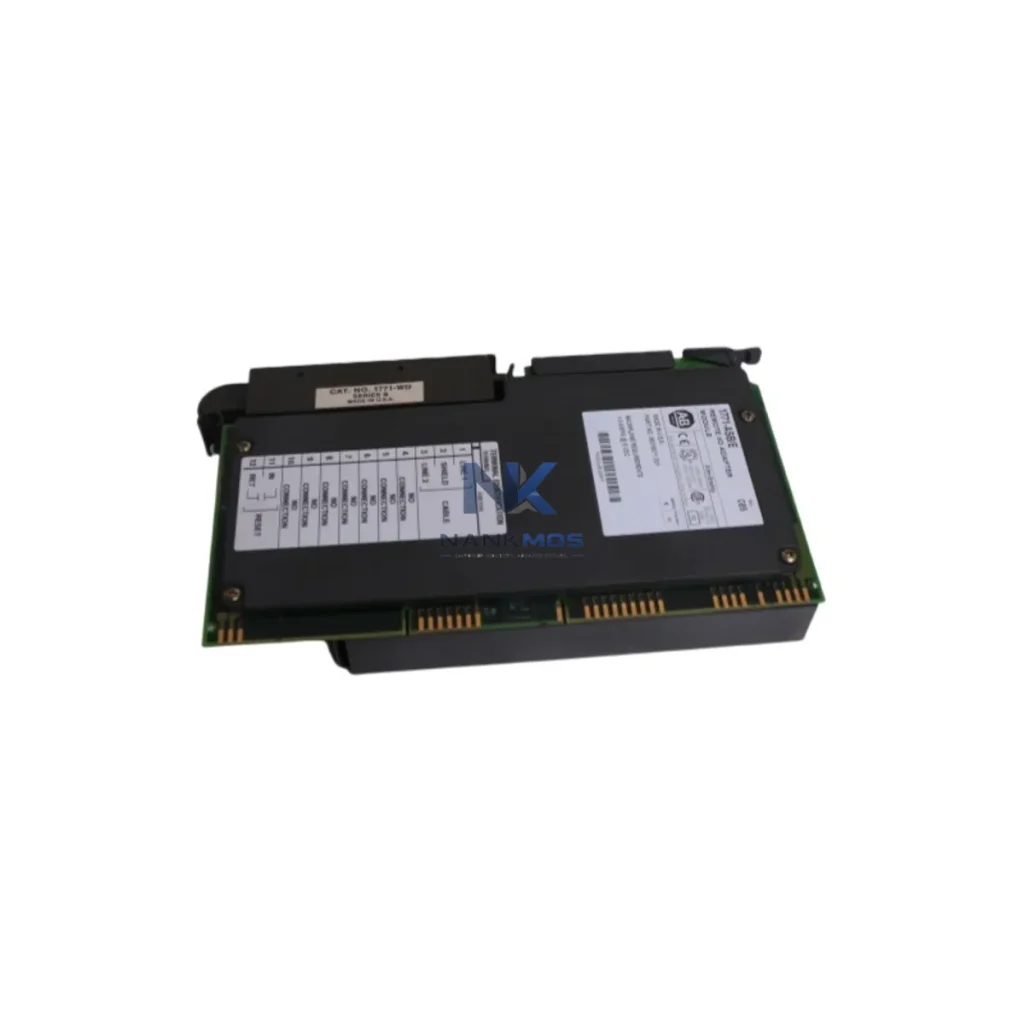
Allen-Bradley 1771-ASB/E is a NANKMOS industrial automation product record Listed under PLC-5 series and Business & Industrial > Automation, Control & Flow Devices > Programmable Logic Controllers. Confirm condition, availability, lead time, compatibility and documentation by email inquiry.
| Manufacturer | Allen-Bradley |
|---|---|
| Application | Controller Processing & System Control |
| Part Number / Model | 1771-ASB/E |
| Compatible System | PLC-5 |
| Series | PLC-5 |
| Condition Options | To Confirm |
| Module Type | Controller / CPU Module |
| Warranty | 12 Months |
| Packaging | Anti-static Bag / Secure Box |
| Shipping Methods | DHL / FedEx / UPS / Air / Sea |
| Availability | To Confirm |
| Lead Time | To Confirm |
| Documentation | Part number and revision checked before quote |
The Allen-Bradley 1771-ASB/E is a Remote I/O (RIO) adapter module engineered for the 1771 I/O chassis platform, providing a high-integrity data link between field-level devices and PLC-5 processor systems. In modern smart factory environments, where every millisecond of data latency and every node of connectivity matters, the 1771-ASB/E serves as a critical bridge in the industrial data chain — connecting distributed I/O racks to the central control architecture over Allen-Bradley's proven Remote I/O protocol. Whether deployed in automotive assembly, food processing, water treatment, or petrochemical facilities, this adapter ensures deterministic, real-time data exchange across the plant floor.
The 1771-ASB/E operates as a scanner-compatible adapter on the Remote I/O link, enabling the PLC-5 processor — such as the 1785-L40B or 1785-L80B — to read and write discrete and analog I/O data from remote chassis locations. This distributed architecture eliminates the need for long home-run wiring from every field device back to the main panel, reducing installation cost and improving signal integrity across large facilities. The module supports full-rack, half-rack, and quarter-rack addressing, giving system integrators the flexibility to scale I/O density precisely to application requirements.
In a connected factory data flow, the 1771-ASB/E sits at the field edge of the communication hierarchy. Sensors — including proximity switches, pressure transmitters, and thermocouple inputs wired into 1771-series analog and digital I/O modules — feed real-time process values into the remote chassis. The 1771-ASB/E then transmits this data upstream over the RIO cable to the PLC-5 scanner port, where it is processed, logged, and made available to supervisory systems. SCADA platforms such as FactoryTalk View SE and Wonderware InTouch can access this live data through the PLC-5's Data Highway Plus (DH+) port or via a 1784-PKTX communication card, enabling operators to monitor production KPIs, track alarm states, and visualize process trends from a centralized HMI workstation.
A complete smart factory data chain built around the 1771-ASB/E begins at the sensor layer. Field instruments — such as inductive proximity sensors, 4–20 mA pressure transmitters, and RTD temperature inputs — wire directly into 1771-series I/O modules installed in the remote chassis. Modules such as the 1771-IB (DC input), 1771-OB (DC output), and 1771-IF (analog input) populate the chassis slots, with the 1771-ASB/E occupying the adapter slot to manage all upstream communication.
The RIO link carries this I/O data at up to 230.4 Kbps over shielded twisted-pair cable to the PLC-5 scanner, where the 1785-L40B or 1785-L80B processor executes ladder logic, PID loops, and sequencer routines based on real-time field values. For applications requiring integration with newer control platforms, a 1756-DHRIO communication module installed in a ControlLogix 1756 chassis can bridge the legacy RIO network to EtherNet/IP, enabling the 1771-ASB/E infrastructure to participate in a modern, converged plant network without requiring a full I/O migration.
At the supervisory layer, a 1784-PKTX or 1784-U2DHP USB-to-DH+ adapter connects the engineering workstation to the PLC-5 DH+ network, allowing RSLogix 5 programming software to perform online edits, force I/O states, and capture data table values for diagnostic purposes. FactoryTalk Diagnostics and FactoryTalk Historian can log time-stamped process data from the PLC-5 data files, feeding dashboards in FactoryTalk View SE or third-party SCADA systems via OPC-DA or OPC-UA gateway servers. This end-to-end data visibility — from the 1771-ASB/E remote chassis to the enterprise historian — is the foundation of transparent, data-driven production management.
For facilities operating mixed-generation control architectures, the 1771-ASB/E remote I/O infrastructure can coexist with DeviceNet and ControlNet segments managed by a 1756-DNB DeviceNet scanner or a 1756-CNB ControlNet bridge module in a ControlLogix rack. This multi-network coexistence allows plant engineers to preserve the investment in proven 1771-series I/O hardware while progressively modernizing the control backbone — a practical, cost-effective path to Industry 4.0 connectivity.
Many industrial facilities operating legacy PLC-5 systems face a common set of connectivity challenges: protocol fragmentation, data silos between field and supervisory layers, limited remote diagnostic capability, and difficulty scaling I/O capacity without major rewiring. The 1771-ASB/E directly addresses these pain points within the Allen-Bradley RIO ecosystem.
Protocol Fragmentation: The 1771-ASB/E standardizes field I/O communication on the Remote I/O protocol, eliminating ad-hoc wiring schemes and ensuring that all chassis in the RIO network speak a single, deterministic language understood by the PLC-5 scanner. For sites that need to bridge RIO data to modern Ethernet-based systems, a protocol gateway — such as a ProSoft Technology MVI56-RIO or an Anybus X-gateway — can translate RIO frames to Modbus TCP or EtherNet/IP, resolving cross-protocol data gaps without replacing the existing I/O infrastructure.
Data Silos and Production Transparency: Without a properly configured RIO adapter, remote I/O chassis operate as isolated islands of field data. The 1771-ASB/E closes this gap by ensuring every I/O point in the remote chassis is continuously mapped into the PLC-5 data table, making all field values available to SCADA, MES, and historian systems in real time. Production counts, machine states, fault flags, and analog process values become visible across the enterprise network, enabling shift supervisors and process engineers to make informed decisions based on live plant data.
Remote Diagnostics and Alarm Tracking: The 1771-ASB/E supports fault reporting through its status indicators and the PLC-5 I/O status file, allowing maintenance teams to identify communication faults, rack configuration errors, and I/O module failures without walking the plant floor. Integrated with FactoryTalk Alarms and Events or a third-party alarm management system, these fault signals can trigger automated notifications, work orders, and escalation workflows — reducing mean time to repair (MTTR) and improving overall equipment effectiveness (OEE).
System Expansion: The 1771-ASB/E supports up to 8 I/O groups per rack address, and multiple remote chassis can be daisy-chained on a single RIO link, allowing the control system to scale from a handful of I/O points to thousands without architectural redesign. This scalability makes the 1771-ASB/E a long-term platform for facilities that anticipate incremental production line additions or phased automation upgrades.
Q1: What is the maximum cable length for the 1771-ASB/E RIO link, and how does it affect communication latency? The Remote I/O link supports cable runs up to 3,048 meters (10,000 feet) at 57.6 Kbps, or up to 762 meters (2,500 feet) at 230.4 Kbps. At the highest baud rate, RIO scan times are deterministic and typically complete within one PLC scan cycle, ensuring real-time I/O response with minimal latency impact on control loop performance.
Q2: Is the 1771-ASB/E compatible with ControlLogix or CompactLogix processors, or only PLC-5? The 1771-ASB/E is natively designed for PLC-5 RIO scanner ports. However, it can be integrated with ControlLogix systems using a 1756-DHRIO module configured as an RIO scanner, allowing ControlLogix processors to communicate with existing 1771-series remote I/O chassis. This migration path preserves the existing field wiring and I/O hardware investment while upgrading the control processor platform.
Q3: How do I verify network stability and diagnose communication faults on the 1771-ASB/E? The 1771-ASB/E provides onboard LED status indicators for power, communication activity, and fault conditions. In RSLogix 5, the I/O status file (S:0 through S:7) reports rack communication health for each configured remote chassis. For deeper diagnostics, RSLinx Classic can be used to monitor the RIO network topology, identify missing nodes, and capture communication statistics — enabling remote fault isolation without physical access to the remote panel.
Q4: What warranty and pre-shipment testing does NANKMOS provide for the 1771-ASB/E? Every 1771-ASB/E unit supplied by NANKMOS is covered by a 12-month warranty from the date of shipment. Prior to dispatch, each module undergoes functional pre-shipment testing to verify communication integrity, DIP switch configuration, and I/O data exchange performance. In-stock units are available for immediate dispatch, minimizing production downtime for urgent replacement requirements. For bulk procurement or project-based supply, contact our technical team for lead time and volume pricing.
Functional Inspection100% tested on professional platforms to ensure stable performance.
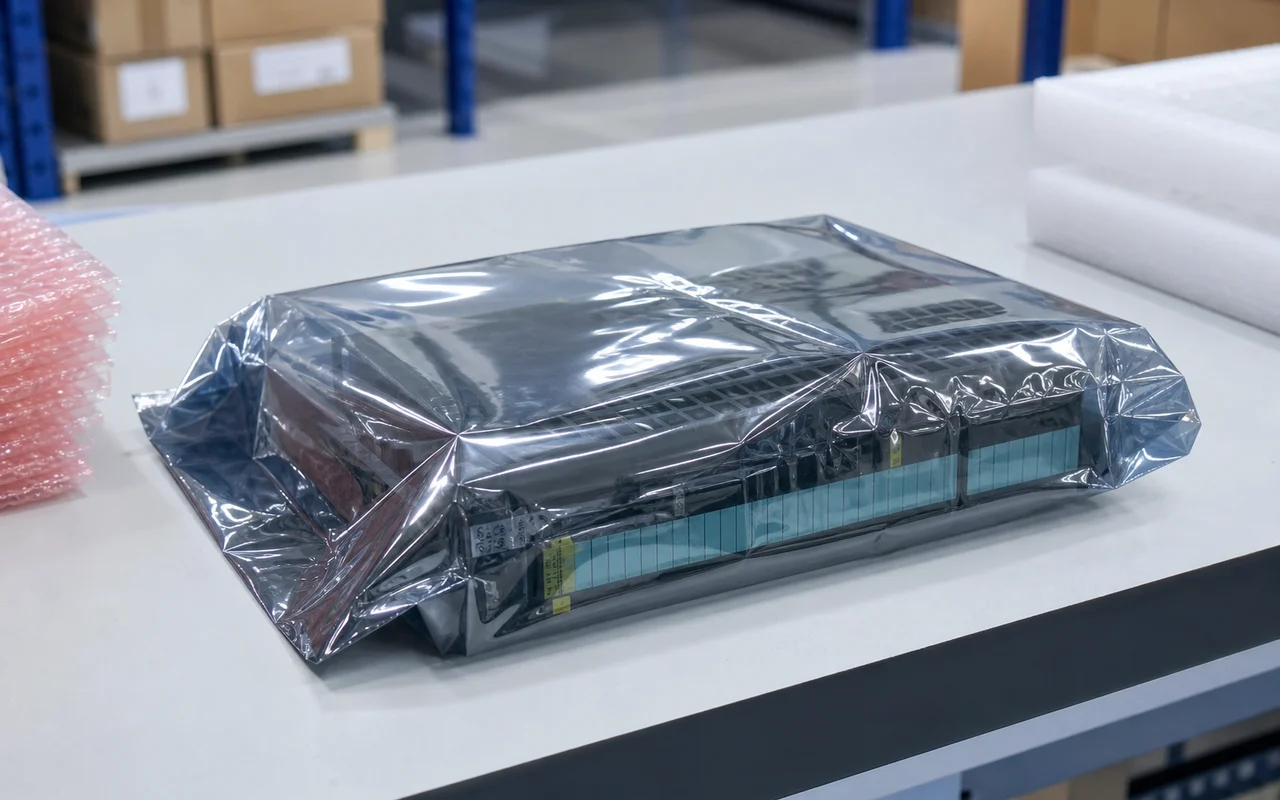 Anti-static Packaging
Modules are packed in anti-static bags to prevent electrostatic damage.
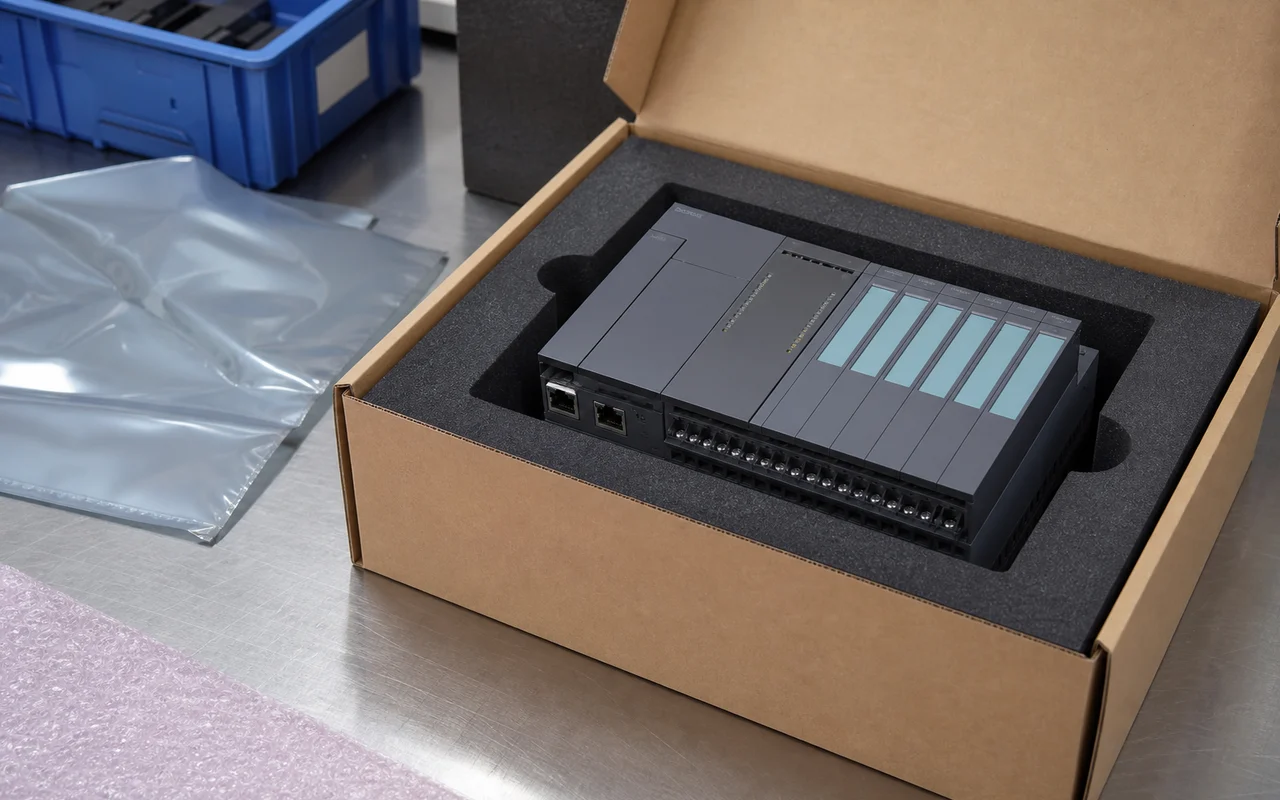 Secure Export Packing
Cushion protection and strong cartons ensure safe transportation.
 Worldwide Shipping
Global logistics network supports air, sea and express delivery.
 Documentation Check
Part number, revision and compatibility verified before shipment.
 After-sales Support
Professional technical support to help resolve your issues.