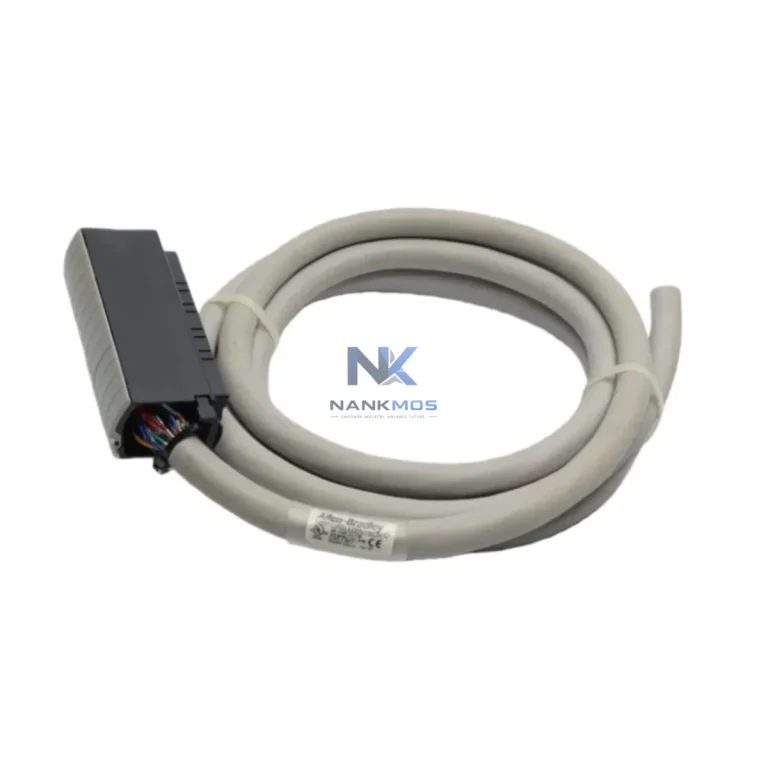
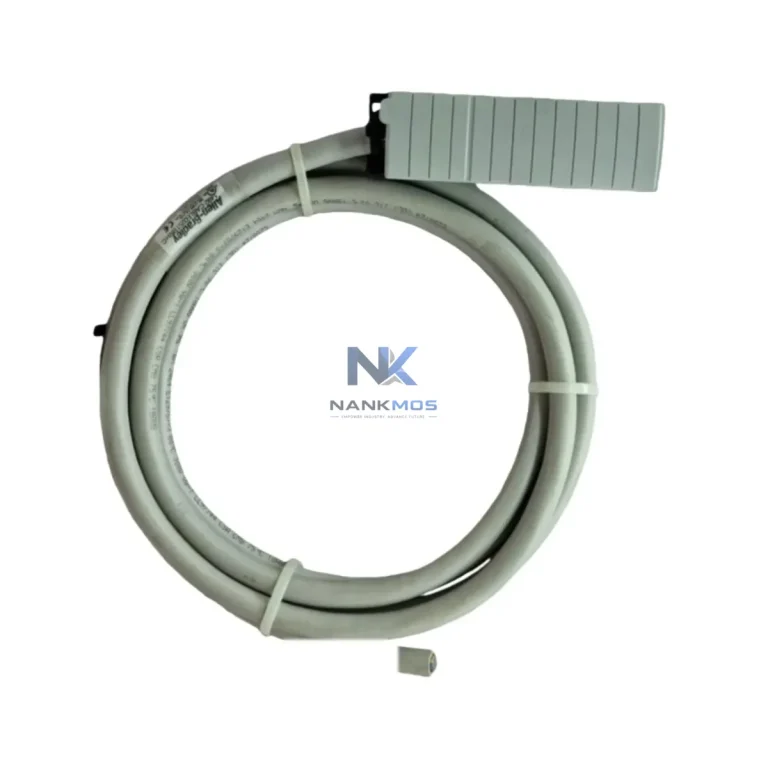
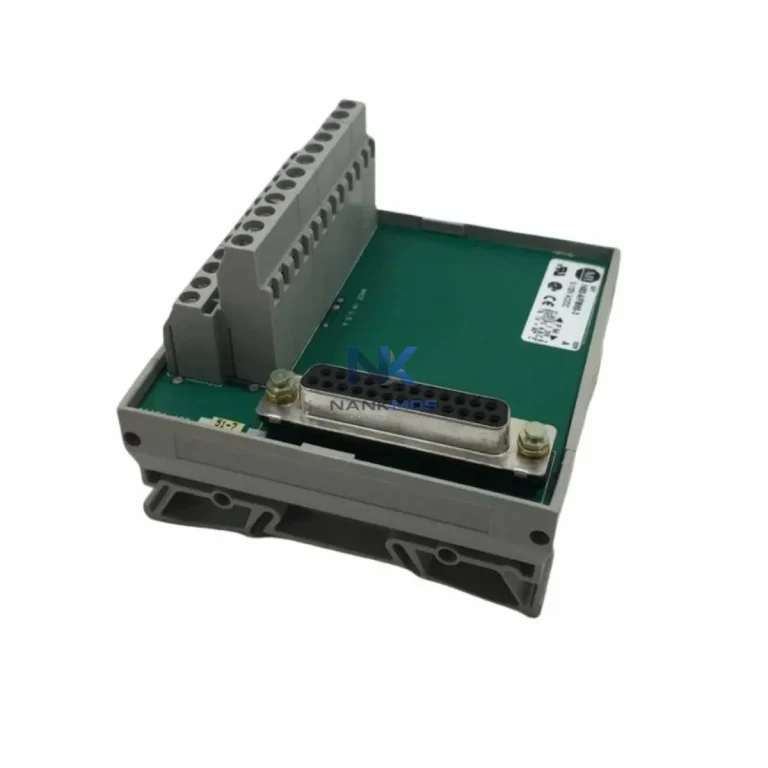
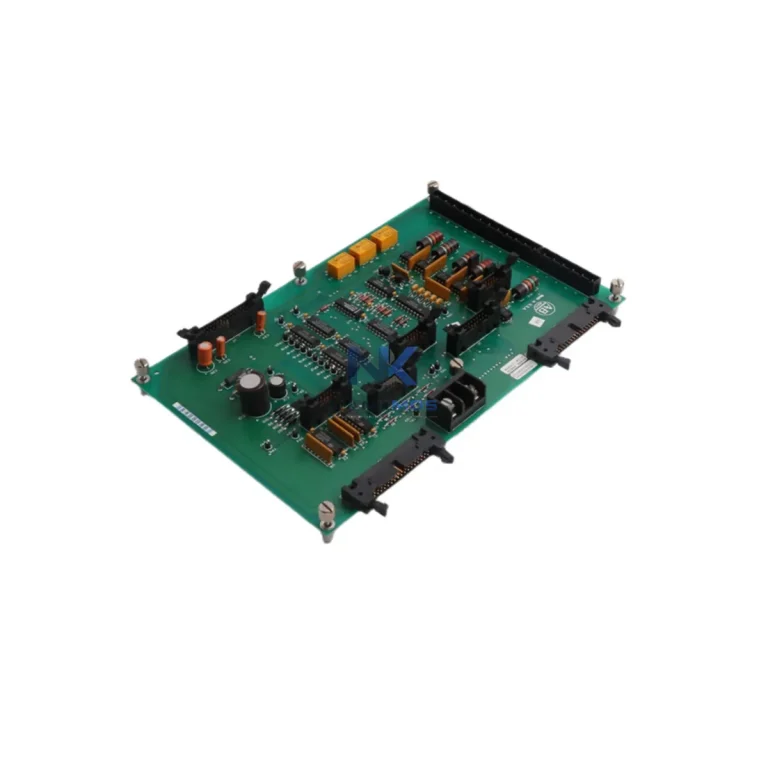
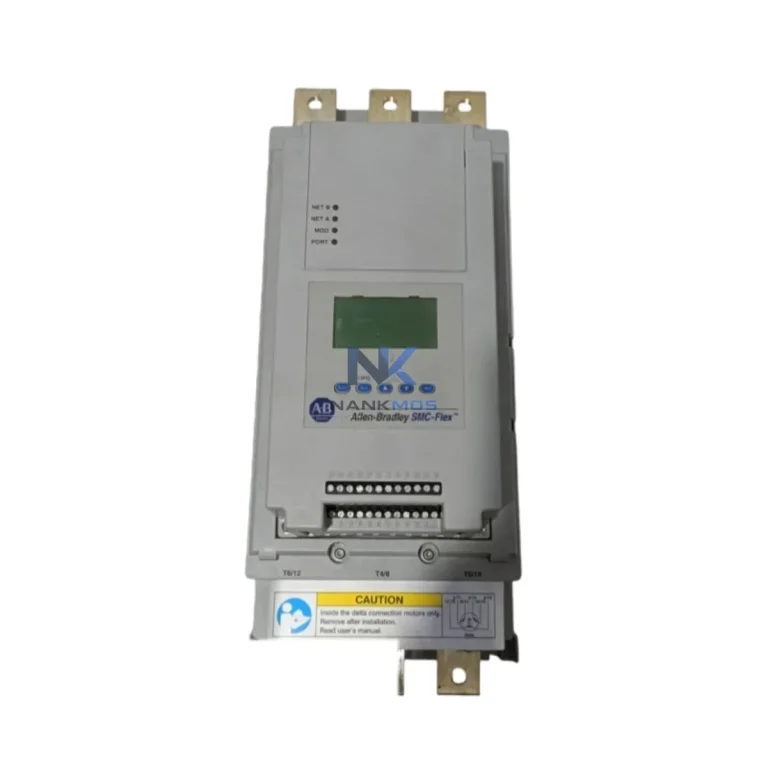
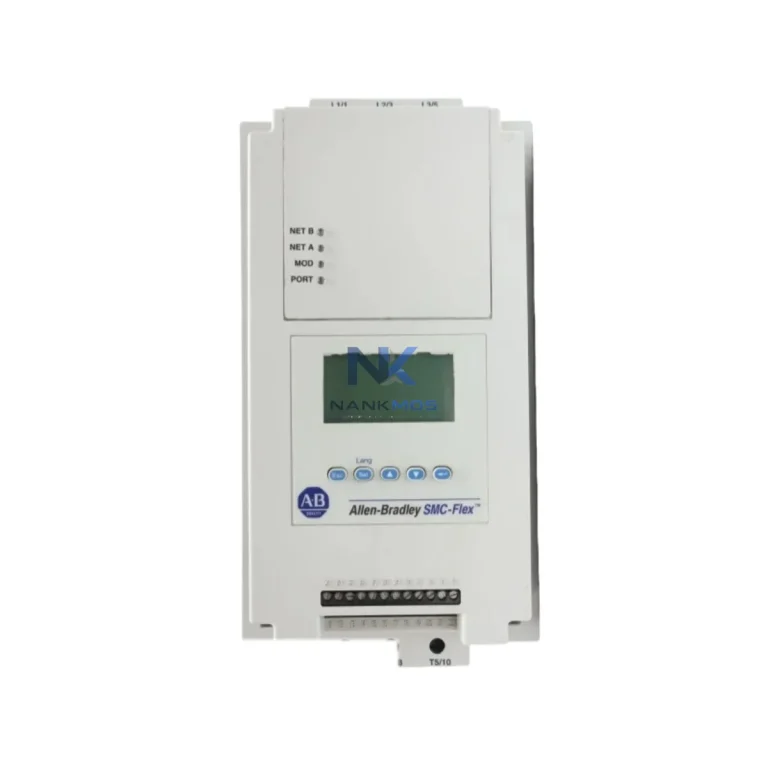
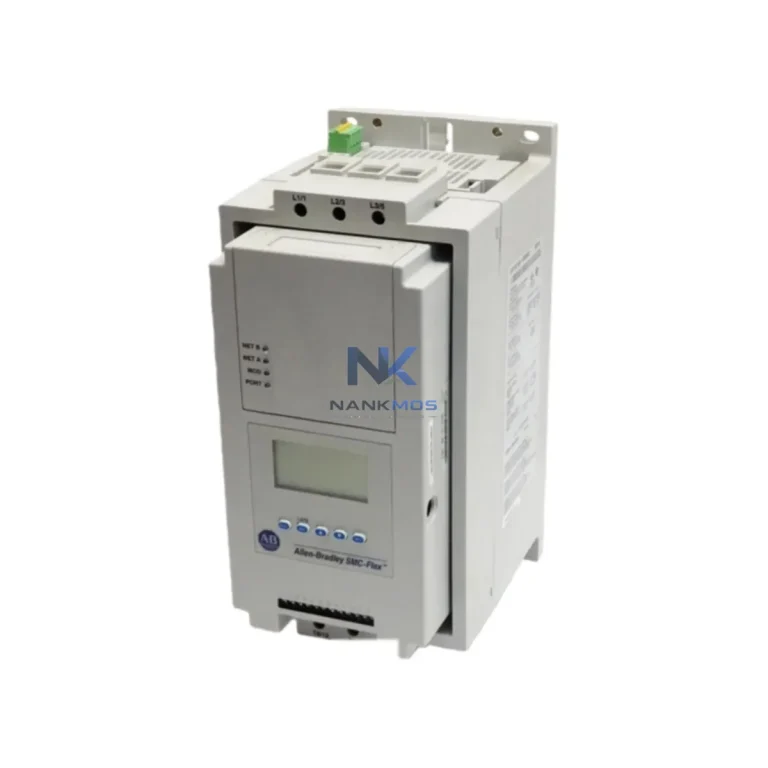
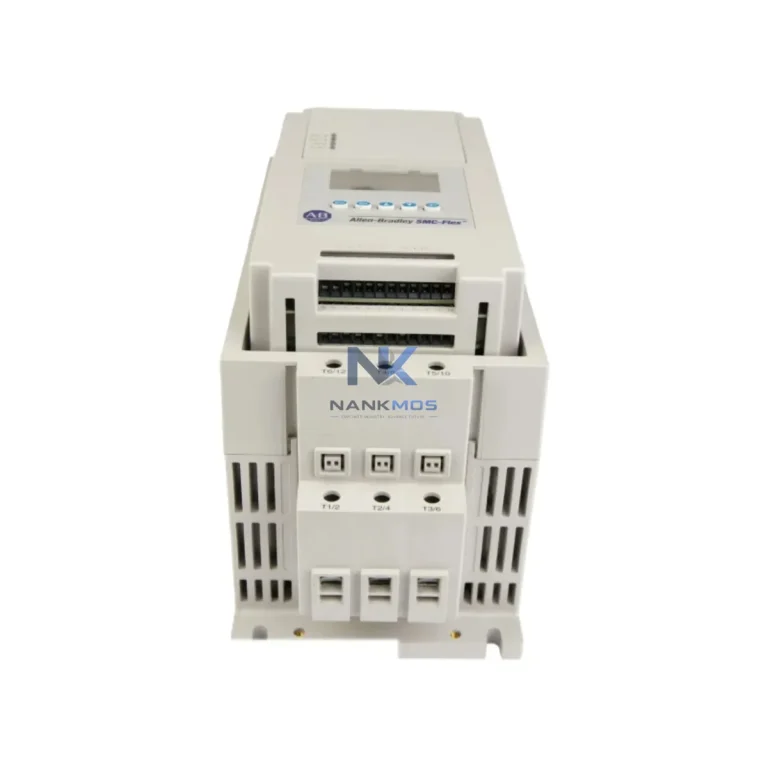
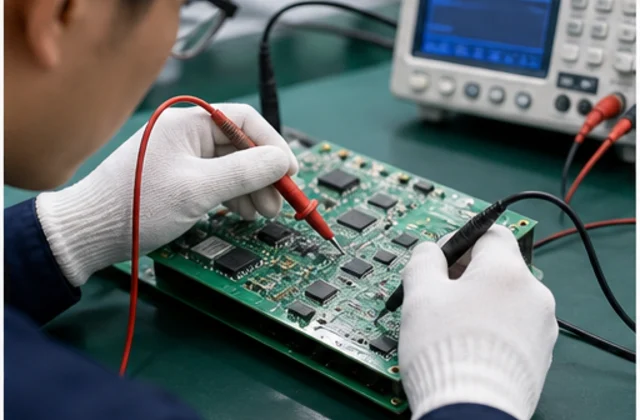
 Functional Inspection
100% tested on professional platforms to ensure stable performance.
Allen-Bradley 1771-DB is a NANKMOS industrial automation product record Listed under PLC-5 series and Business & Industrial > Automation, Control & Flow Devices > Programmable Logic Controllers. Confirm condition, availability, lead time, compatibility and documentation by email inquiry.
Brand names are used for identification only.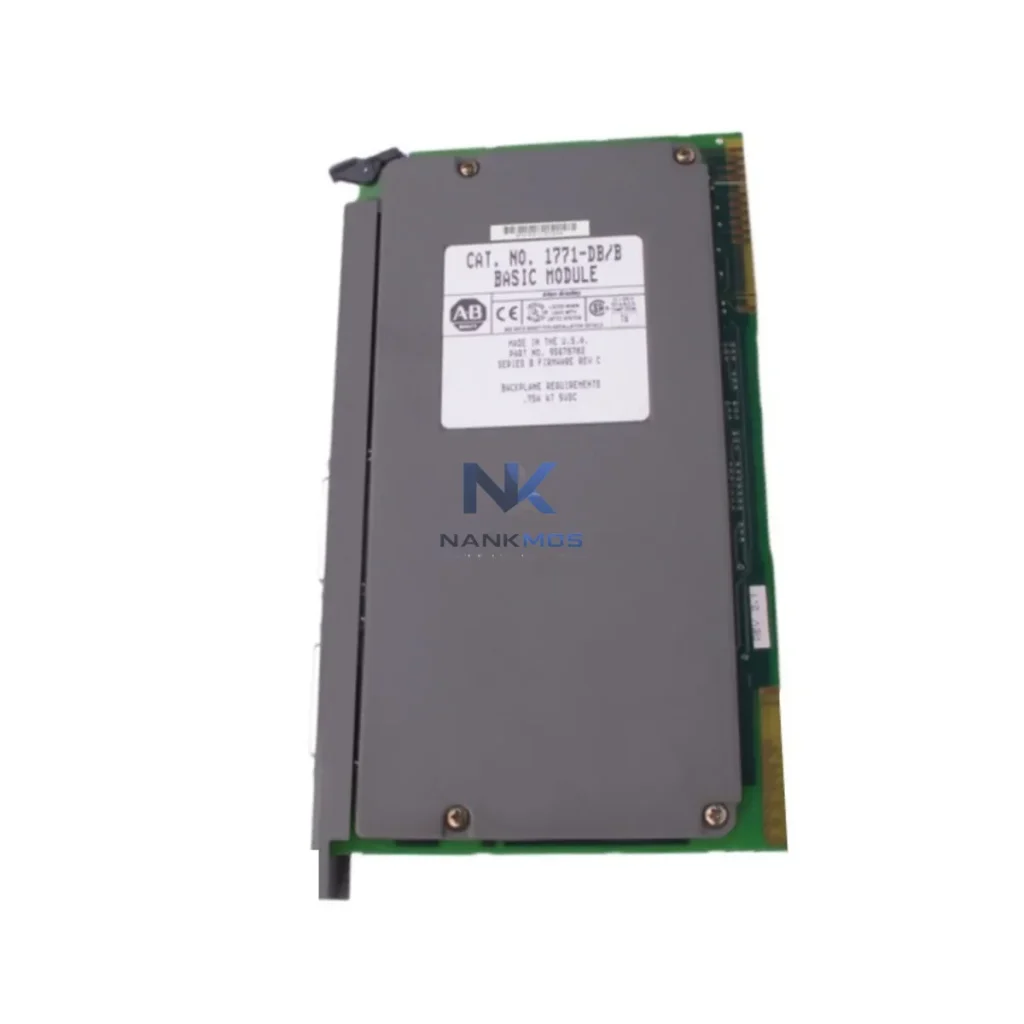
Allen-Bradley 1771-DB is a NANKMOS industrial automation product record Listed under PLC-5 series and Business & Industrial > Automation, Control & Flow Devices > Programmable Logic Controllers. Confirm condition, availability, lead time, compatibility and documentation by email inquiry.
| Manufacturer | Allen-Bradley |
|---|---|
| Application | Controller Processing & System Control |
| Part Number / Model | 1771-DB |
| Compatible System | PLC-5 |
| Series | PLC-5 |
| Condition Options | To Confirm |
| Module Type | Controller / CPU Module |
| Warranty | 12 Months |
| Packaging | Anti-static Bag / Secure Box |
| Shipping Methods | DHL / FedEx / UPS / Air / Sea |
| Availability | To Confirm |
| Lead Time | To Confirm |
| Documentation | Part number and revision checked before quote |
The Allen-Bradley 1771-DB is a foundational energy-control PLC module engineered for the PLC-5 platform, one of Rockwell Automation's most enduring programmable logic controller families. Designed to operate within demanding industrial environments, the 1771-DB delivers reliable I/O expansion and control logic execution that directly supports energy-aware automation strategies across discrete manufacturing, process control, and utility management applications.
In modern production facilities where energy costs represent a significant share of operational expenditure, the 1771-DB plays a critical role in reducing unnecessary power draw. By enabling precise, scan-cycle-level control over output states, the module helps eliminate phantom loads — outputs that remain energized beyond their required duty cycle — a common source of avoidable energy waste in legacy PLC-5 installations. When integrated with a power monitoring module such as the Allen-Bradley 1404-M4 or a third-party power quality analyzer connected via the Data Highway Plus (DH+) network, the 1771-DB's output states can be correlated with real-time energy consumption data, enabling engineers to identify and eliminate inefficient load patterns.
The 1771-DB achieves its highest energy-control value when deployed as part of a coordinated automation architecture. In a typical PLC-5 cabinet, the module occupies a slot in the 1771 I/O chassis alongside analog input modules such as the 1771-IFE and digital output modules like the 1771-OBD, forming a tightly integrated I/O subsystem that the PLC-5 processor scans at deterministic intervals. This scan-cycle precision is essential for load management: outputs controlling motor starters, solenoid valves, and heating elements can be toggled with millisecond accuracy, preventing the energy spikes associated with uncoordinated switching.
For drive-intensive applications, the 1771-DB works in concert with Allen-Bradley PowerFlex 700 variable frequency drives (VFDs) and PowerFlex 40 compact drives. The PLC-5 processor, reading feedback from the 1771-DB's I/O points, can issue speed reference commands to these drives via a 1771-SDN DeviceNet Scanner module, enabling closed-loop motor speed control that matches drive output to actual process demand — a strategy that can reduce motor energy consumption by 20–50% compared to fixed-speed operation.
Servo-driven axes in the same production cell, managed by an Ultra 3000 servo drive or a Kinetix 6000 multi-axis drive system, benefit from the 1771-DB's ability to coordinate motion enable and inhibit signals. By gating servo power based on production line state — for example, disabling servo holds during scheduled micro-stops — the module contributes to measurable reductions in standby power consumption across the motion system.
On the monitoring side, the 1771-DB's I/O points interface with current transducers and voltage sensors wired to 1771-IFE analog input modules. These signals feed into the PLC-5 program, where energy calculation function blocks can compute real-time kWh consumption per production cycle. This data is then surfaced on a PanelView Plus 6 HMI terminal via DH+ communication, giving operators immediate visibility into energy performance without requiring a separate energy management system.
For facilities running a SCADA platform such as FactoryTalk View SE or Wonderware InTouch, the PLC-5 communicates over an RSLinx Classic OPC server, making the 1771-DB's I/O state data available to higher-level energy dashboards and historian databases. This integration supports ISO 50001 energy management system requirements by providing auditable, time-stamped energy consumption records at the machine level.
Production line energy optimization with the 1771-DB centers on three operational levers: load scheduling, thermal management, and predictive maintenance readiness.
Load Scheduling: The 1771-DB enables the PLC-5 program to implement demand-response logic — automatically shedding non-critical loads such as auxiliary conveyors, cooling fans, and lighting circuits during peak tariff windows. This is achieved through dedicated output points on the module that control load-shedding contactors, coordinated by time-of-day logic in the PLC-5 ladder program. Facilities with time-of-use electricity tariffs can realize direct cost savings without any reduction in production throughput.
Thermal Load Reduction: By enabling precise duty-cycle control of resistive heating elements and motor-driven cooling systems, the 1771-DB reduces the thermal cycling that accelerates component wear. Stable thermal management extends the service life of power semiconductors in connected VFDs and servo drives, reducing both maintenance frequency and the energy overhead associated with thermal runaway events.
Production Line Rhythm Stability: Inconsistent line throughput — caused by uncoordinated start/stop sequences — is a significant source of energy waste. The 1771-DB's deterministic I/O response ensures that upstream and downstream equipment transitions are synchronized to the PLC-5 scan cycle, eliminating the energy-intensive acceleration bursts that occur when equipment restarts after an unplanned gap. This contributes to a smoother production rhythm, higher overall equipment effectiveness (OEE), and lower energy consumption per unit produced.
Predictive Maintenance Integration: I/O diagnostic data from the 1771-DB — including module fault flags and communication status bits — can be logged by the PLC-5 and forwarded to a FactoryTalk AssetCentre system for trend analysis. Early detection of I/O degradation prevents unplanned downtime, which is consistently one of the highest-energy-cost events in industrial operations due to the energy required to restart cold processes and re-establish thermal equilibrium.
All units are pre-tested prior to shipment, covered by a 12-month warranty from the date of delivery, and maintained in ready-to-ship inventory to support urgent replacement requirements and minimize production downtime.
Q1: What energy savings can I expect from deploying the Allen-Bradley 1771-DB in a PLC-5 system? The 1771-DB itself is a low-power I/O module; its energy-saving value is realized through the control strategies it enables. When used to implement duty-cycle management for motor loads and demand-response load shedding, facilities typically report 15–40% reductions in machine-level energy consumption, depending on the baseline control strategy and load profile.
Q2: Is the 1771-DB compatible with modern Rockwell Automation systems and communication protocols? The 1771-DB is native to the PLC-5 / 1771 I/O platform and communicates over Data Highway Plus (DH+) and Remote I/O (RIO). It can be integrated into ControlNet and EtherNet/IP architectures via bridge modules such as the 1785-ENET or 1756-DHRIO gateway, enabling data exchange with ControlLogix and CompactLogix systems without requiring a full platform migration.
Q3: What is the recommended replacement or upgrade path for aging 1771-DB modules? For direct replacement, the 1771-DB is a drop-in substitute for equivalent 1771-series basic modules with matching slot and backplane specifications. For facilities planning a platform migration, the ControlLogix 1756 I/O platform with 1756-OB16 digital output modules provides a functionally equivalent upgrade path with enhanced diagnostics and EtherNet/IP connectivity.
Q4: What does the 12-month warranty cover, and what is the typical lead time? The 12-month warranty covers manufacturing defects and functional failures under normal operating conditions from the date of shipment. Units are held in stock and typically ship within 1–3 business days. Pre-shipment functional testing is performed on all units to verify I/O response, backplane communication integrity, and module identification prior to dispatch.
Functional Inspection100% tested on professional platforms to ensure stable performance.
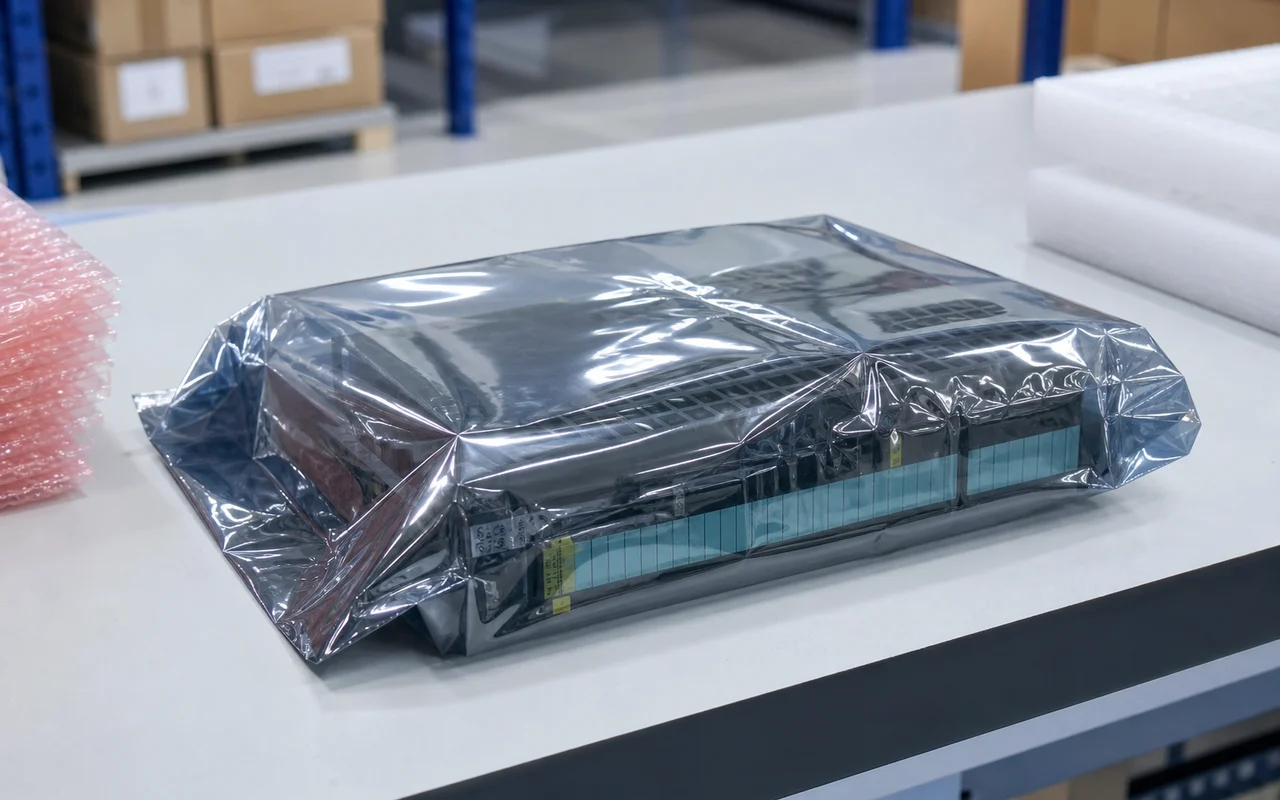 Anti-static Packaging
Modules are packed in anti-static bags to prevent electrostatic damage.
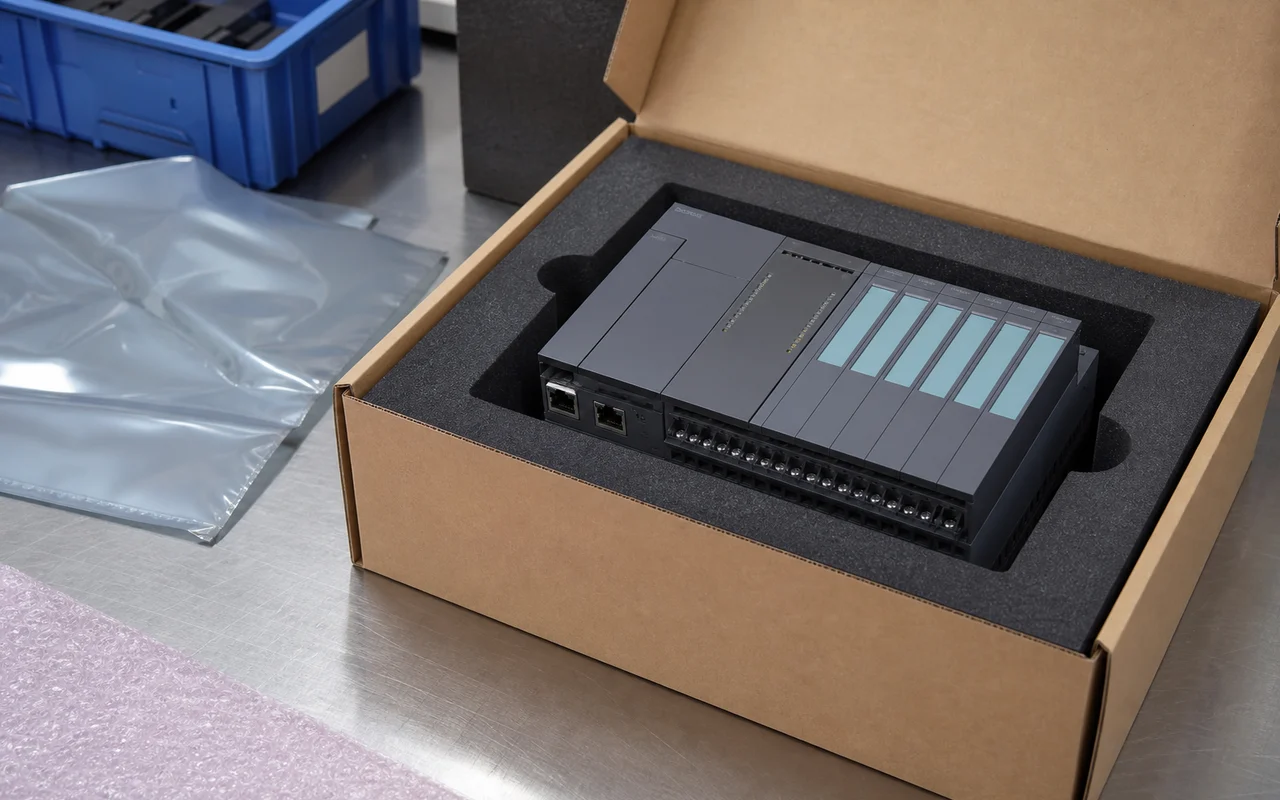 Secure Export Packing
Cushion protection and strong cartons ensure safe transportation.
 Worldwide Shipping
Global logistics network supports air, sea and express delivery.
 Documentation Check
Part number, revision and compatibility verified before shipment.
 After-sales Support
Professional technical support to help resolve your issues.